U.S. Army Special Forces/republic of vietnam:
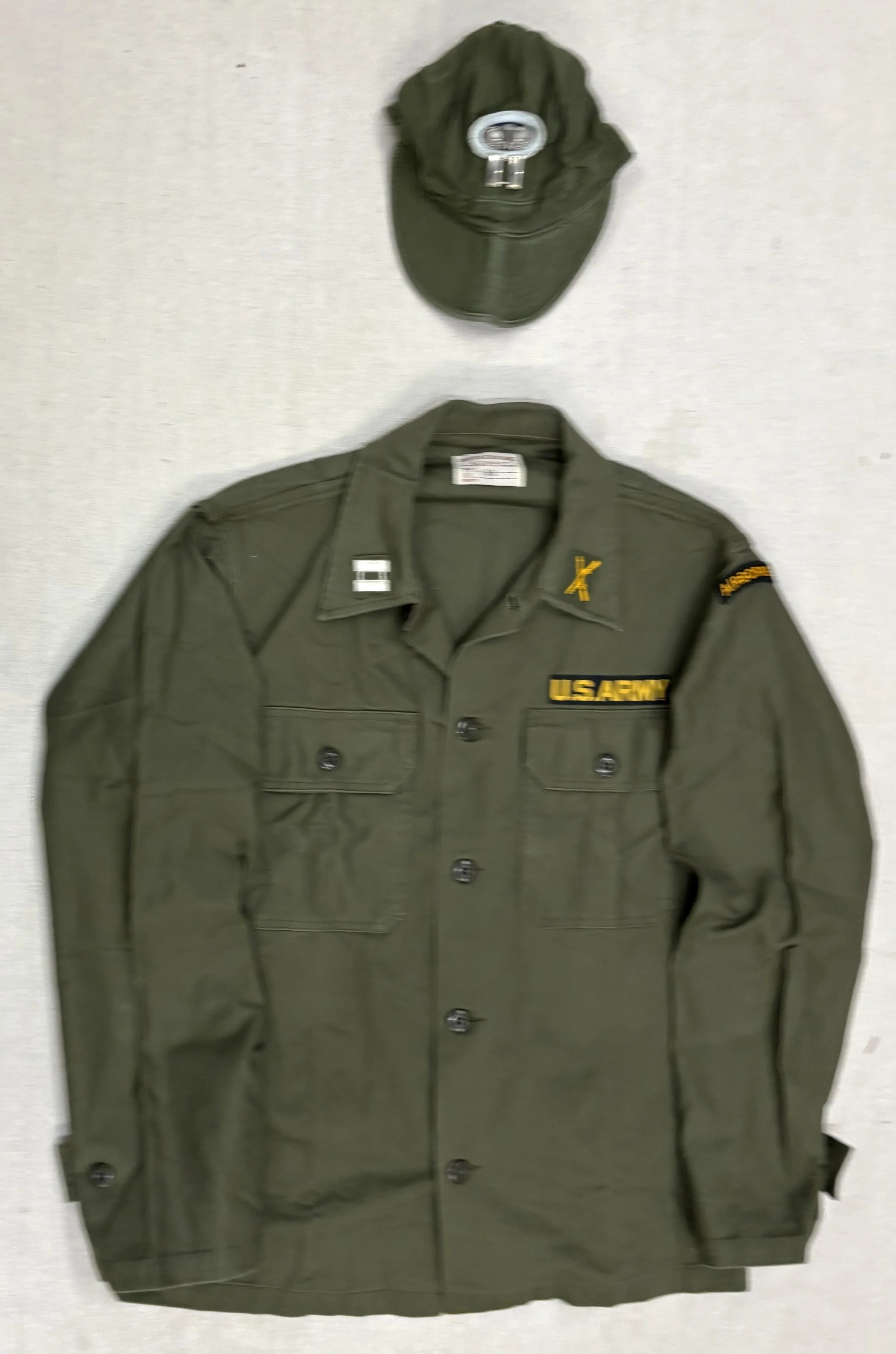
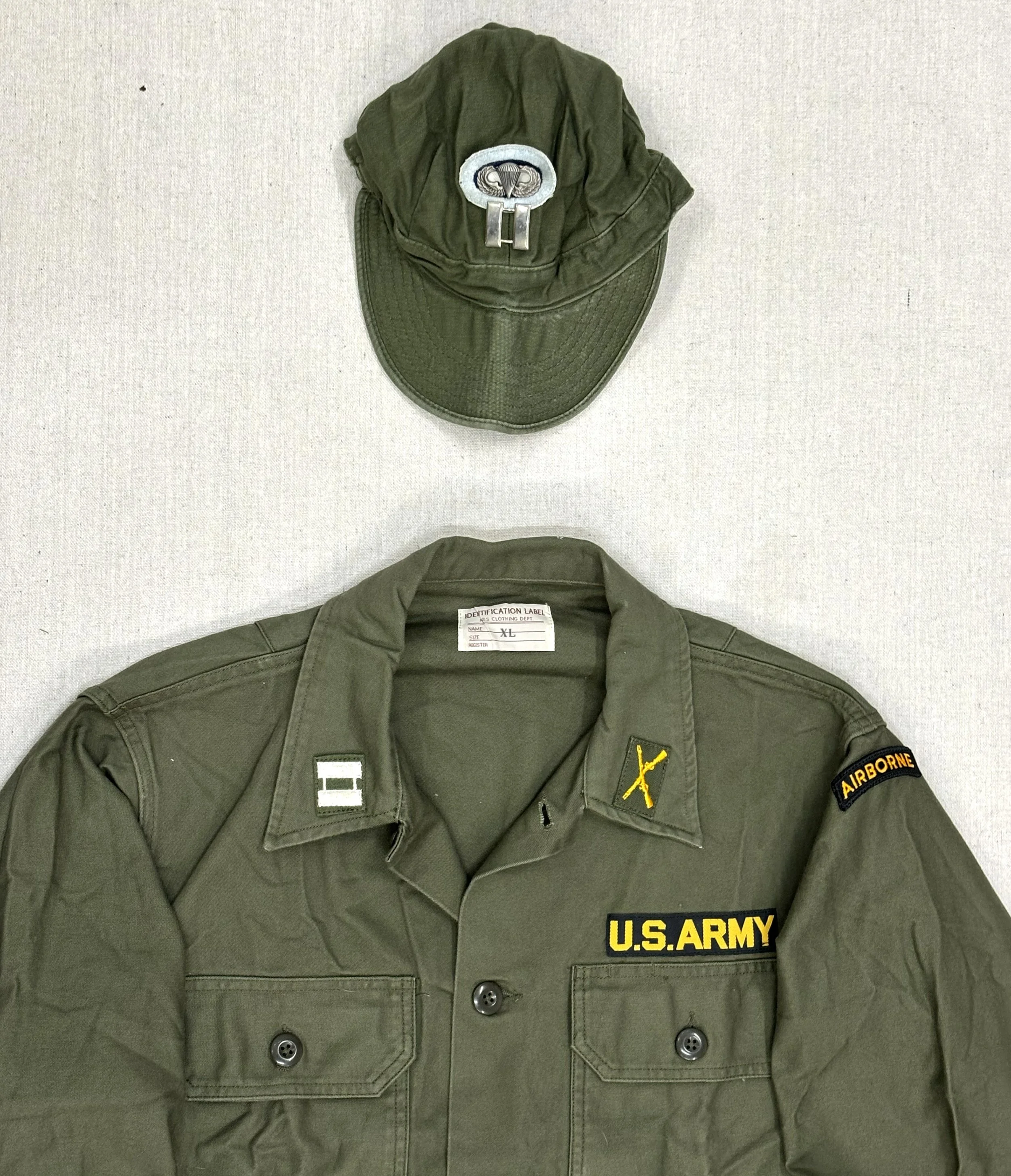
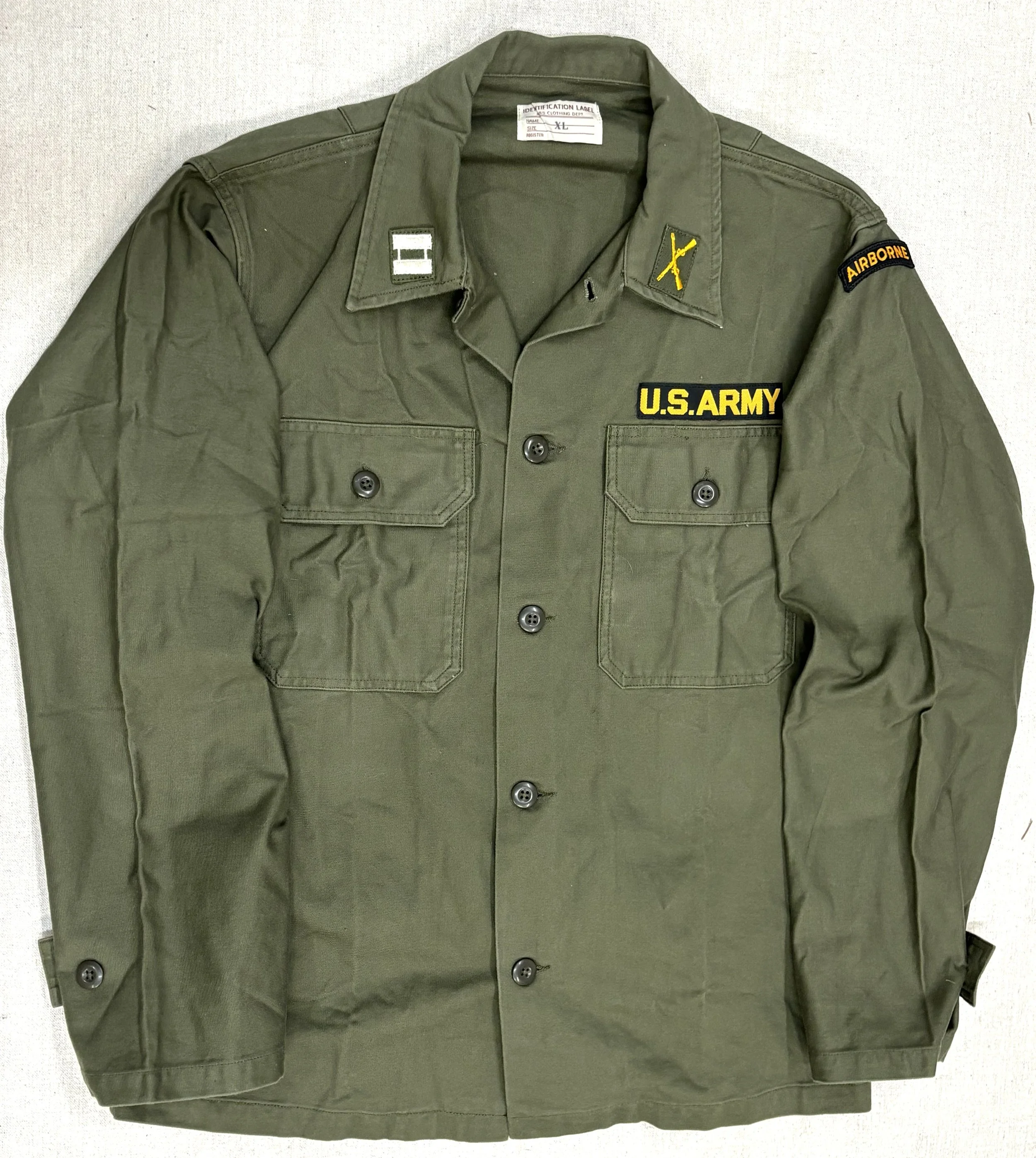
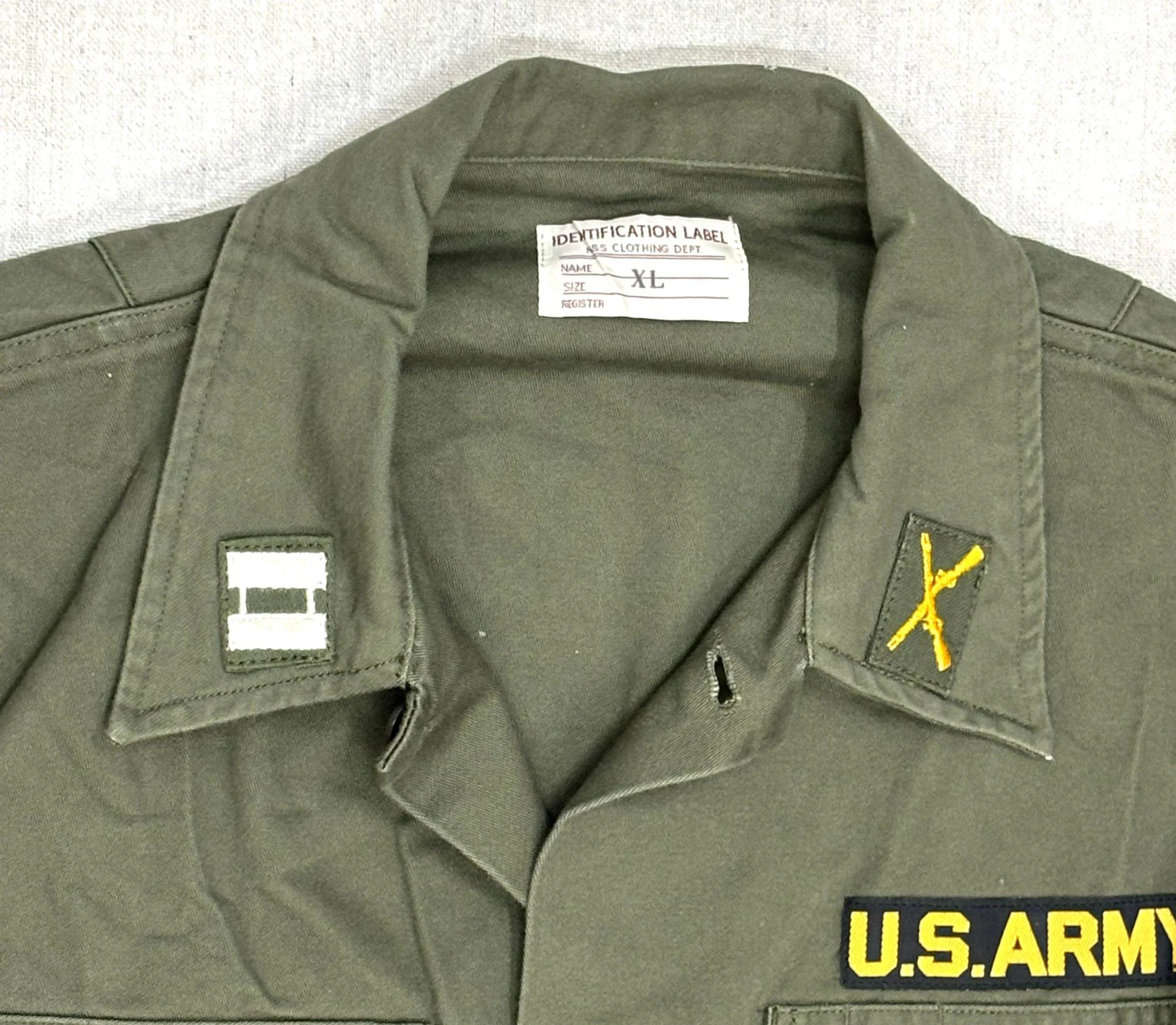
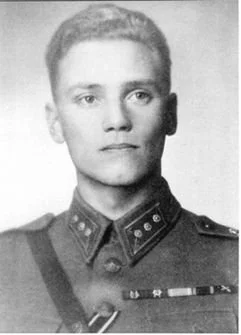
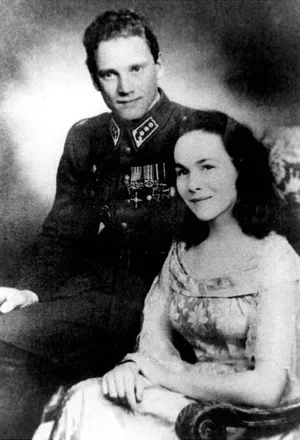
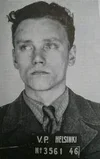
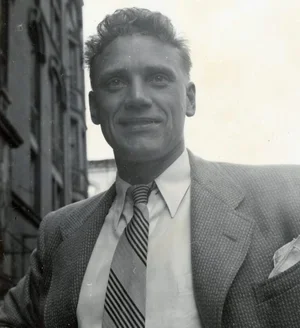
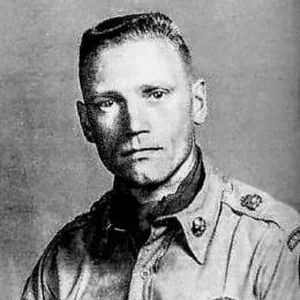
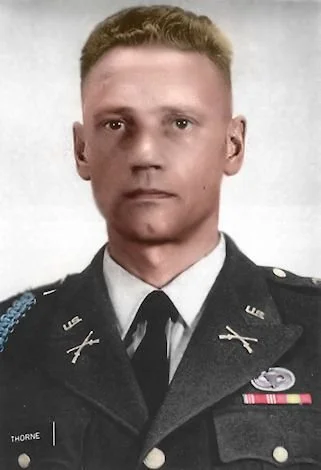
” Updated” Captain, ‘Lauri Törni’ (Thorne), 77th Special Forces Group:
Special Forces trace their roots to the primary proponent of unconventional warfare, with purpose-formed special operations units such as the Alamo-Scouts, the Philippine Commandos, the first special service force, and the operational groups (OGs) of the Office of Strategic Services. Although the OSS was not an Army Organization, many Army and military personnel were assigned to it and later used their influence to form the ‘Special Forces’.
During the Korean War, individuals such as former Philippine guerrilla commanders Colonel Wendell Fertig and Lieutenant Colonel Russel W. Volckmann drew on their wartime experience to formulate the doctrine of unconventional warfare, which became the cornerstone of the Special Forces. In 1951, Major General Robert A. McClure chose former OSS member Colonel Aaron Bank as Operations Branch Chief of the Special Operations Division of the Psychological Warfare Staff (OCPW) of the Pentagon.
In June 1952, the 10th Special Forces Group (Airborne) was formed under Colonel Aaron's command, soon after the establishment of the Psychological Warfare School, which ultimately became the John F. Kennedy Special Warfare Center and School. By the end of June 1952, the 10th Special Forces had 122 officers and men assigned to it. Many prior OSS people, Rangers, and Airborne-trained individuals had served in WWII. The group’s mission was to conduct partisan-like warfare behind Soviet lines. If the Cold War went ‘Hot’, and the Soviets began an invasion of Europe, they could respond with clandestine operations within their safe areas. (Thank God this never came to that.) But on 10 November 1953, the ‘10th Special Forces Group A (SFG(A) was split in half, with half of them going to Bad Tolz, West Germany, and the other half remaining at Fort Bragg to become the 77th Special Forces Group.
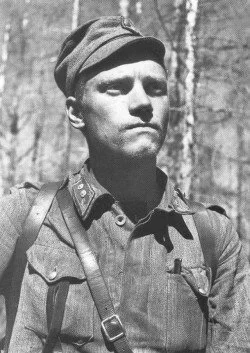
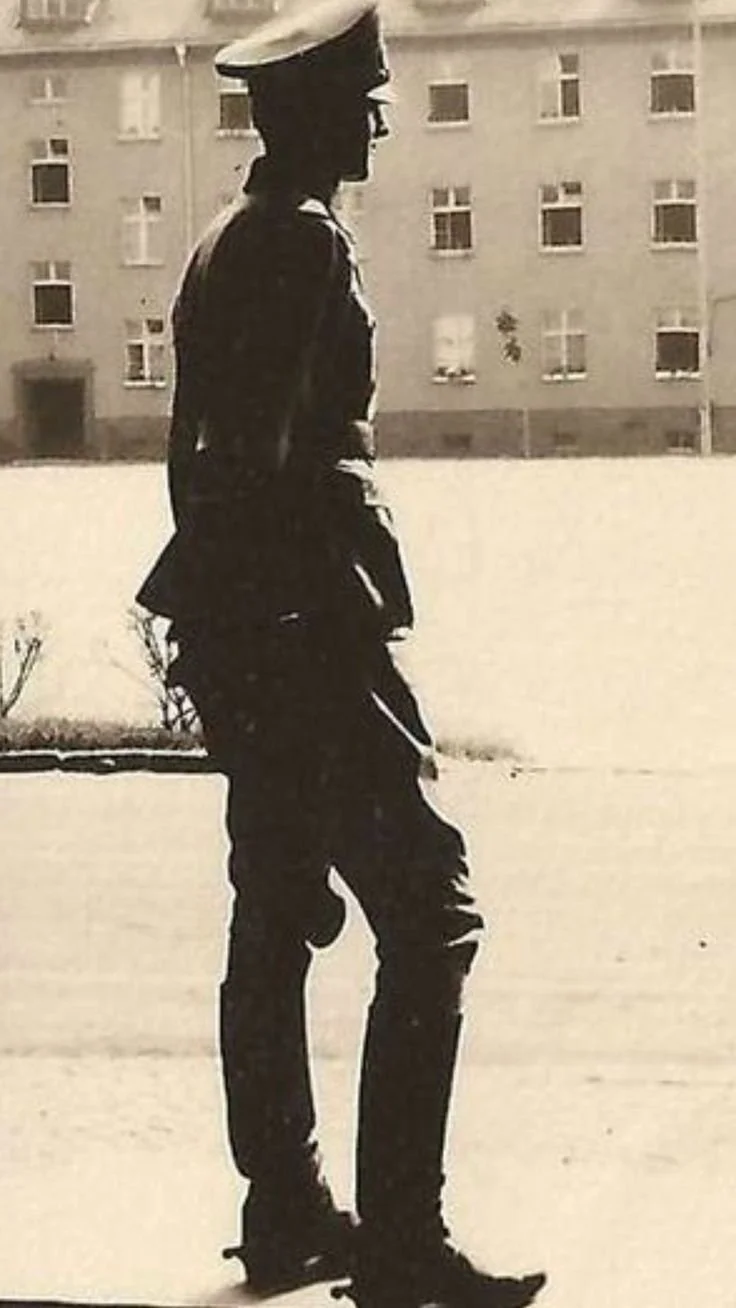
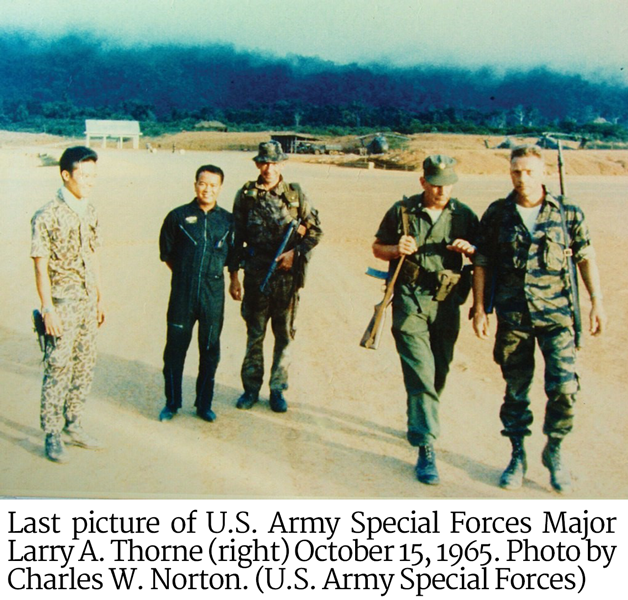
With the Cold War heating up in Europe, it was originally planned that half of the members of the Special Forces there would be ‘Native Europeans’ (To blend in with the locals on both sides of the wall. In 1950, the Lodge Act was passed, providing for the recruitment of initially 2,500 foreign nationals into the United States Military, where they would serve in the military for citizenship. Many of the initial members of the 10th SFG(A) were Lodge recruits, who were serious ‘anti-communists ’. Among the more notable accepted of these men was Lauri Allan Torni (Larry Thorne), a former Finnish Army Soldier, who was drawn into the German Waffen-SS. He had won both the Mannerheim Medal and the Iron Cross in World War Two. The U.S. Army later decorated Thorne after he was killed during his deployment to the Republic of Vietnam. If you look at the pictures of him that are available now, there are like 5 or 6 different uniform styles alone
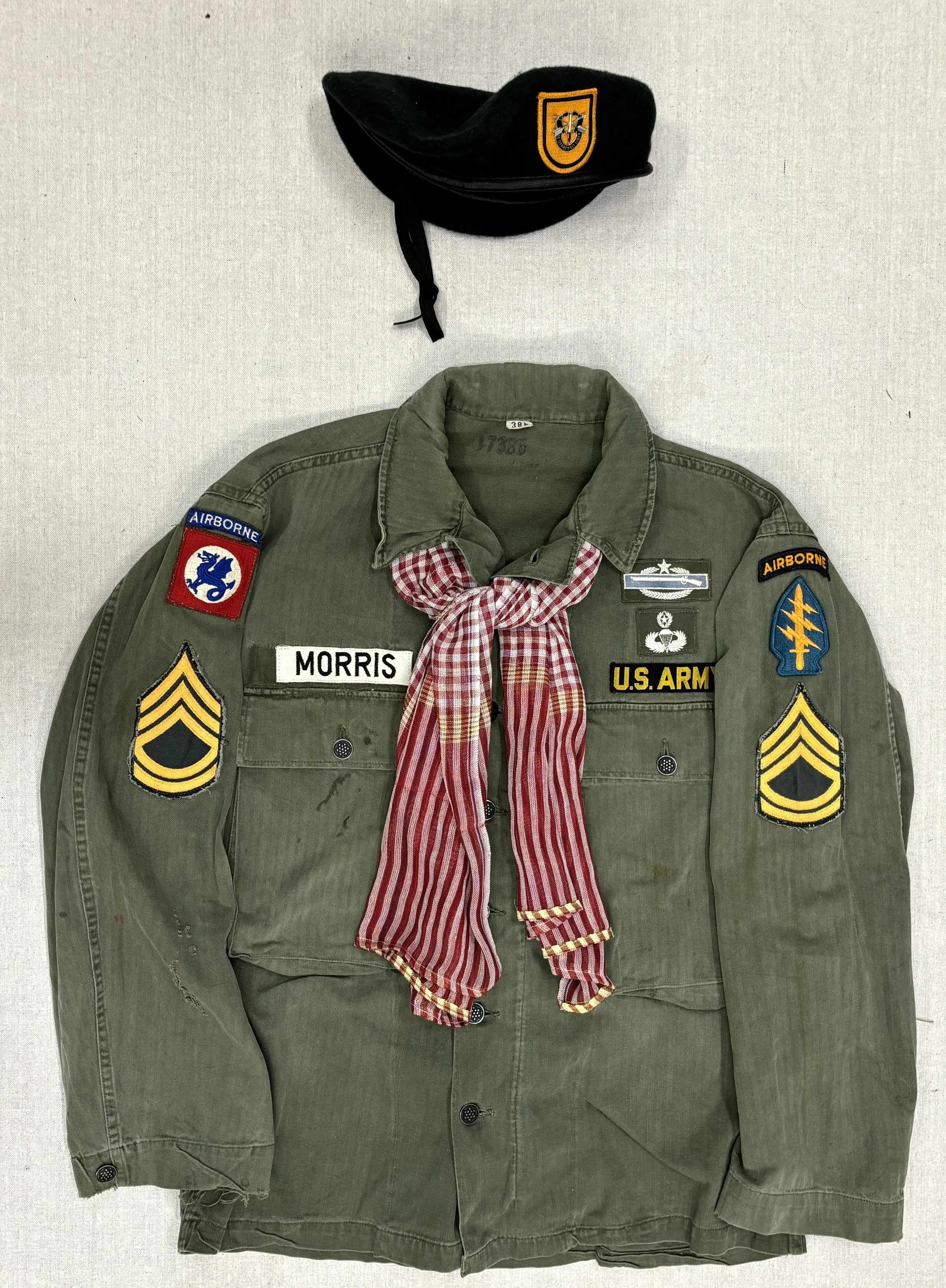
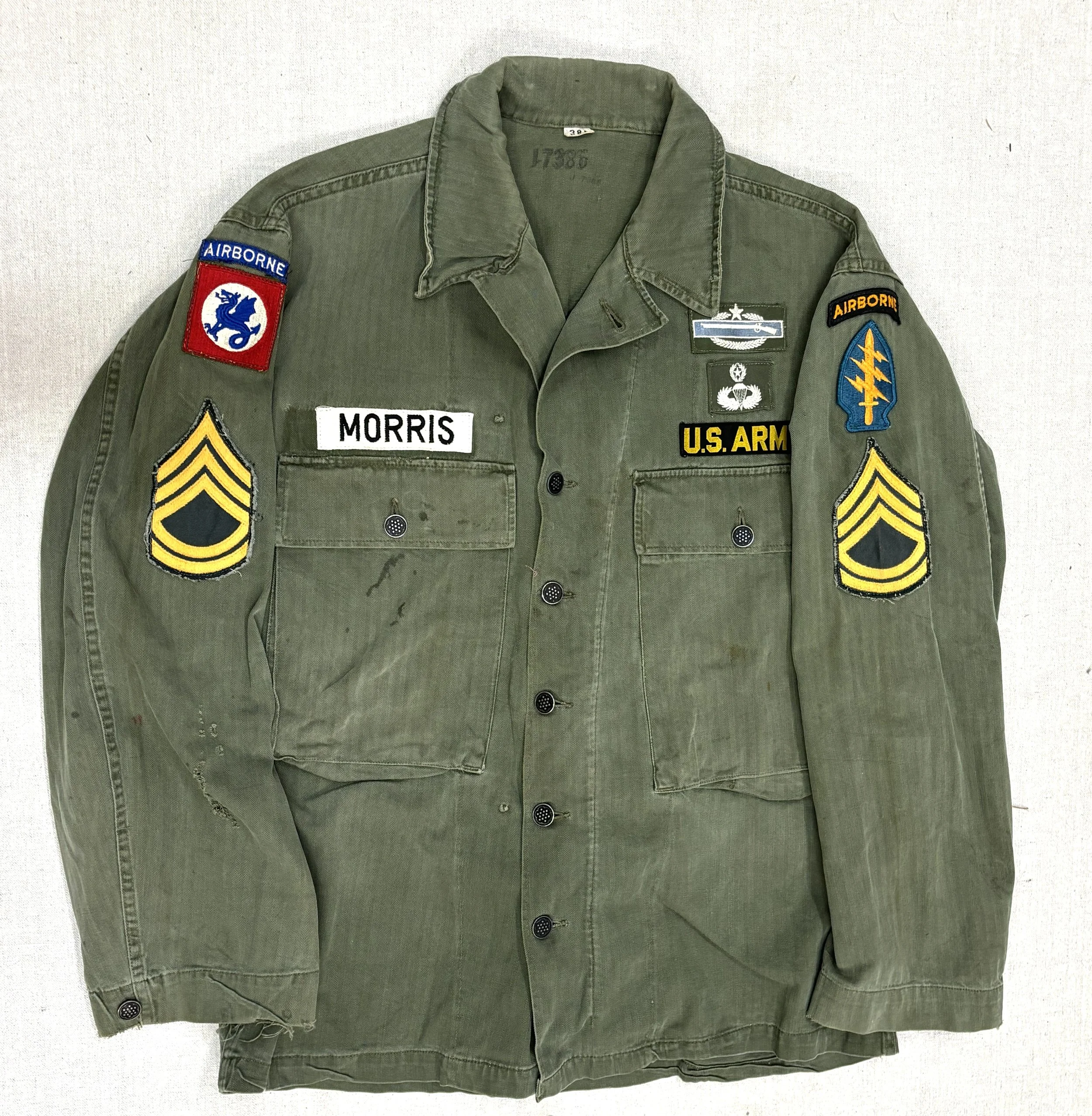
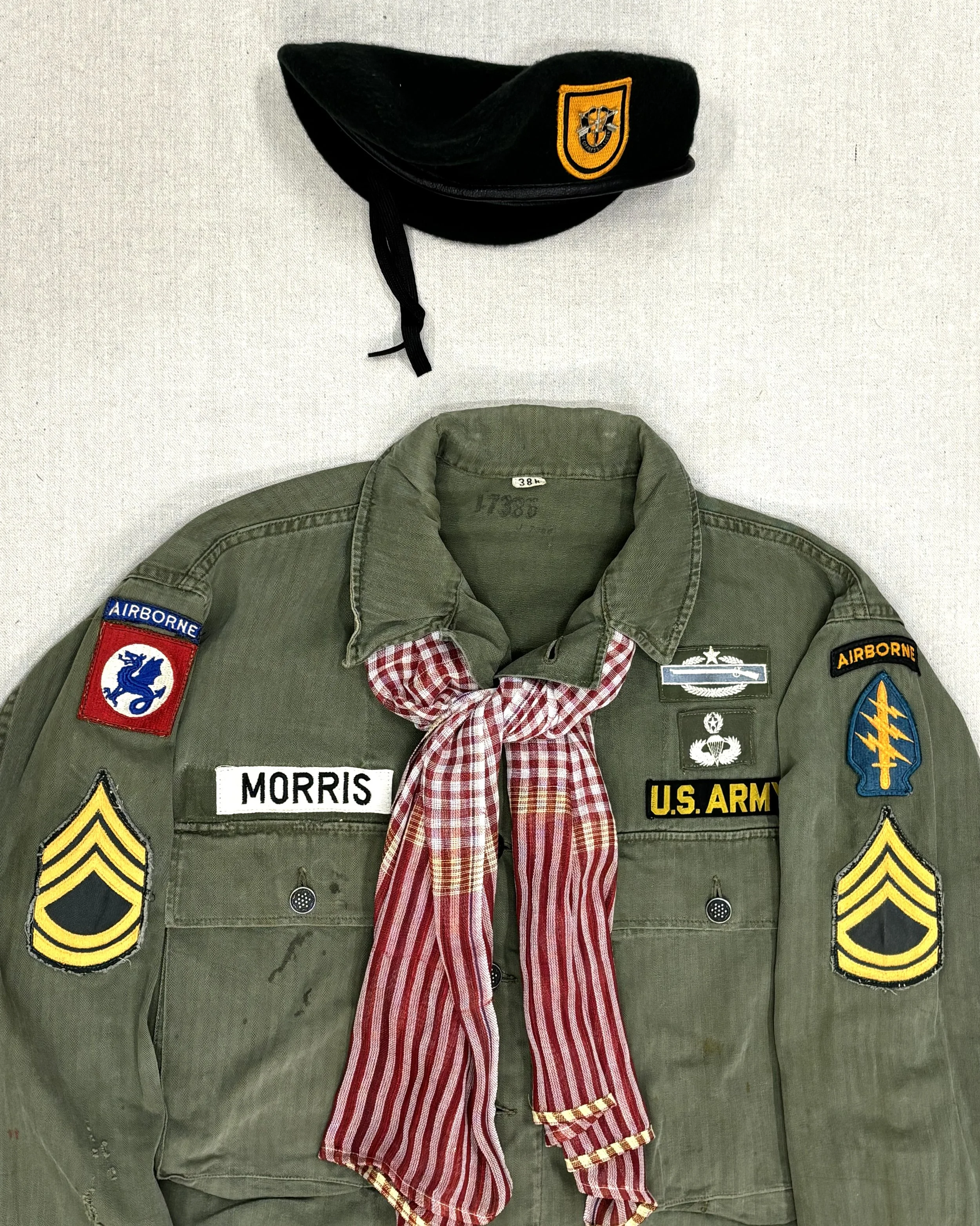
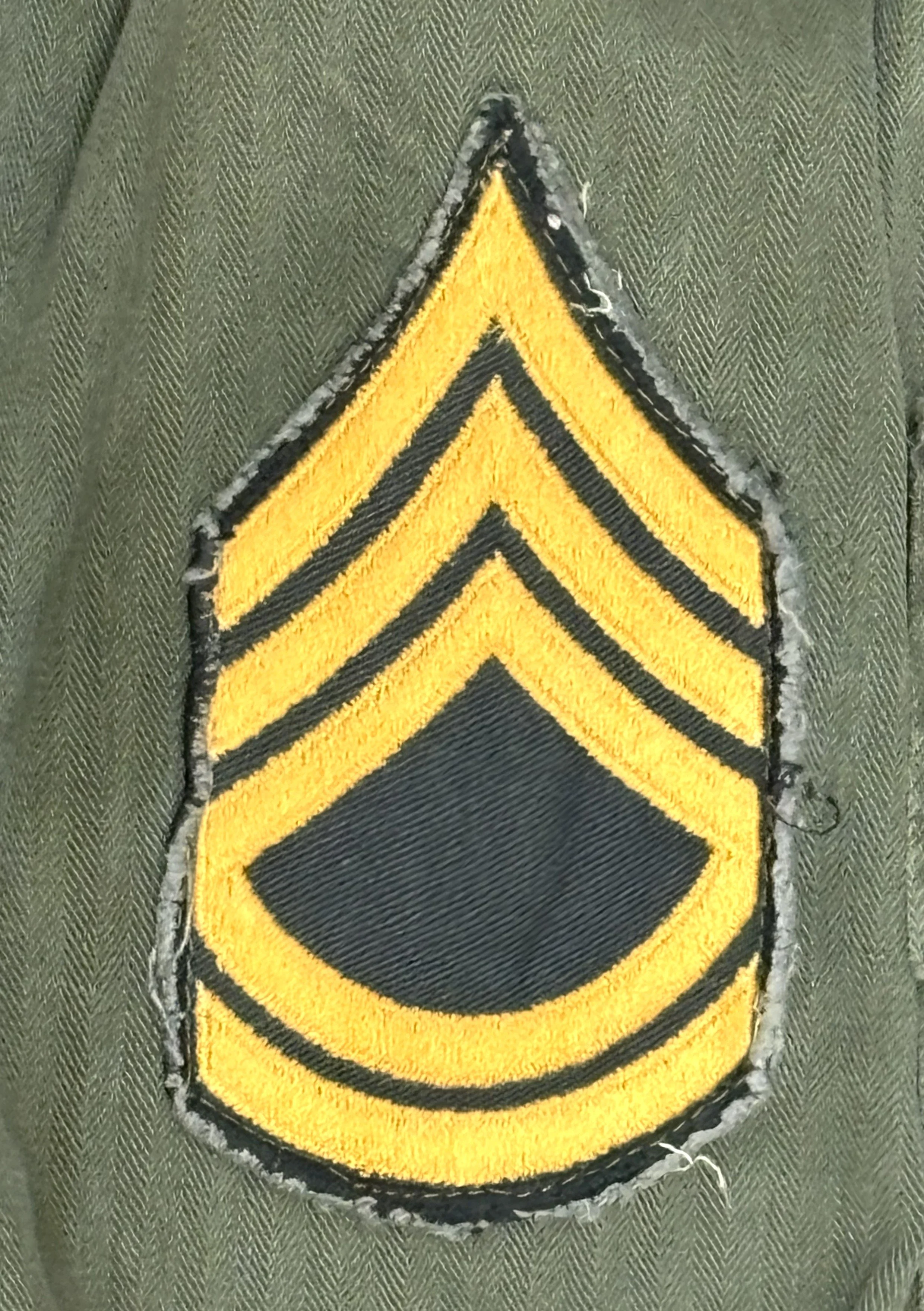
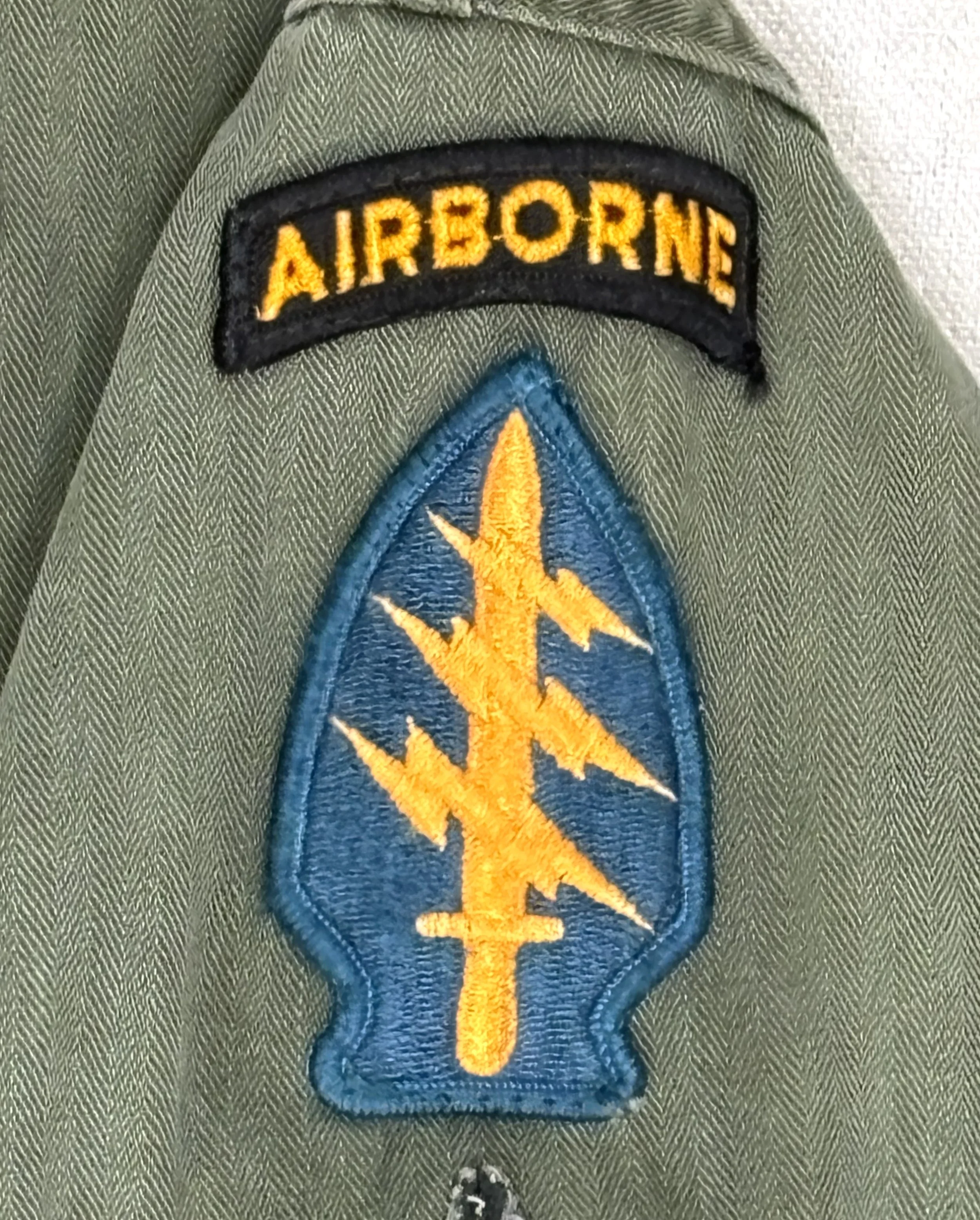
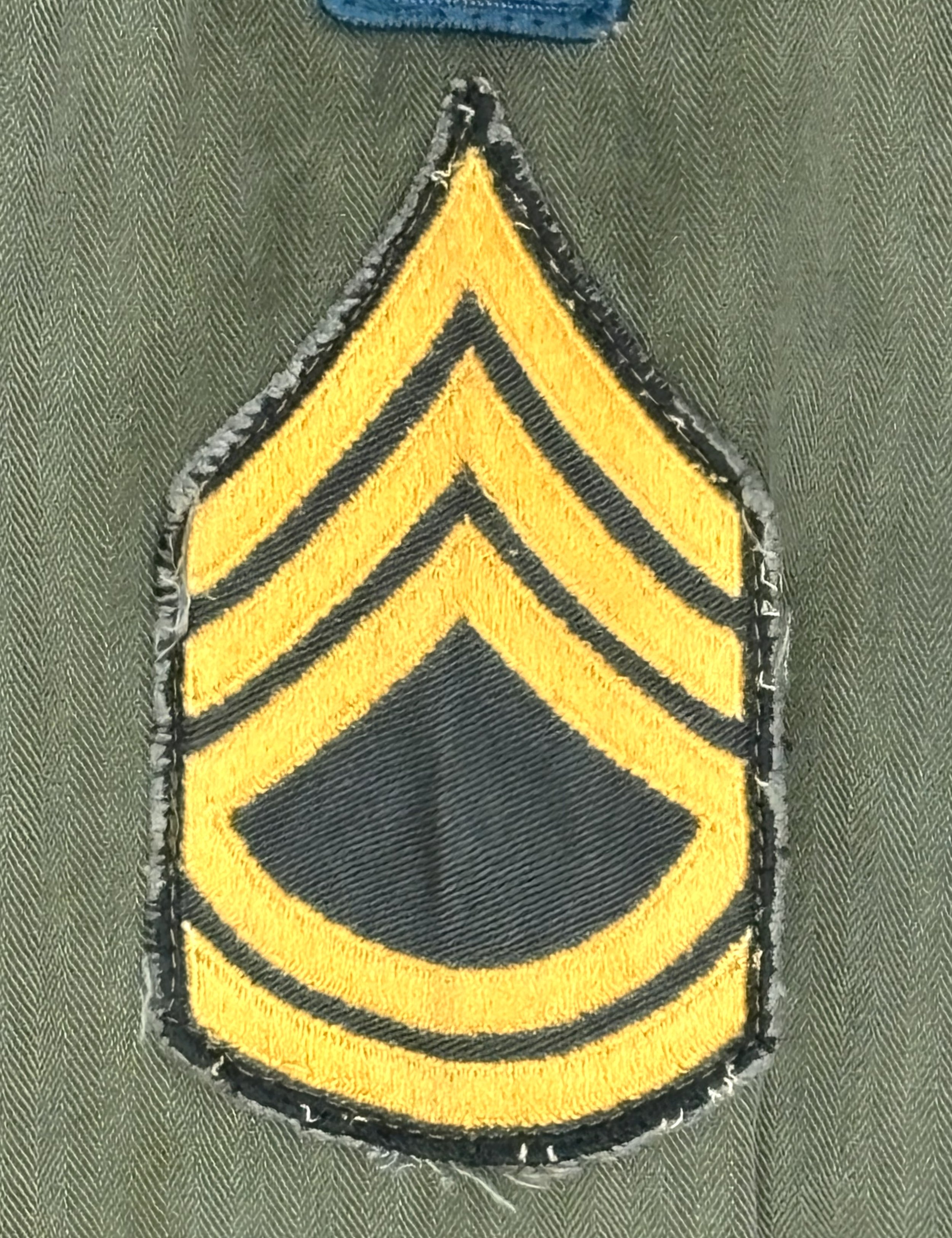
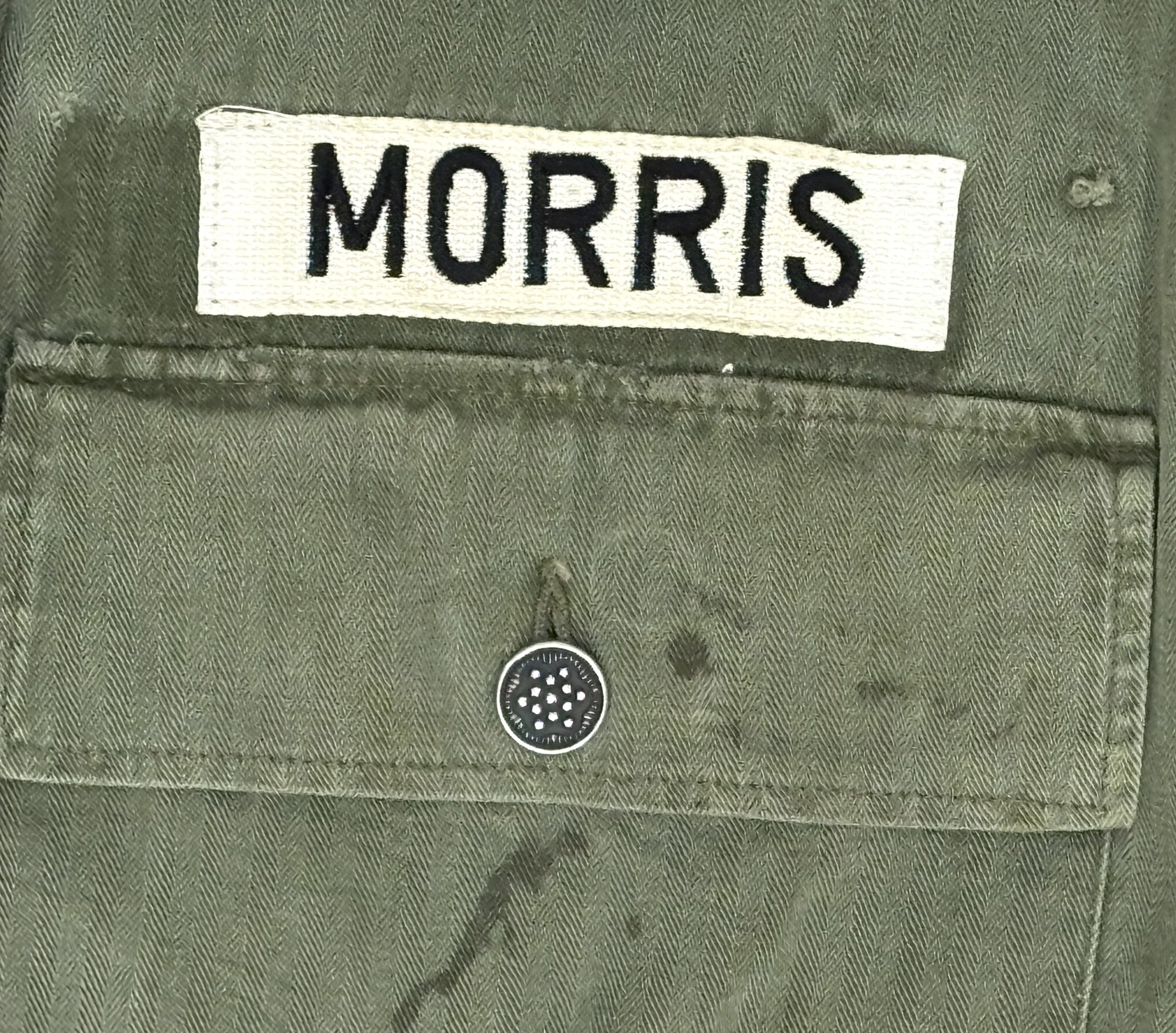
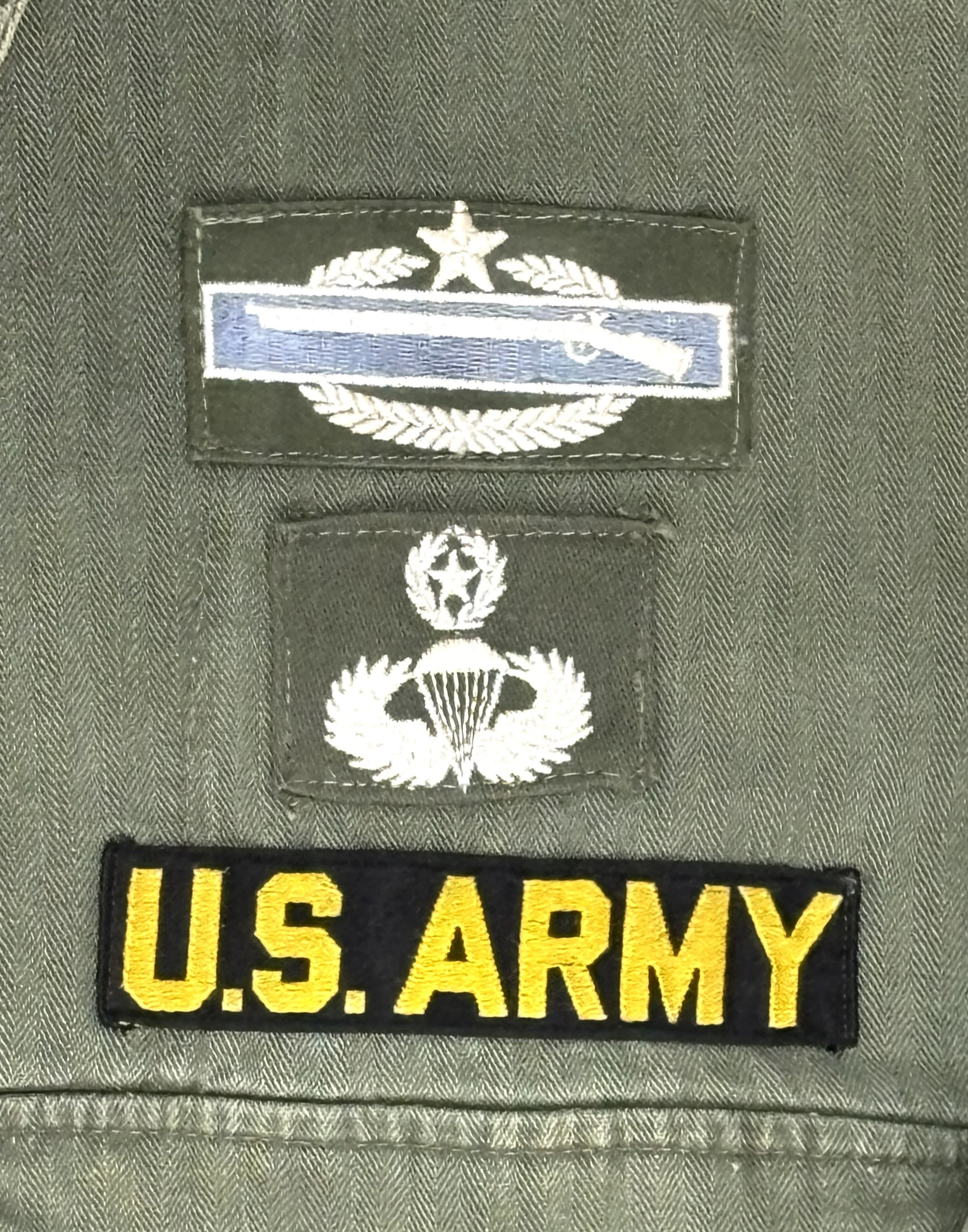
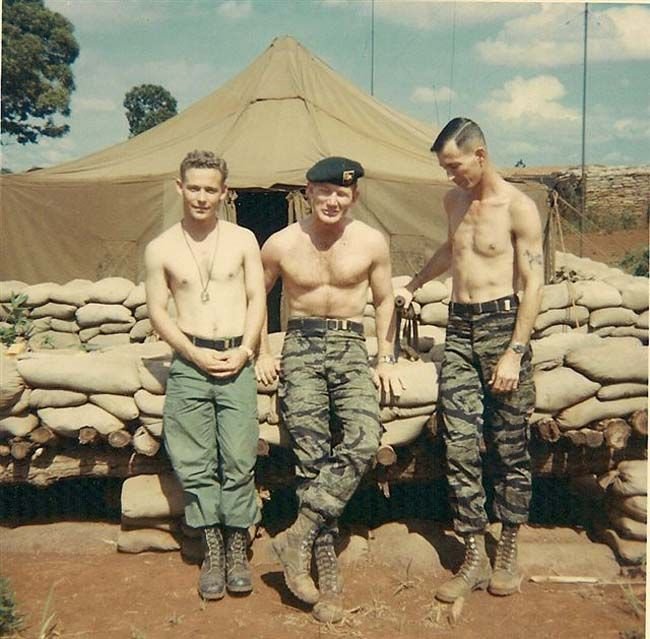
“NEW” Sergeant First Class, 1st Special Forces, Laos, Mid-1960s:
Being constituted on 5 July 1942, the United States Army created and developed the 2d Company, 1st Battalion, First Regiment, of the 1st Special Service Force, which was the combination of Canadian Soldiers and American Soldiers, “A Joint Venture”, organizing a secret “Special Force” in a cohesive multinational unit. And they were then activated on July 9, July 1942, at Fort William Henry Harrison in Montana.
Operating like Commandos, the mountain-trained 1,800 men, some called them “The Devil's Brigade or the Black Devils”. Developed for operating in Norway, possibly, and targets there, Romania, or in the Alps. But in February of 1943, English-trained “Norwegian SOE” terminated the operation of the heavy water and deuterium plants in Norway, one of the very missions the FSSF had been created for. They did, however, serve overseas, and in battle in 1943, fighting at the end of the Aleutian chain against the Japanese, and in Italy, notably at Monte la Difensa, Monte Majo, in 1944, and then at Anzio. Then they did operations in France till the end of the War, and they disbanded on 6 January 1945.
The 1st Special Forces Group started at Fort Bragg in NC in 1955, and Mandatory Airborne Qualification started there. Starting with Four Special Forces Operational Detachments, i.e., the 12th, 13th, 14th, and 16th. They were selected from the 77th Special Forces Group and transferred to the Pacific theater over the next year. The 1st Special Forces Group was officially activated at Fort Buckner, Okinawa (Named after the General who was slain during the battle for control of the island), on 24 June 1957. In 1957, the 1st SFG was established in Japan as the Third Special Forces Group of the Army. LTC A. Scott Madding, acting commander, and MSG Robert L. Voss were the sergeant major. Reconstituted 15 April 1960 in the Regular Army, as Headquarters and Headquarters Company, 1st Special Forces Group, 1st Special Forces, and activated 4 October 1960.
In Vietnam, teams were deployed on six-month temporary duty at a time. They had several missions there; one was to gather and train groups of indigenous peoples, and gather them together to make small, local fighting units to ward off the Communist Forces and influences in South Vietnam. One of the other missions of the time was to run Camp Hardy Combat Training Center at the Northern Training Area of Okinawa.
They set up a base there in Okinawa, the 1st Special Forces Group (1st SFG), and that was a pivotal point in the early stages of the Vietnam War. There, they put the groups of Nung Mercenaries, tribesmen, South Vietnamese, etc. Together with an American Special Forces team, they were trained together into a special reaction unit. Training in unconventional warfare was said to have begun in 1957. Working with the South Vietnamese forces and operated the Camp Hardy training center.
The 1st Special Forces Group holds the distinction of having the first and last Special Forces soldiers killed in Vietnam, with 1st SFG Captain Harry G. Cramer becoming the first Special Forces soldier killed in Vietnam in 1957. Captain Richard M. Rees was killed on 15 December 1973. Nearly 3 Decades later, 1st Special Forces Group soldier Sergeant First Class Nathan Chapman became the first American to die by hostile fire in Afghanistan on 2 January 2002. The Group was inactivated on 30 June 1974 at Fort Bragg, North Carolina, but reactivated on 1 September 1984 at Fort Lewis, Washington State.
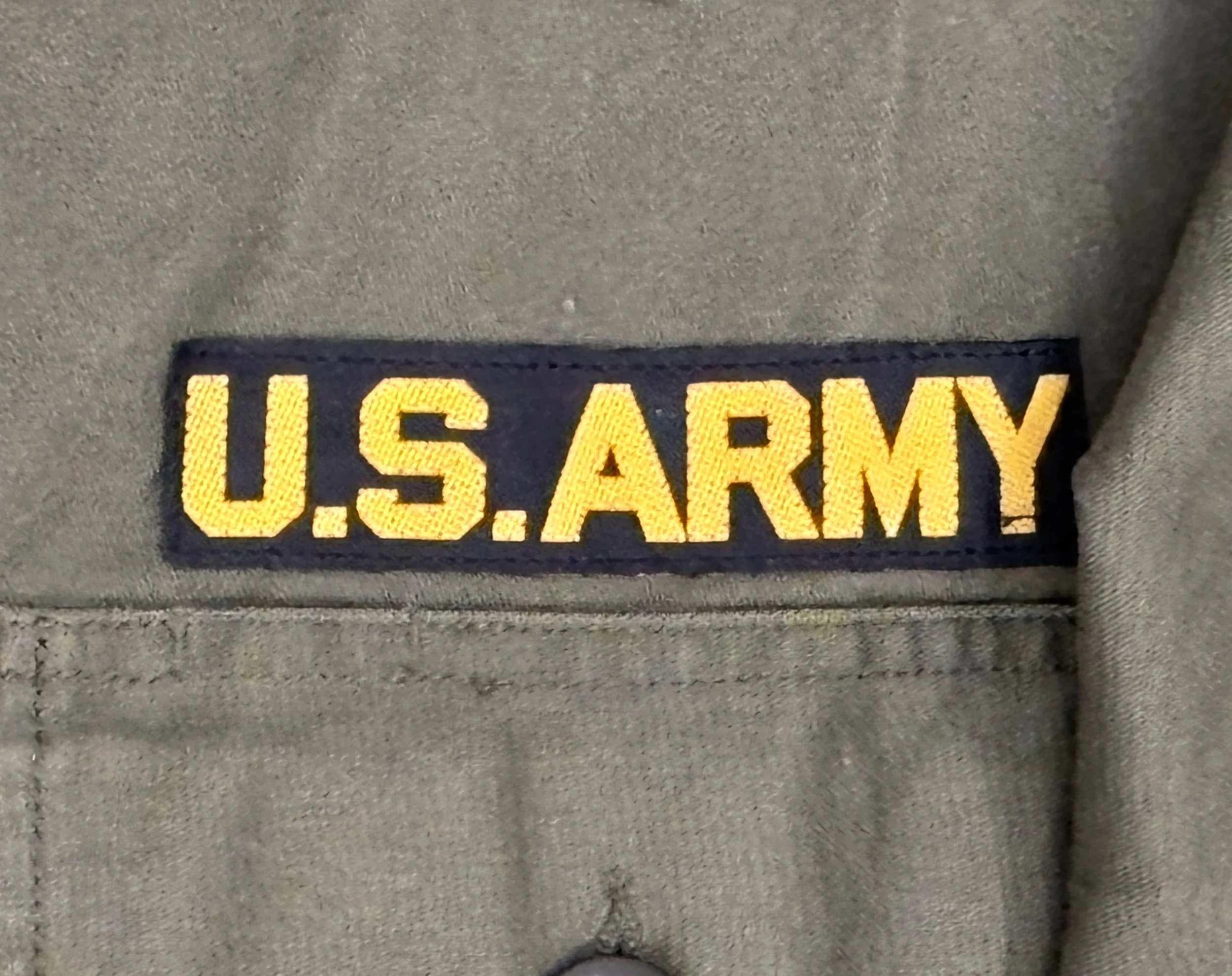
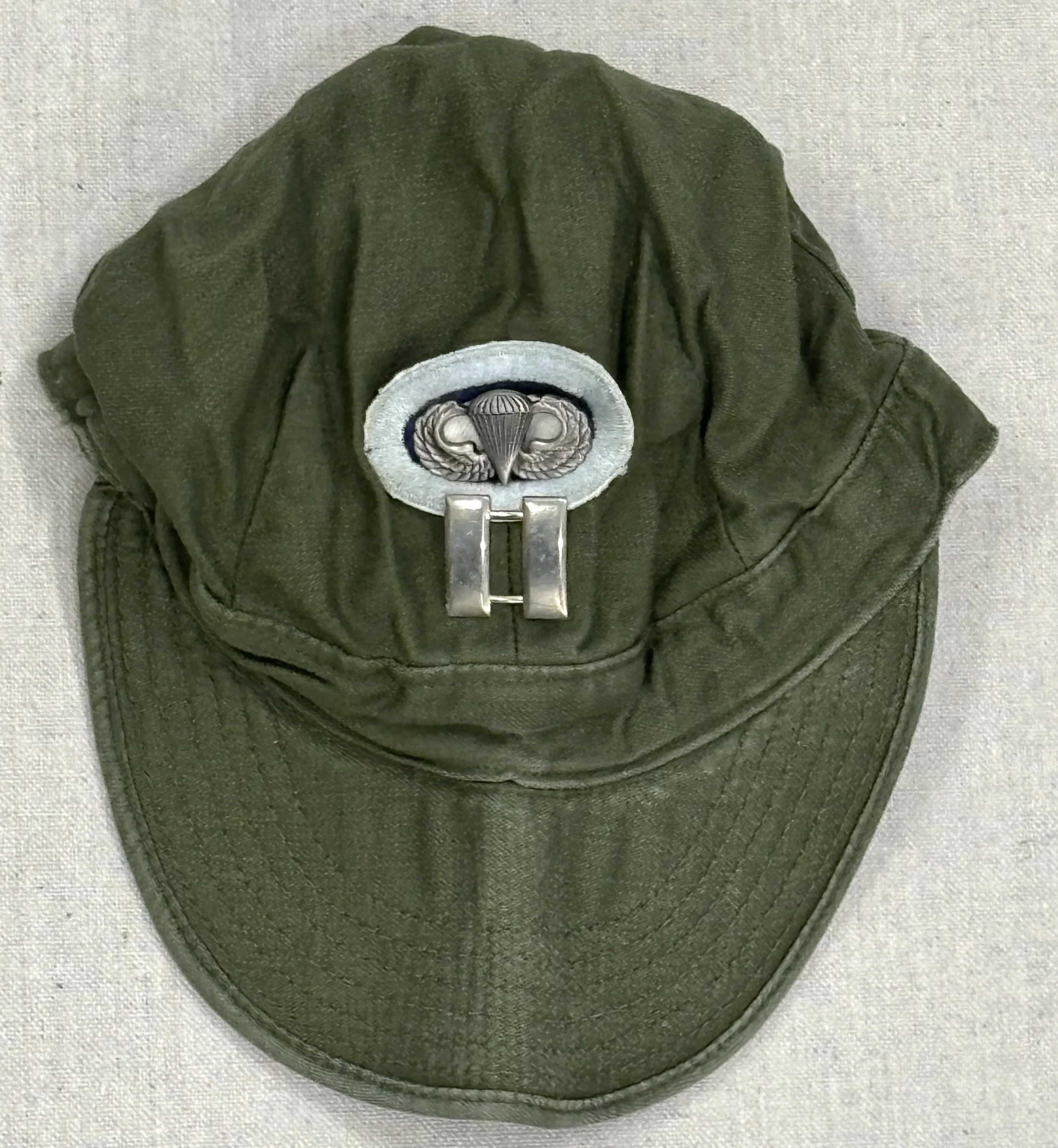
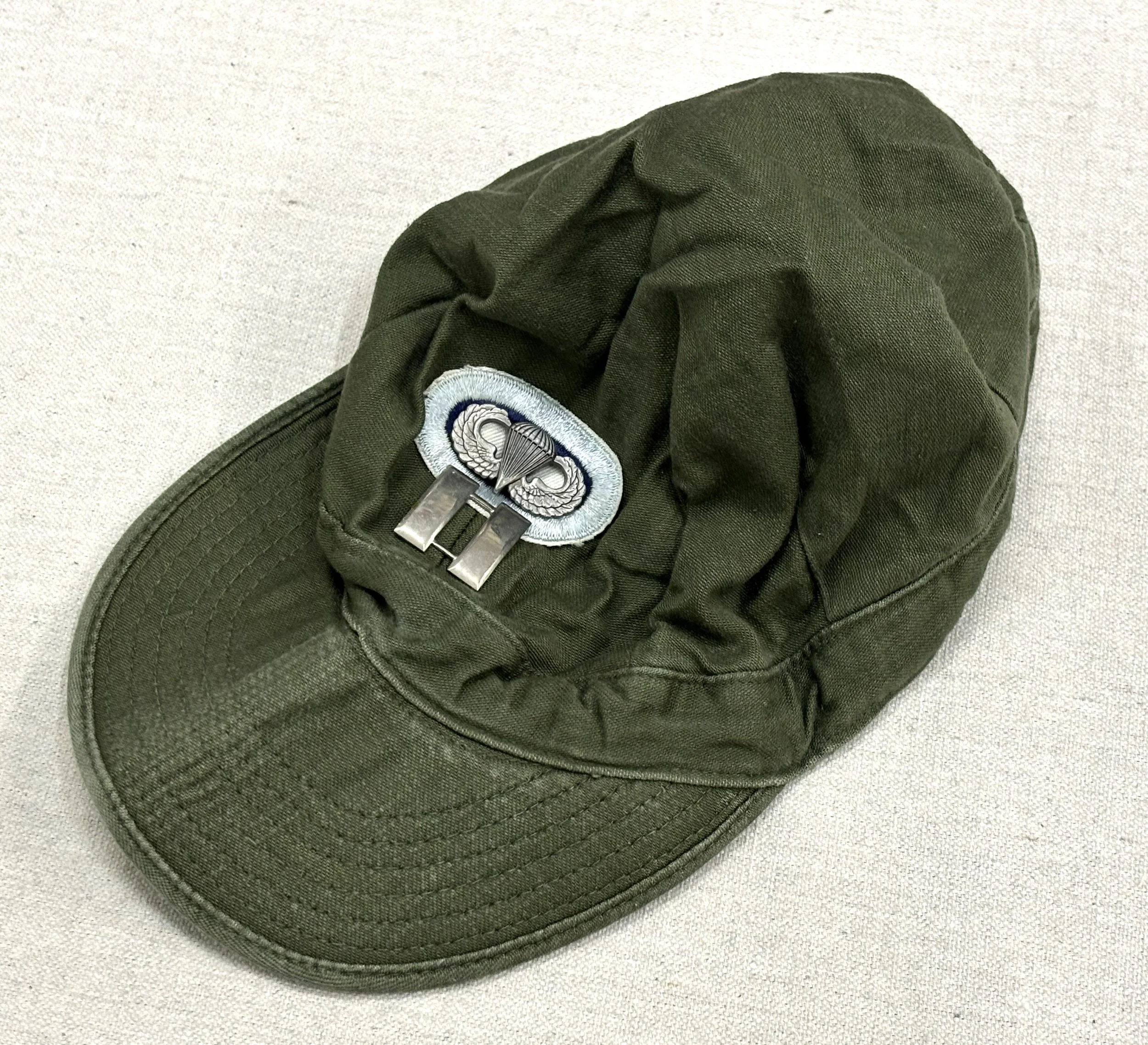
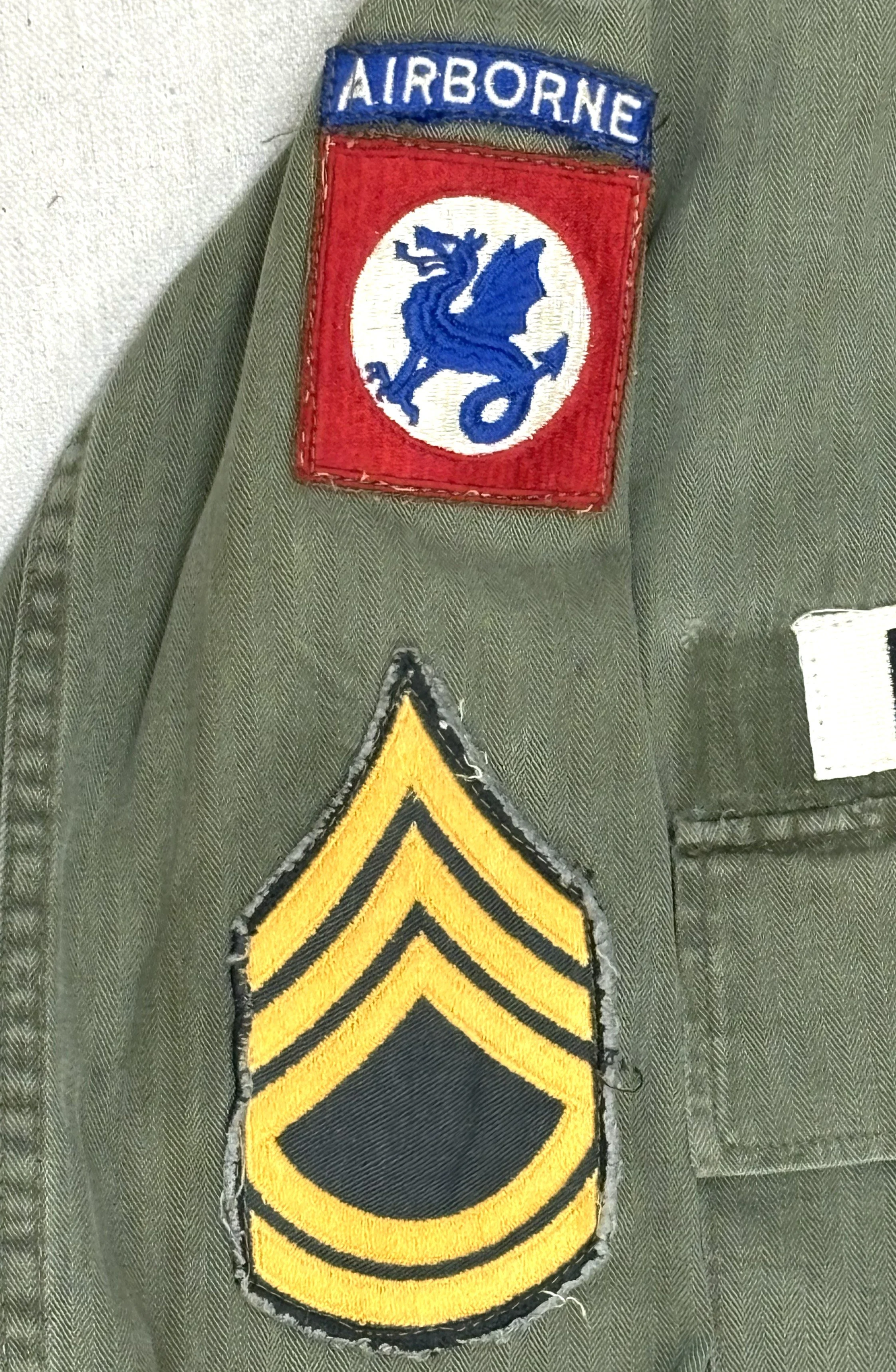
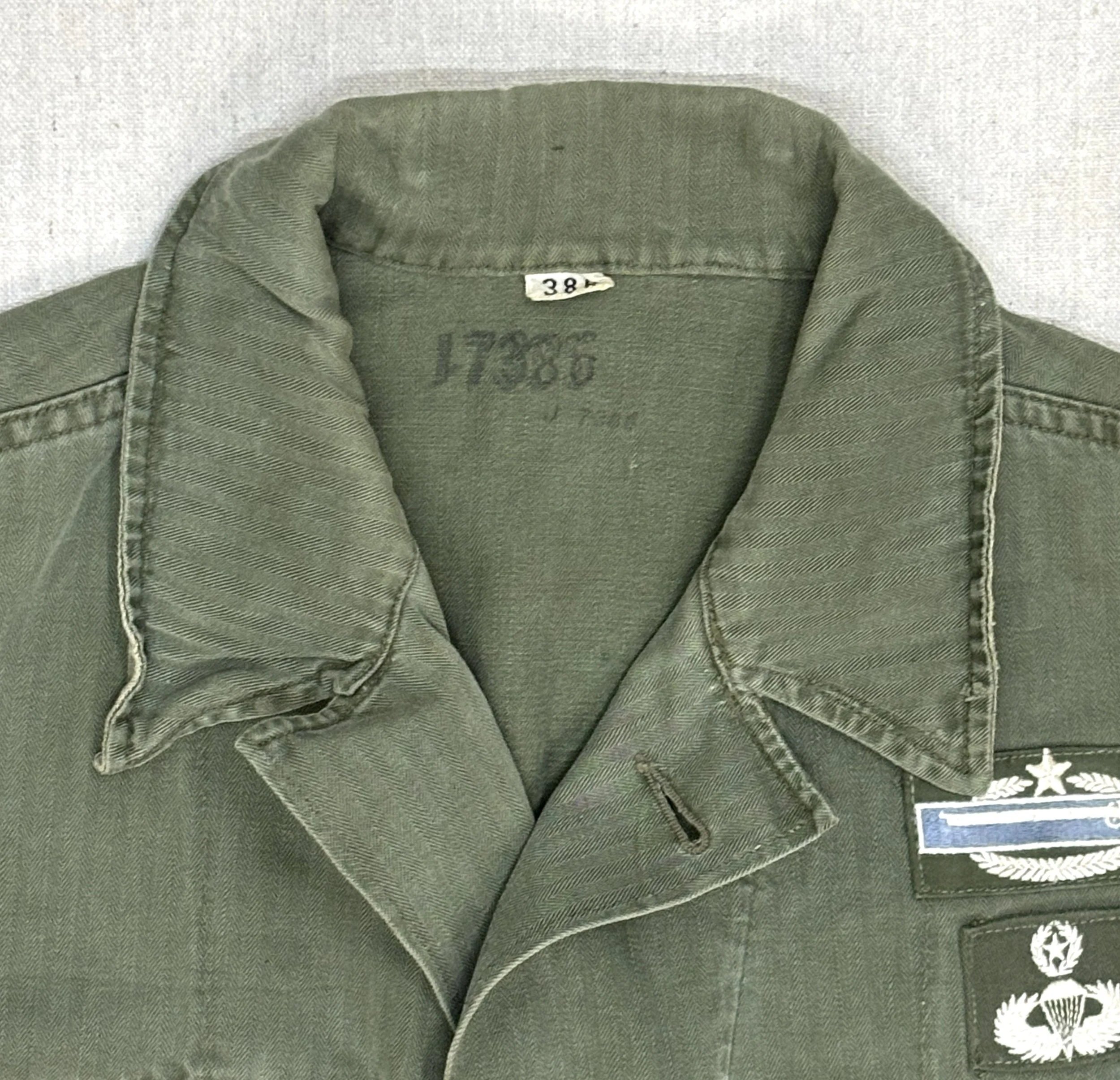
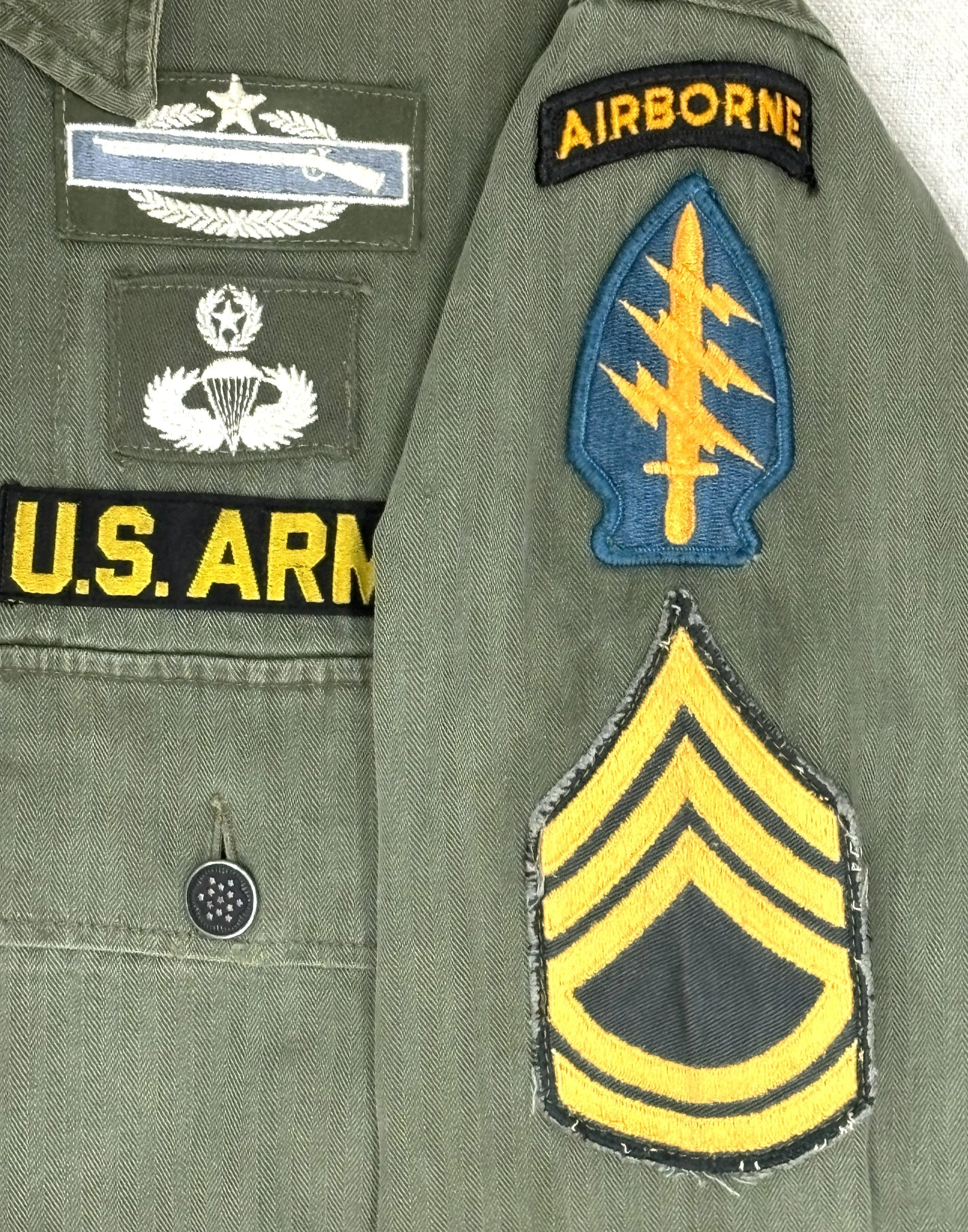
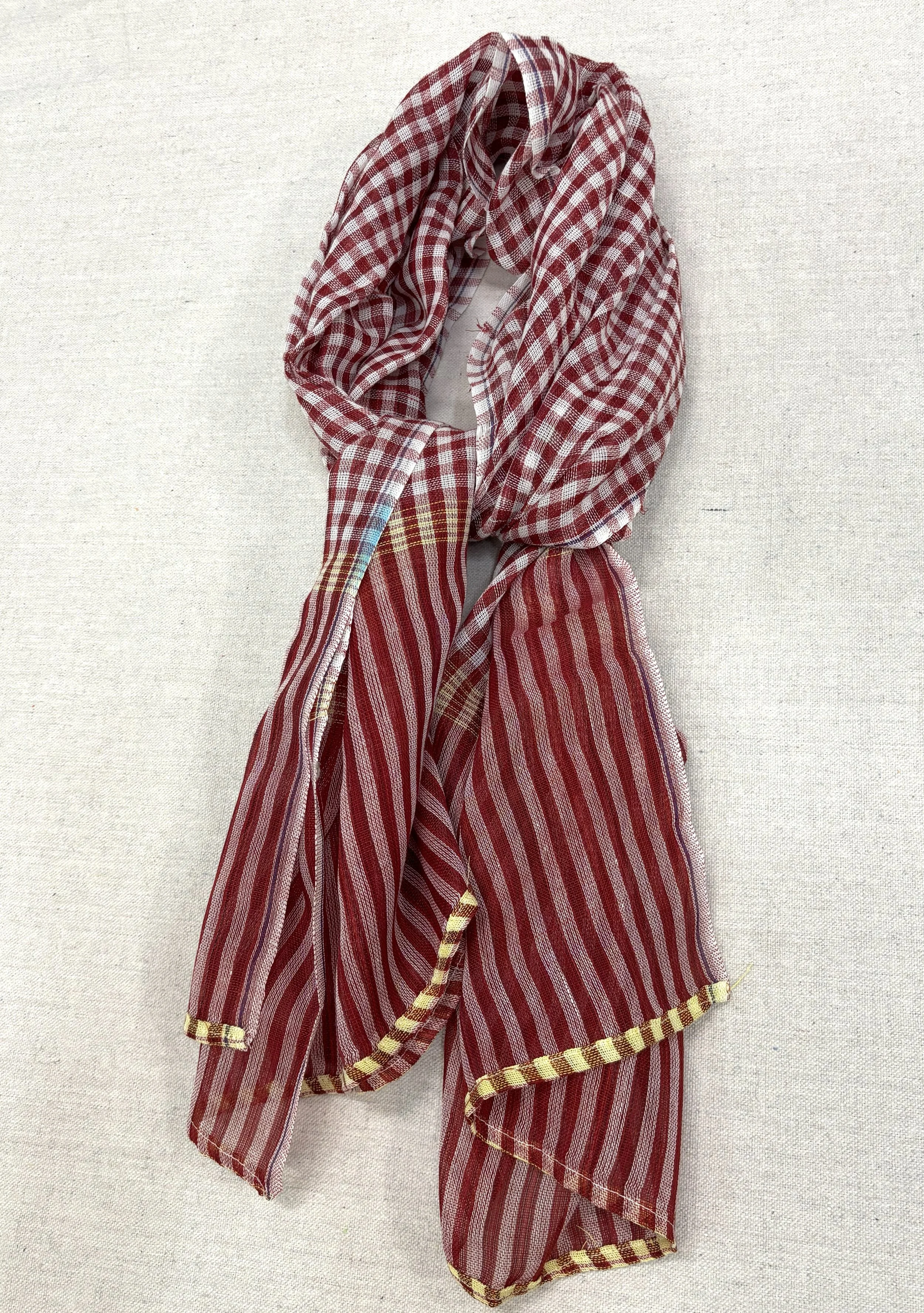
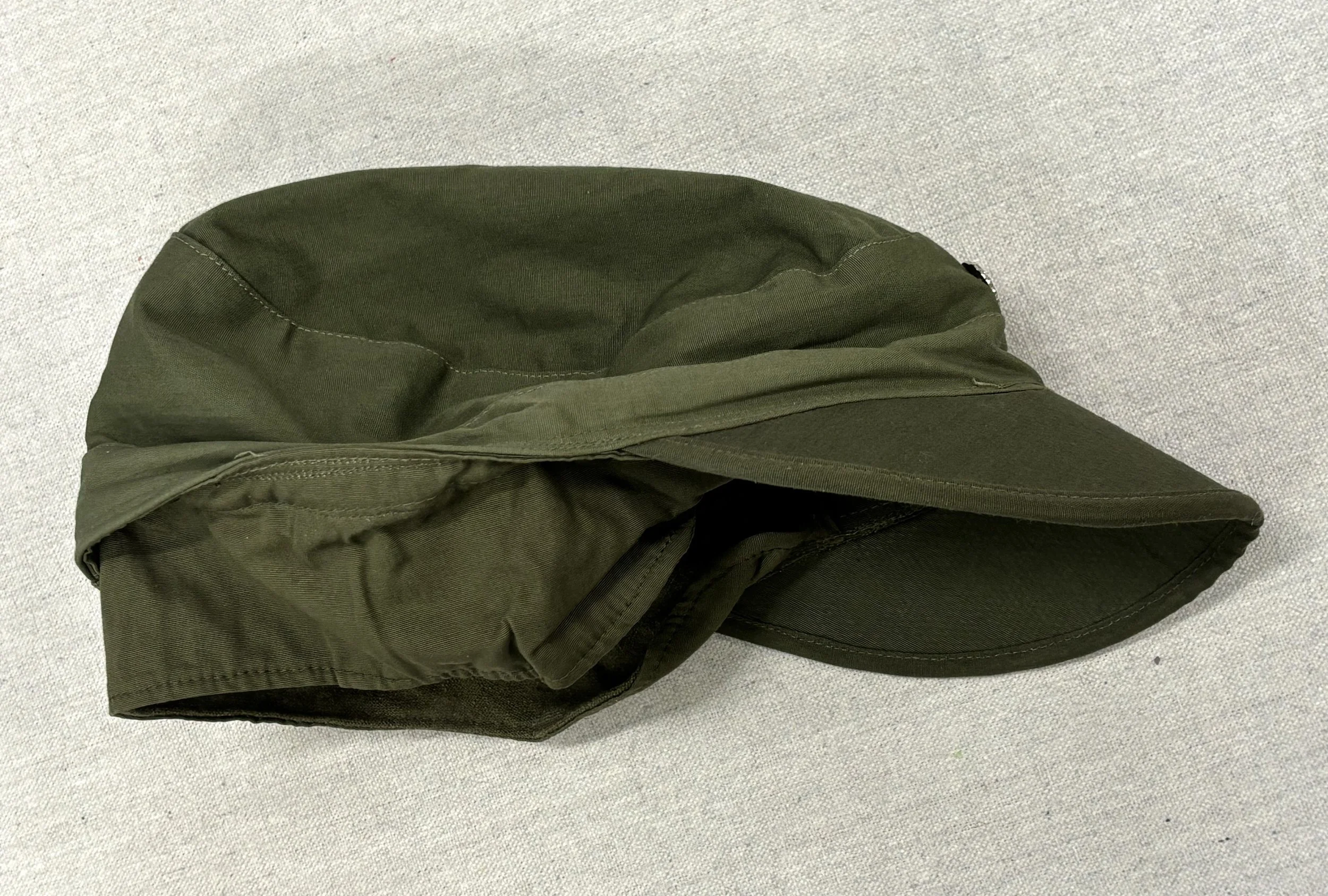
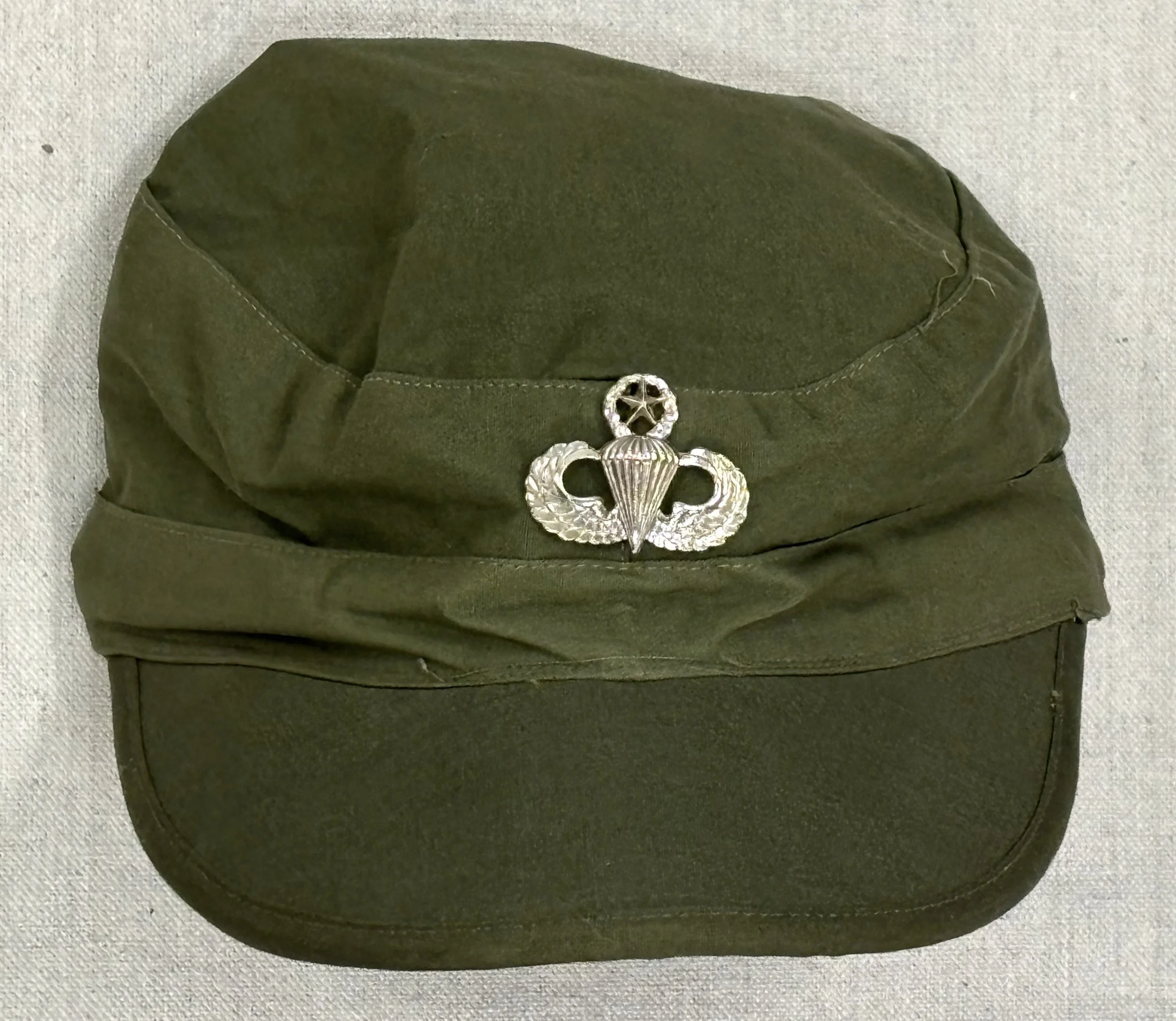
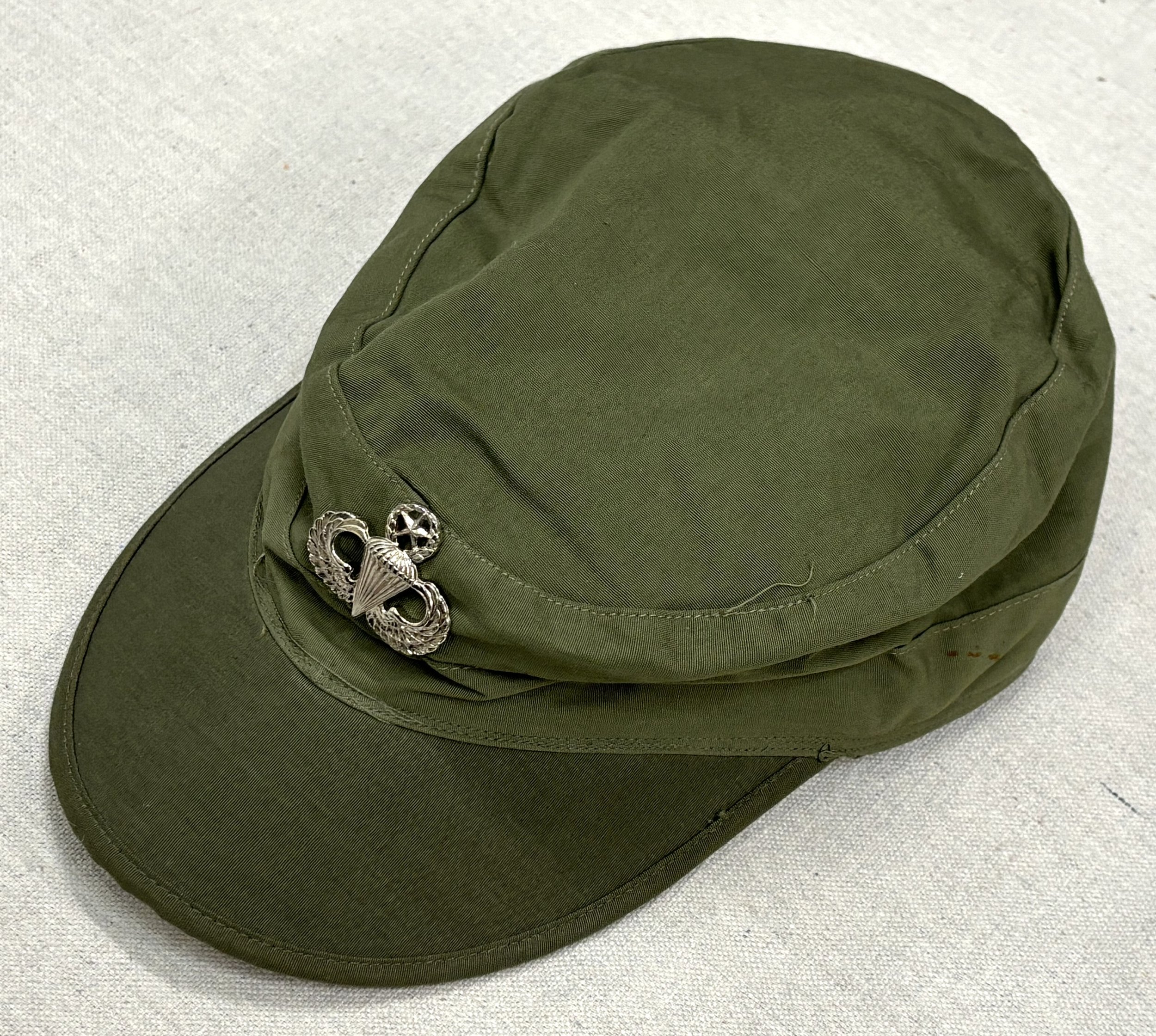
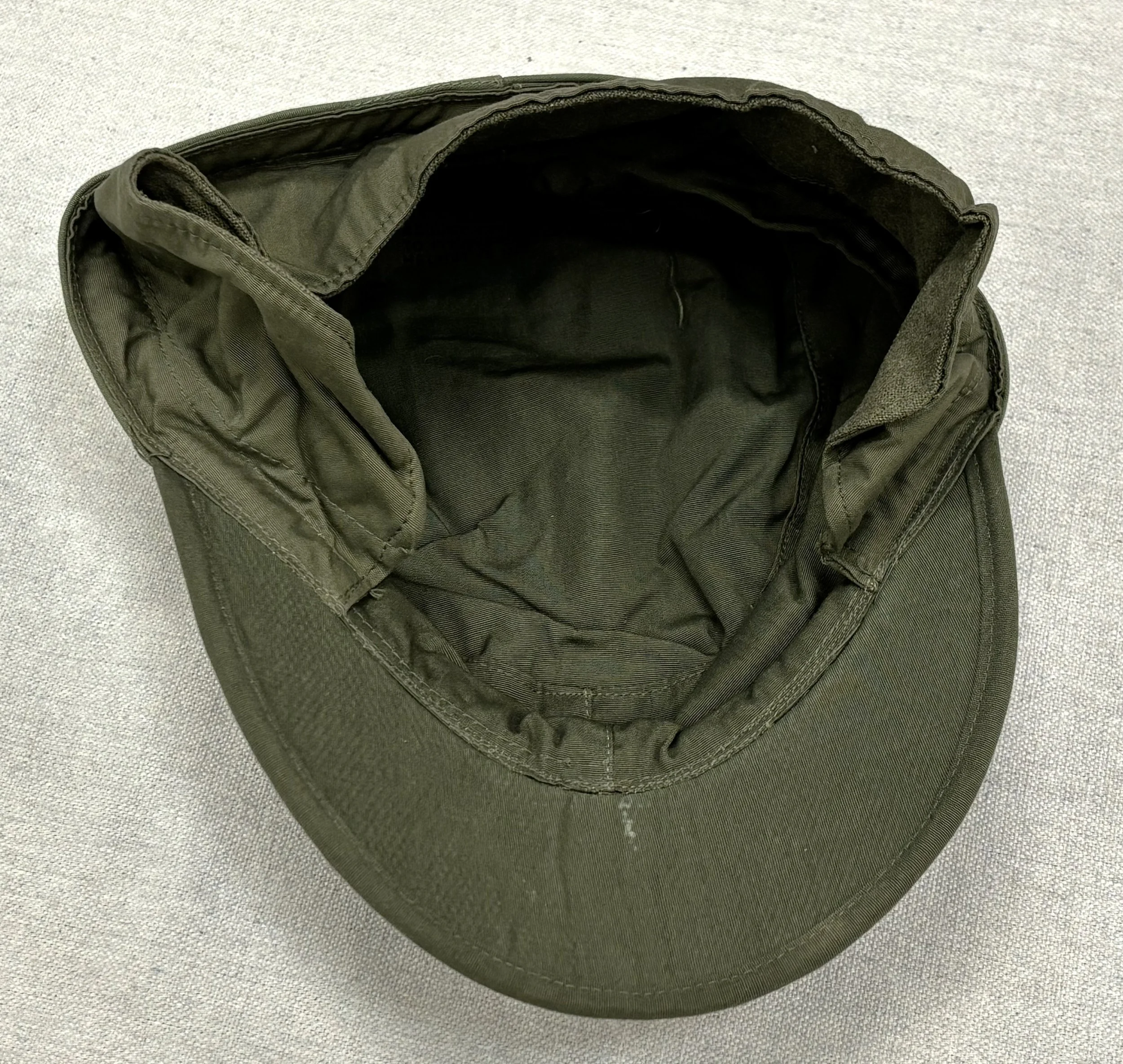
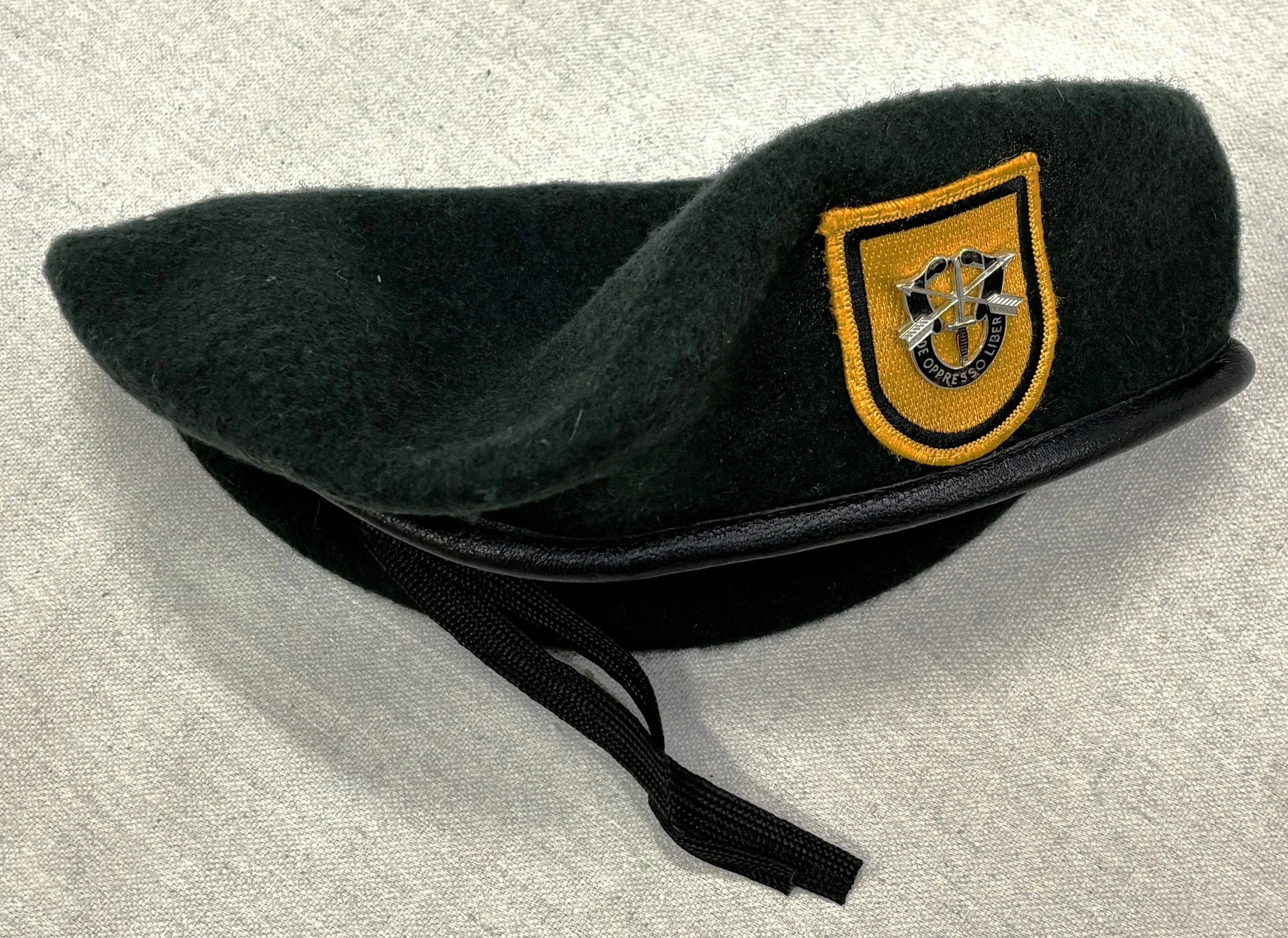
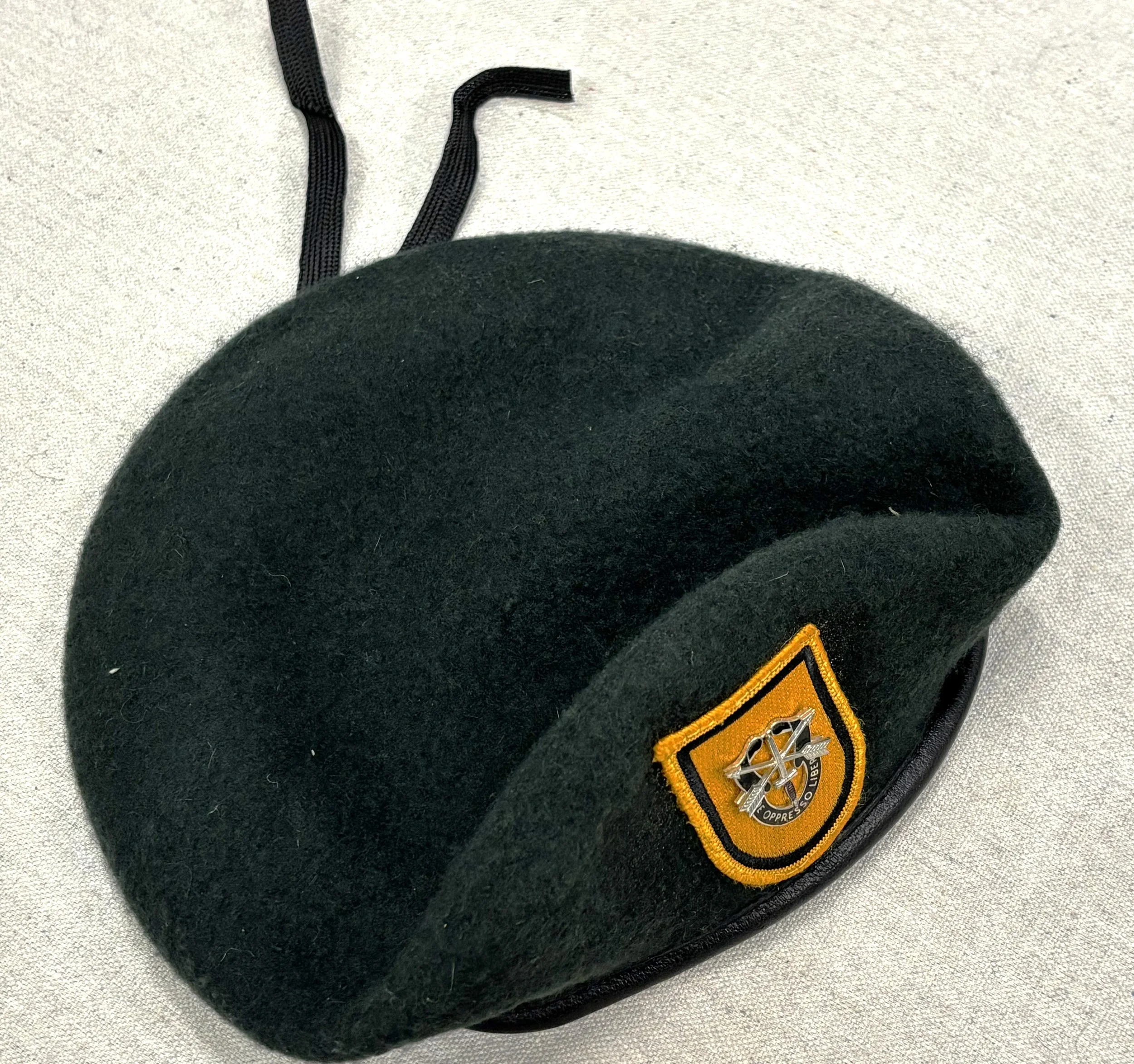
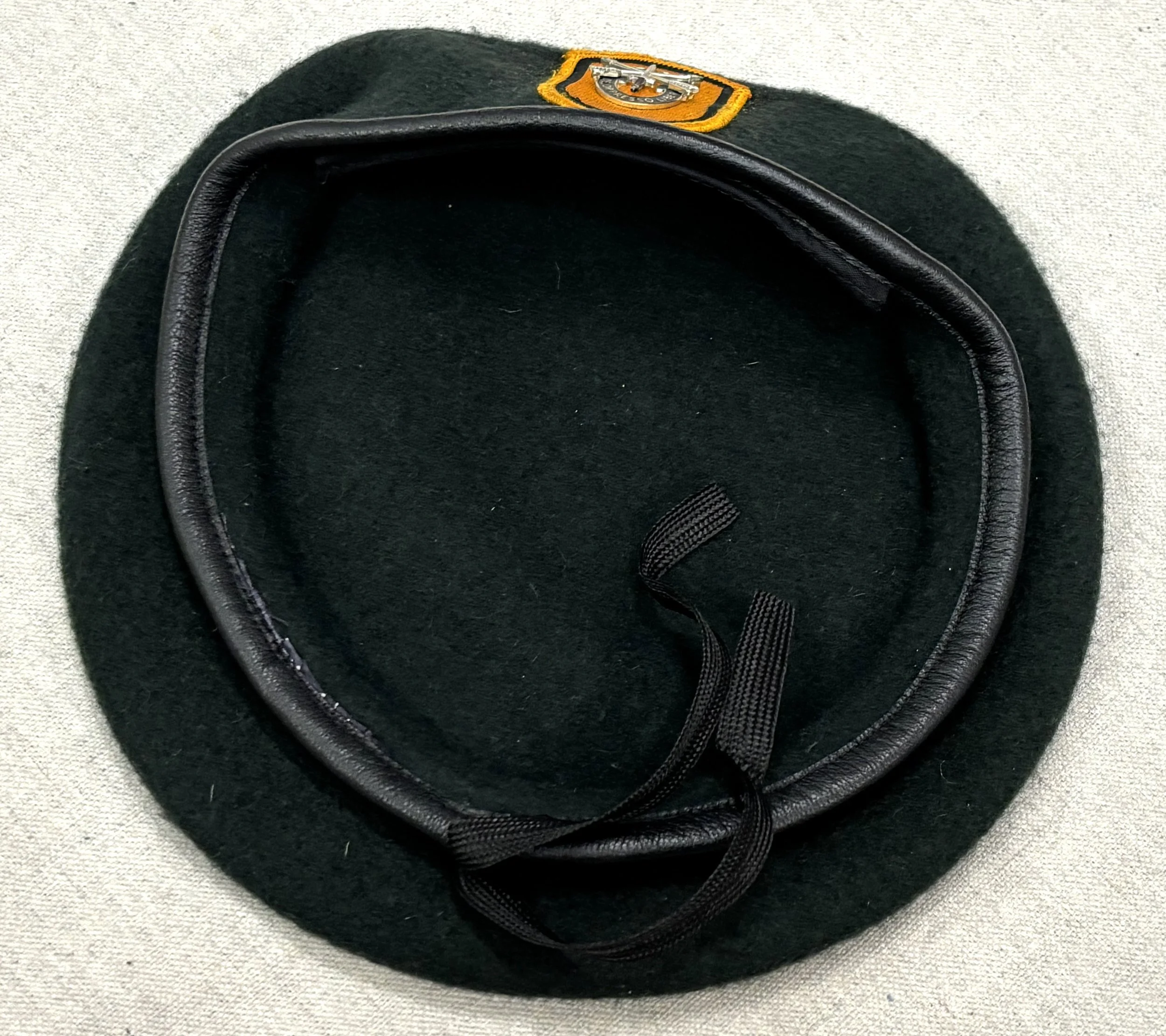
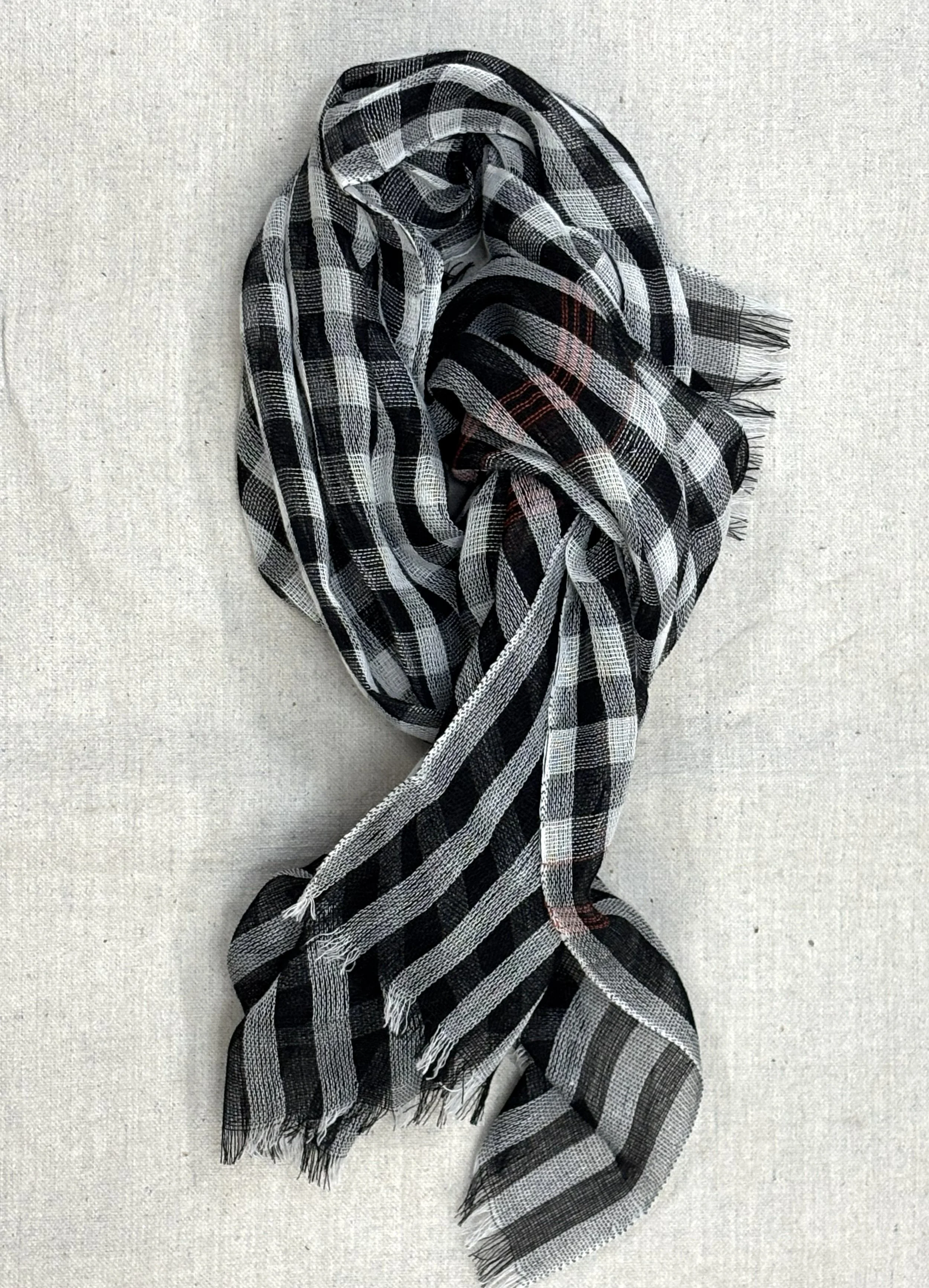
This Soldier has been through testing and training. and assessing. By recognition or by offer, his special talents have landed him here, with Special Forces, in Vietnam. And he is ok with this; he’s volunteered to try and help and defend their country, and if he trusts the system, he should have the ability to do the job; he is as prepared as he can be. The uniform depicts an operator, at the time of the official announcement of our involvement in the Vietnam War, 1963-64, maybe. He has already seen his share of war, though, but still thinks he might be able to make a difference. He has earned the CIB twice now, one calculated likely WWII, and Korea; he is an old-timer, and knows his business. With no fear of heights, he wears the bright Master Jump Wings on his chest. The uniform has a red scarf, a unit identifier, for coming out of the bush into camp; no one wants to get shot by someone with a nervous or twitchy trigger finger. His fatigues are the WWII tweed pattern used throughout the Korean War and into Vietnam, which pretty much disappeared by 1965-66. It’s not exactly clear what unit he fought battles in to earn his “Starred” CIB. I show his patrol cap because the group was new, but used to the older equipment, and the operators had 1940s and 50s, so you see them with them on, but because of that, they don’t realize they are SF. The patrol cap was very much part of the uniform in the field; the Beret, not so much. The beret has no visor to block the sun and rain either. That said, the Army Field Cap is often associated with the Rangers too, and with as much pride and bravado as the beret.
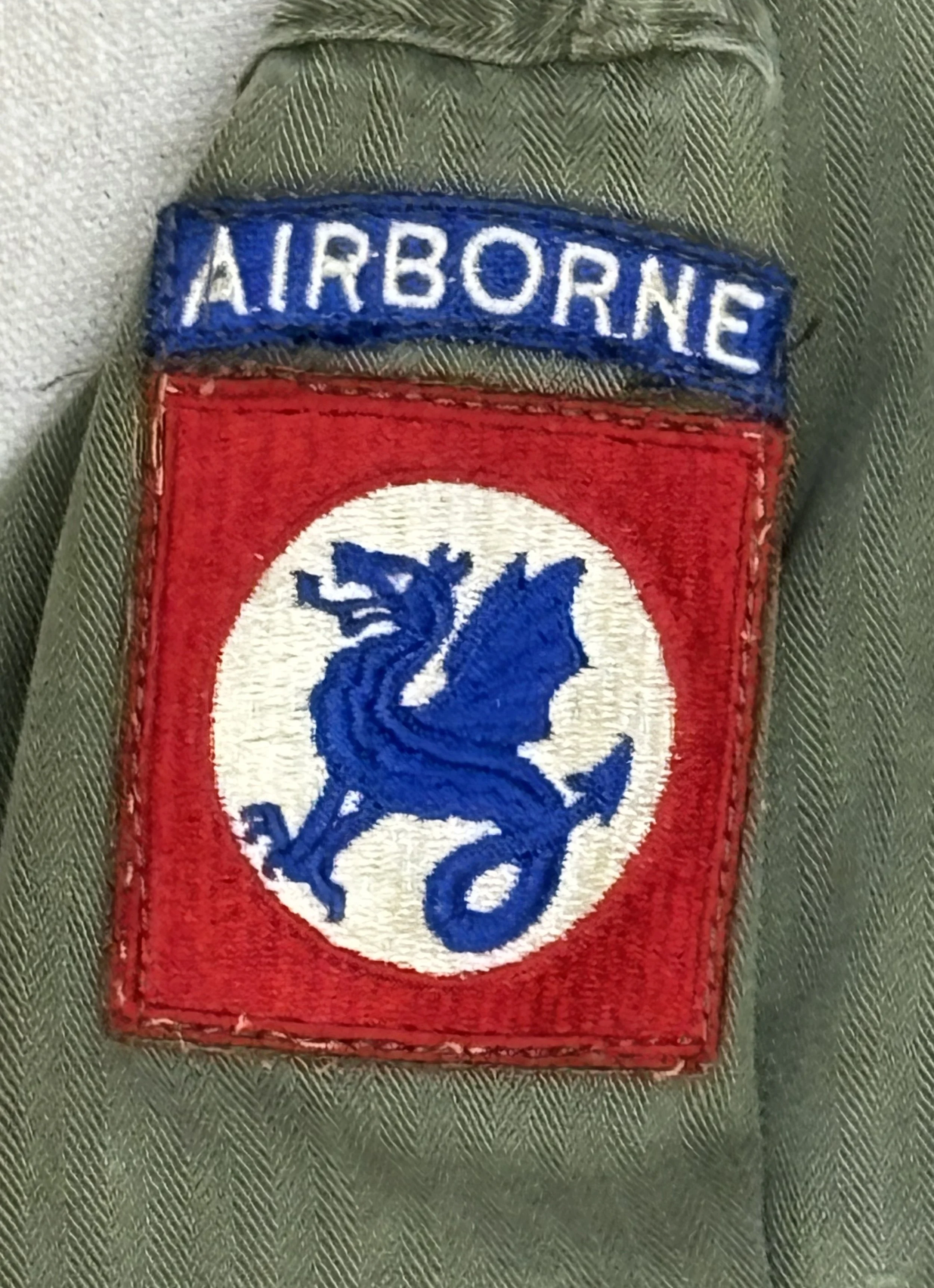
His last service was with the 508th ABN RCT Force, and he carries the “patch” with him; it was only worn from October 15th, 1951 till 22 March 1957. It was adapted from the 82nd ABN insignia, as its cadre came from there; the unit combined elements from the 508th ABN. Infantry Rgt., 320th ABN. Artillery BN., 598th ABN. Engineer CO., and the 319th ABN. Quartermaster CO. They fought in WWII, but not Korea, being reformed in 1951 at Fort Bragg, but then inactivated in March 1957 as part of the reactivation of the 101st Airborne Division as a combat unit. They would serve in the Dominican Republic in 1965 and 1966, Panama, and Grenada. One would think the outfit he served with in Korea would be in this position, but maybe he served over in the Dominican Republic before being deployed to Vietnam.
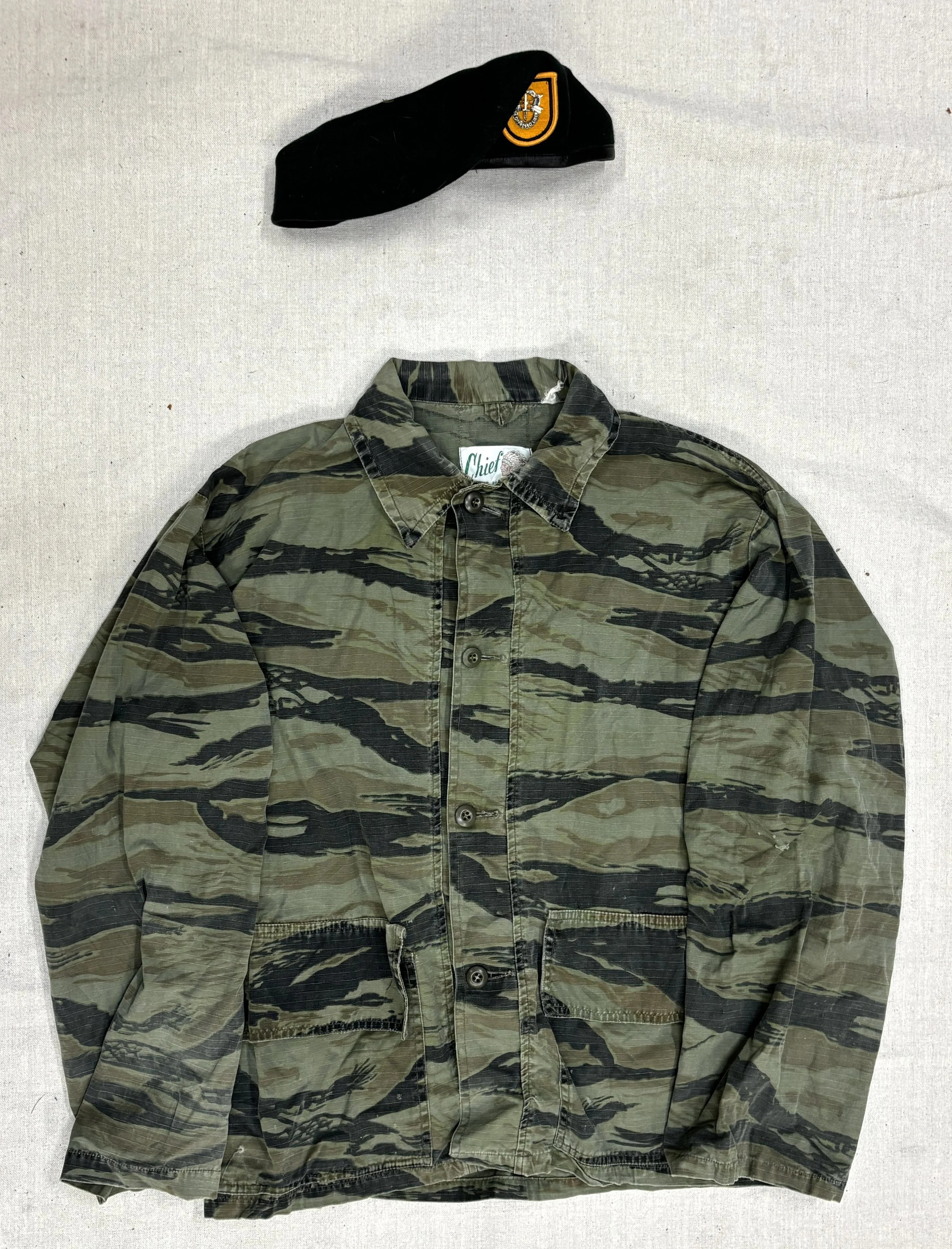
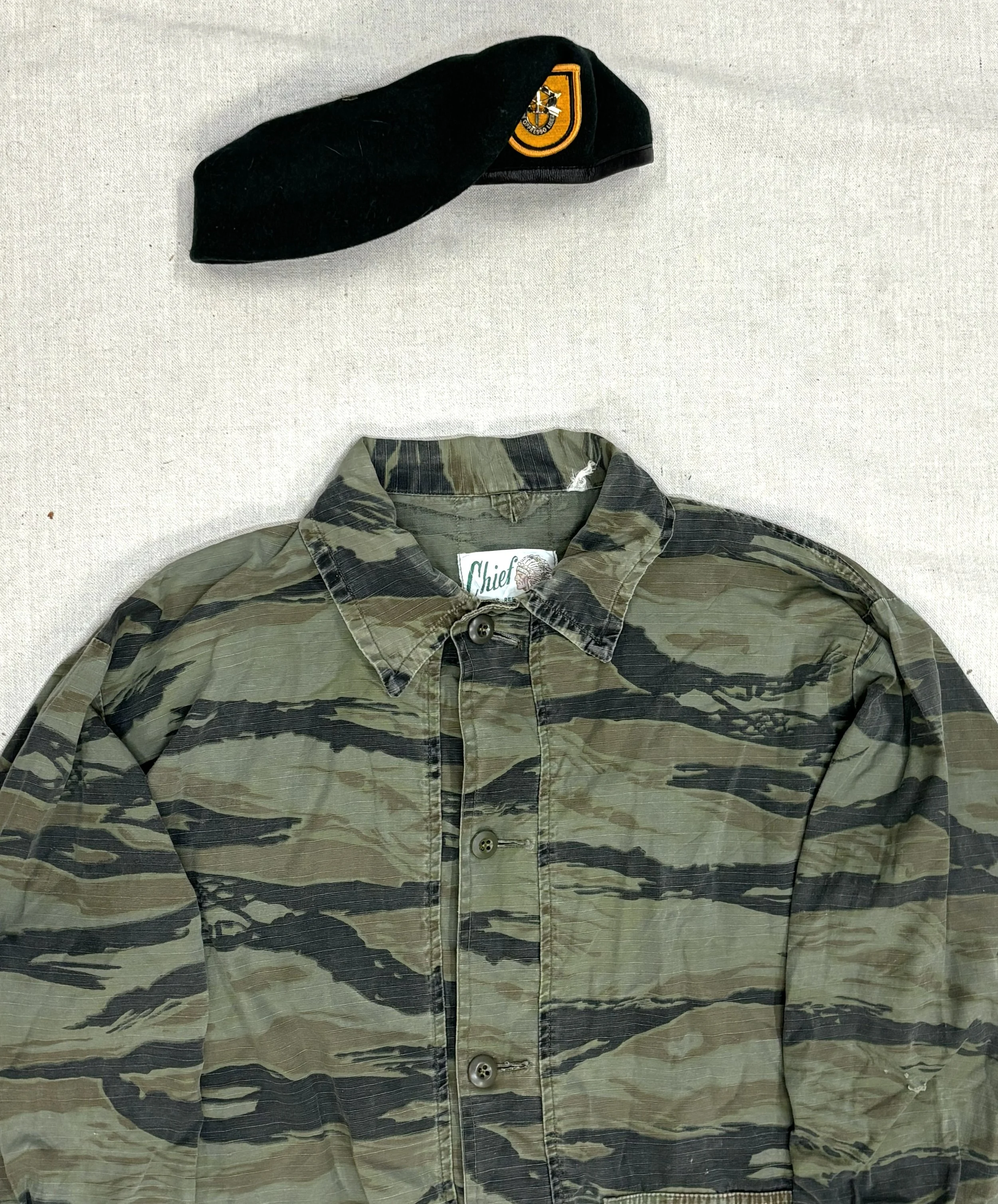
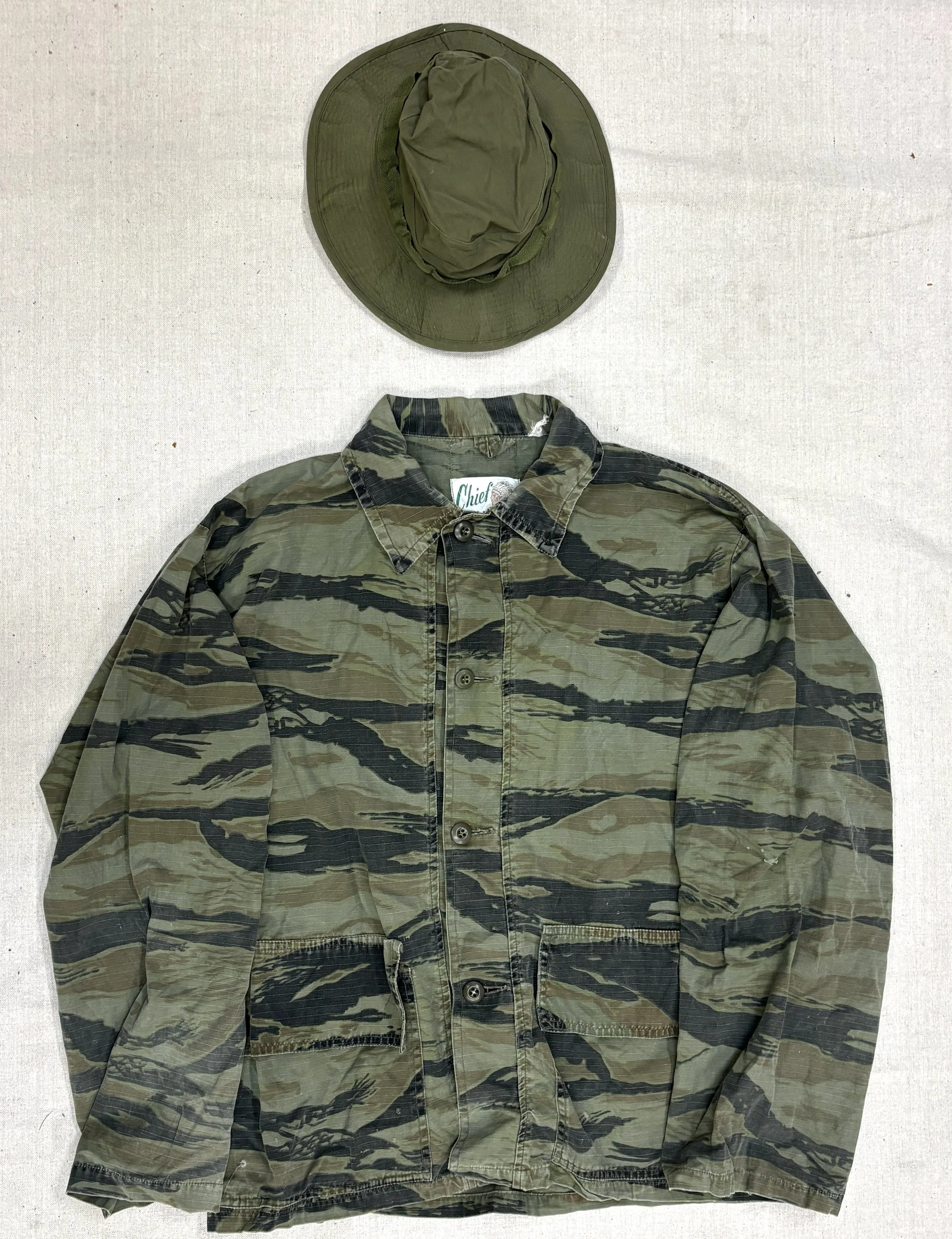
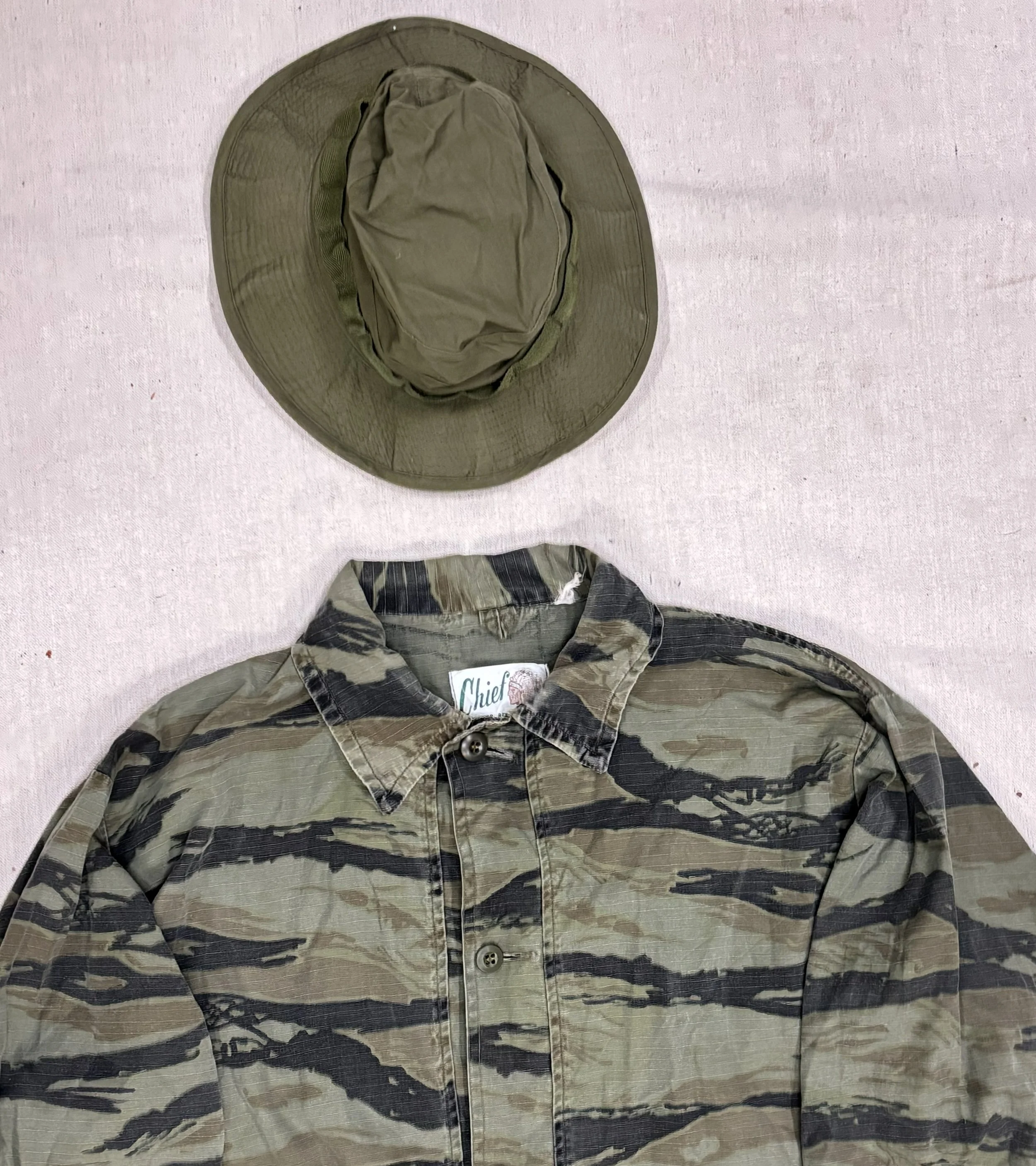
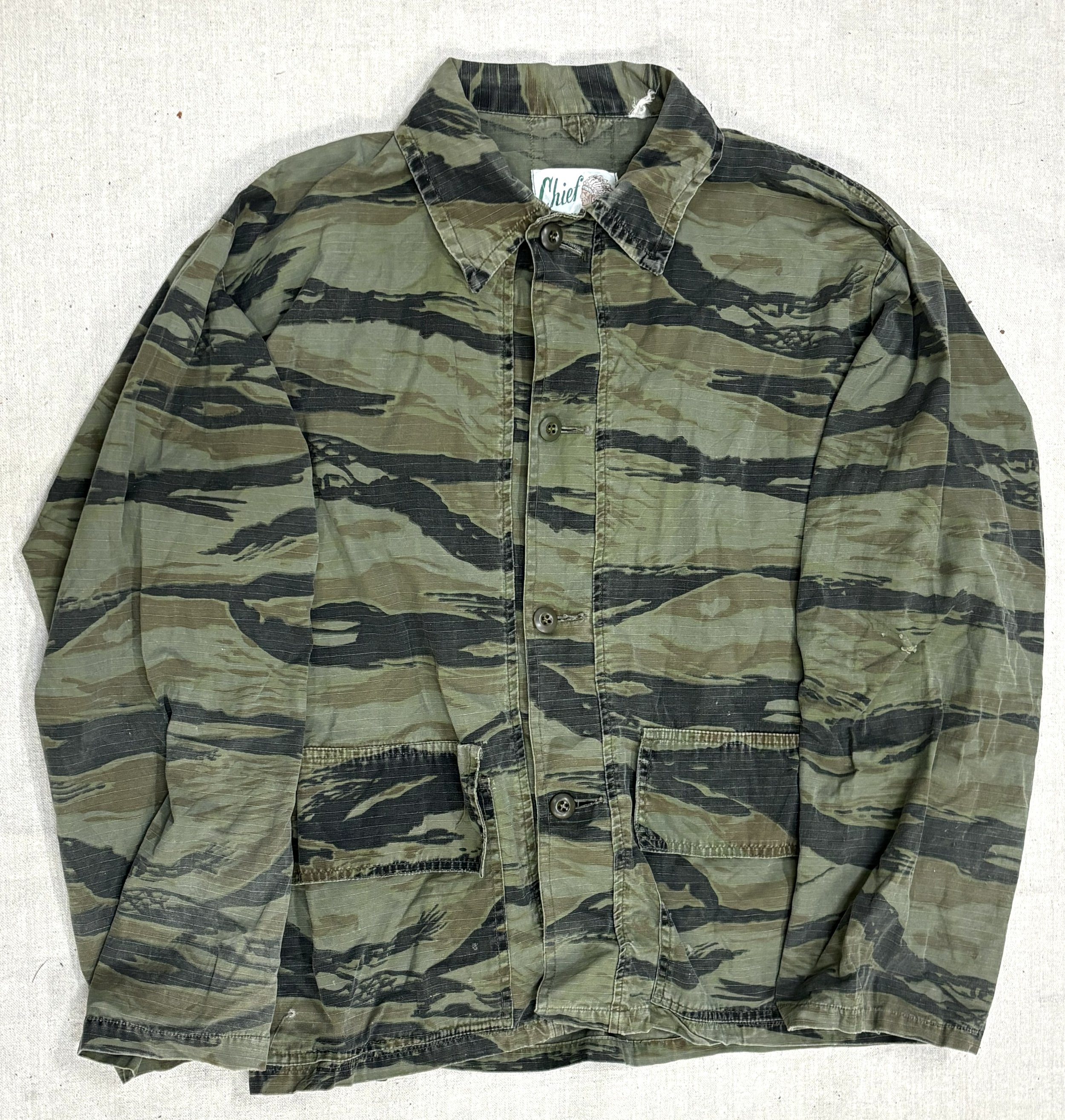
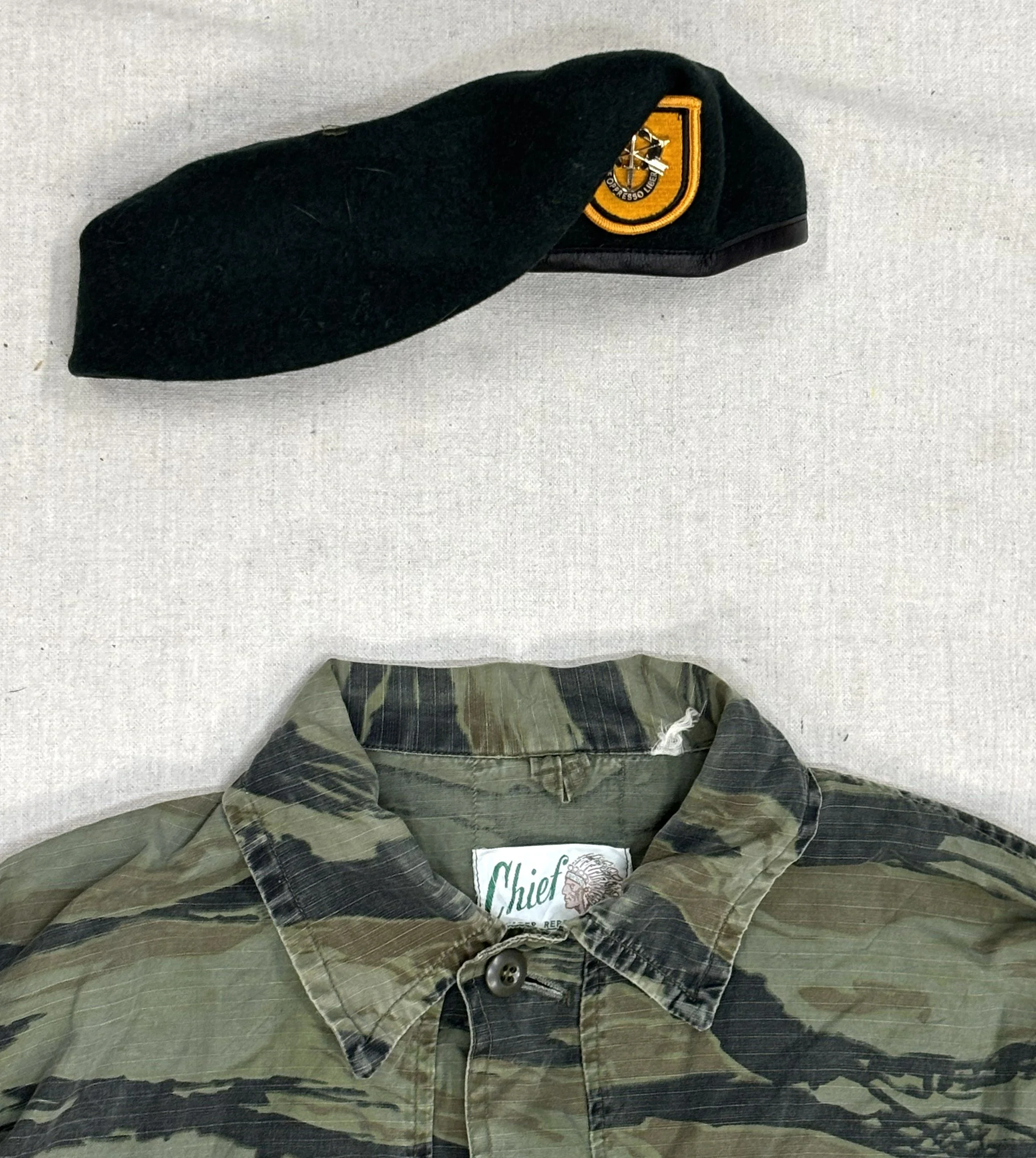
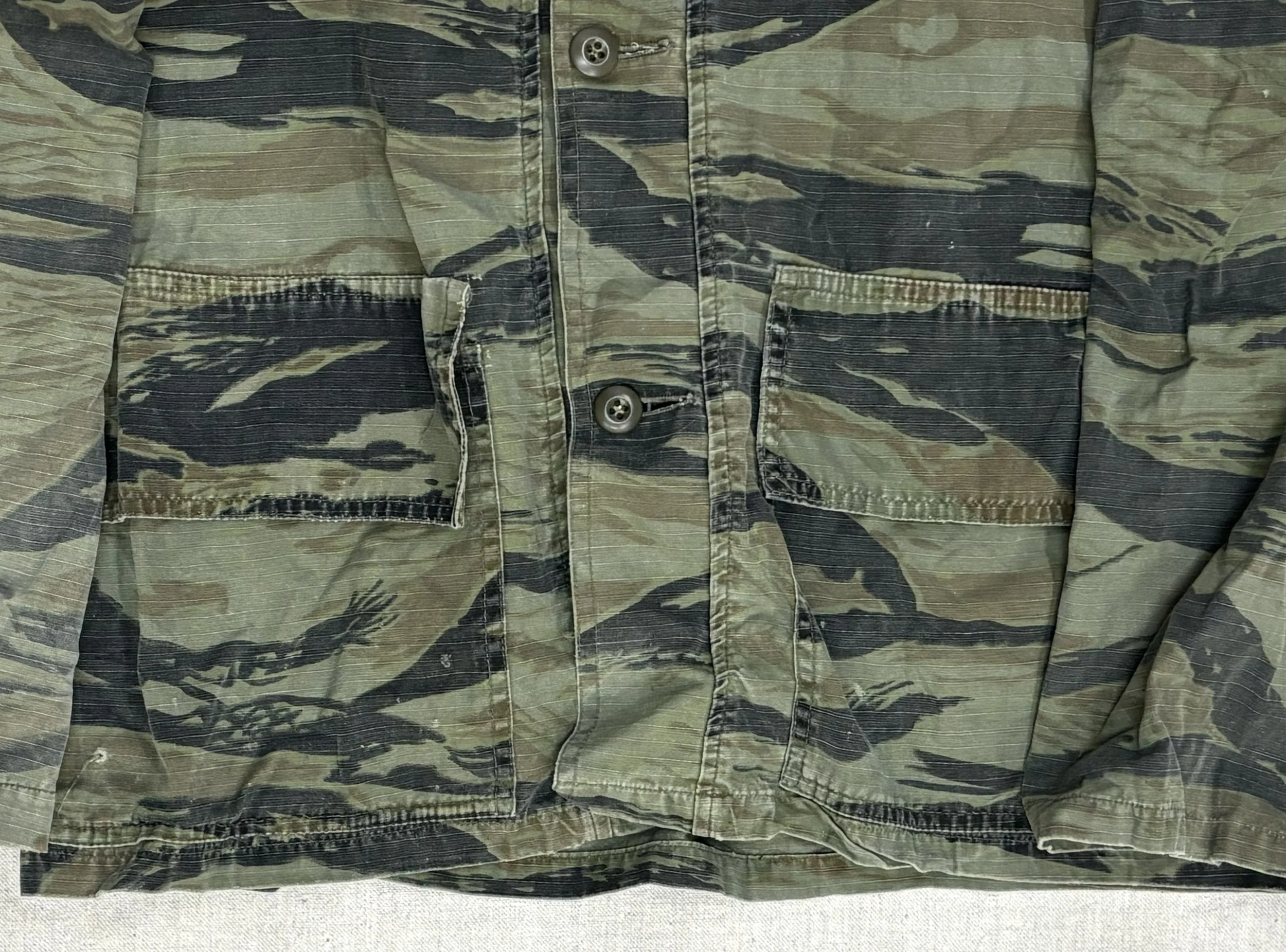
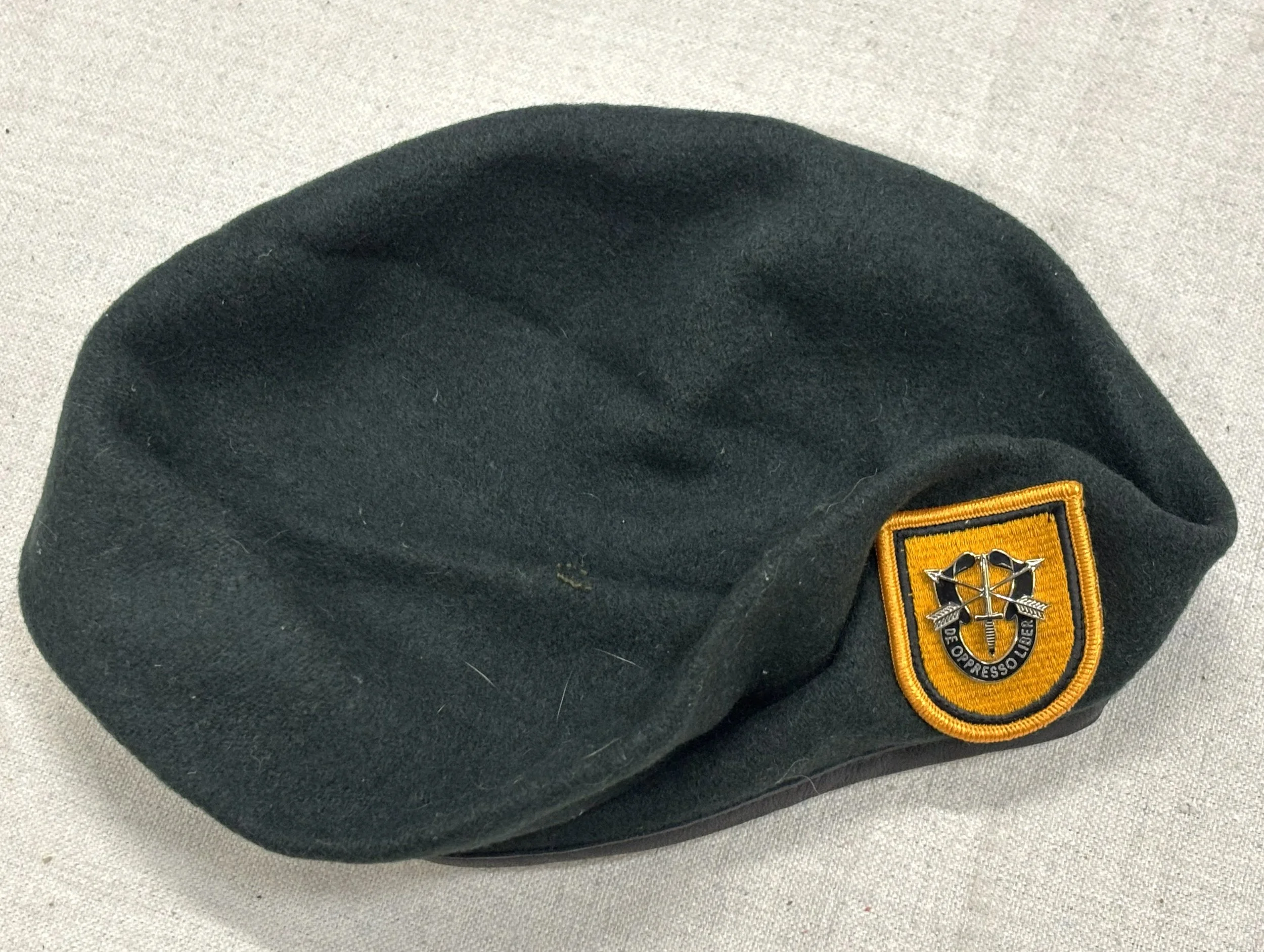
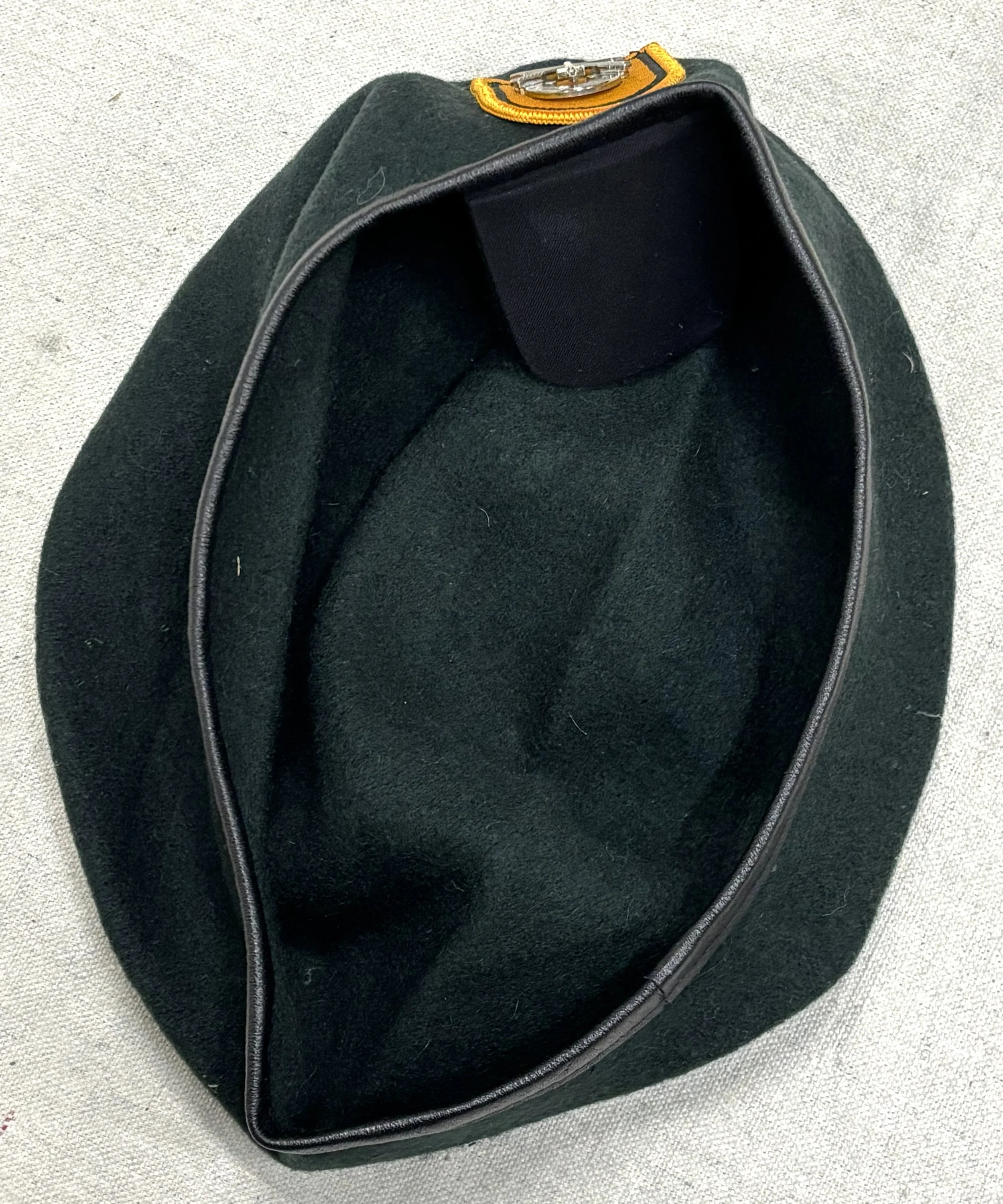
“New” 1st SFG. Tigerstripes-sterol Uniform:
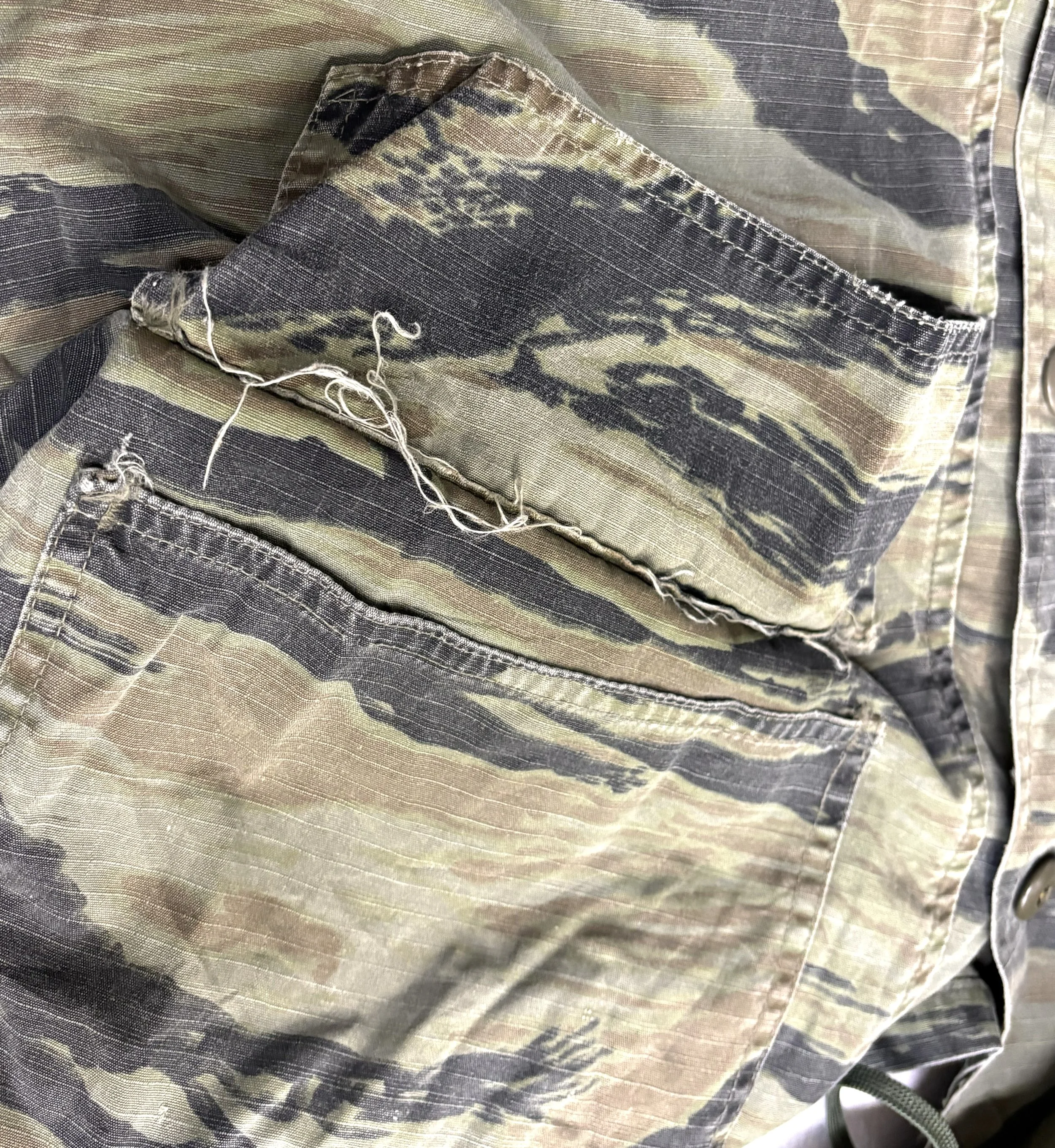
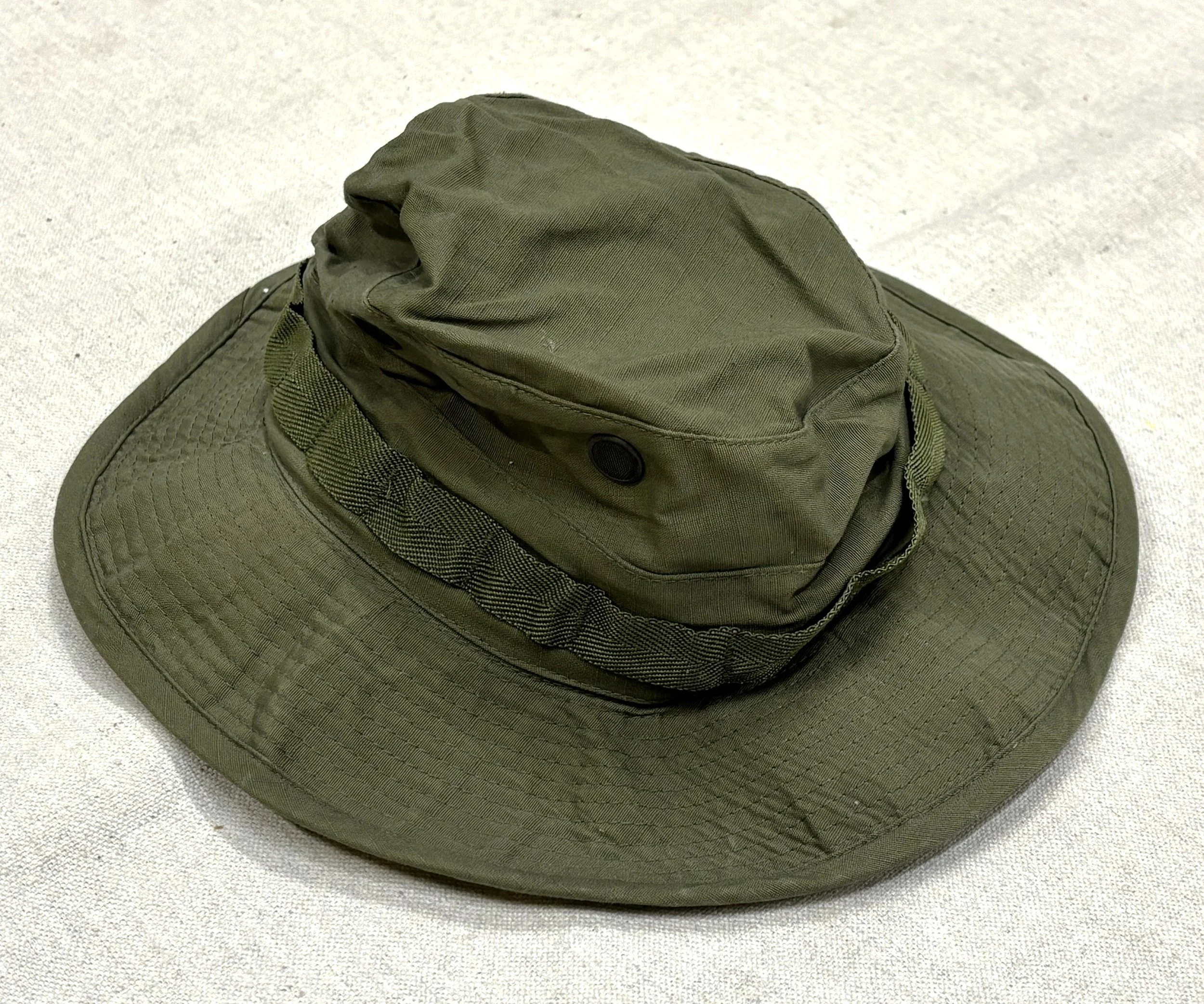
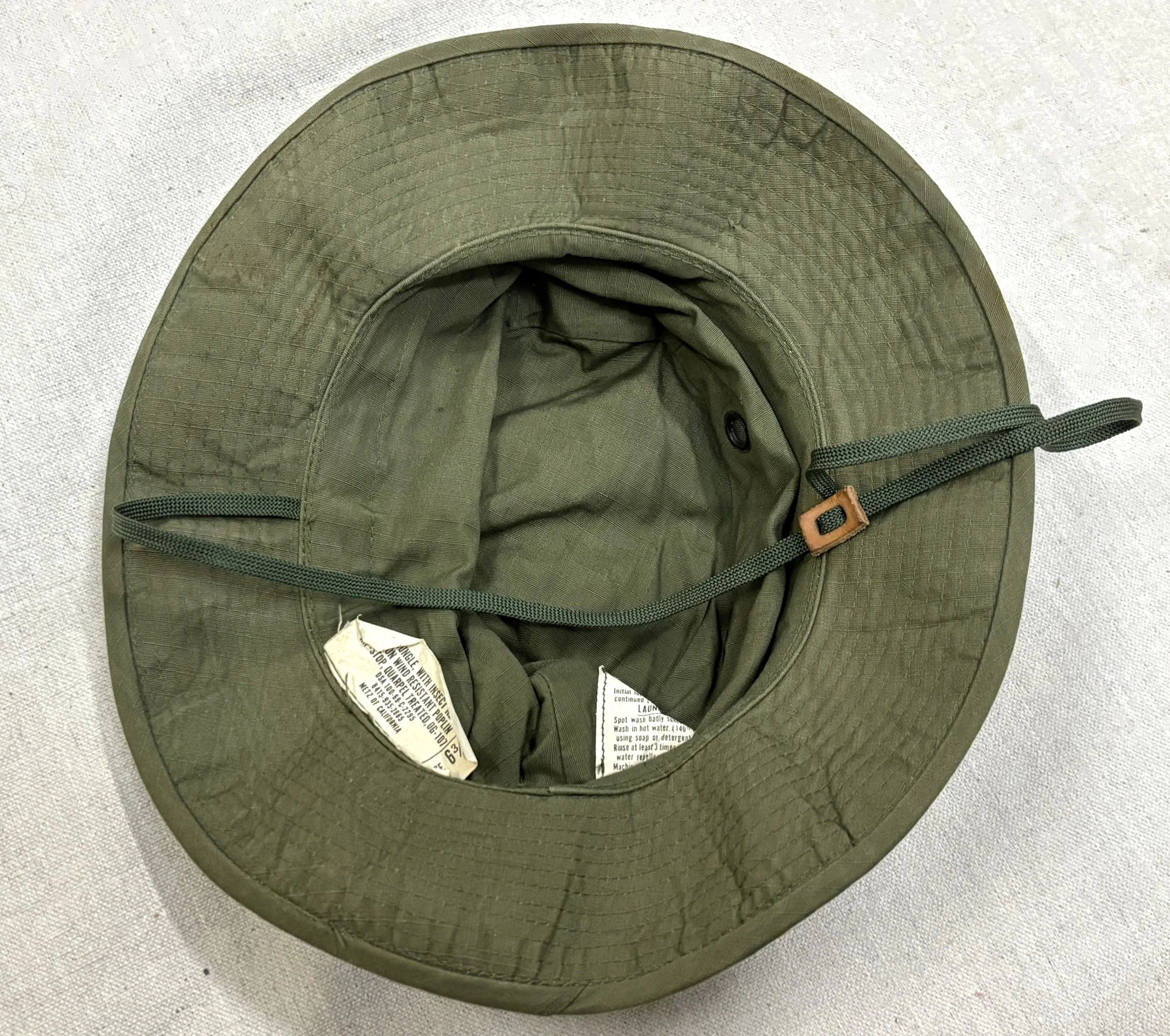
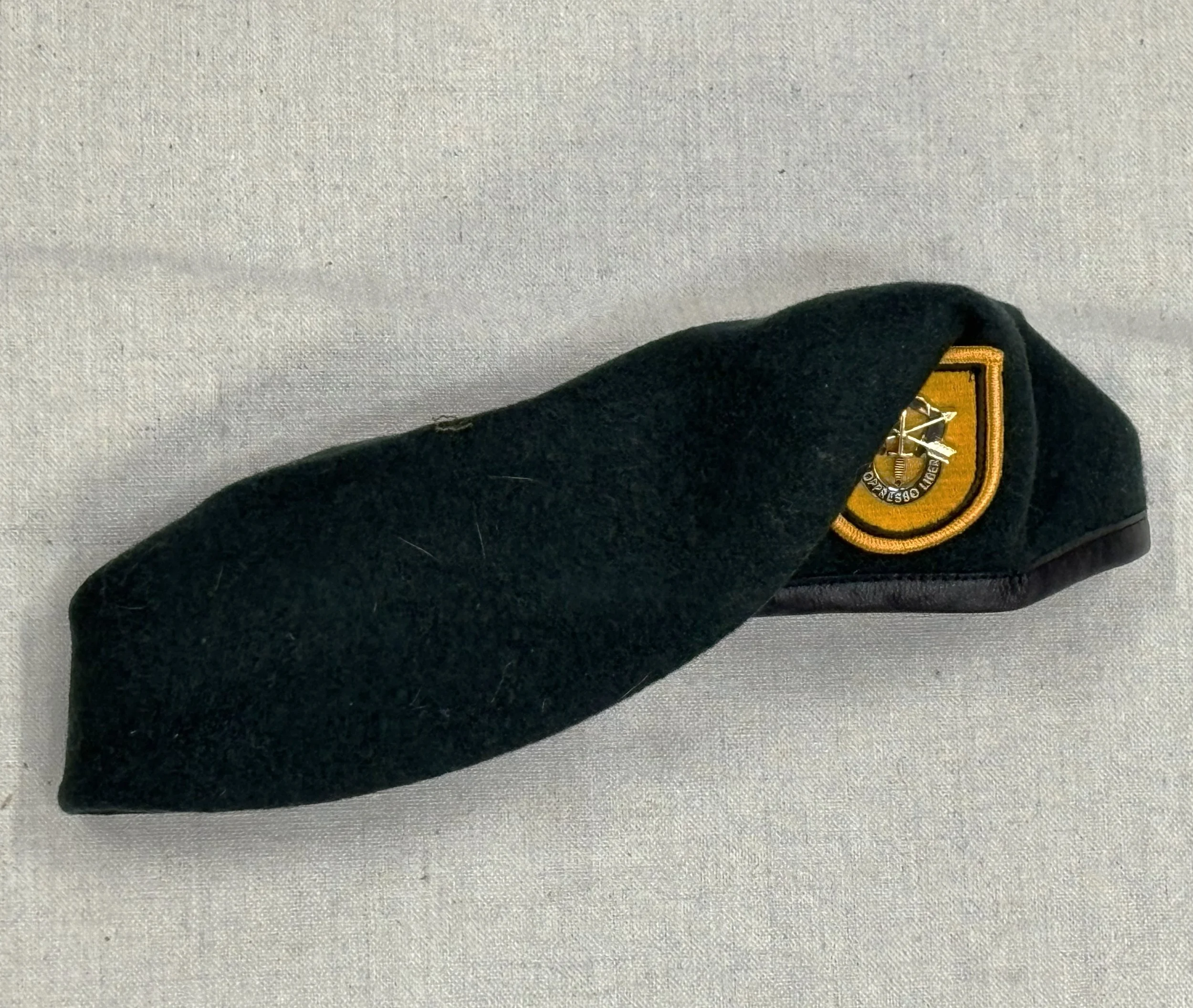
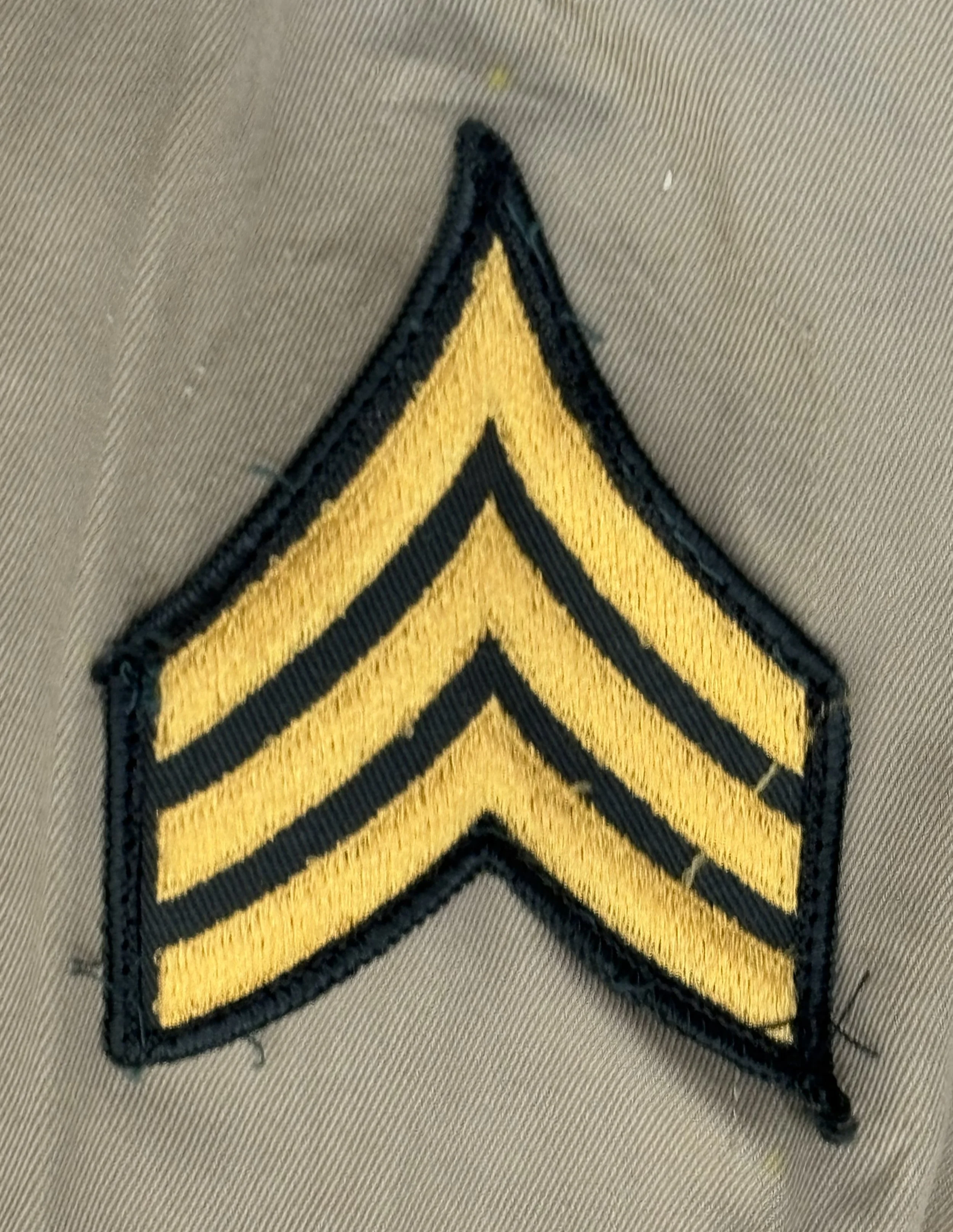
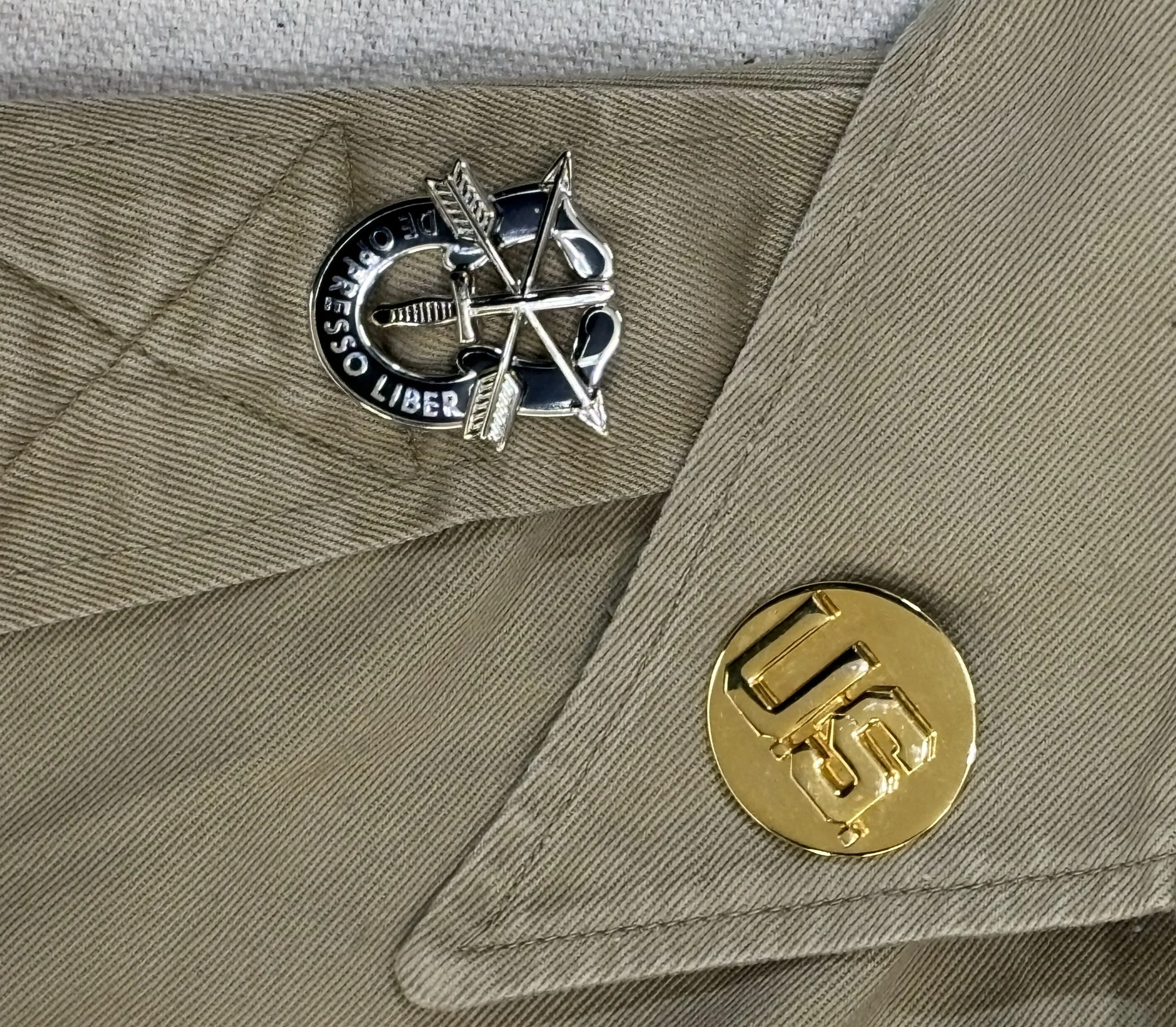
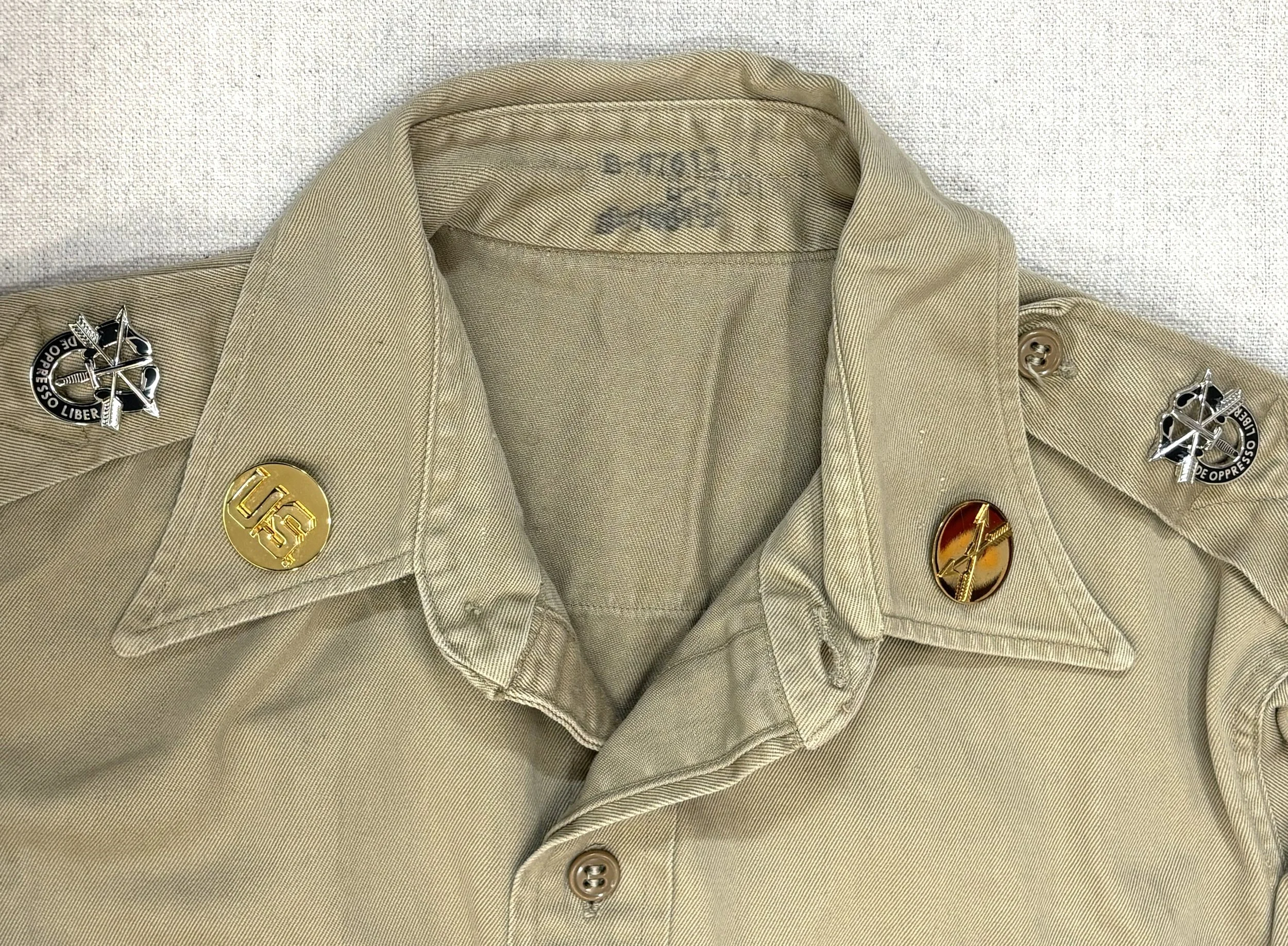
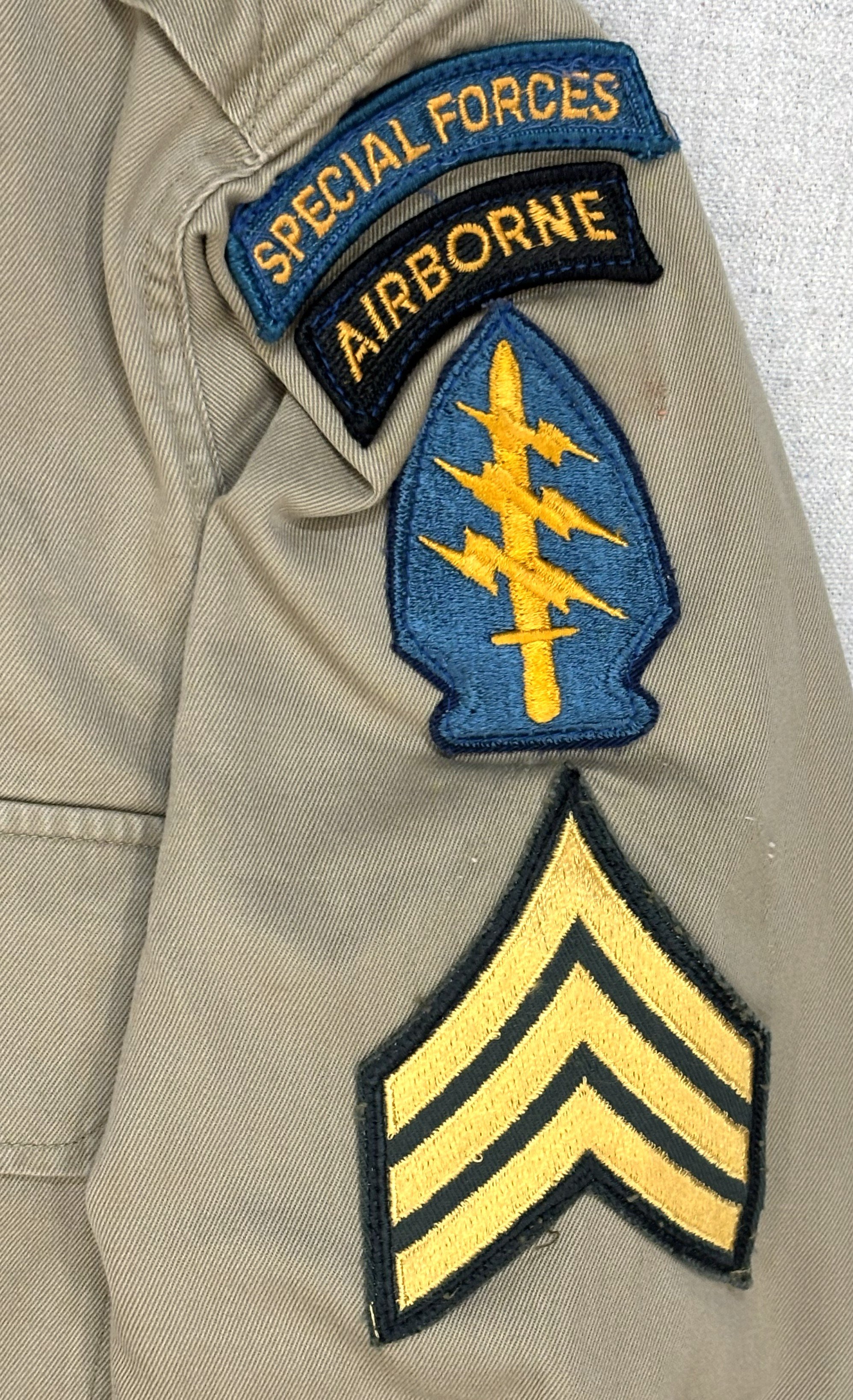
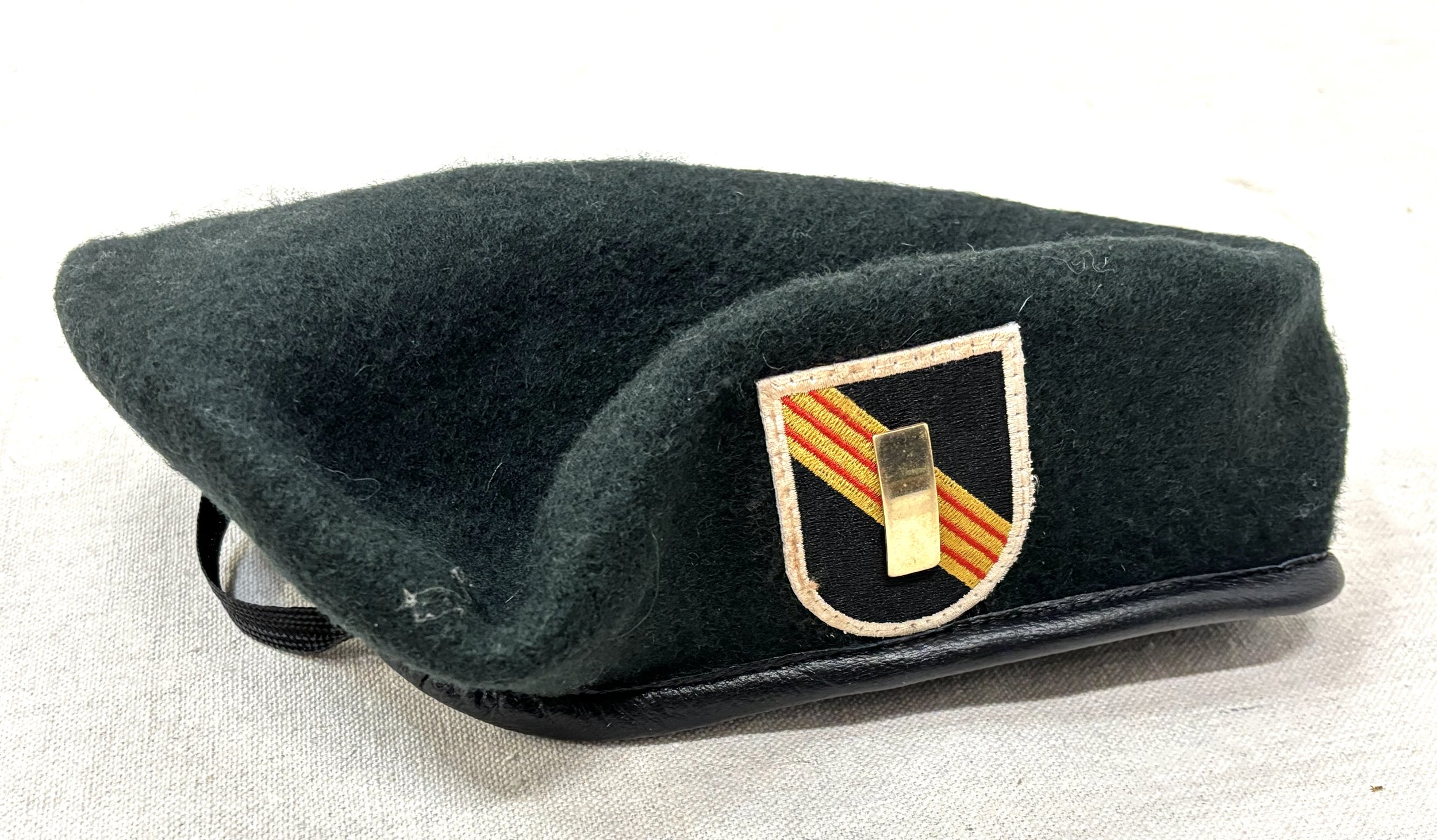
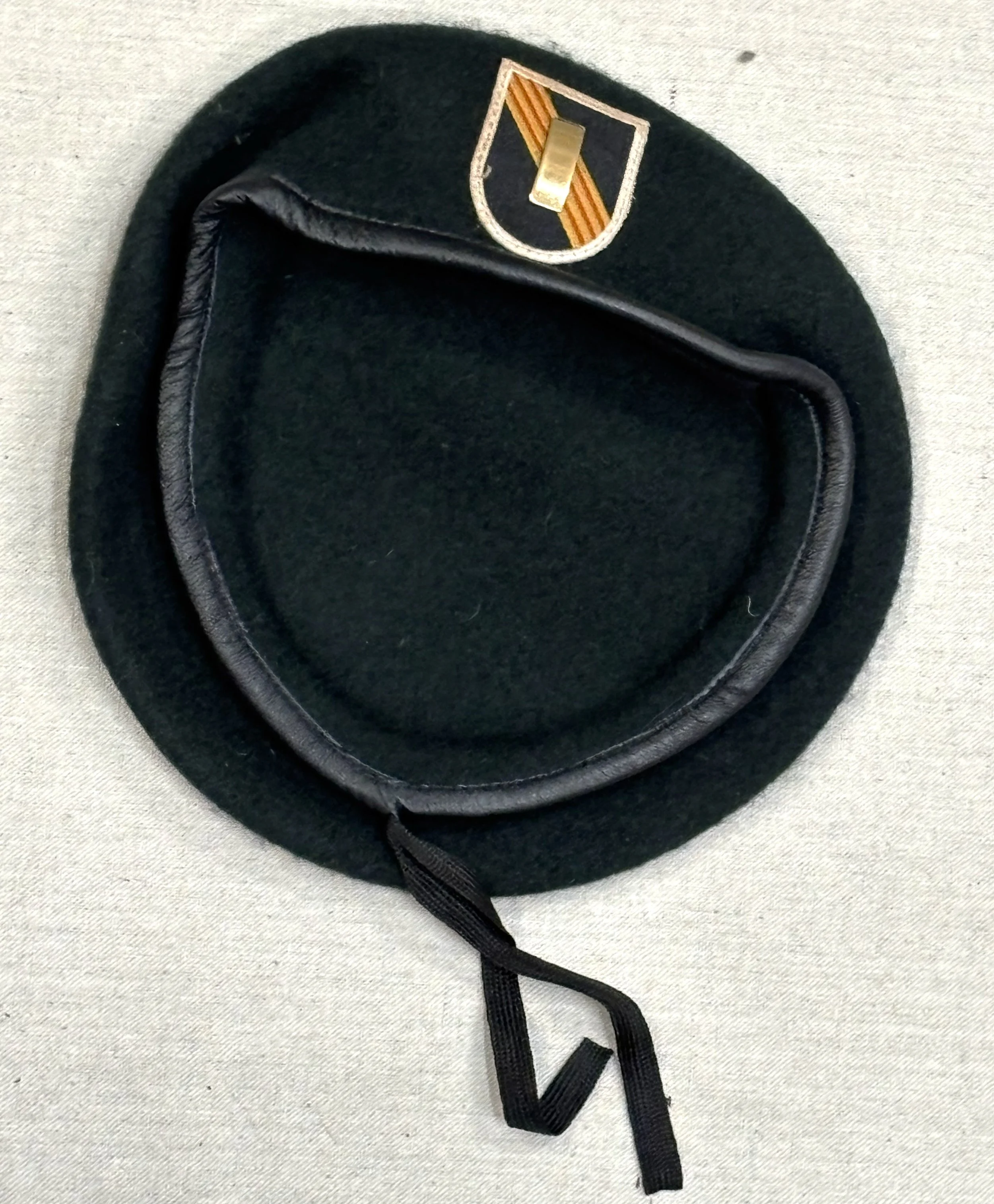
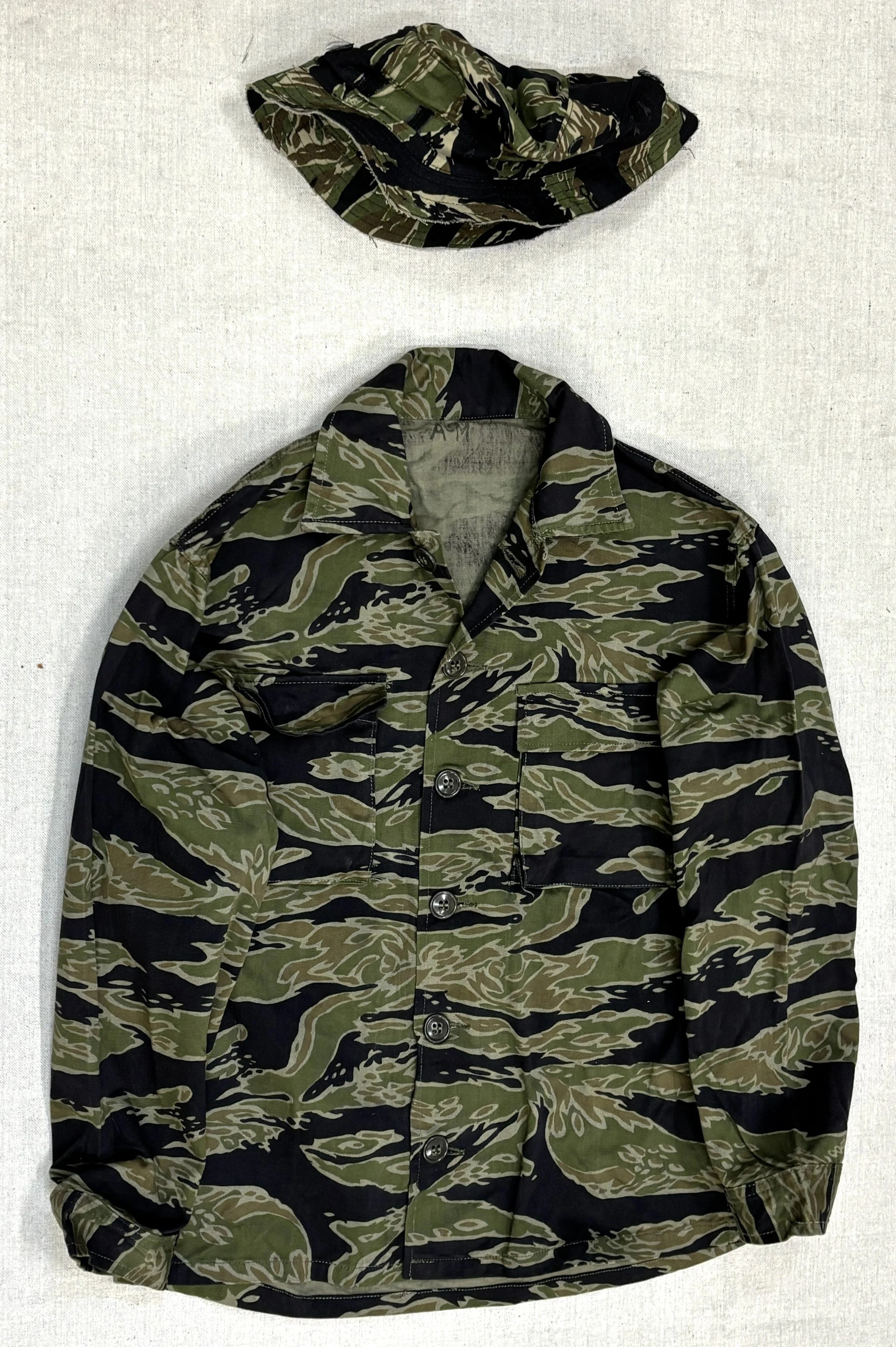
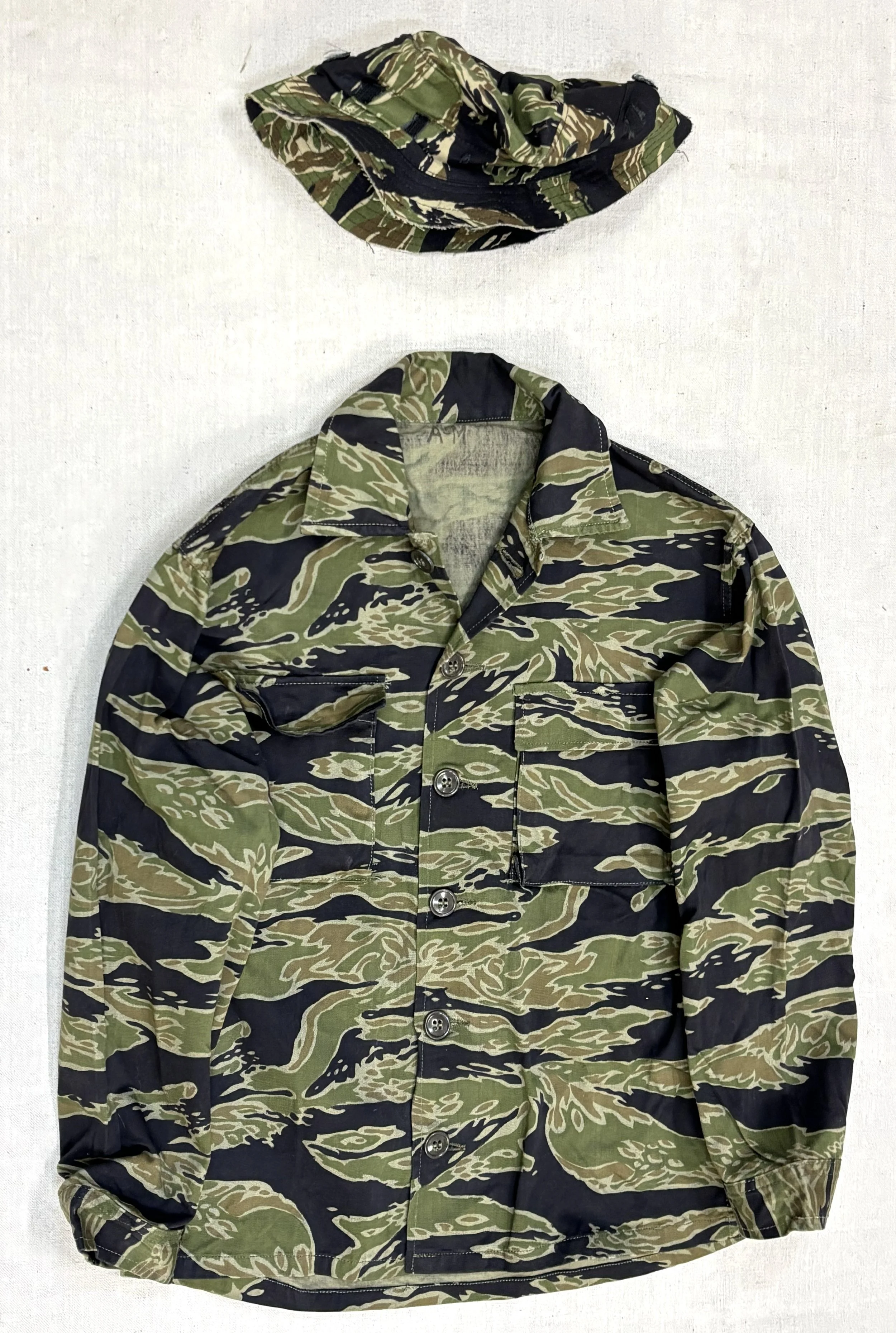
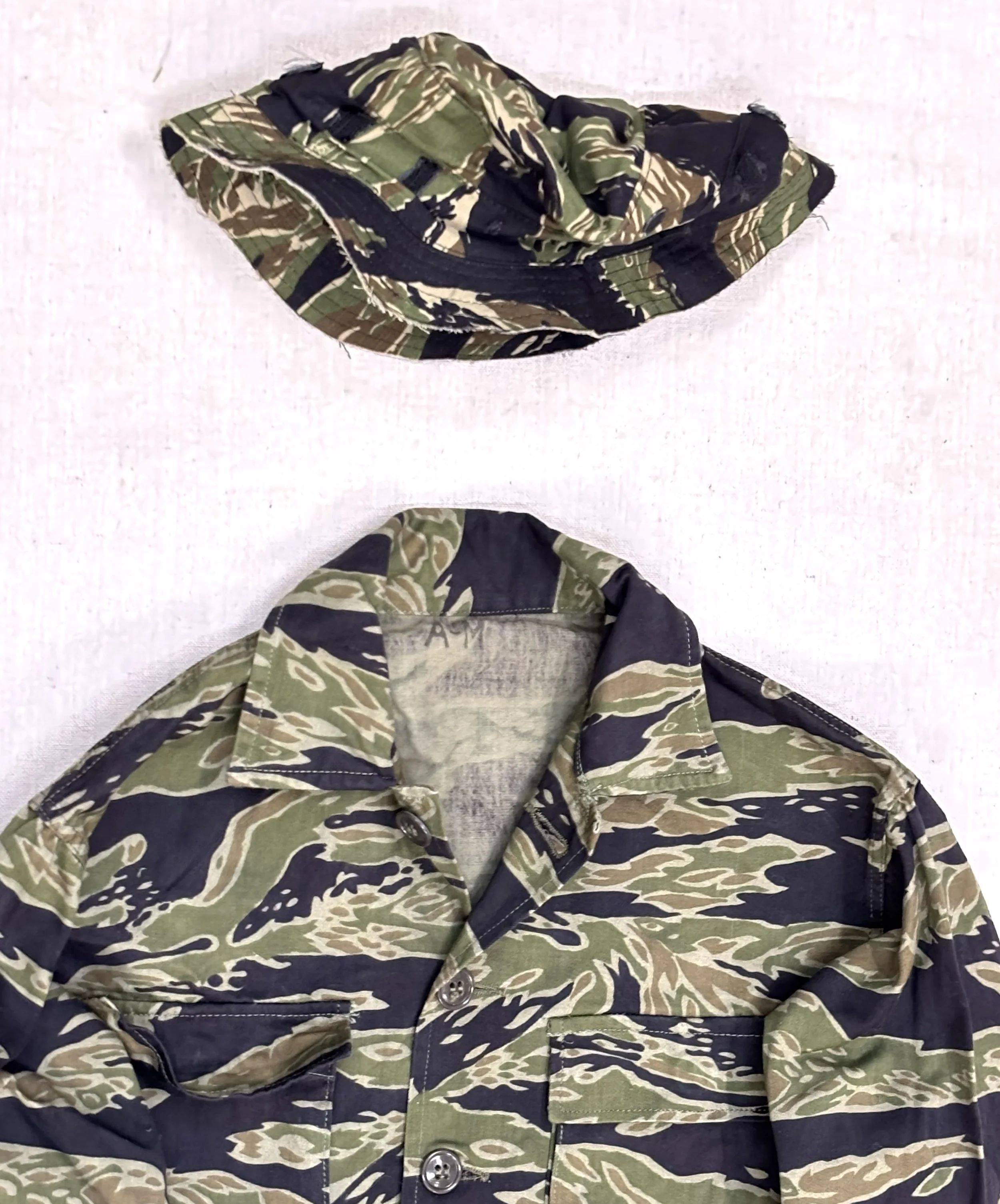
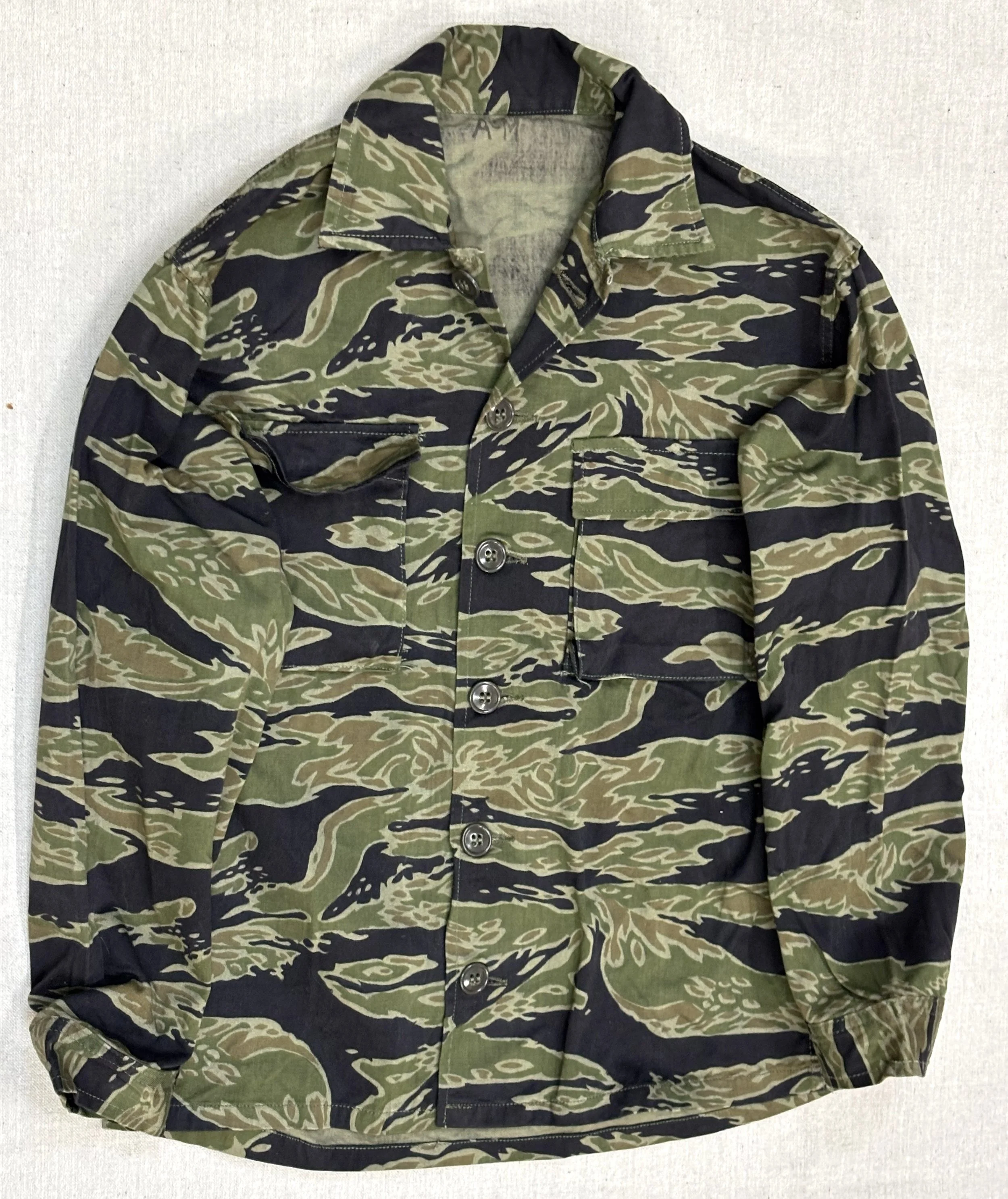
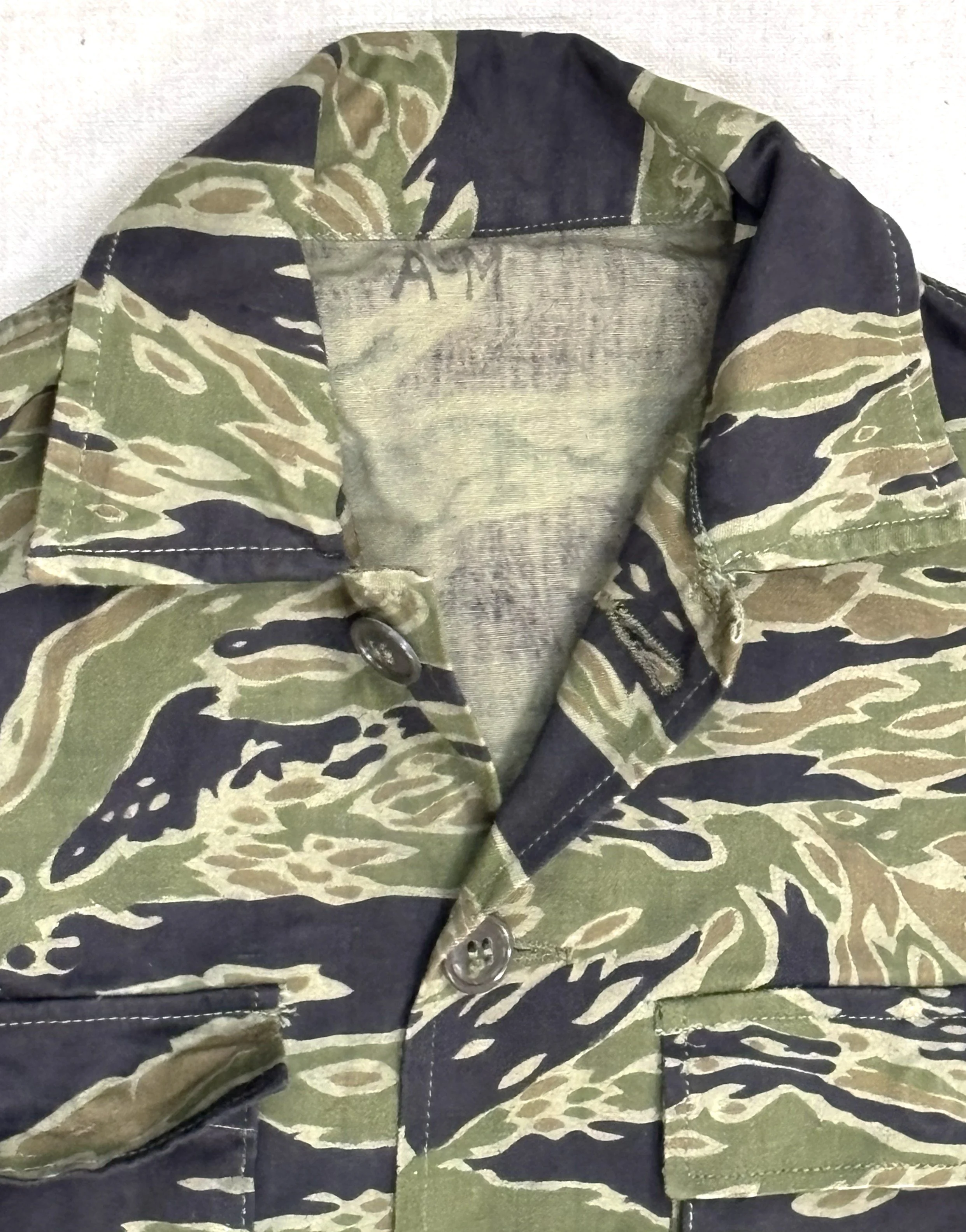
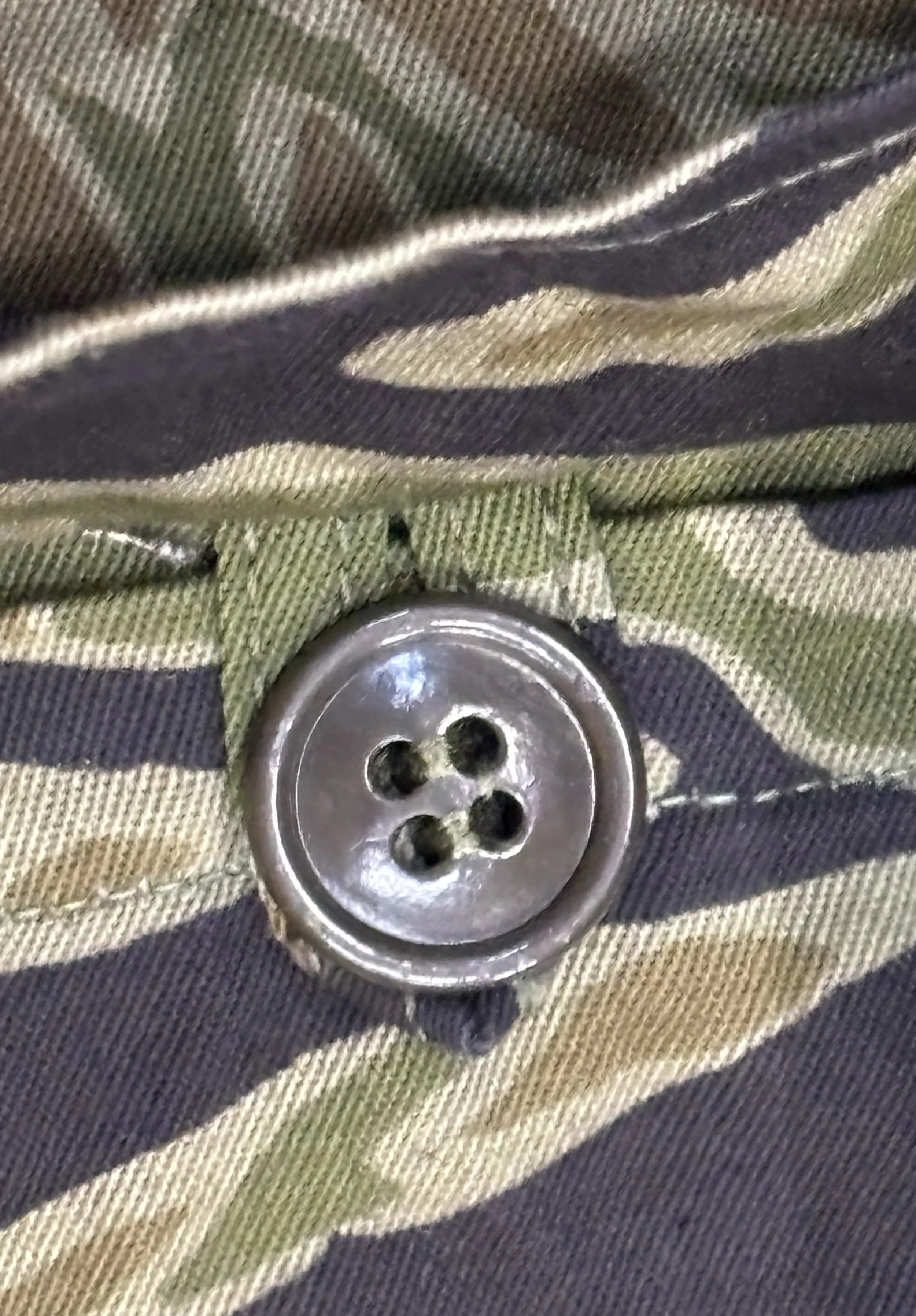
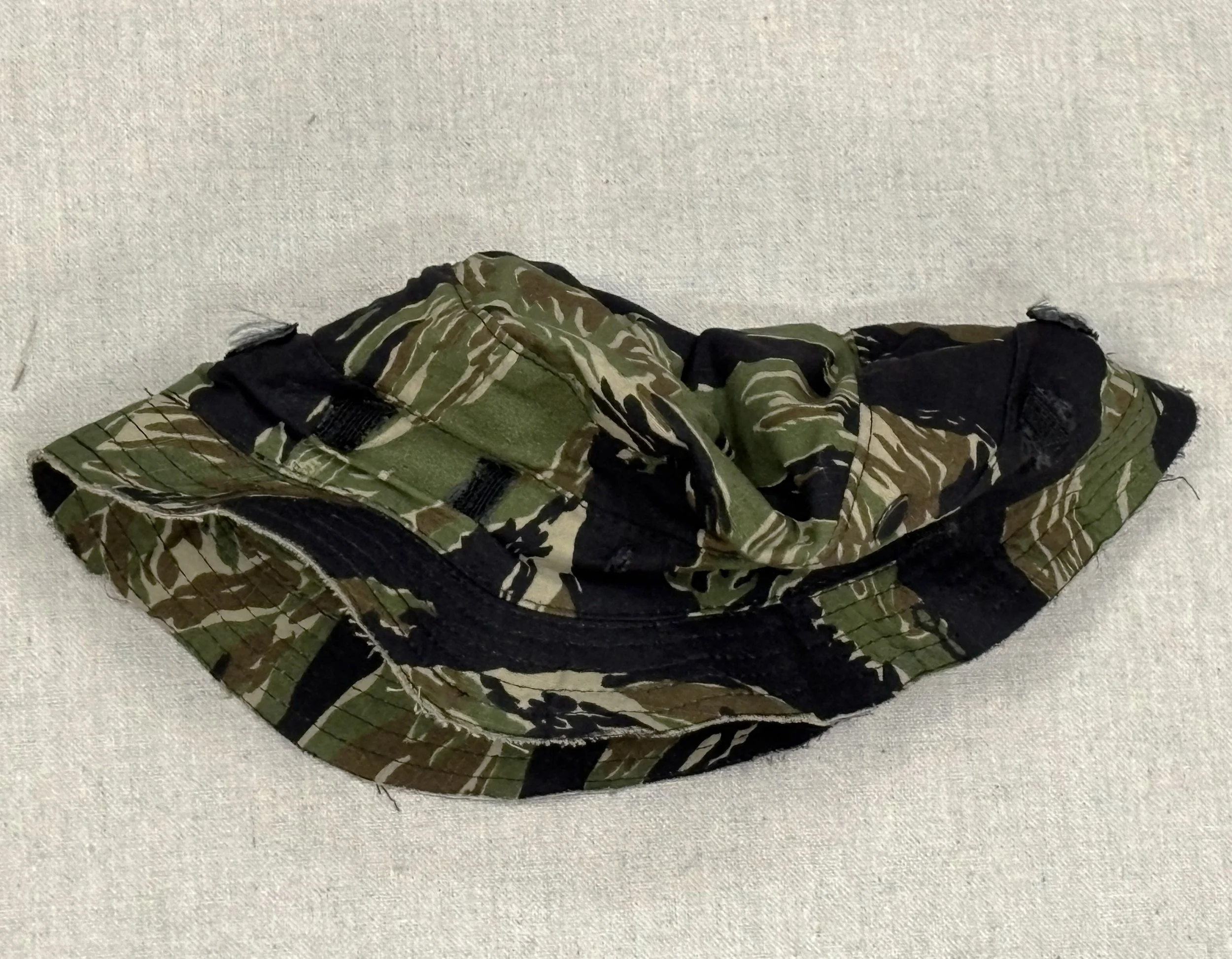
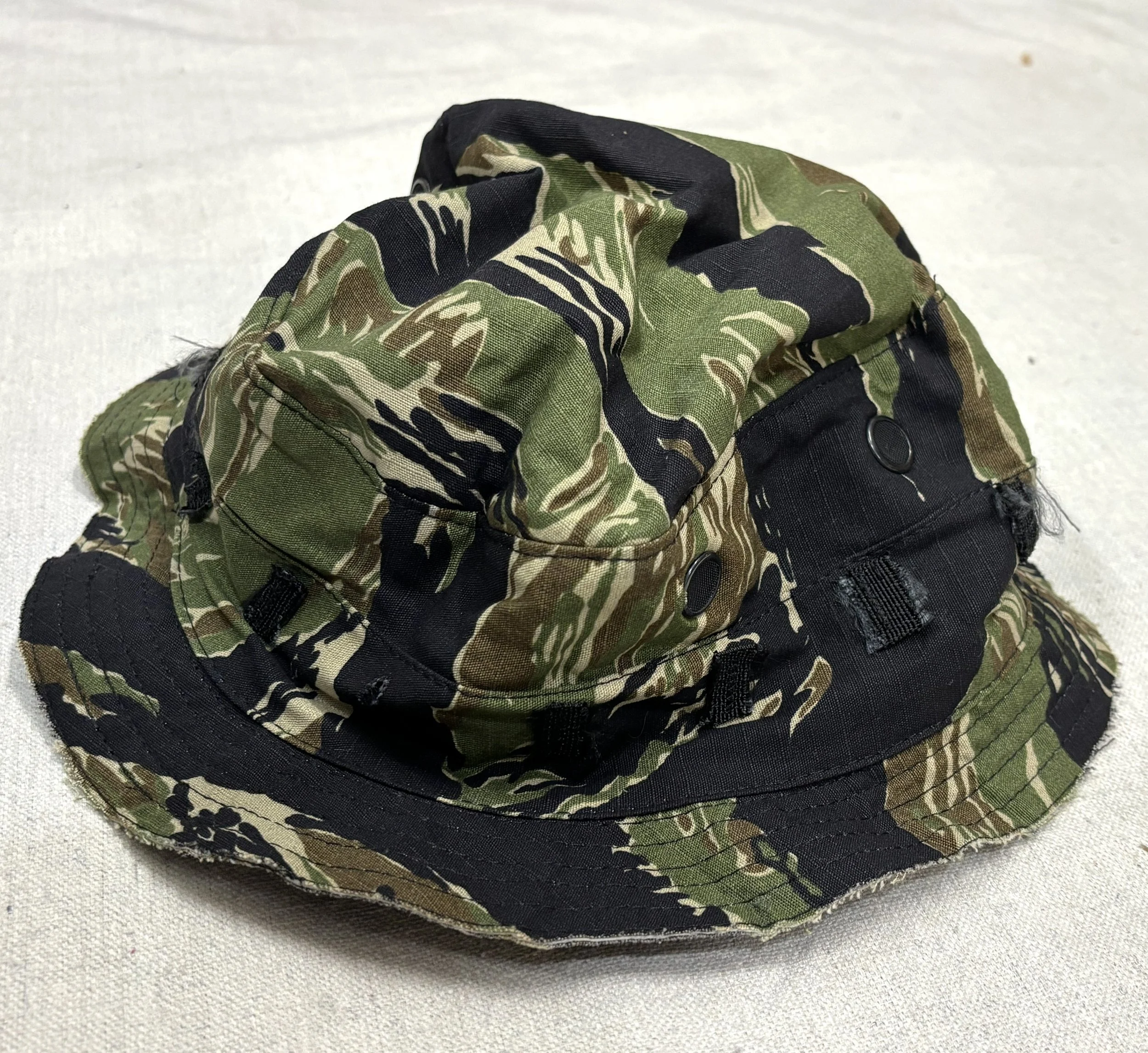
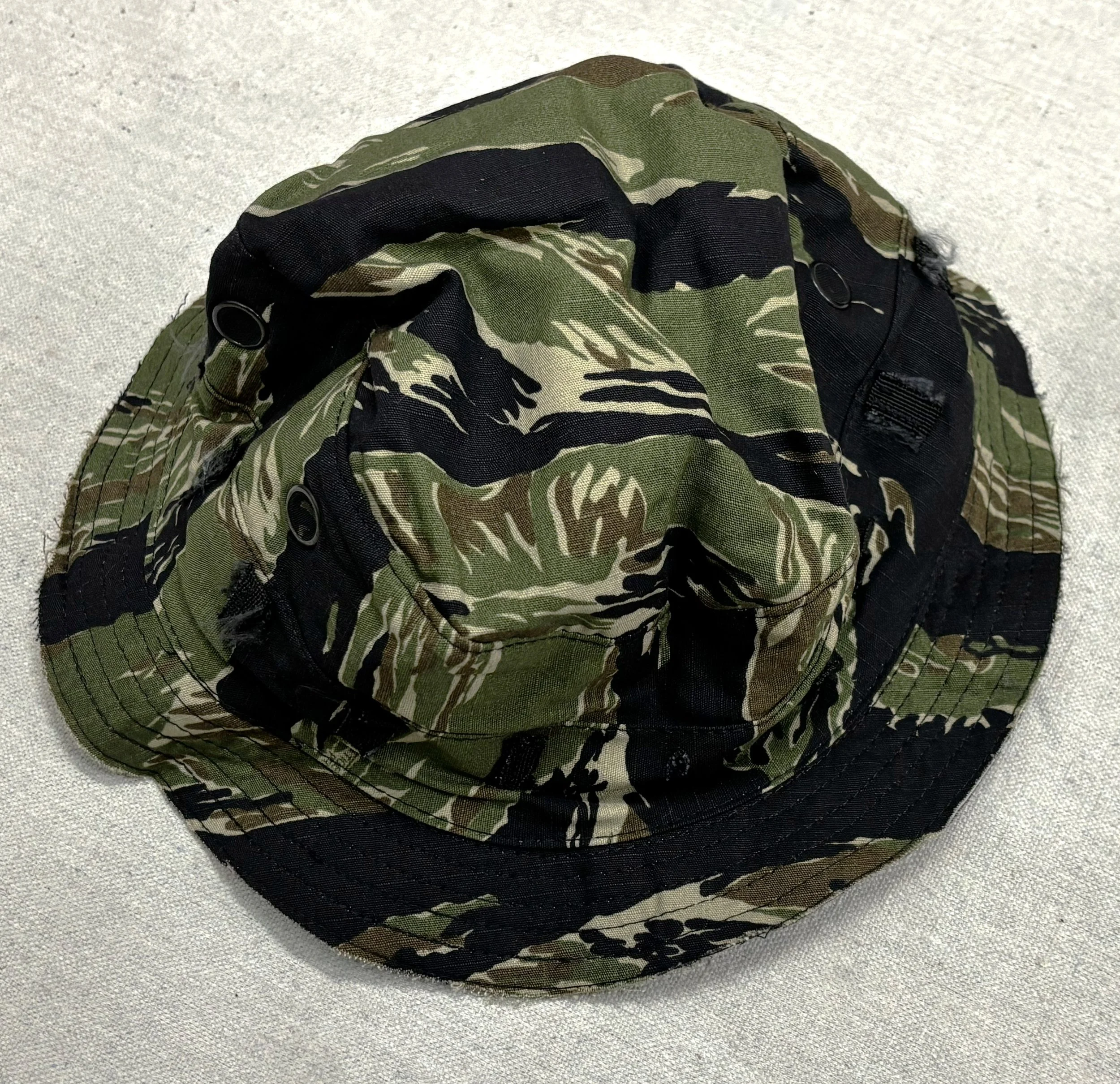
This is one of the uniforms I received from being in storage, misplaced and covered for eight or ten years, and needed a home. I thought, in large part, these were worn in the blank mode, no insignia whatsoever, and I just added some caps and/or berets and added them to various sections of the collection, easy-peasy. I understand they may be the wrong pattern of camouflage, or the cut for Army Special Forces, etc.; they just needed a home quick, so it goes.
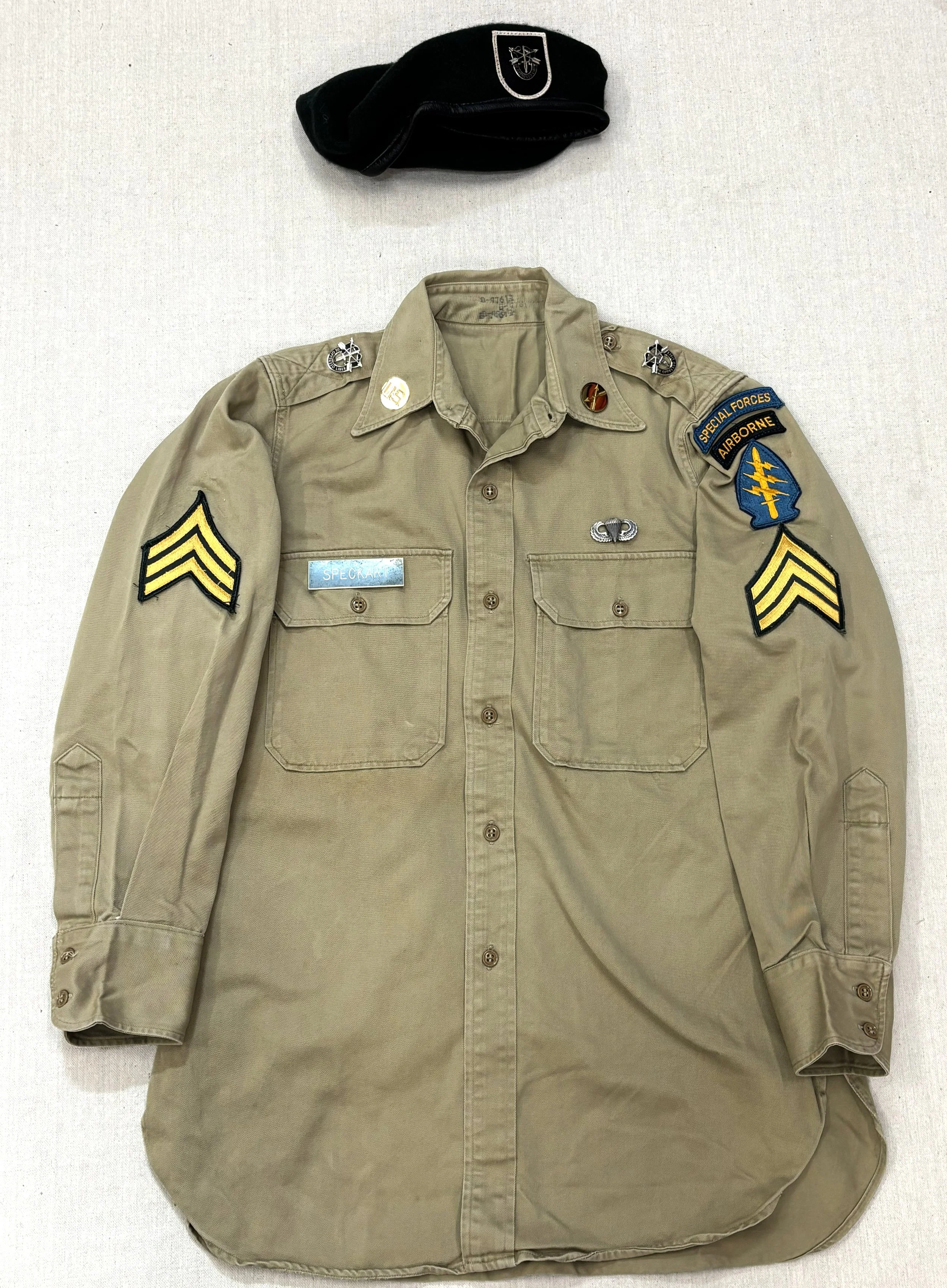
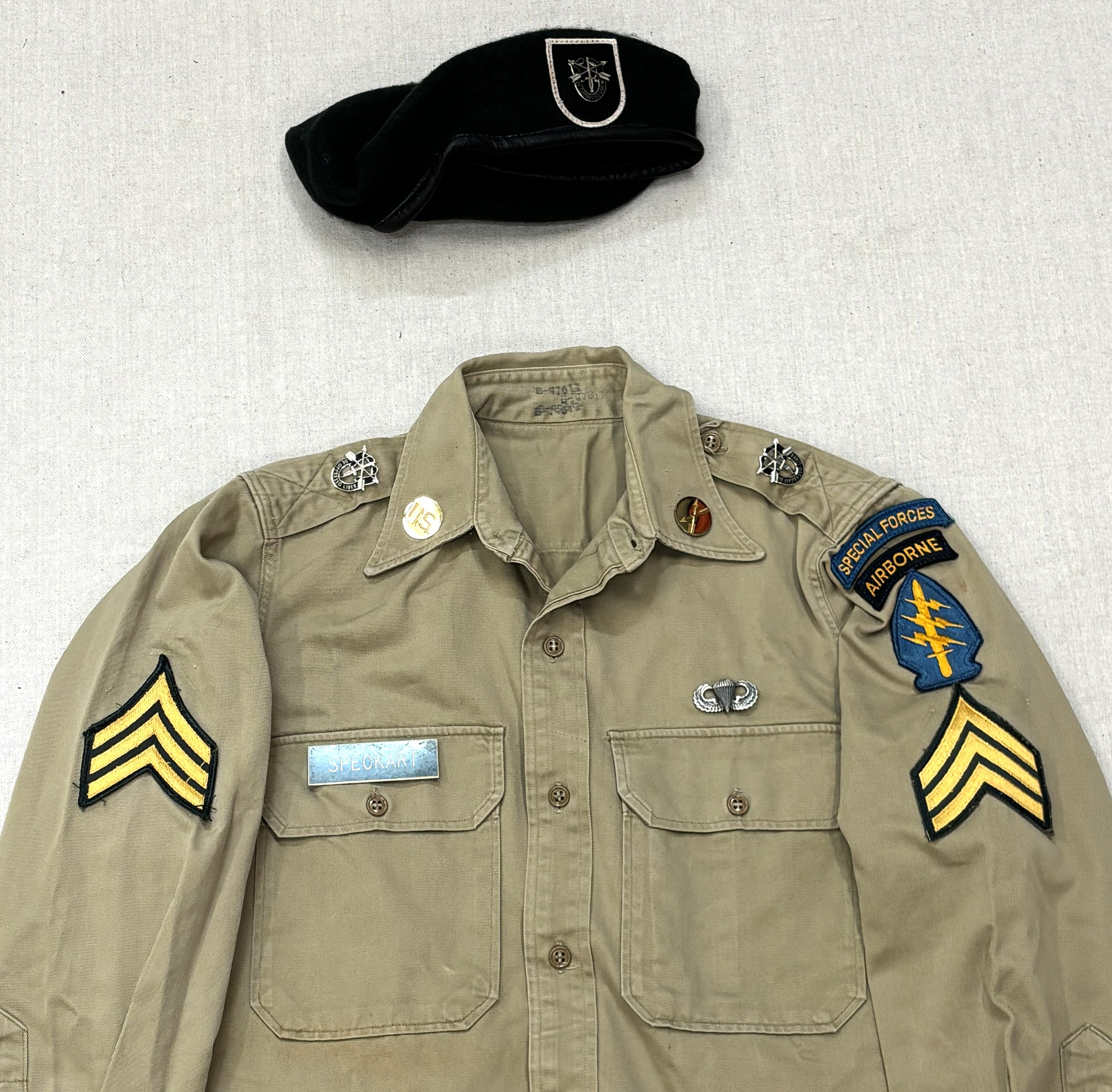
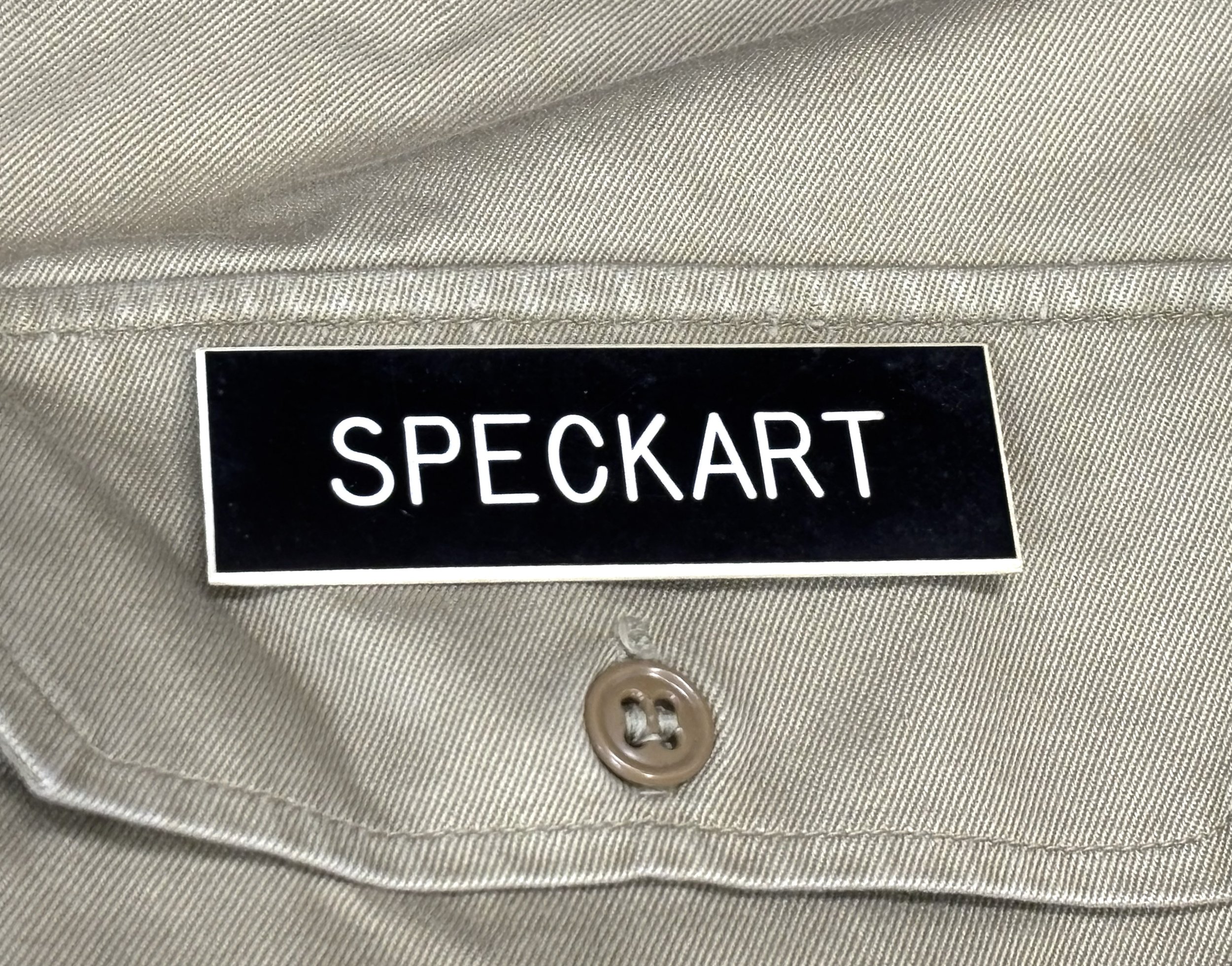
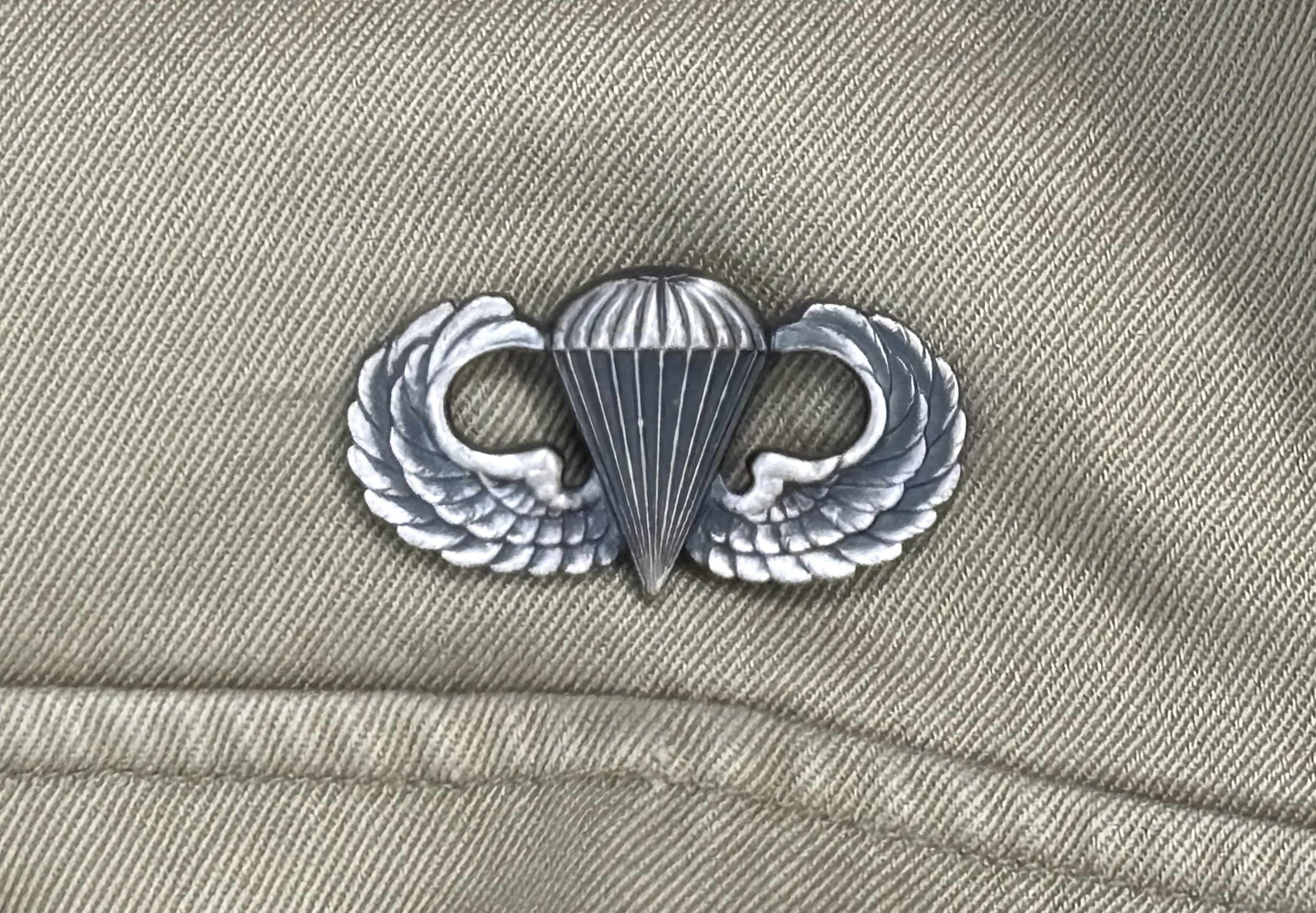
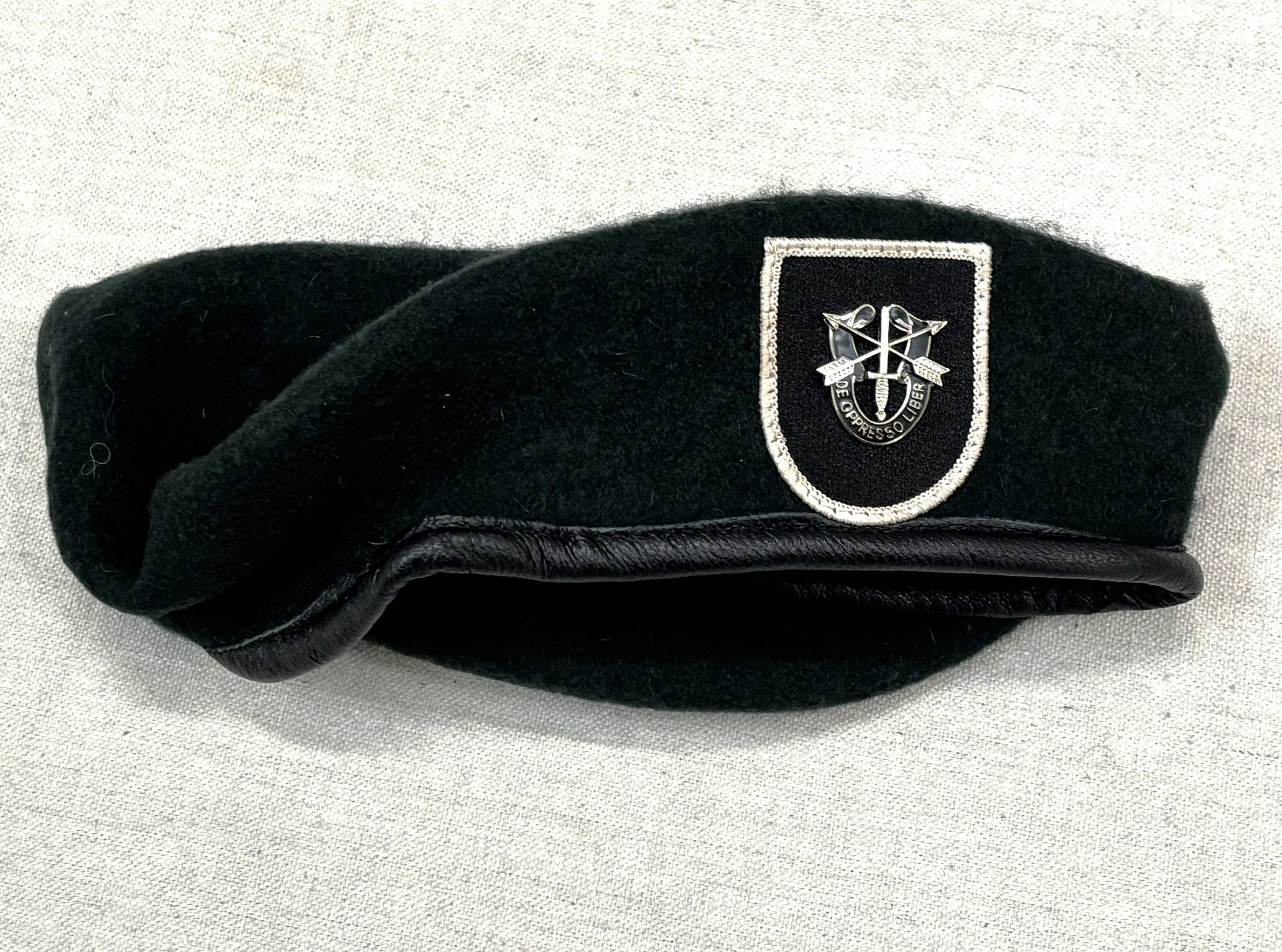
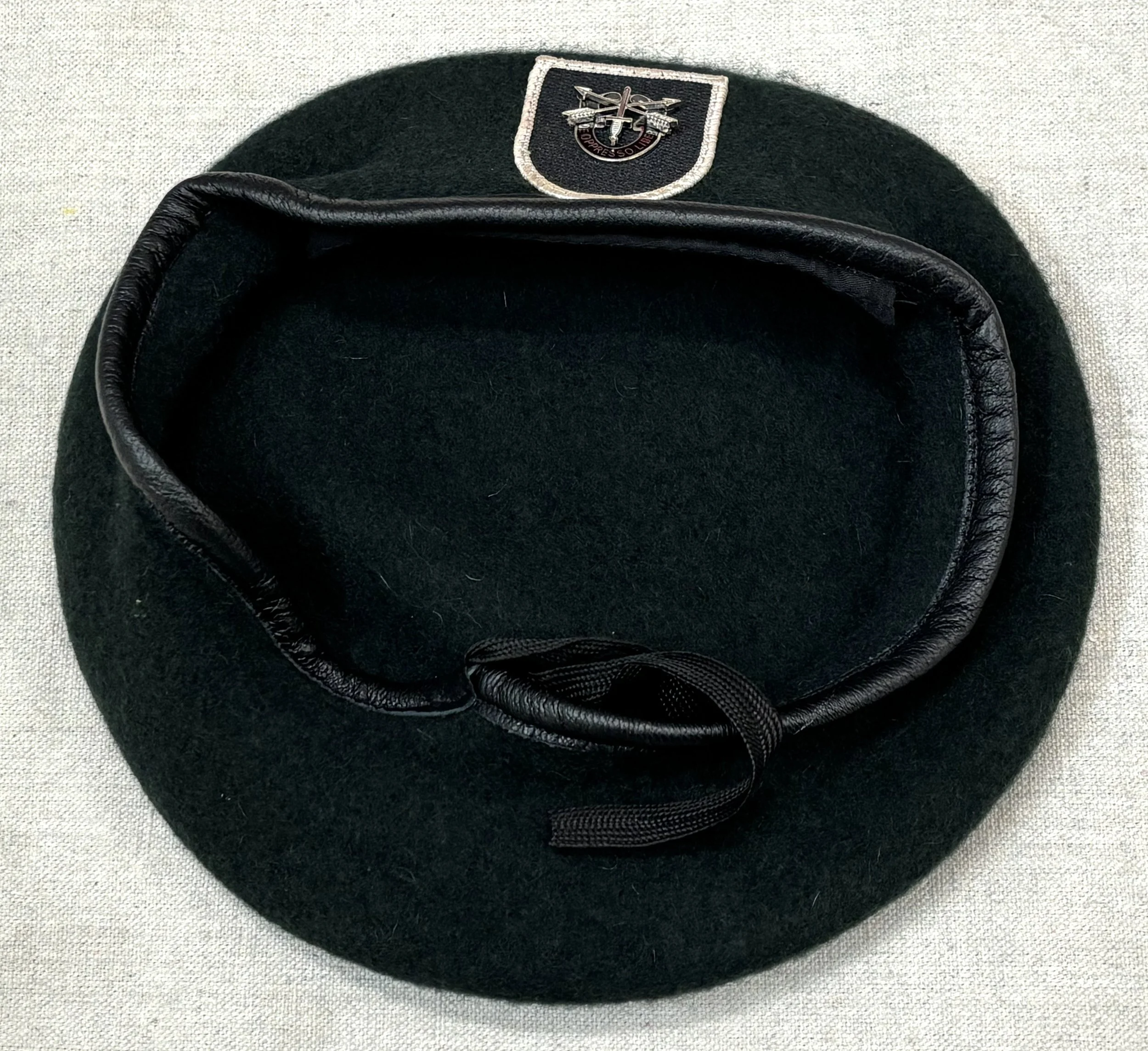
“New” Sergeant, 5th Special Forces Group:
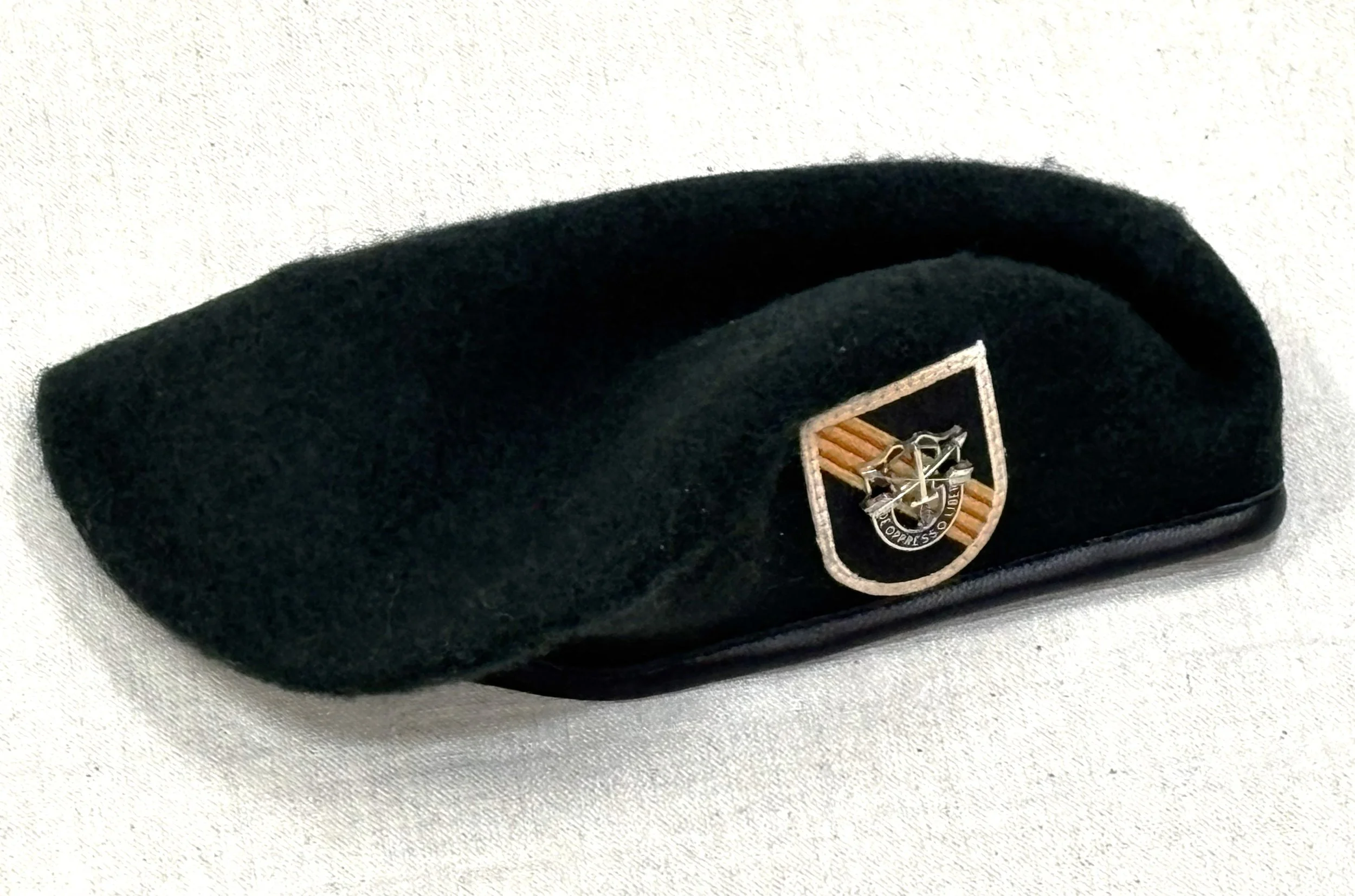
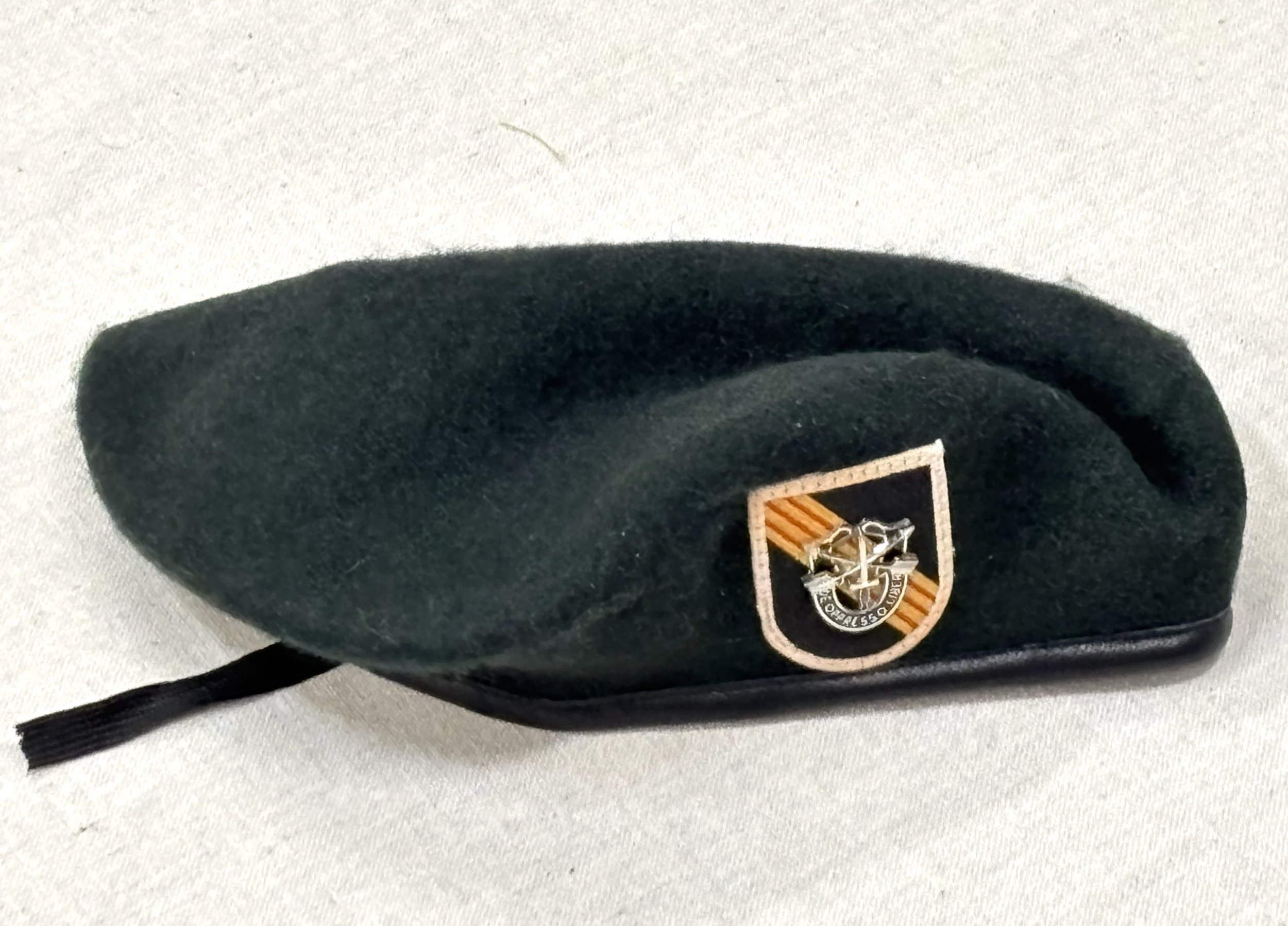
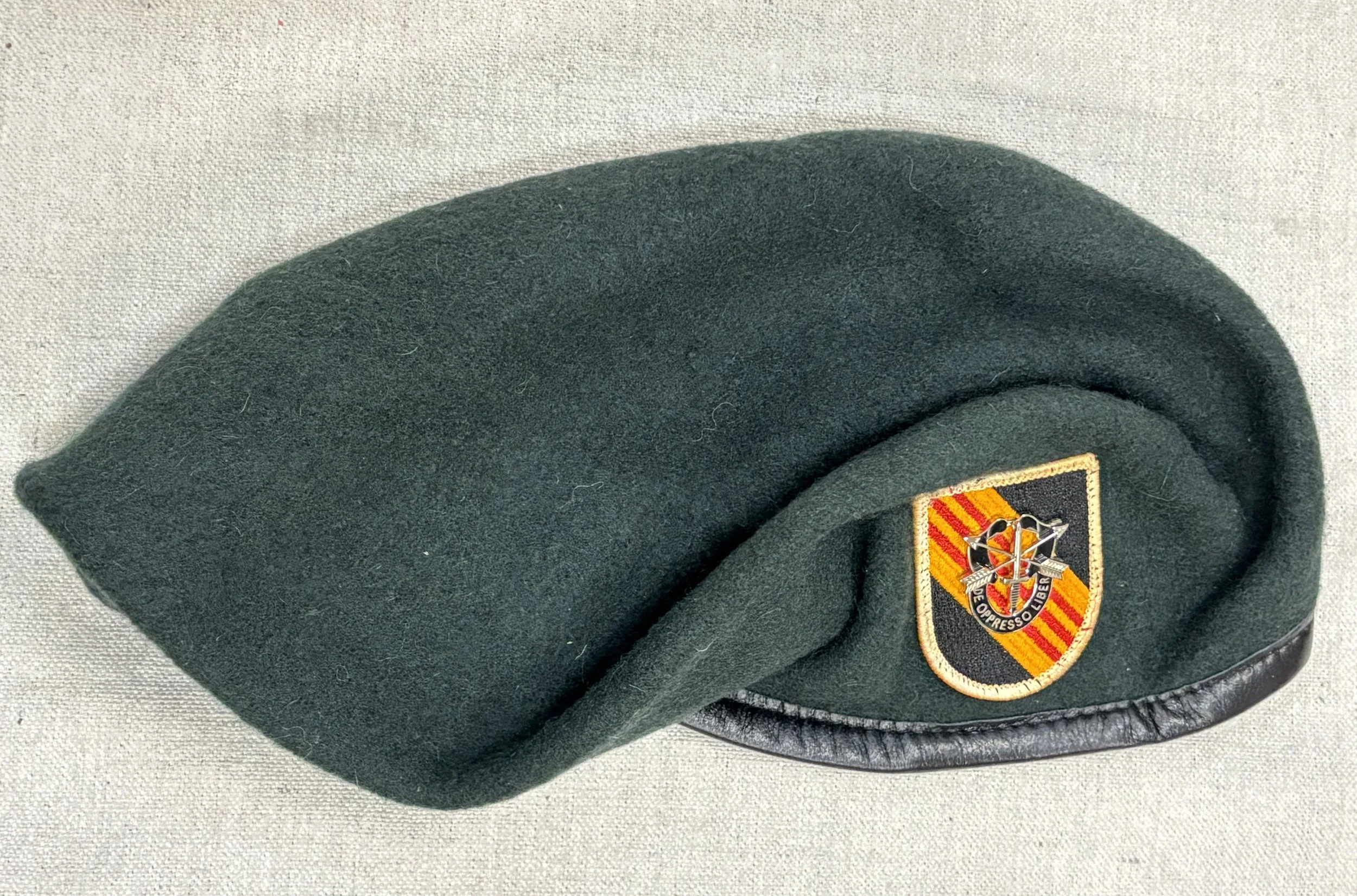
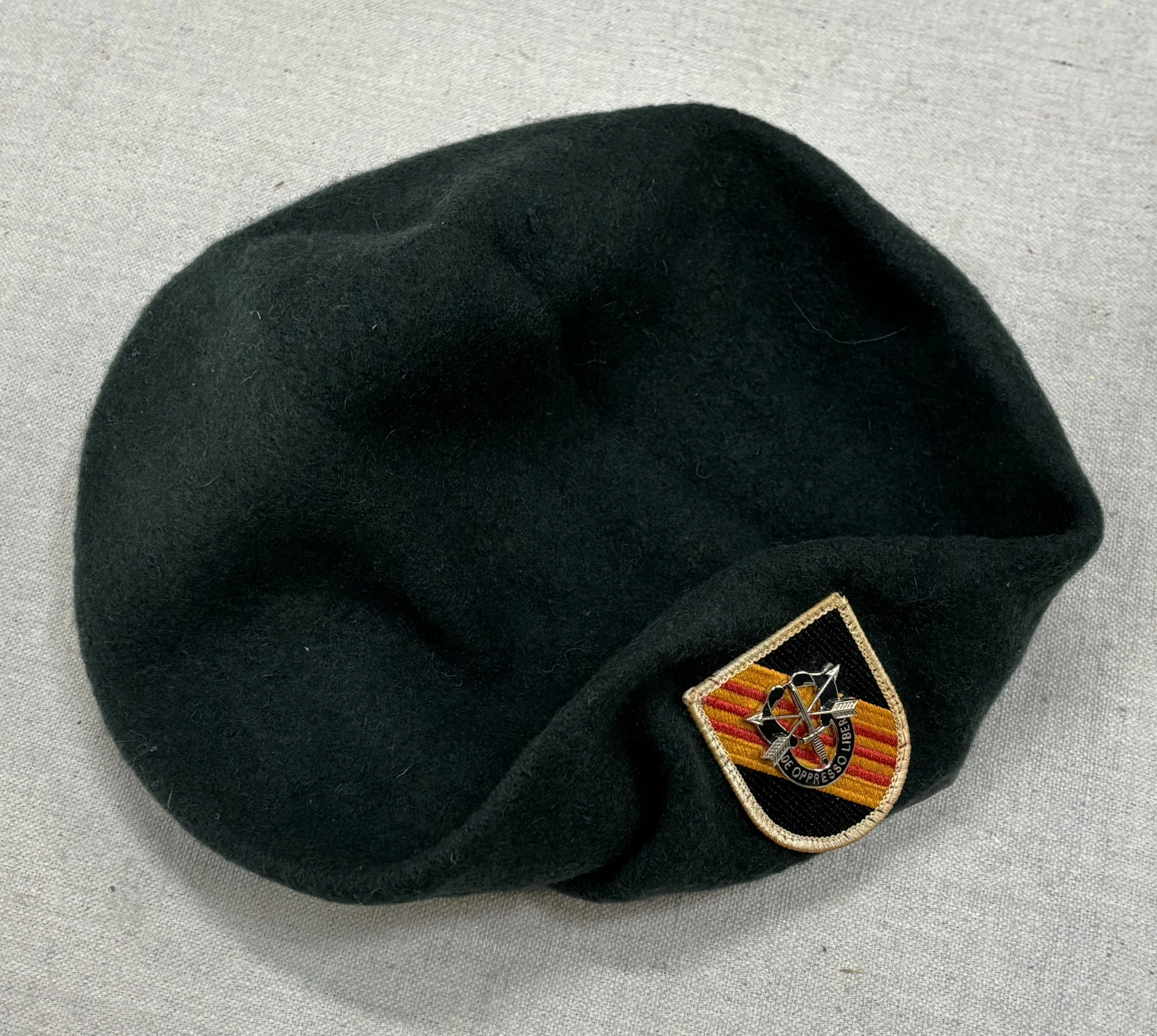
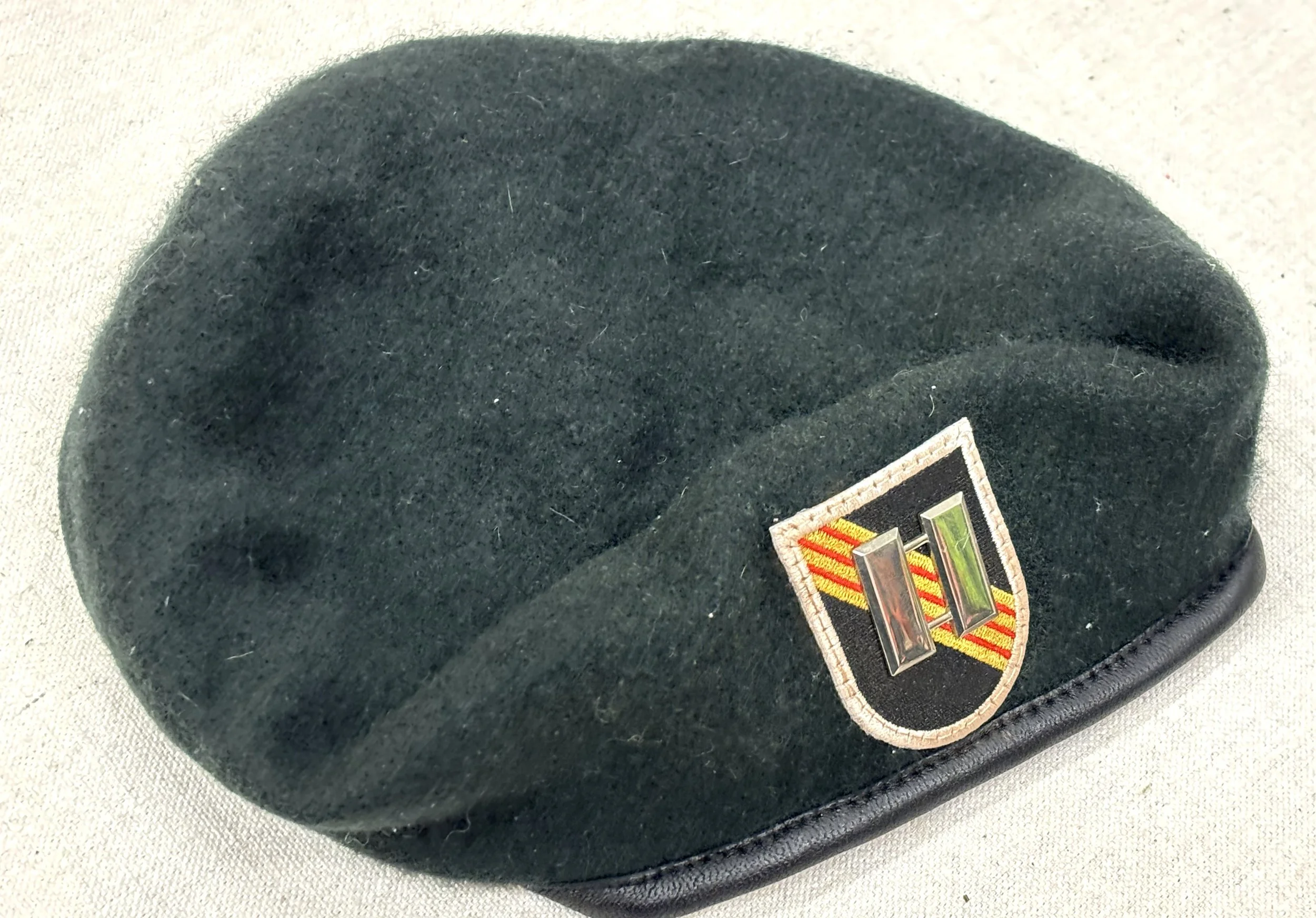
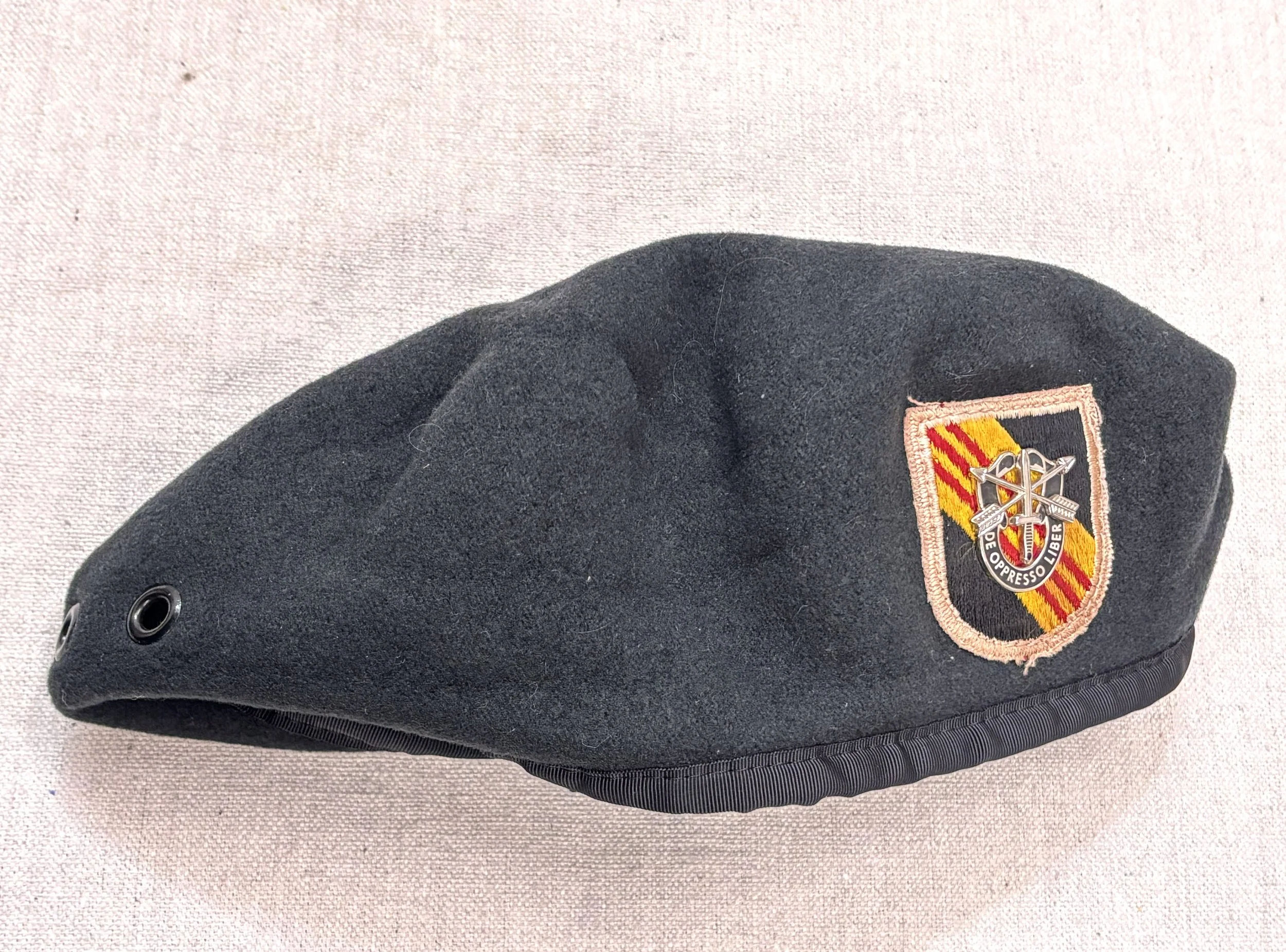
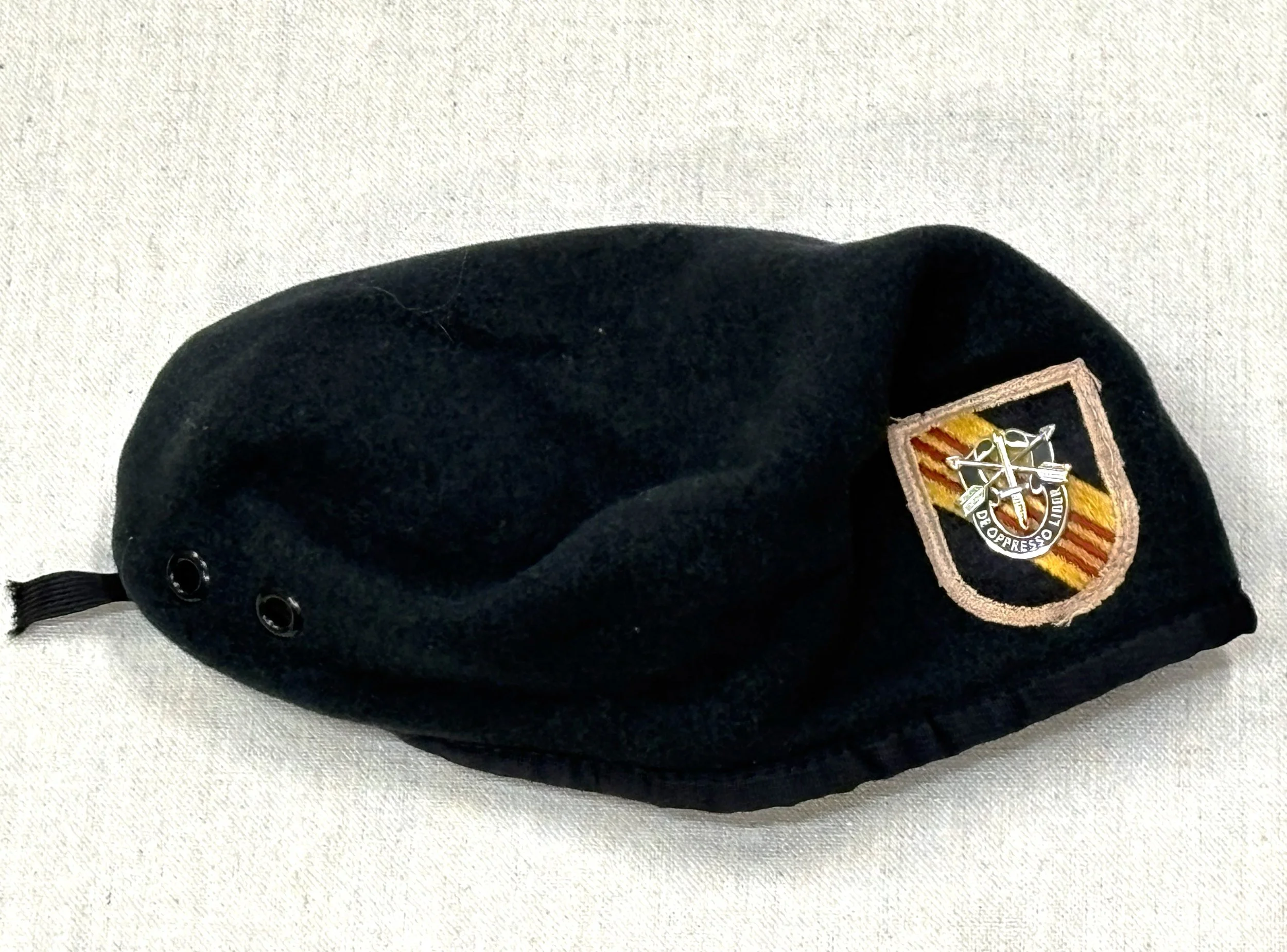
This, I think, was finally accepted early in the summer uniform for Special Forces by our official involvement in the Vietnam War, following the previous decade's look, using khaki color, but while it was often seen at Fort Bragg, it went into the duffel bag for their tour in Vietnam. The khaki blouse is what these men showed up in in Vietnam, and only pulled out and pressed when their fatigues were finally put in the bag to take back home. And then they wore one when they left Vietnam, often a new one as the other had molded up and fallen apart in storage. Elements from the 5th Special Forces Group deployed to Vietnam in 1964 and operated there, in small outposts with just a few American Special Forces, civilian irregular groups, observing the enemy, and protecting their own, from the Vietnamese until 1971 from Nha Trang. Over time, they trained and operated with some 42,000 Civilian Irregular Defence Group personnel, and operating with members from the 5th SFG, launched cross-border (MACV-SOG) operations. In doing so, they earned 18 Medals of Honor, making them one of the most decorated units of the Vietnam War. The 5th Special Forces Group, Black Flash, used this Beret Flash from 1961–1963 and 1985–2016, from 196 - 1984, and after 2016, they used the flash with the South Vietnamese flag running through it.
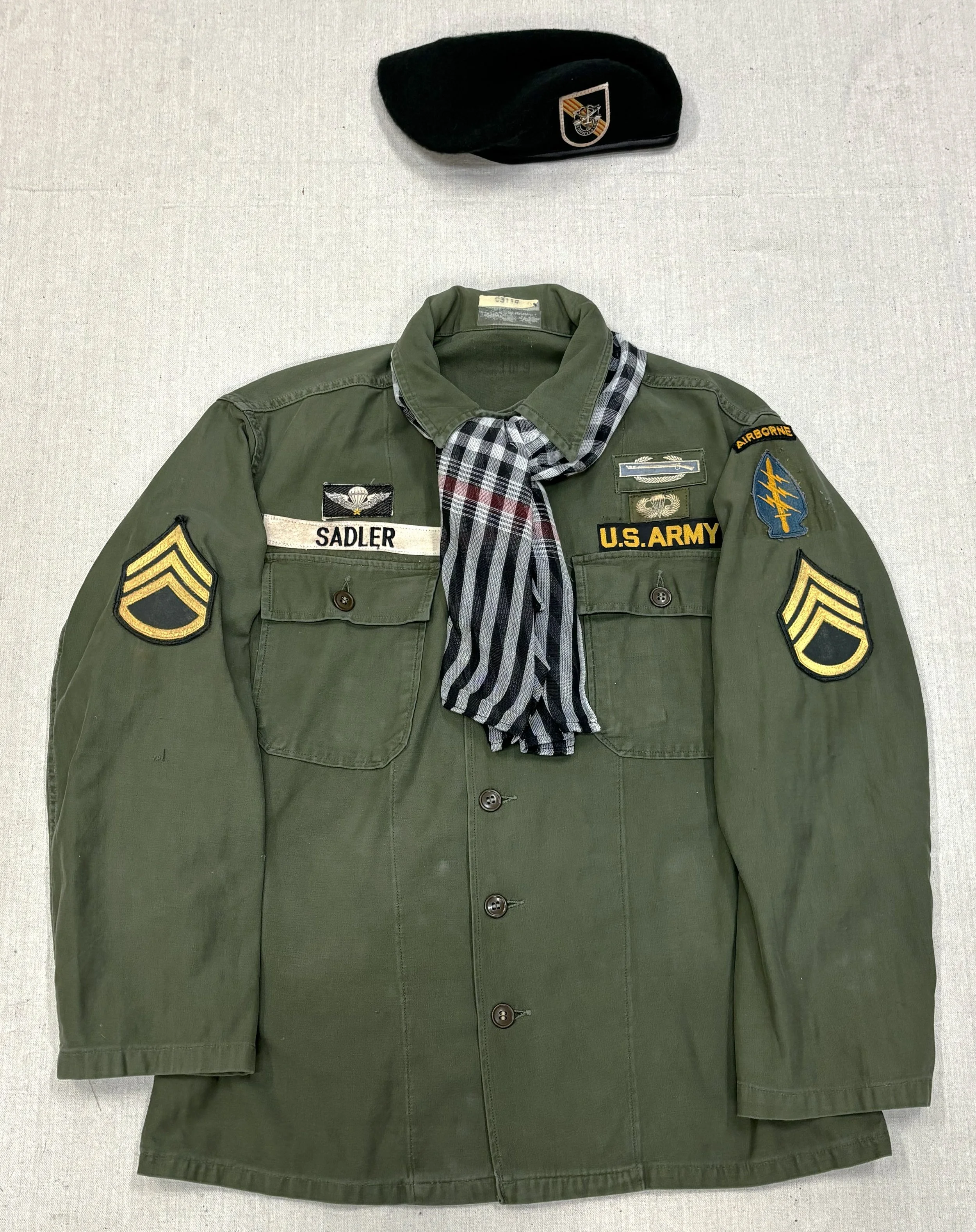
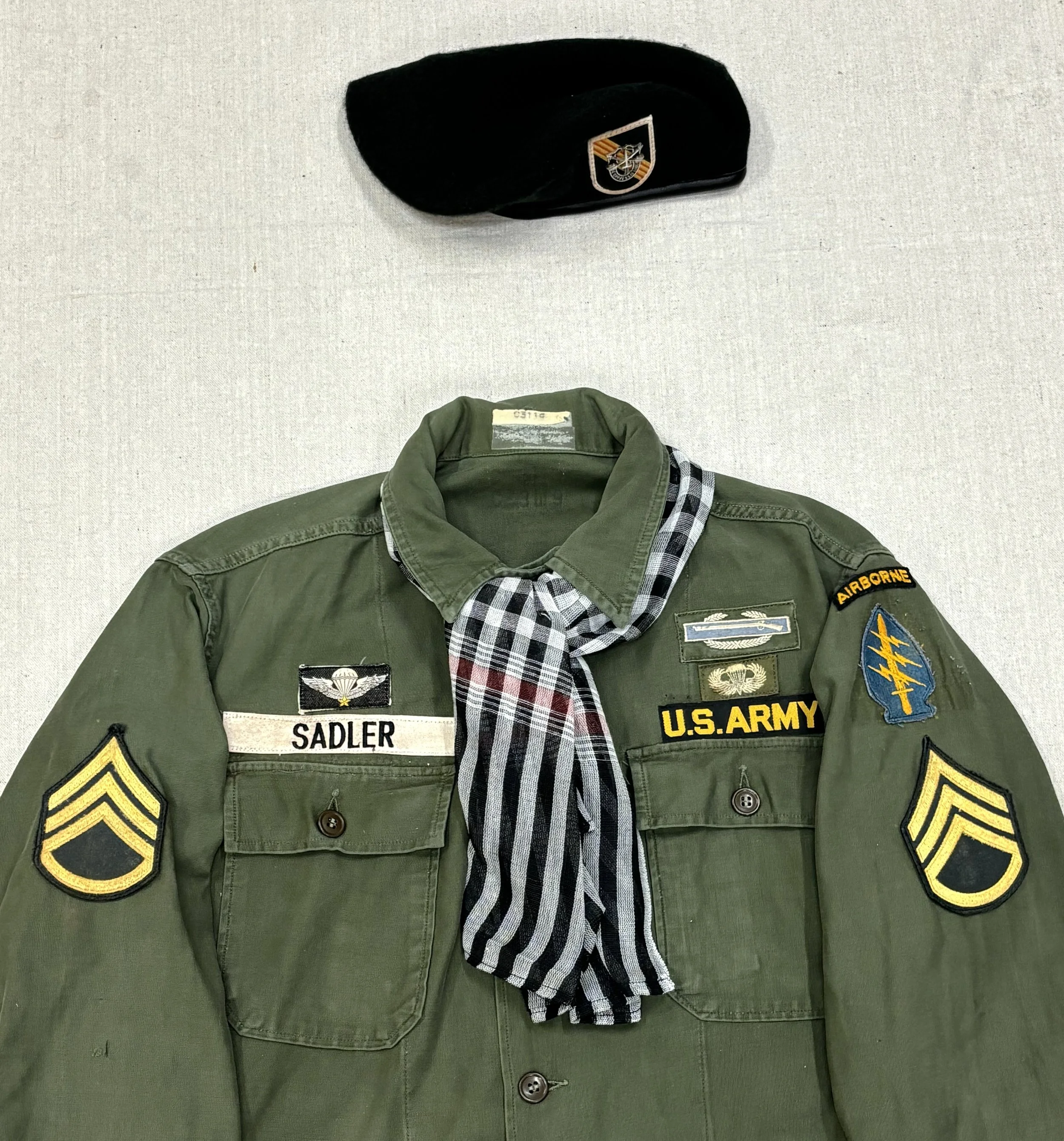
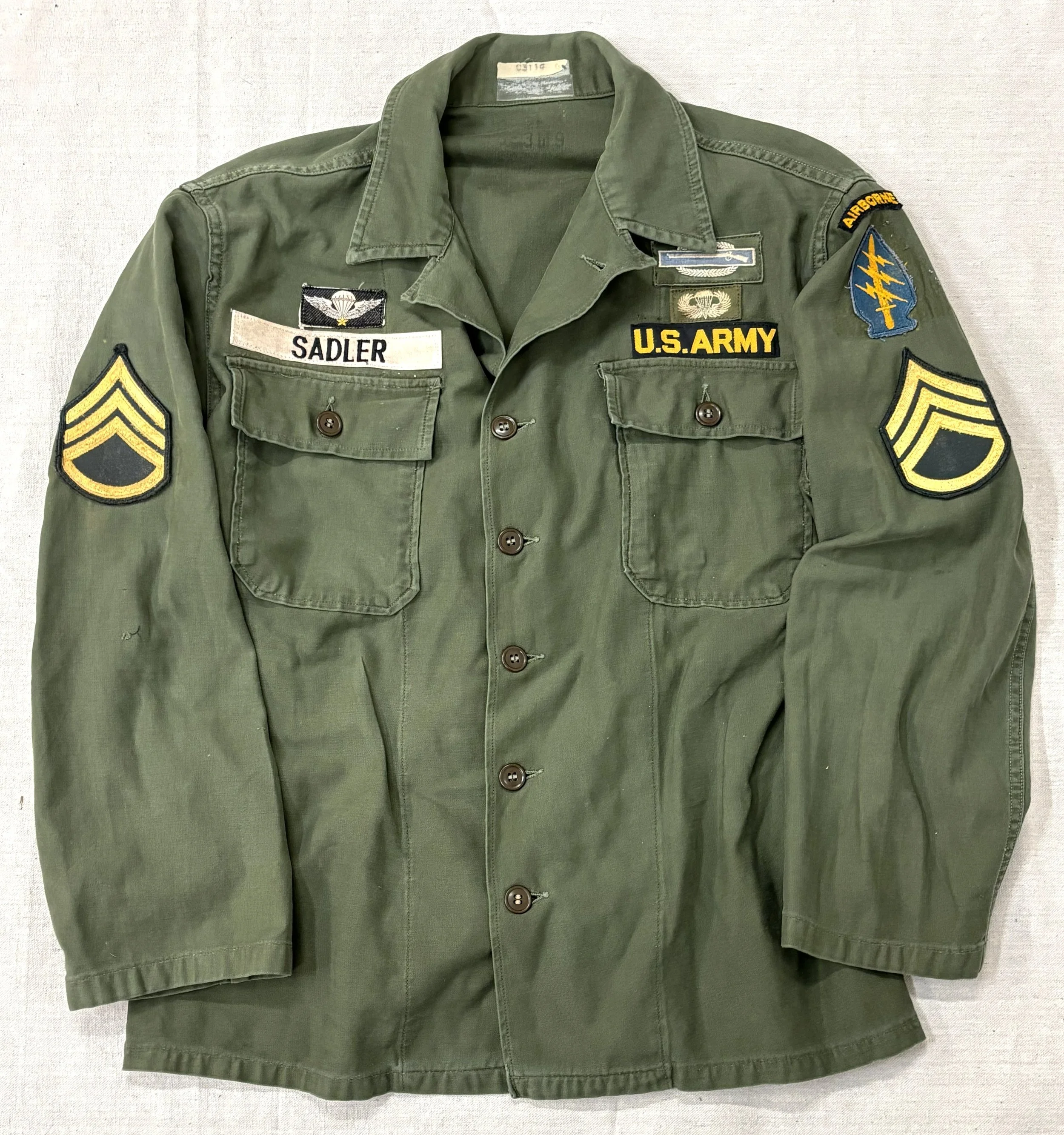
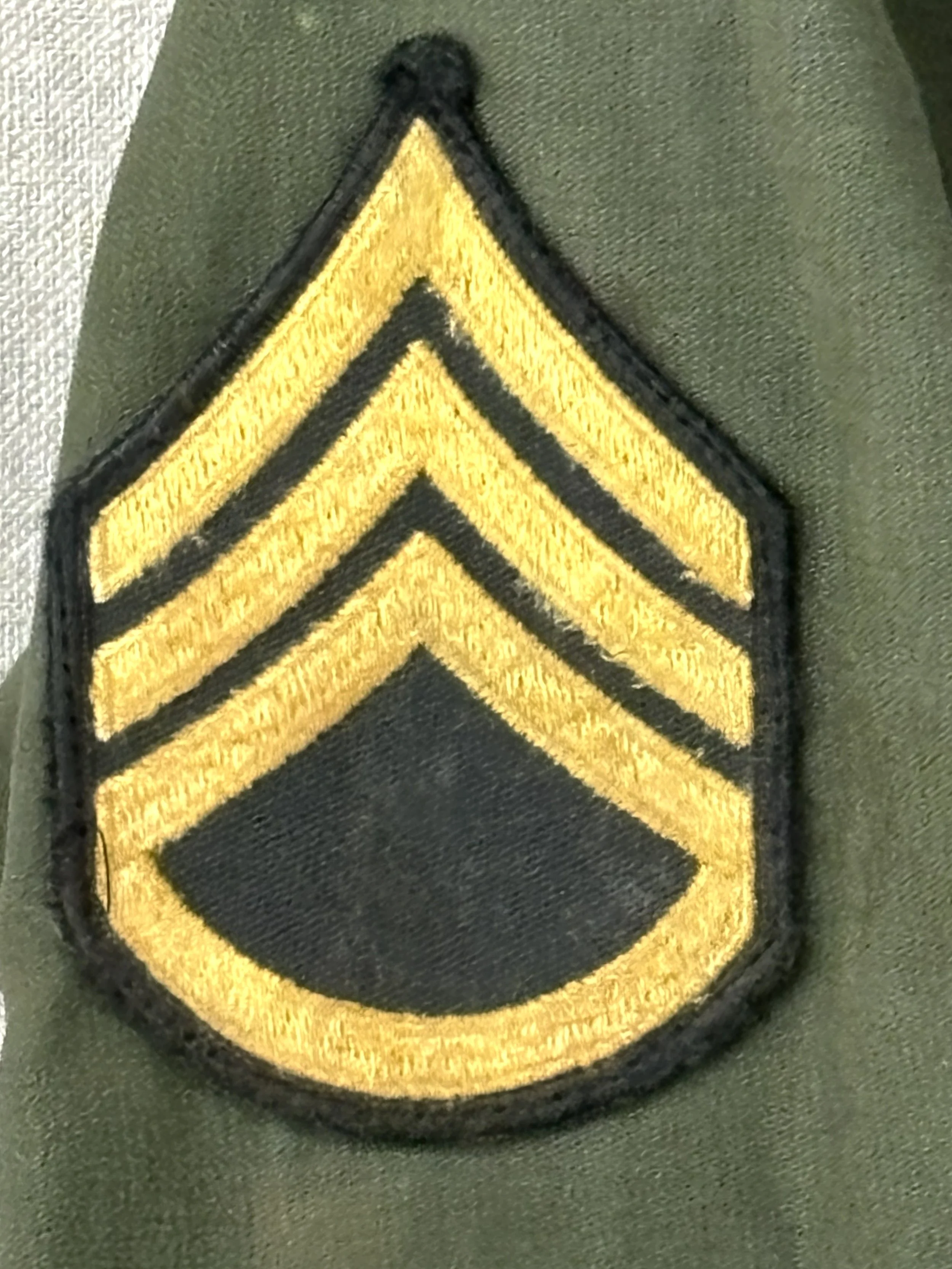
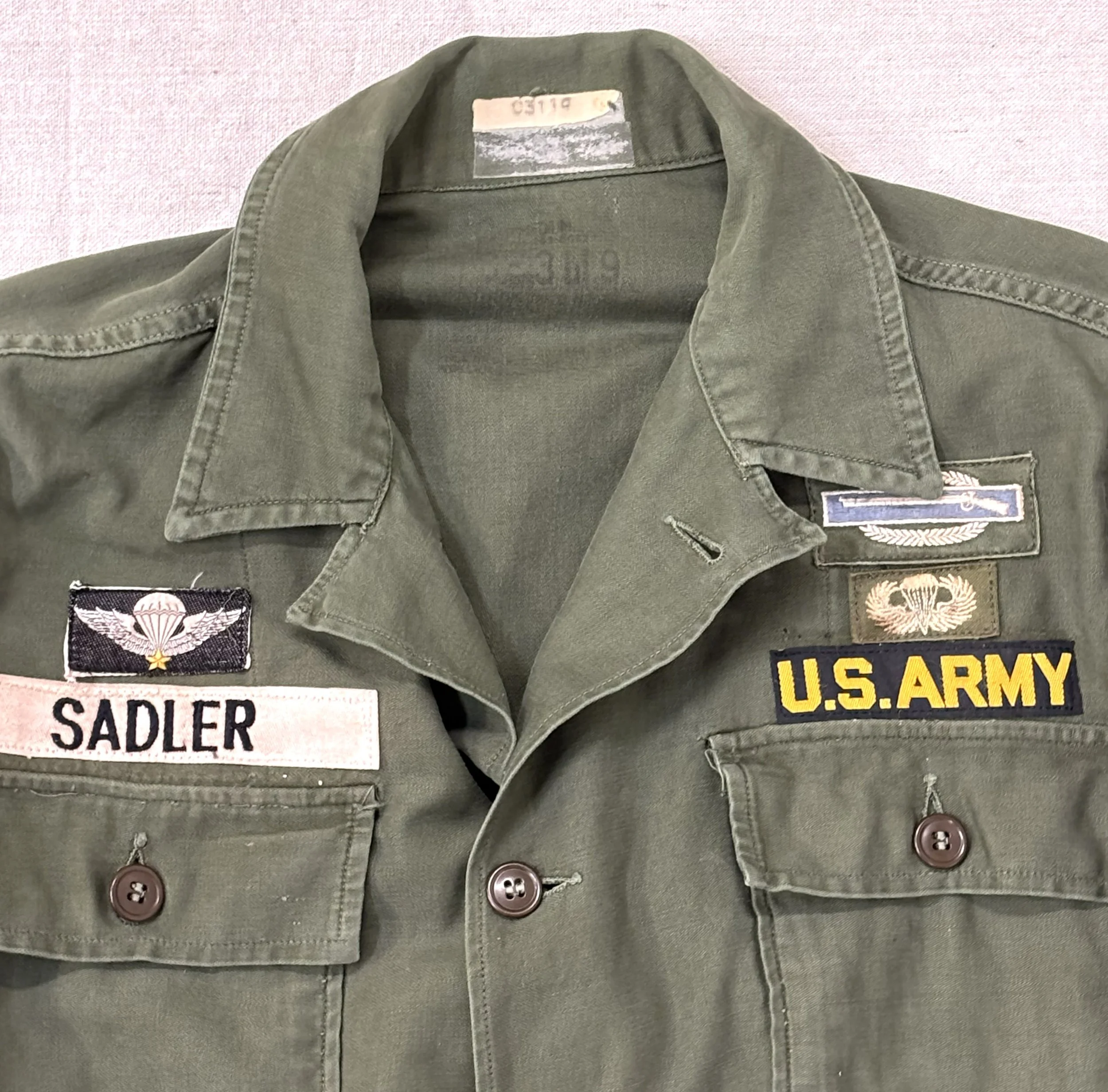
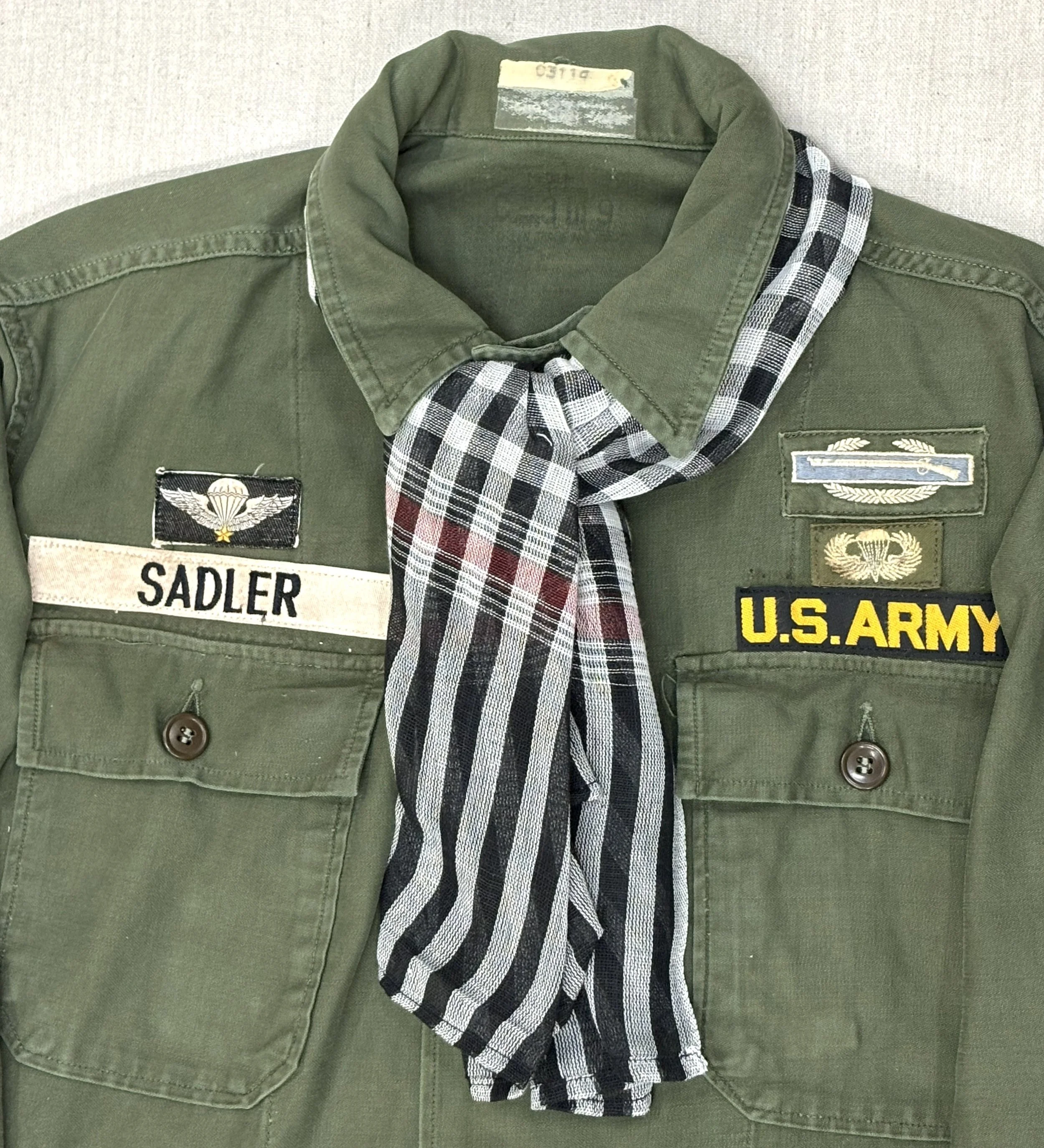
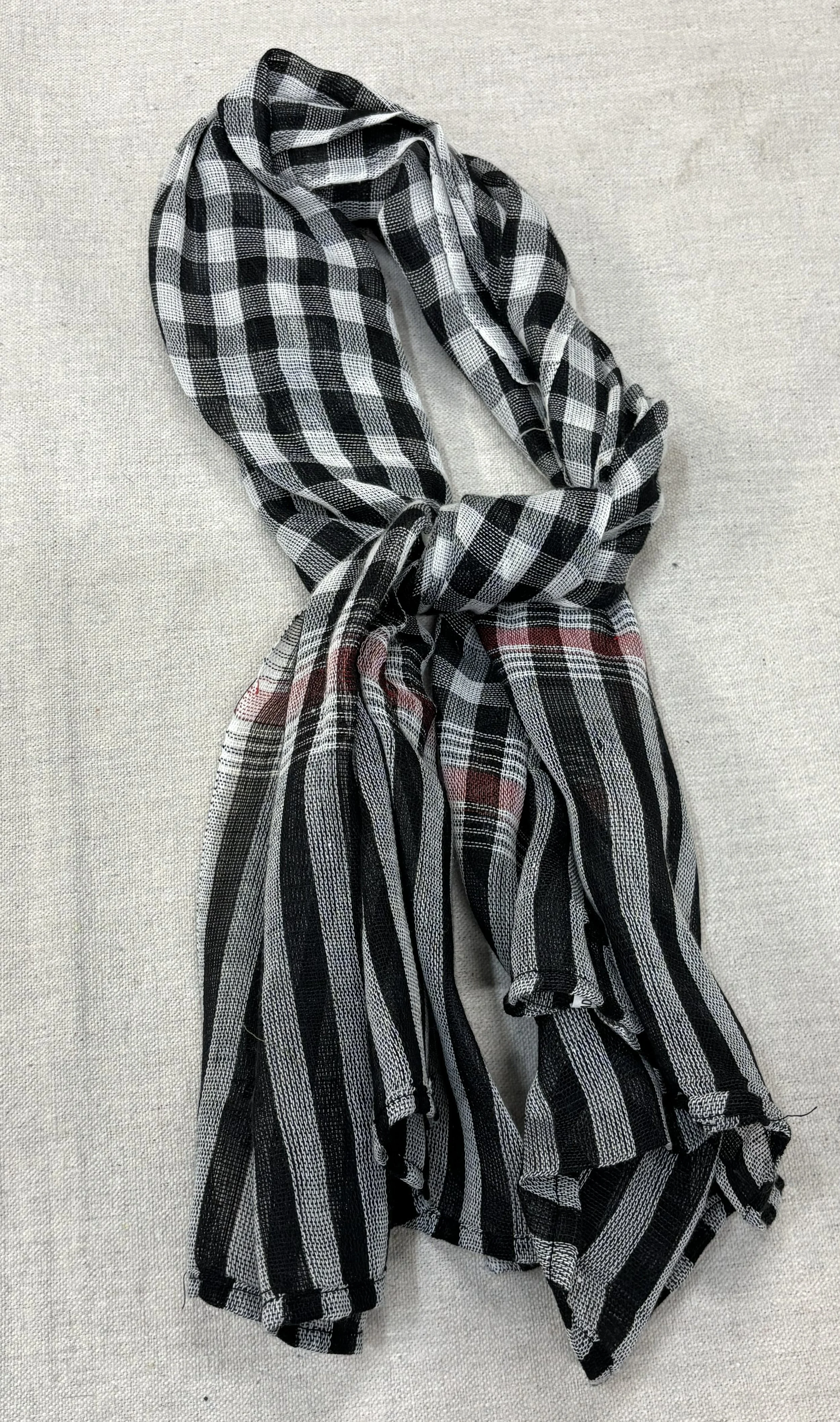
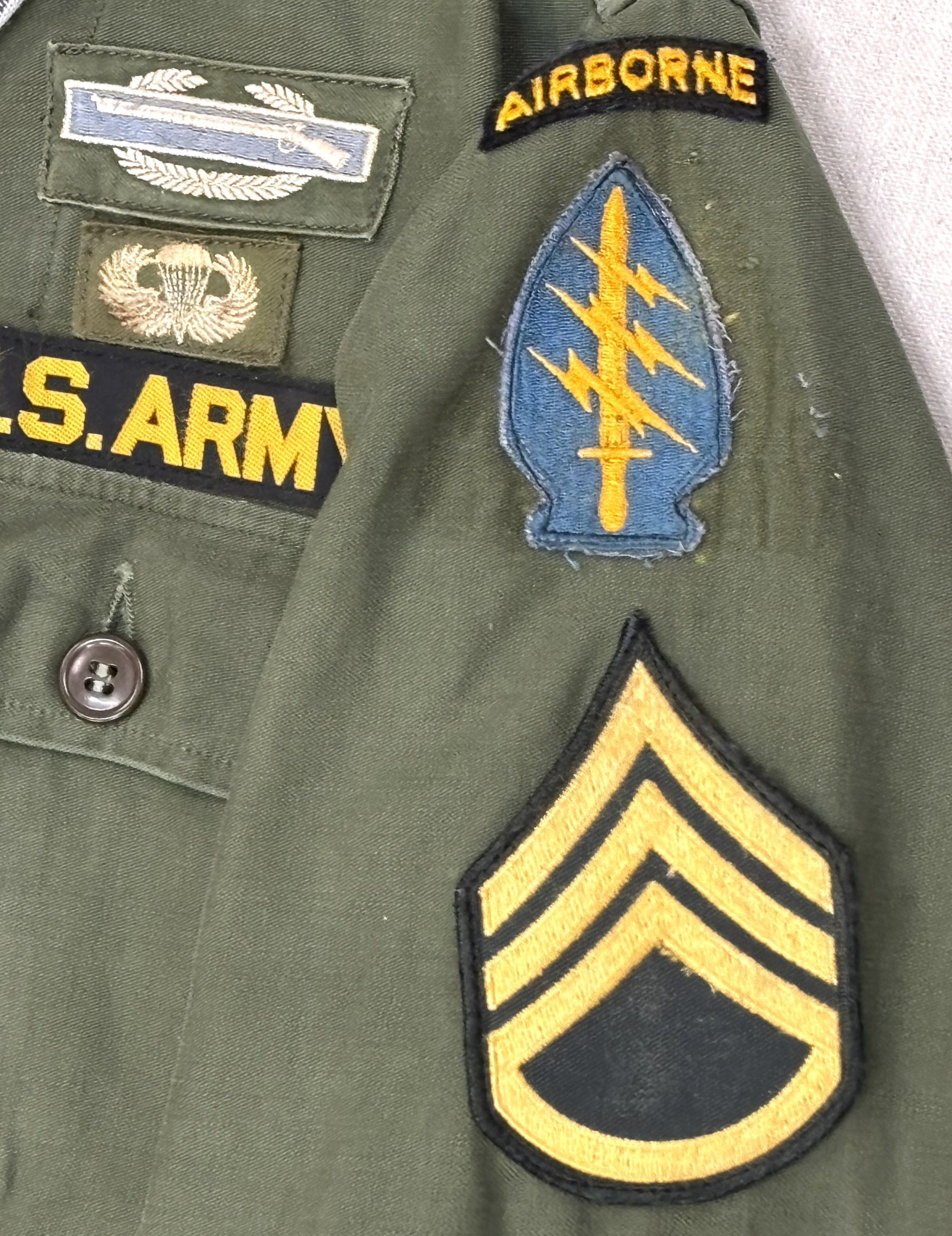
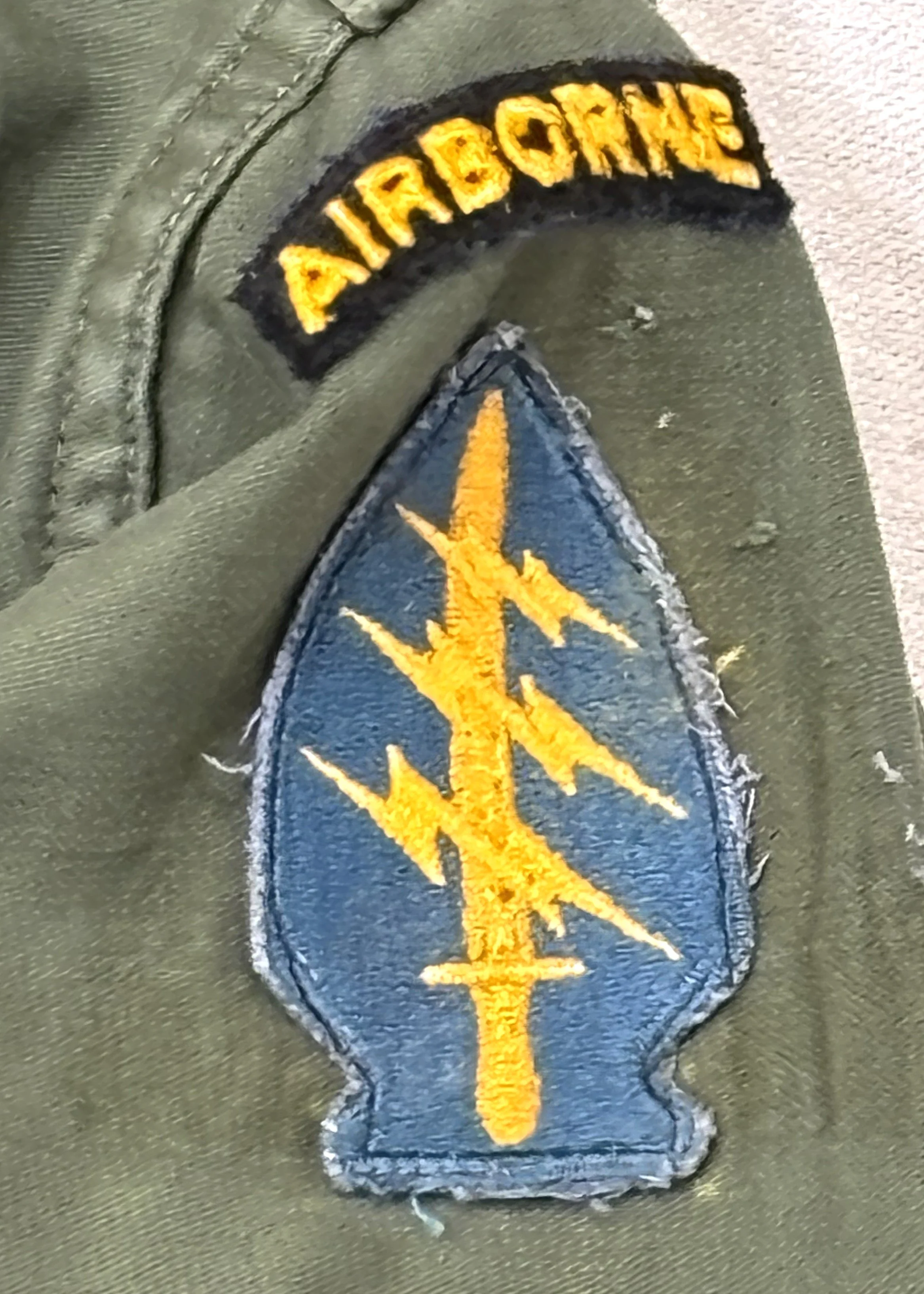
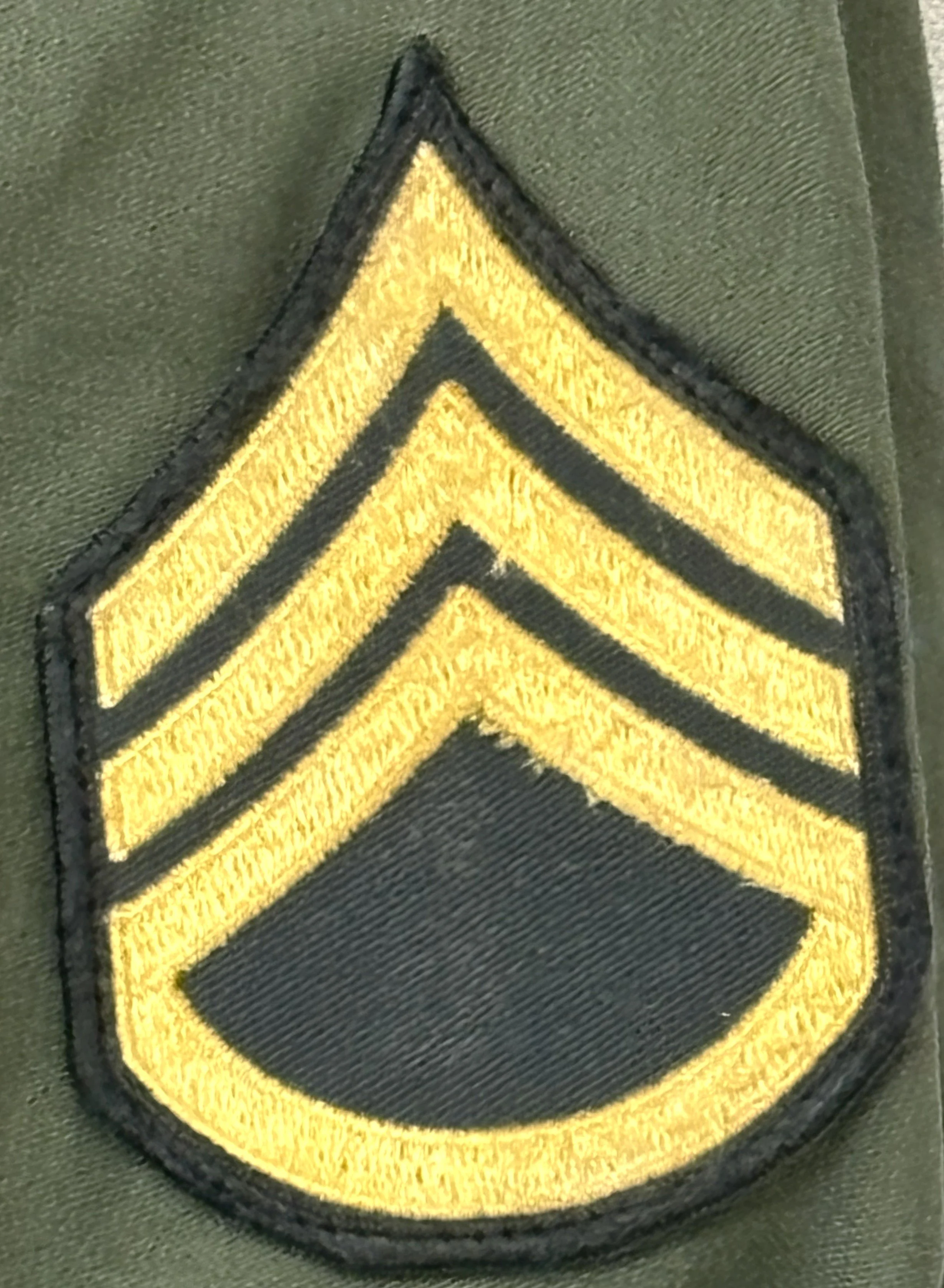
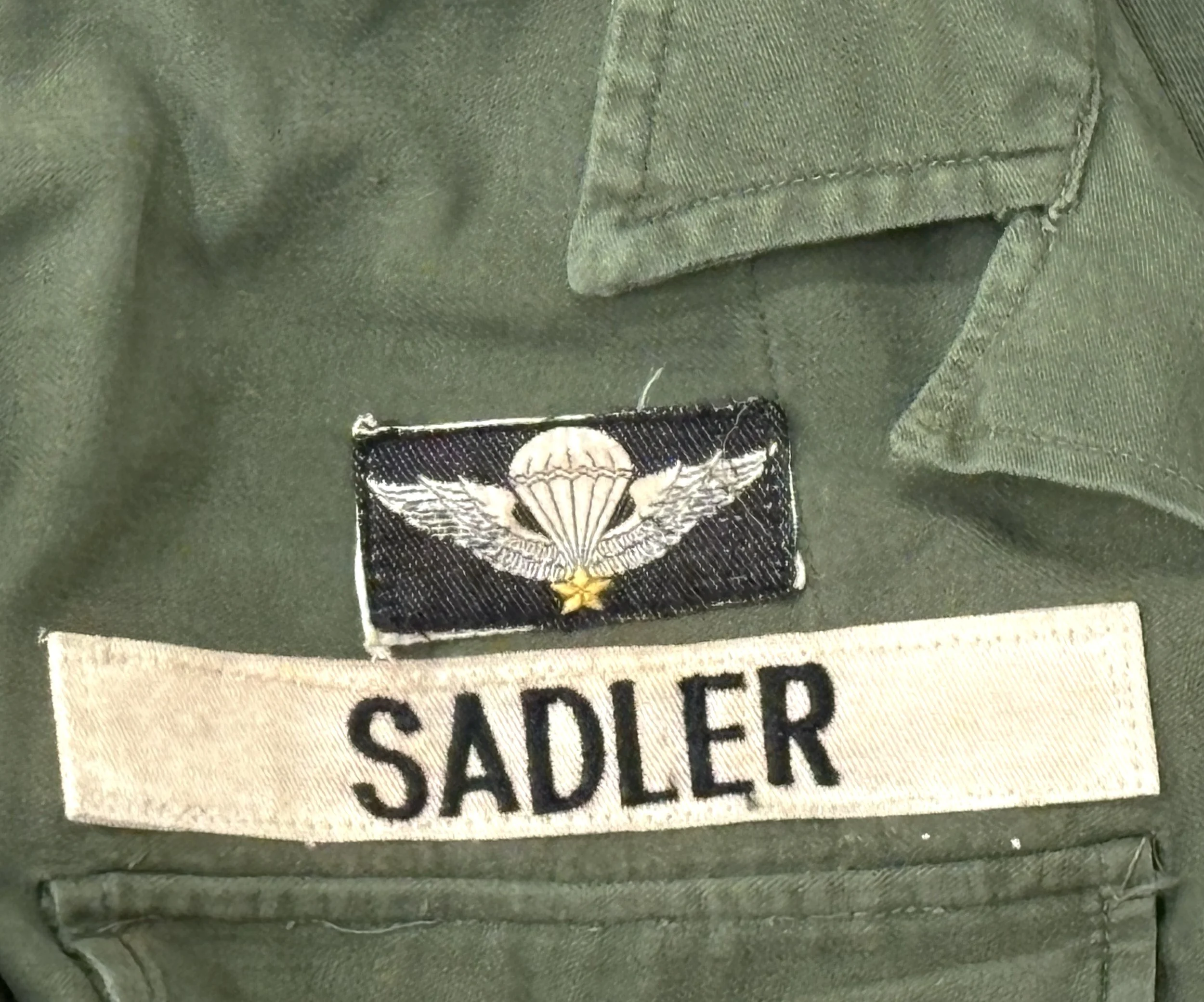
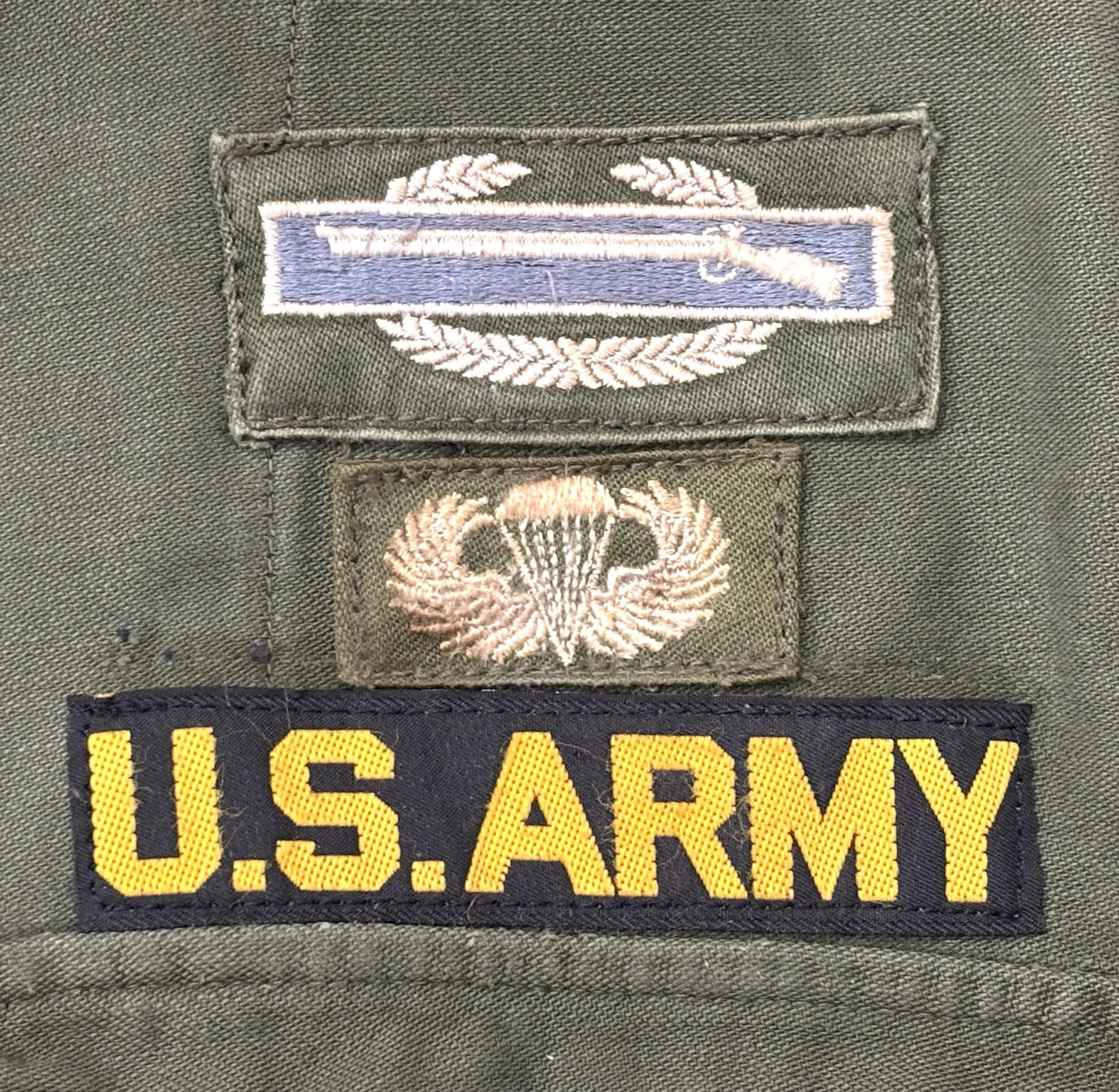





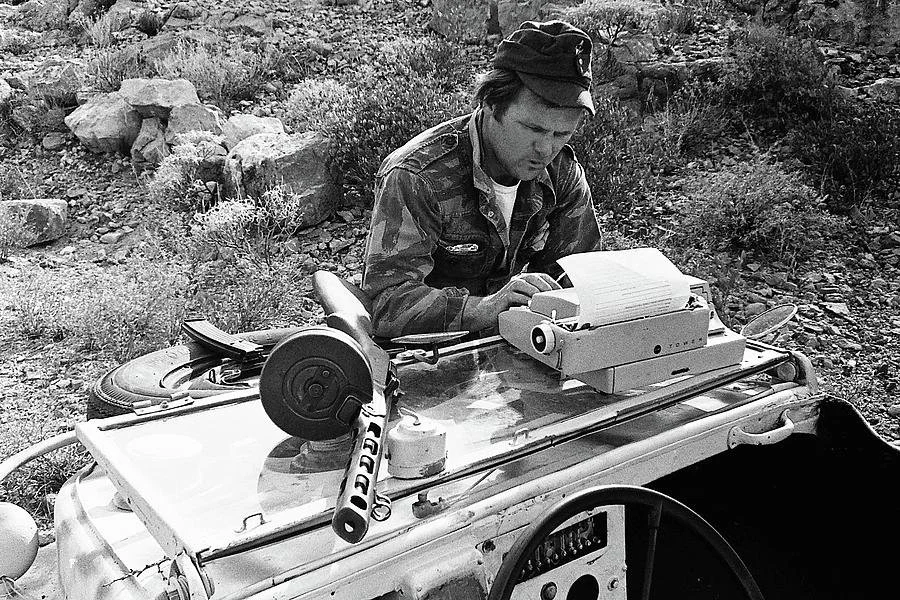


Redone, Staff Sergeant, Berry Sdler, 5th Special Forces:


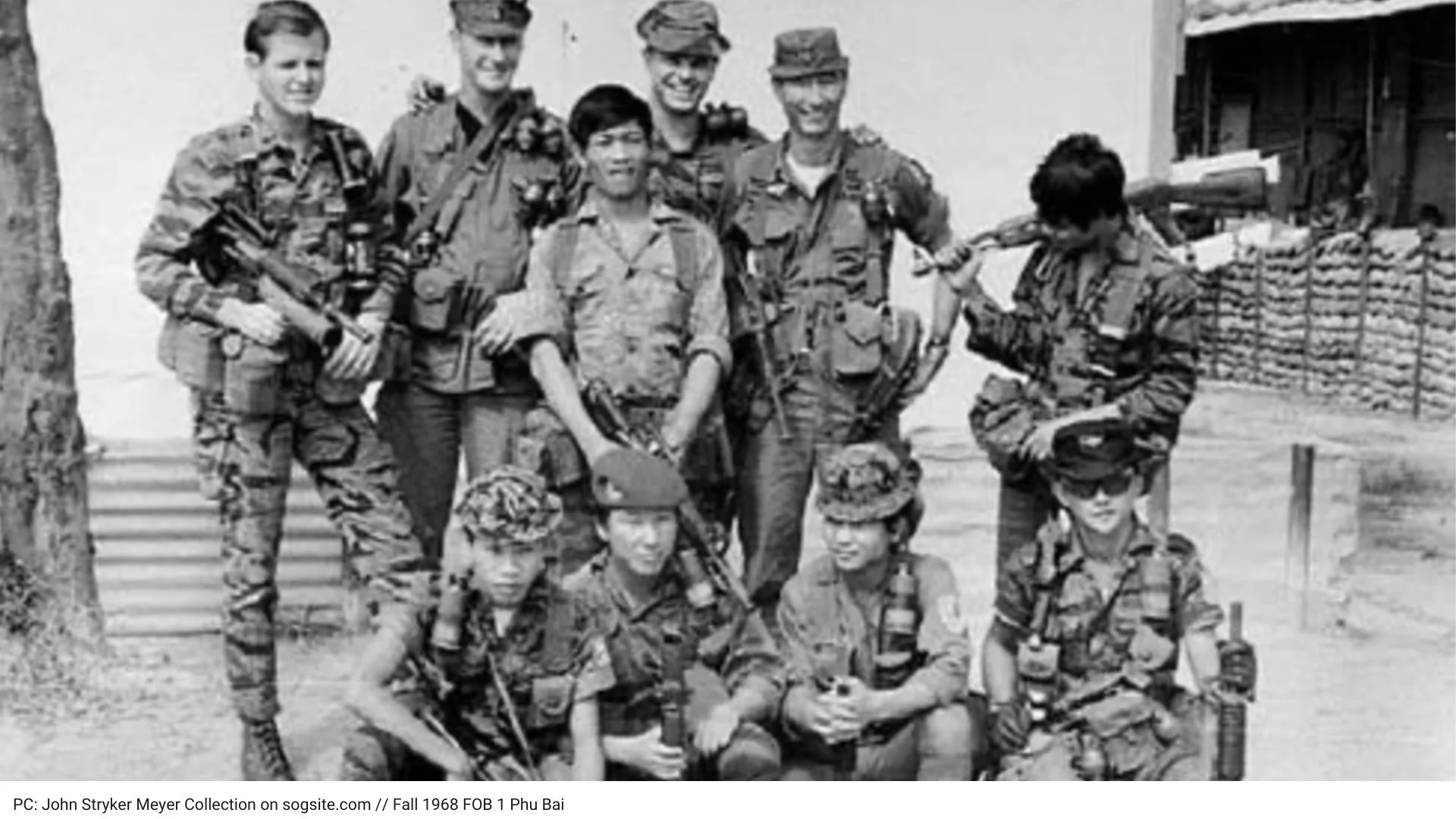


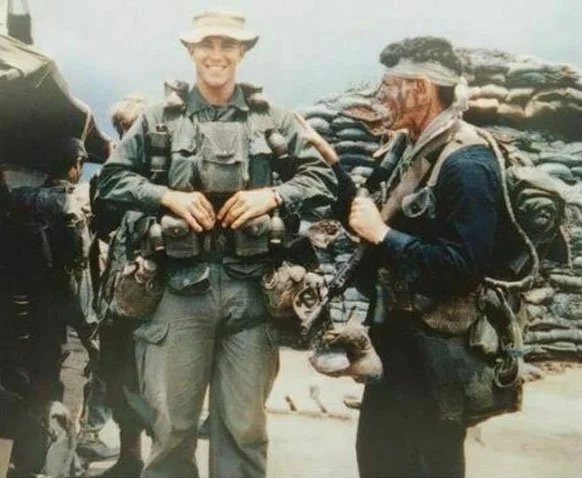
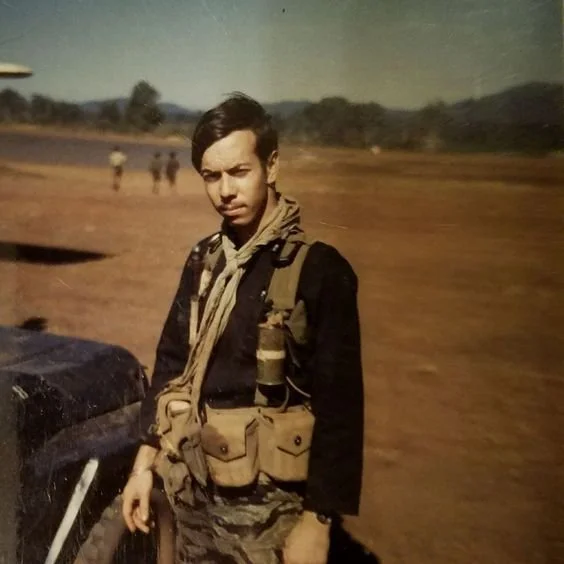
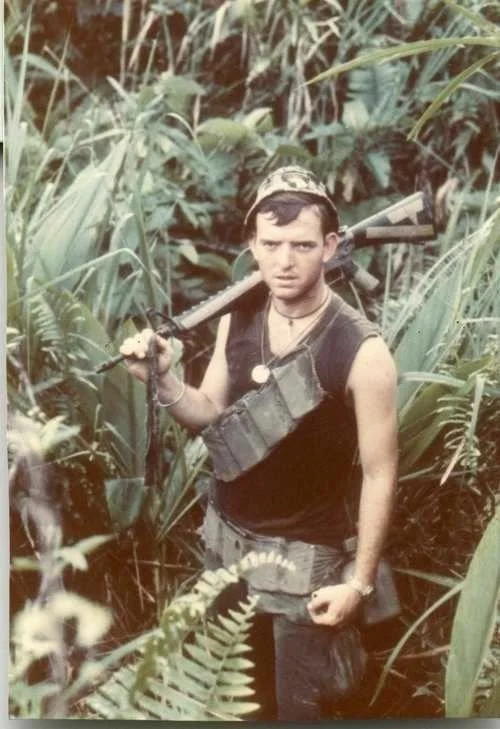
“Updated” Example of Sterol, Tiger-Striped Uniform:
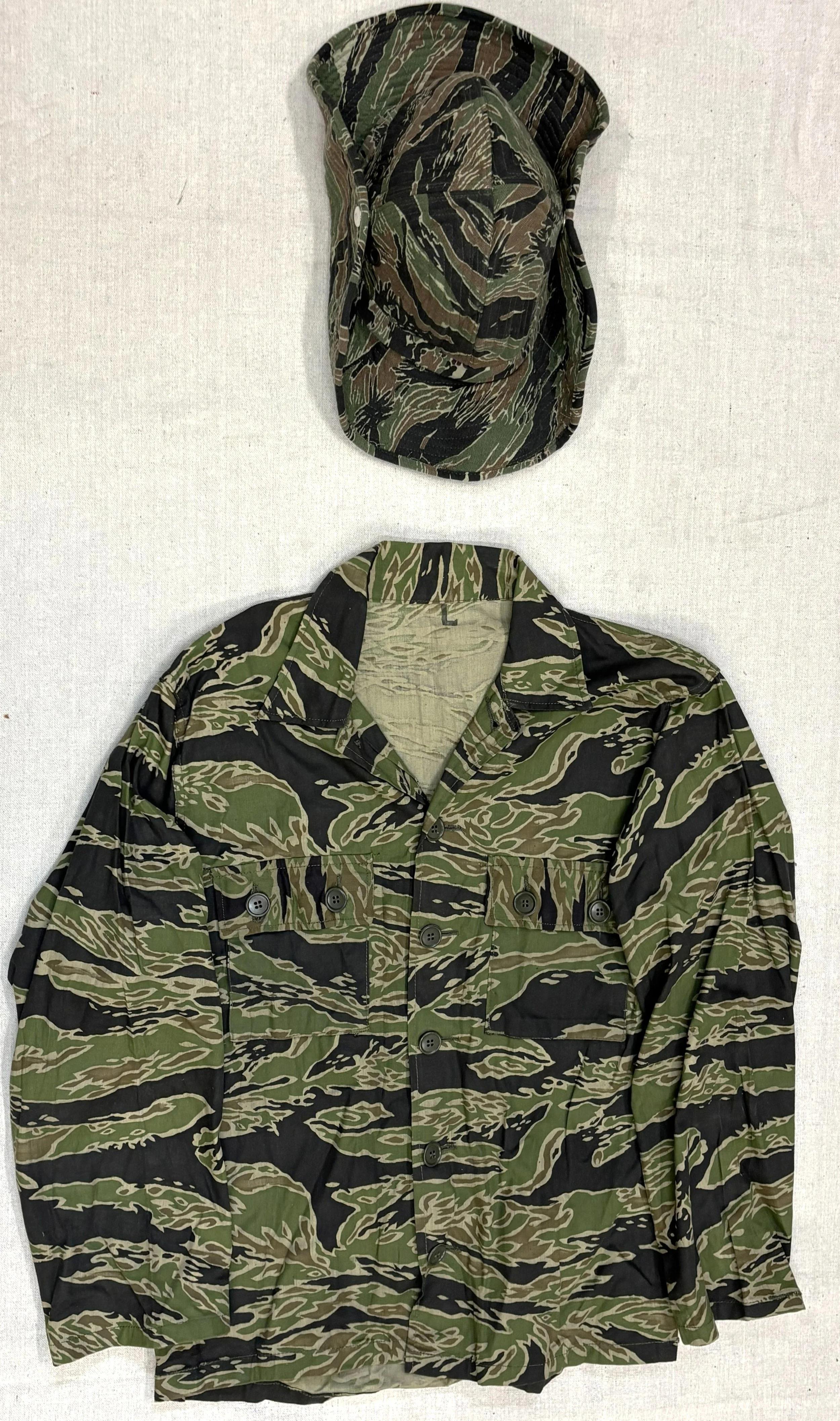
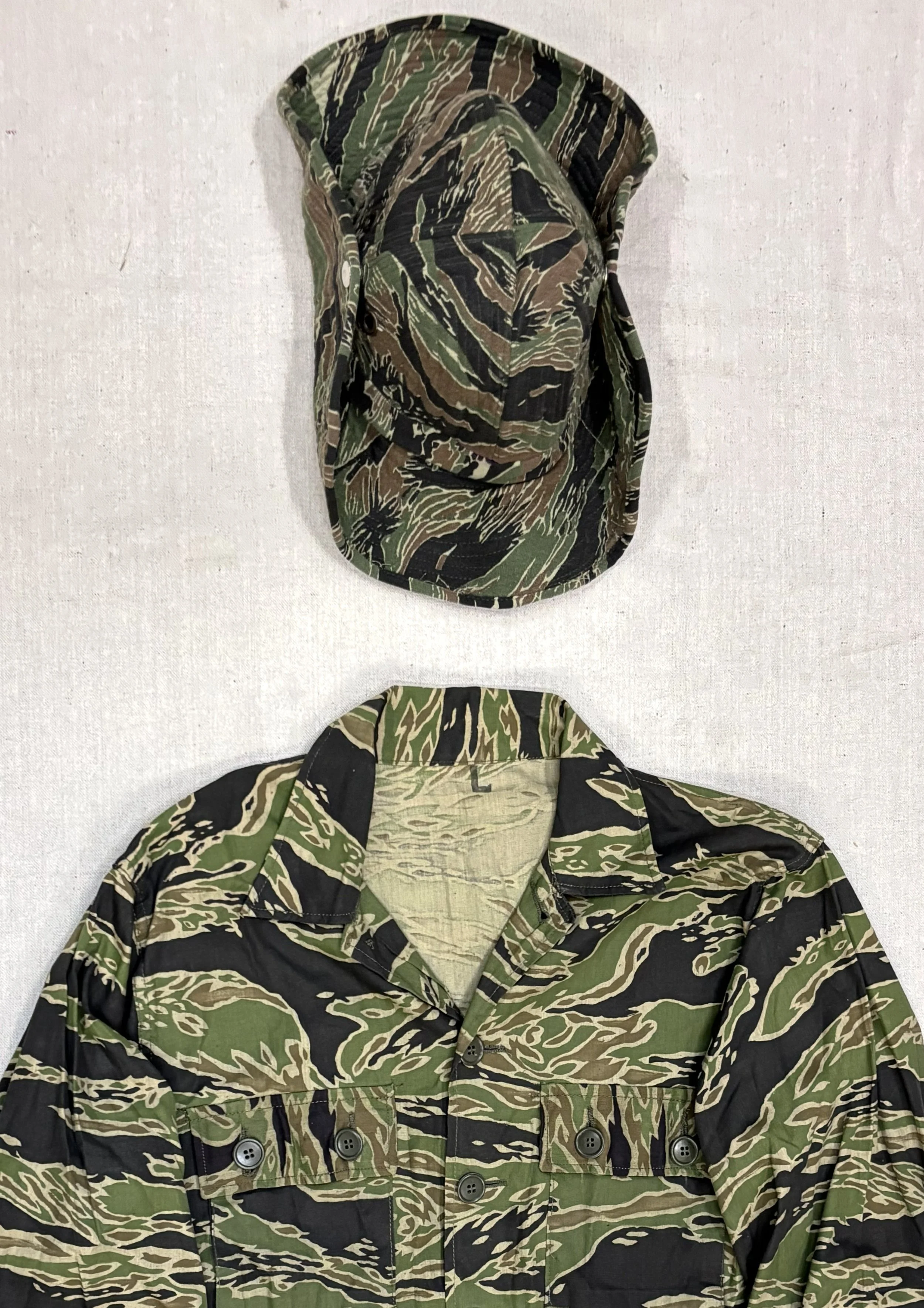
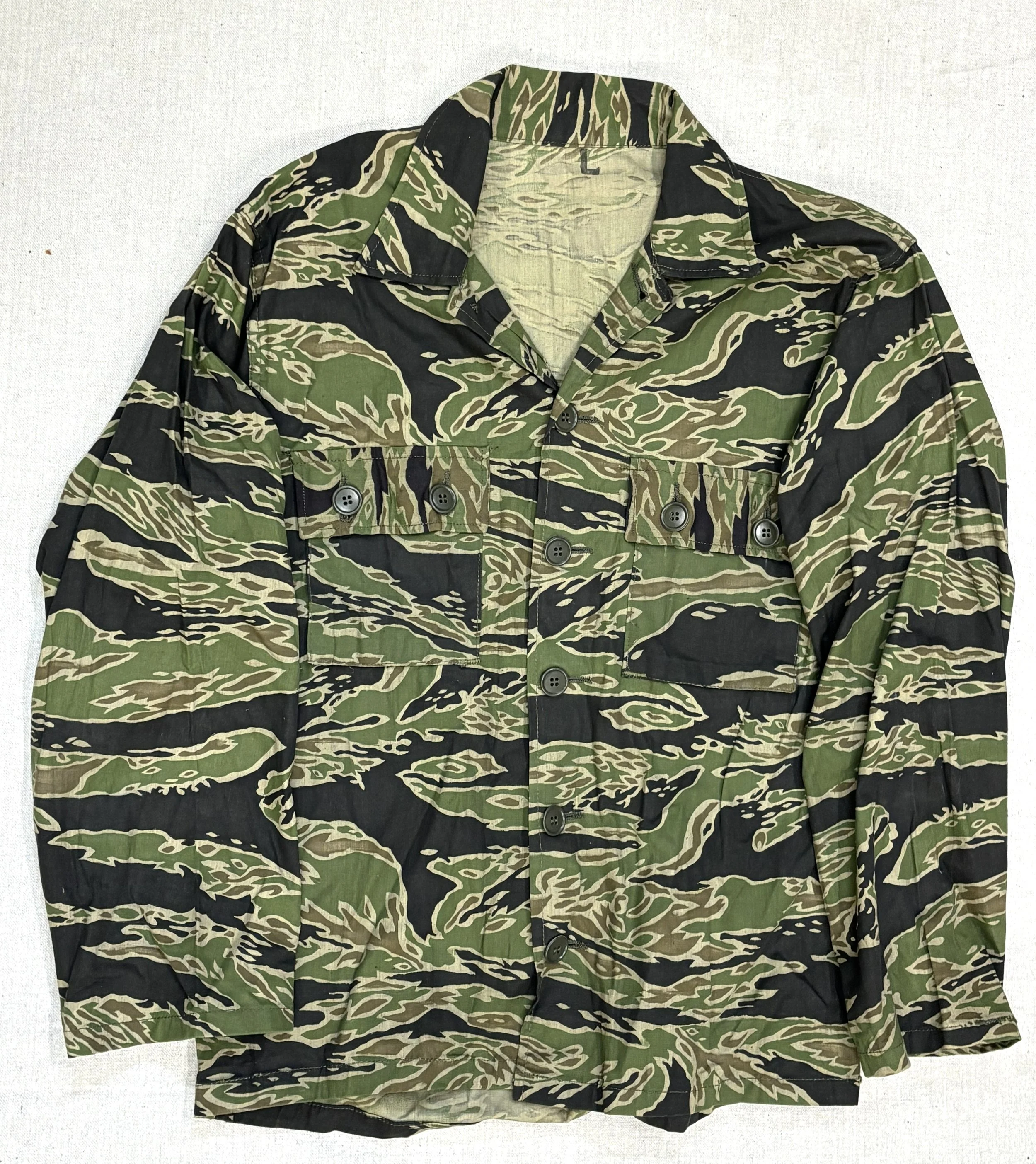
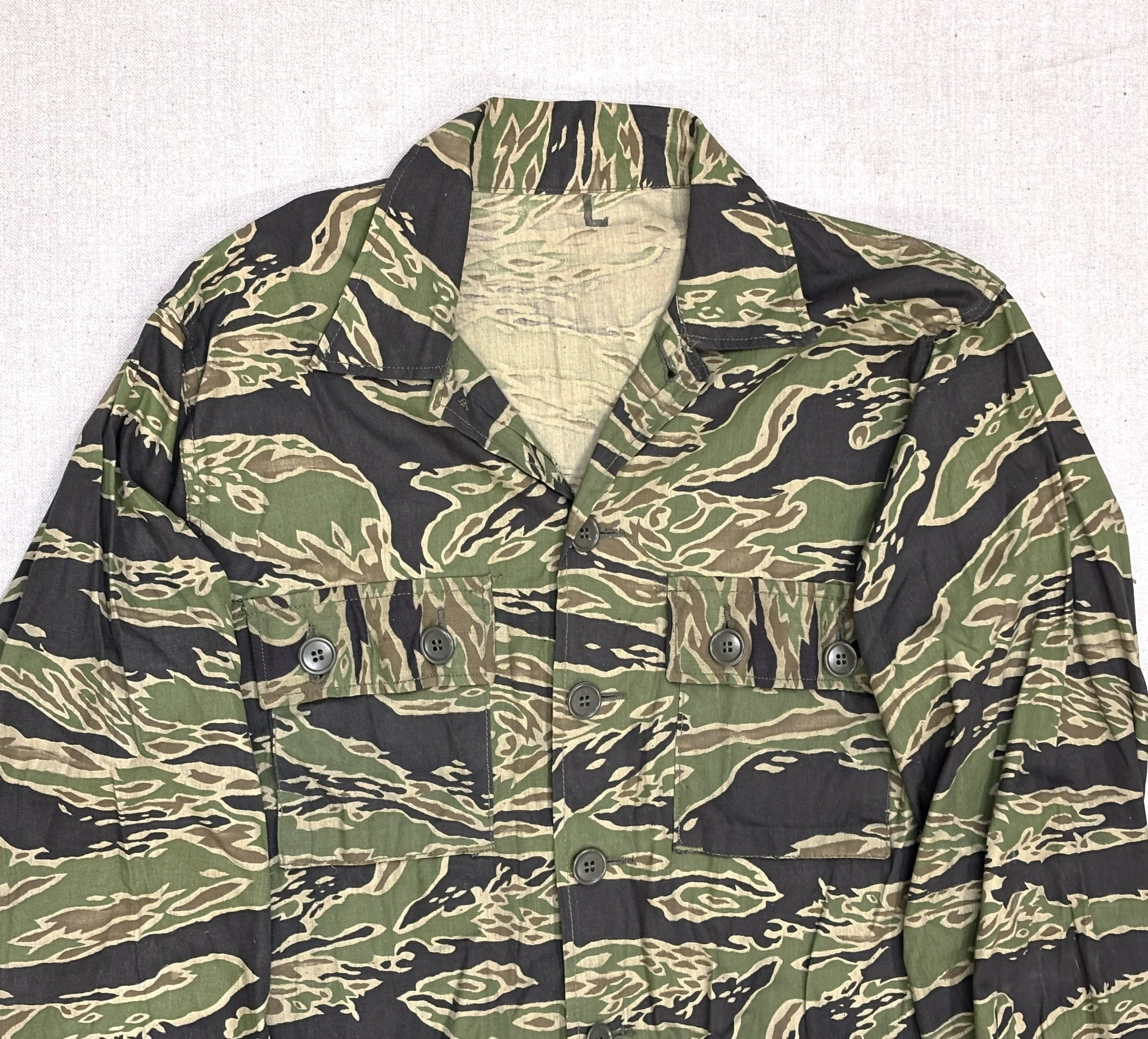
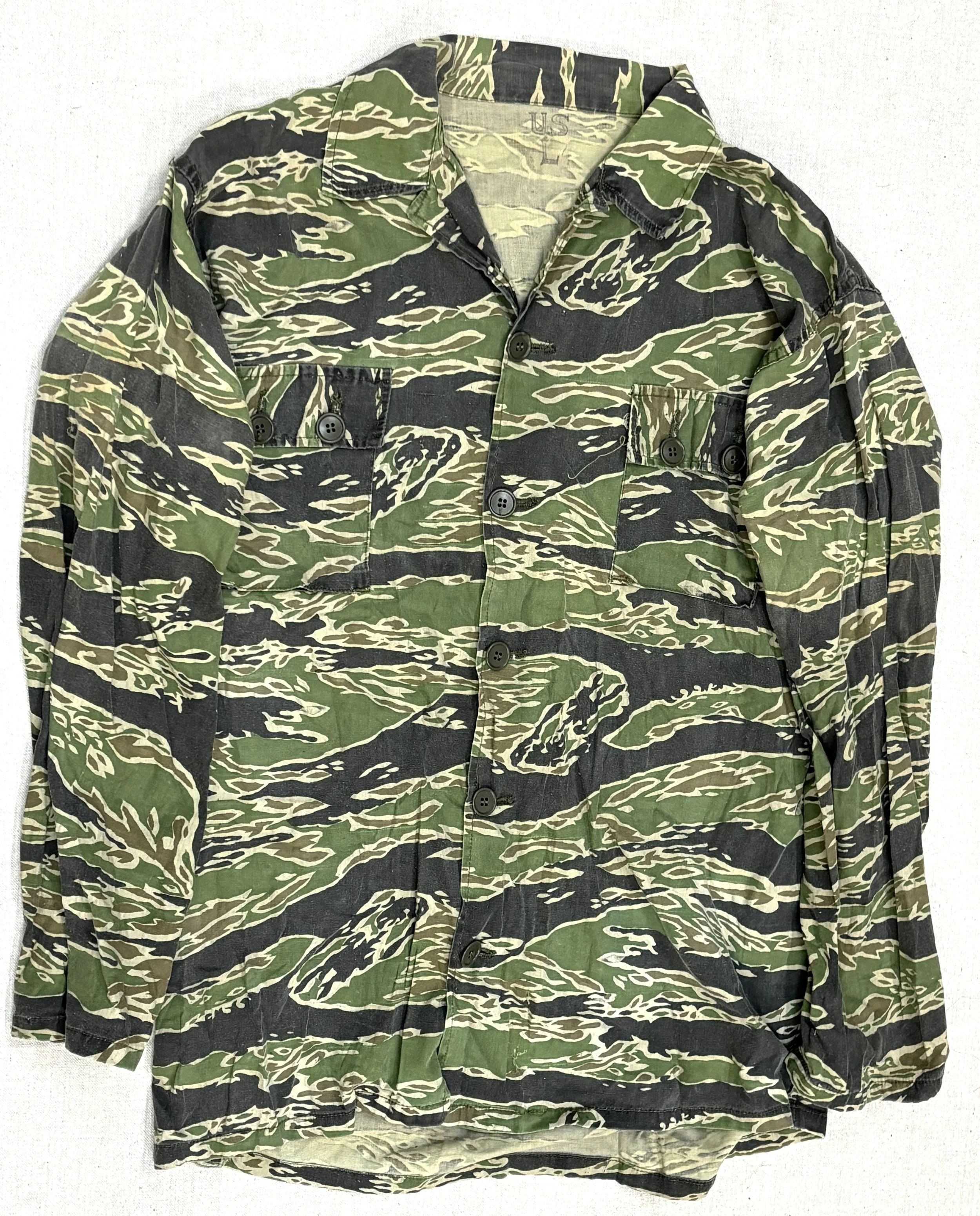
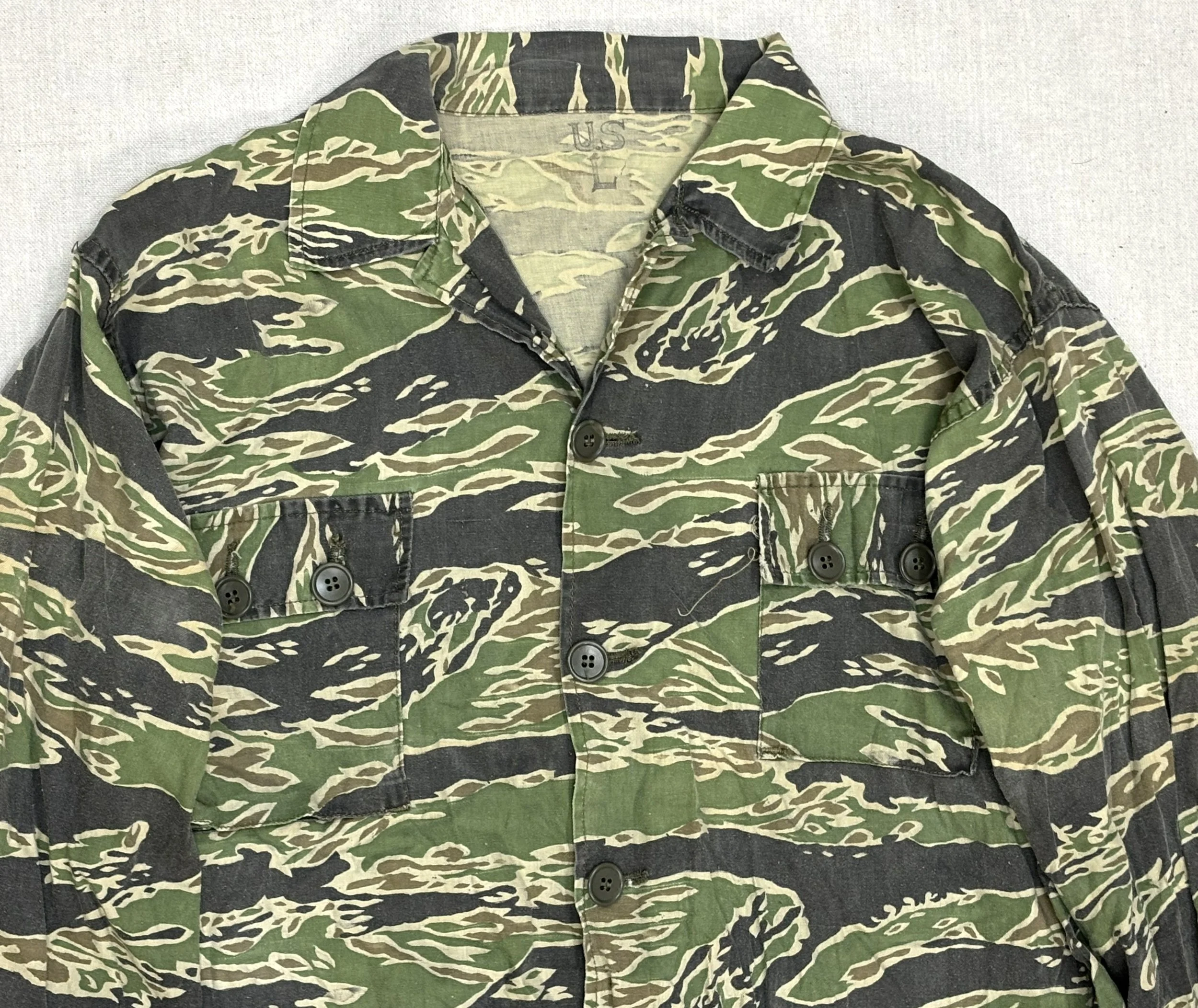
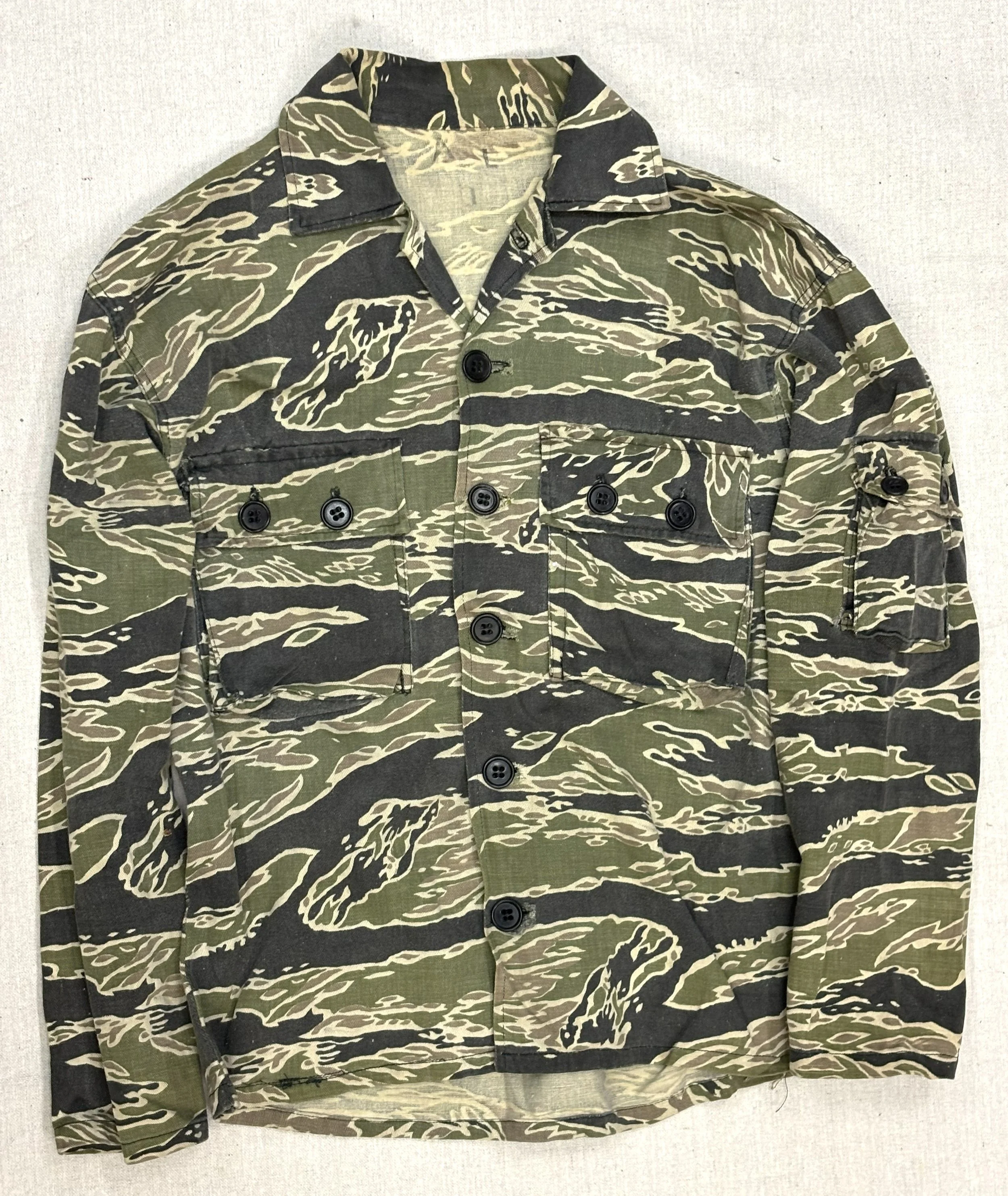
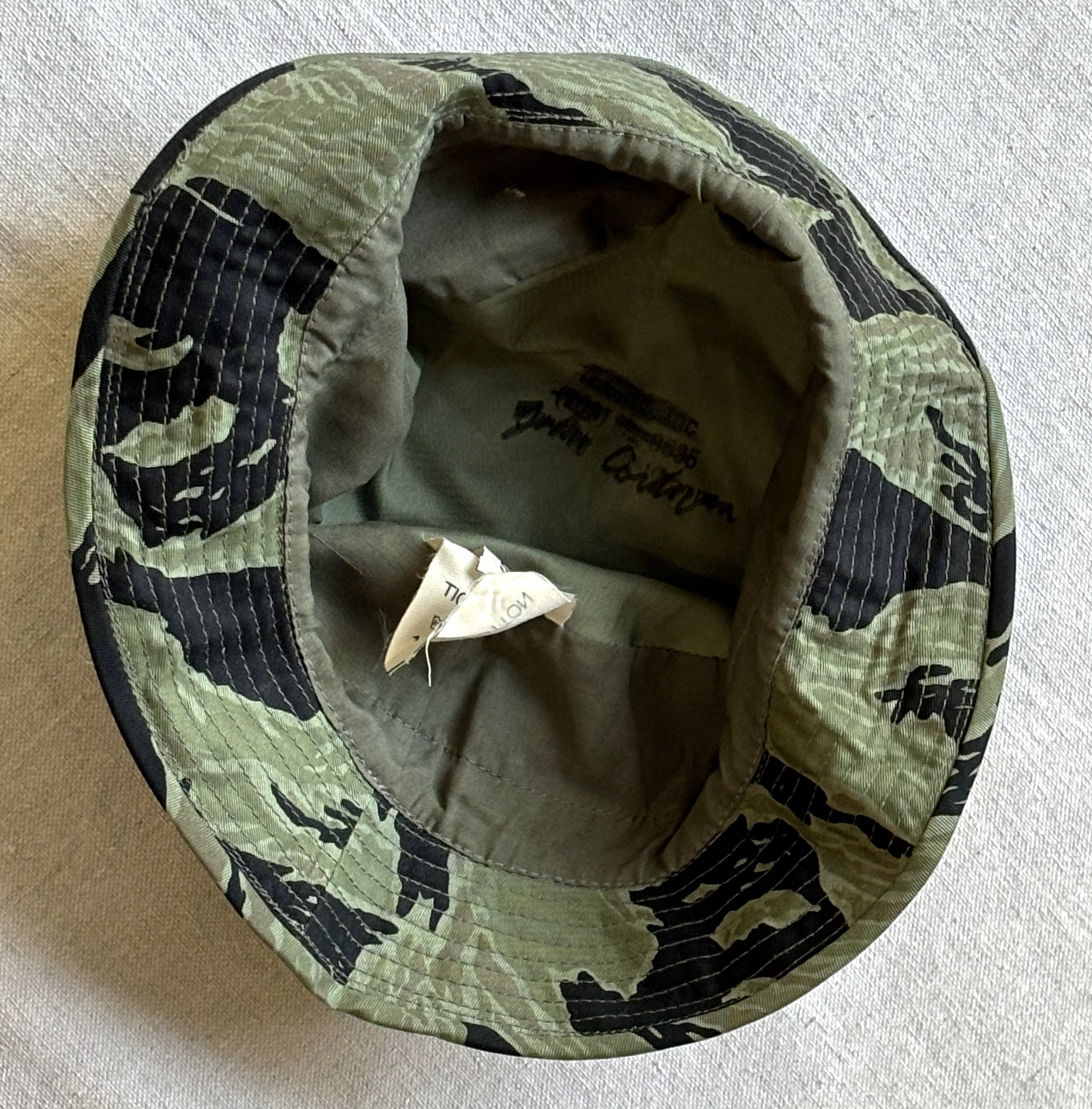
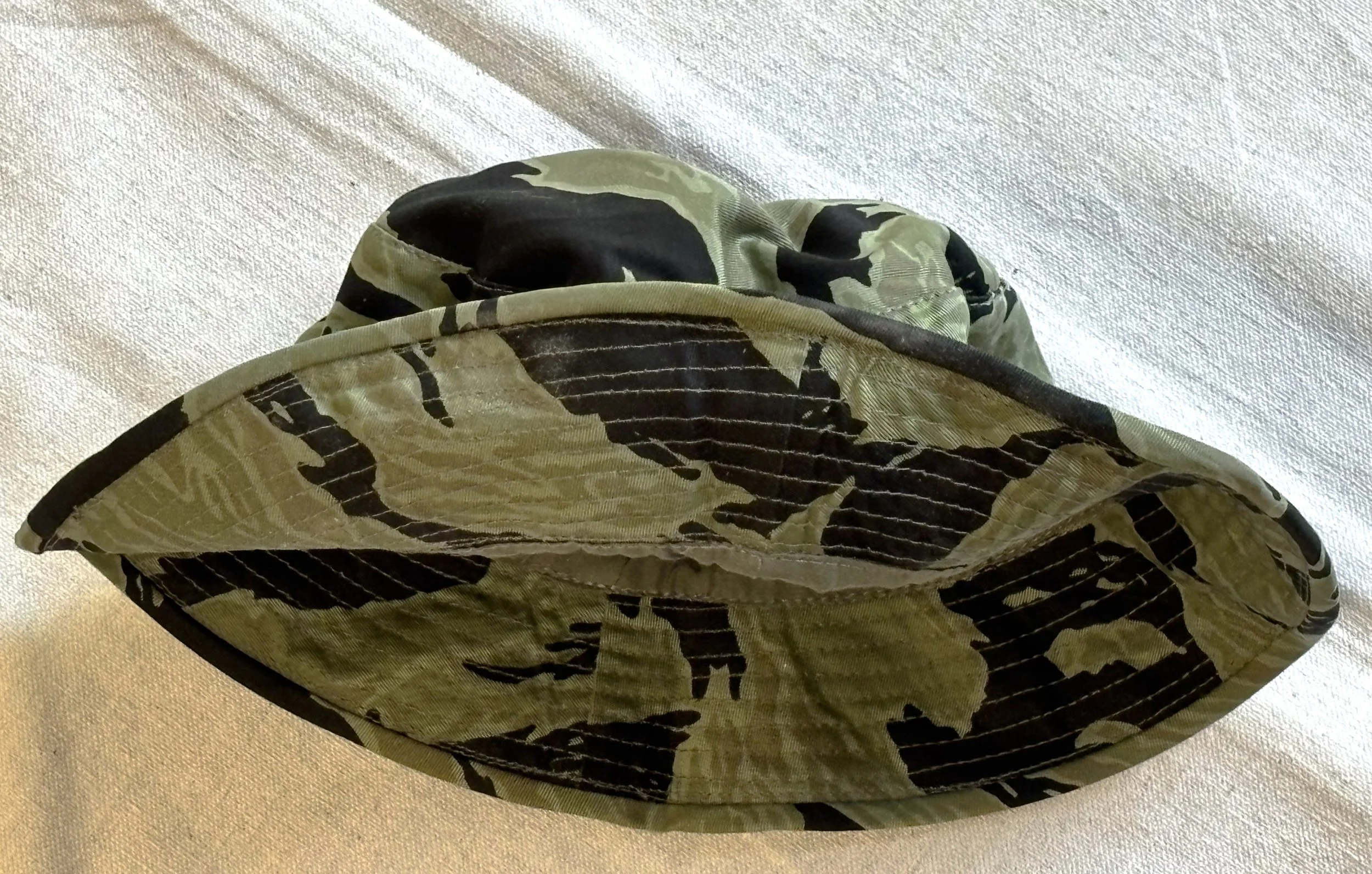
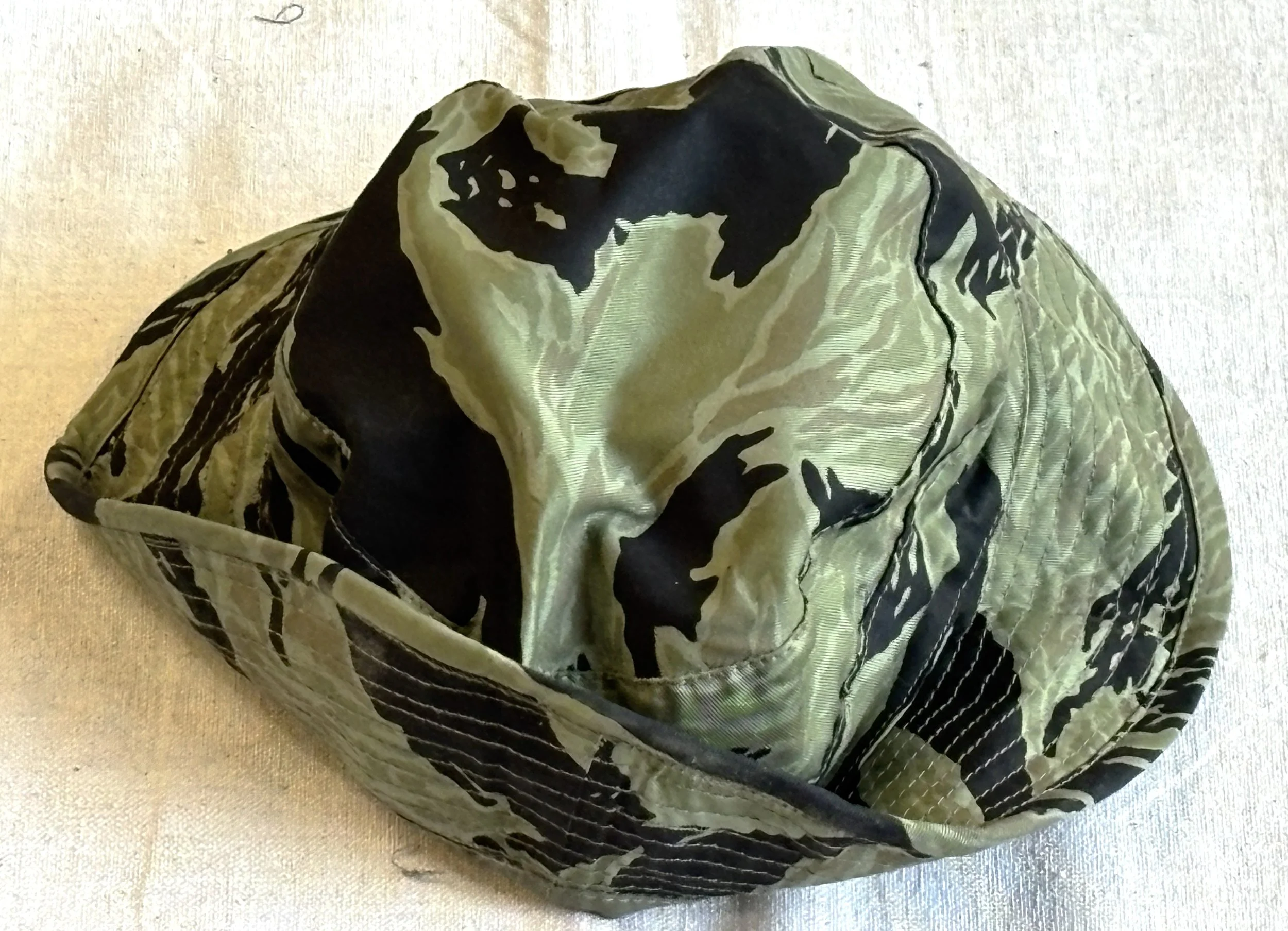
Being Special, Sneaky, by nature, the Special Forces Operatives soon conformed to the “Vietnamese” well-learned methods of concealment, and they had experimented with “Their Patterns” along with the surrounding countries there, and it was good, generally well-thought-out patterns with 3-4 contrasting colors to break up a person’s outline. They were a bit small for the Americans, who pulled the boney hats over their heads tight, and used the lightweight uniforms till they tore apart or they were modified to be bigger-additional strips in the center or on the cuff. Some were made completely custom, ordered, and made in a few days, outside the camp. That let the Vietnamese know there, but they came and went. So there are some nice ones out there; some were even government-made and sized.
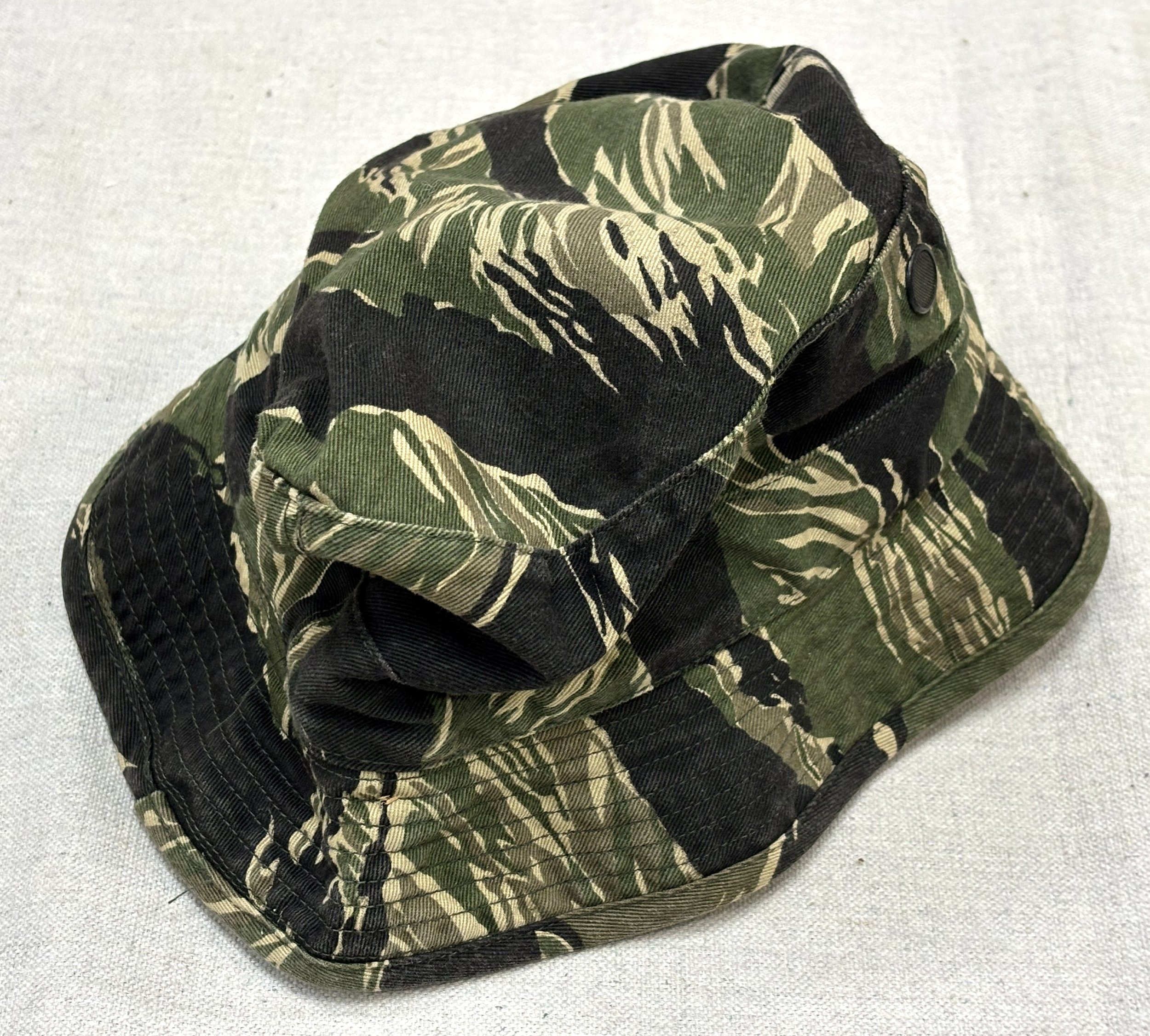
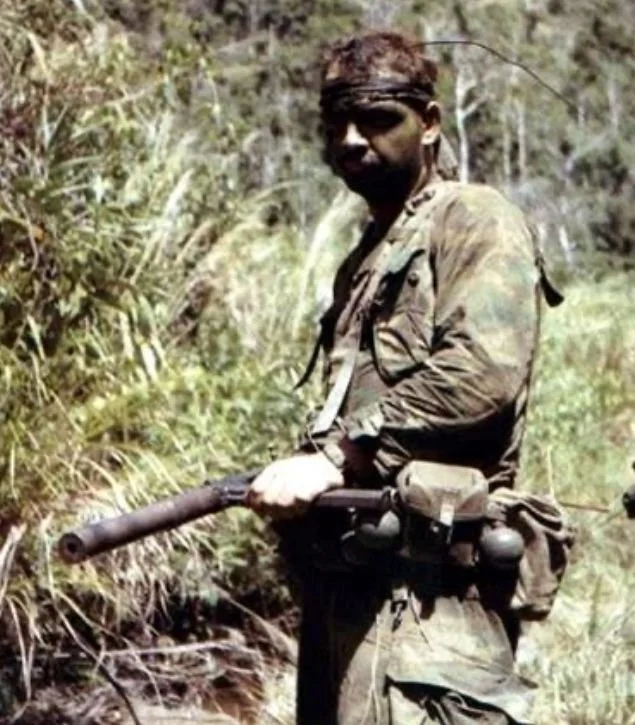
Often, rather than being used as a jacket, the tendency was to be on the smaller size, being of the Vietnamese stature; then it was pretty light compared to an American, though they too tended to, well, have little extra fat on them, so lower pockets on jackets were removed, and the bottom tucked into their trousers, the extra pockets used on another. Field uniforms often lacked any insignia; it was the norm, regardless of rank. Tigerstripes were good and locally available, and the ERDL-type camouflage is very good. What you don’t hear about, because it was against the Geneva Convention, was the wearing of the enemy’s uniform (this would then be a Spy), but then wearing the black, blue, etc. of the Vietcong was the same as every villager in the country. North and South. Now, in all practicality, dressing in “plain clothes” would absolutely be best for hiding in plain sight, even though the lighter Americans were 20 pounds heavier and 6 inches taller than the average Vietnamese of the time, so they were going to stand out, but I have heard it was common practice to wear black, especially in a lot of vegetation. American Special Forces Operators had prices on their heads, literally, and their names were out there, so they did not want to get caught, and they probably kept the last bullet for themself in the field. Life is quite different out in the boonies, on your own with only a radio to get you support, food, medical, ammo…
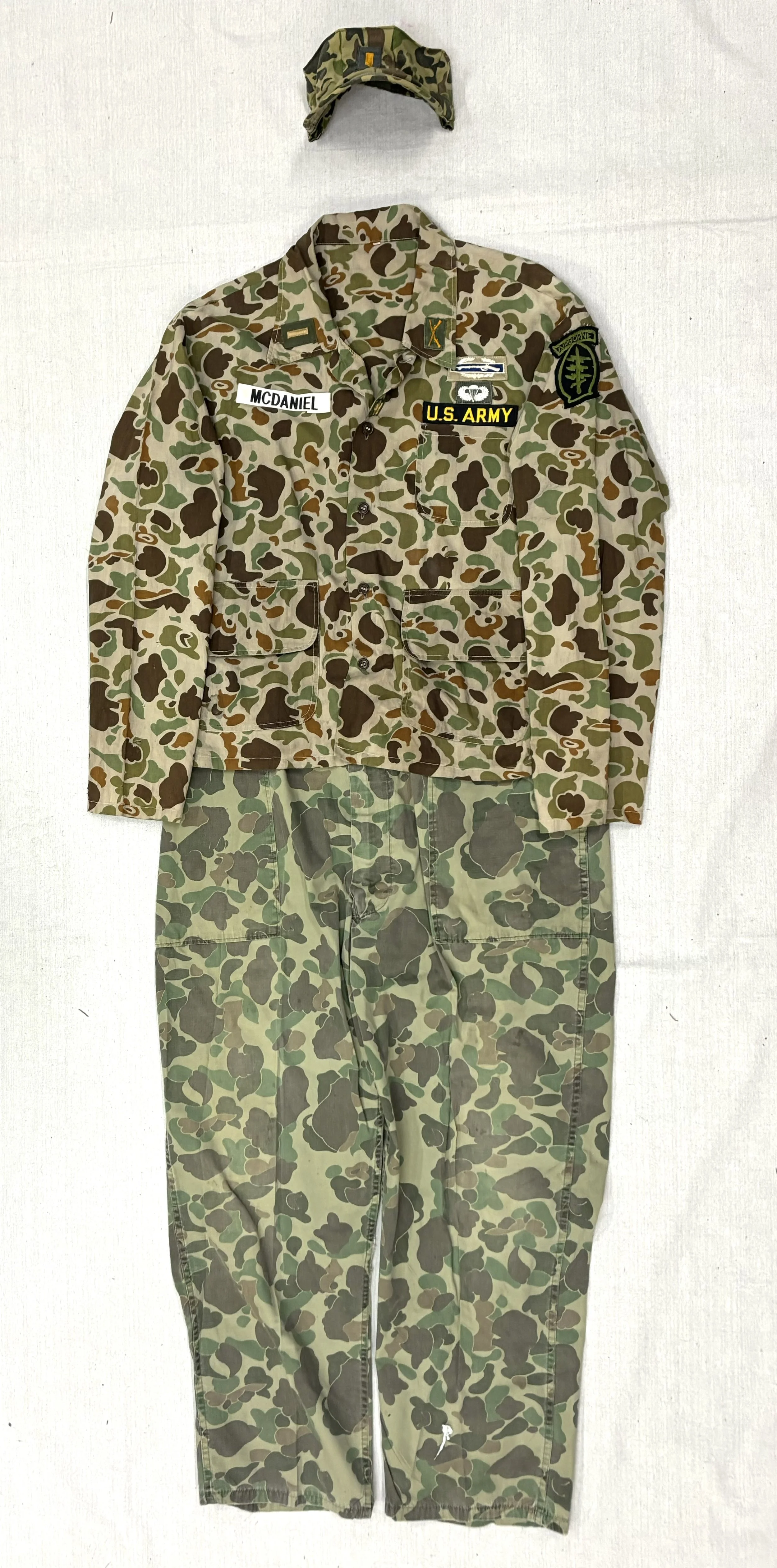
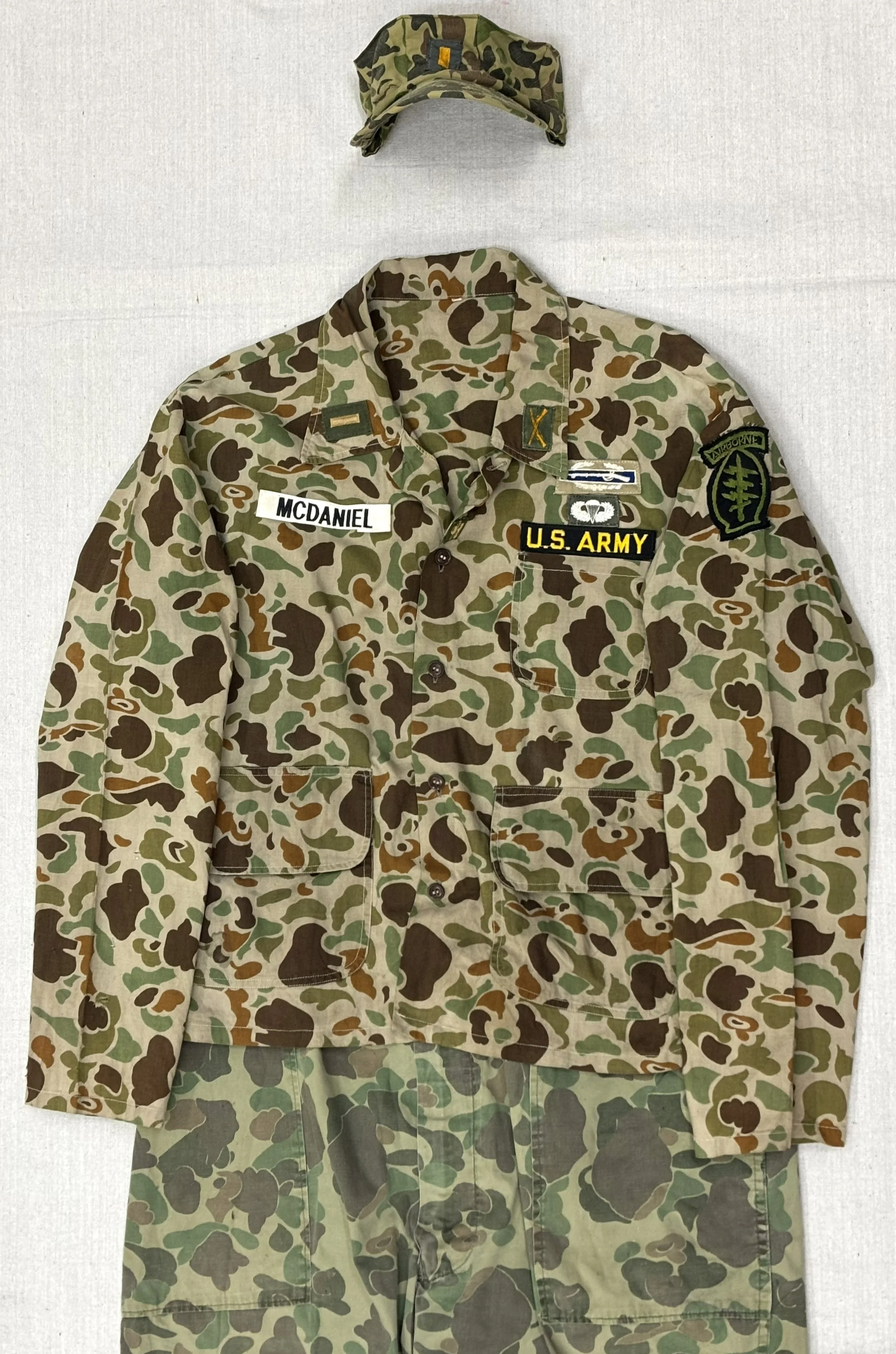

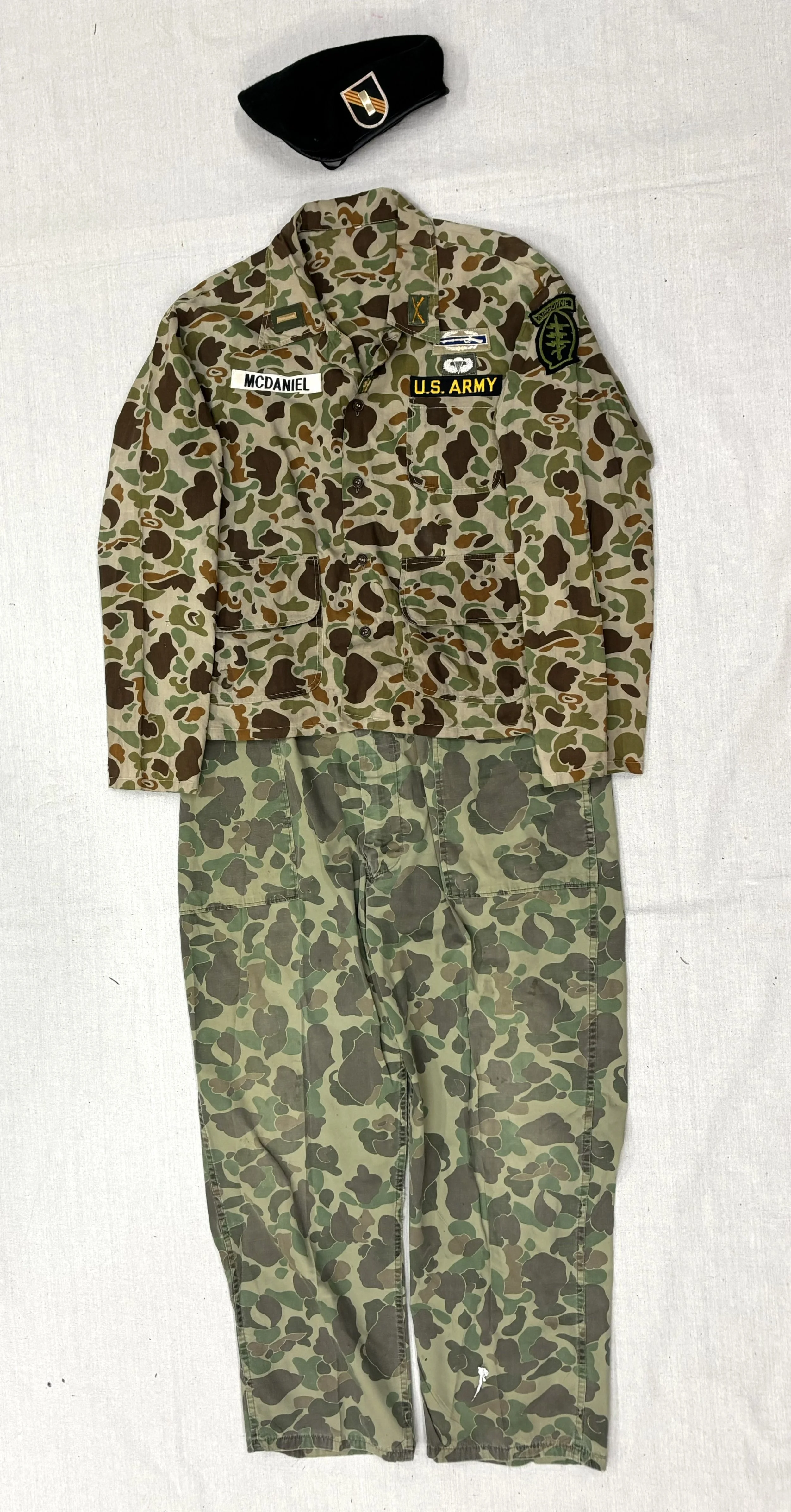
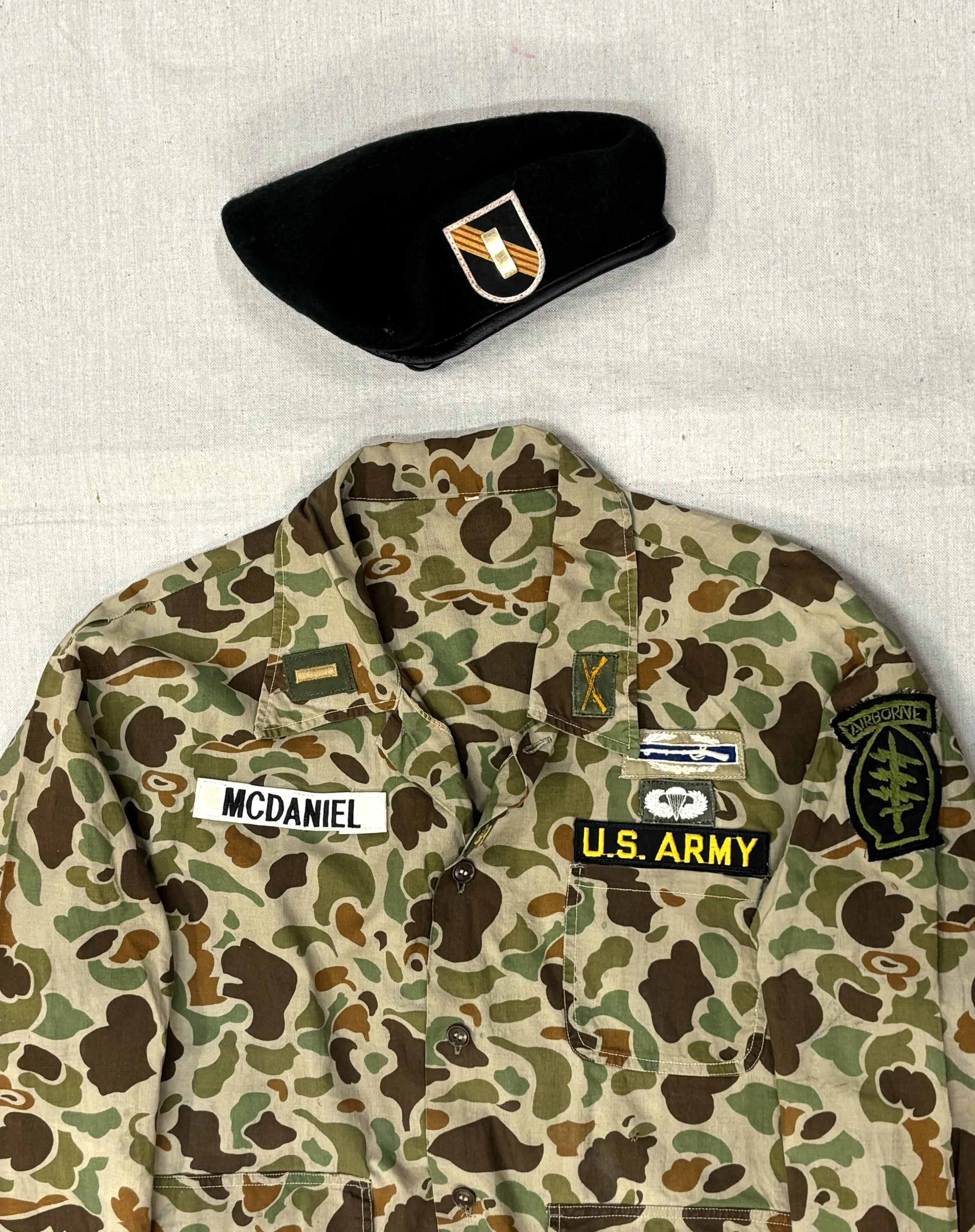
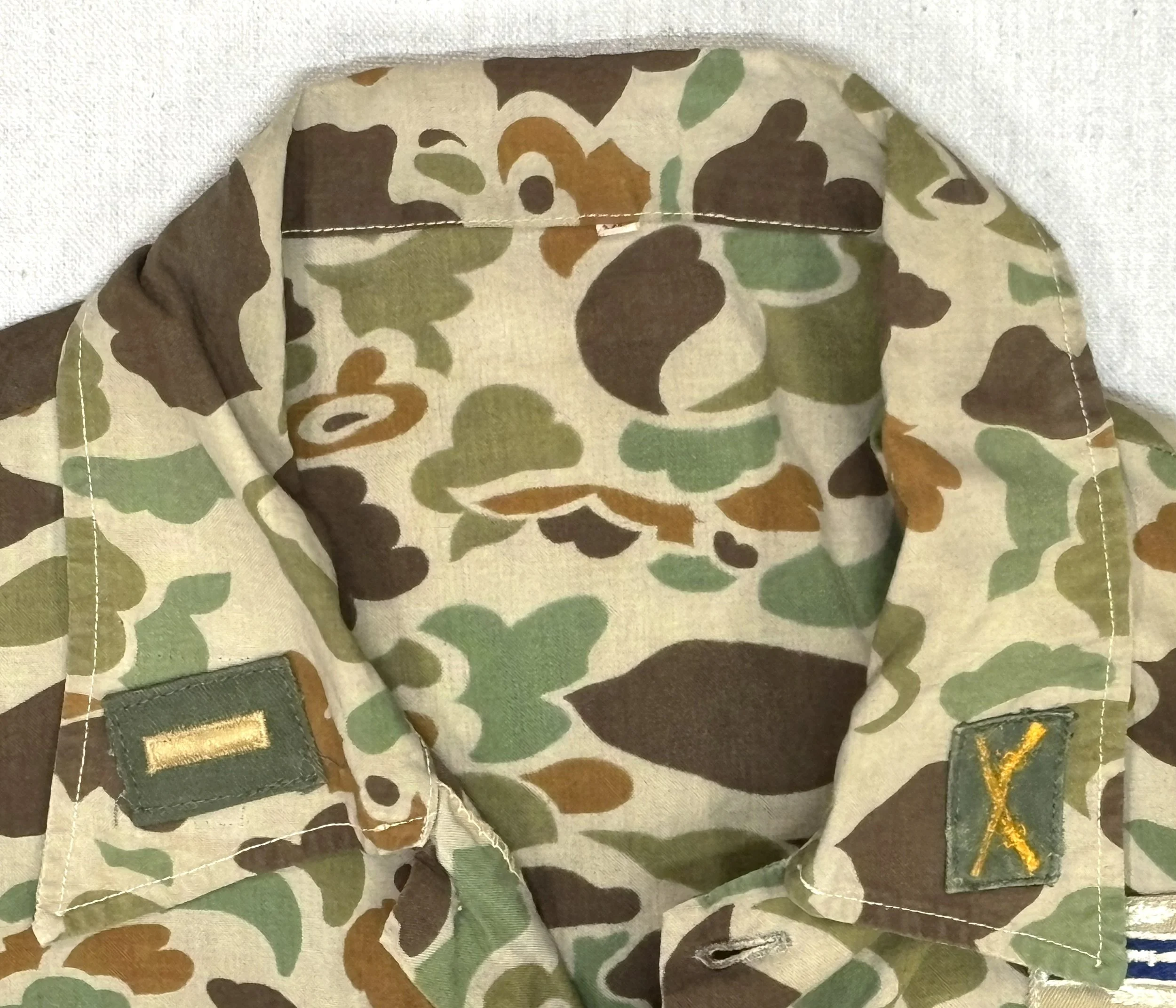
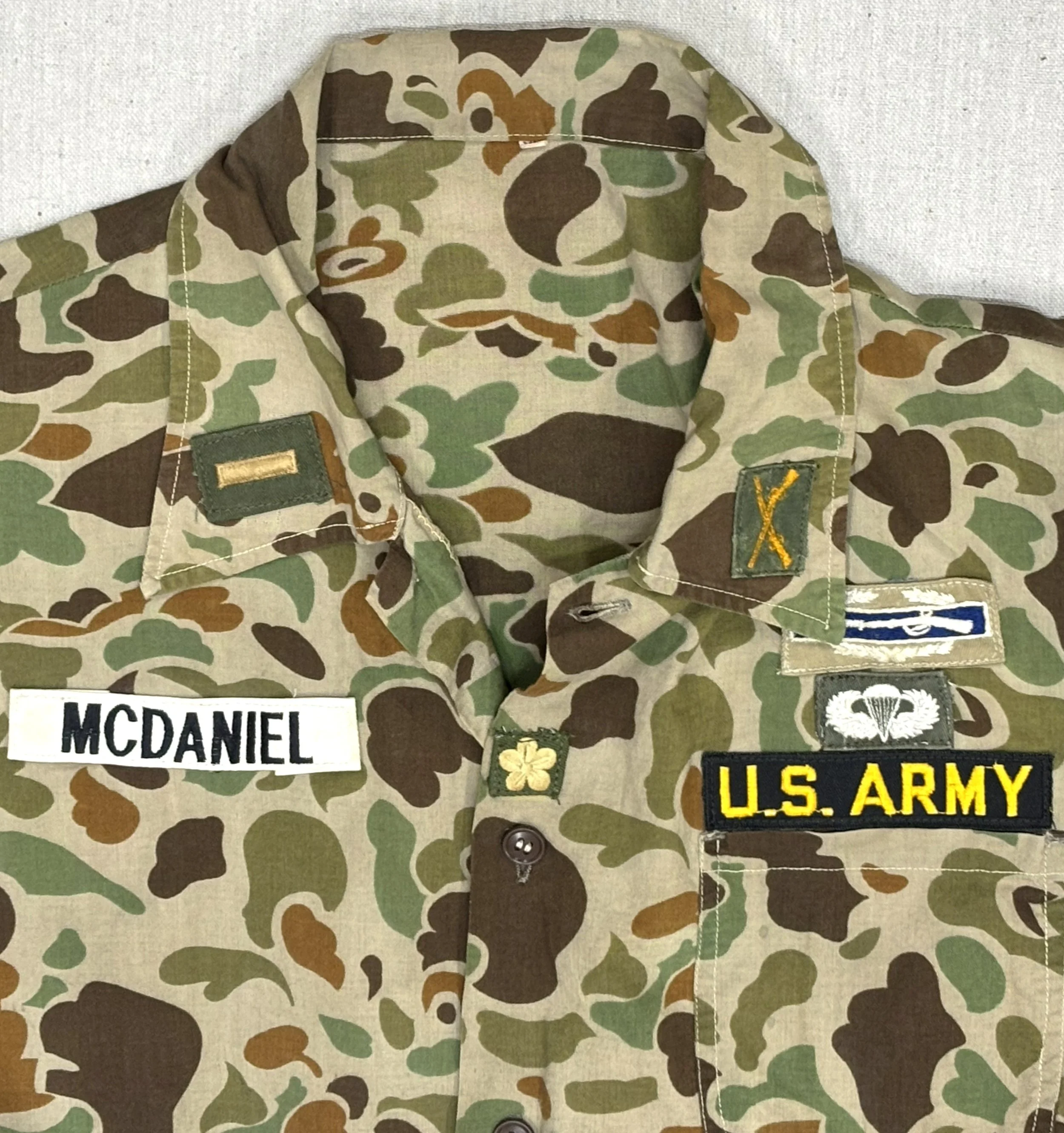
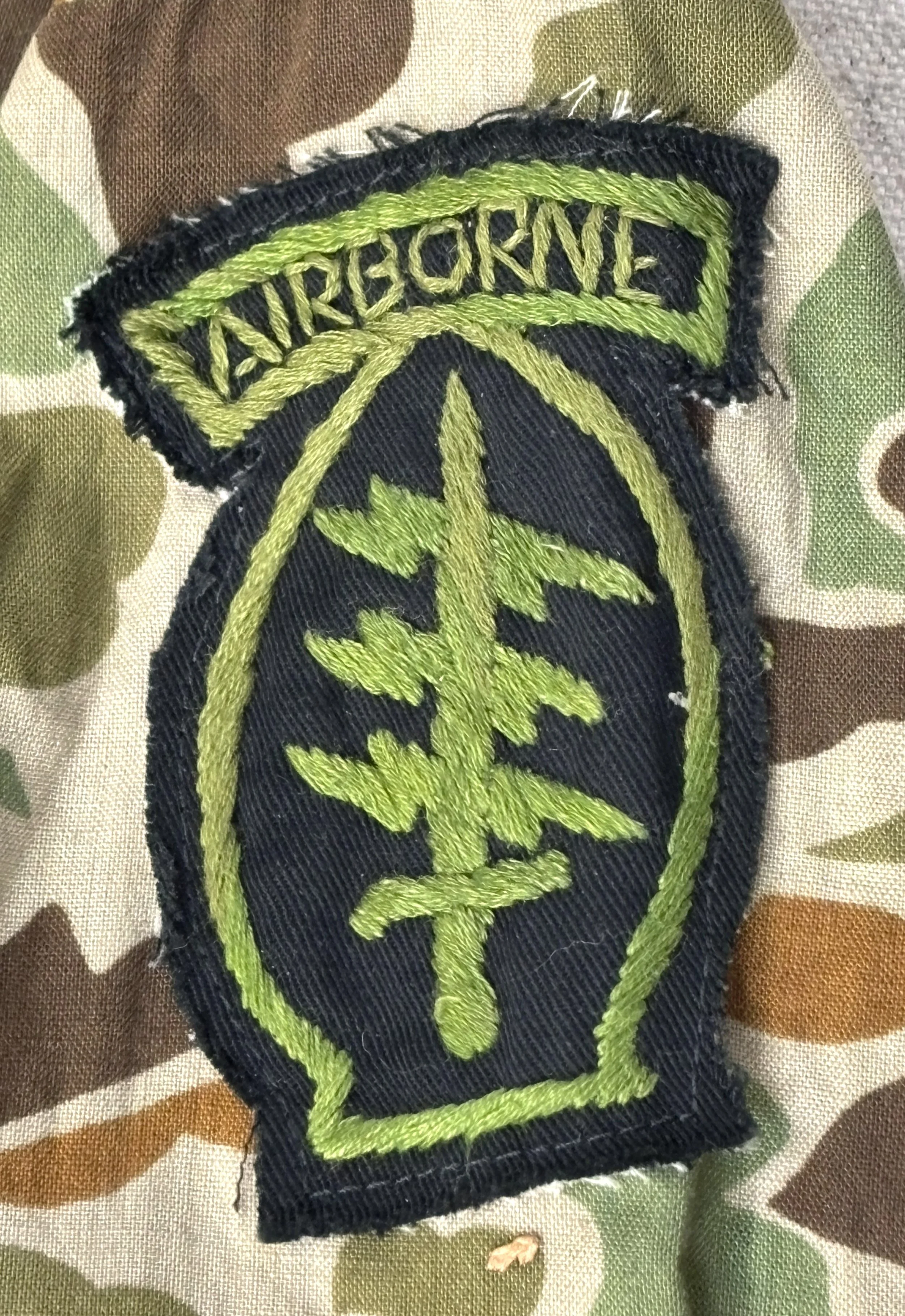





“New Pictures” 2nd Lieutenant, ODA-321 CIDG (Civilian Irregular Group) 1964-65:
The 60s and 1970s were the best times to grow up in the US. But as I am thinking about it, there were quite many in their late teens or early 20s who had volunteered early on, and later many were drafted to fight a war overseas, to keep war off our shores, and to help the people of South Vietnam; they would have their memories nonetheless. This is the story of one guy. his uniform tells us quite a lot, albeit non-regulation and, to the untrained eye, quite ominous. U.S. Special Forces troops first deployed to Vietnam in 1957. On the 24th of June 1957, the First Special Forces Group was activated at Okinawa, and in the course of a year, a team from this unit trained 59 men from the Vietnamese Army at the Commando Training Centre in Nha Trang, RVN. The trainees would later become the instructors, instructor cadre, for the First Vietnamese Special Forces units.
Up to 1961, the Government of South Vietnam and the U.S. Mission in Saigon, in dealing with the insurgency, had placed primary emphasis on developing the regular military forces, which, for the most part, the most part excluded the ethnic and religious minority groups.
Under the U.S. sponsorship of the U.S. Mission of Saigon in 1961, however, several programs were initiated in the late part of the year to broaden their counterinsurgency effort by developing the paramilitary potential of certain minority groups. Special Forces Detachments were assigned to “The U.S. Mission in Saigon” to provide training and advisory assistance in the conduct of these programs, which eventually came to be known as the “CIDG” or Civilian Irregular Defence Group Program. The development of paramilitary forces amongst the minority groups became the paramilitary mission of the Special Forces operation in the Republic of Vietnam.
Originally, the focus was on the Montagnards, people living in the strategic Central Highlands. The first was taken in October 1961 with the beginning of a project designed to prevent the Rhade tribesmen in Darlac Province from succumbing to Viet Cong control. Exploratory talks were held with the Rhade leaders in Darlac to seek their participation in a village self-defence program. In November of 1961, the first medical specialist troops of the U.S. Special Forces were employed in Vietnam in a project originally designed to assist the Montagnard tribes in the high plateau county around Pleiku. Out of this modest beginning grew one of the most successful programs for using civilian forces ever devised by a military force, the Civilian Irregular Defence Group. Eventually, the organisation, development, and operation of the CIDG proved to be the chief work of the U.S. Special Forces in the Vietnam War.
In the beginning of the 1970s, a program of Vietnamization began, where everything the US Forces had controlled would go back to the South Vietnamese, and they would start receiving fewer and fewer pars and supplies, the CIDG would not work with the ARVN, who did, really dis-like them, so it began falling appart, there were hard feelings, and, eventually the Montagnard’s paid the price, and the North took out their vengeance on them as well, it was a sad end, a dark spot on the war in the end..
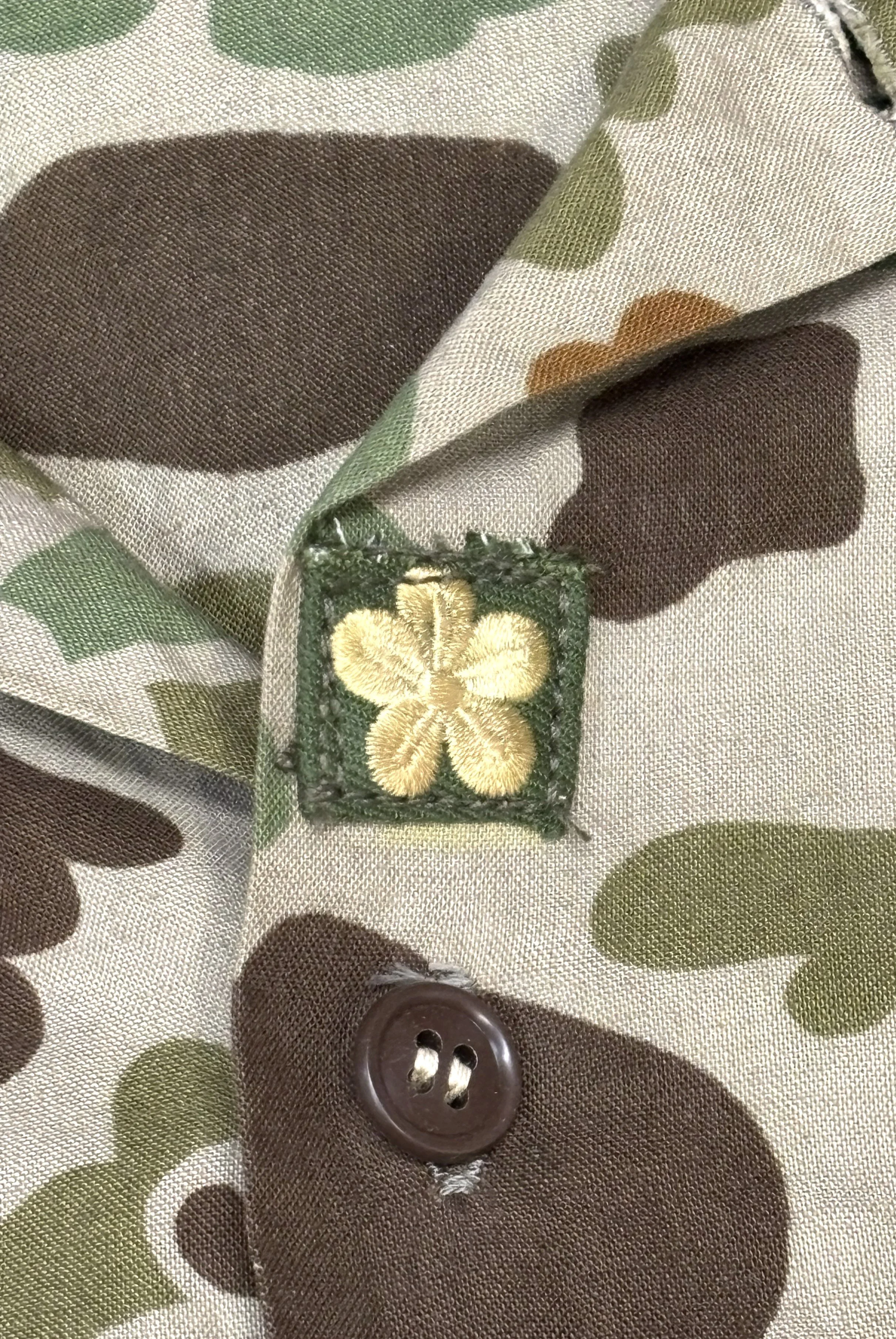
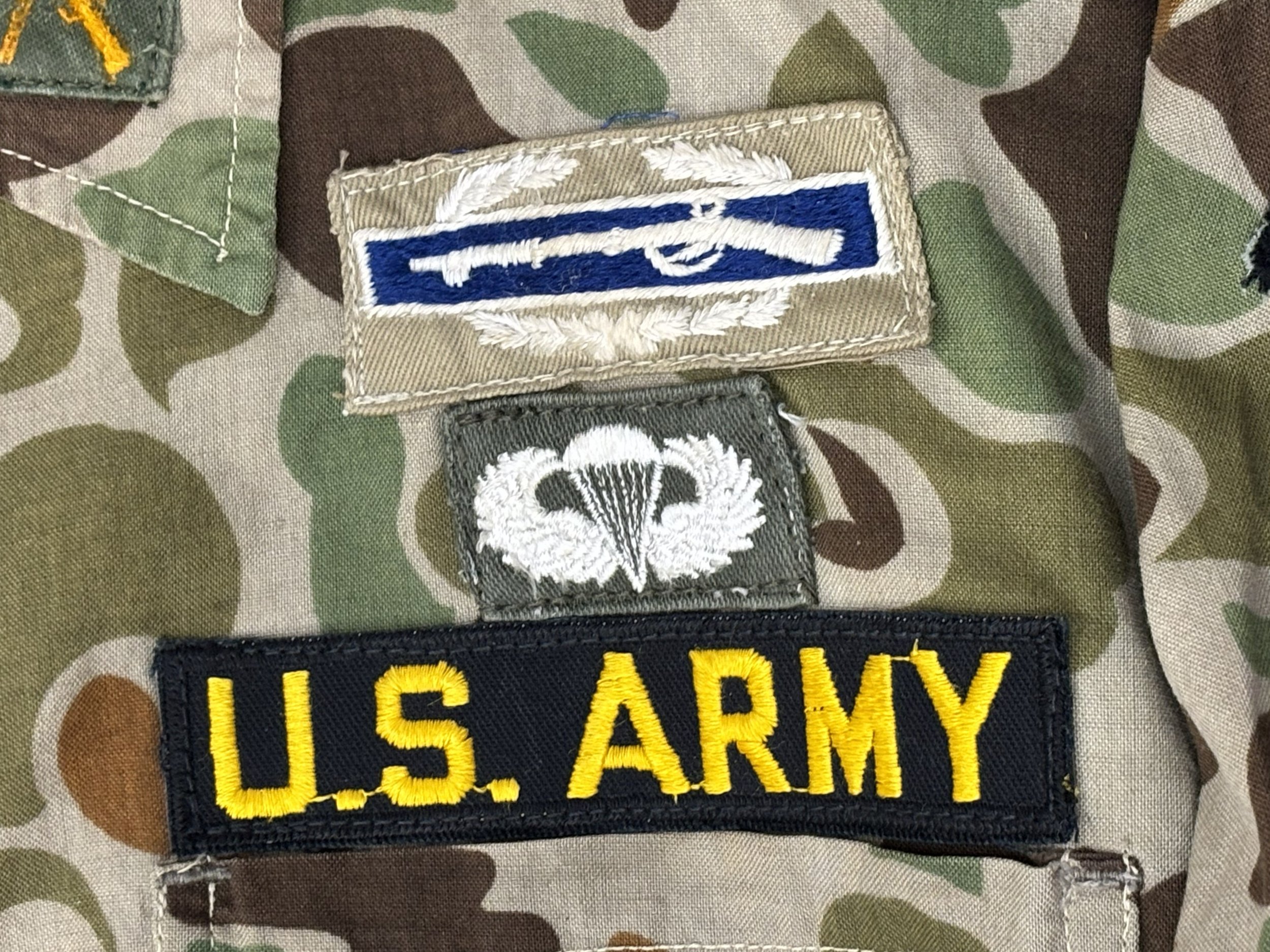
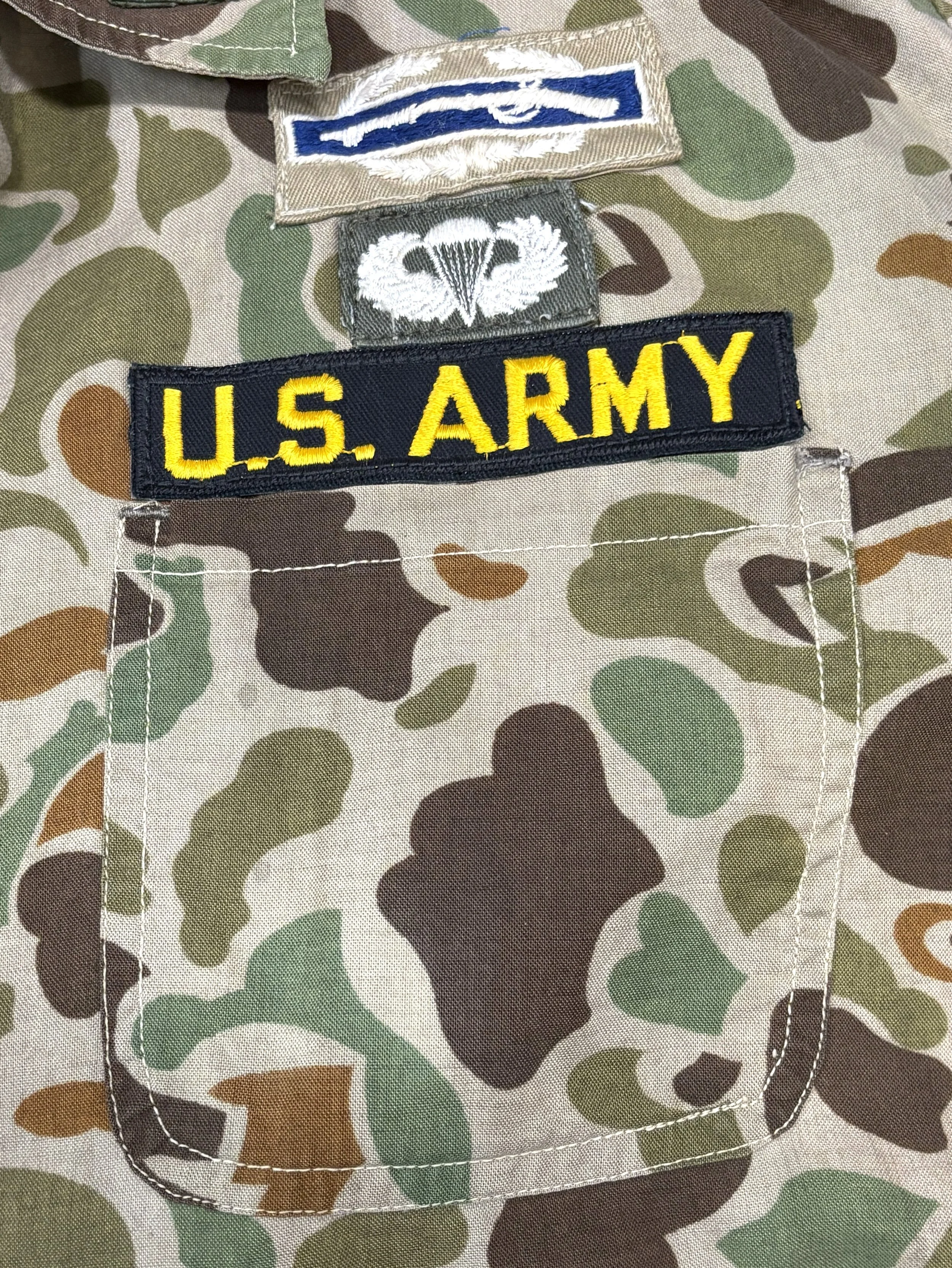
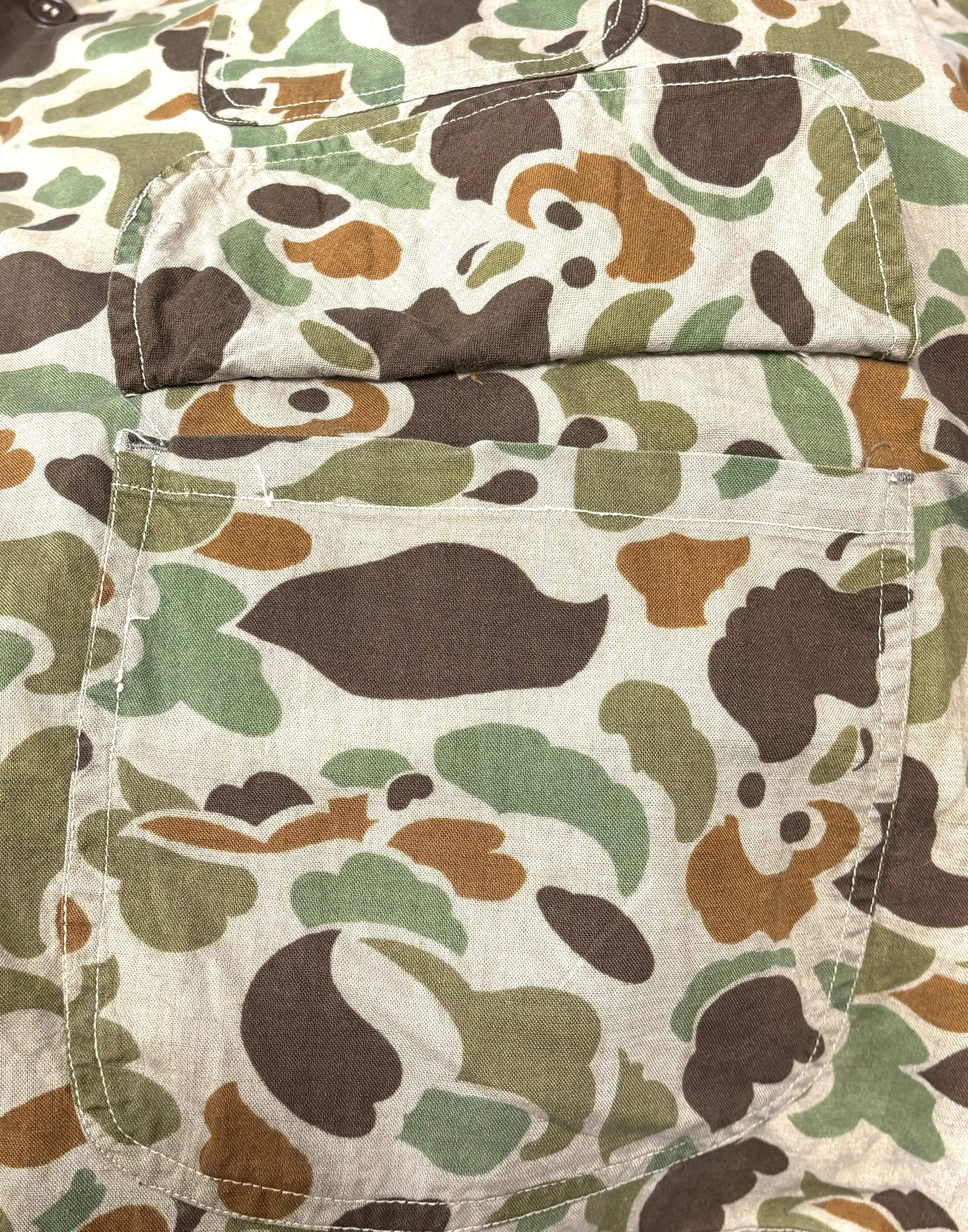
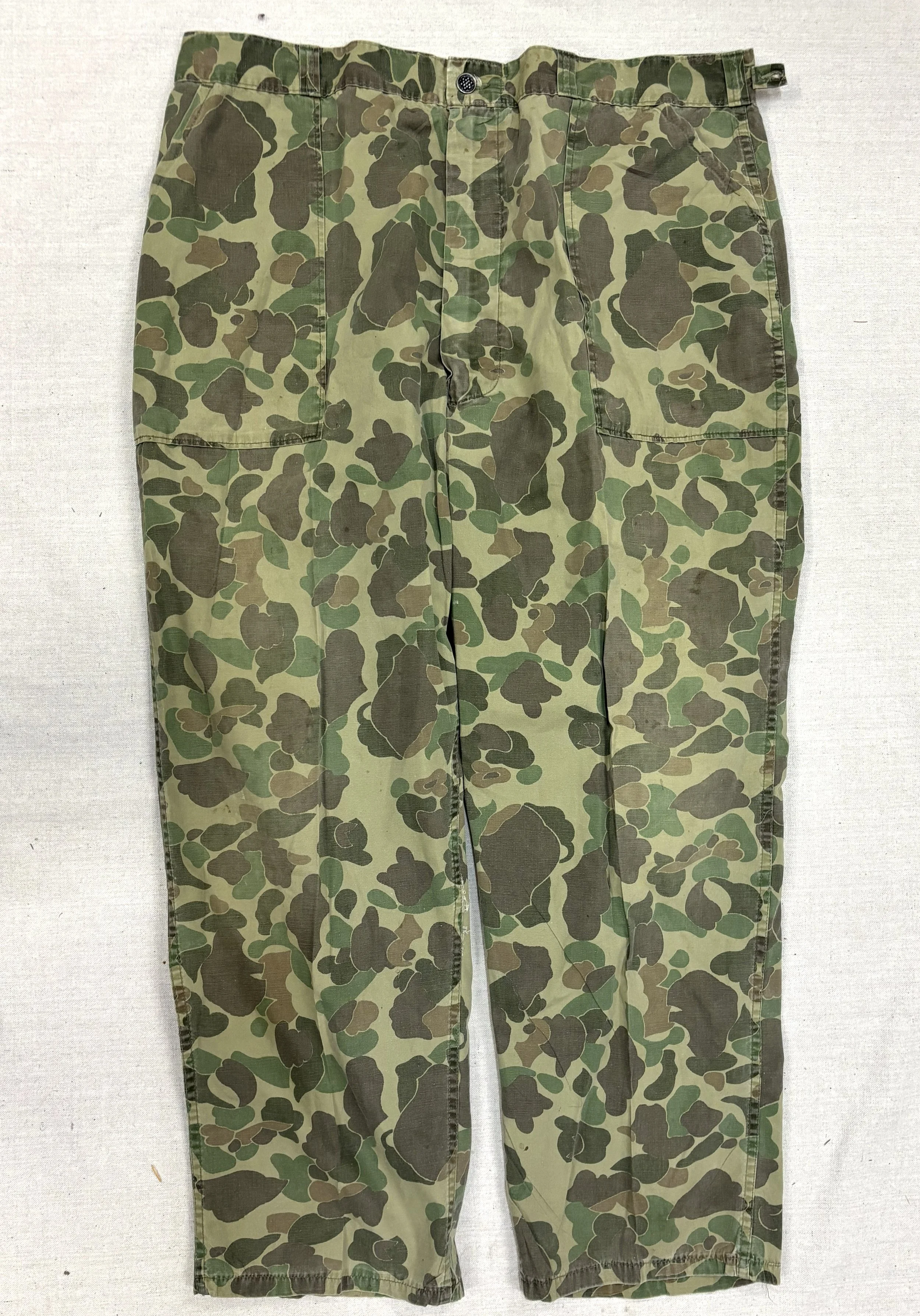
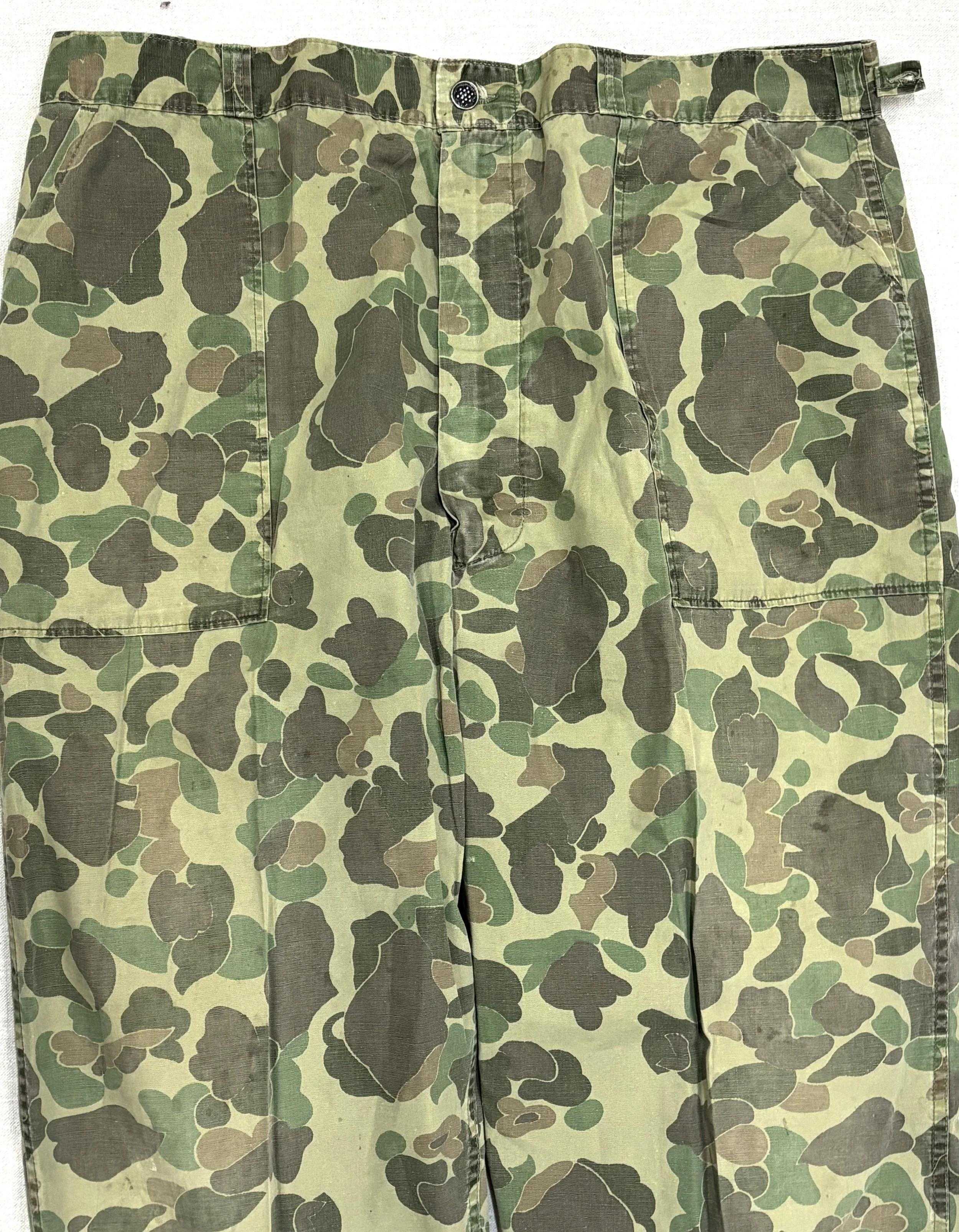
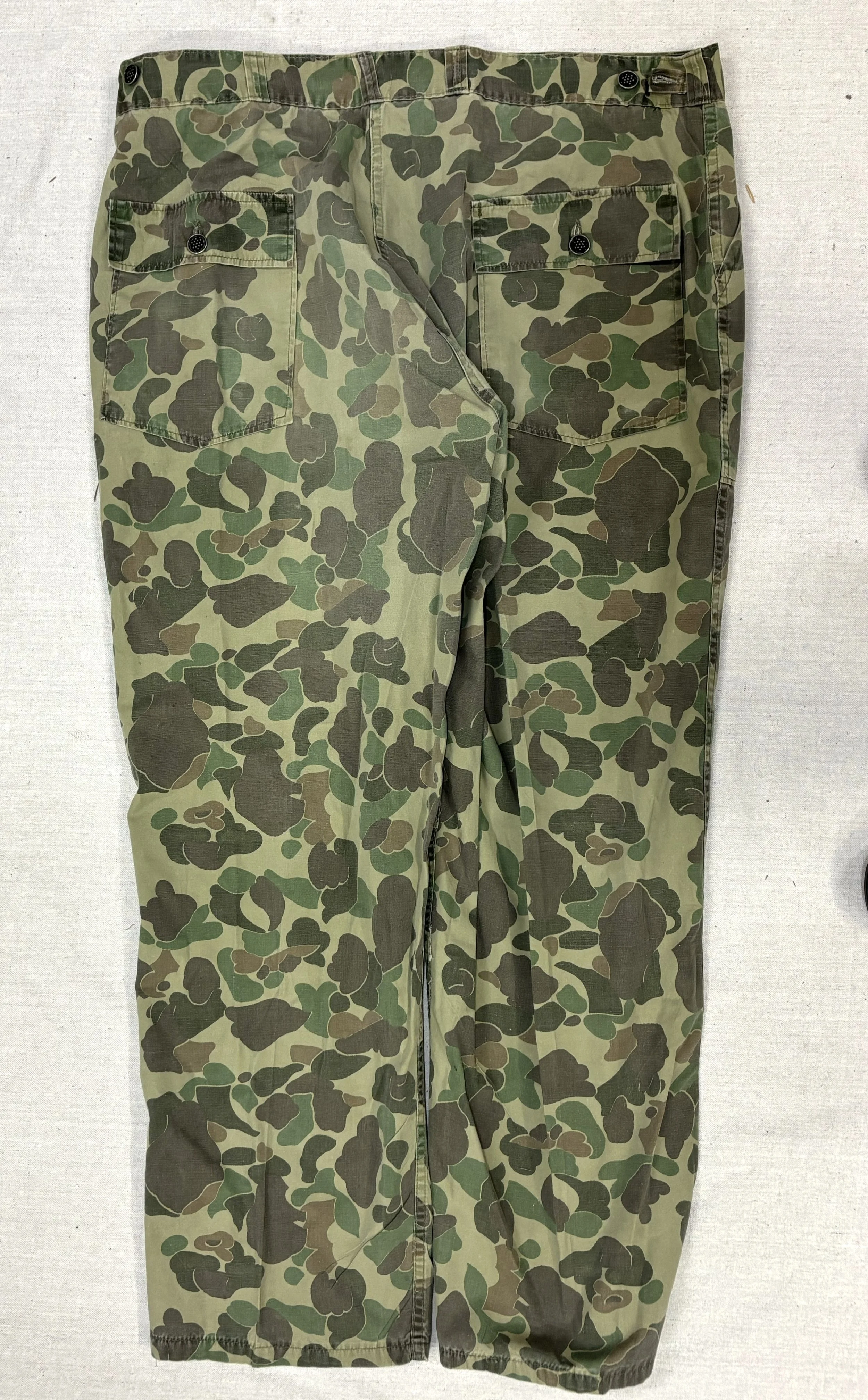
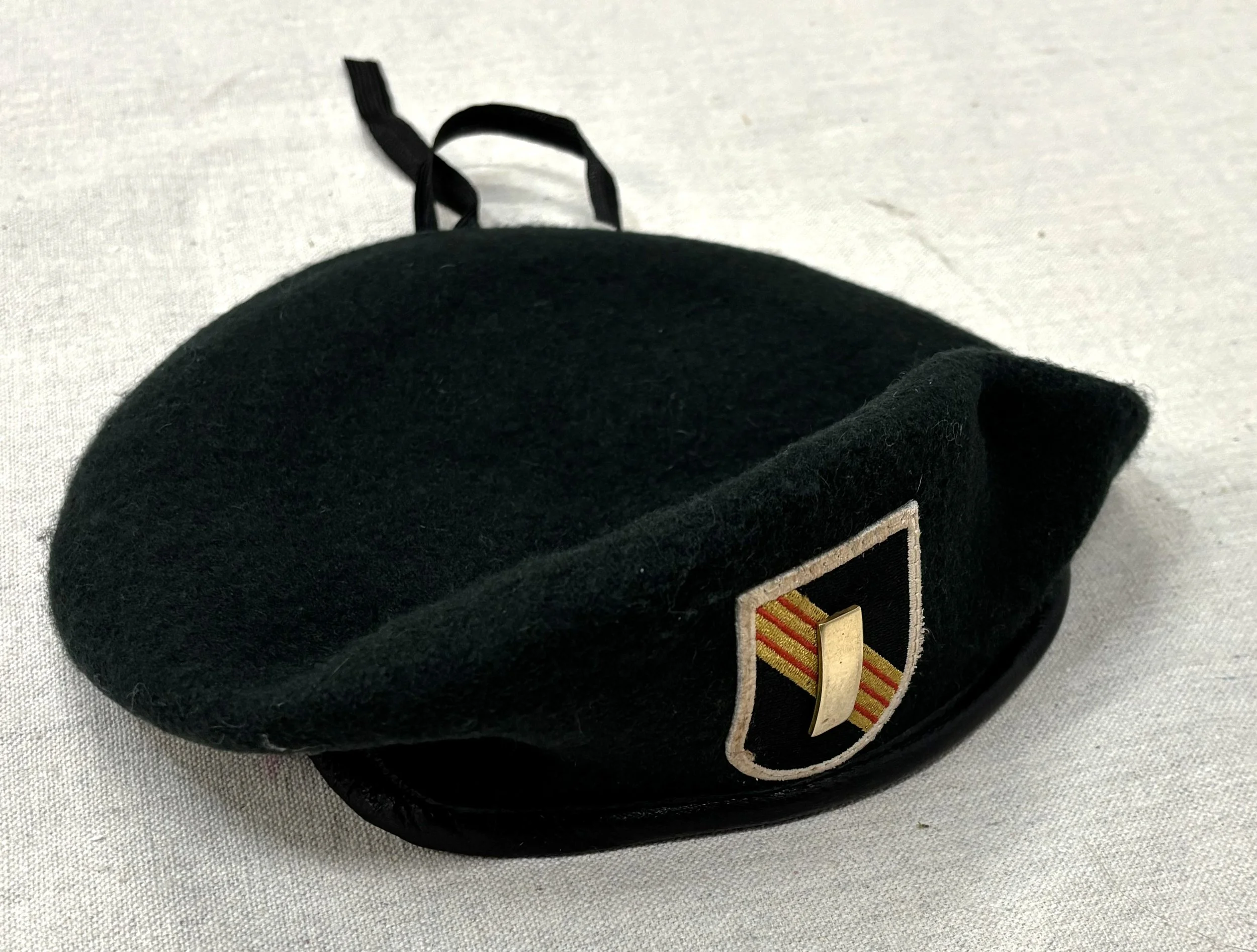
This Second Lieutenant wears a lightweight / In-Country produced version of the early, lightweight, 4 colour, “Duck Hunter” camouflage. he tried to match trousers, shirt, and cap, but they are all just a bit different if you look closely, and the cap is Marine Corps style 8-point flat top “Cover”. Realizing he is flashy enough, he has applied a locally made “Special Forces” patch in a subdued format. Sometimes working with and around South Vietnamese Forces, he wears their equivalent rank, the 2nd Lieutenant, on his shirt above the buttonhole. He has the CIB from a previous War, and his jump wings, but they don’t match. Interestingly, none of the pockets has button closures. As with most of the A-Teams in Vietnam, ODA-321 will eventually produce its unofficial patch. Canvas cartridge belt, 3x20 round, 5.56mm magazine, ammo pouches with a canteen, complete the Officer’s equipment. He does not carry the standard .45 Auto pistol as he has exchanged it for the new M-16 rifle for its higher rate of fire. Early in the conflict, he still wore black leather jump boots. He wore either his group's Green Beret or a camouflage hat out in the field.
“New” CIDG Operative:
What’s the difference between an SF Troop and a CIDG? Well, where they’ve come from, and why they’re there, maybe, but, really, it was the size of the uniform. Still, the size of the uniform has nothing to do with one’s will, internal strength….or heart; these guys were soldiers, fighting to stay alive, in a country where even the country they were fighting for didn’t want them. Not that many South Vietnamese wanted the Americans there either; they were trying to keep them safe and a democratic society, while keeping the war going. They just wanted a life with no more war. The Communist Forces promised that they would not own anything, but they would be alive and taken care of, and everyone would be happy again...except the people who run businesses; they would be controlled by the Government, they’d take care of it…and that’s what happened, eventually.
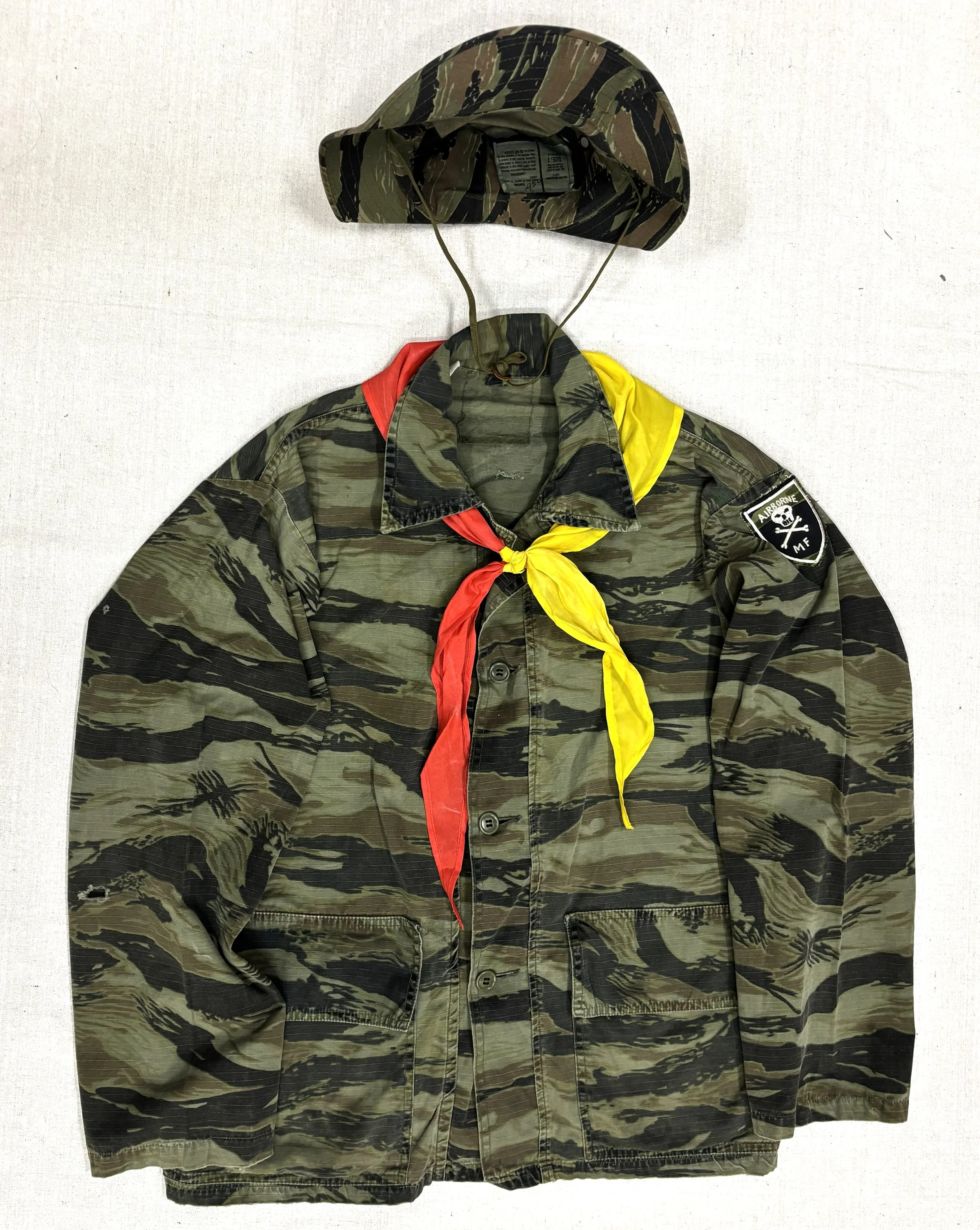
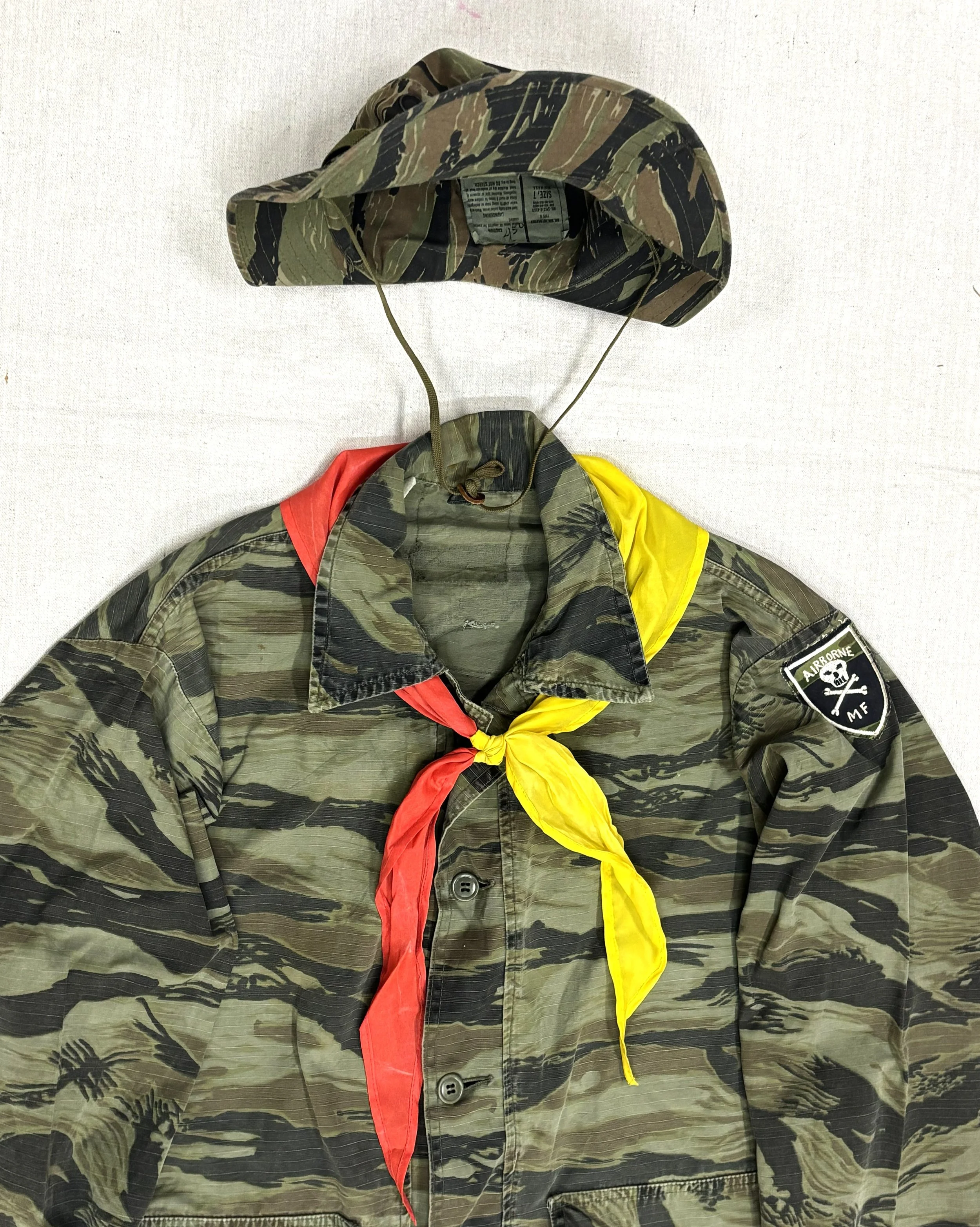
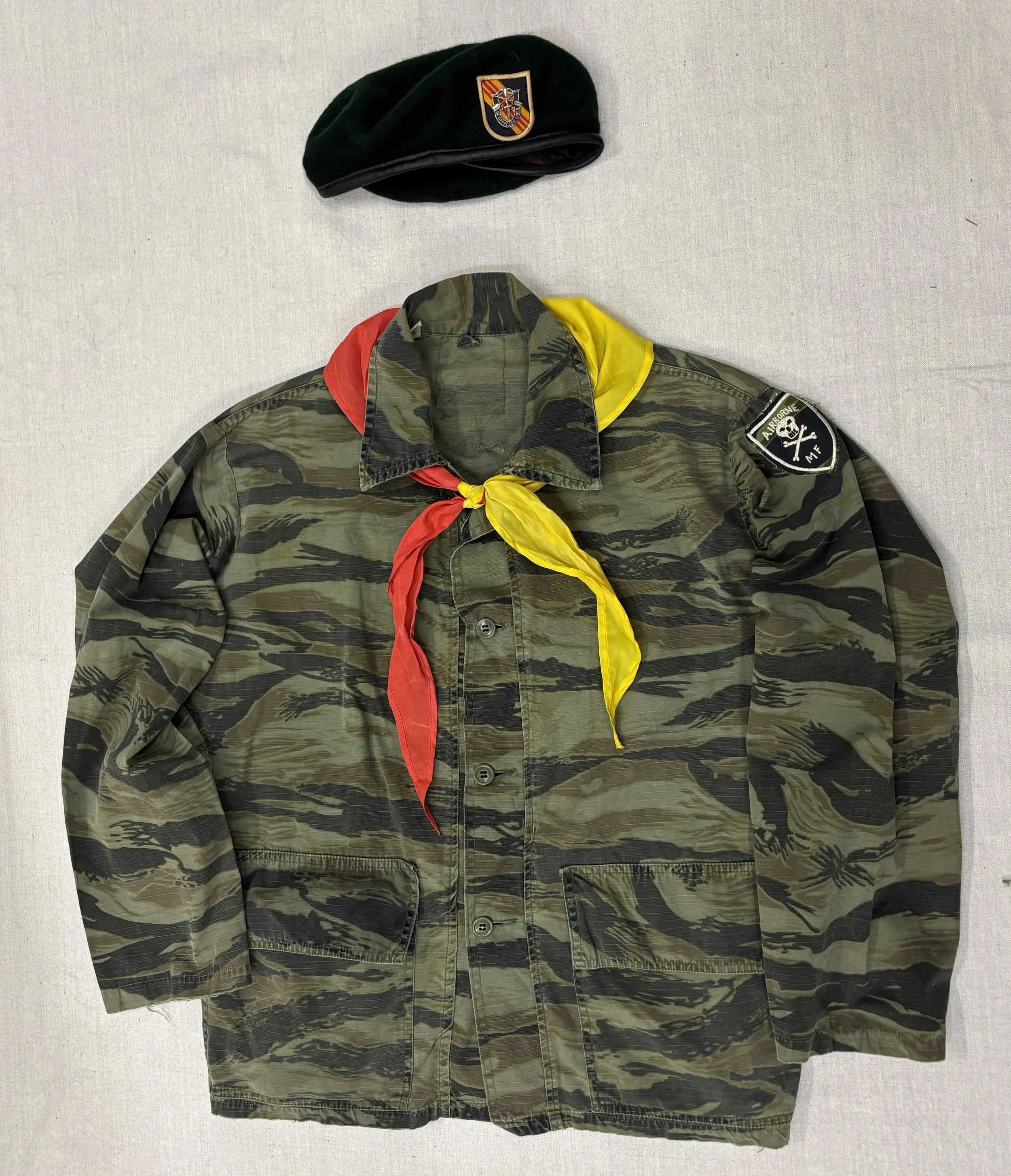
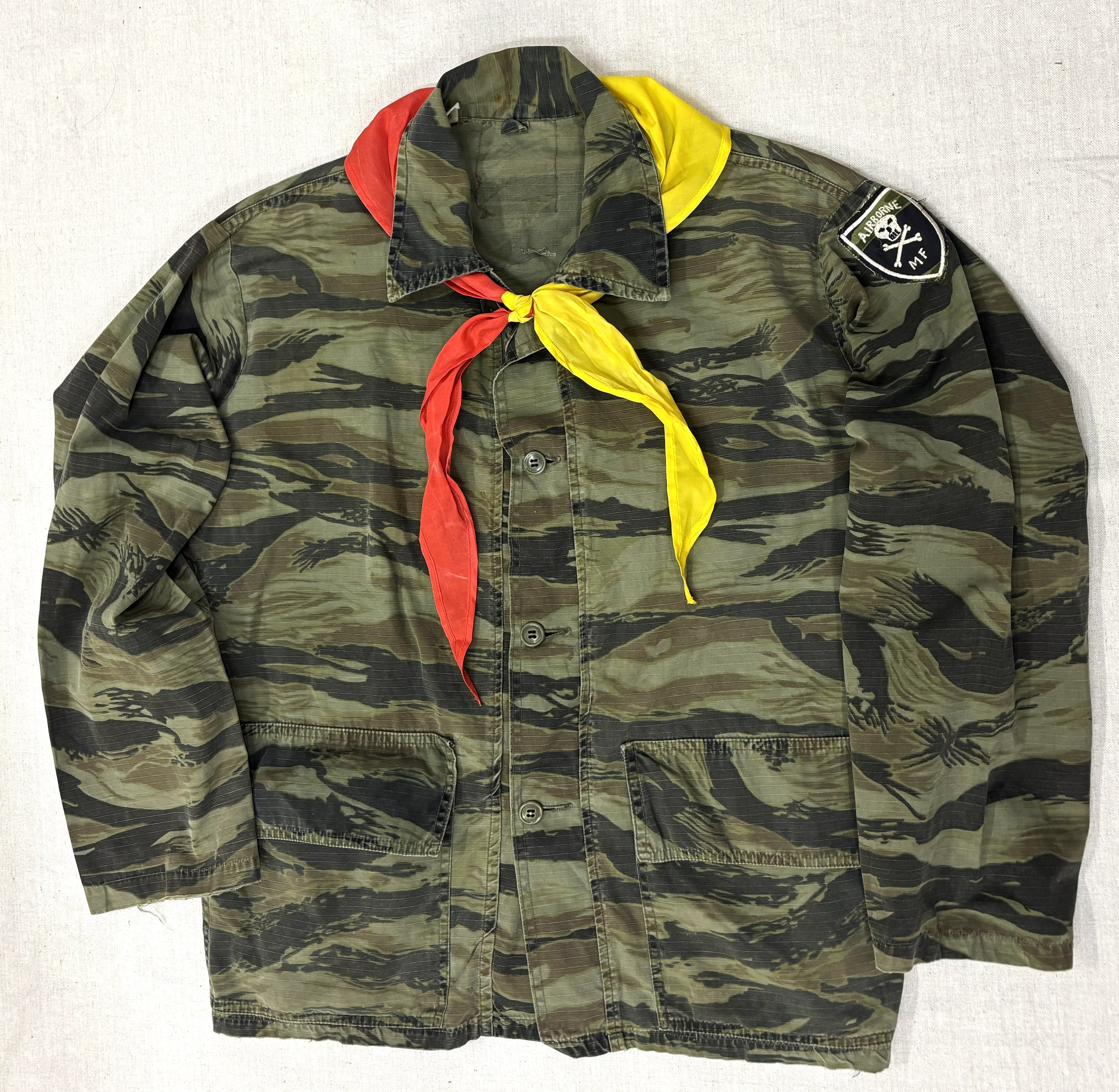
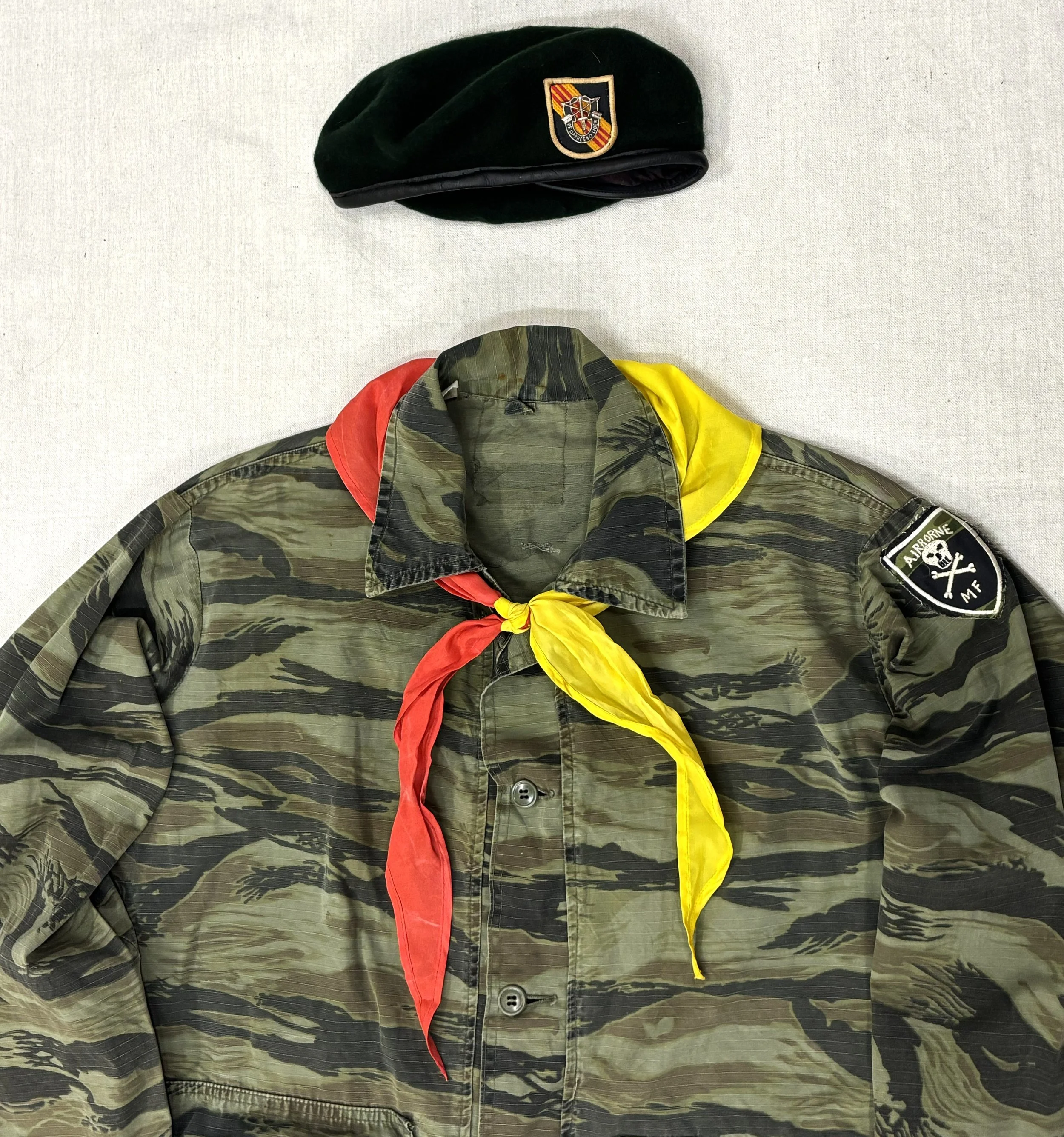
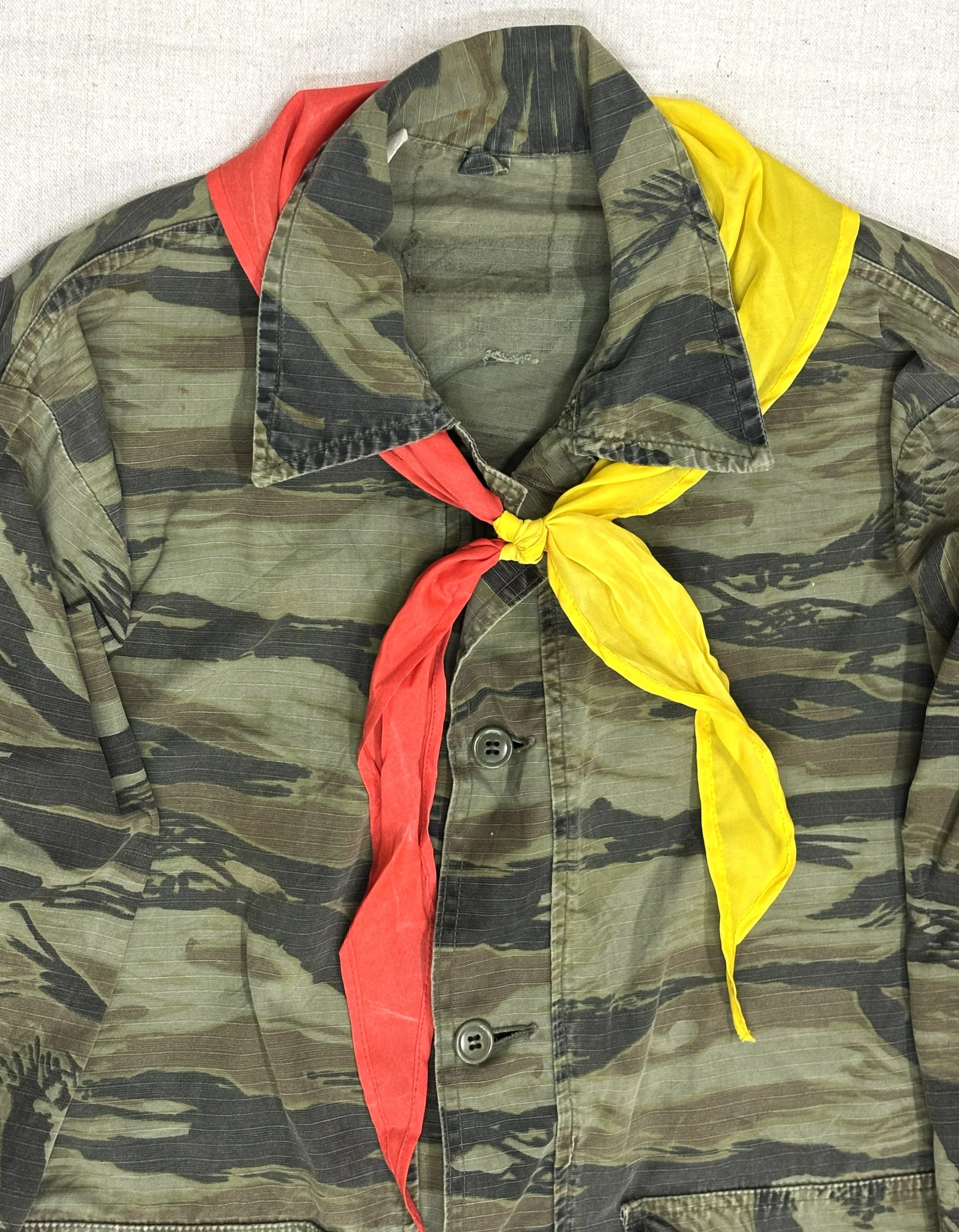
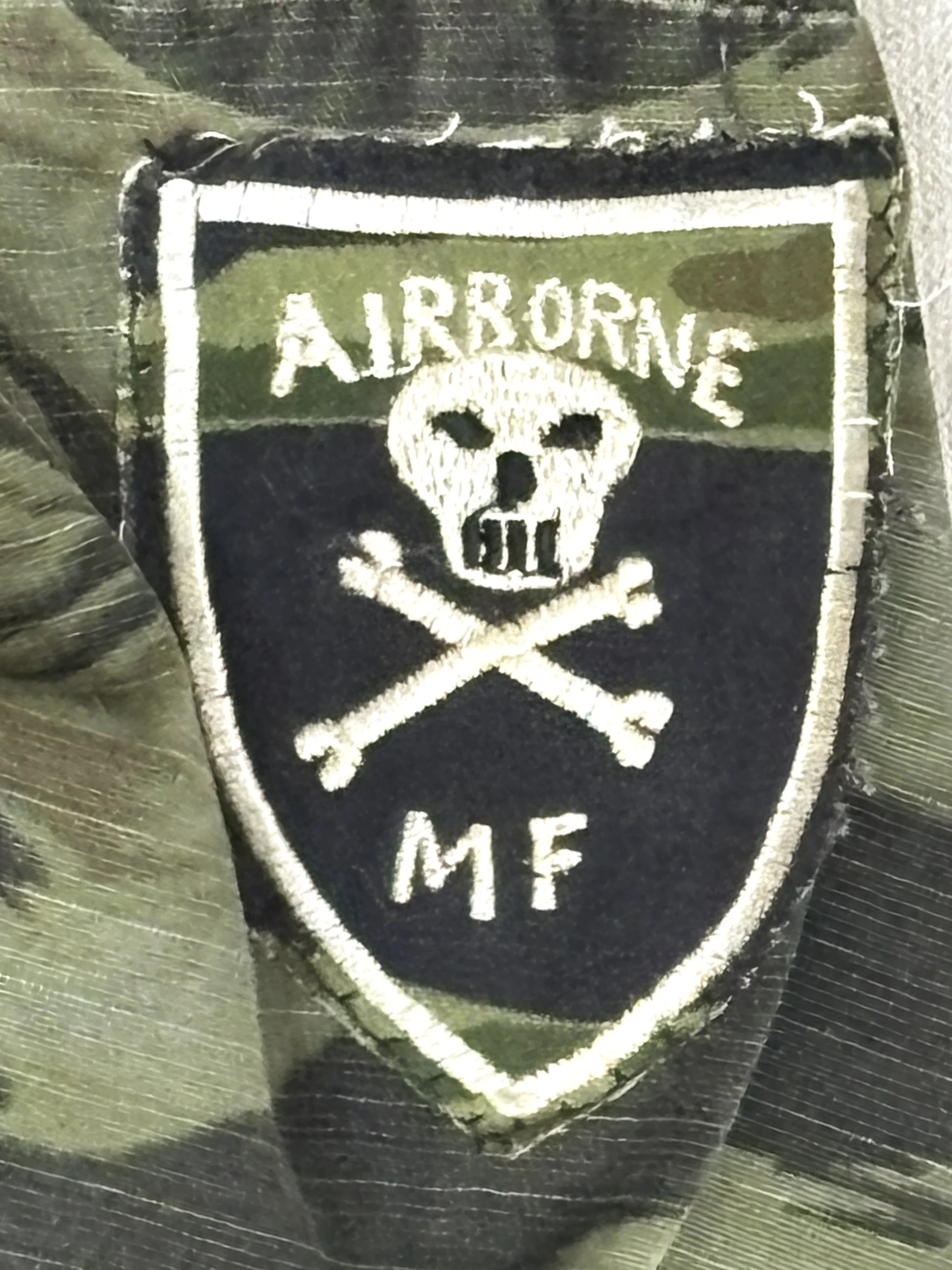
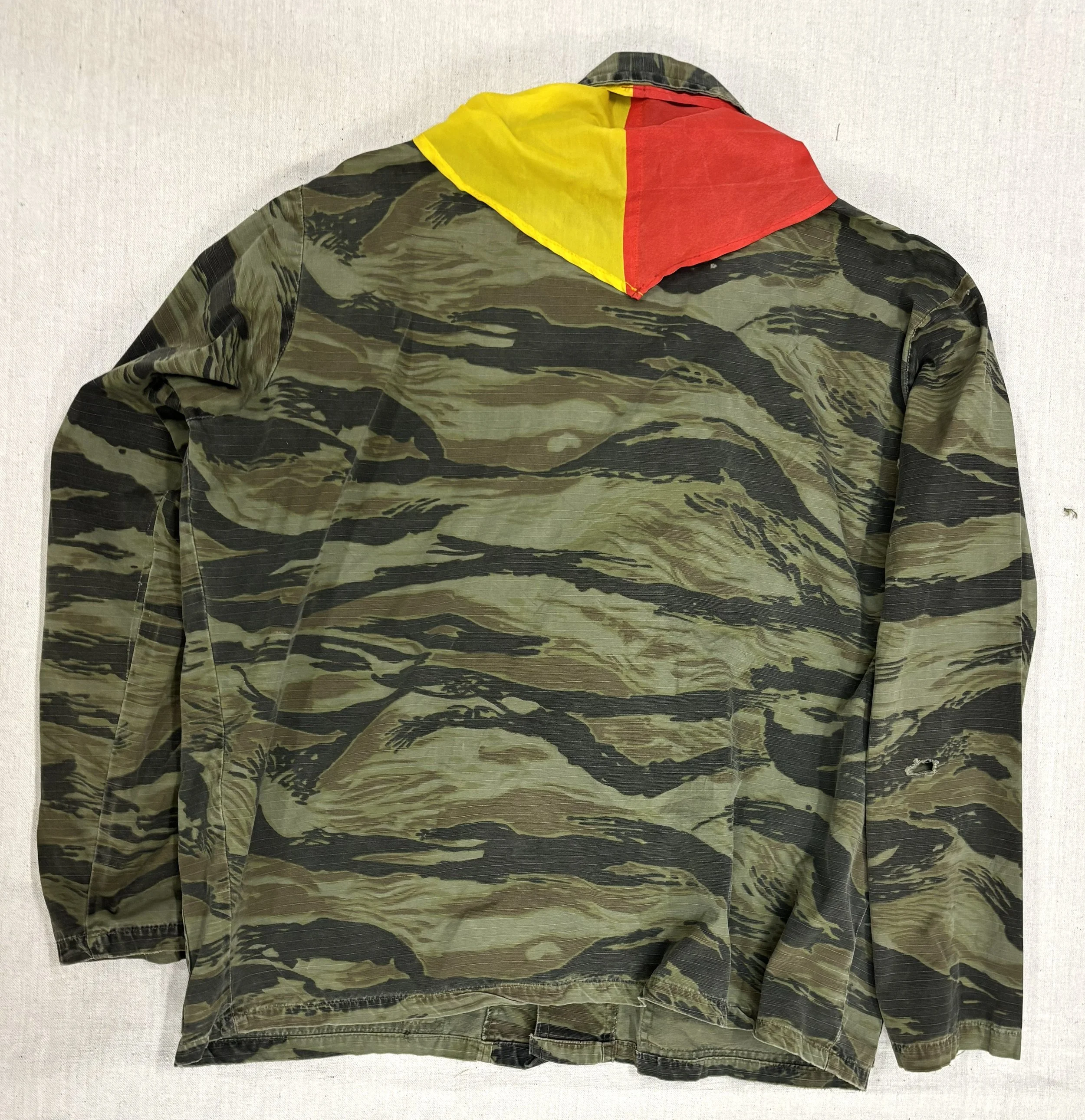
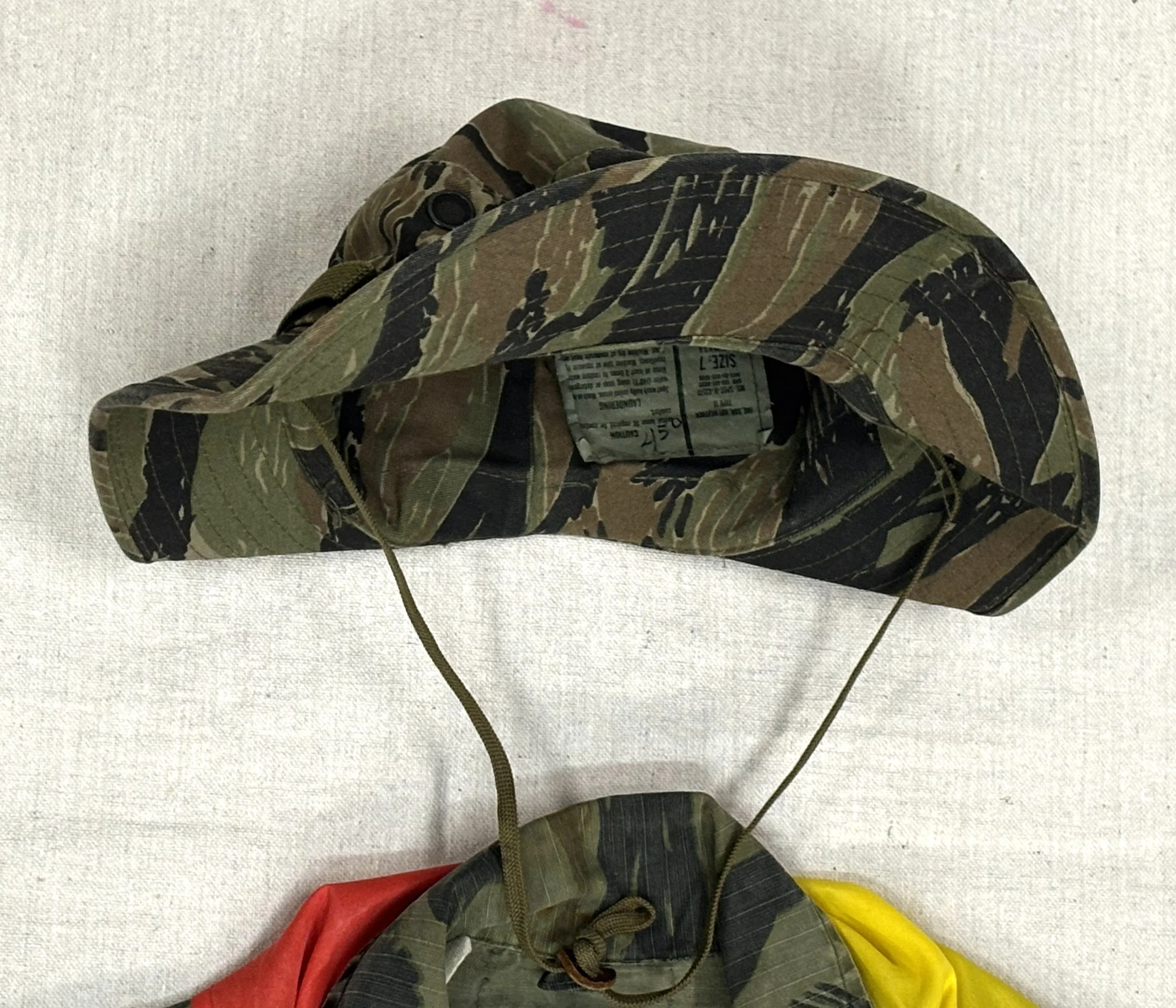
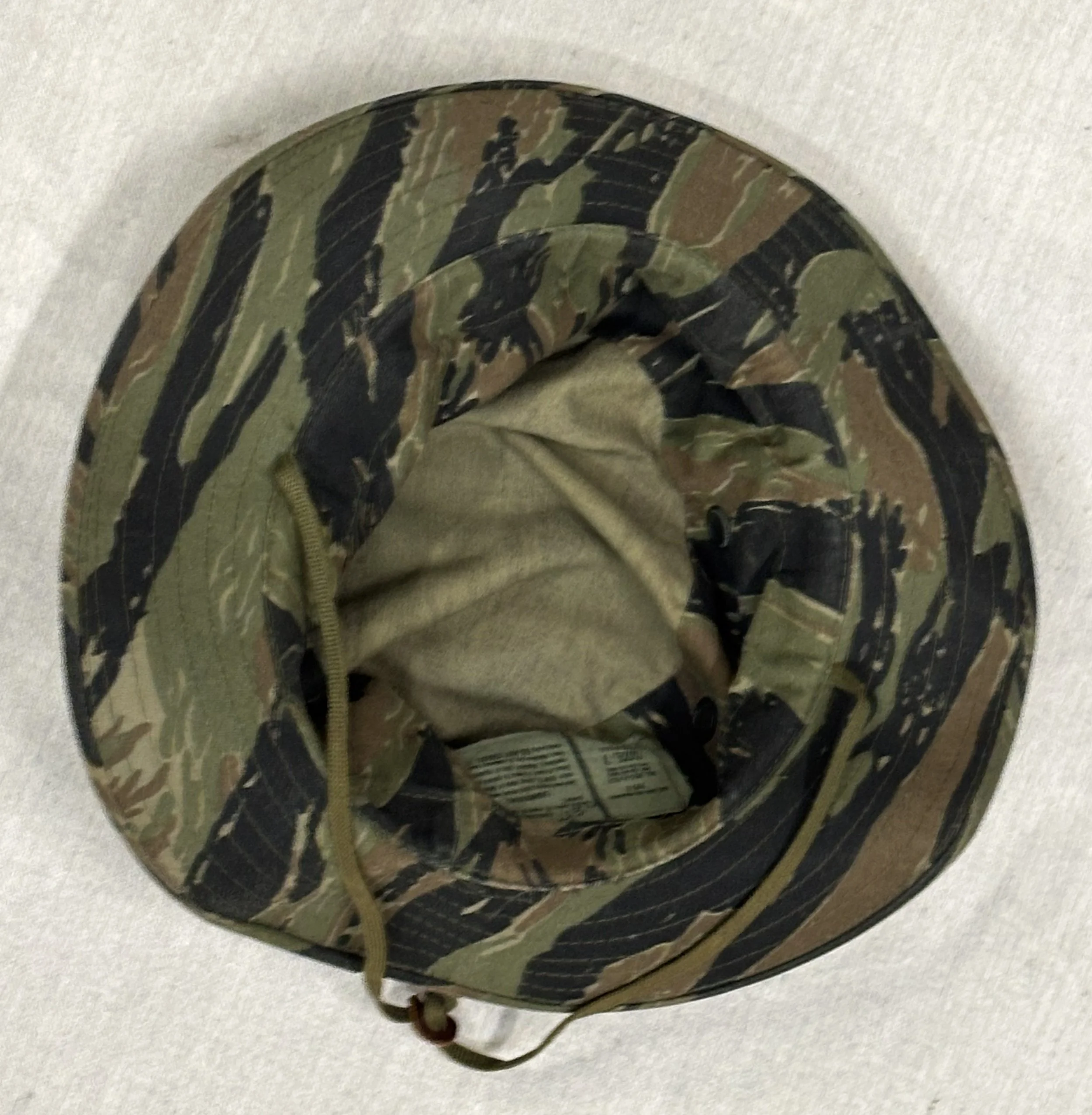


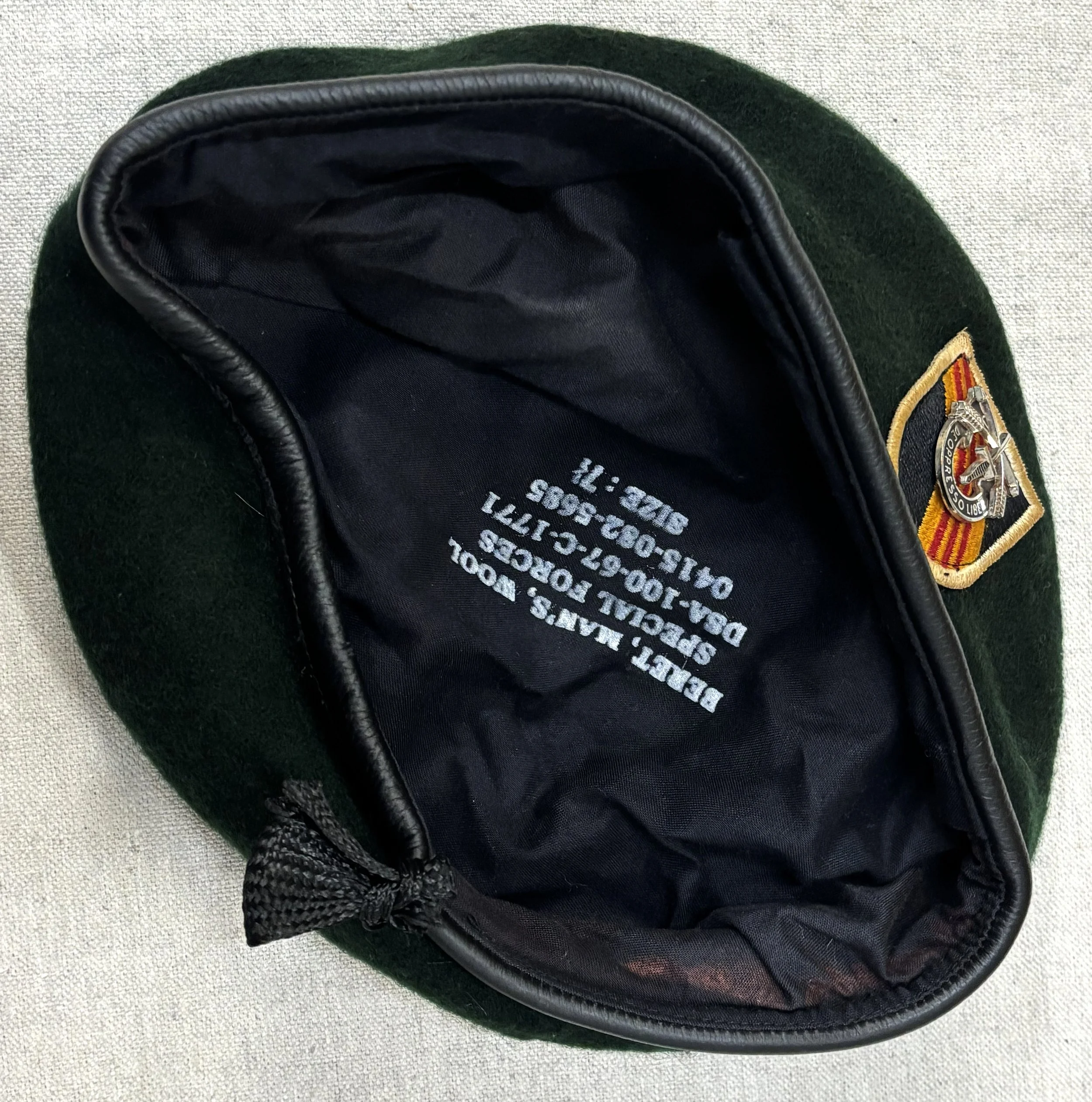


*UPDATED PICTURES: Mike-Force (Special Forces) Indigenous Group Advisor:
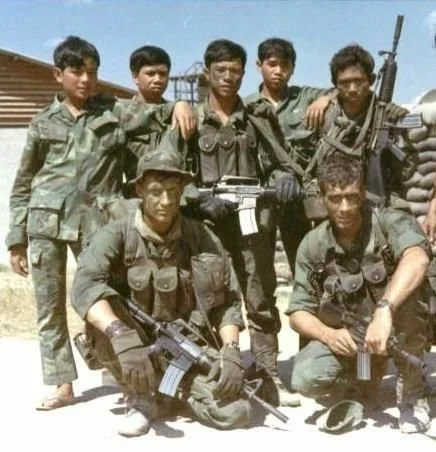
With increasing Viet Cong reports around Saigon in late 1964, the South Vietnamese controlled the area in the III Corps operations zone. The door opened for the CIDGs; they had ample capabilities, and their mission was to be a quick reaction force, so to speak, for SF Camps and Southern-supported villages under attack by the Viet Cong. The "Mike Force" was named after Special Forces Lieutenant Colonel Miguel de la Pena, who supervised its creation. Originally, it was composed of Nung people, one of the ethnic groups that had migrated from southern China back in the 4th century. The Mike Force application was soon used on other organized groups, as well as the Bahnar, Hmong, Jarai, the Khmer Krom minorities, and the Degar peoples, commonly known as the known as Montagnards.
Mike Force’s mission was country-wide from top to bottom. The idea was to have a quick-reaction group not for stop-gap orders, but more for quickly securing, reinforcing, and recapturing CIDG A Camps. The second purpose was as a “Special Reconnaissance Capability (for where other Recon and LRP groups could not go- special zones), and the third mission would be for “Search and Rescue”, “Search and Destroy Operations, and then some Recon Team Missions being assigned.
This is not to be confused with the Tiger Force; this Black-Op Group job was primarily tasked with counter-gorilla warfare, that is to create fear and the enemy, secretly operating from well behind the enemy lines, aimed at places like maybe a training center, or port, ammo dumps, more emphasized on body-count, rather than force multiplication.
Unfortunately, in typical US form, the American political actions of 1970 had the ‘Mike Forces’ disbanded after the “Vietnamization” of all the Vietnamese Armed Forces, giving the war's Allied control to the South Vietnamese Military, and less and less US control (which had taken over in 1965.
This completely let down all the CIDG forces and ruined the loyalty of all these indigenous personnel when U.S. Special Forces abandoned them! telling them they were commanded by the South Vietnamese now. And that was an awful call. Many Montagnards were Christian, and like the Jews of Europe in WWII, the South Vietnamese did not treat them as equal human beings, but as sub-peoples, generally referring to them as savages! (As if the South Vietnamese were so civilized).
And in 1974, the indigenous people who had remained of the Mike forces in Vietnam, and all their tribes of origin, were systematically hunted down, town by town; they were murdered and annihilated by the North Vietnamese Army. After the U.S. forces had bailed and when the South crumbled, it fell quickly to the mass Communist forces.
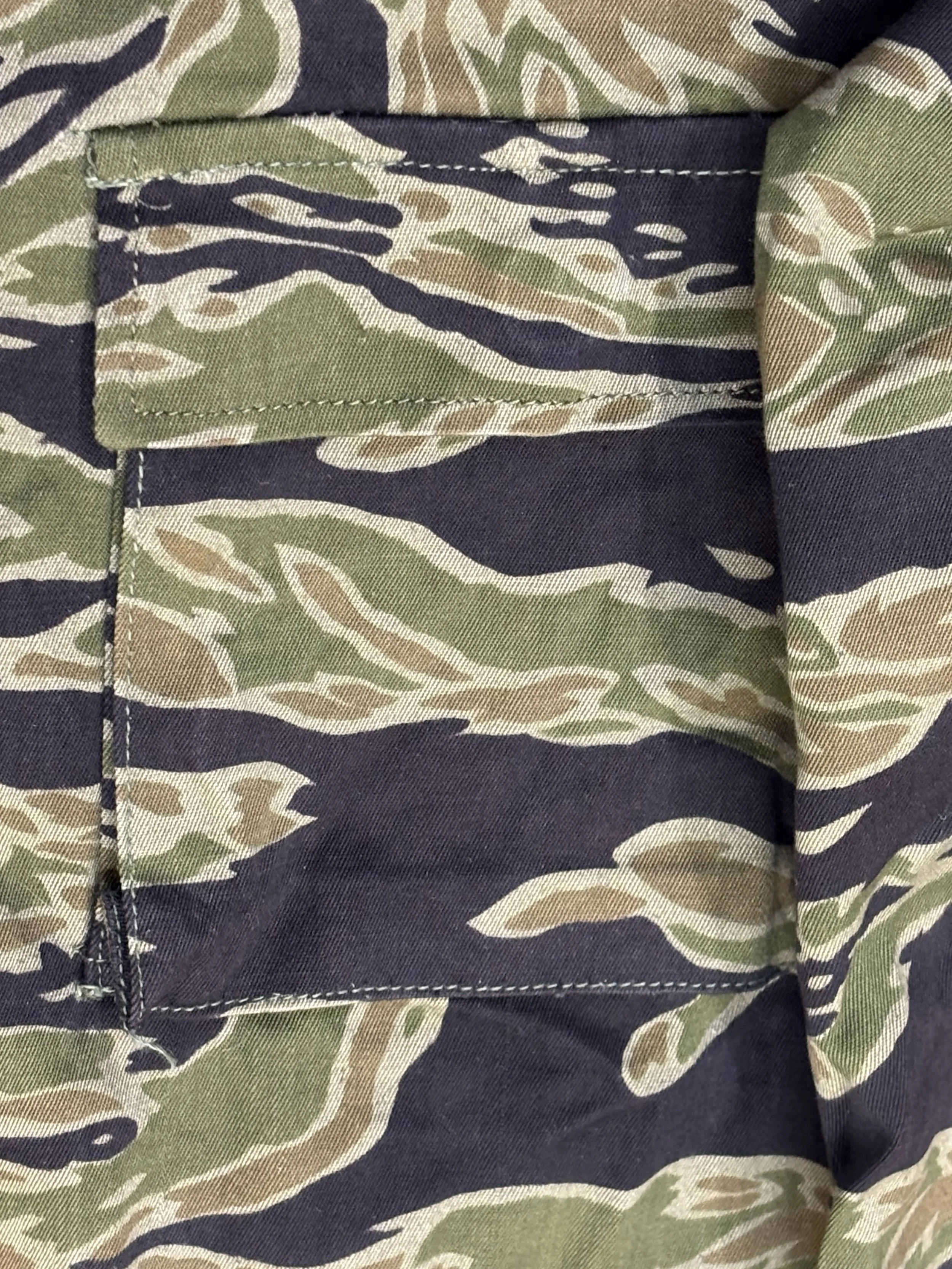
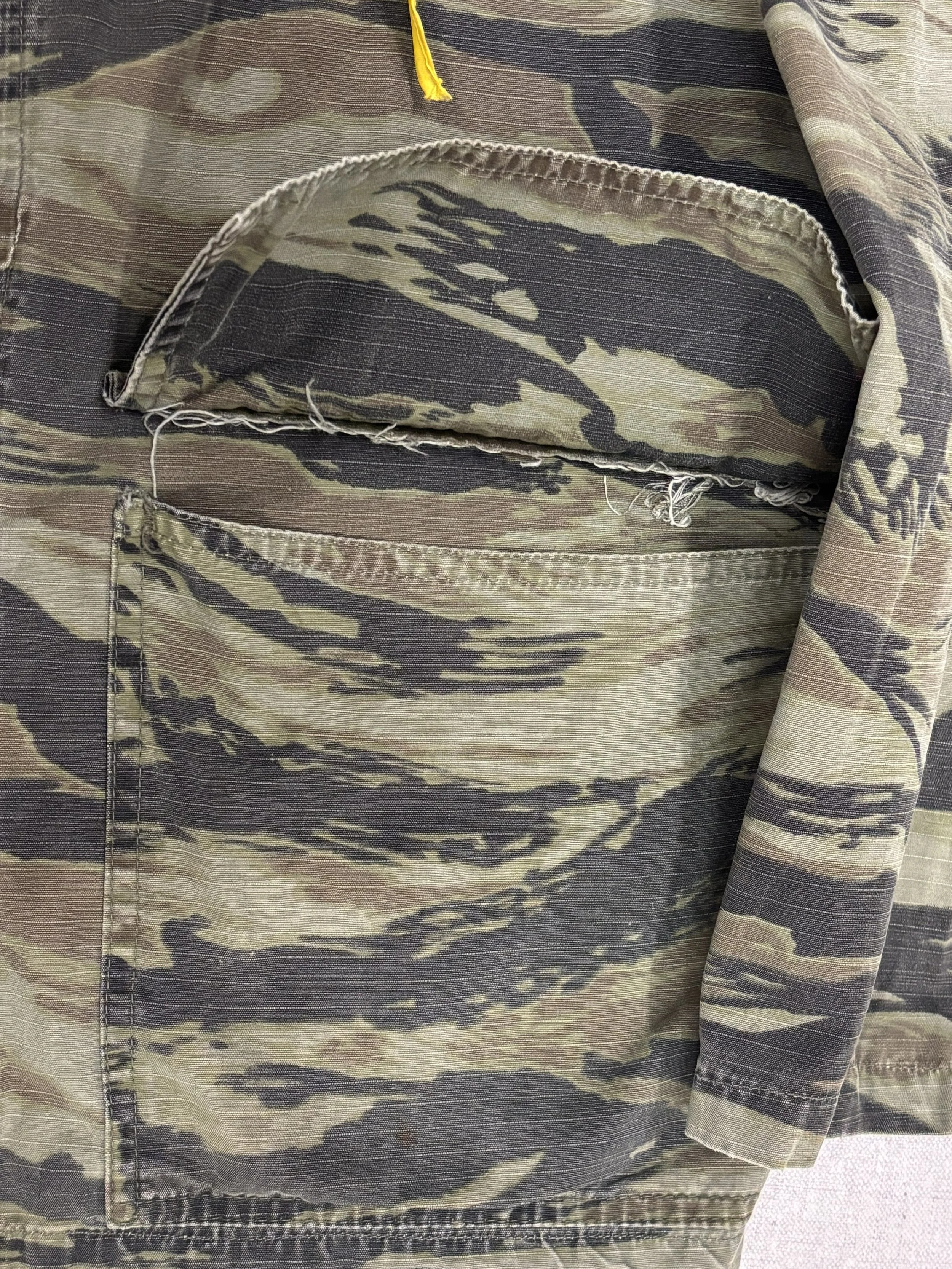
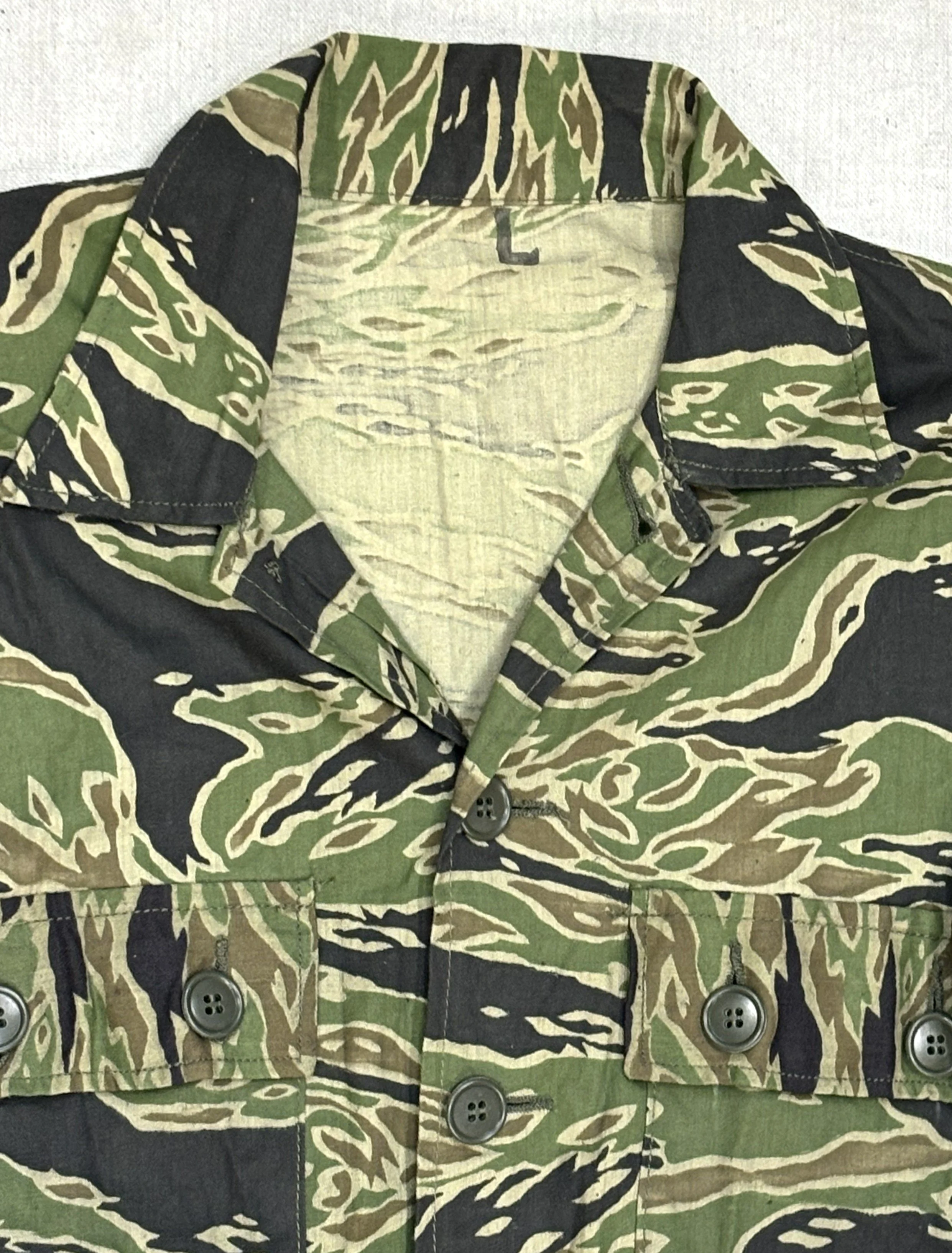
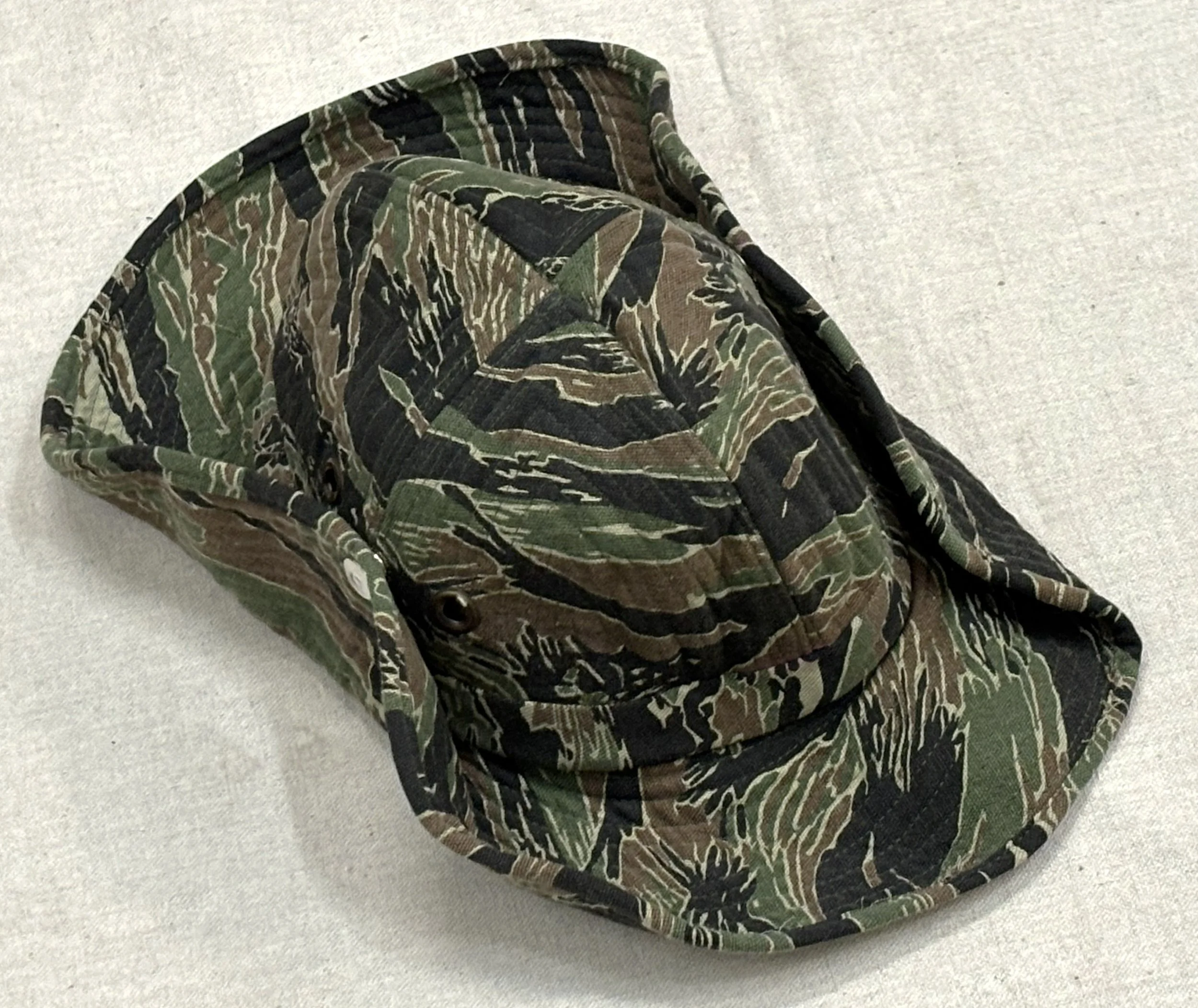
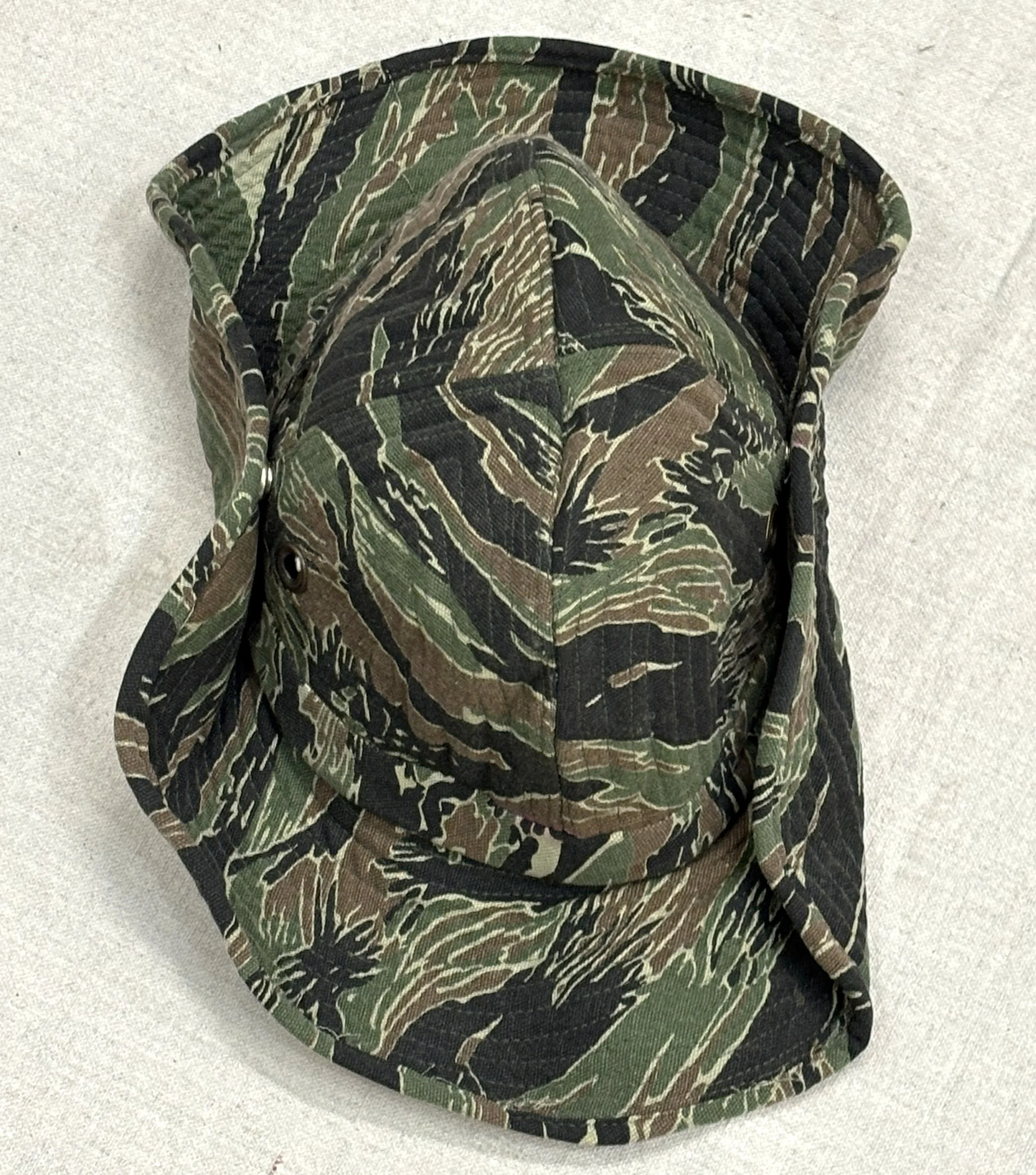
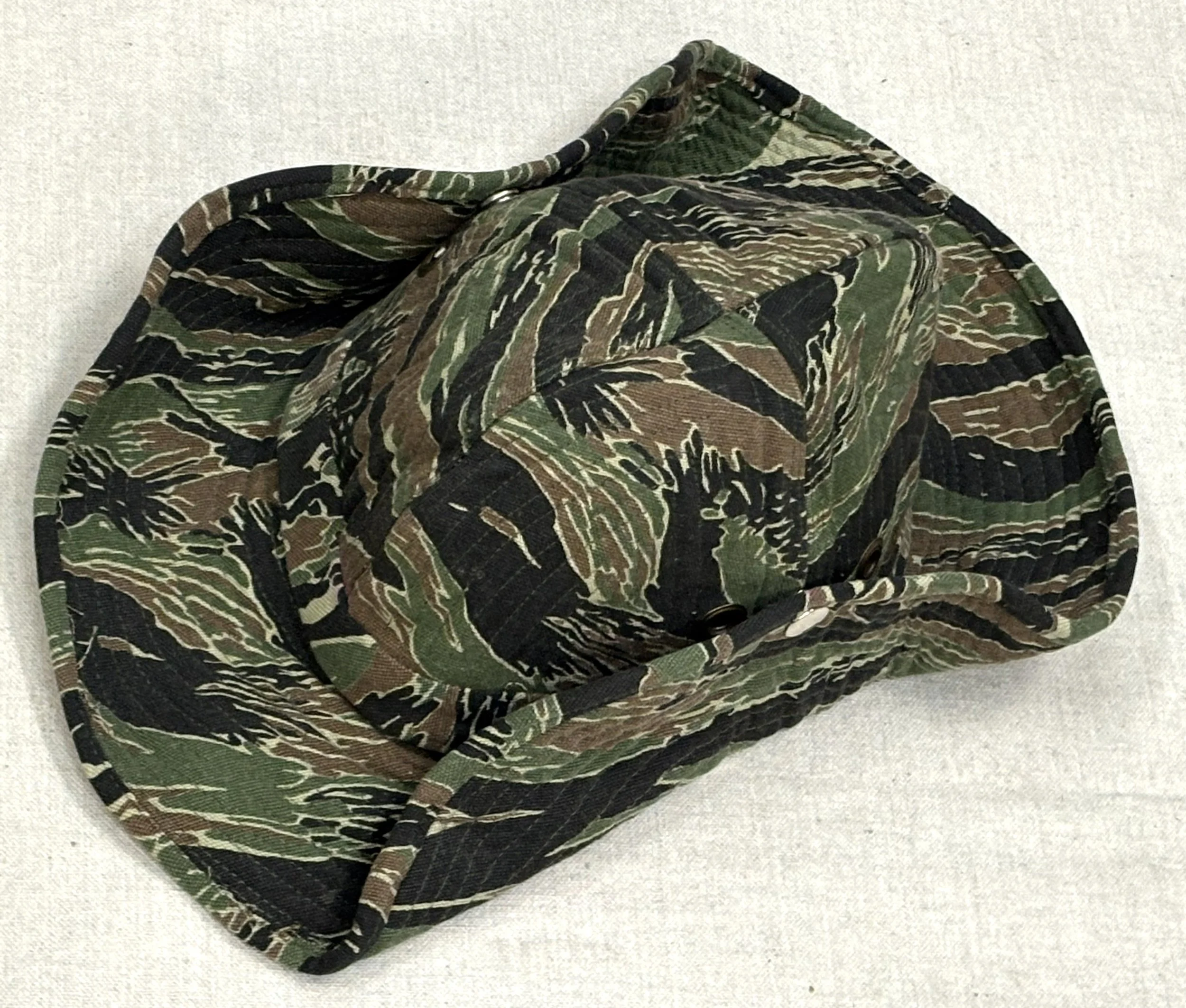
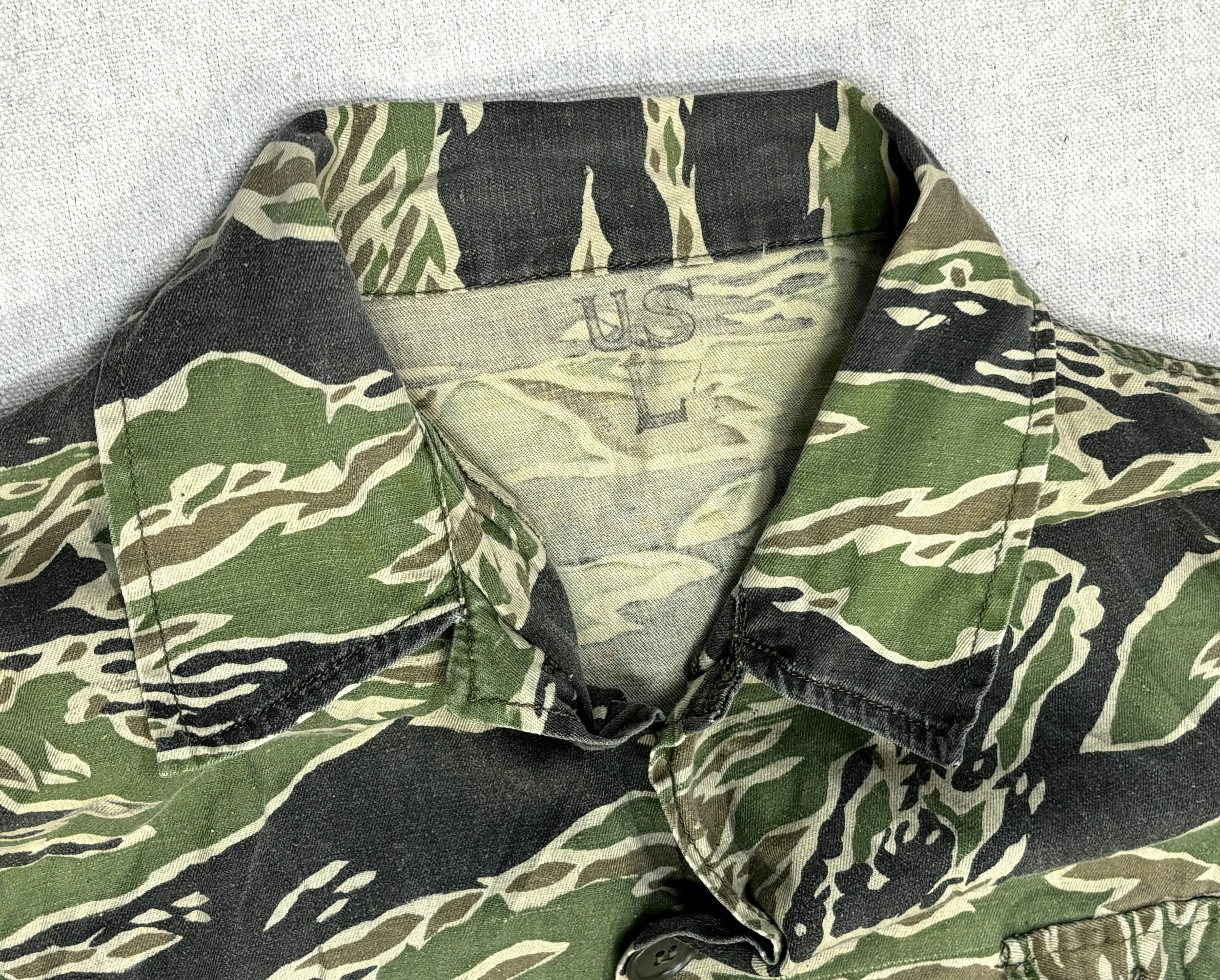
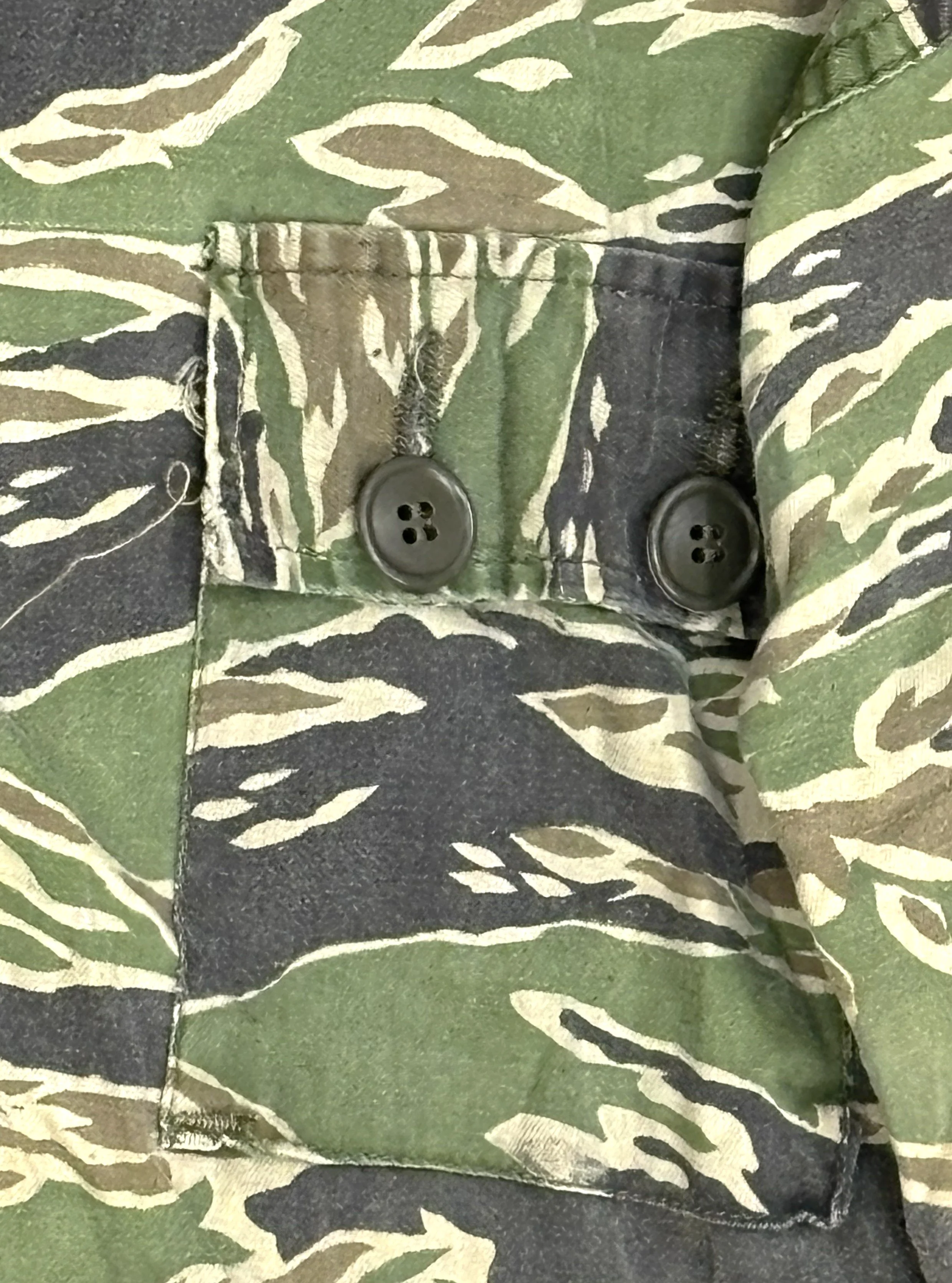
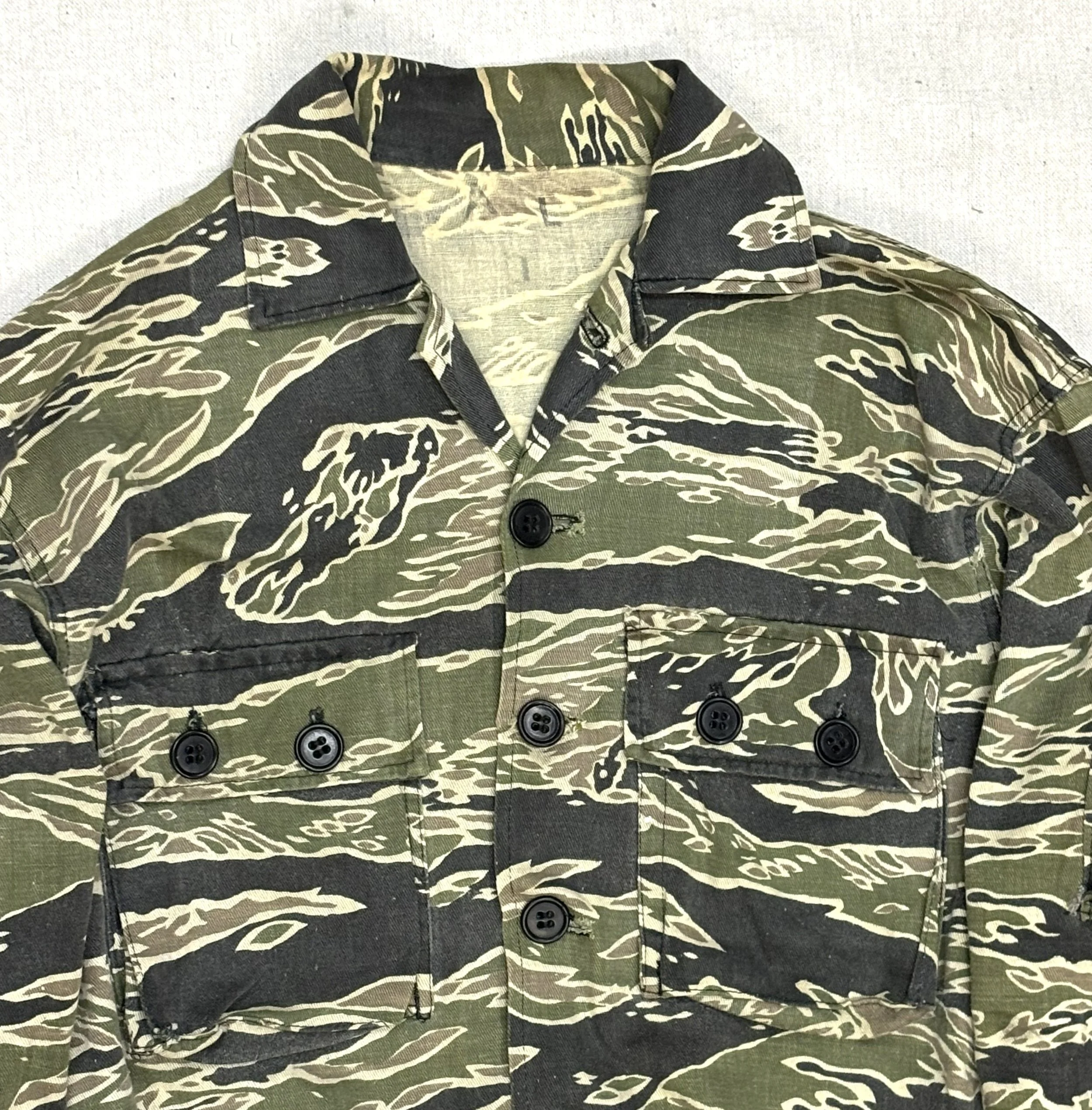
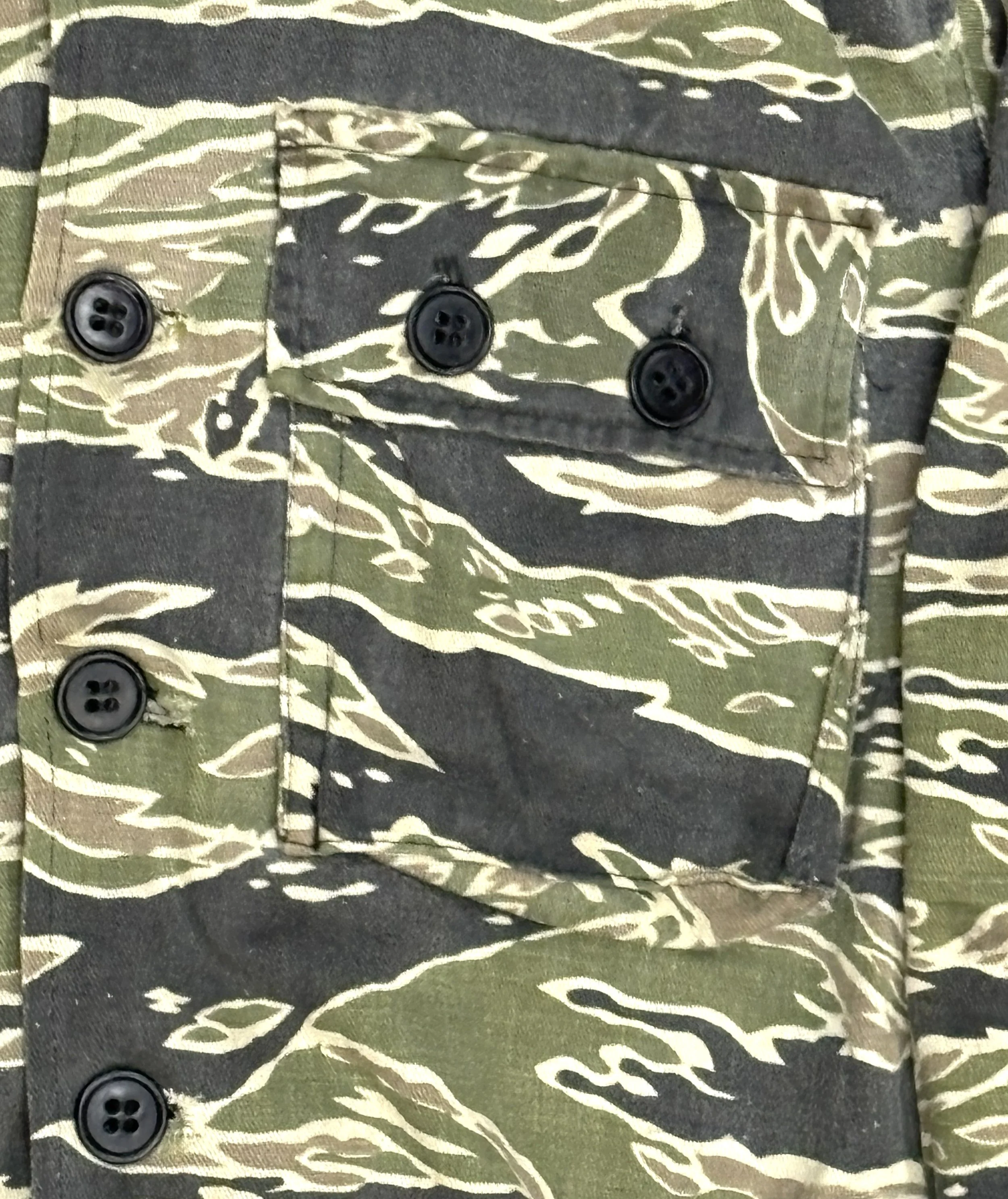
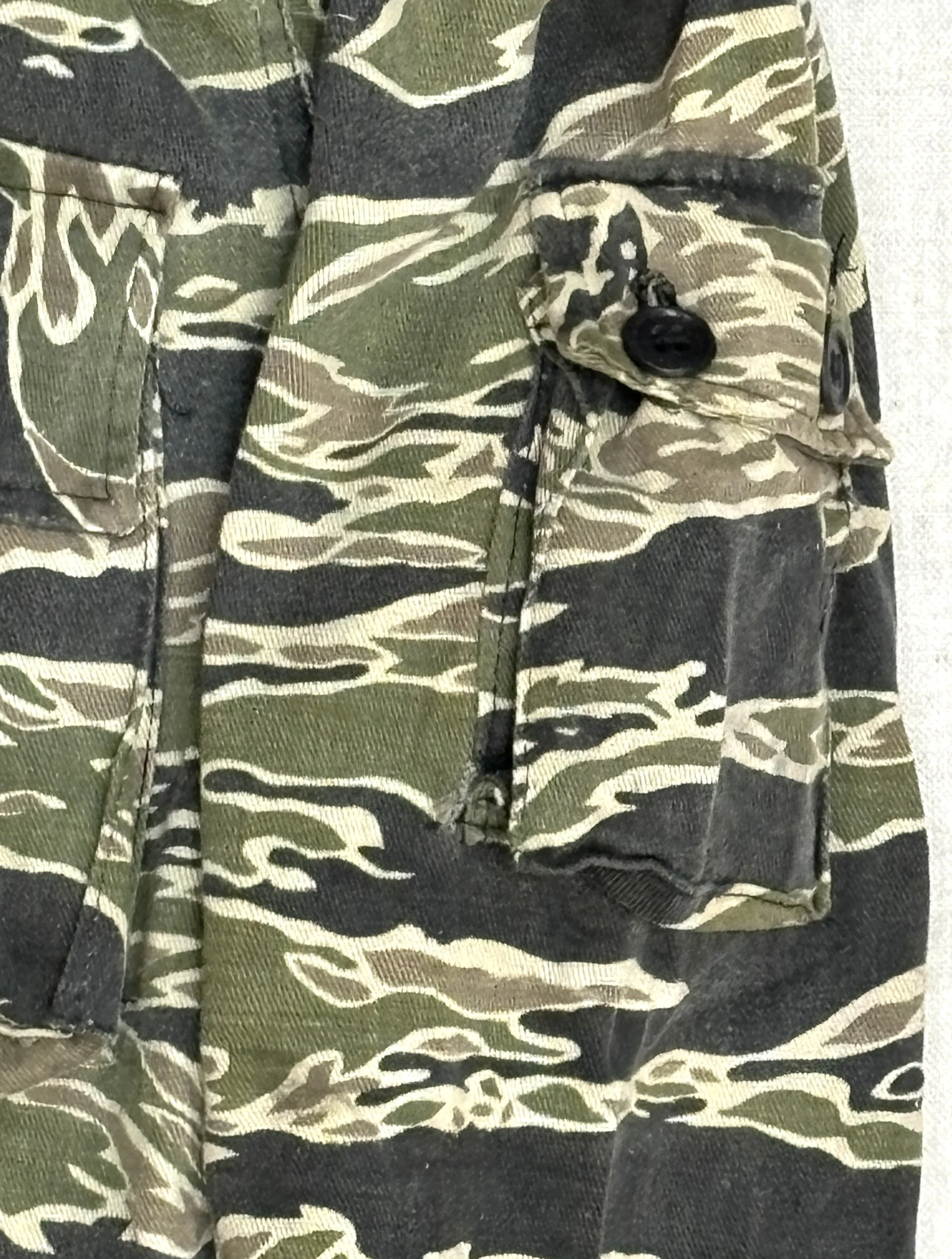
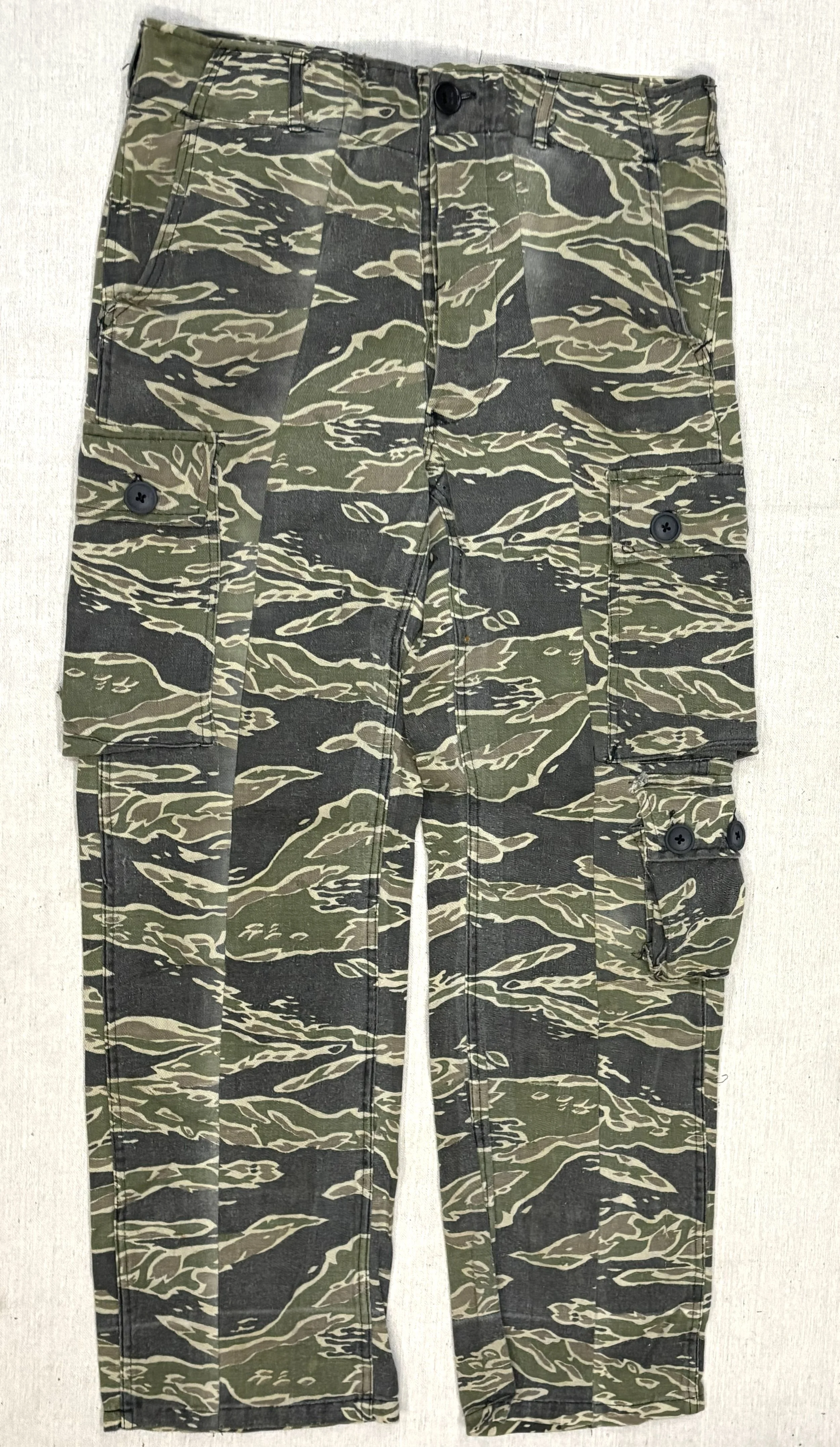
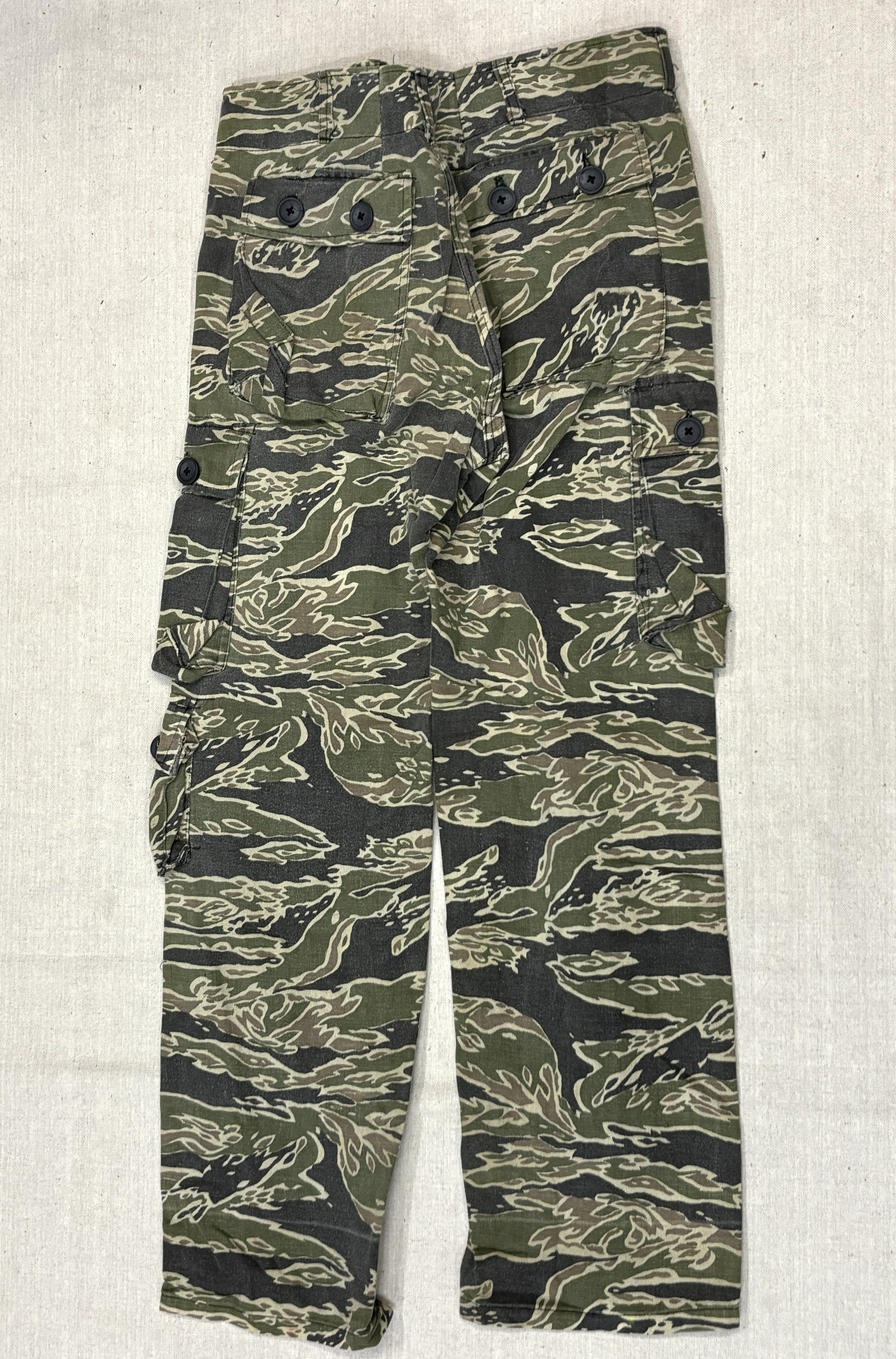
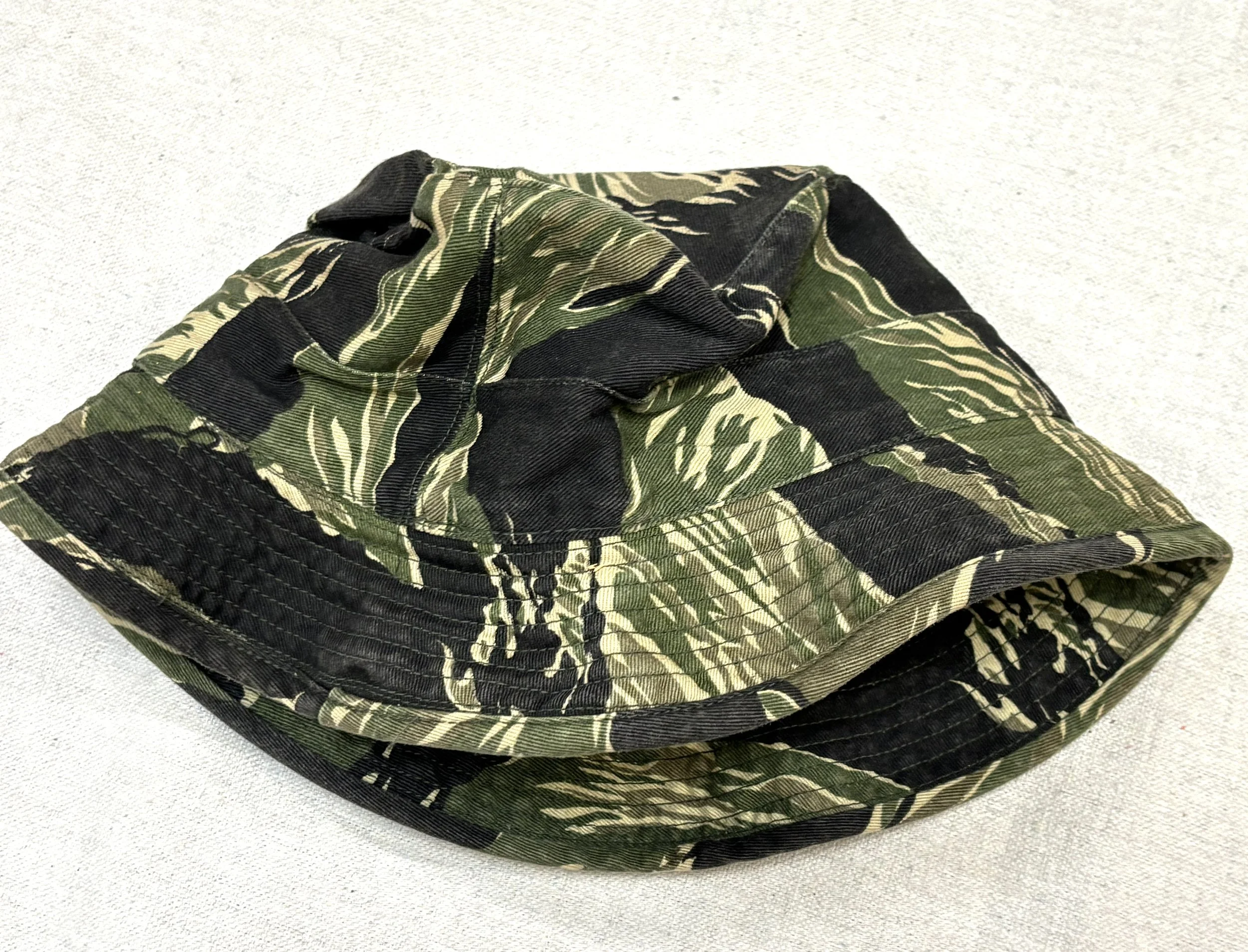
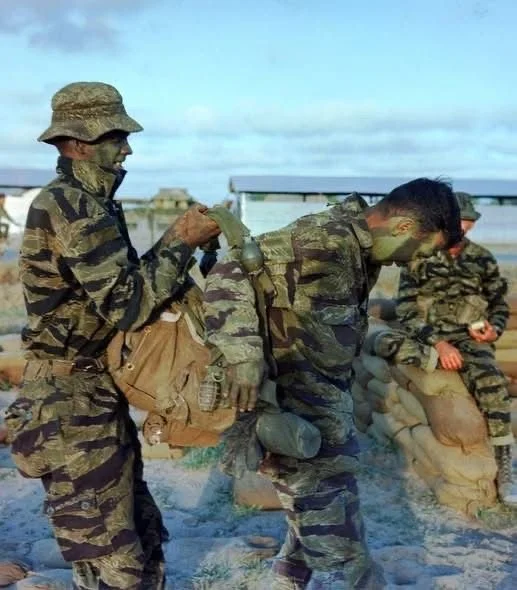
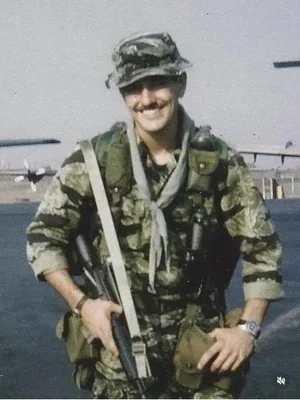
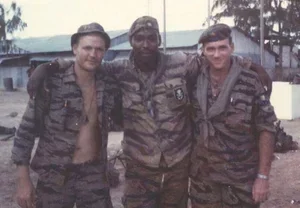
The Tigerstripe Uniform was something the South Vietnamese had developed, in a few main patterns, generally using a Black and brown over green, or black and green over lighter brown or olive color, and something Vietnamese Forces had adapted and experimented with, they were “generally” bought in the largest they could get sizes, but were still small and tight on the Americans bodies, they were more often than not, 2 breast pocket affairs, in Vietnamese cuts, and construction. The Americans tucked the jackets into the trousers, and they became shirts. There were 4-pocket jackets custom-made from time to time, and the SEALs had some official patterns that had ammo pockets added from the front and back of the shoulders, etc. Although you see them being worn with insignia, name tapes, official decorations, AirborneJump Wings, and CIBs on them, what they were for use base in their camp, but they rarely left from there, like pretty much all special forces, Army Navy, what have you, completely sterol uniforms were used in the field, maybe with Name and Army tapes above the pocket flaps but that’s it. I’ve heard that a common practice was to wear black pajamas like the enemy did, while going out on missions, especially if they crossed the fence into Cambodia and Laos.
*Note: I tried to put these uniforms together with what information I had available to my friends and me, at the time, and there are 1000 variations, in colors and patterns, and only a handful really, available at the time. I have since found an awesome book that covers these “Tiger-Stripe Uniforms of the Vietnam War”. Ya, called “Tiger Patterns”, A guide to the Vietnam War’s Tiger-Stripe Combat Fatigue Patterns and Uniforms. By Sgt. Richard Denis Johnson. A large, beautifully formatted book. Pointing out a few particulars on this and others in the collection, I am “Fixing Them Up”, respectfully so. Big thanks to him, but I still have to use what is available today; originals are beaucoup bucks or falling apart, a disposable item to begin with, they were discarded before leaving the country, I should think.
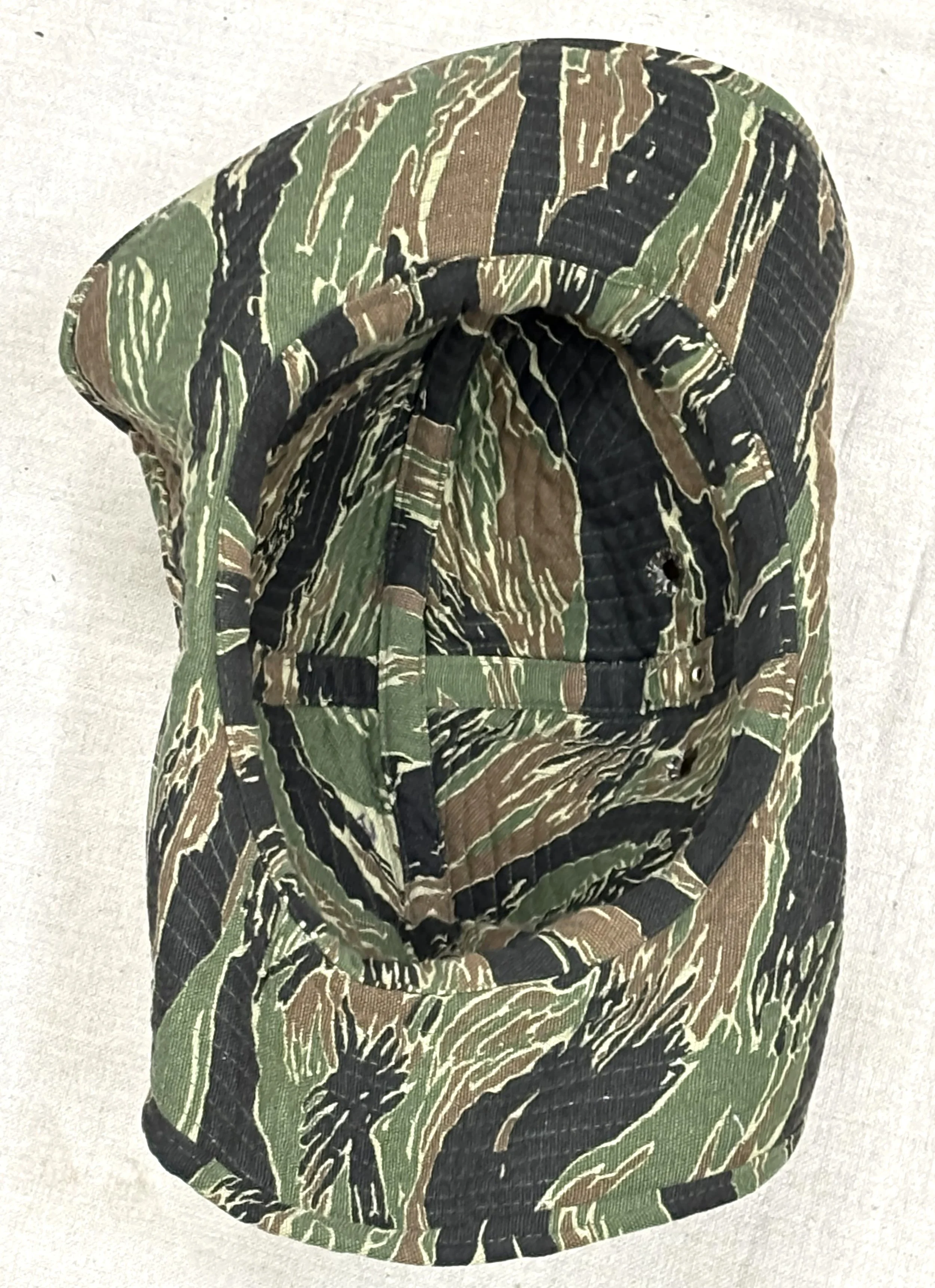
“New” “Nung”:
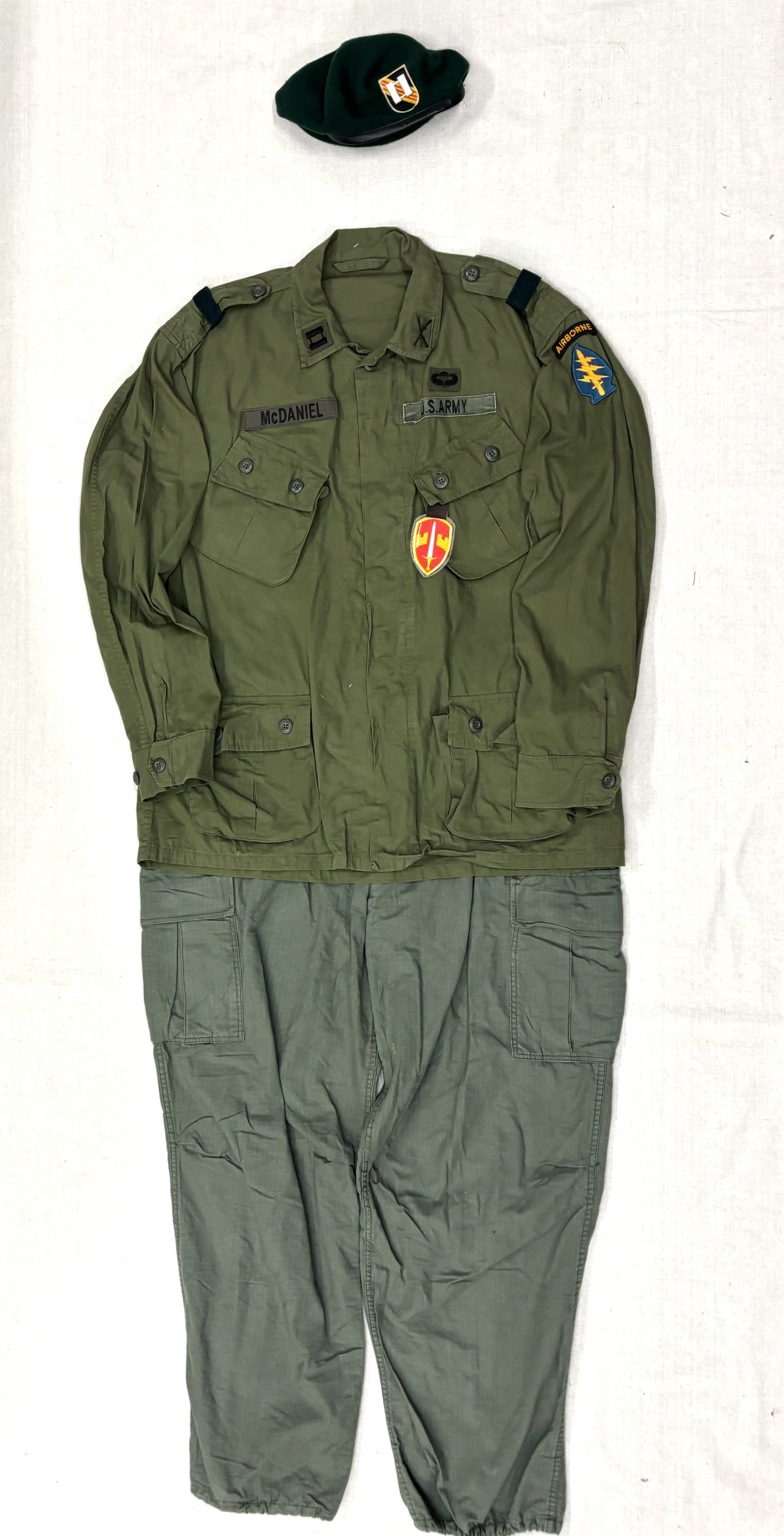
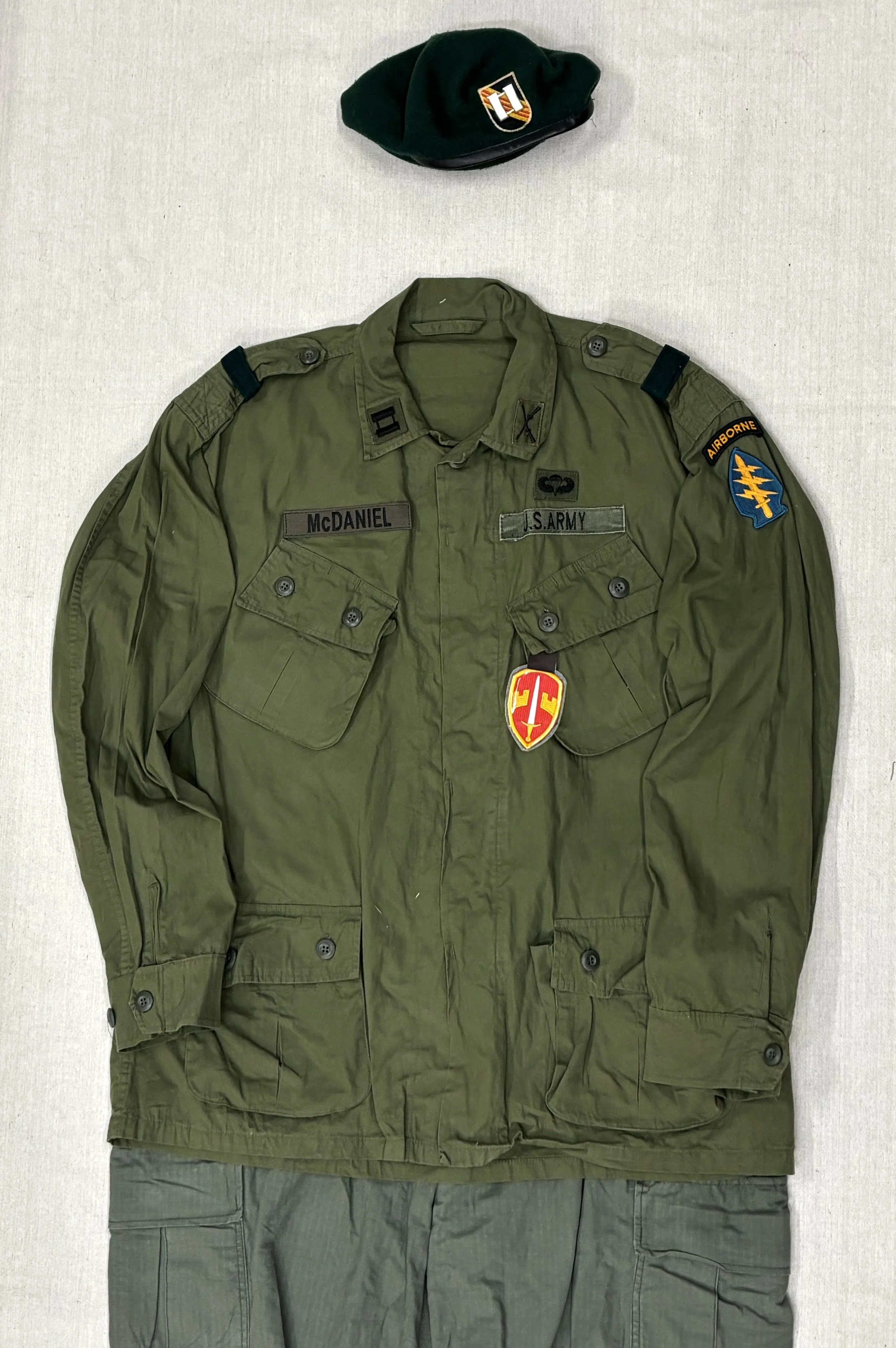
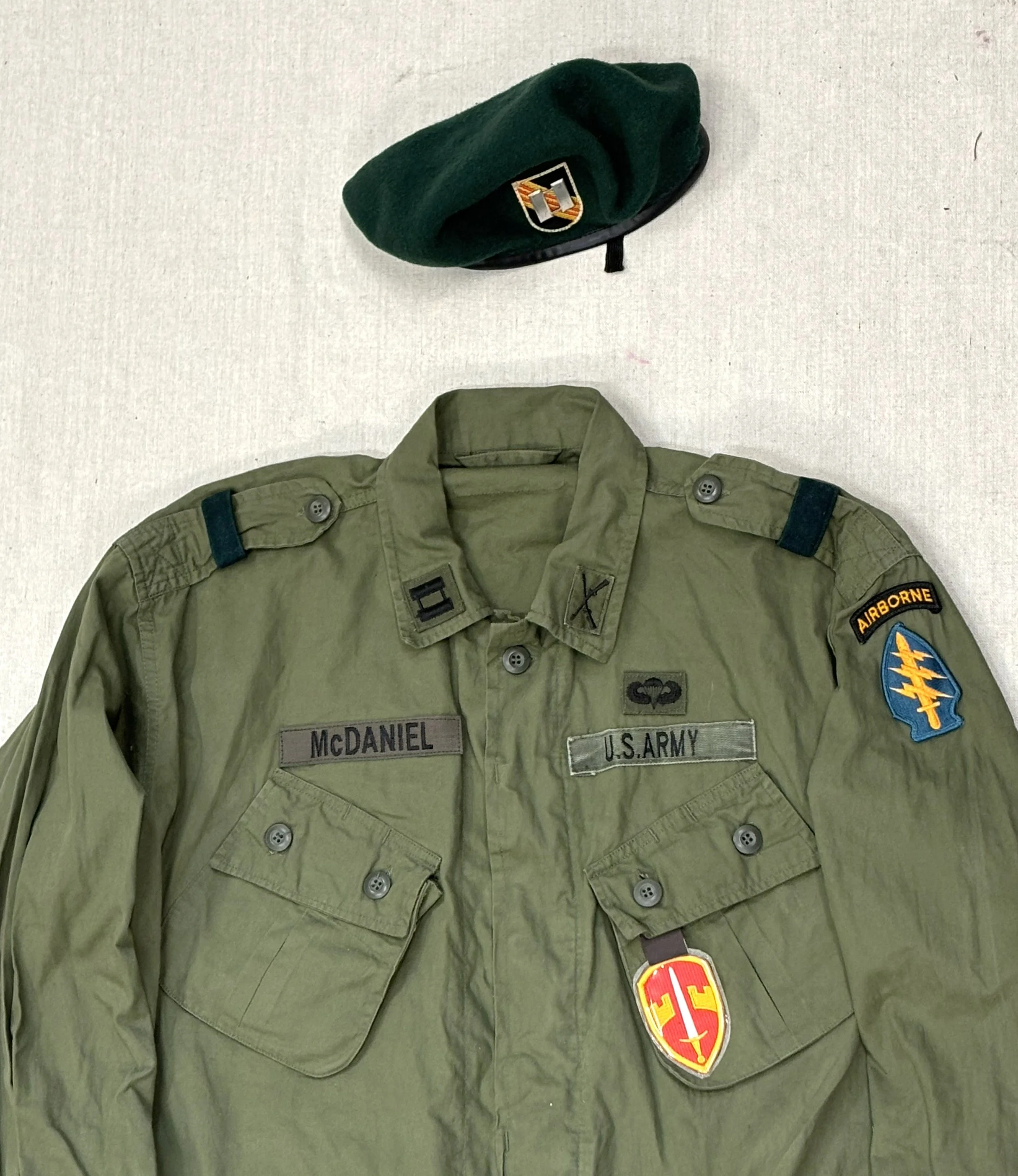
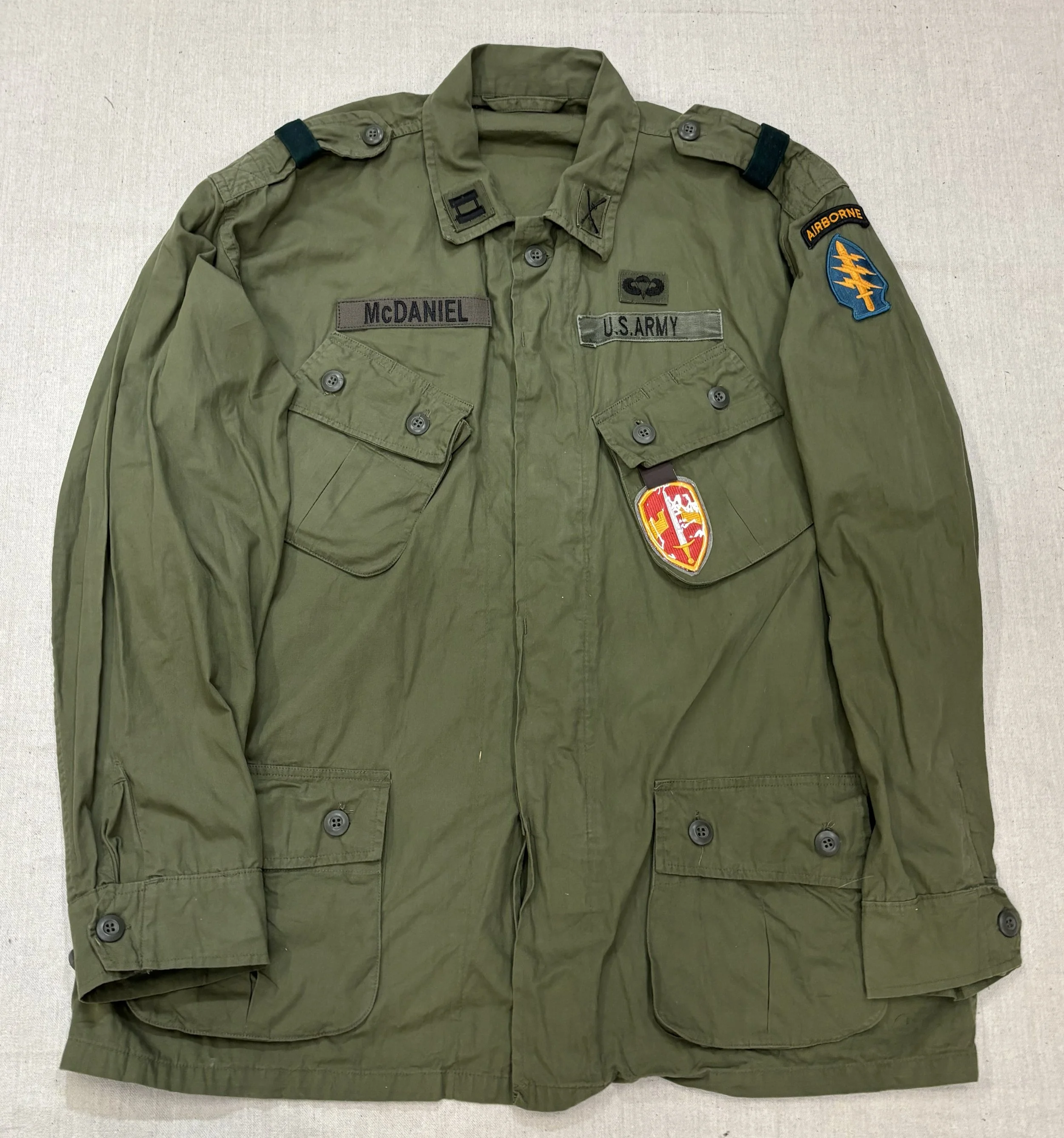
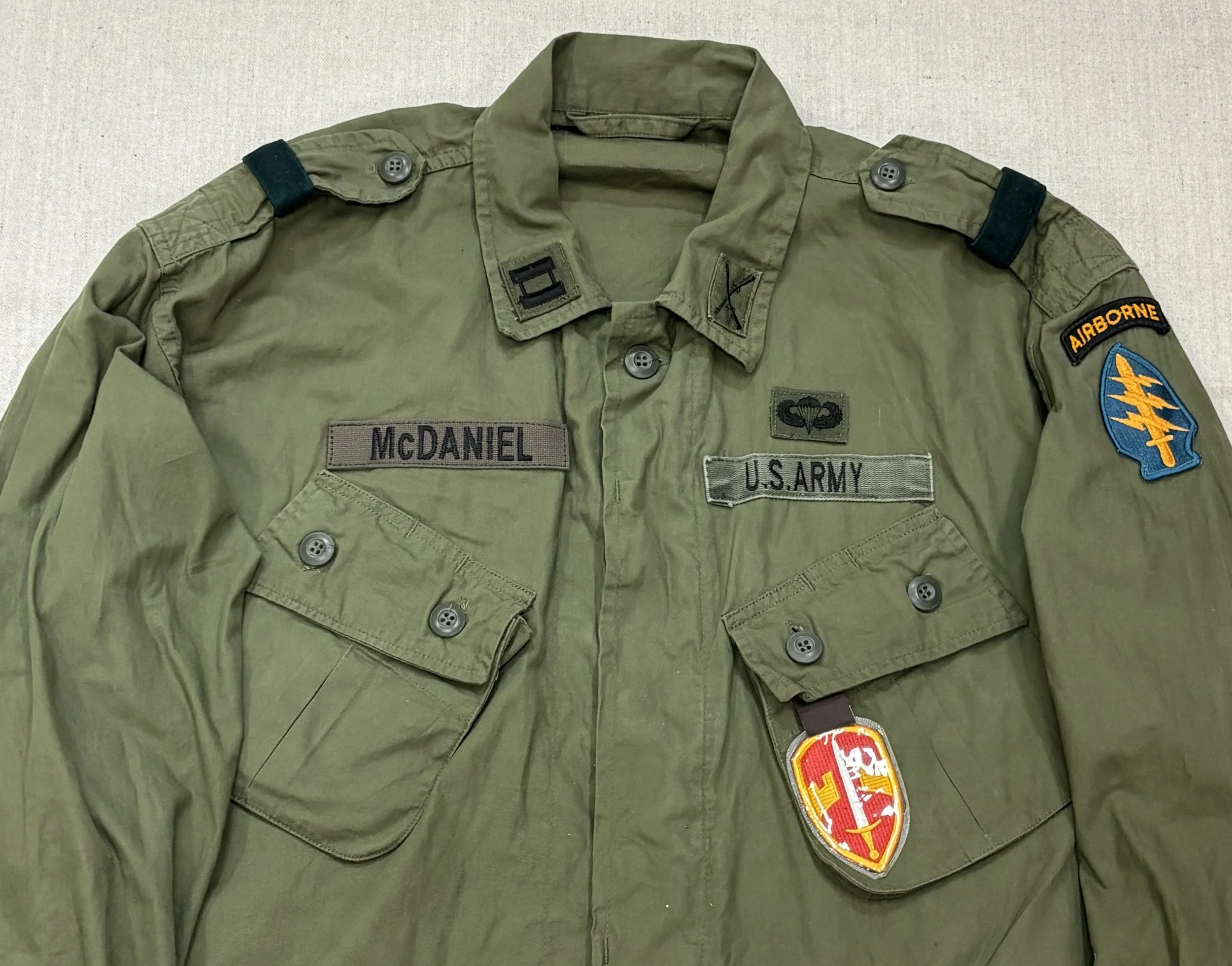
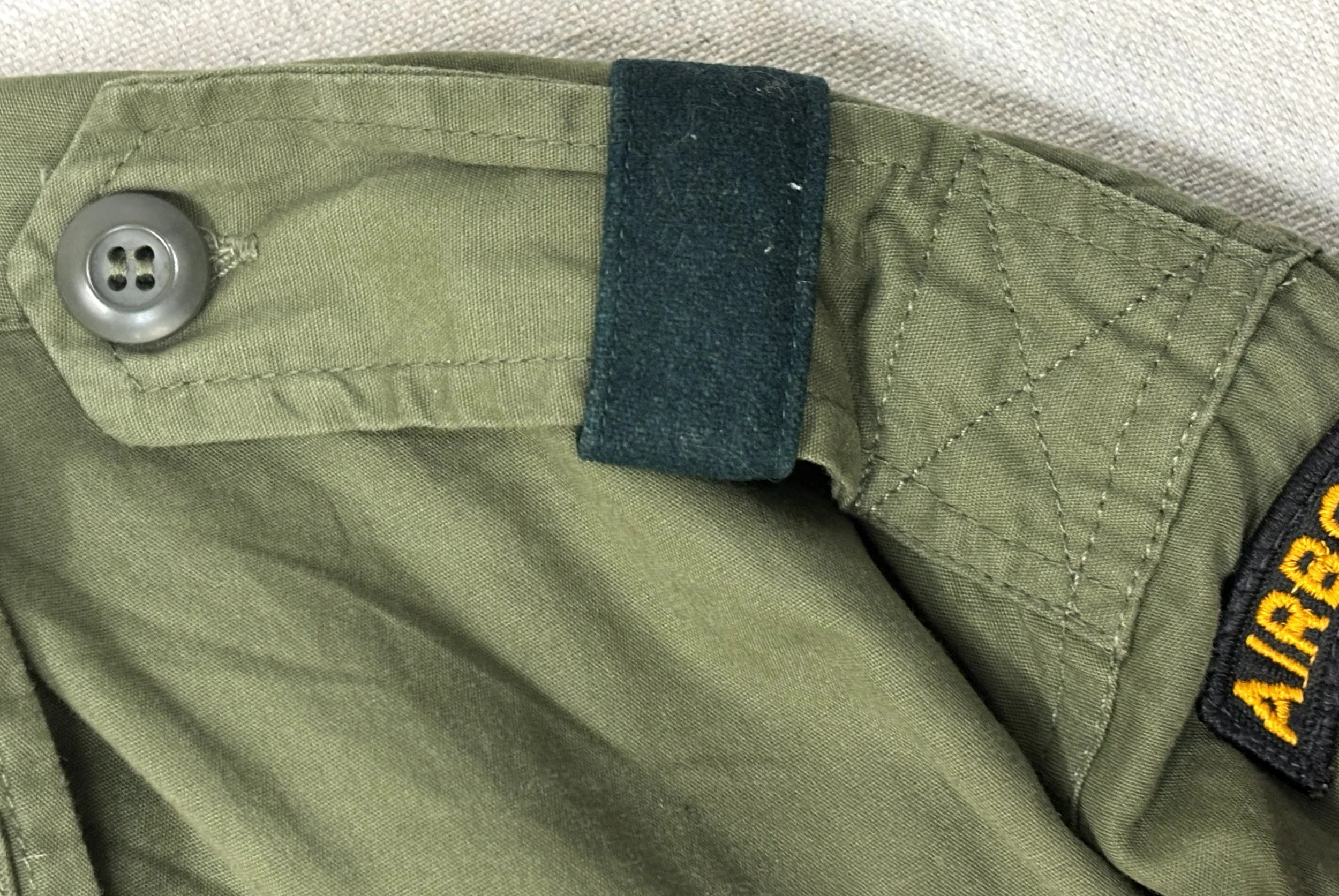
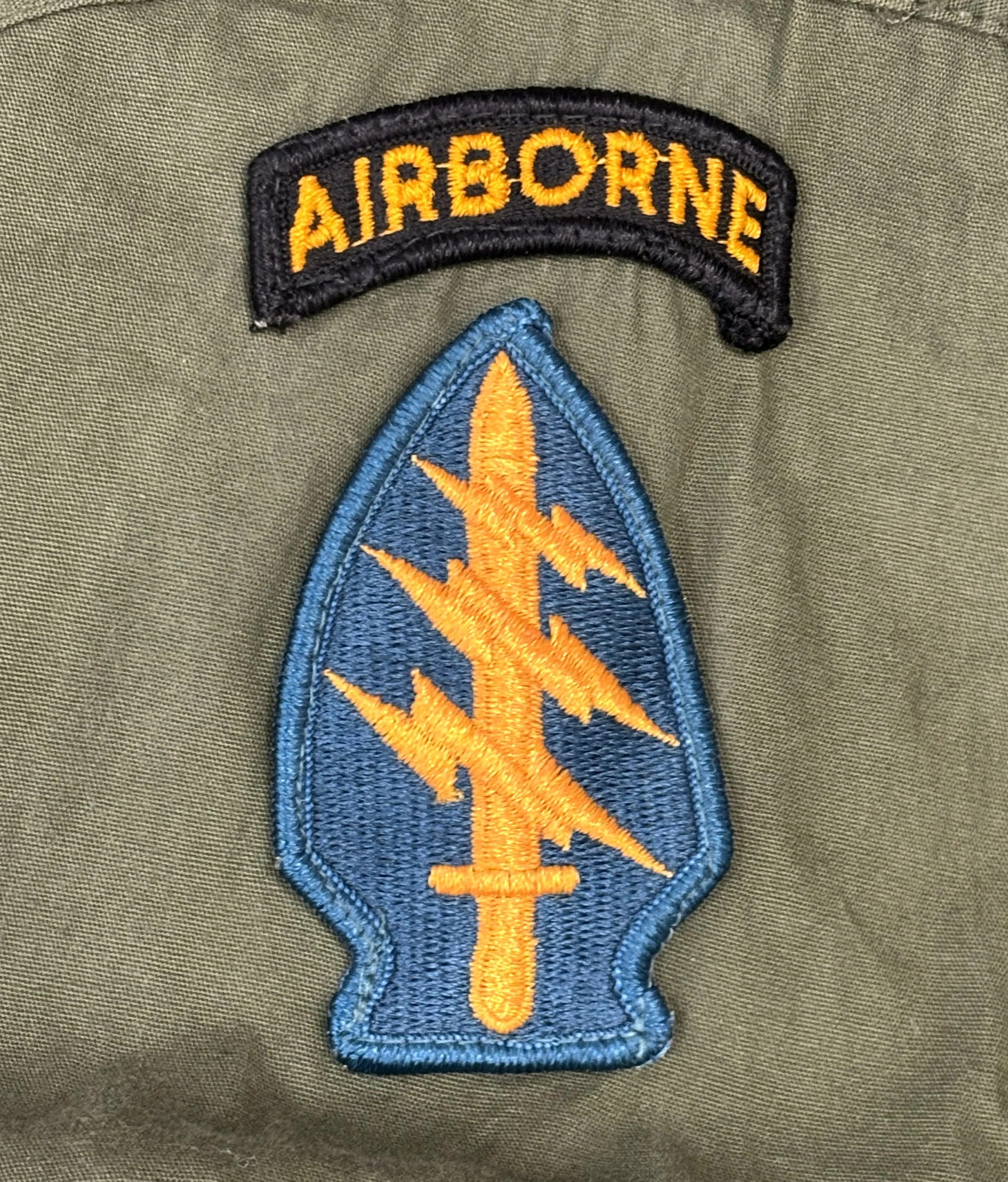
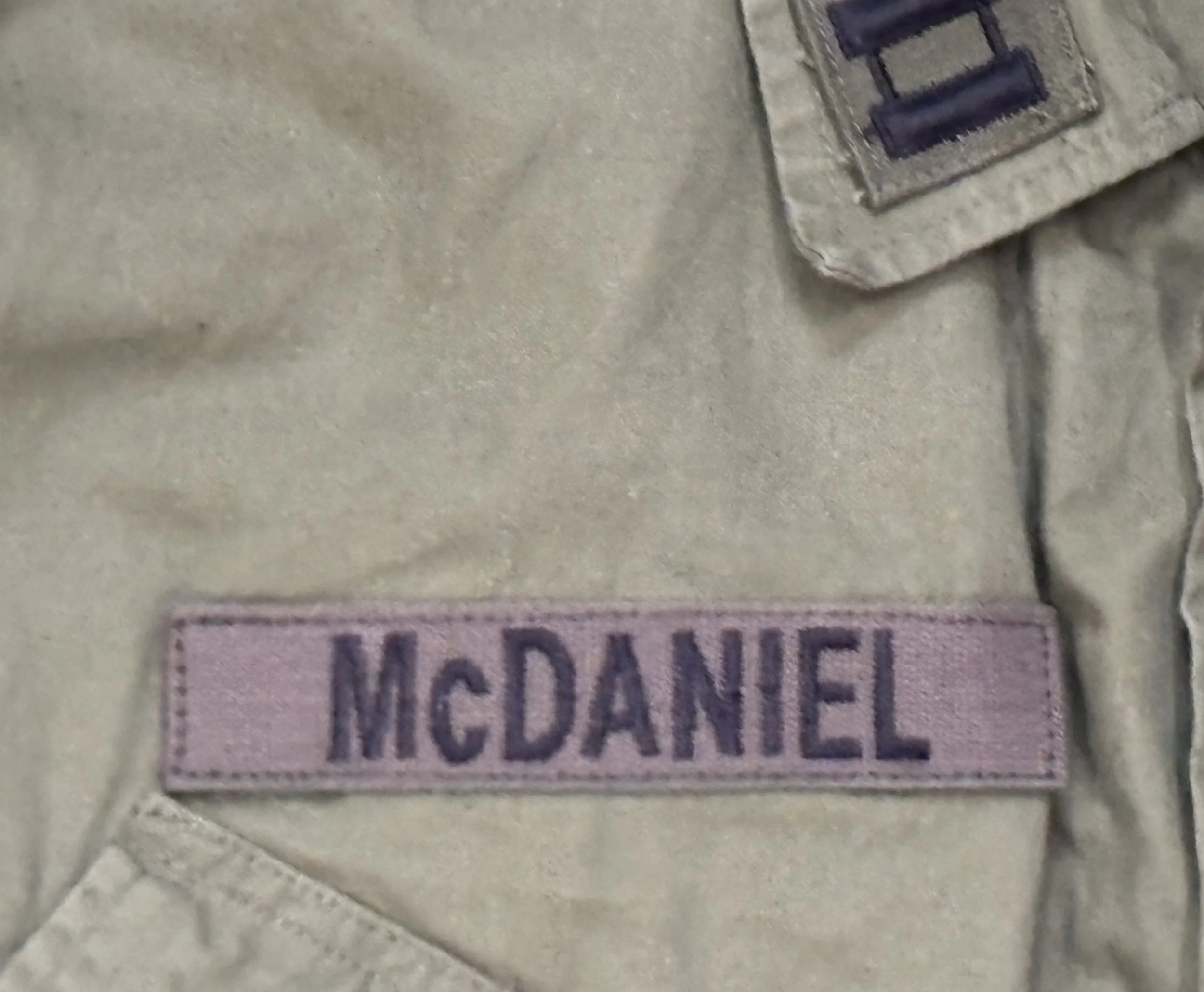
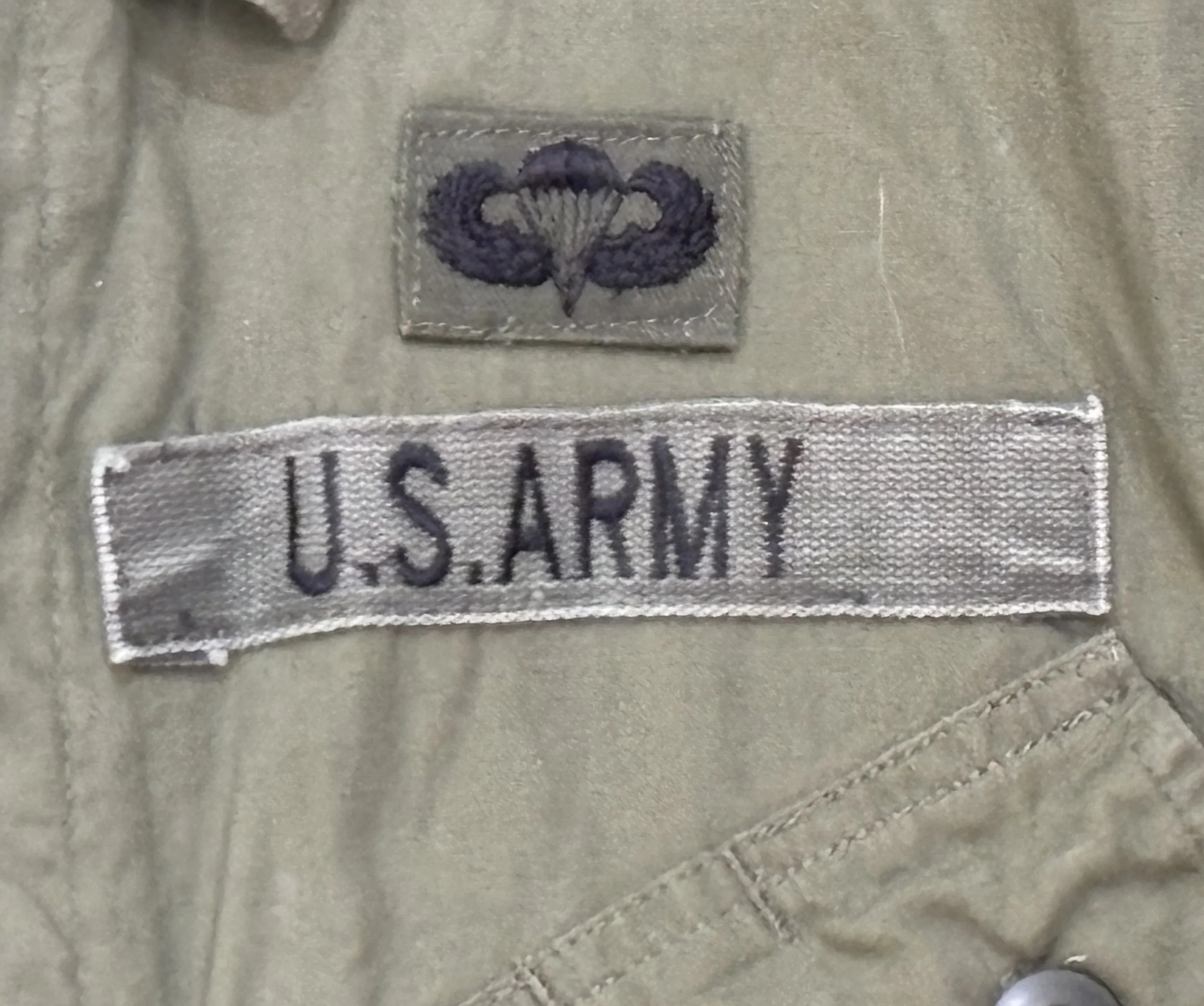
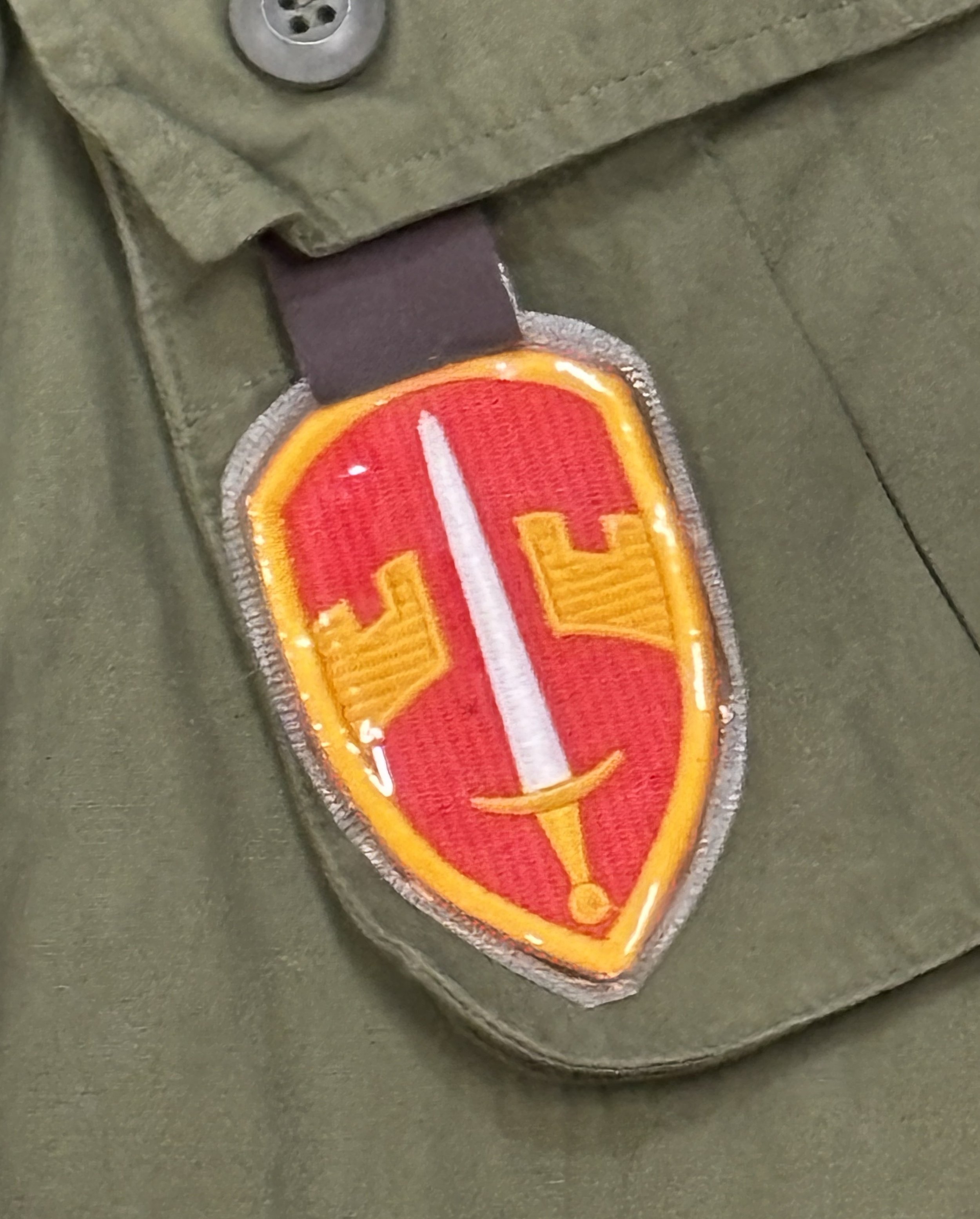
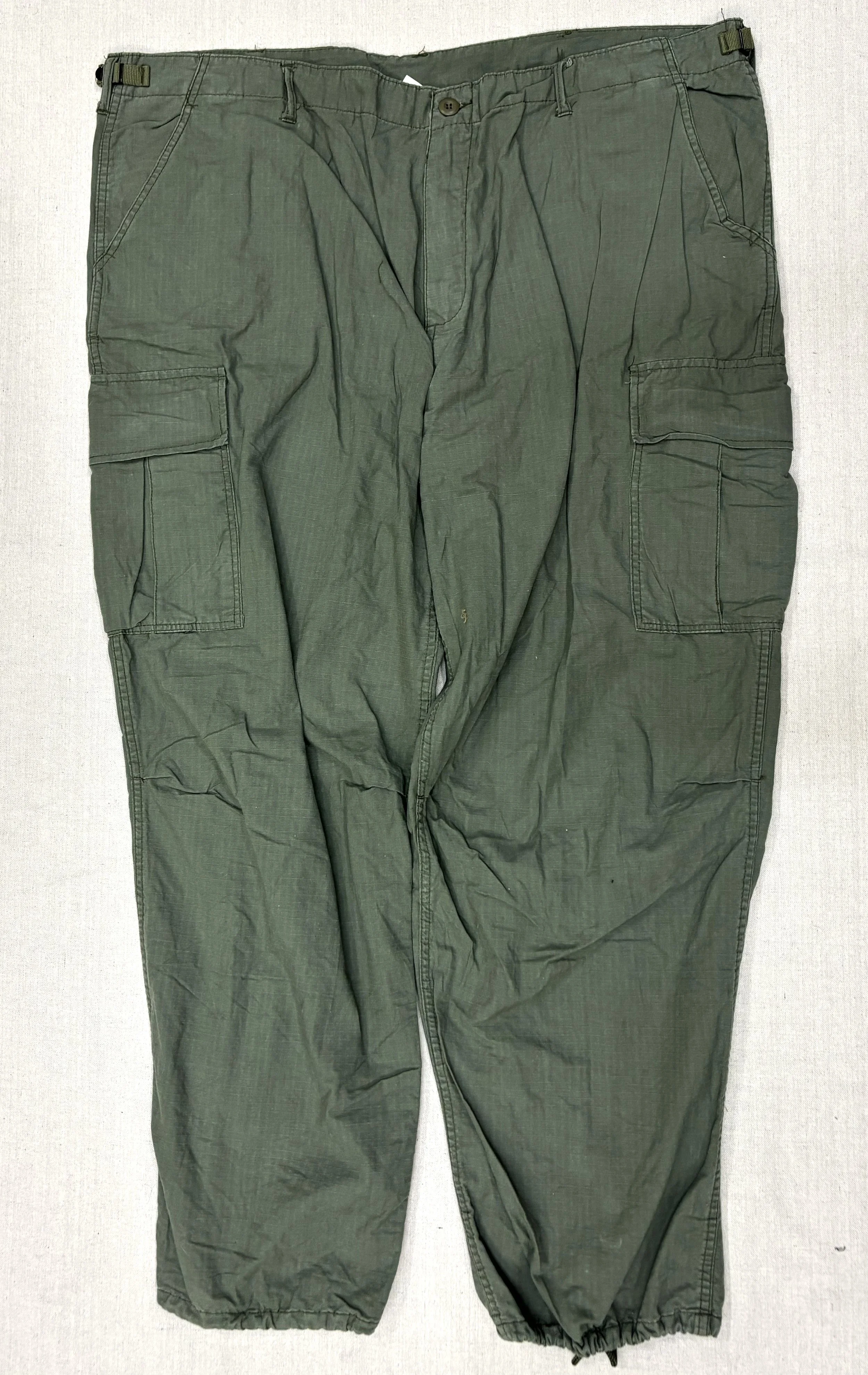
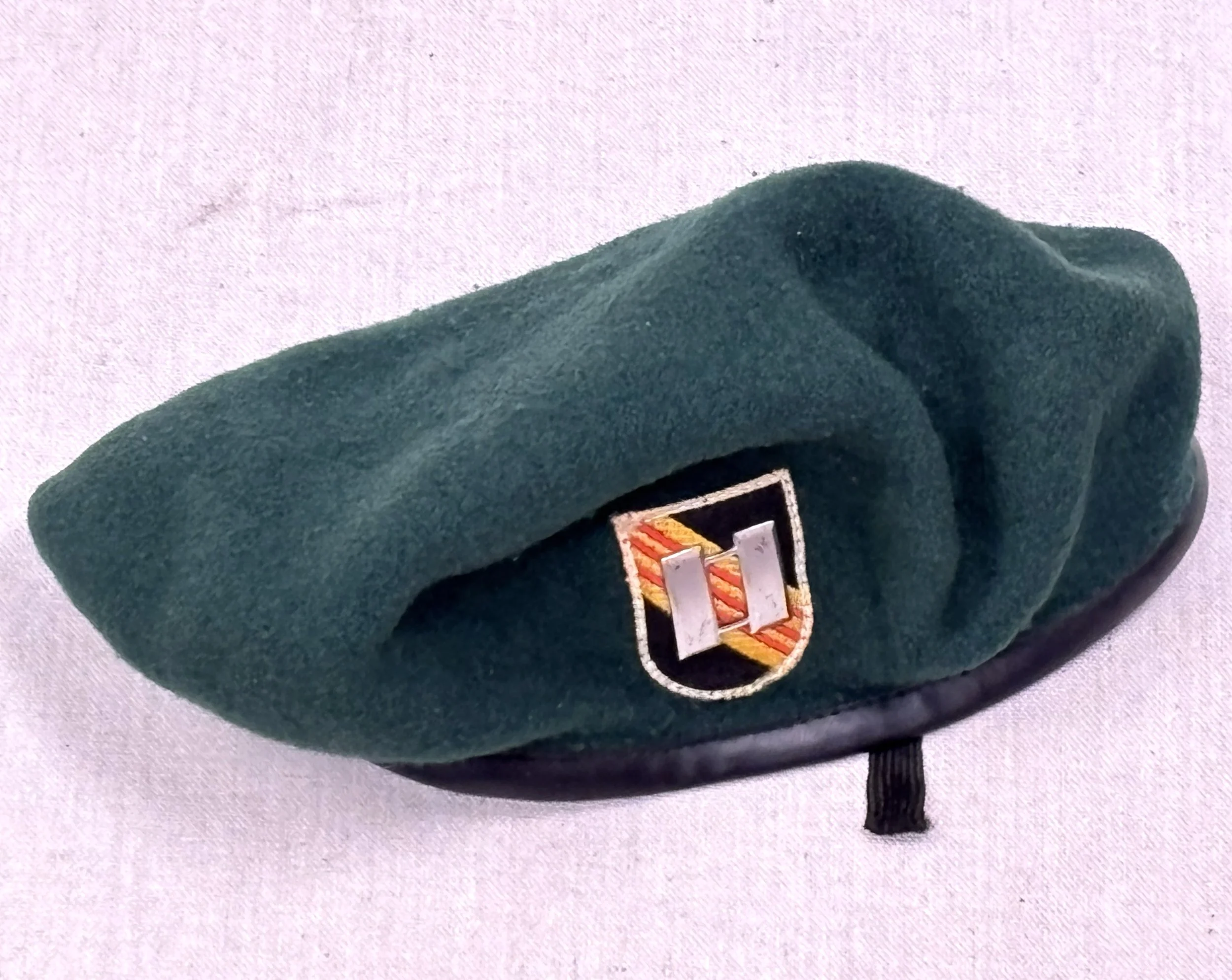
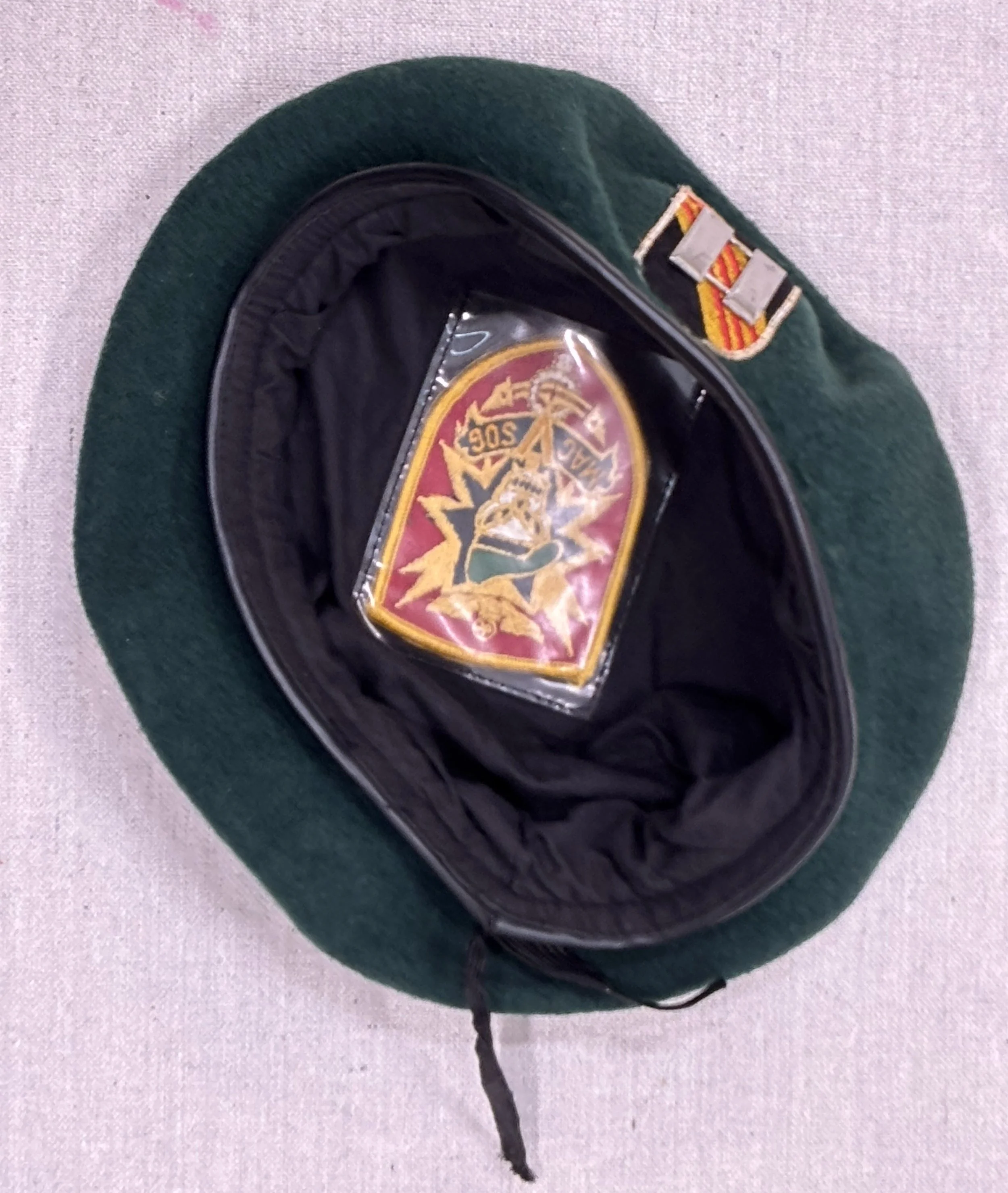

“Updated” Captain McDanail, MACV-SOG (Special Observation Group):
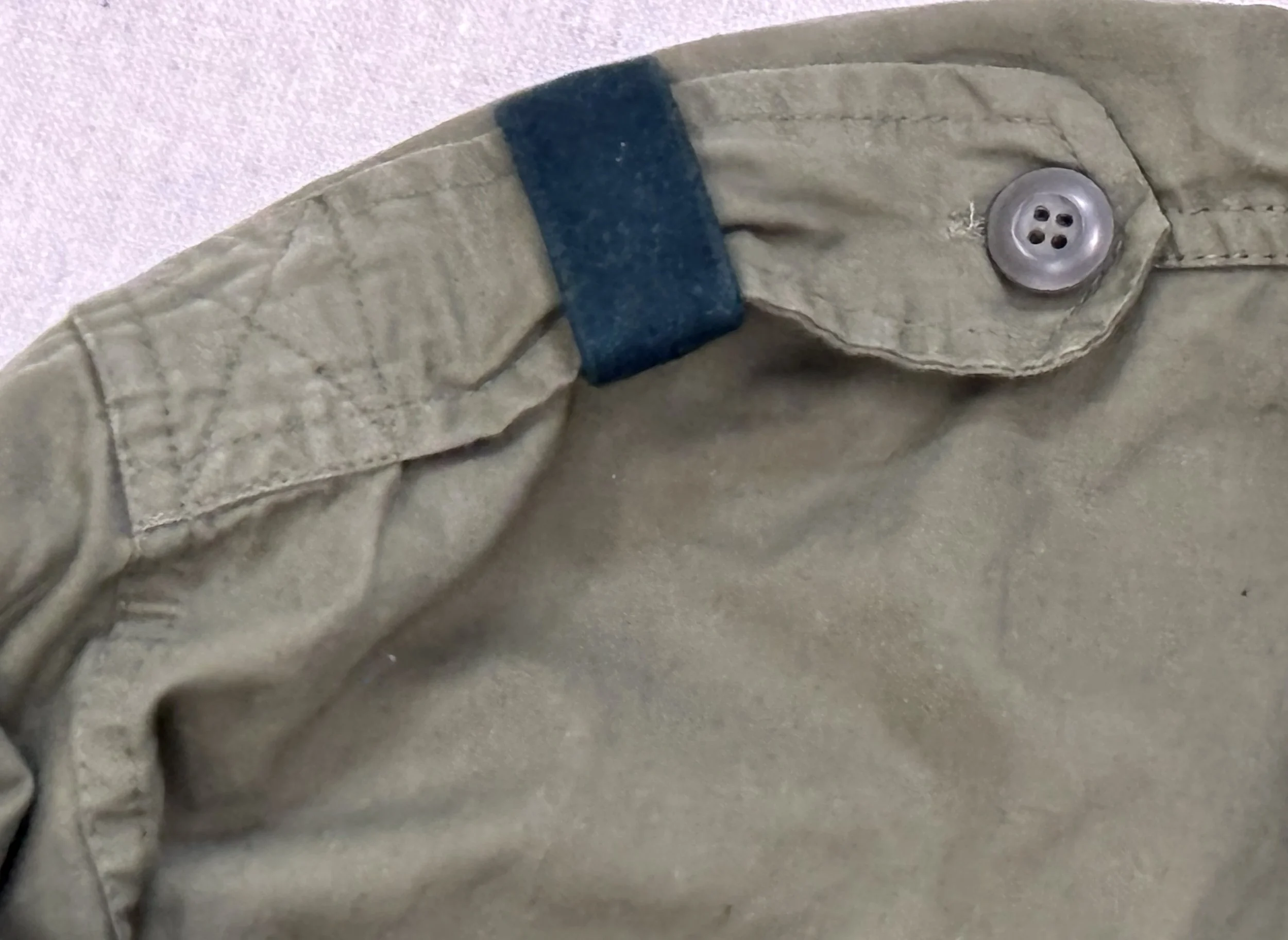
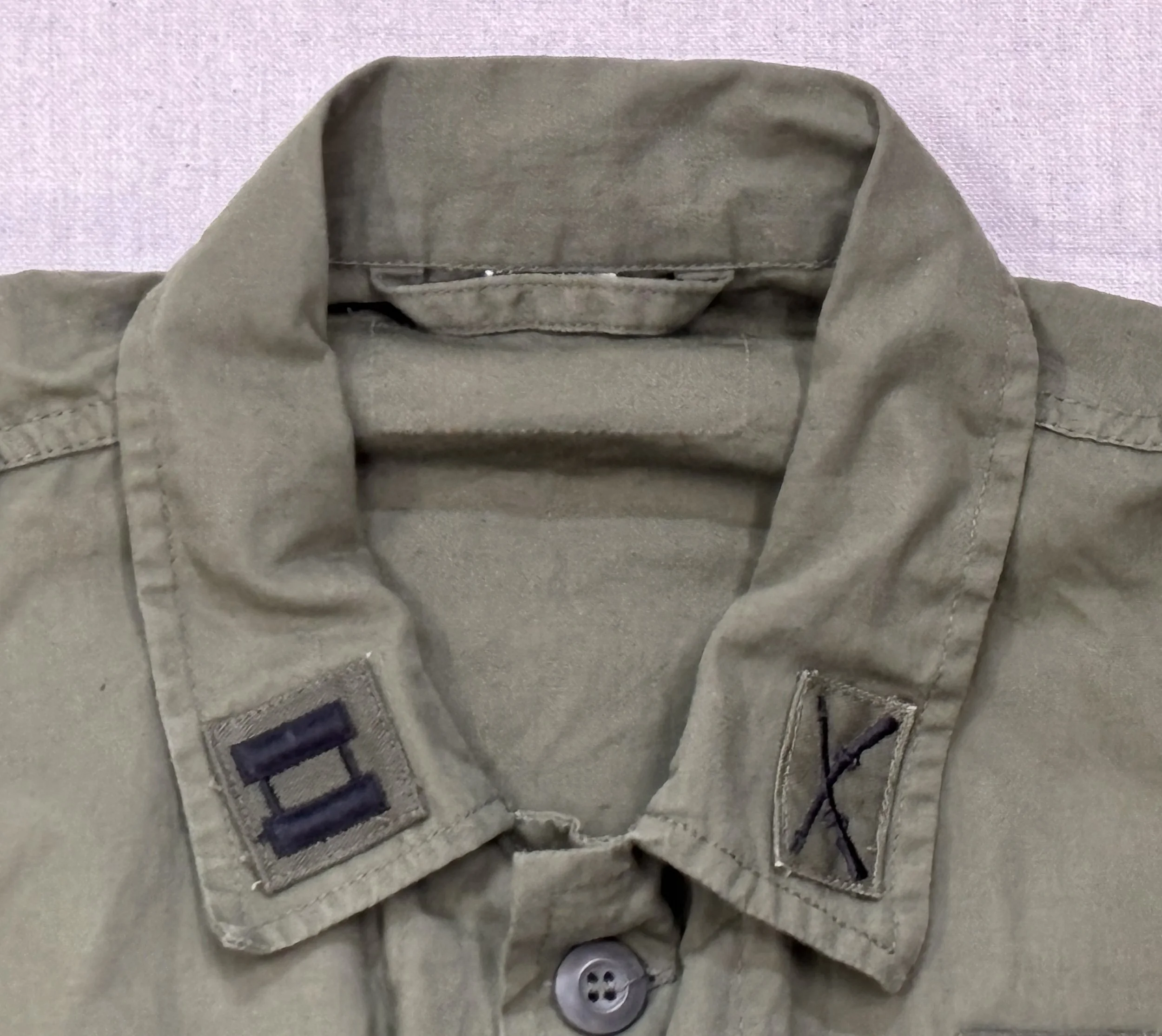
MACV-SOG was composed of three units organized under three field commands - CCN, CCC, and CCS. These units deployed small patrols of USSF and indigenous Soldiers in "hatchet teams." The uniform showing the Green “Leadership” bands on the shoulder loops, and the MACV Pocket Hanger “FOB” leads me to think he is in the position, being on base, Saigon, or some Training Camp affair, rather than out in the field here. But what do I know? It was common practice, that in that in the field, insignia was often not used at all; if anything, name and branch.
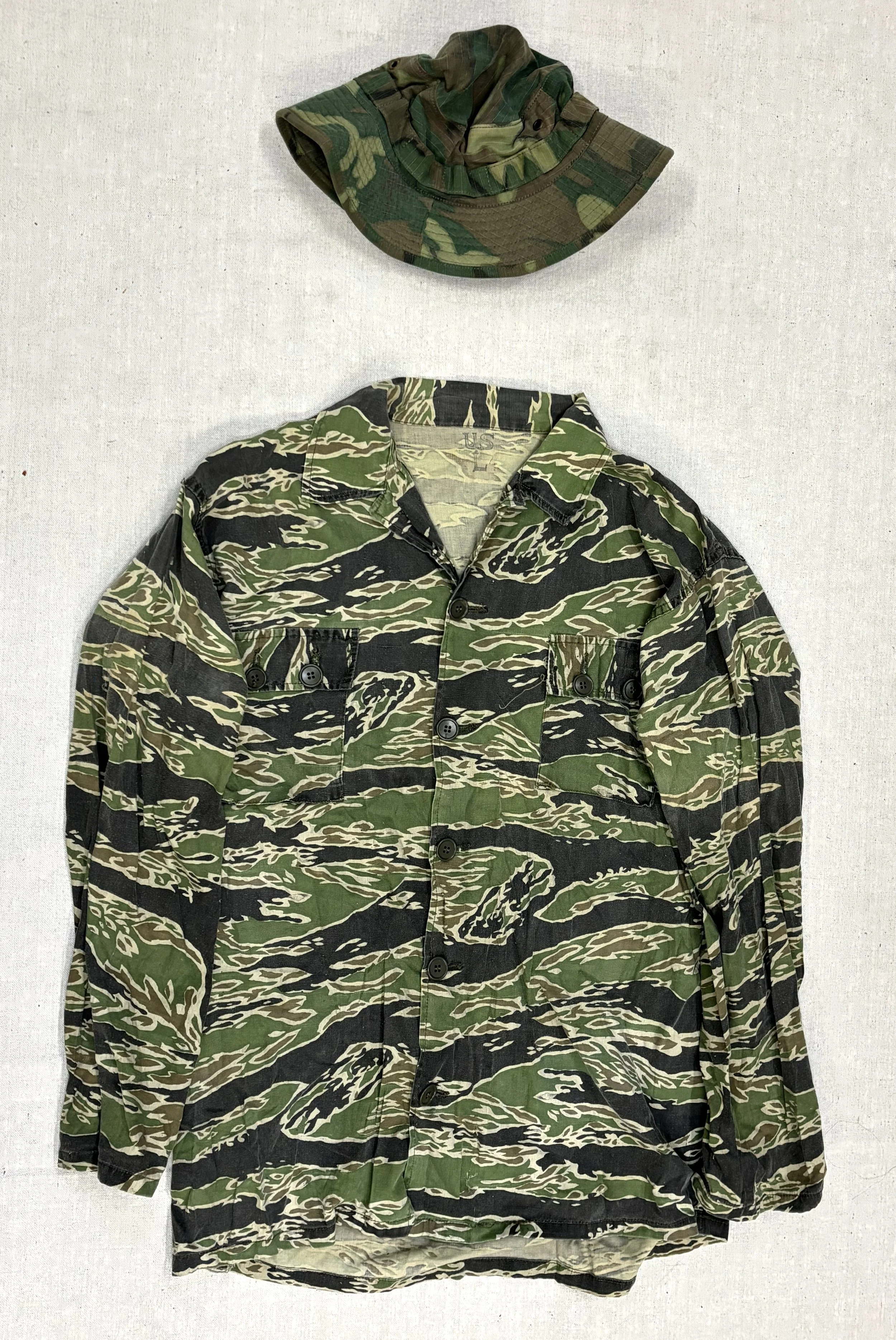
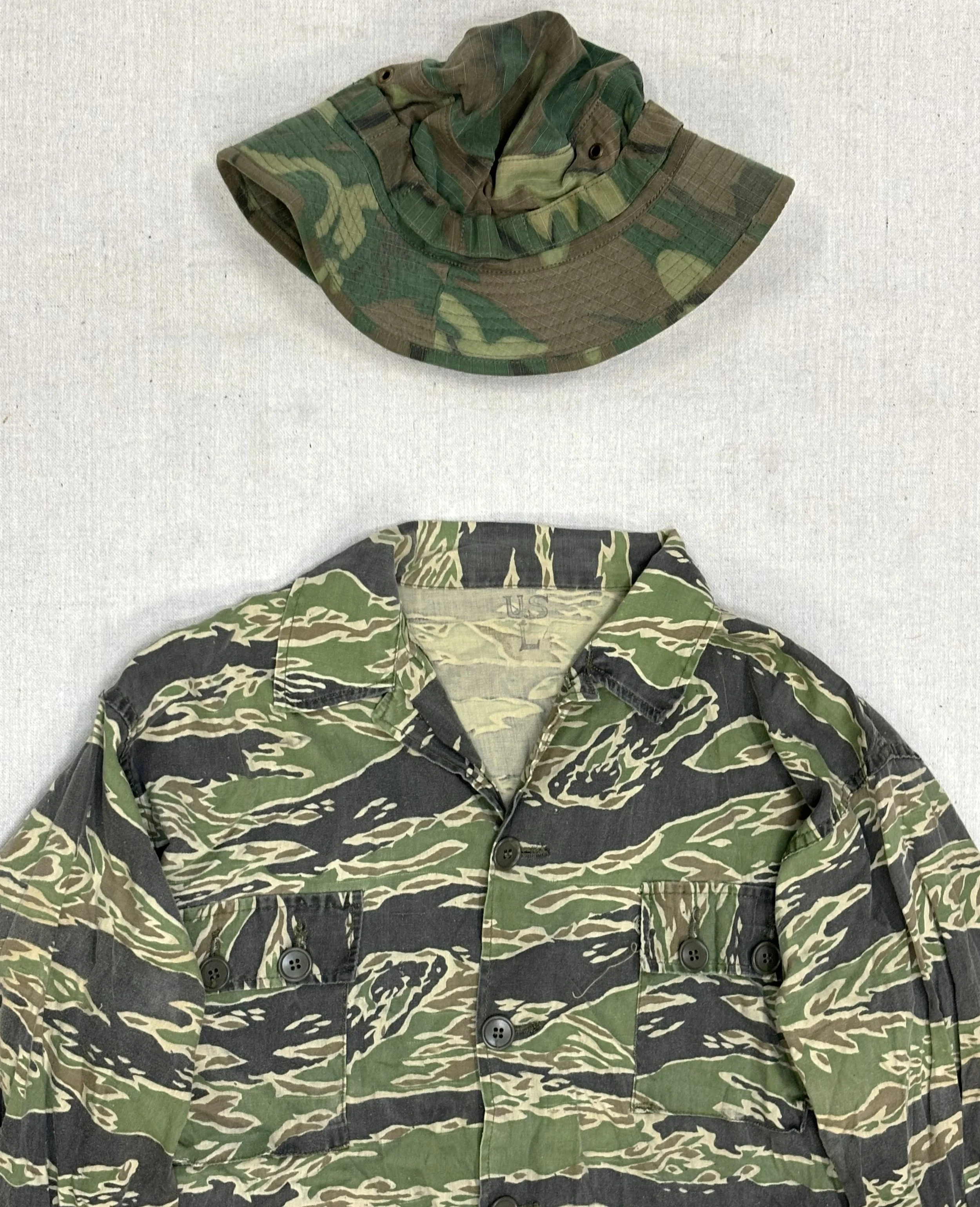
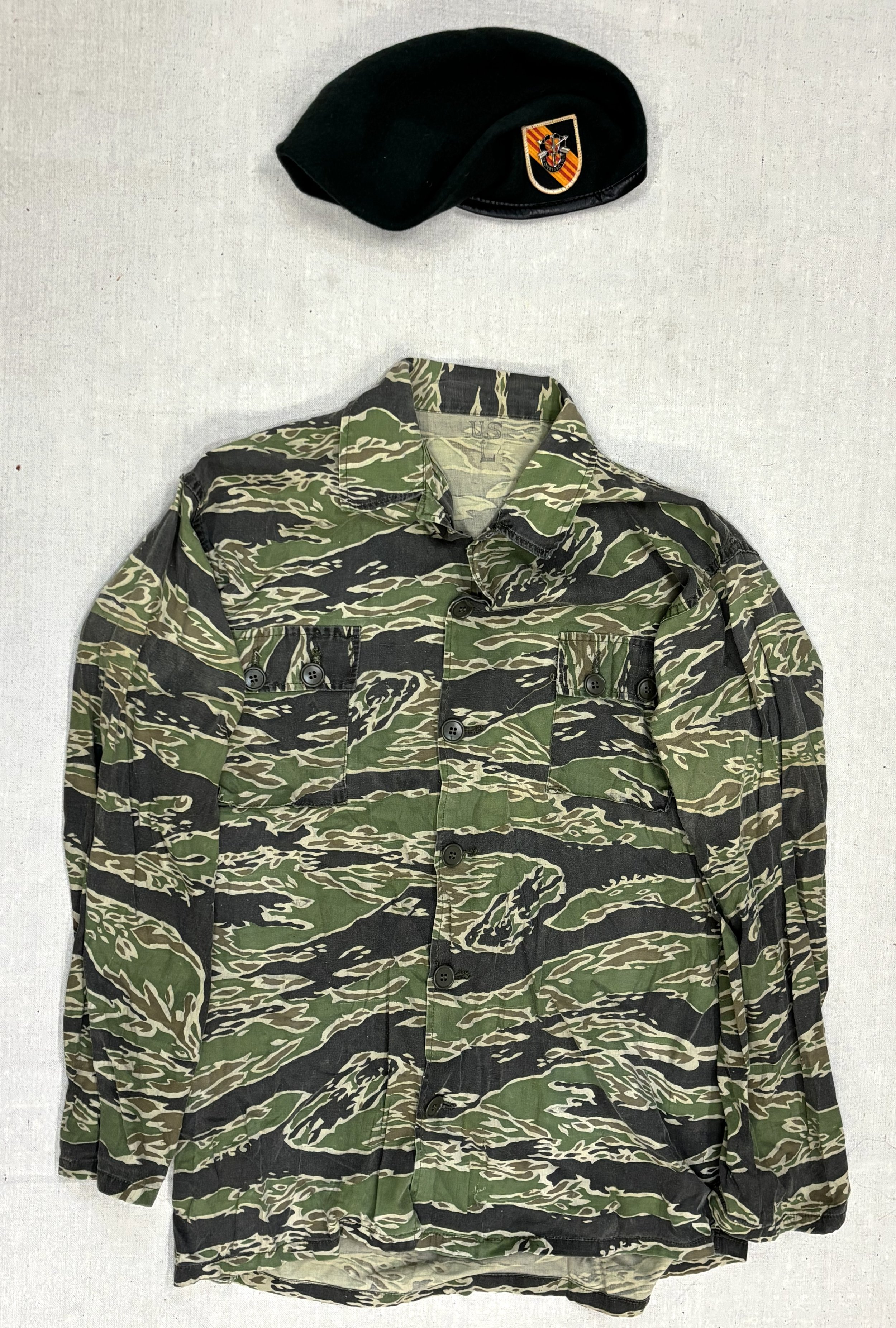
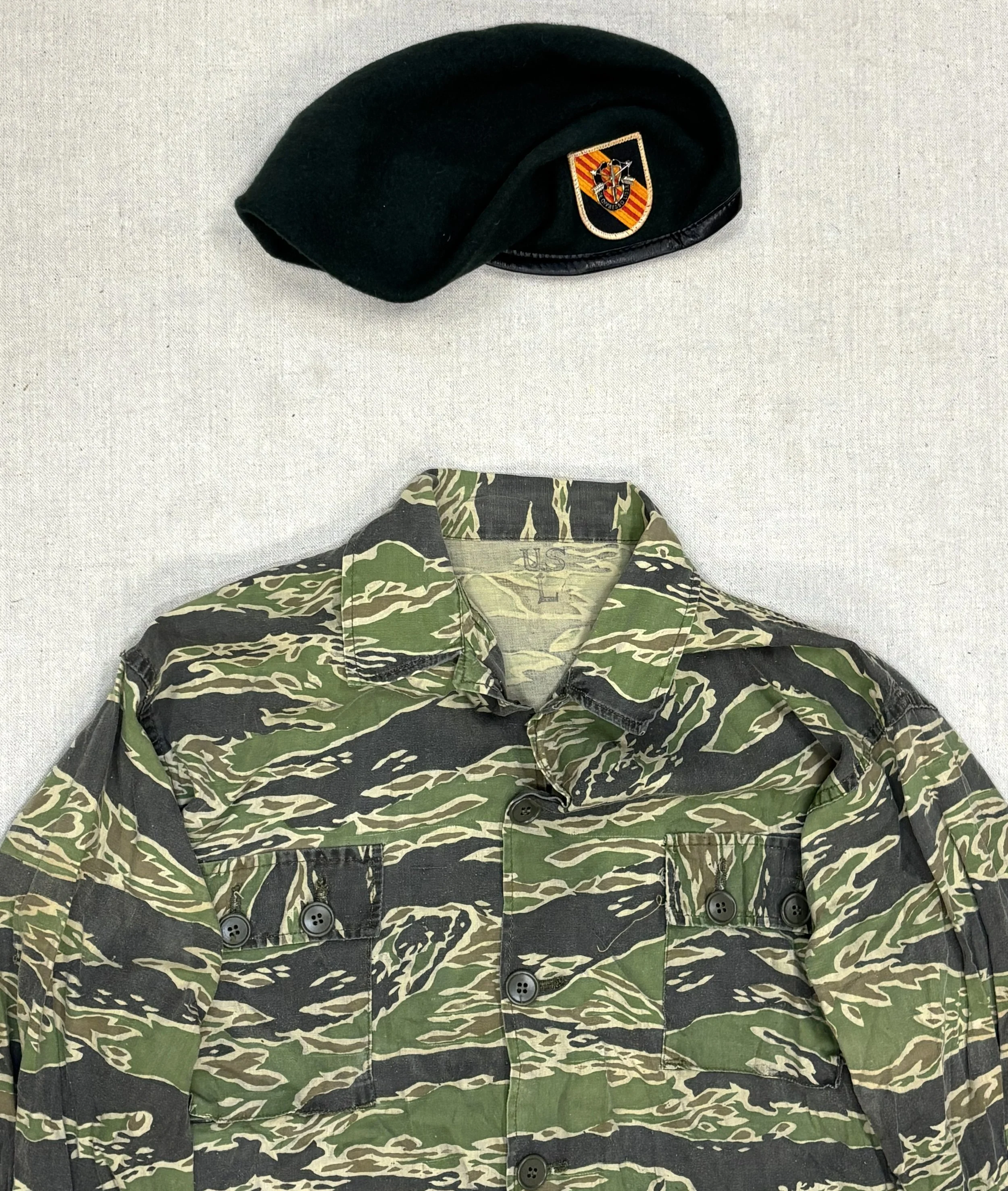
“New” NCO, 5th Special Forces, Typical Sterol Uniform, Vietnam, Late 1960s:
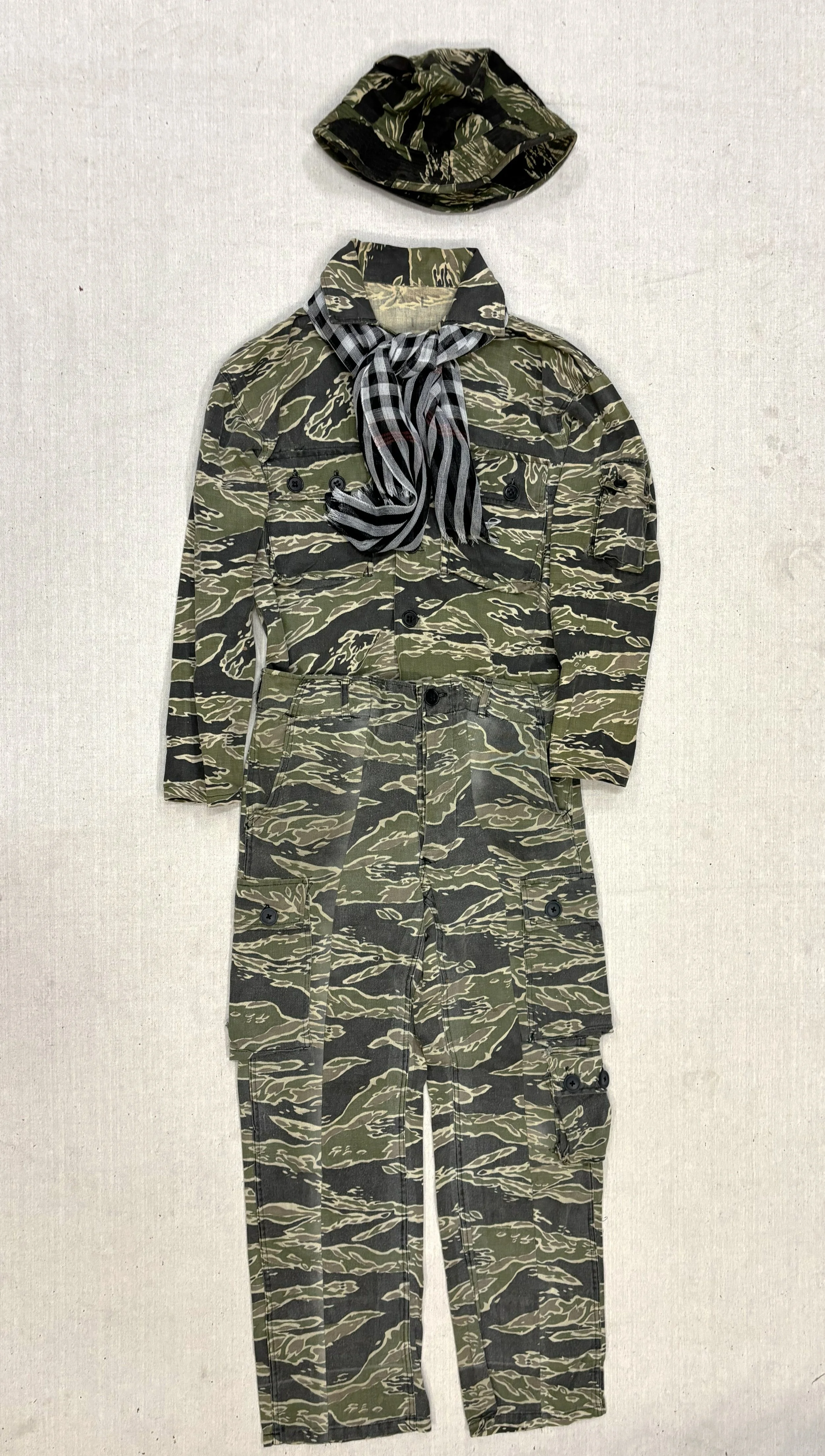
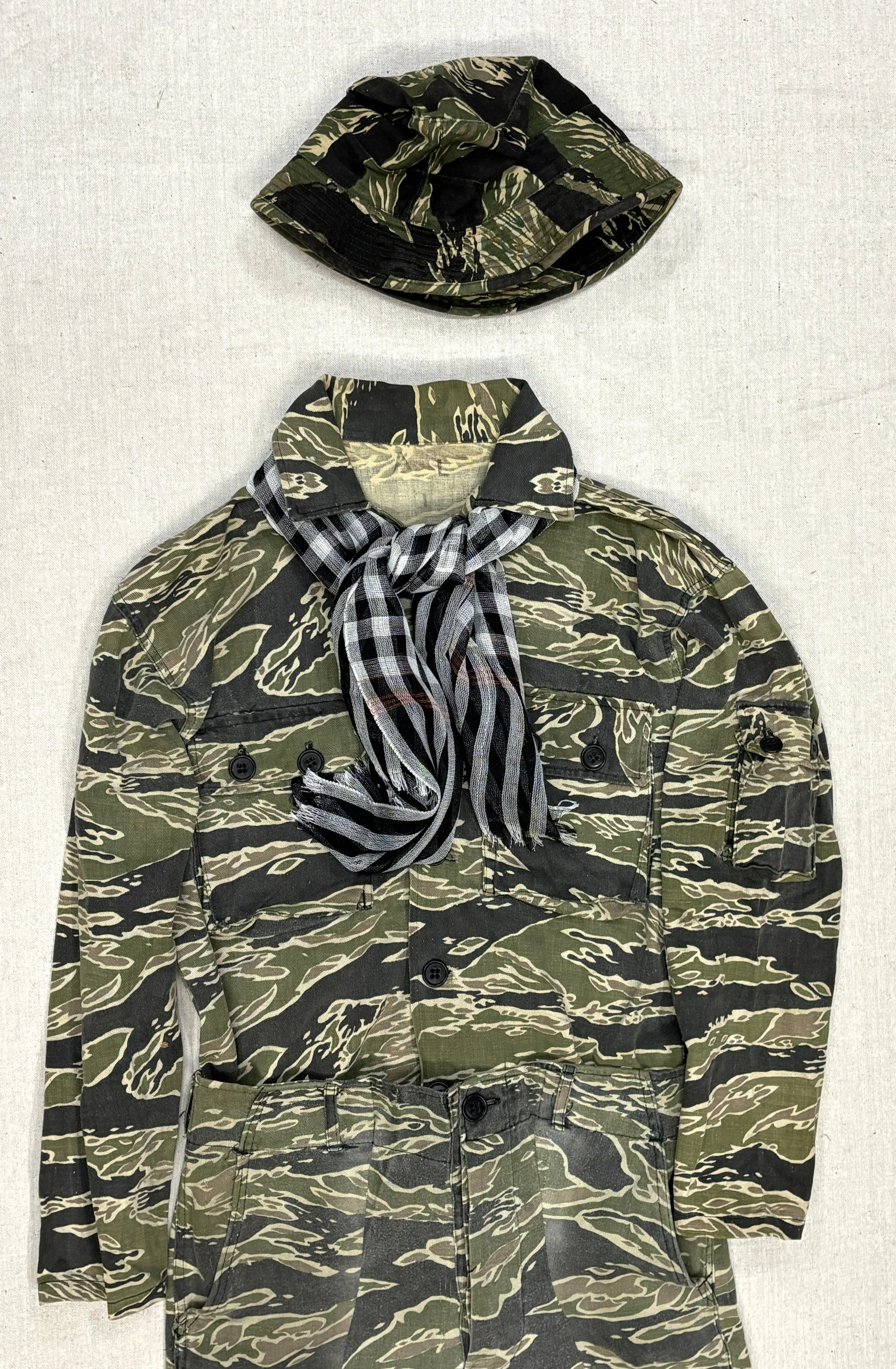
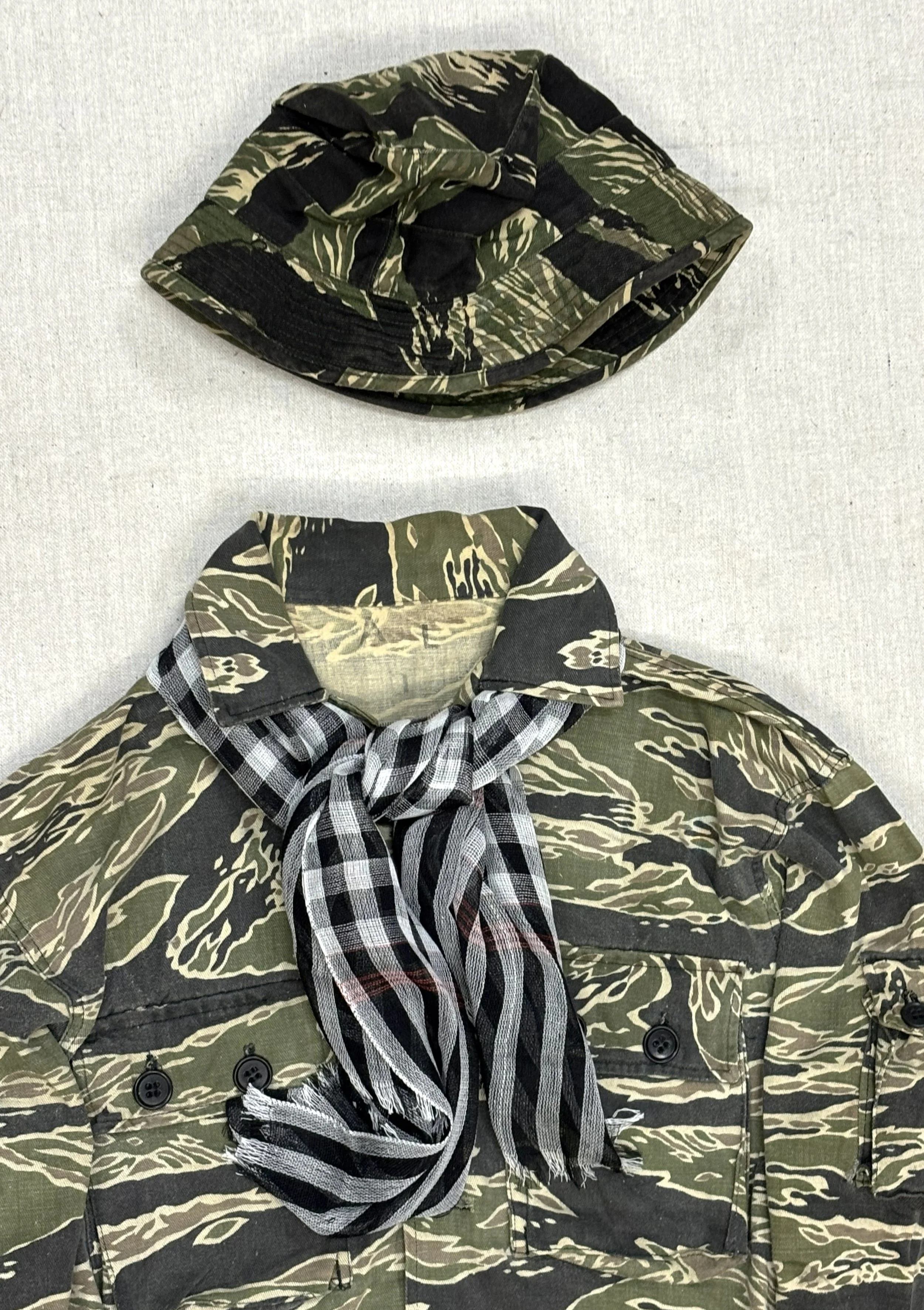
“New” CIDG:
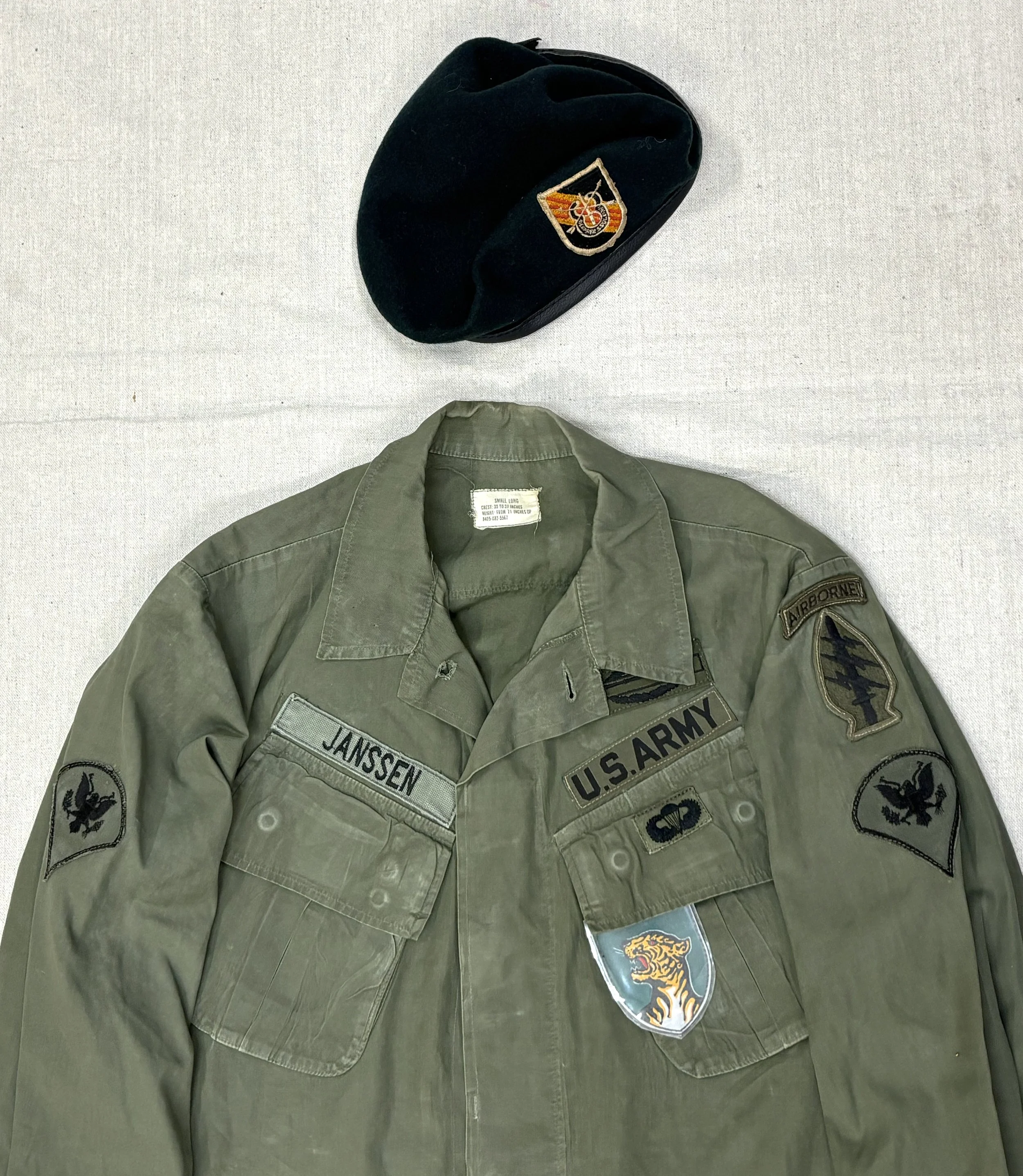
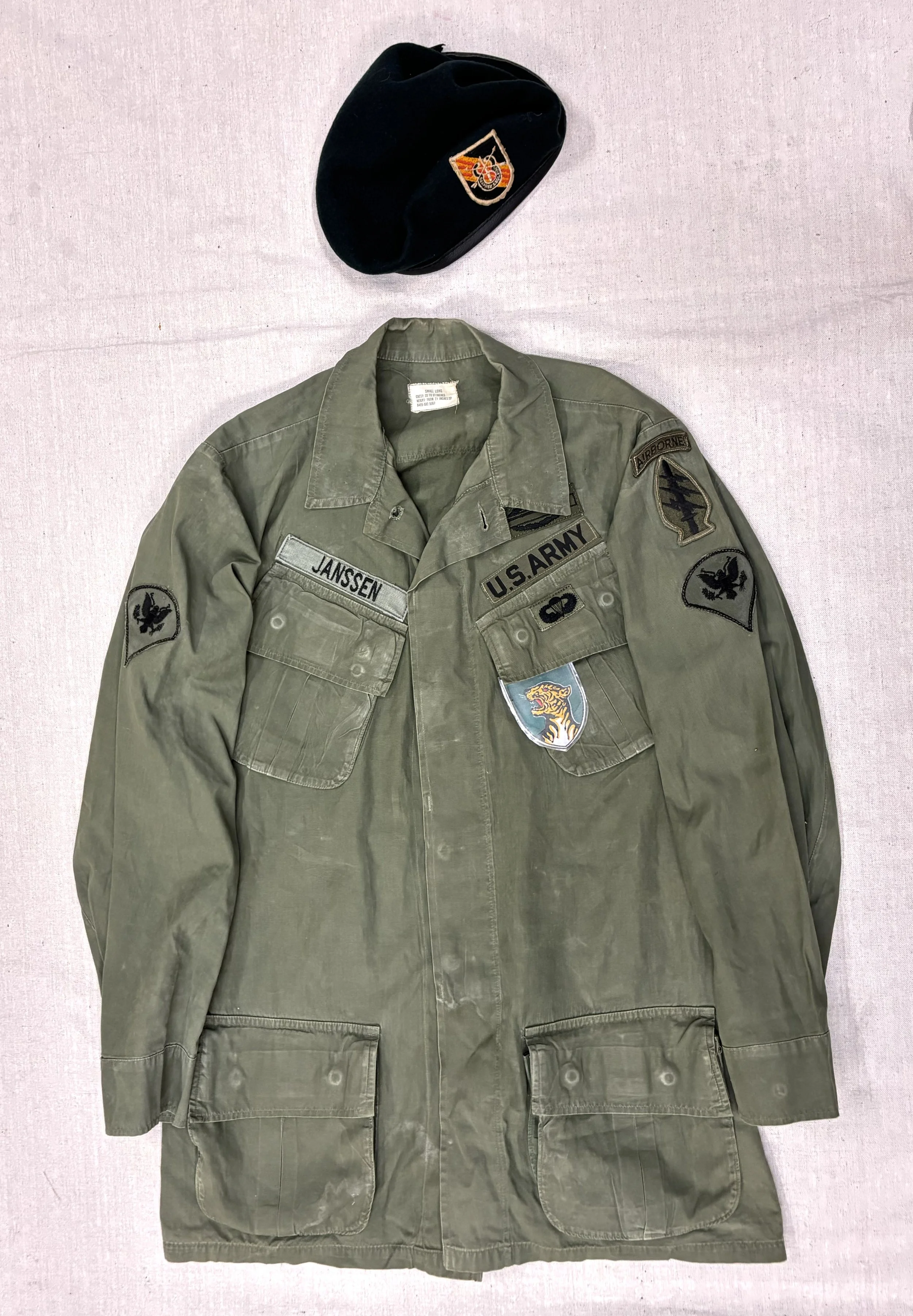
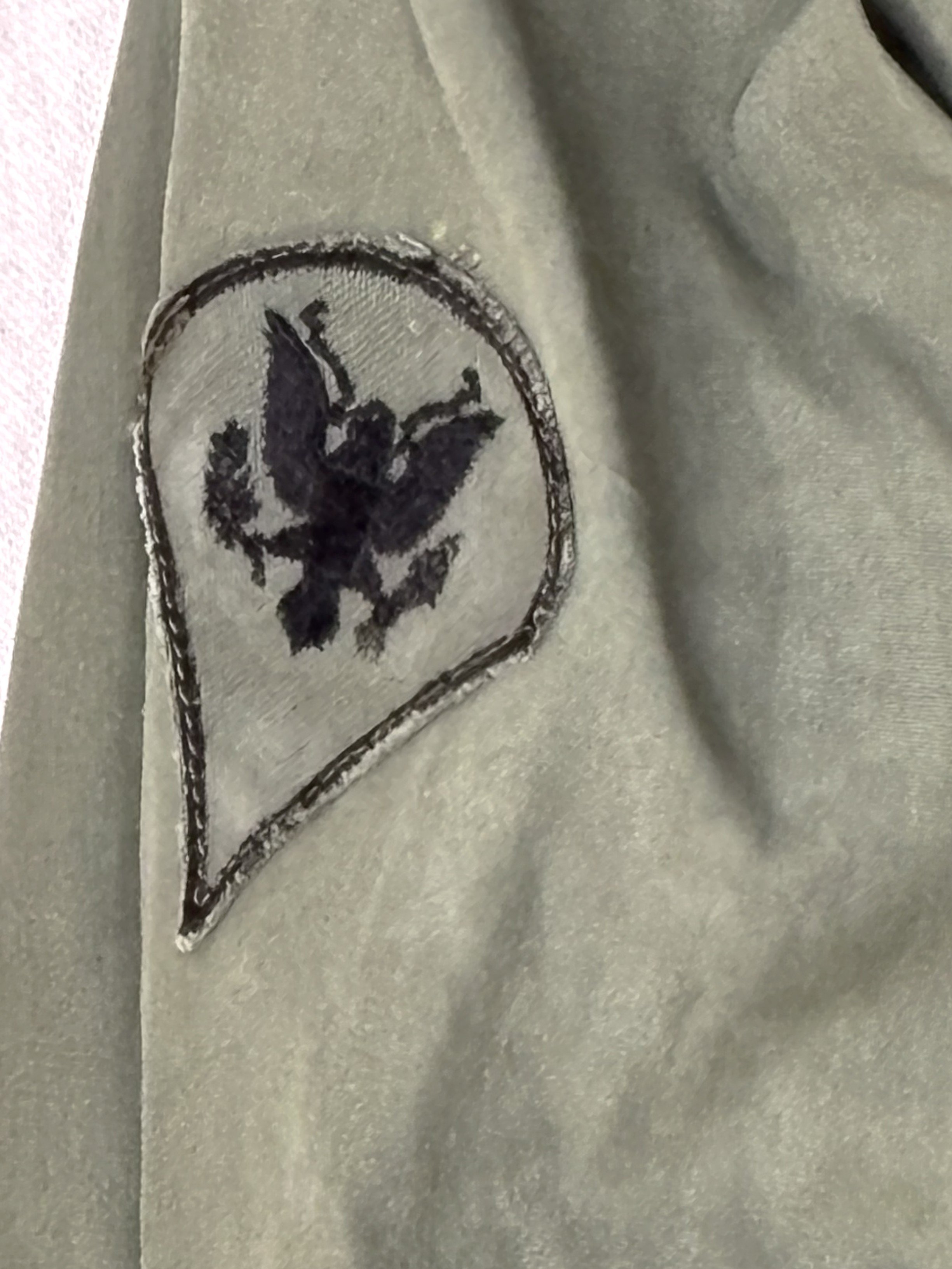
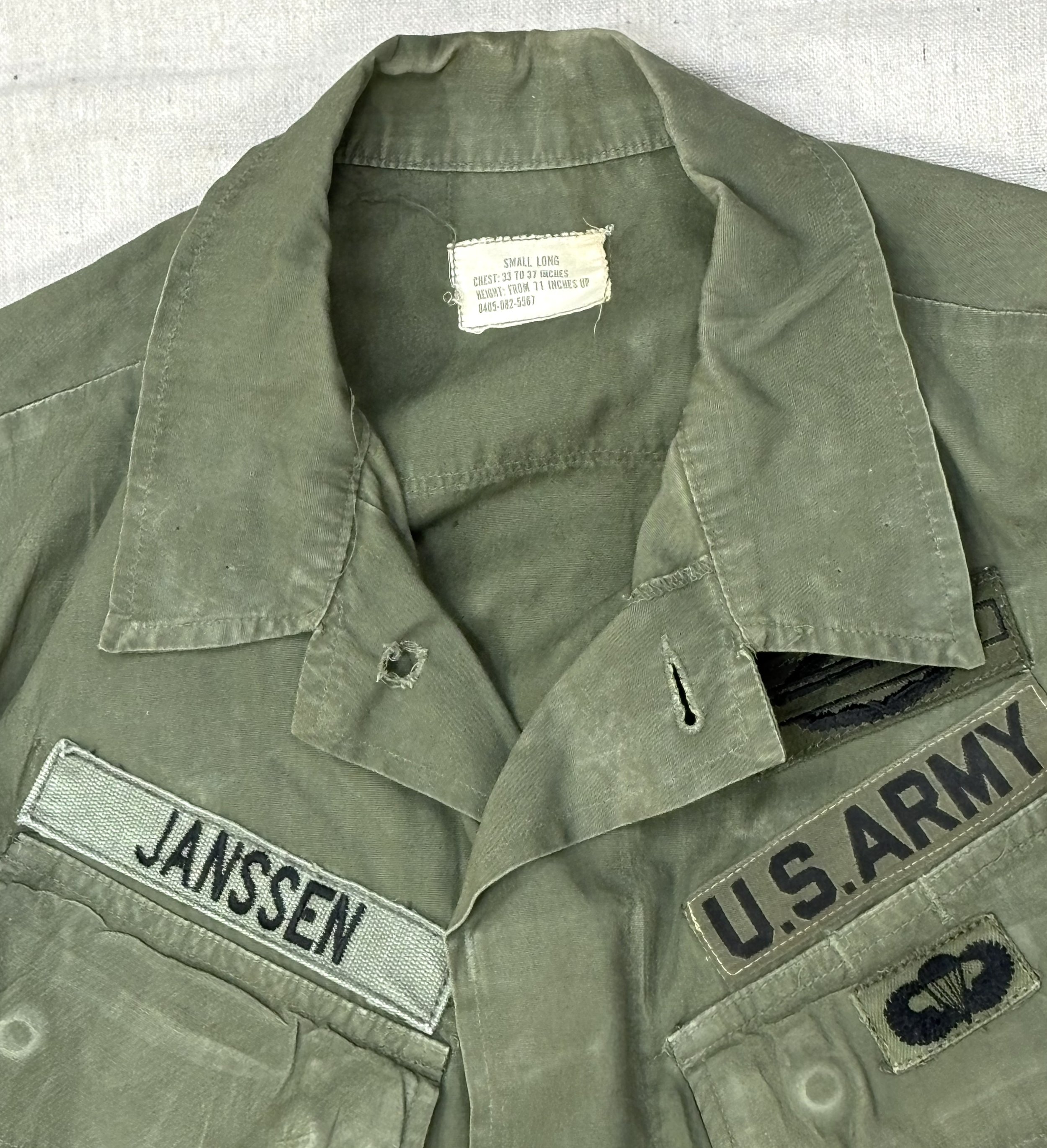
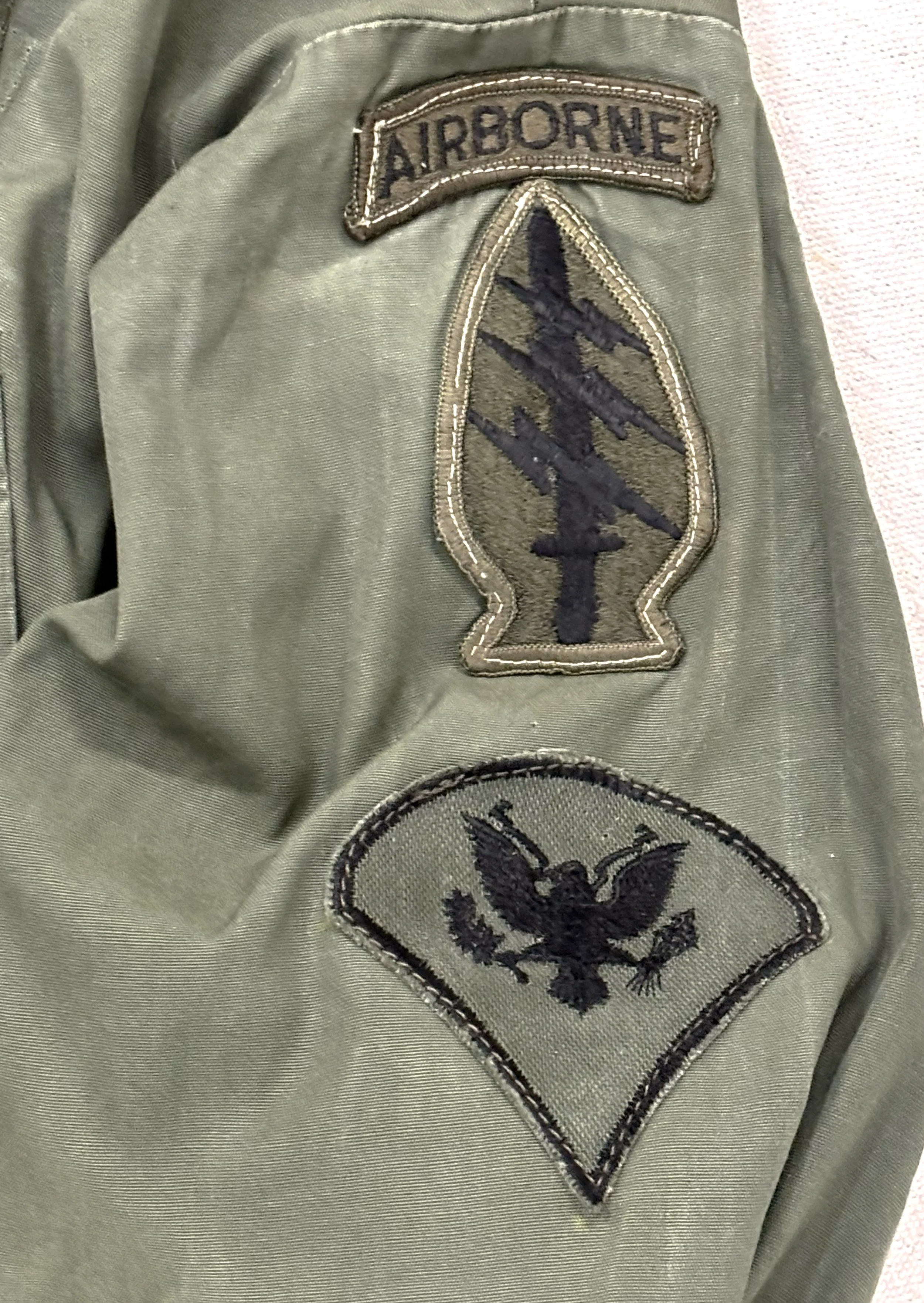
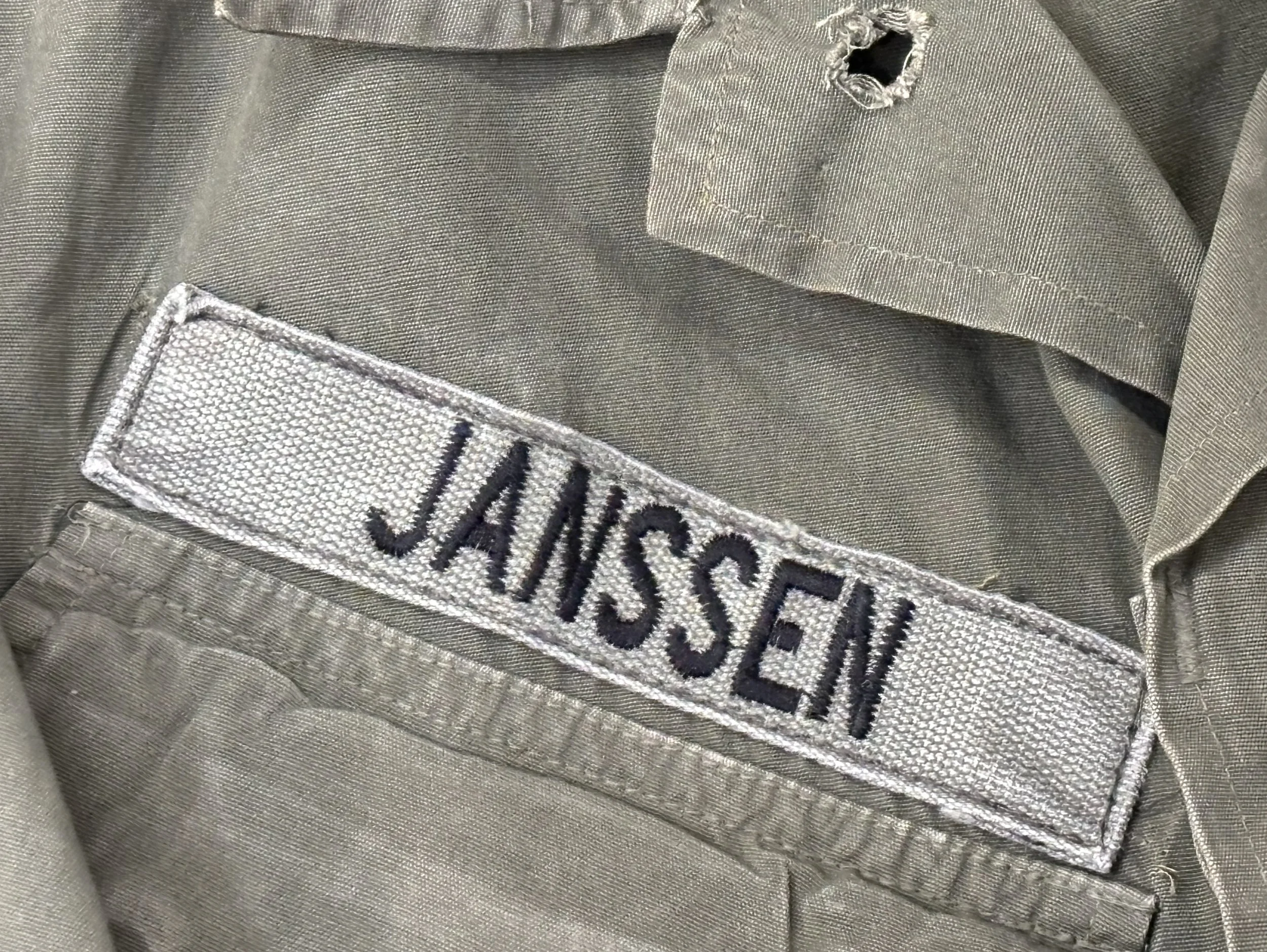
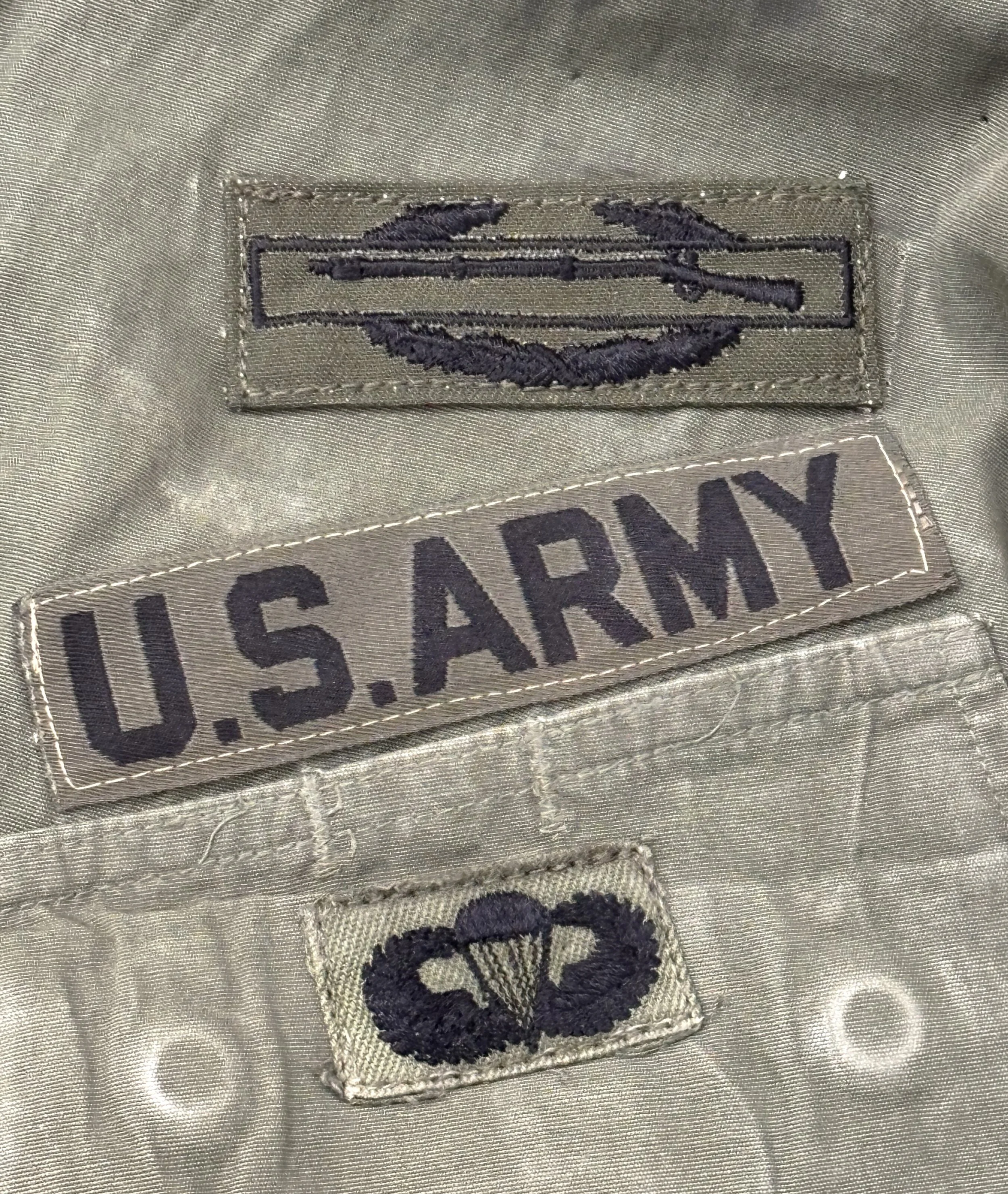
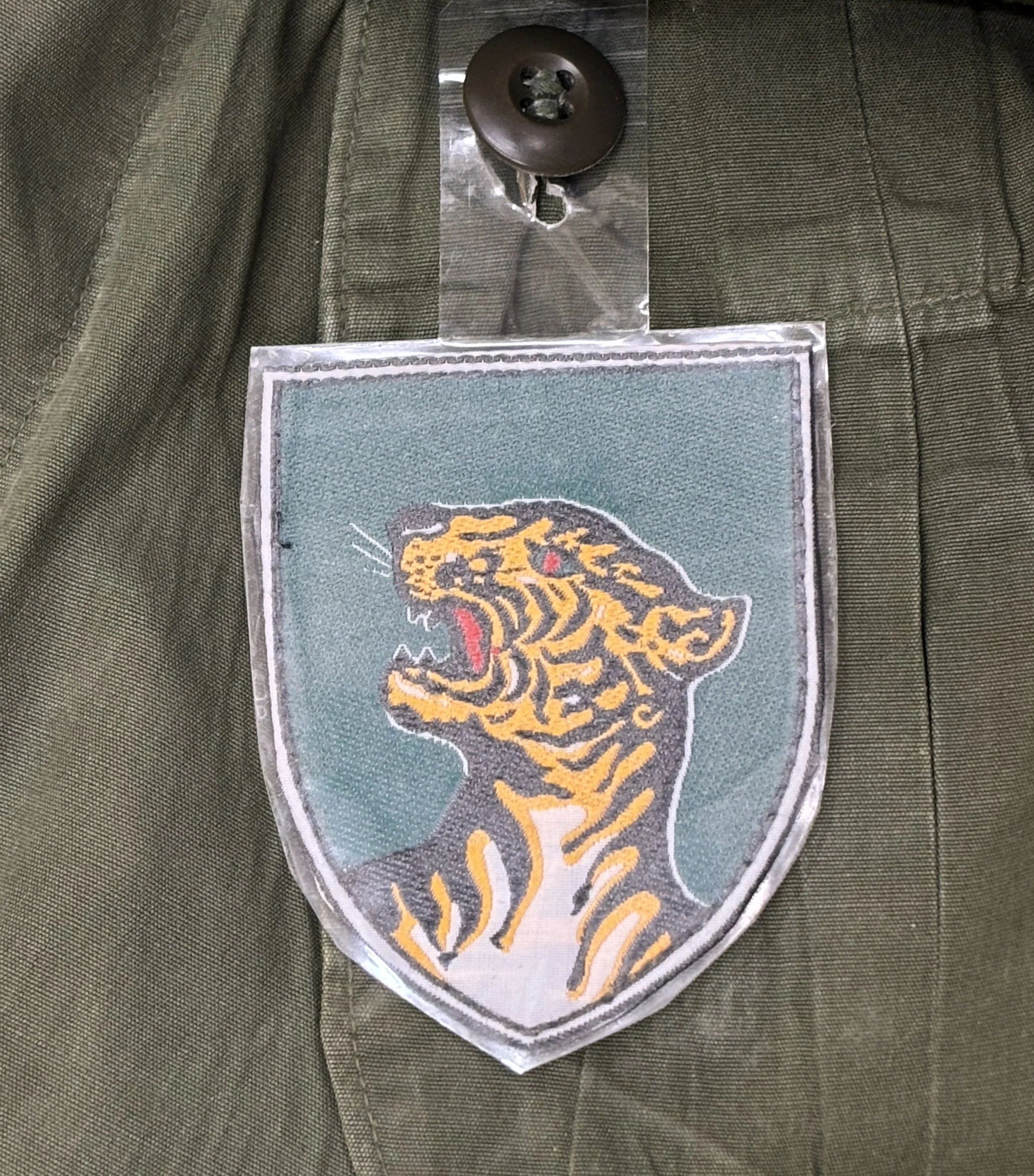
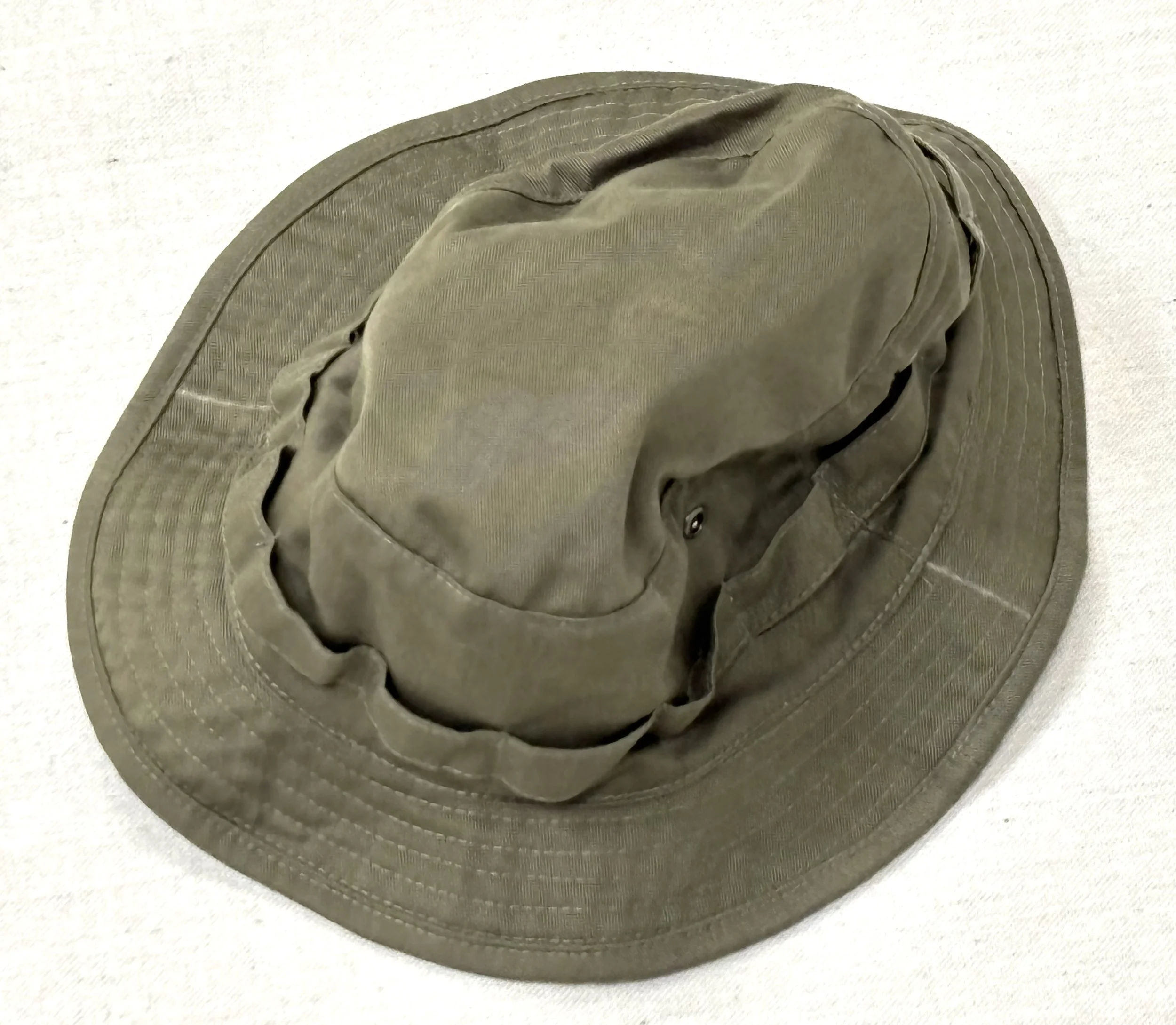
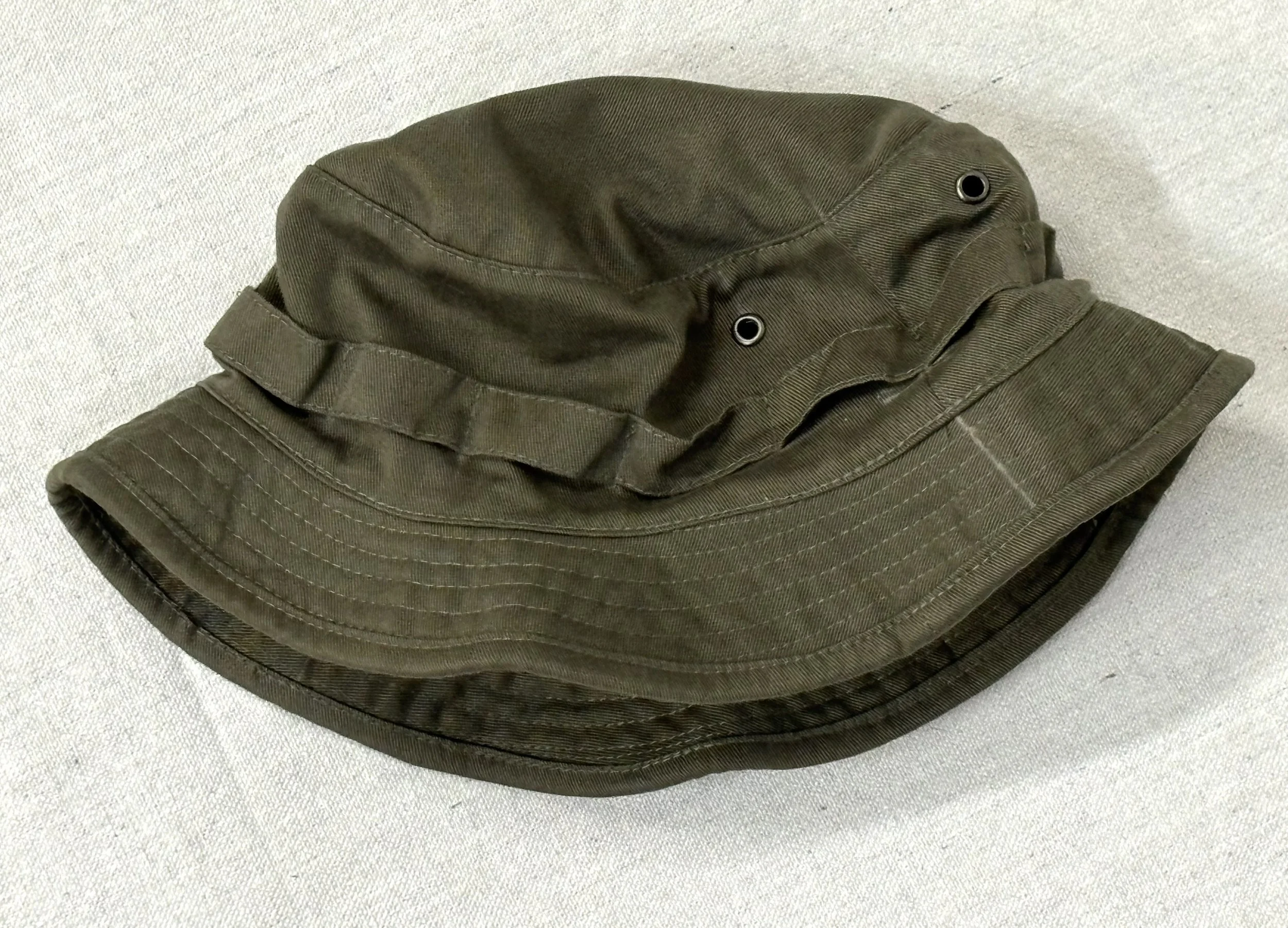
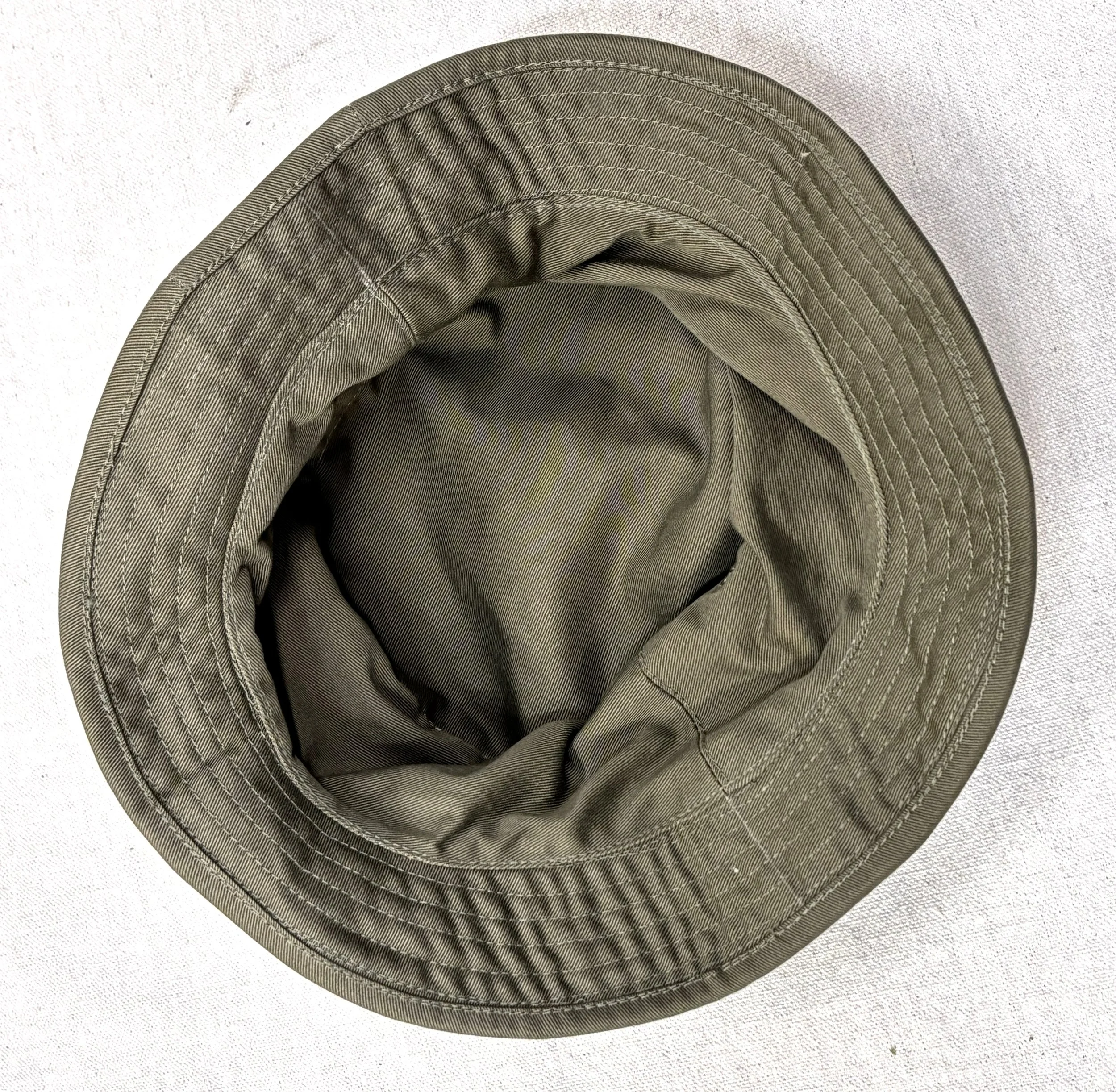
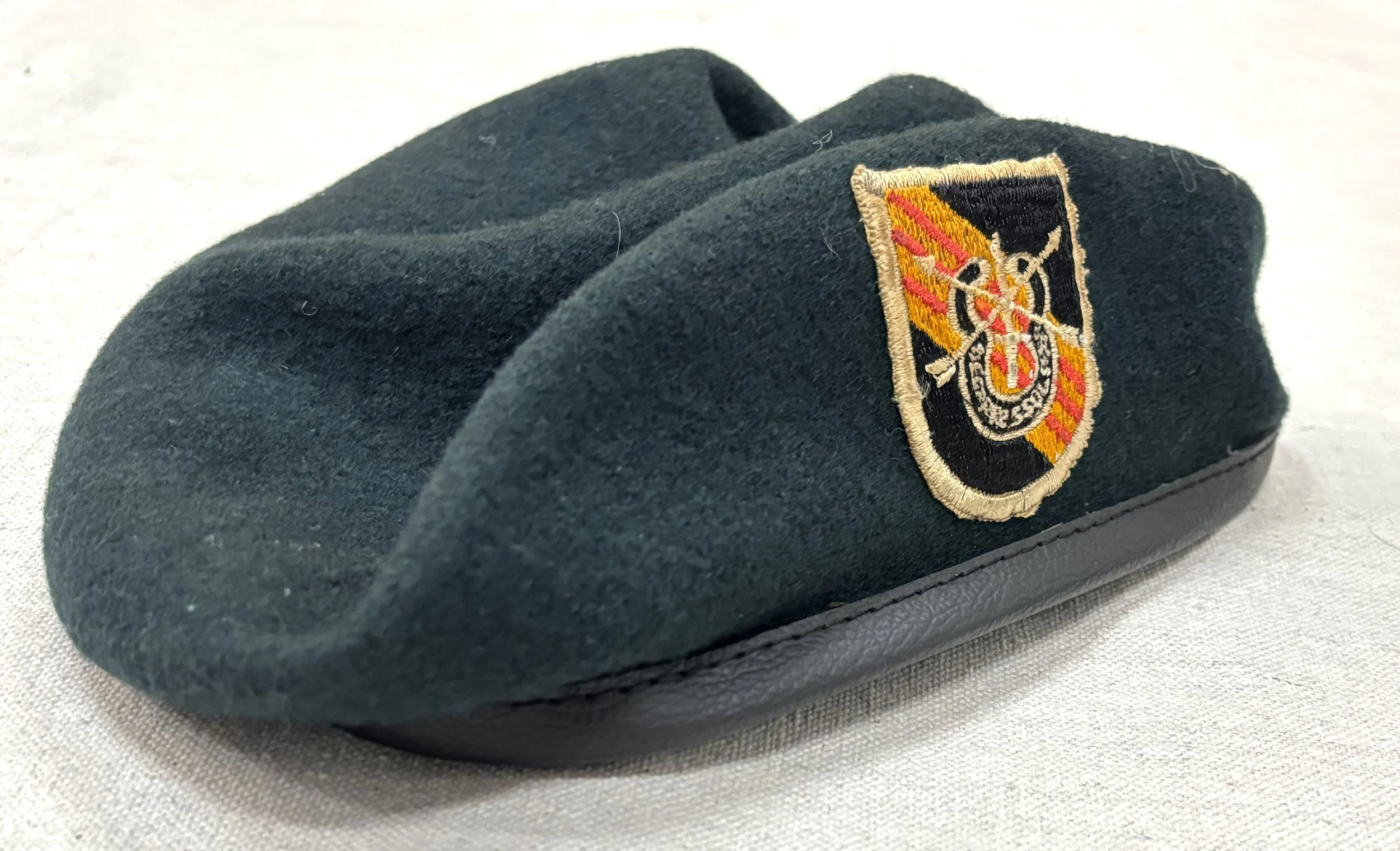
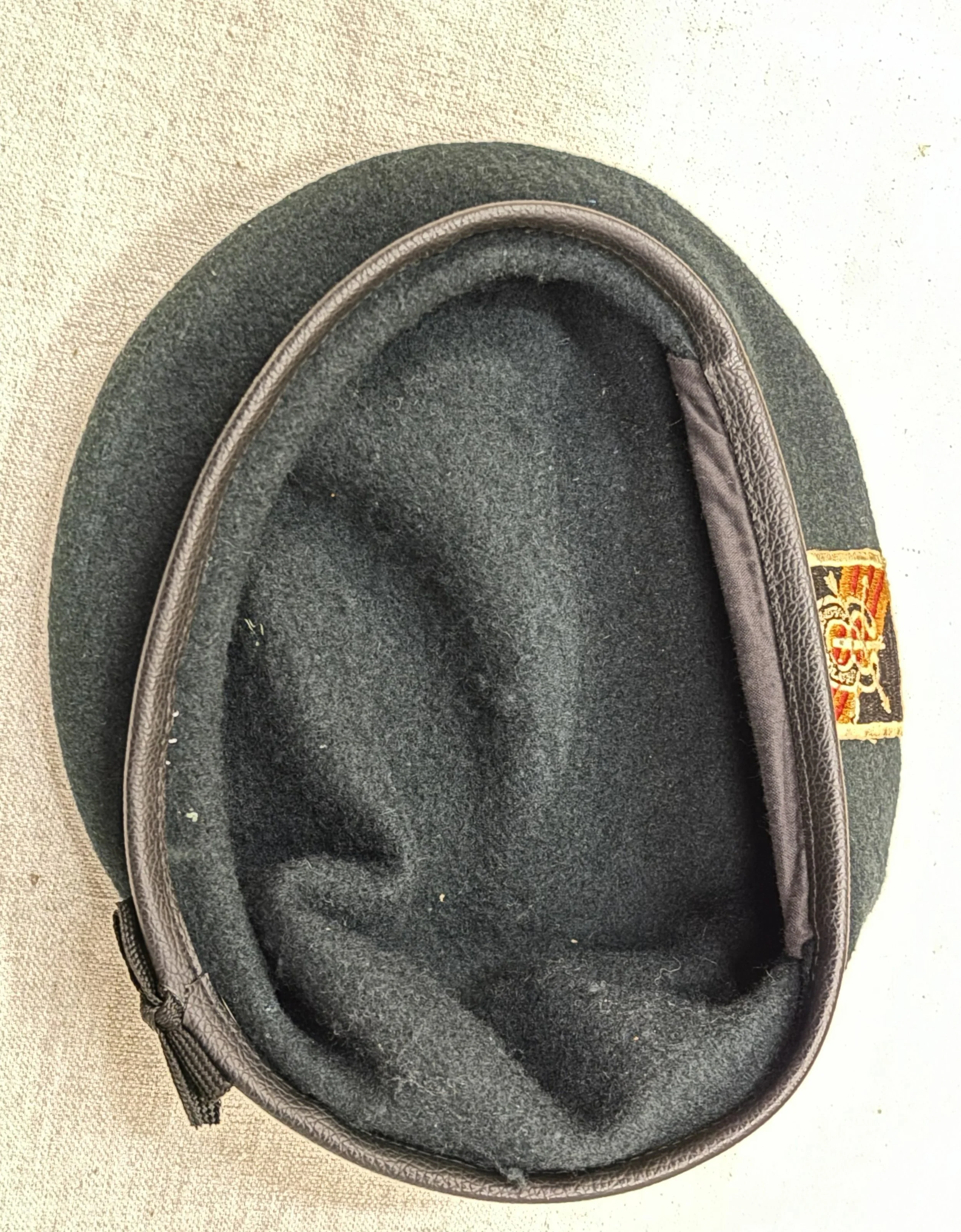

Specialists, 5th Special Forces Group, ‘CIDG’ Assault Force:
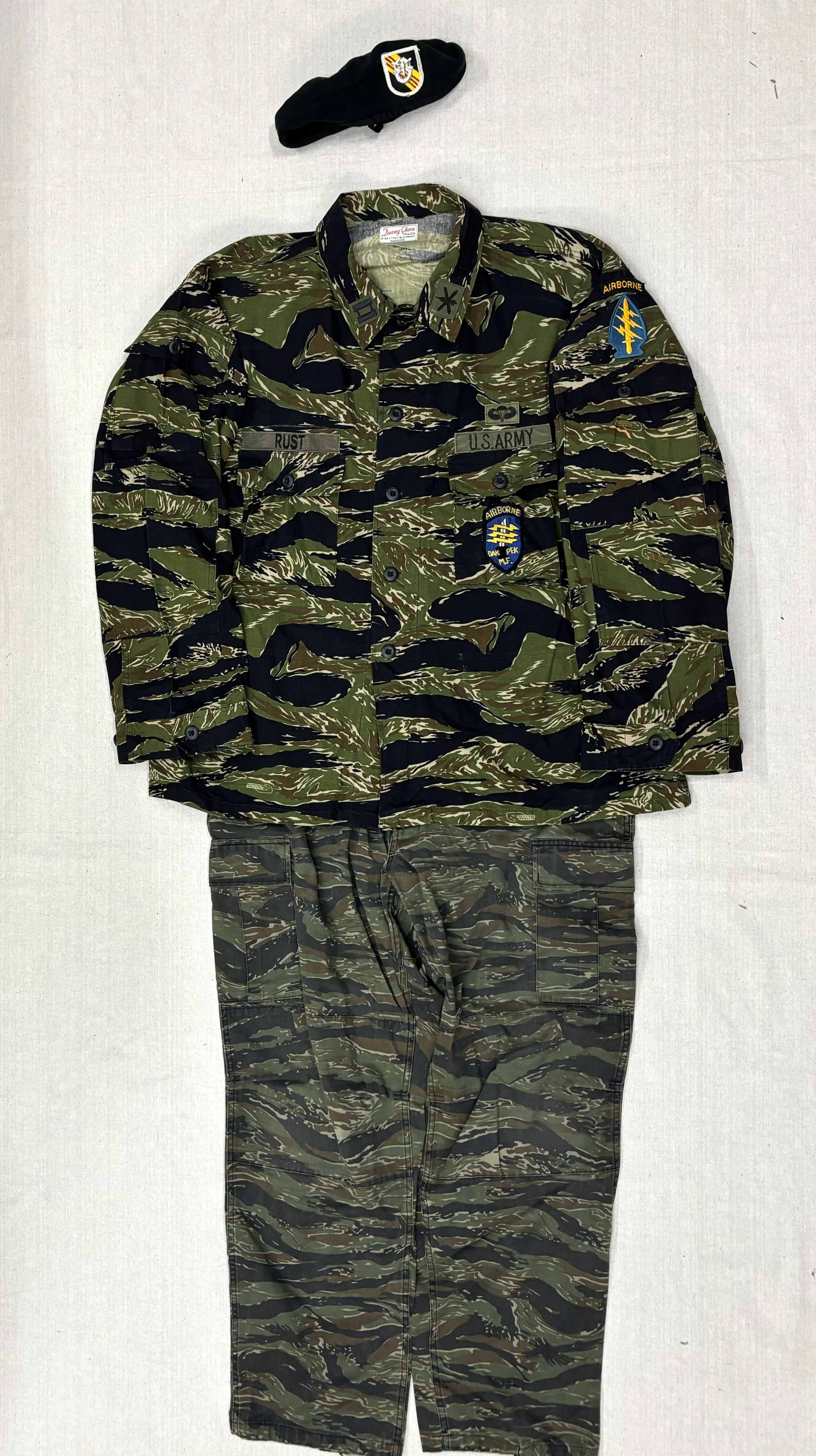
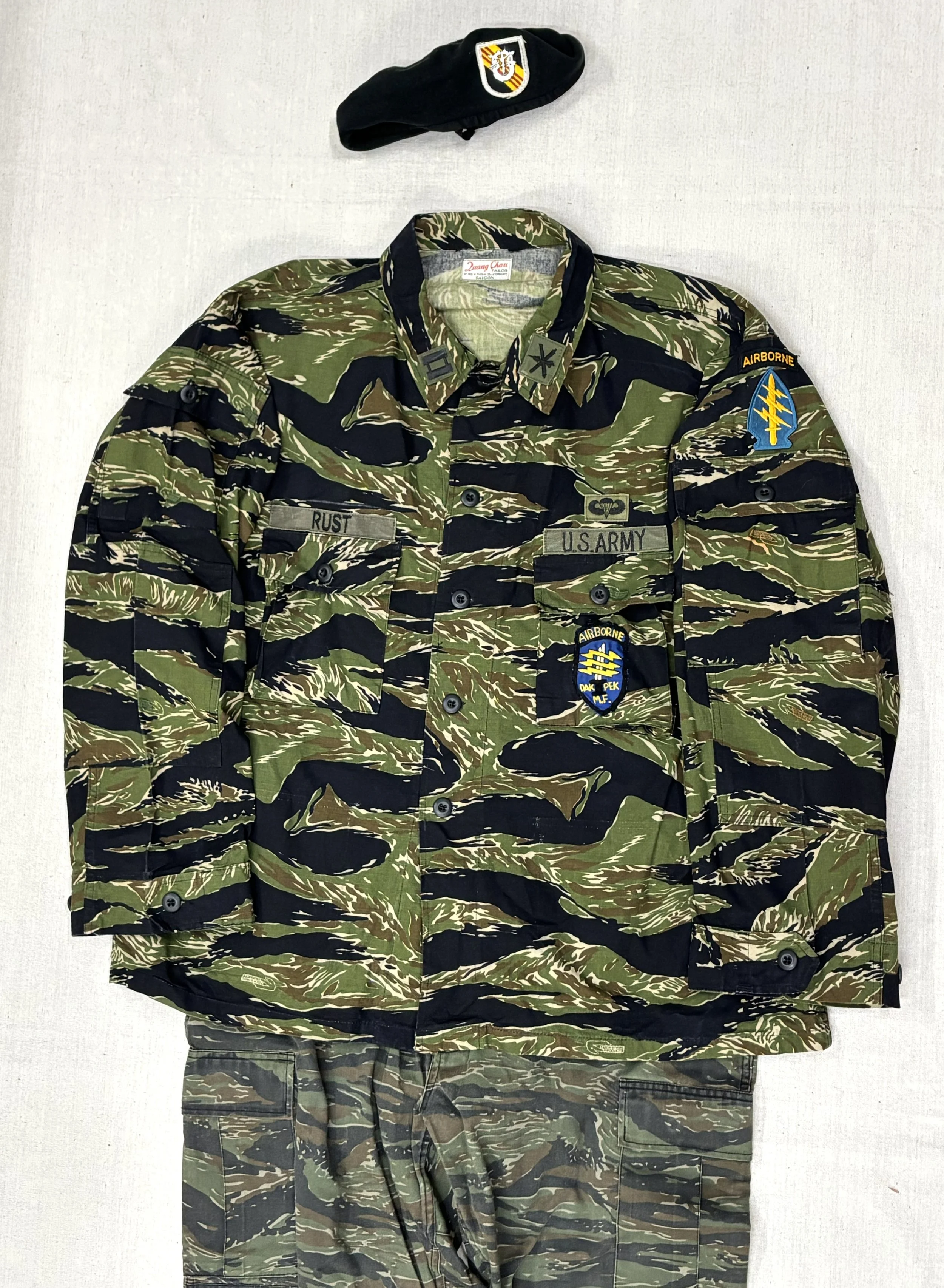
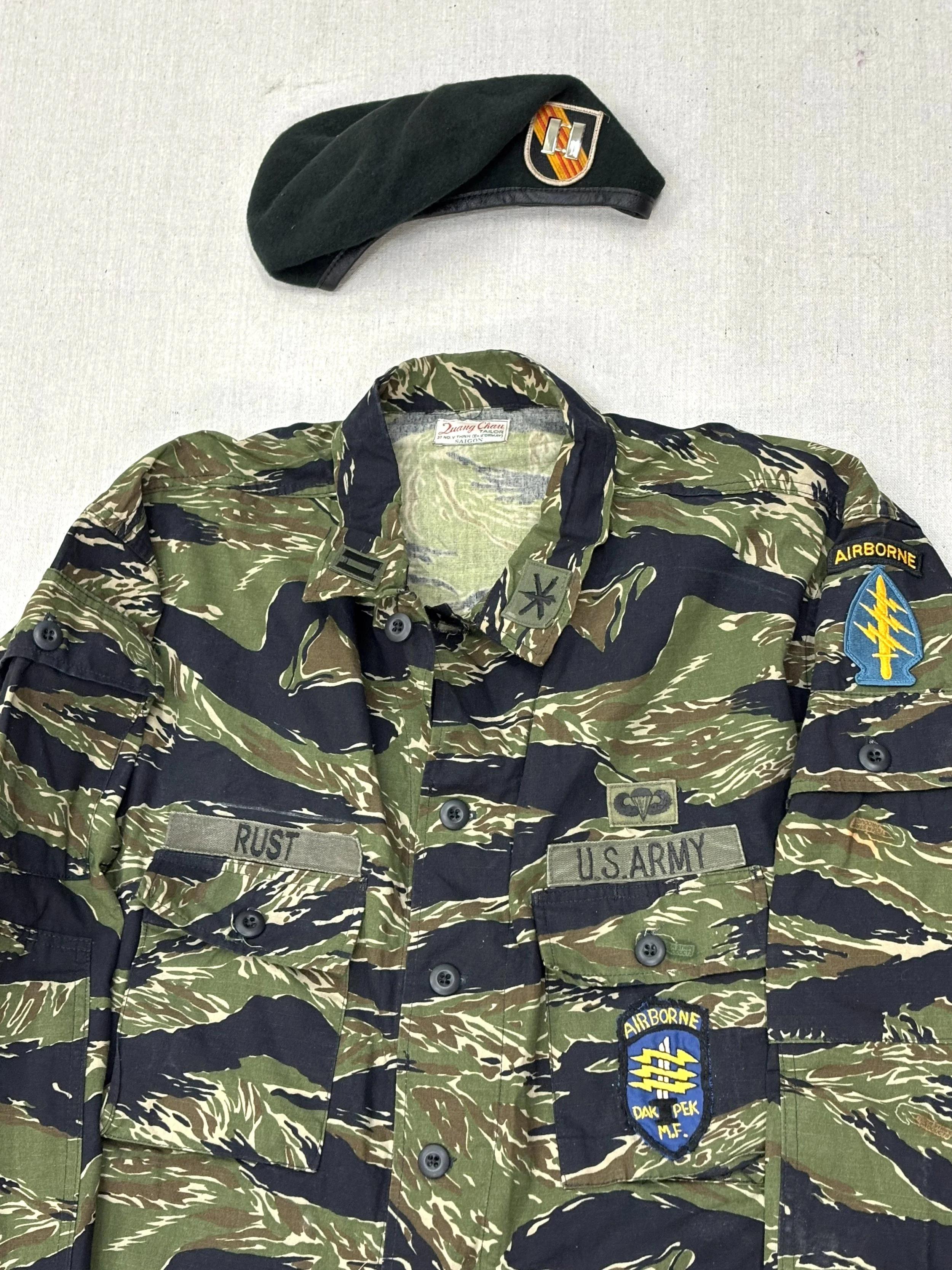
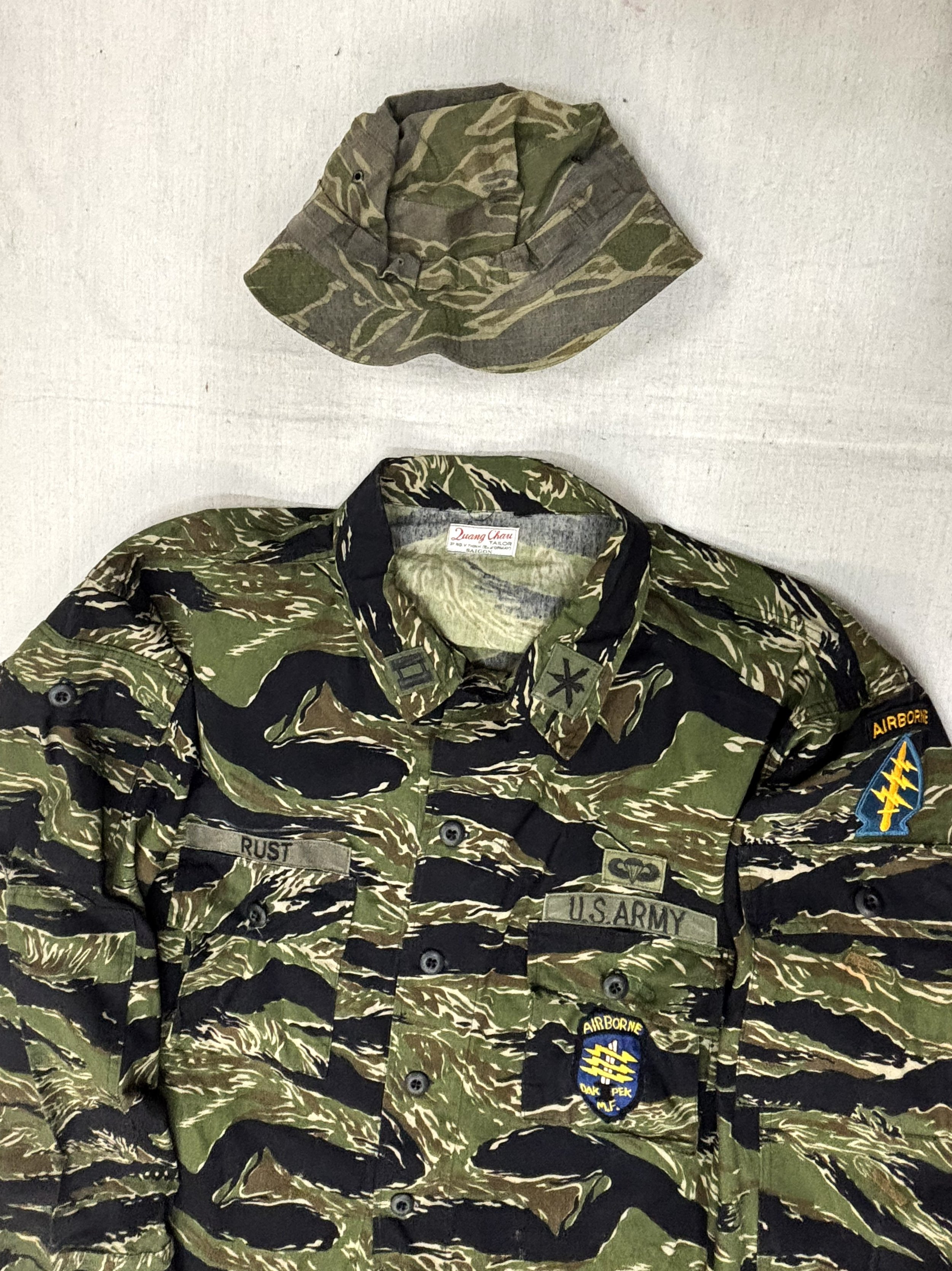
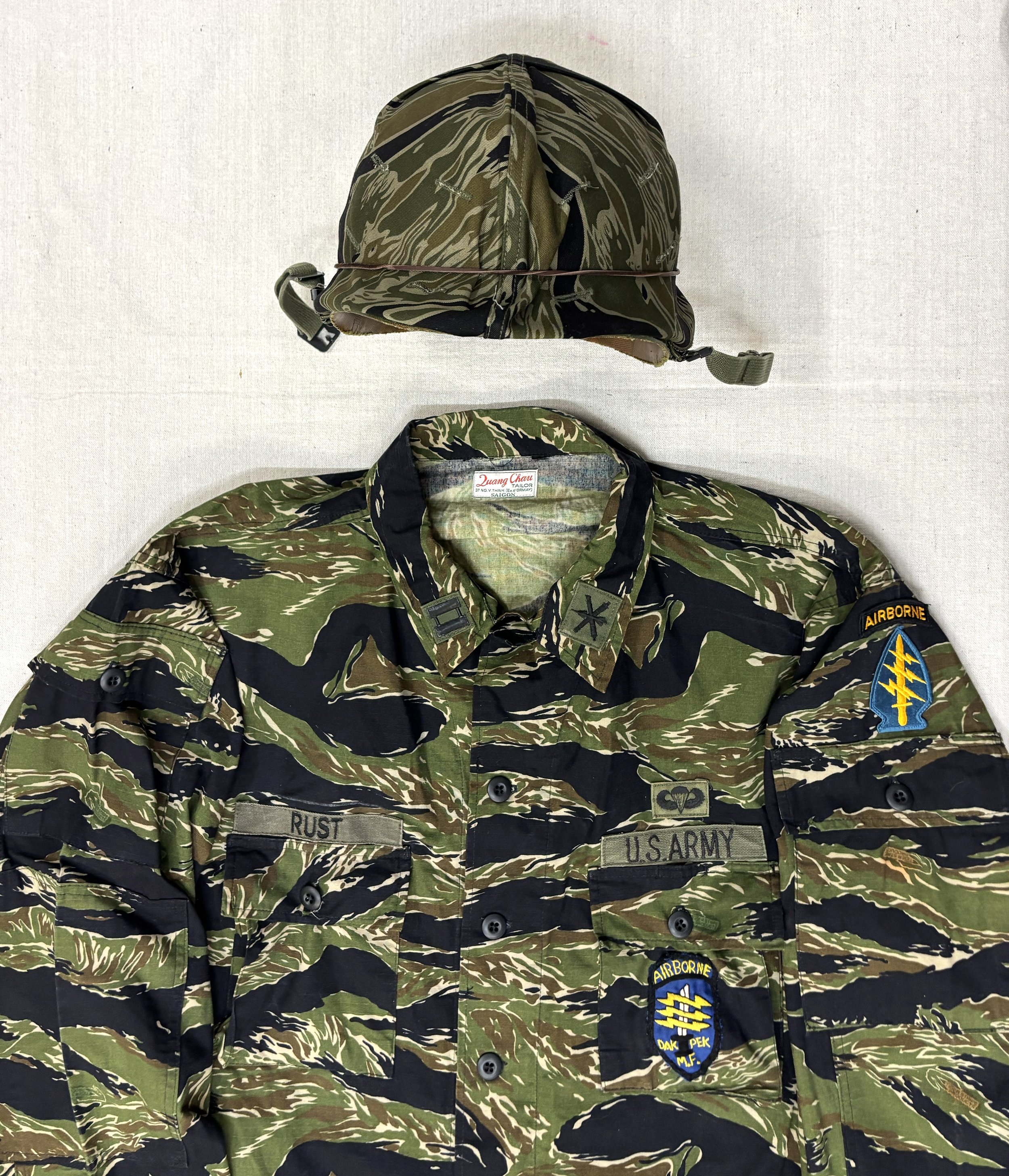
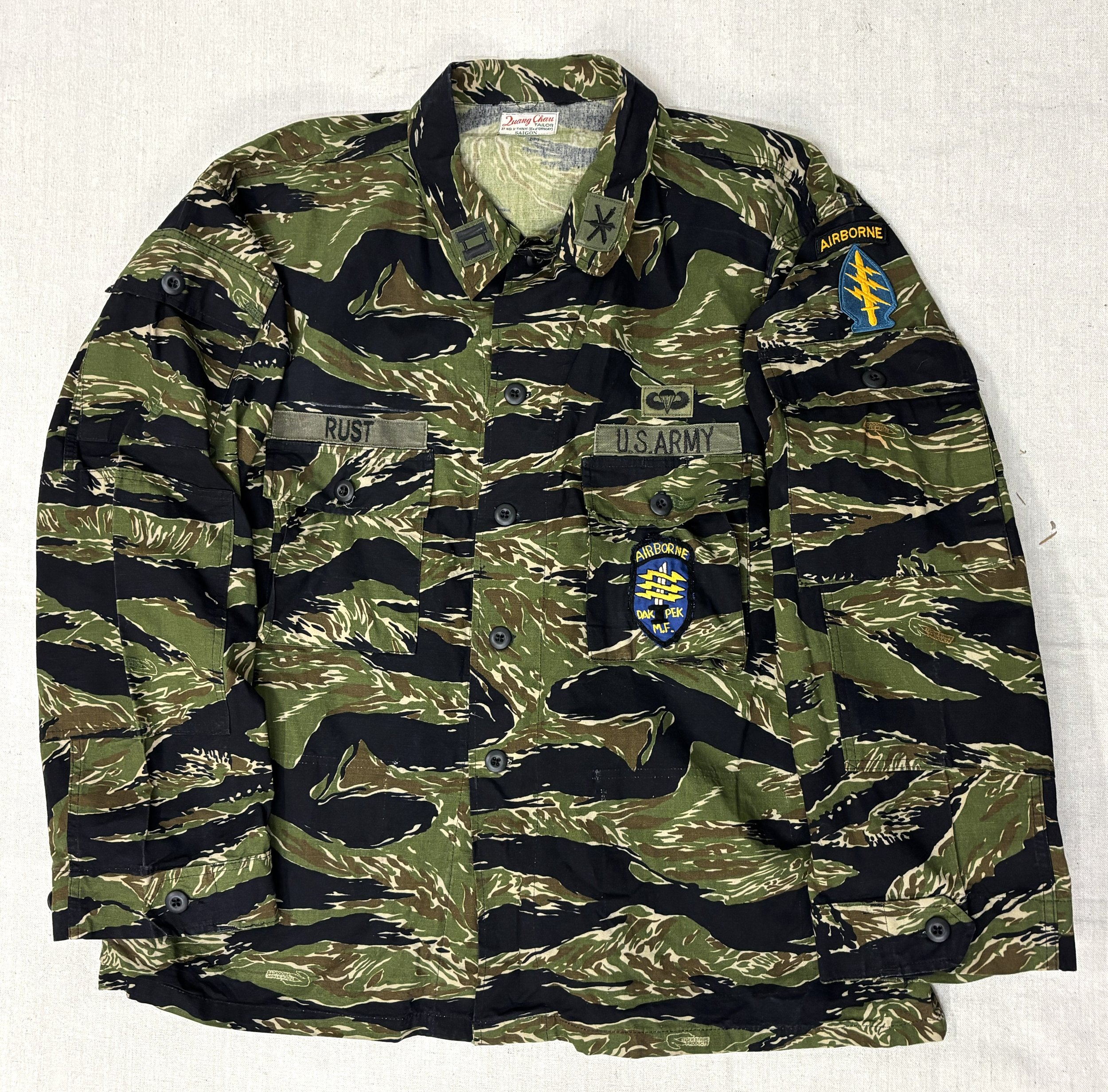
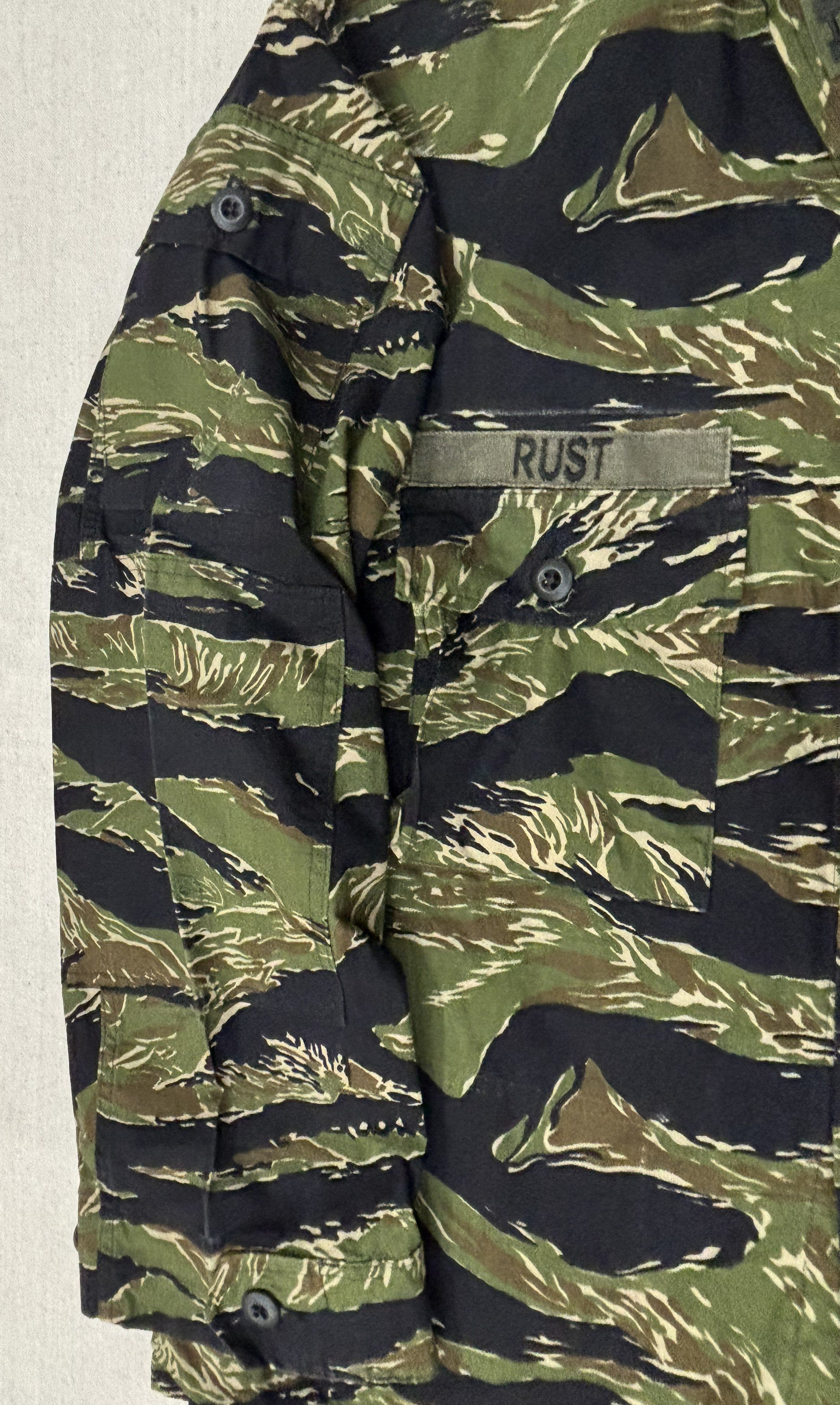
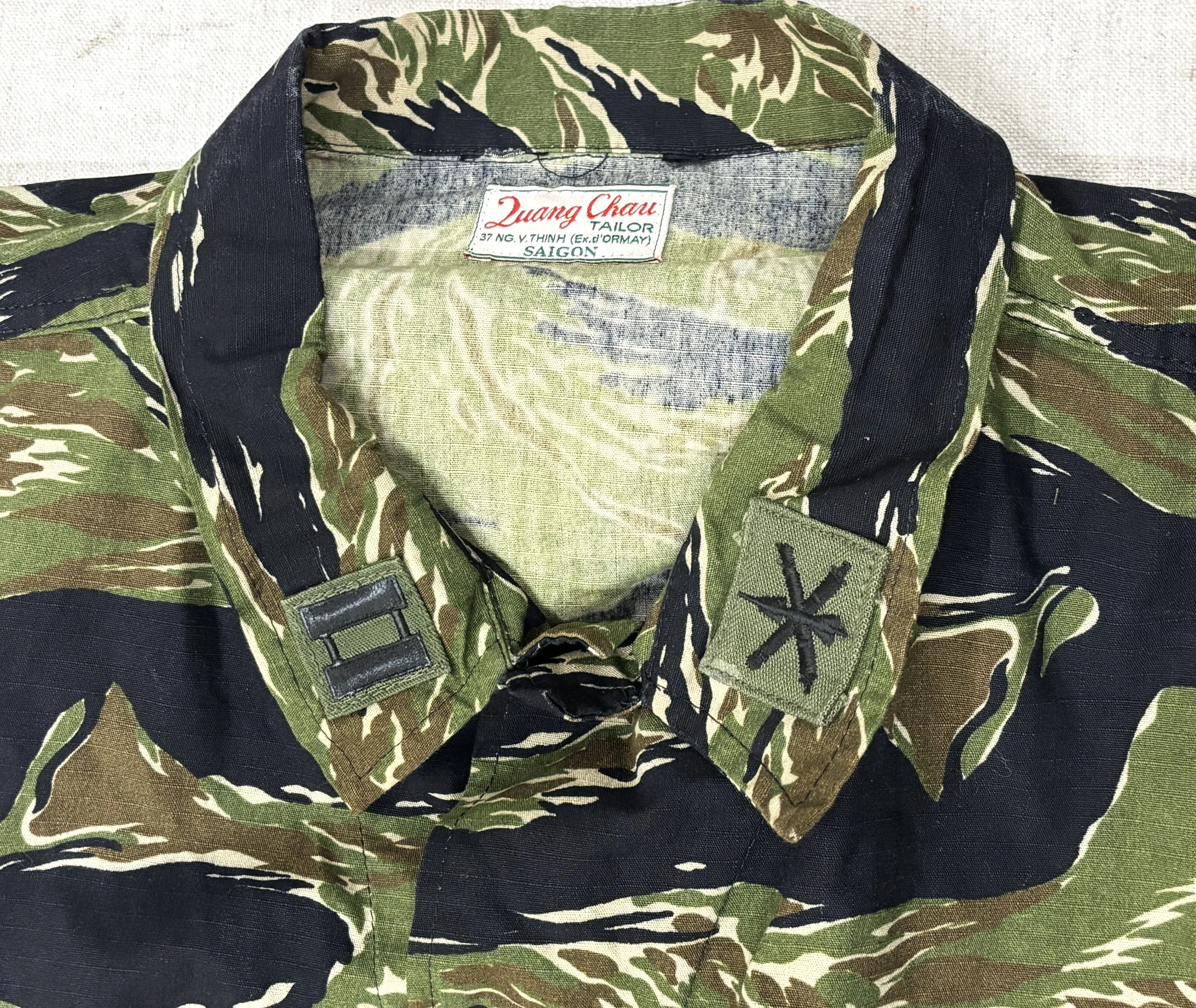
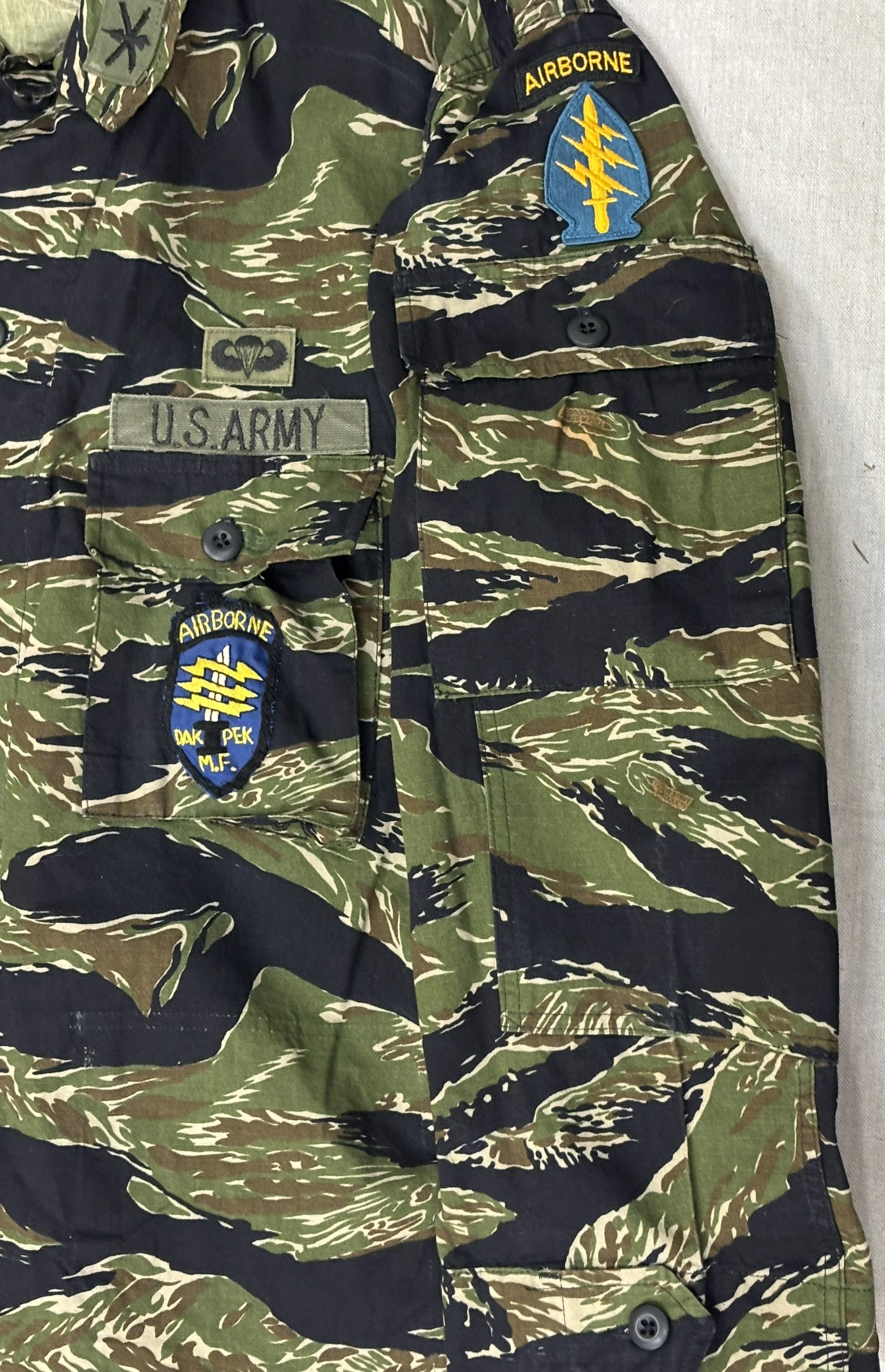
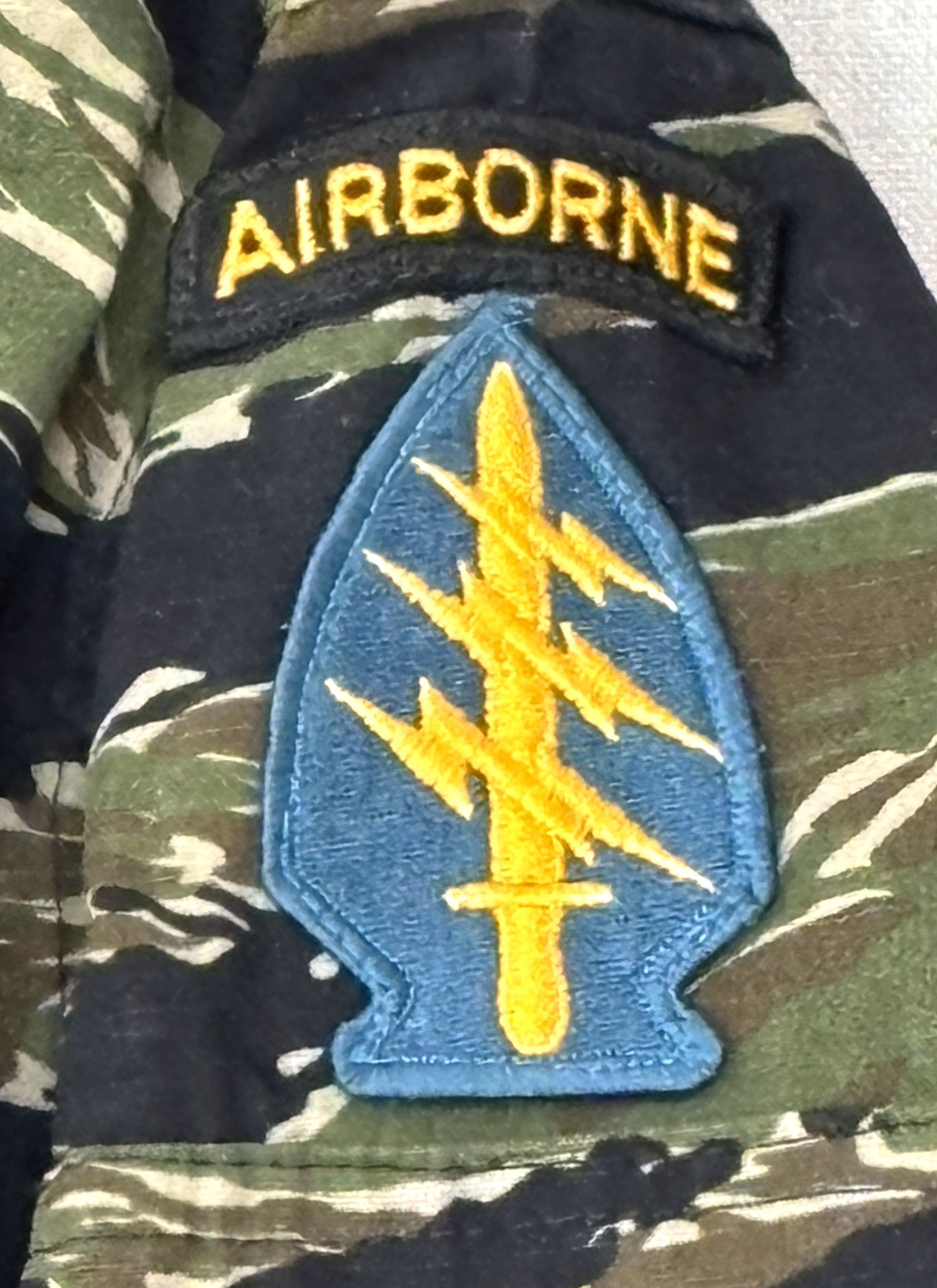
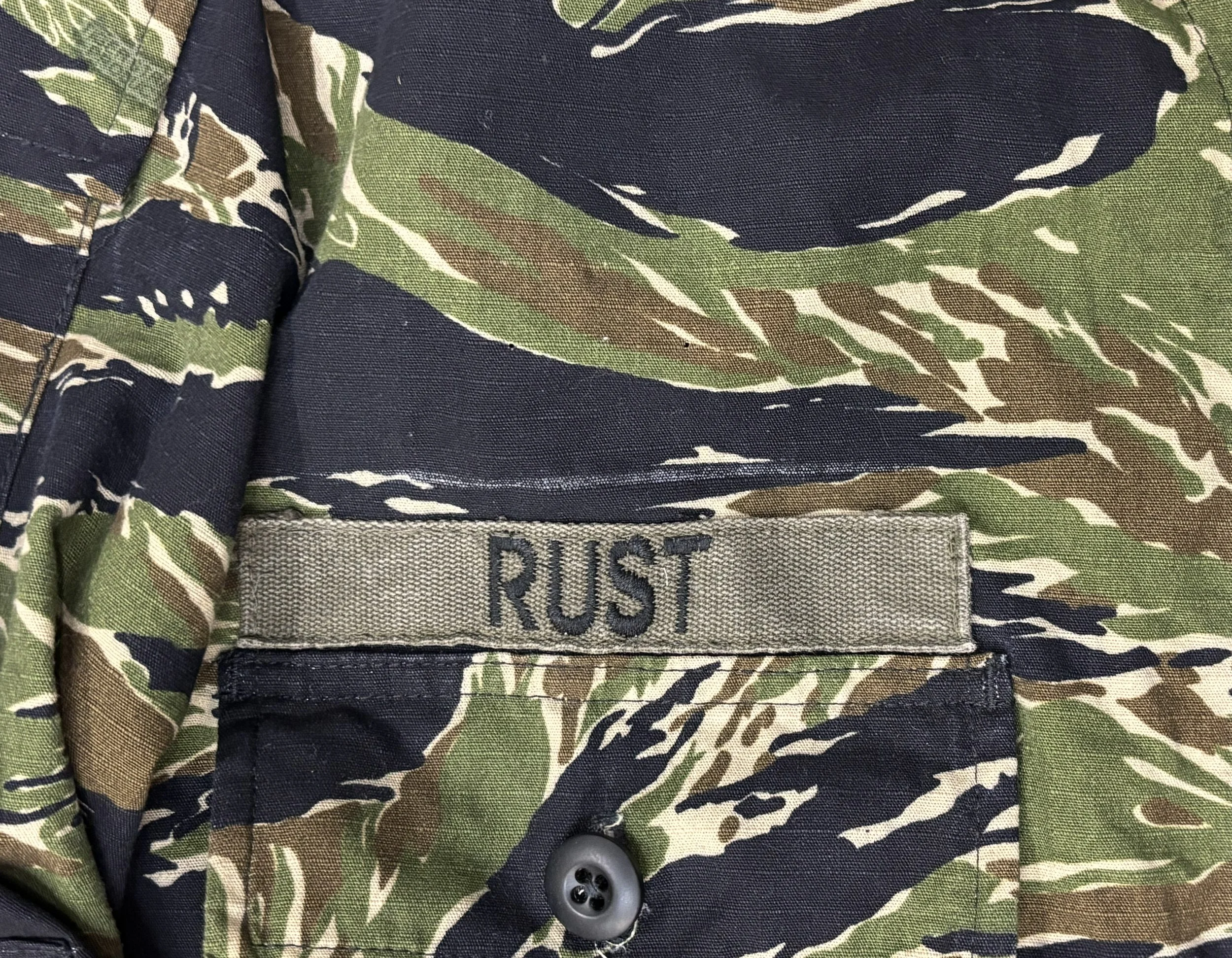
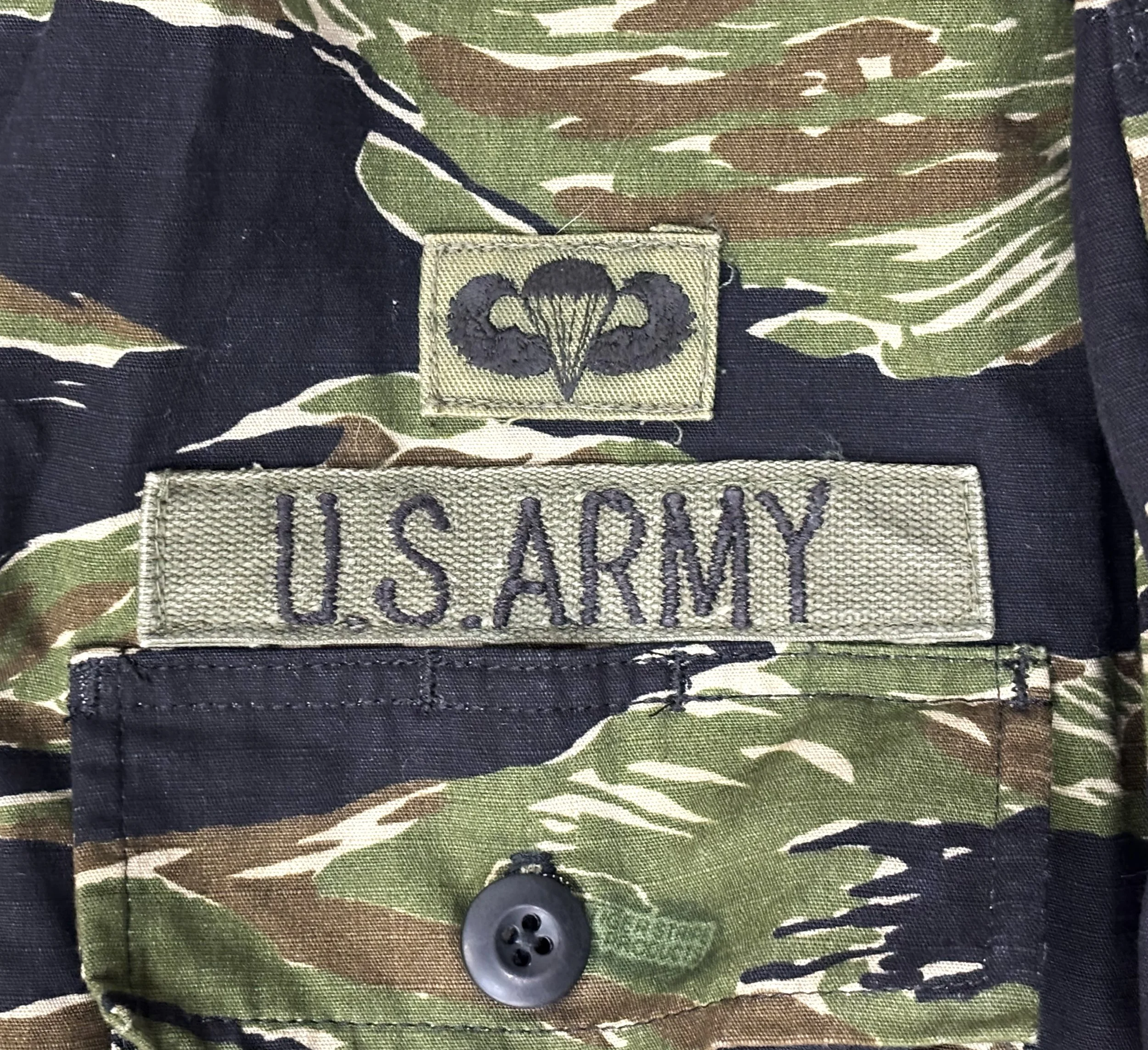
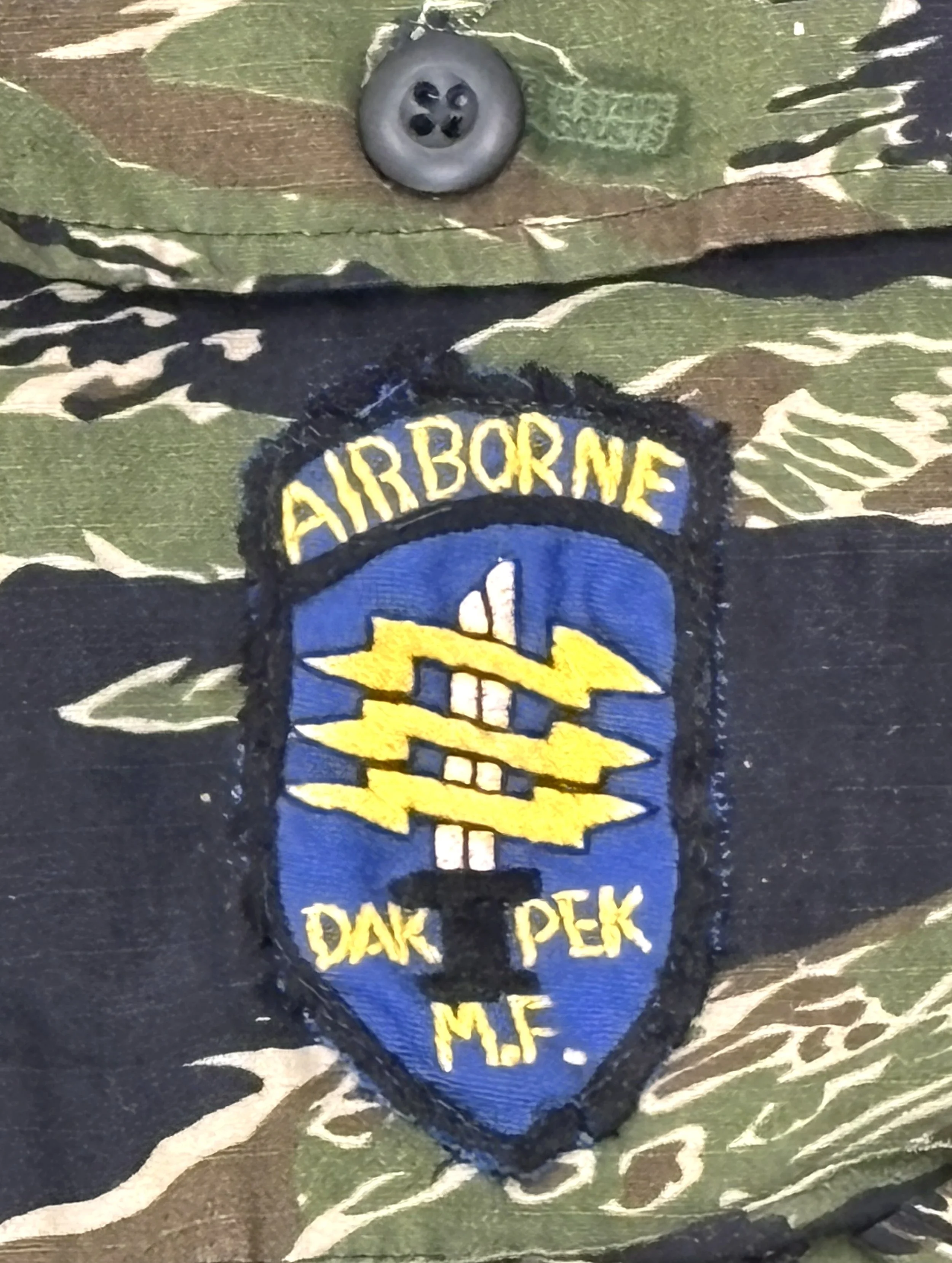


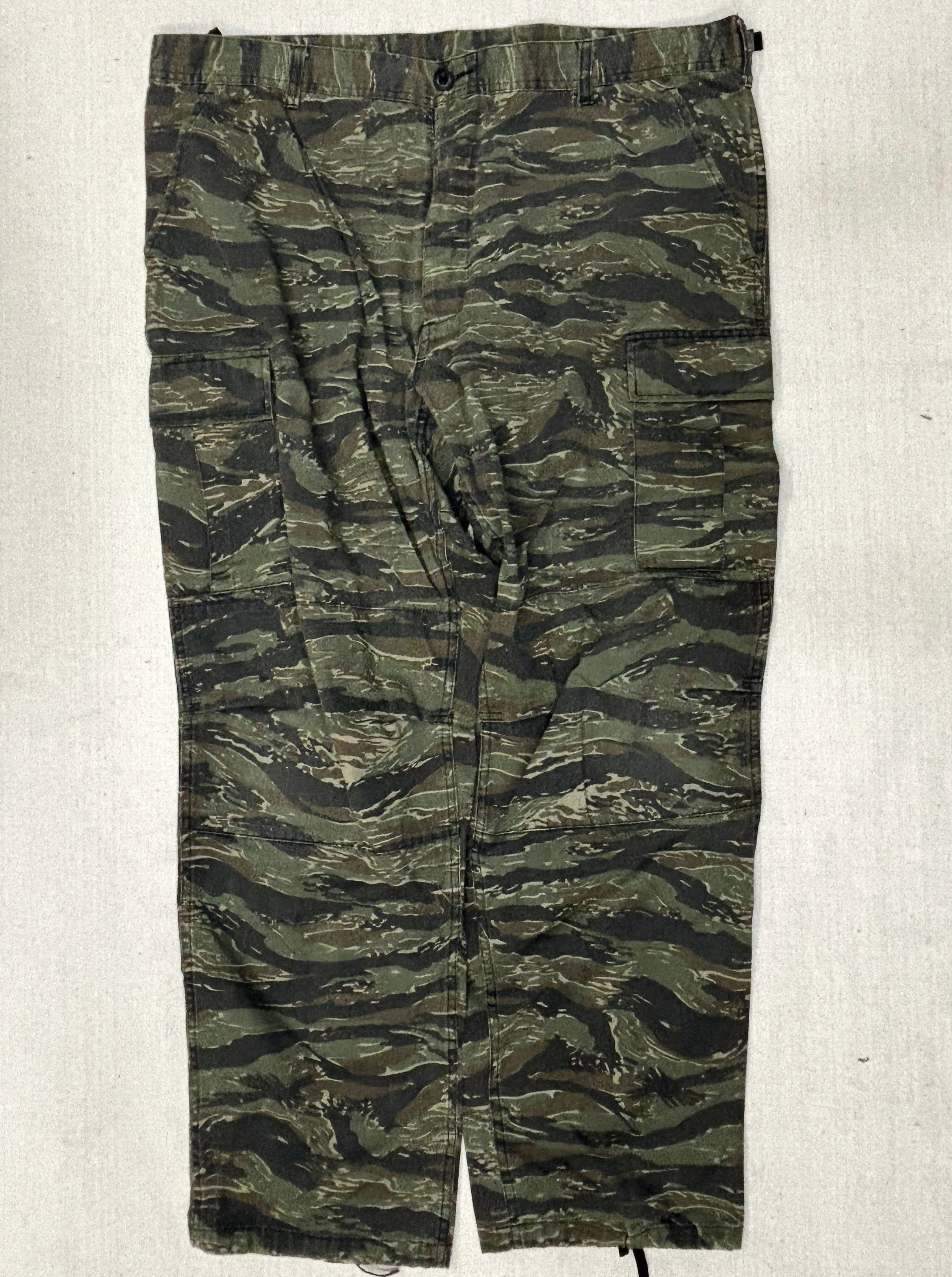
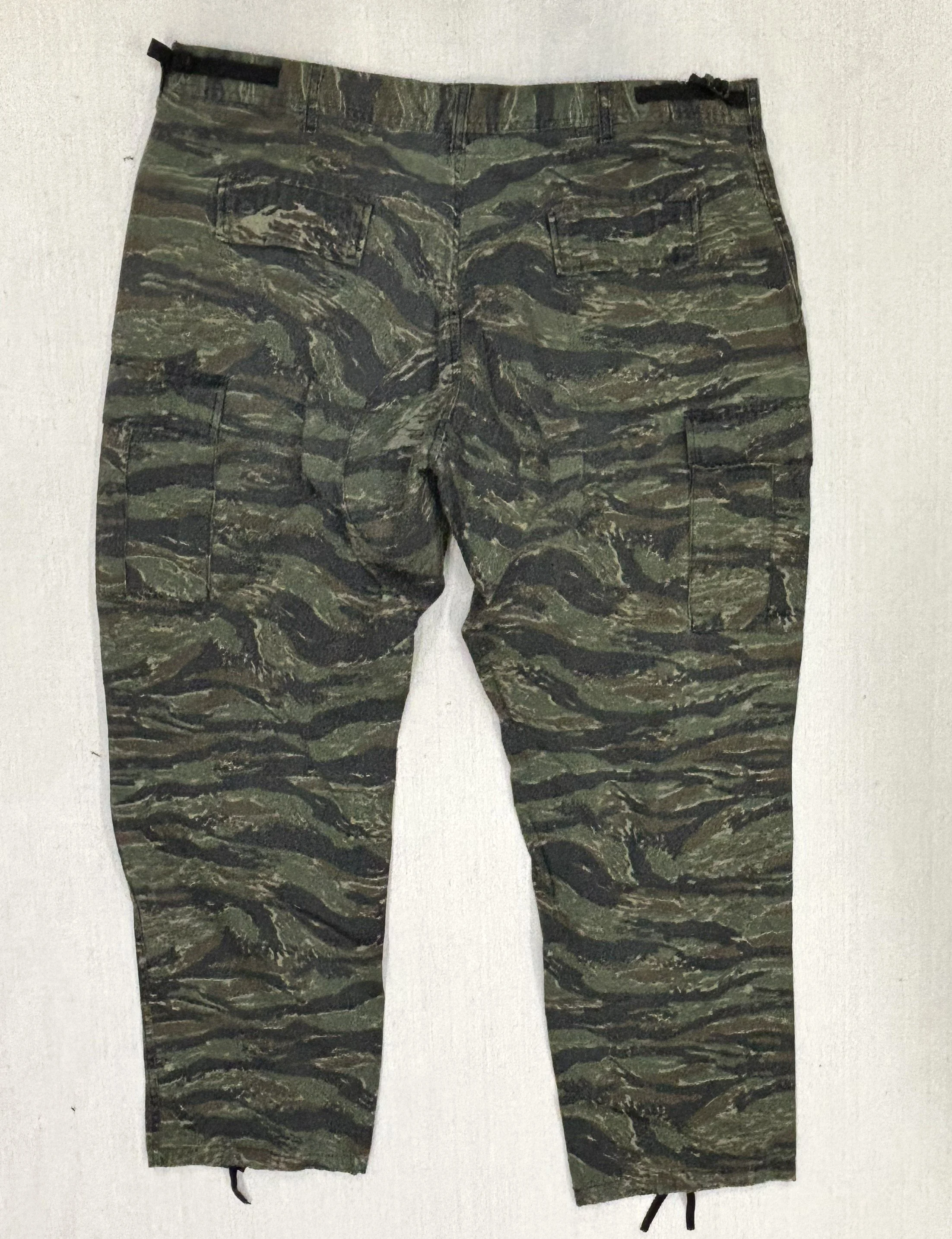
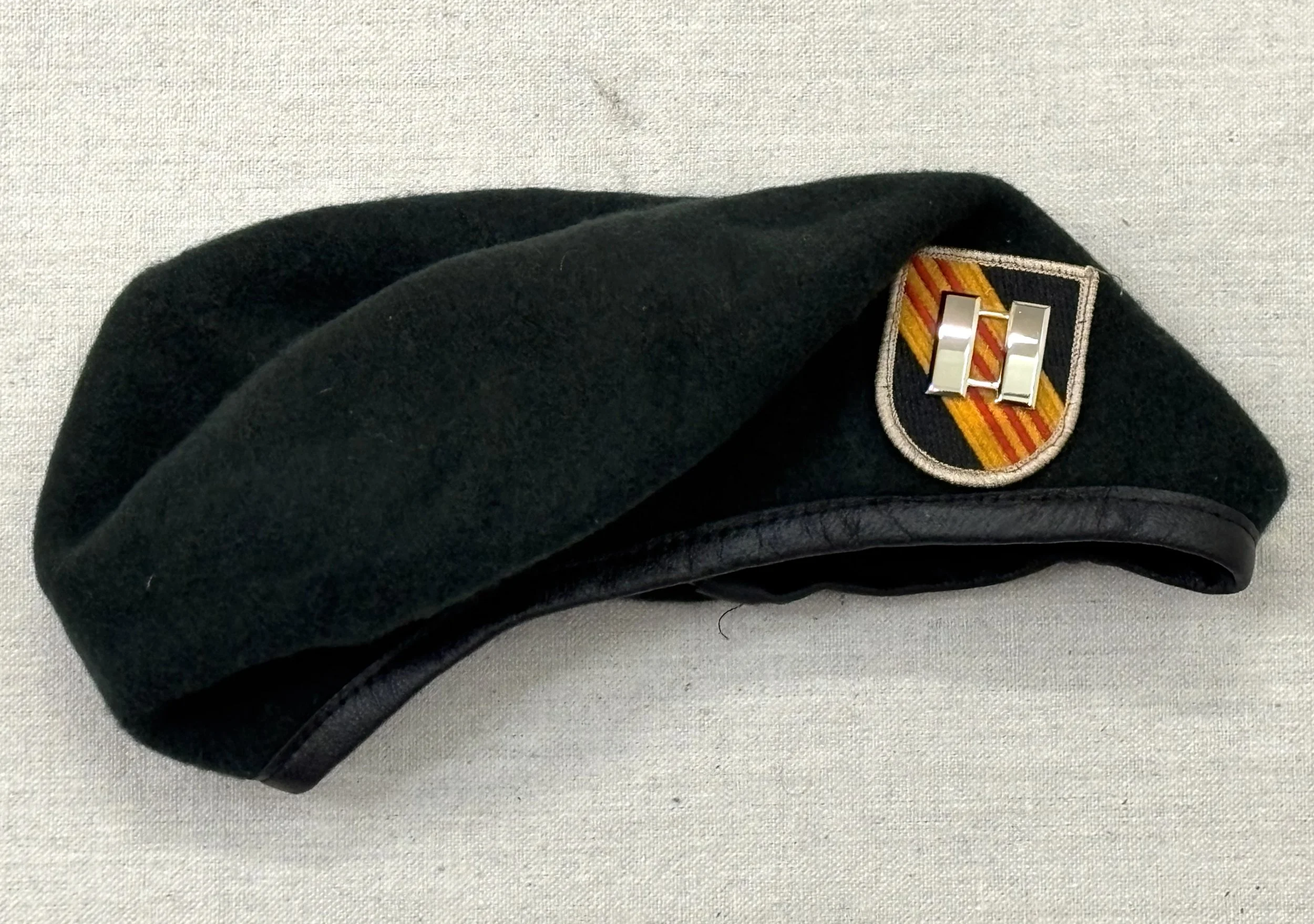
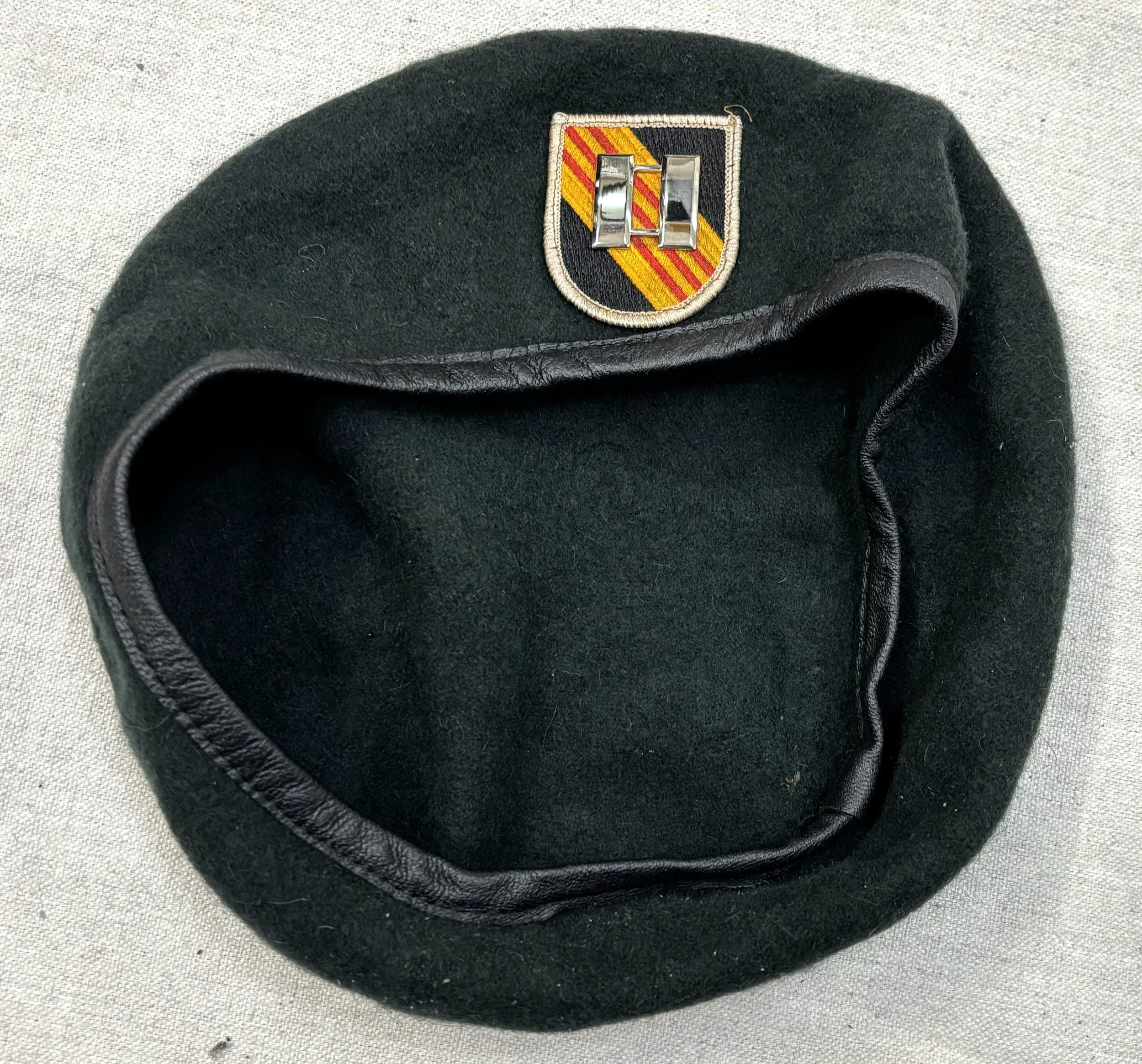
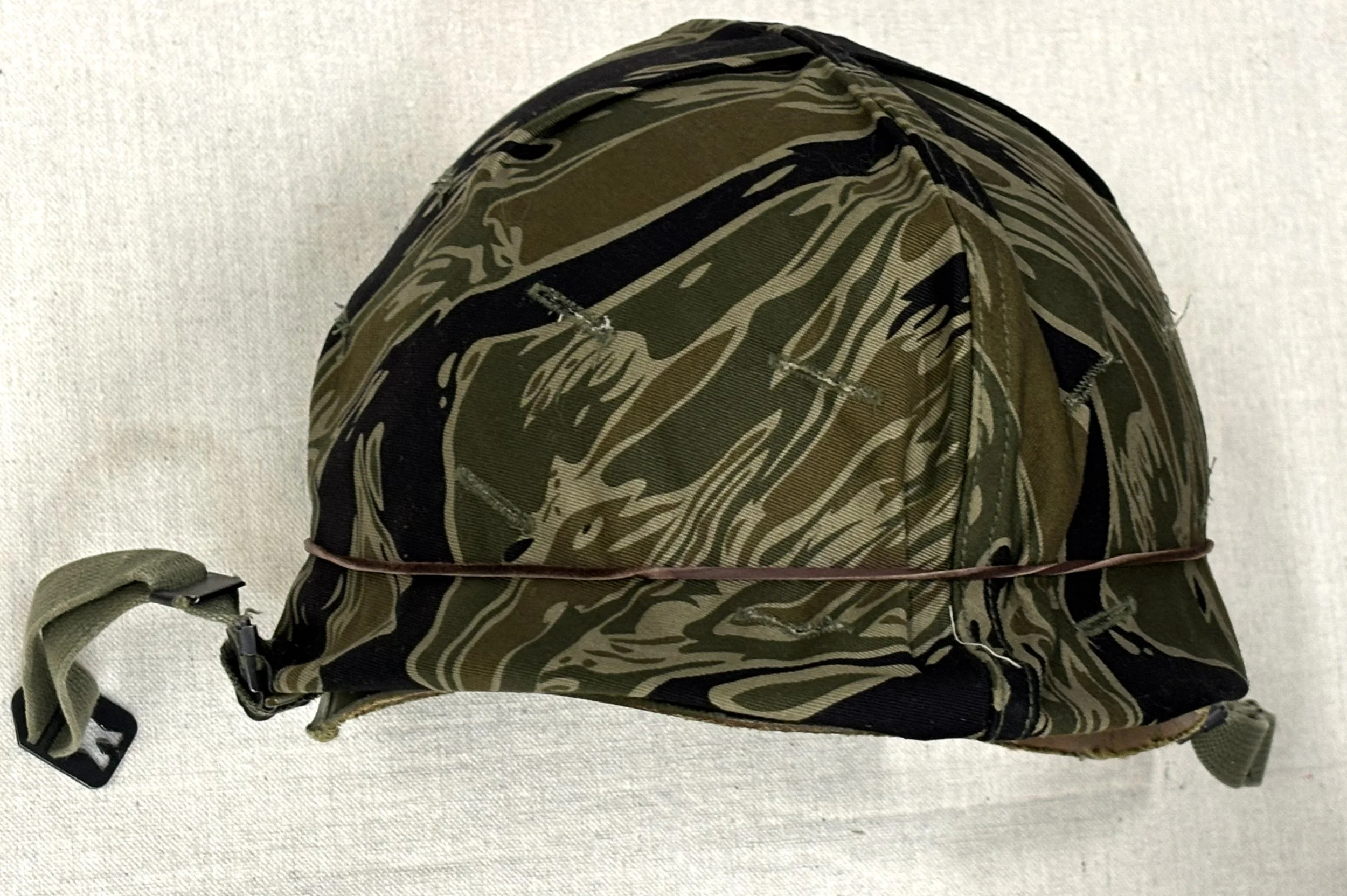
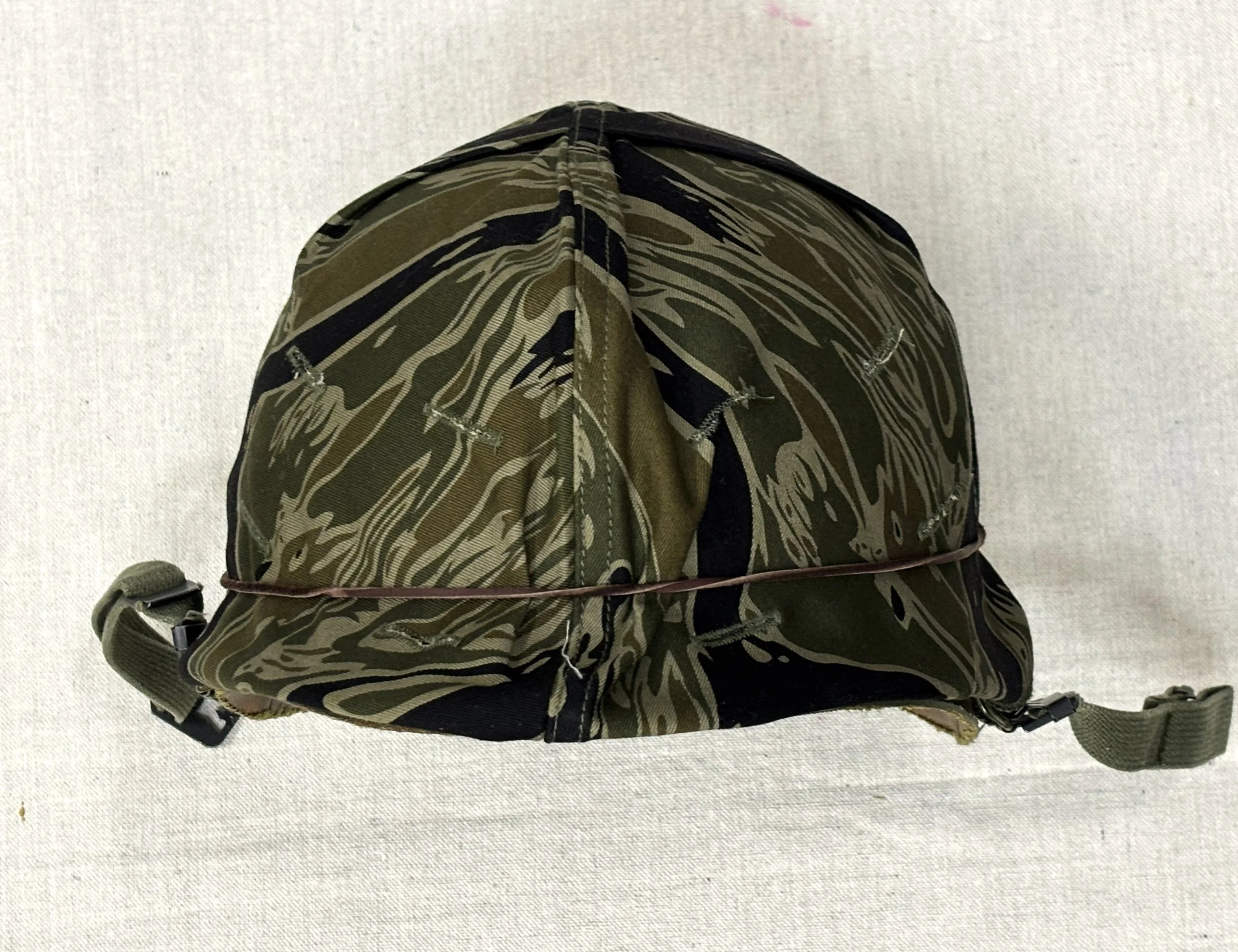
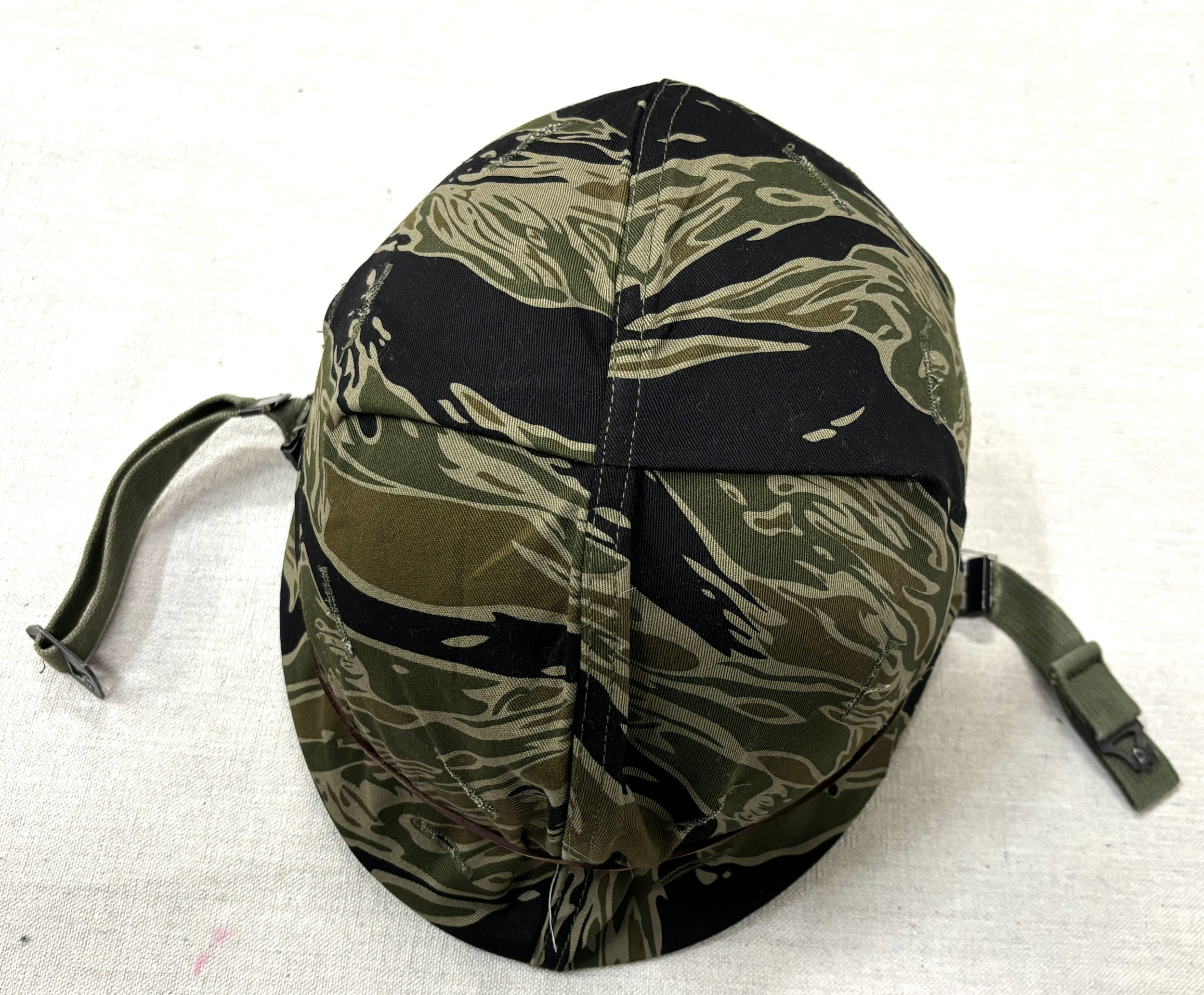
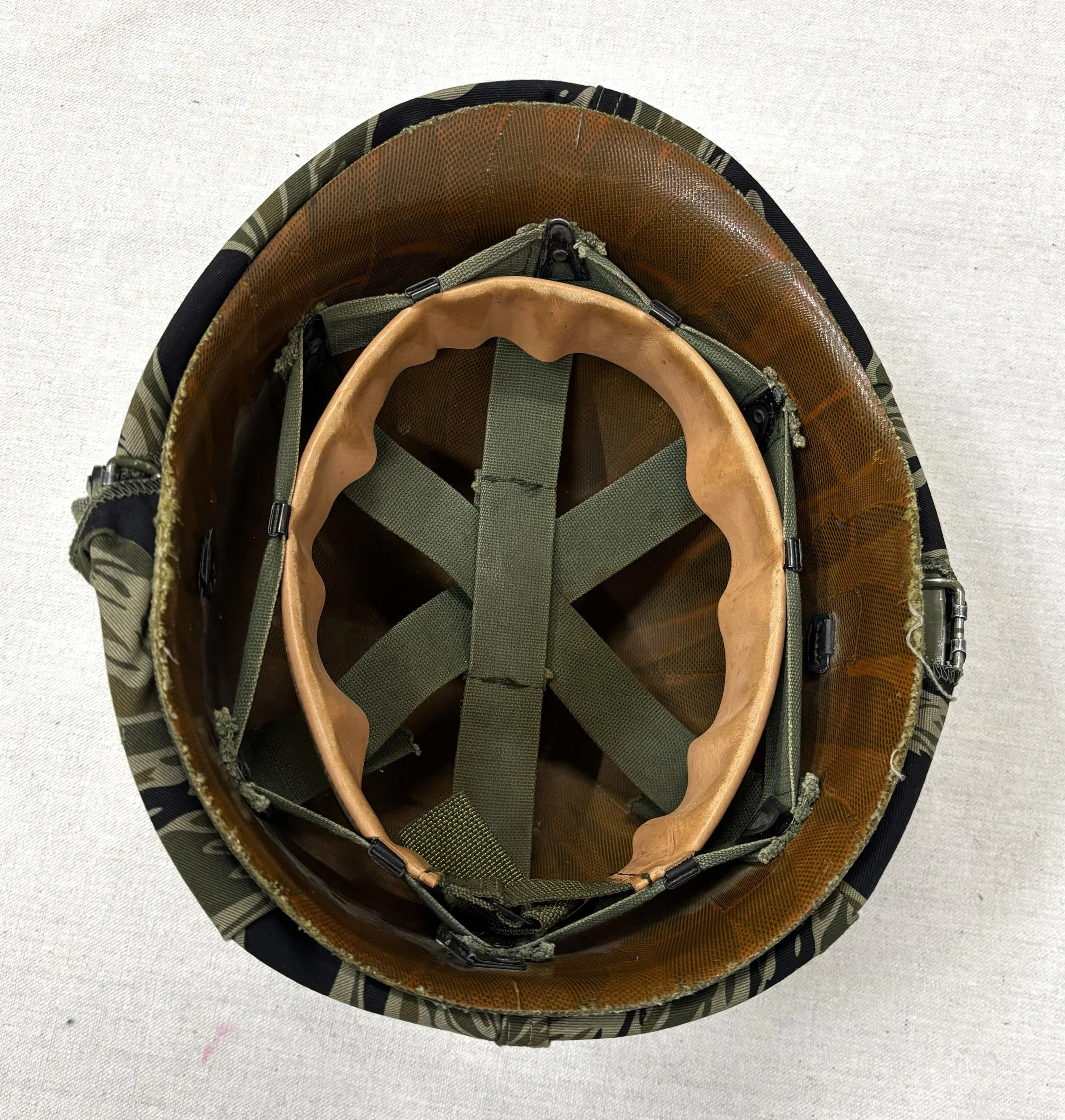


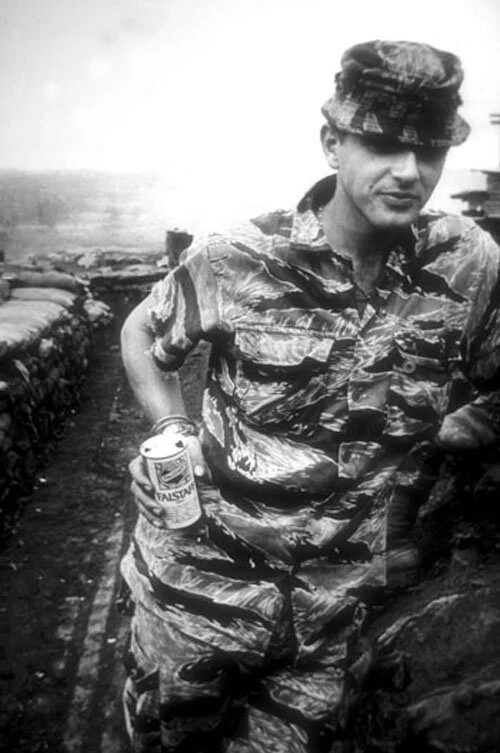


“Updated” Special Forces Captain, A-503, MIKE Force, Nah Trang, Mekong Delta, IV Corps, Republic of South Vietnam:
The Mobile Strike Force Command, or MIKE Force, was a key component of U.S. Army Special Forces operations in Vietnam. Detachment A-503 worked with the 5th Special Forces in the Delta, but they were their own entity. They served with the indigenous soldiers selected and trained through the large minority, ‘non-Vietnamese, Civilian Irregular Defense Group (GIDG) composed of the persecuted Degar, Bahnar, Hmong, Nung, Jarai, Khmer Krom, and the Montagnard peoples. MIKE FORCE was active under the Military Advisory Command Vietnam of the Army Special Forces from 1964 to 1970.
Mike Force’s mission was to act as a country-wide fast reaction force for securing sites, reinforcing, and recapturing CIDC A-CAMPS, as well as conduct special reconnaissance patrols, search and rescue, and search and destroy missions.
IV Corps was the Southernmost of the 4 sections of South Vietnam, and that’s where Detachment-503’s Camp was located, at Nha Trang in the Mekong Delta. Captain Rust wears a Saigon tailor-made custom uniform variation for use while training his group of people. He’s got a custom cover for his helmet, again for training, but he preferred the beret. He had matching trousers bloused into his jump boots. They usually lived off the land and traveled lightly, often just the web belt and holster, or with the web straps and magazine pouches.
The area of operations was huge, with many waterways that were being used for infiltration, so the CIDG used Air Boats and rubber boats, and, like, often used by these forces, through the Mekong, very quickly, along the tributaries of the Delta.
OK just a note here on Tiger Strips, I’m kind of shooting from the hip on some of these, I am not an expert on the uniform what-so-ever, I try to copy black and white or old instamatic pictures, but I may be off, but there is a great book that is out there, I’ll refer you too that may clear up any questions you may have, or how far off I am, its called TIGER PATTERNS, A guide to the Vietnam War’s Tiger-Stripe combat fatigue patterns and uniforms, by Sgt. Richard Denis Johnson. He can tell you far more than I will ever remember.
Uniforms with patches and names are rarely used in actual Special Forces Operations in the field, as well as by the other US Military Special Operations Groups of the Navy, Marine Corps, and Air Force. The M1 helmet, with the tiger-striped helmet cover, is questionable at best. I had it for some time and thought maybe airborne jump training was a possibility, but I had no idea if there ever was any.
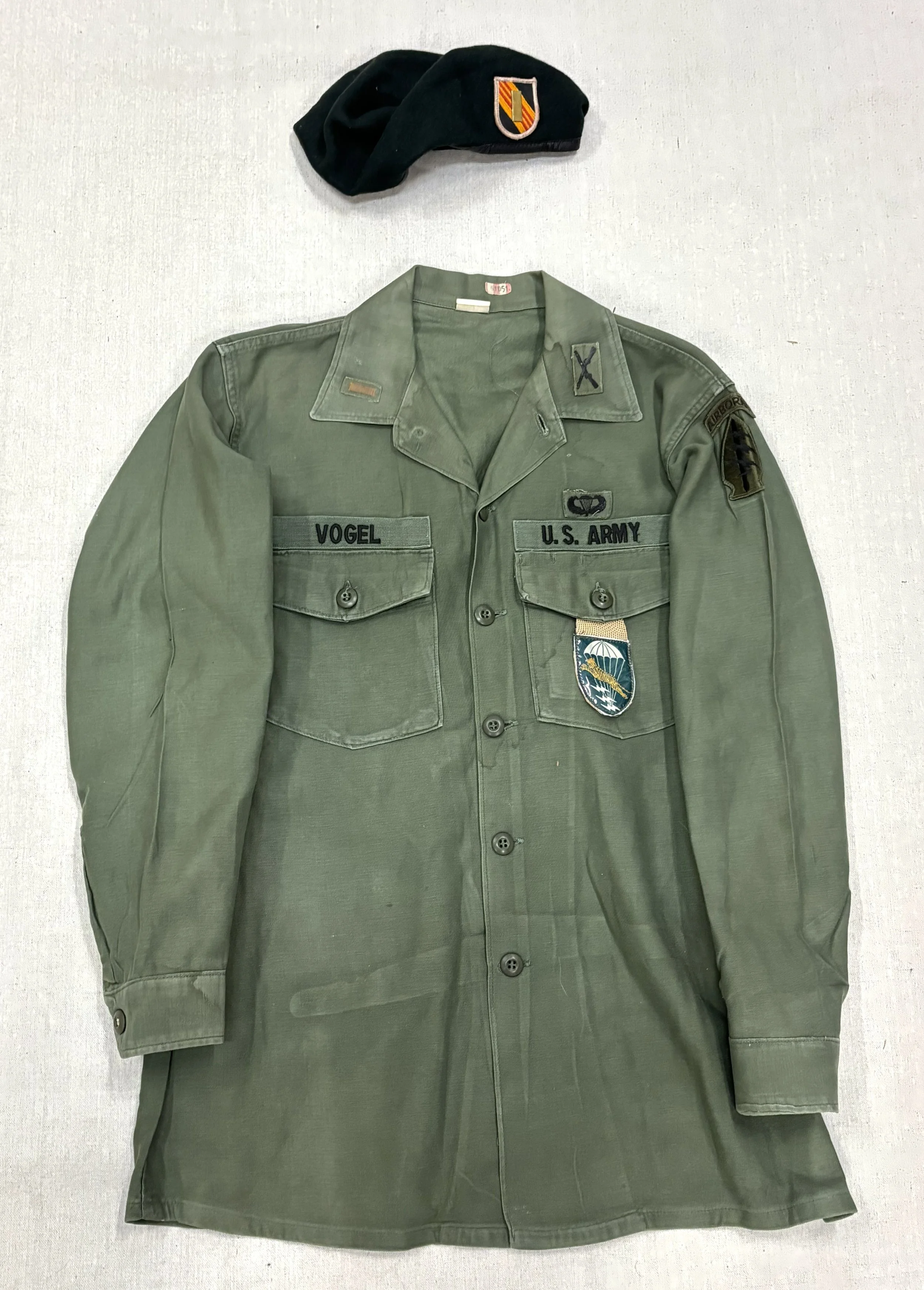
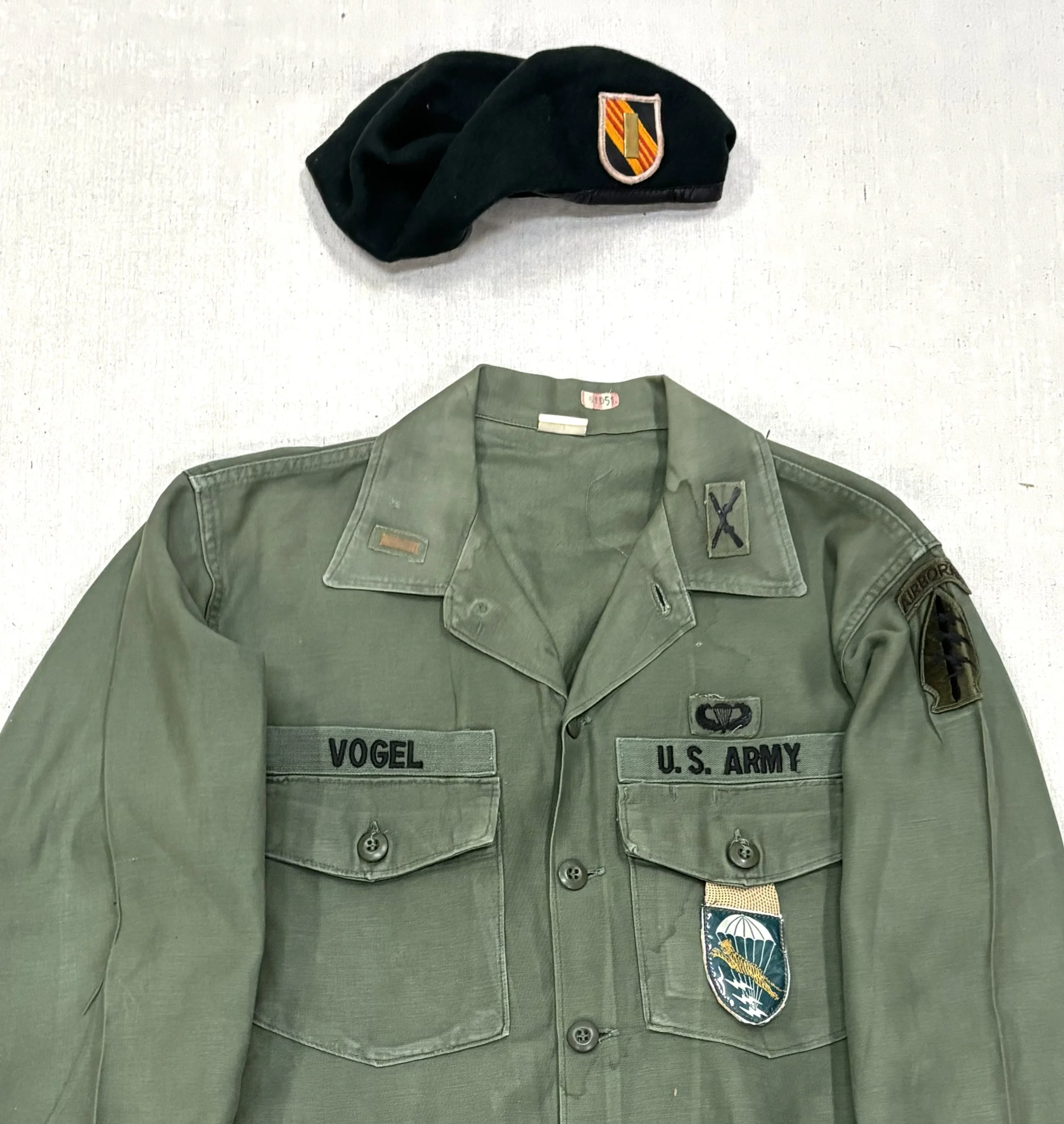
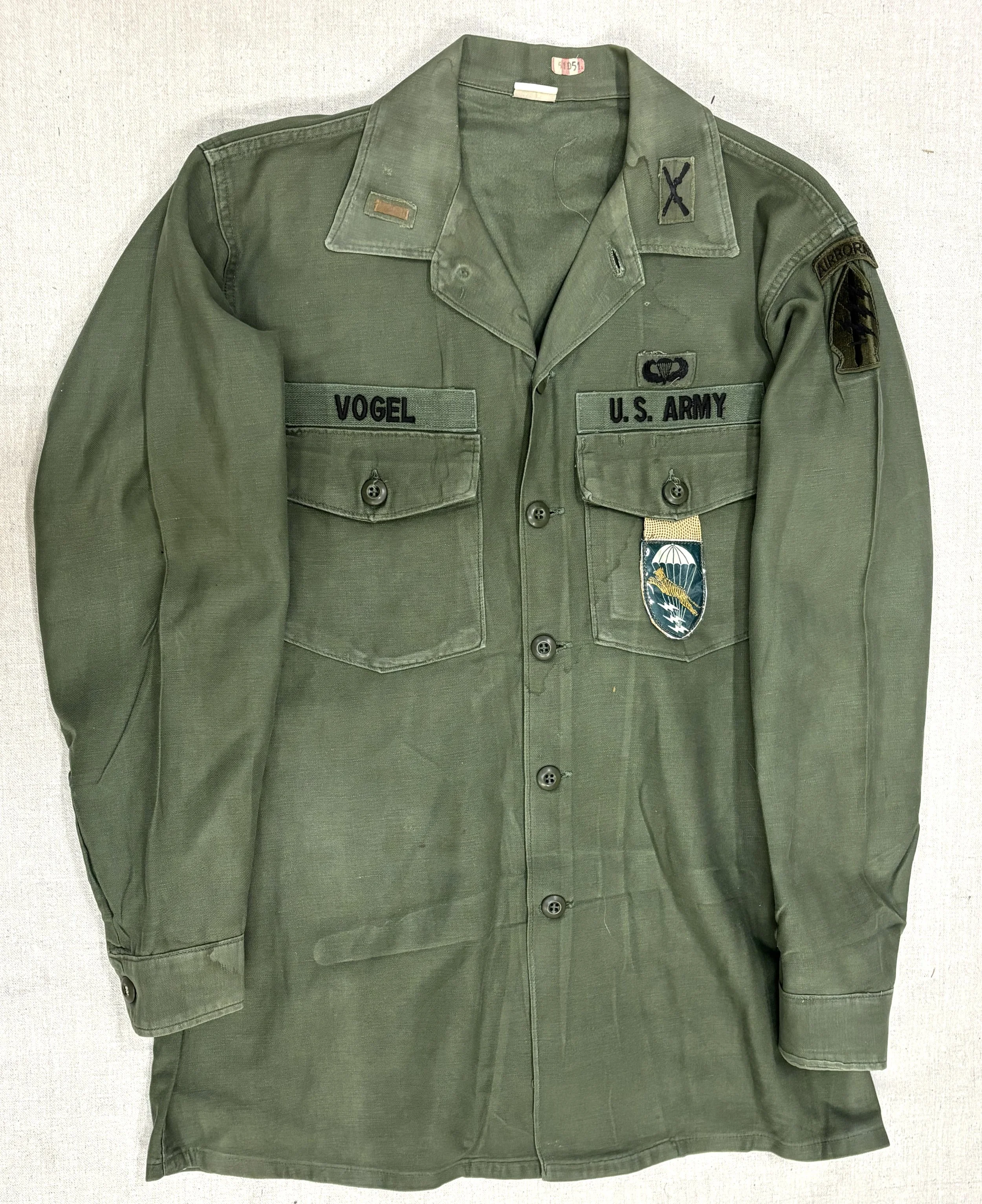

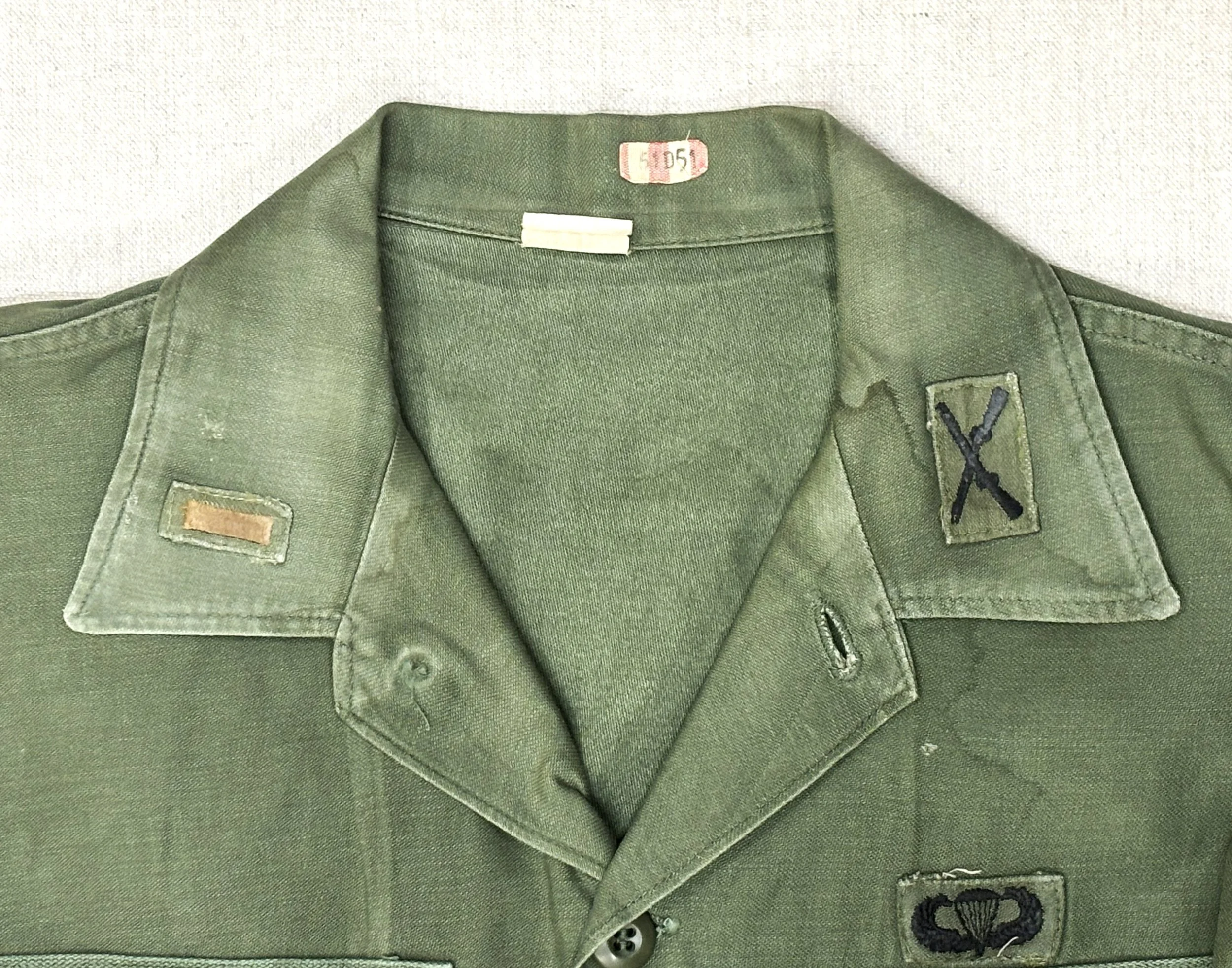

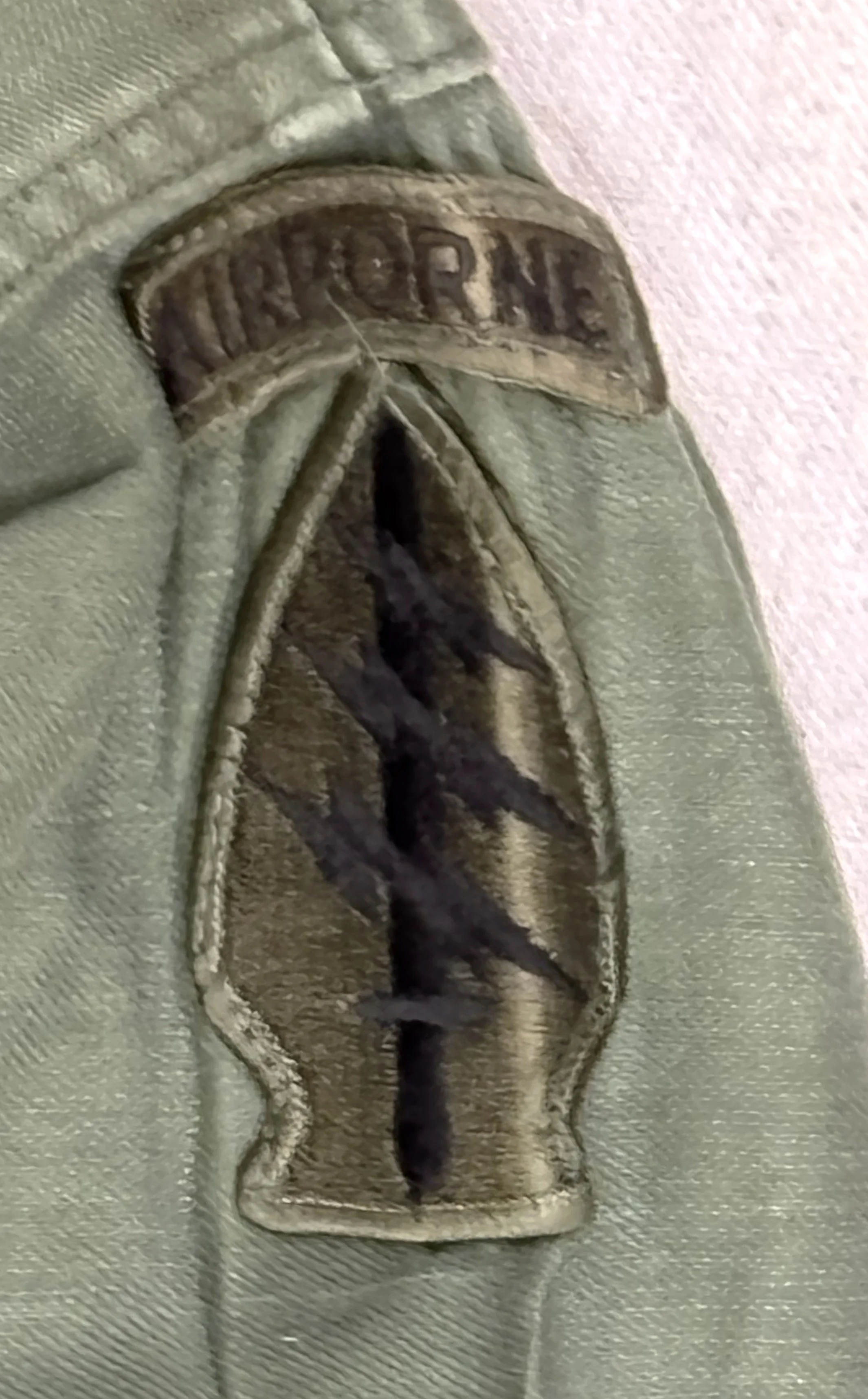
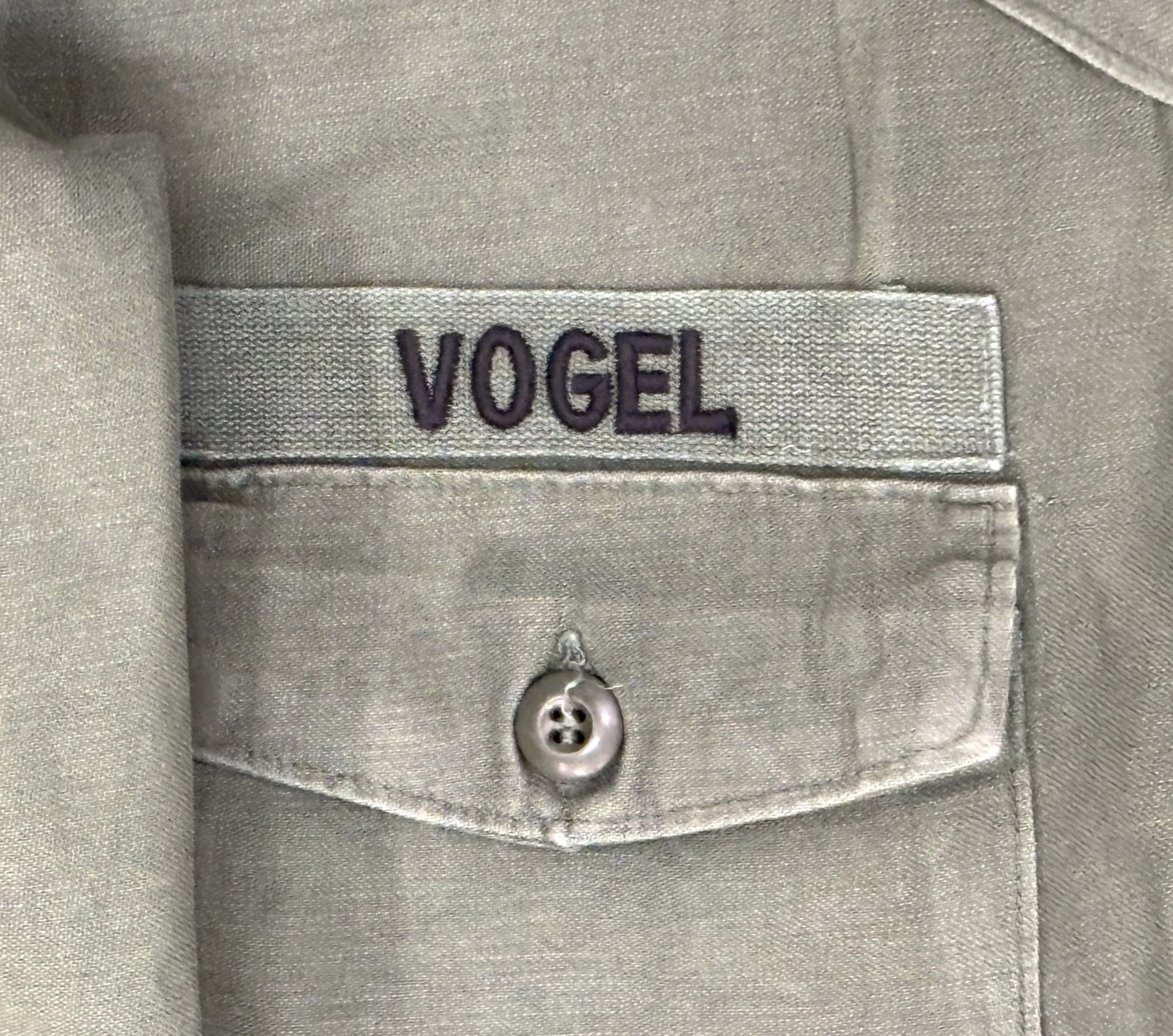
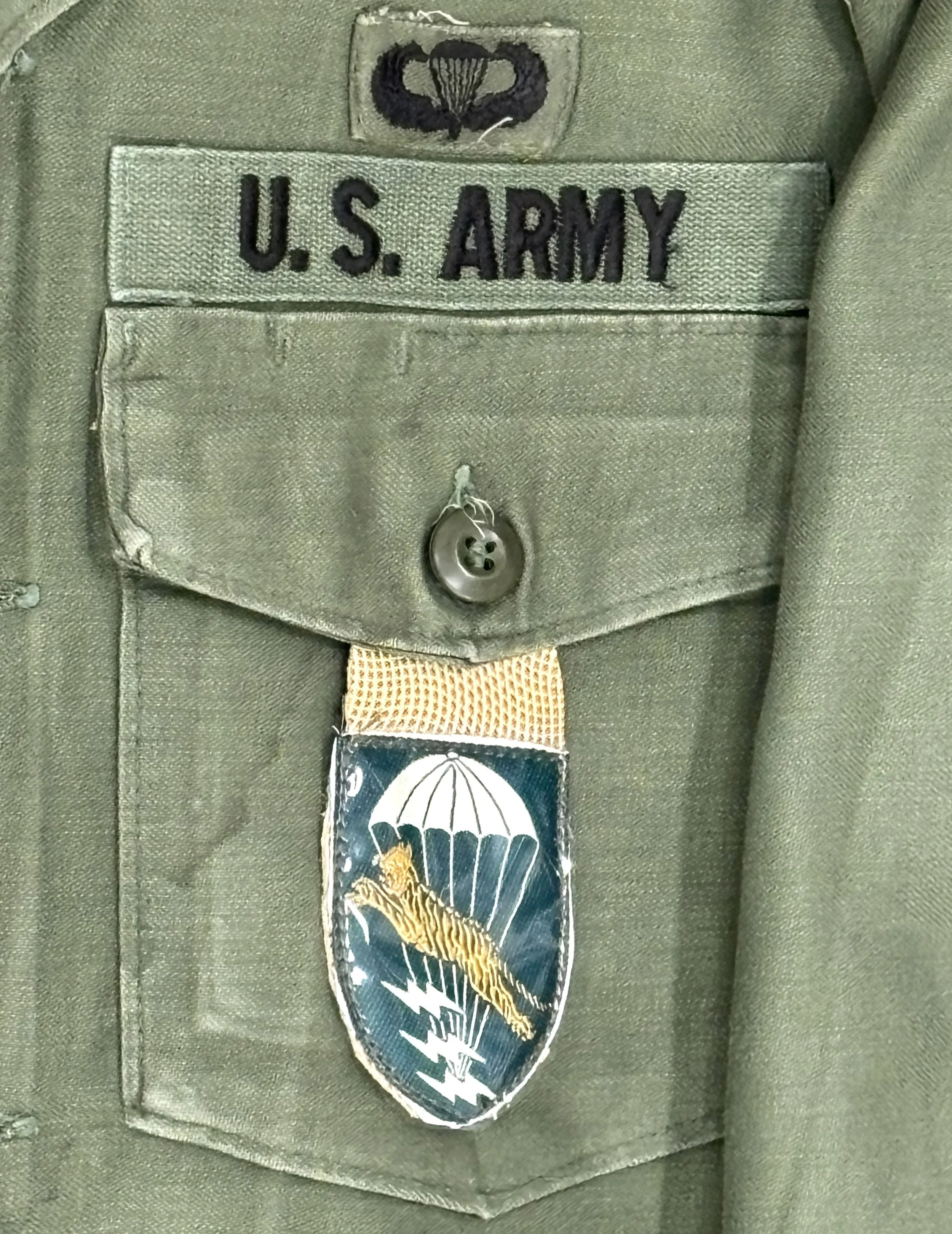
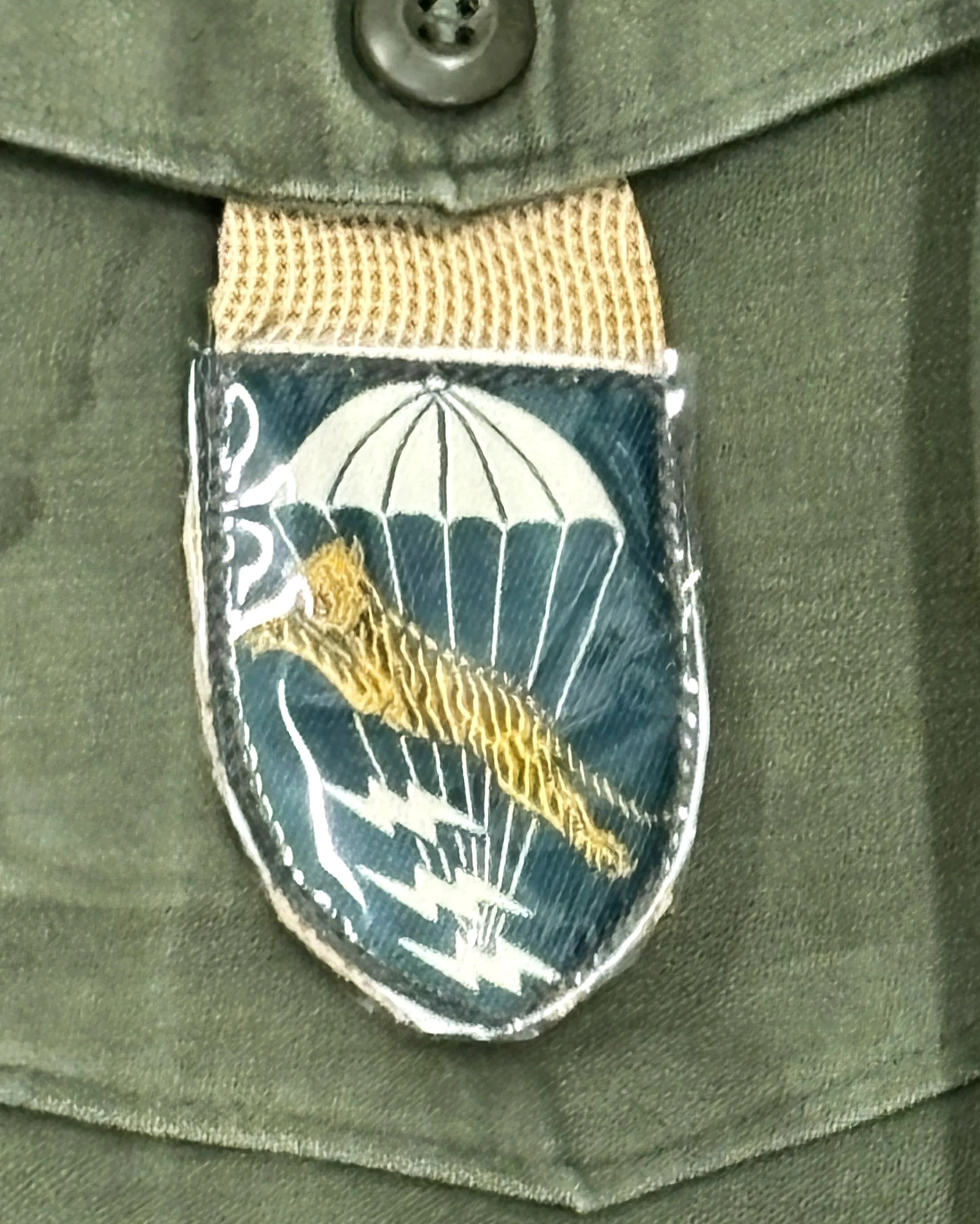
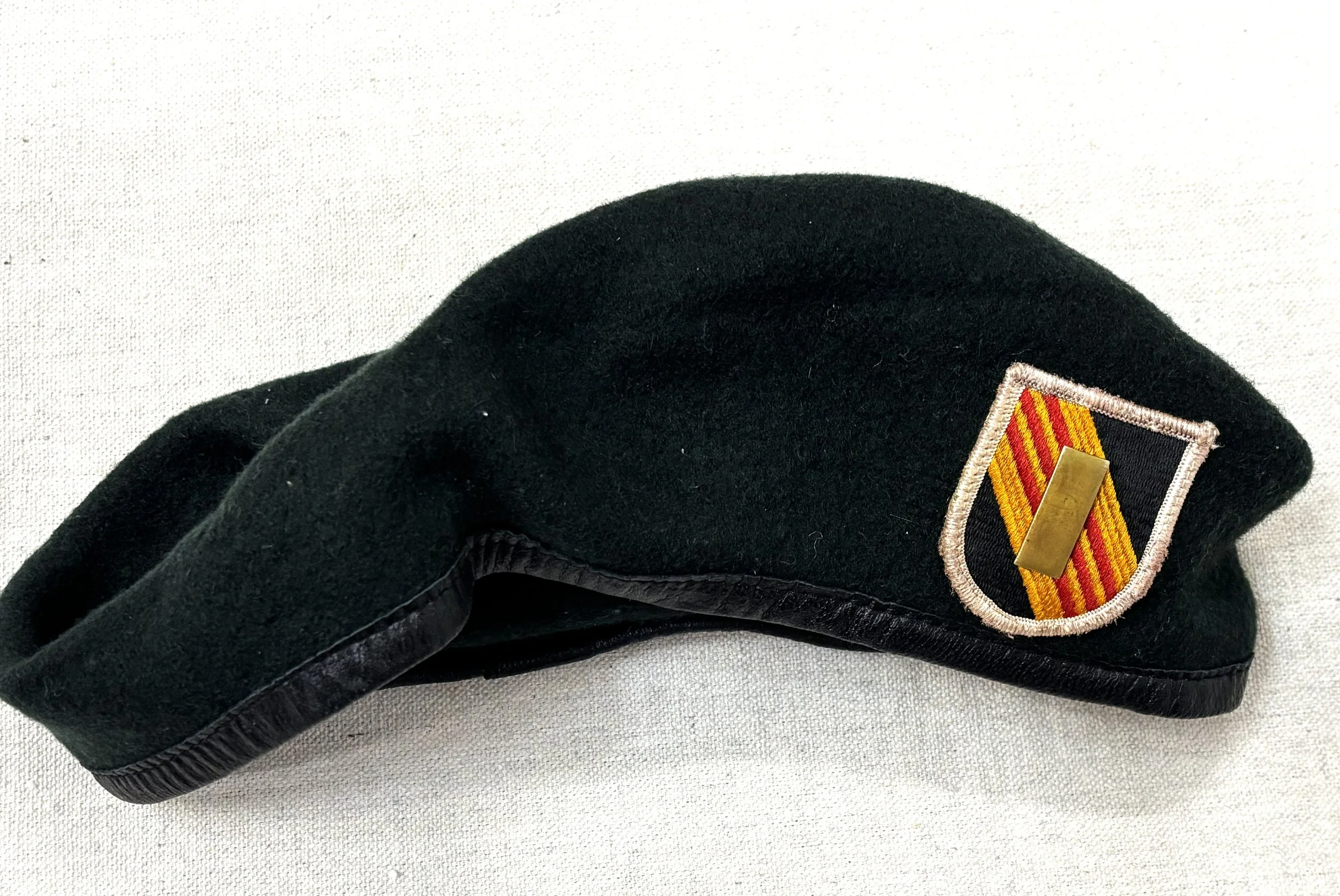
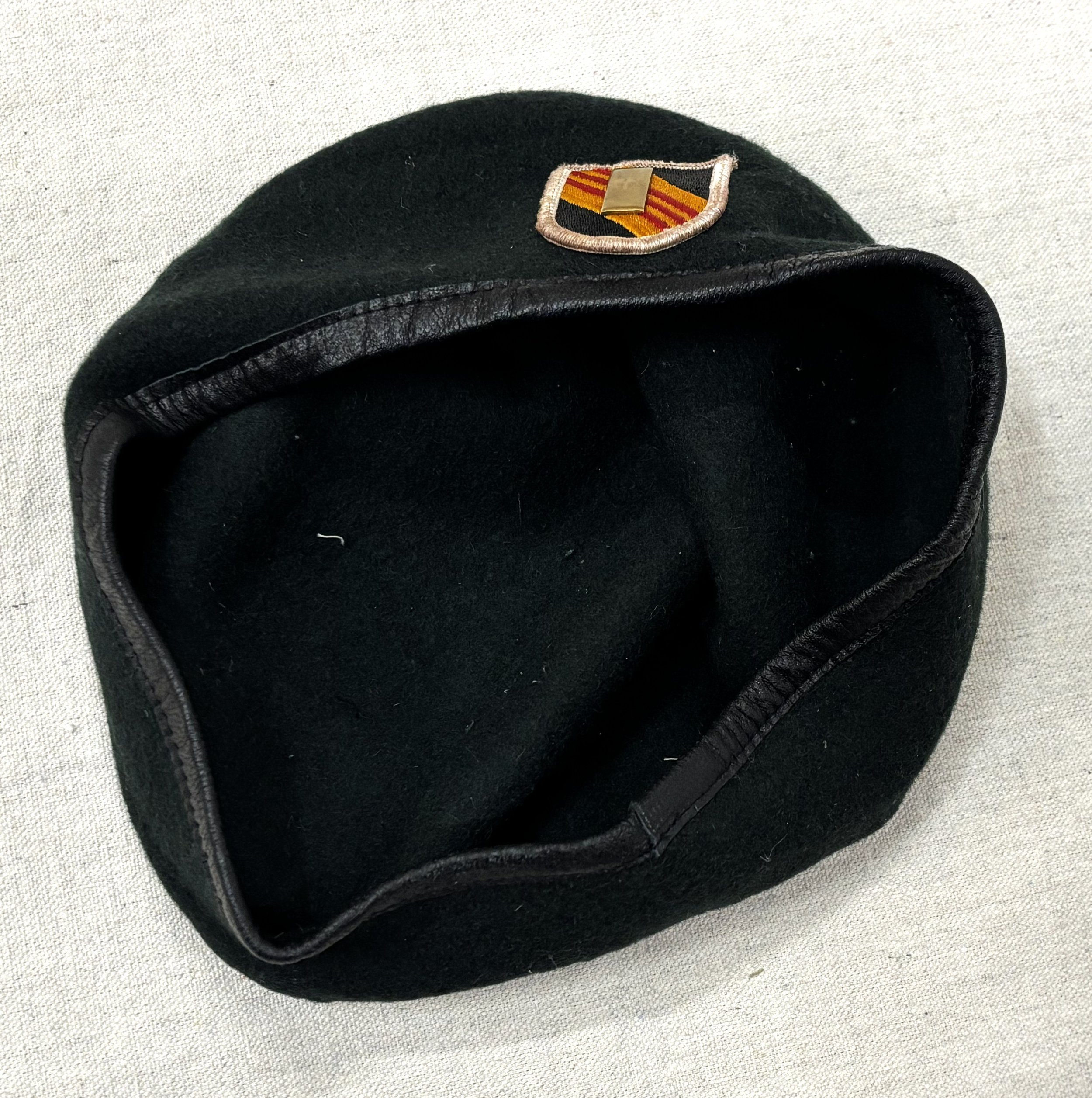
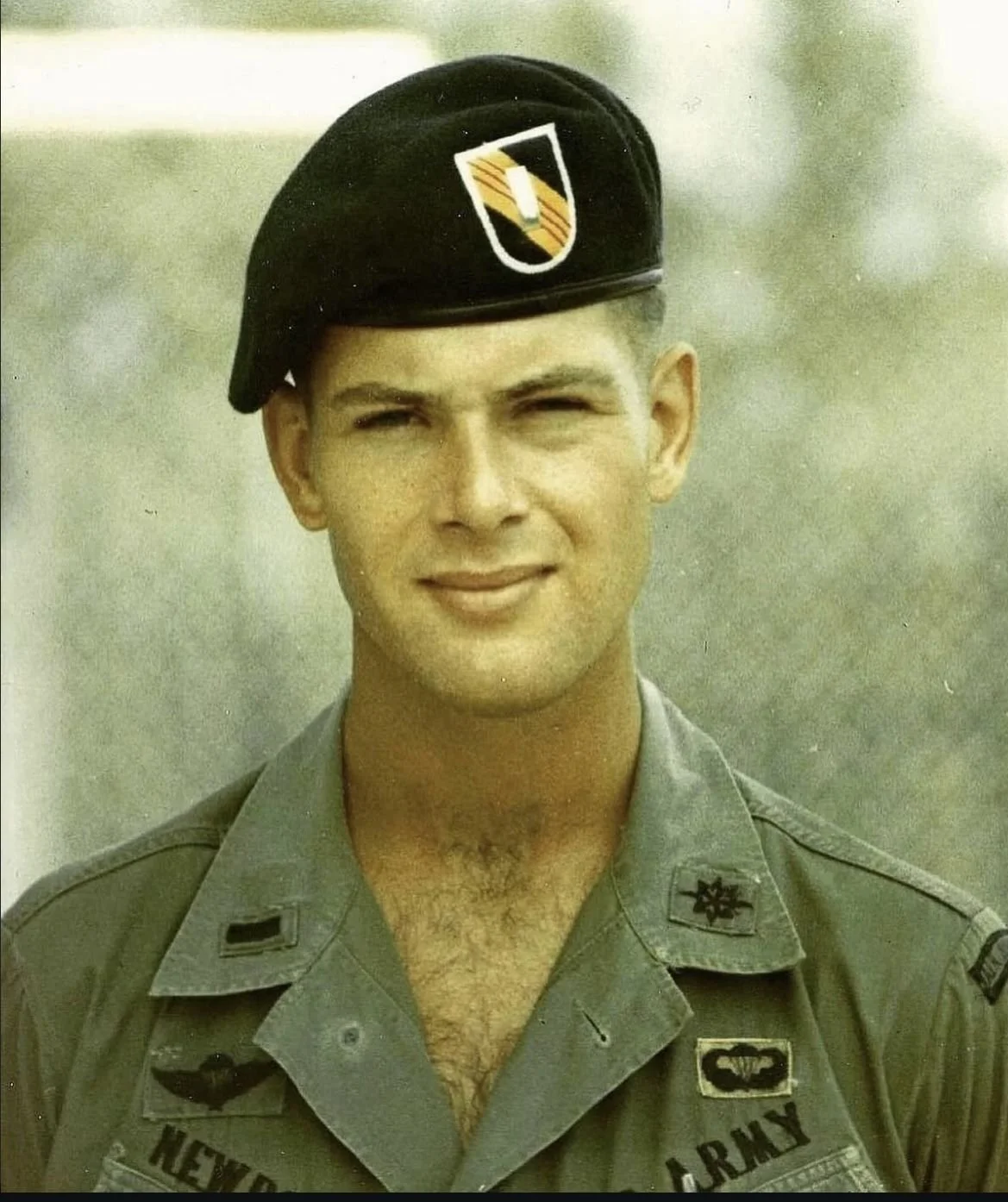

Updated Pictures: 5th Special Forces Group, Second Lieutenant Vogel, Leutnant, Operating with the LLBD:
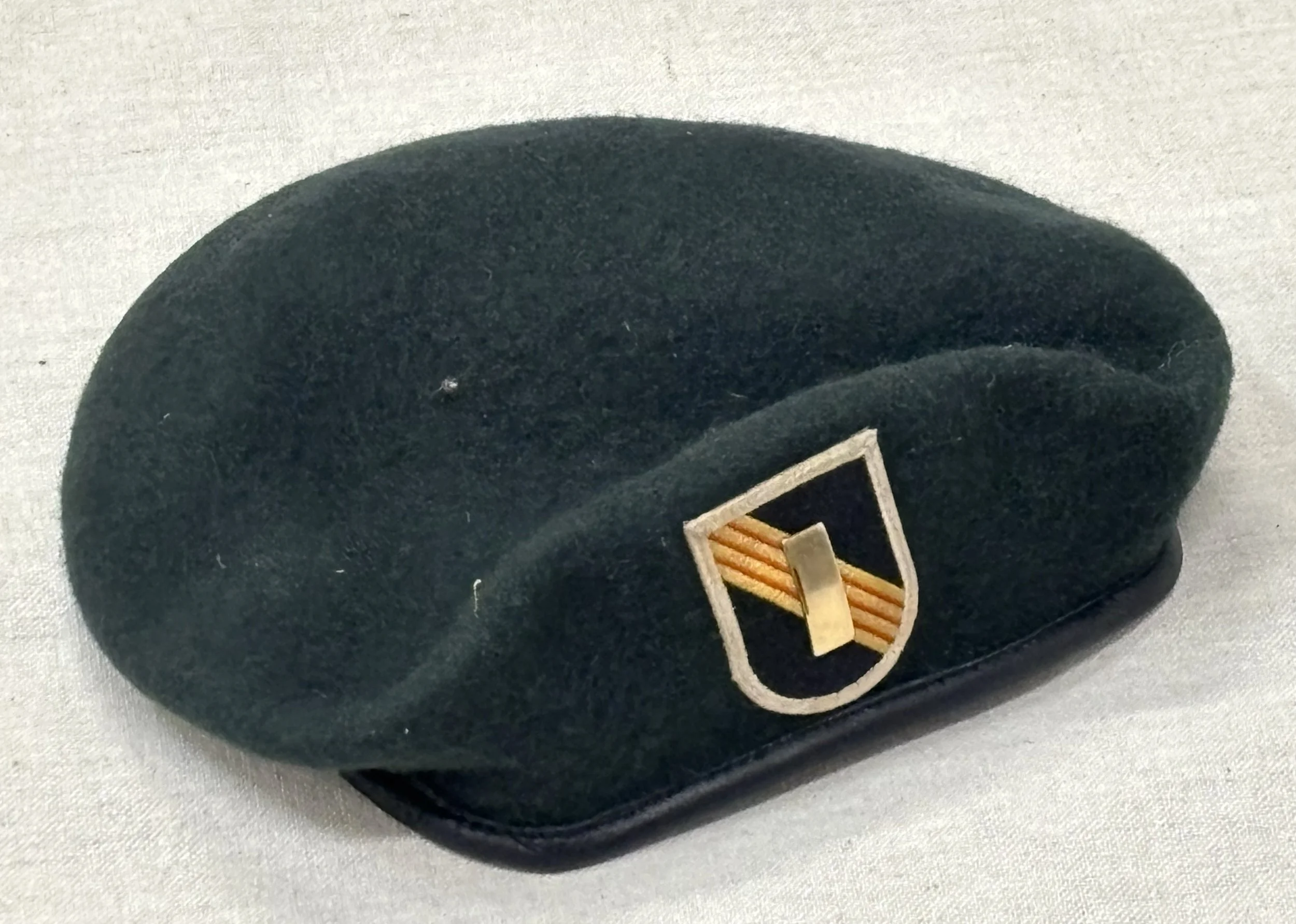
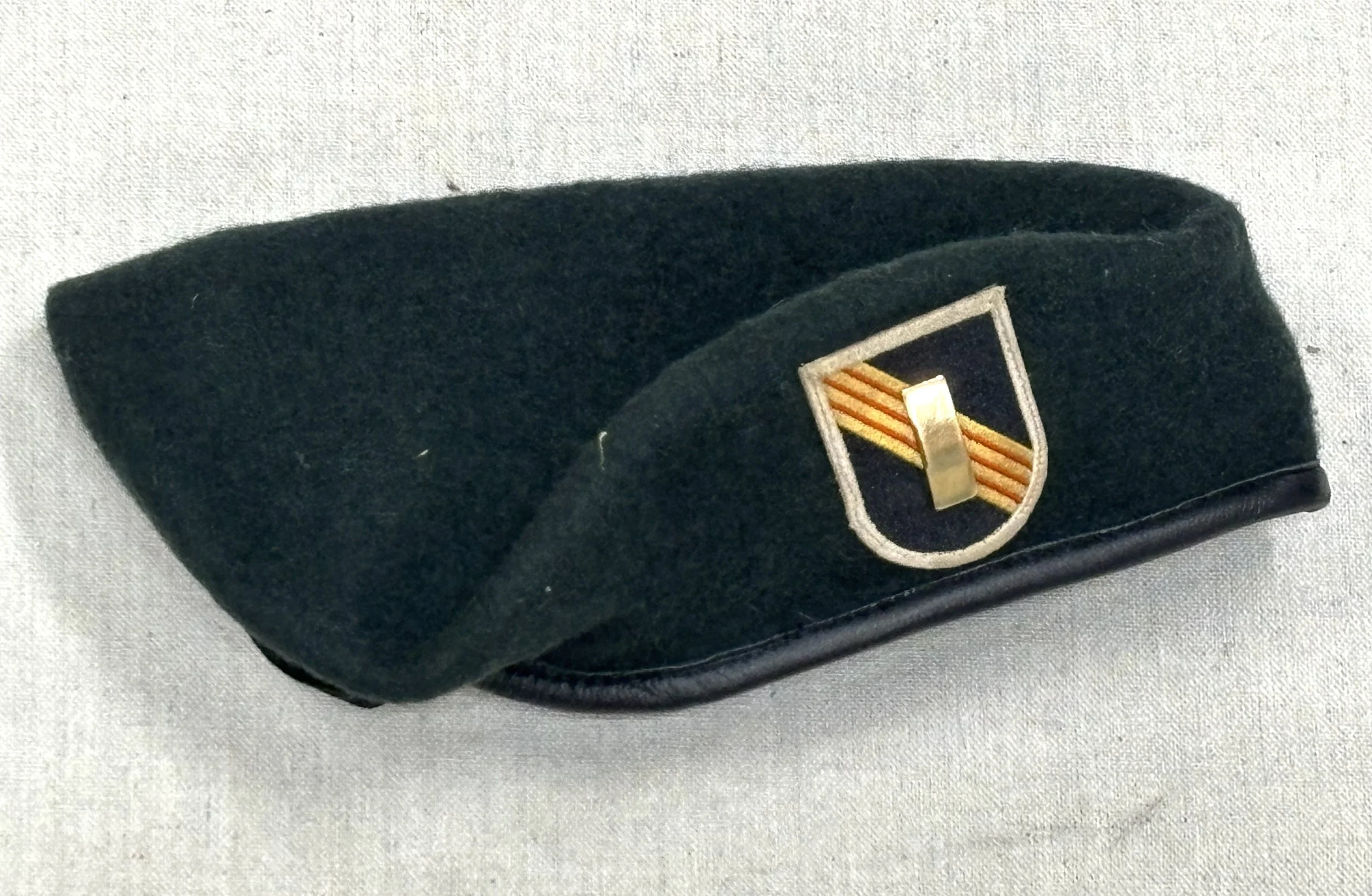
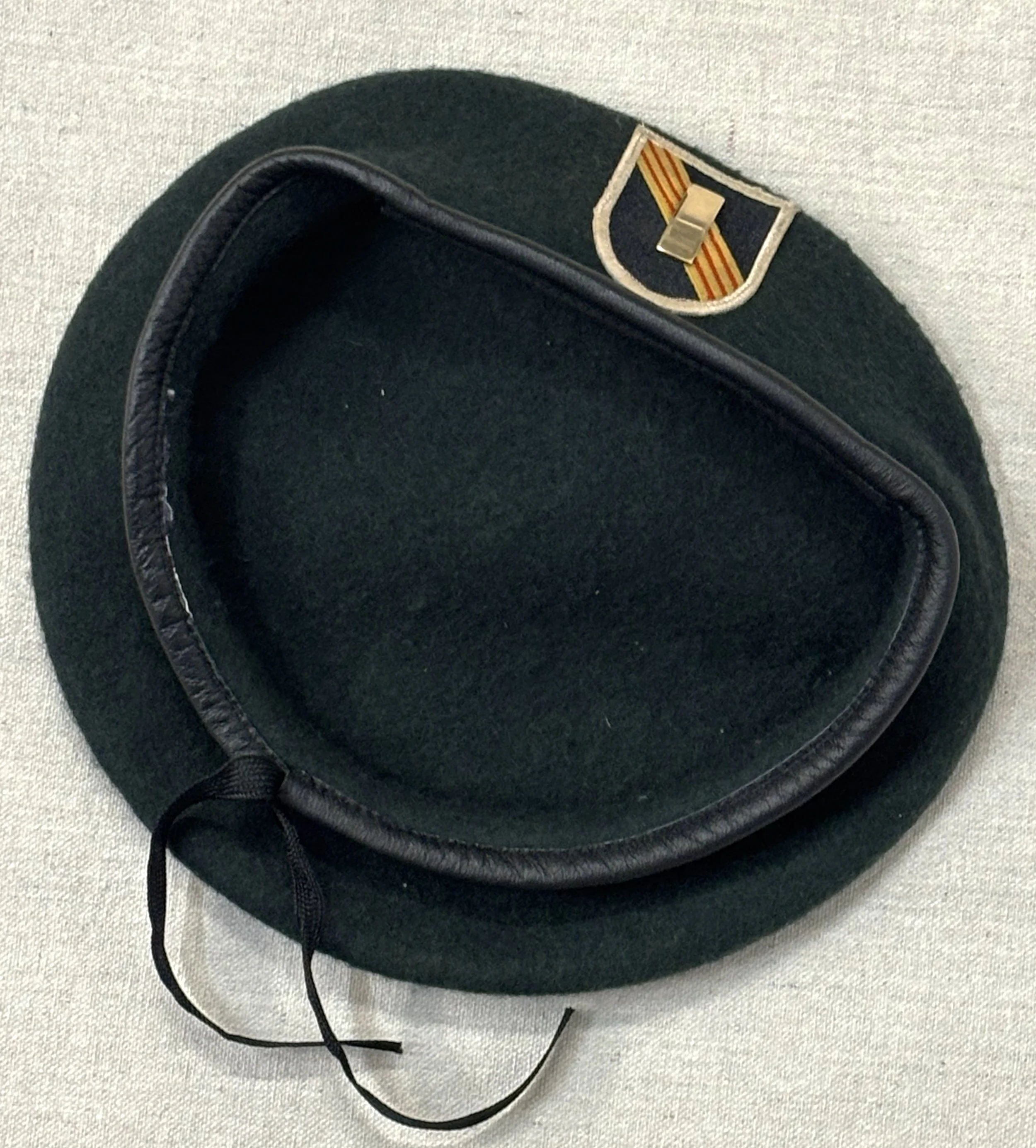
In the very early 1970s, the ERDL camouflage pattern had become an issue item. Before that, camouflage was not issued, but it was acquired in its various available forms, the “Tiger-Stripes” pattern being the most famous, and most common, even more popular, but they used what they could get when they needed them. But this was the standard “Fatigue” style being used. Camouflage uniforms were generally completely devoid of insignia before 1969. The 5th SP Beret Flash, a Black shield (during the Vietnam War, the RVN flag was added to the background), was carried over for years of use “Stateside” and was even reissued for use once or twice. He wears the LLDB (RVN Special Forces) pocket hanger patch. Operating out of Nha Trang, the South Vietnamese actually had them from February 1956 to April 1975, with the fall of Saigon.
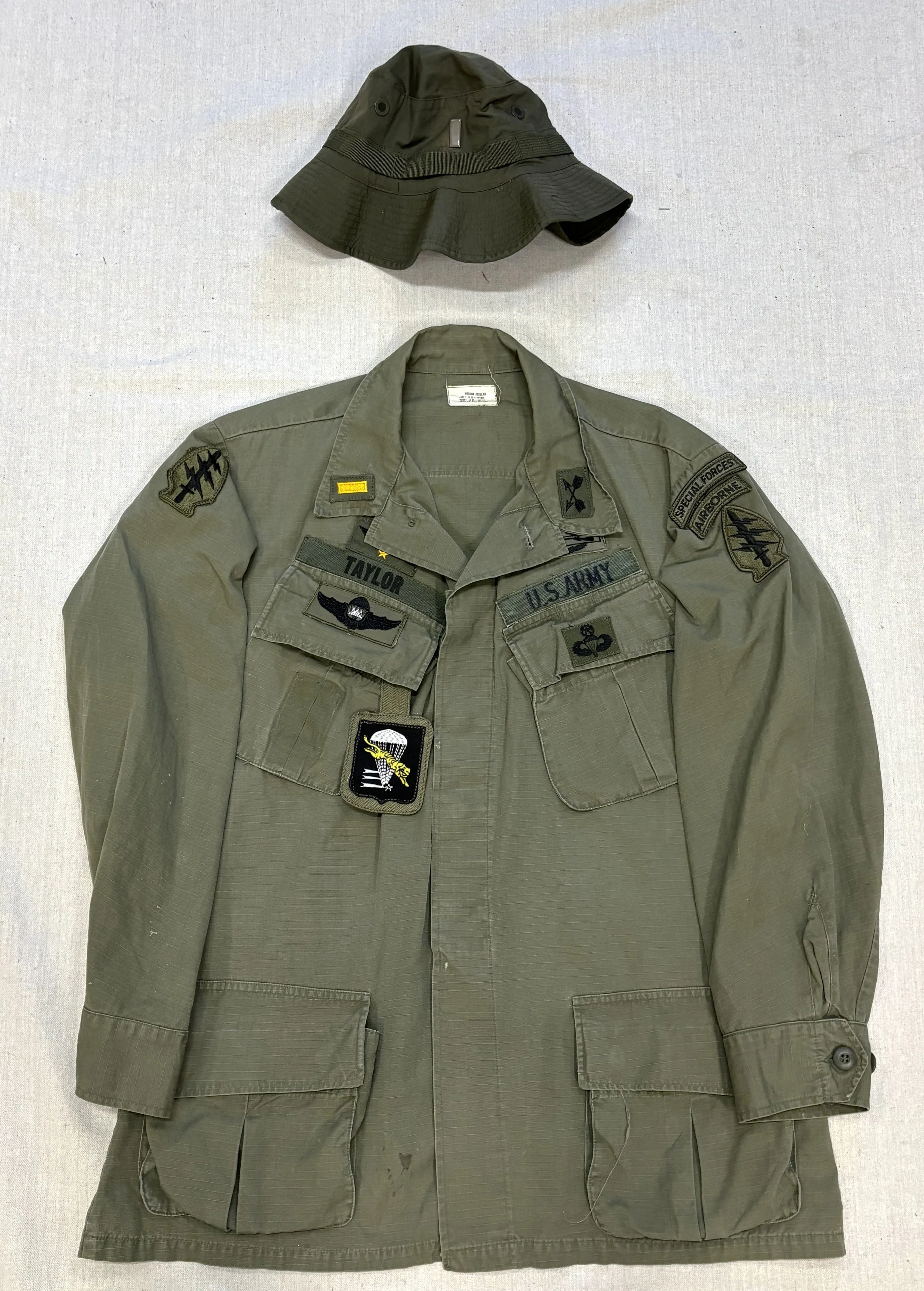
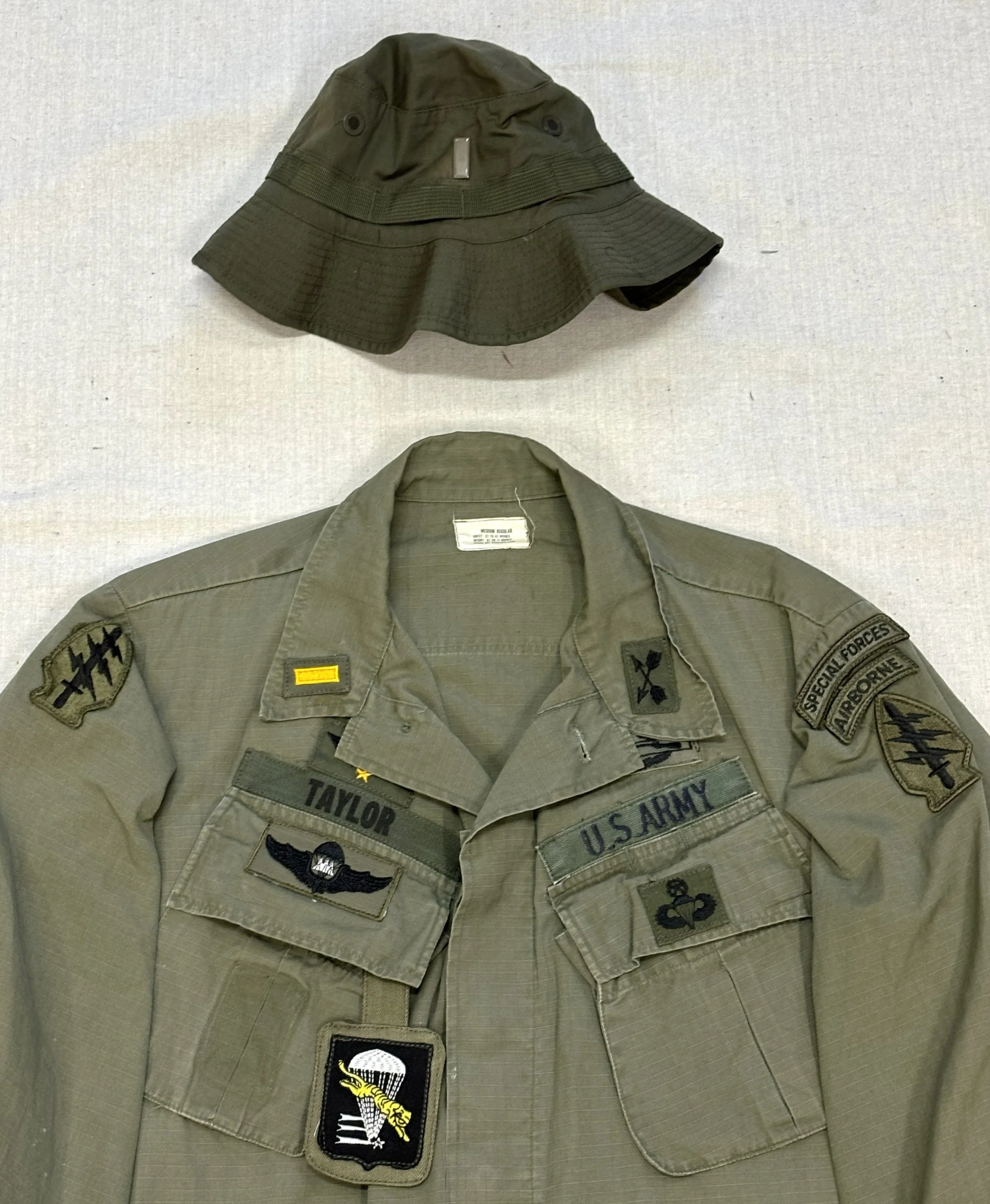
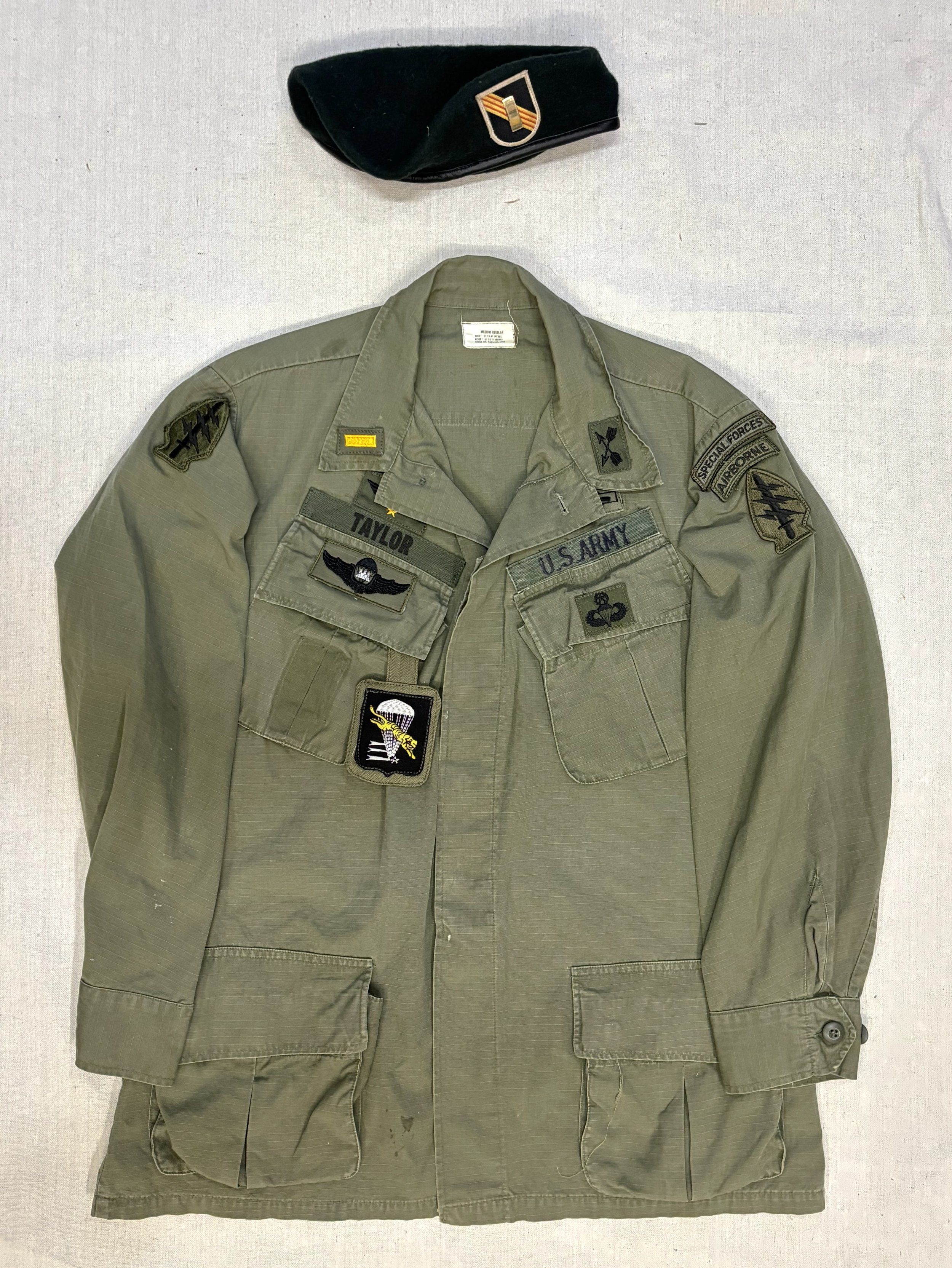
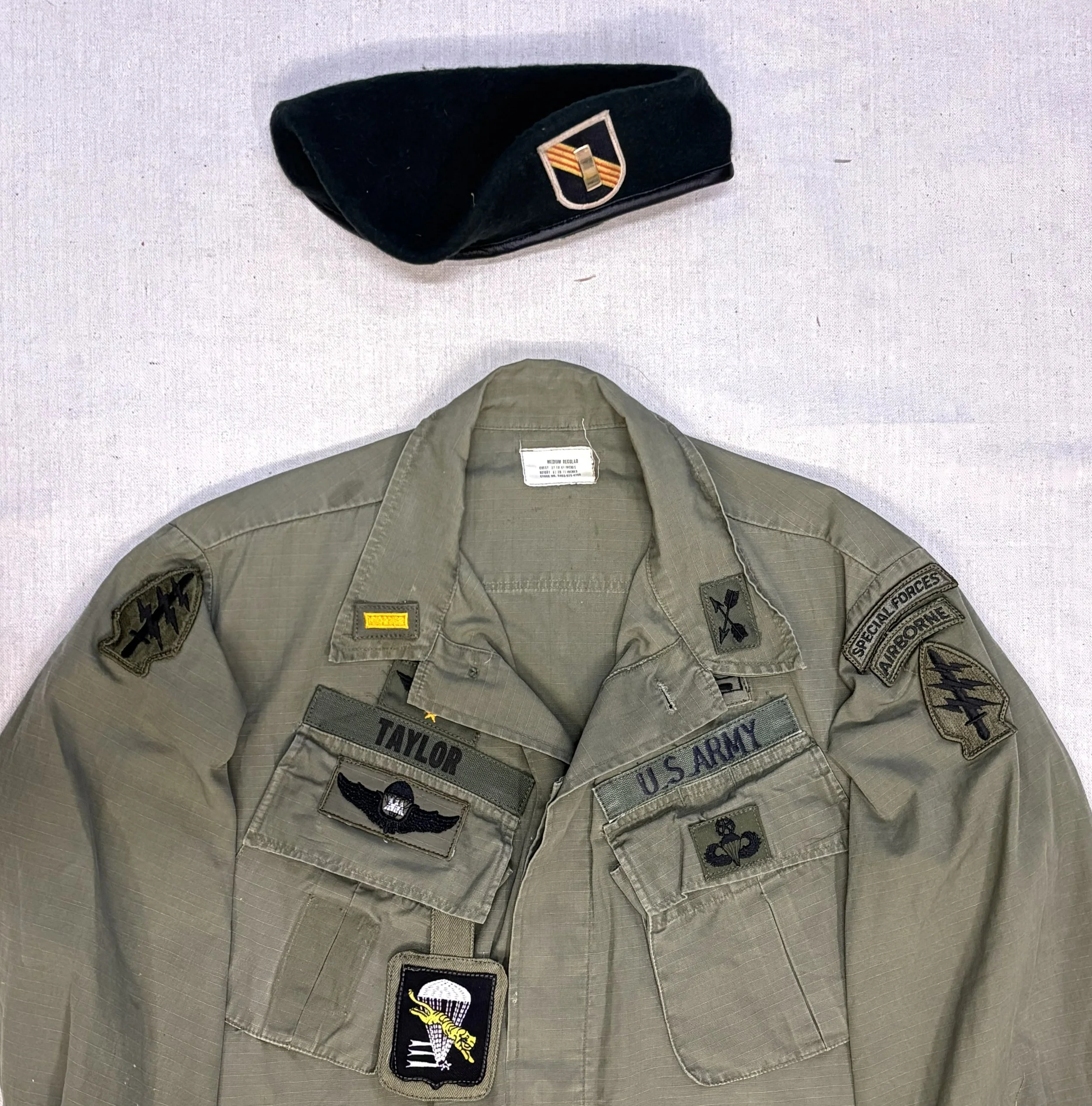
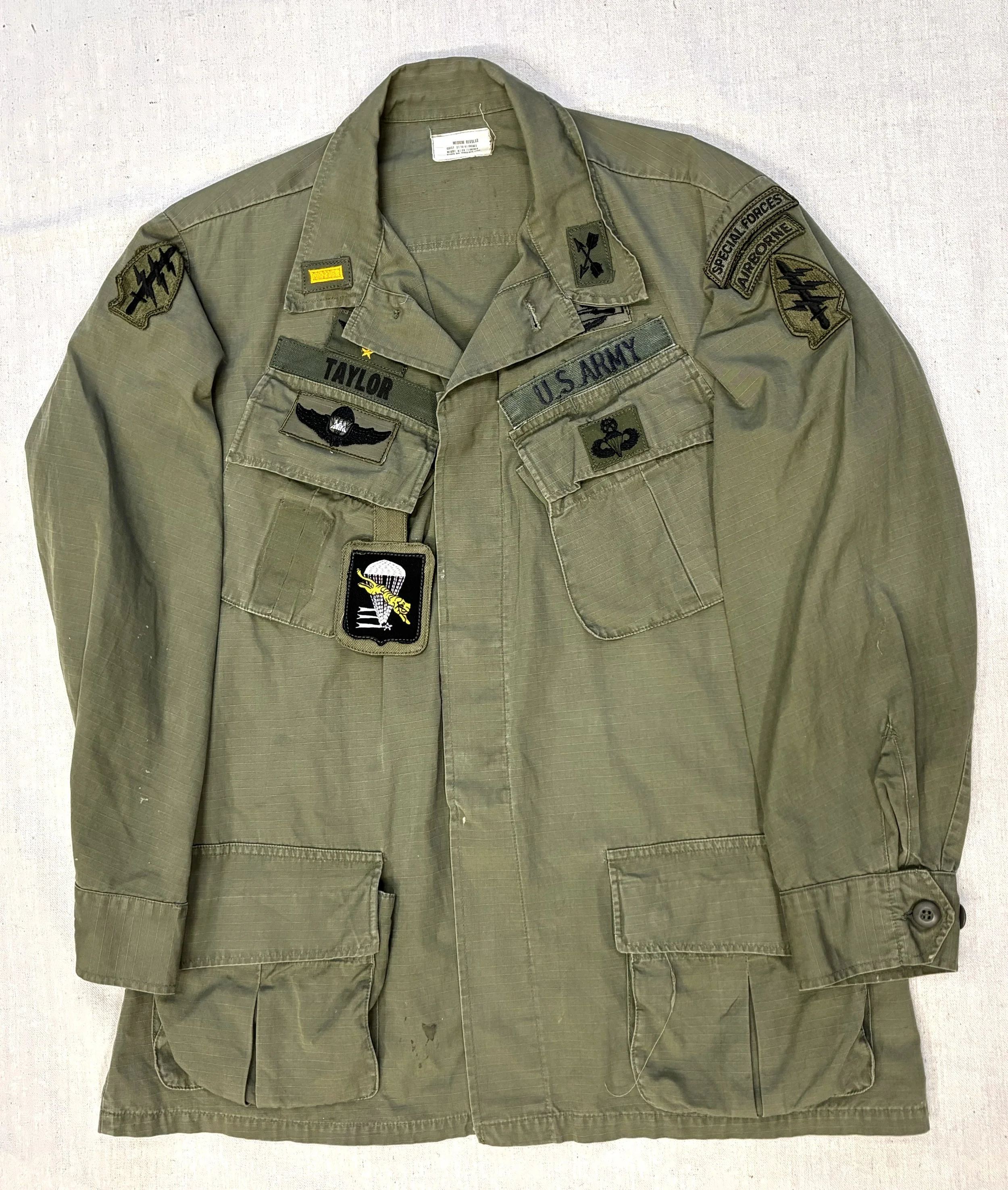
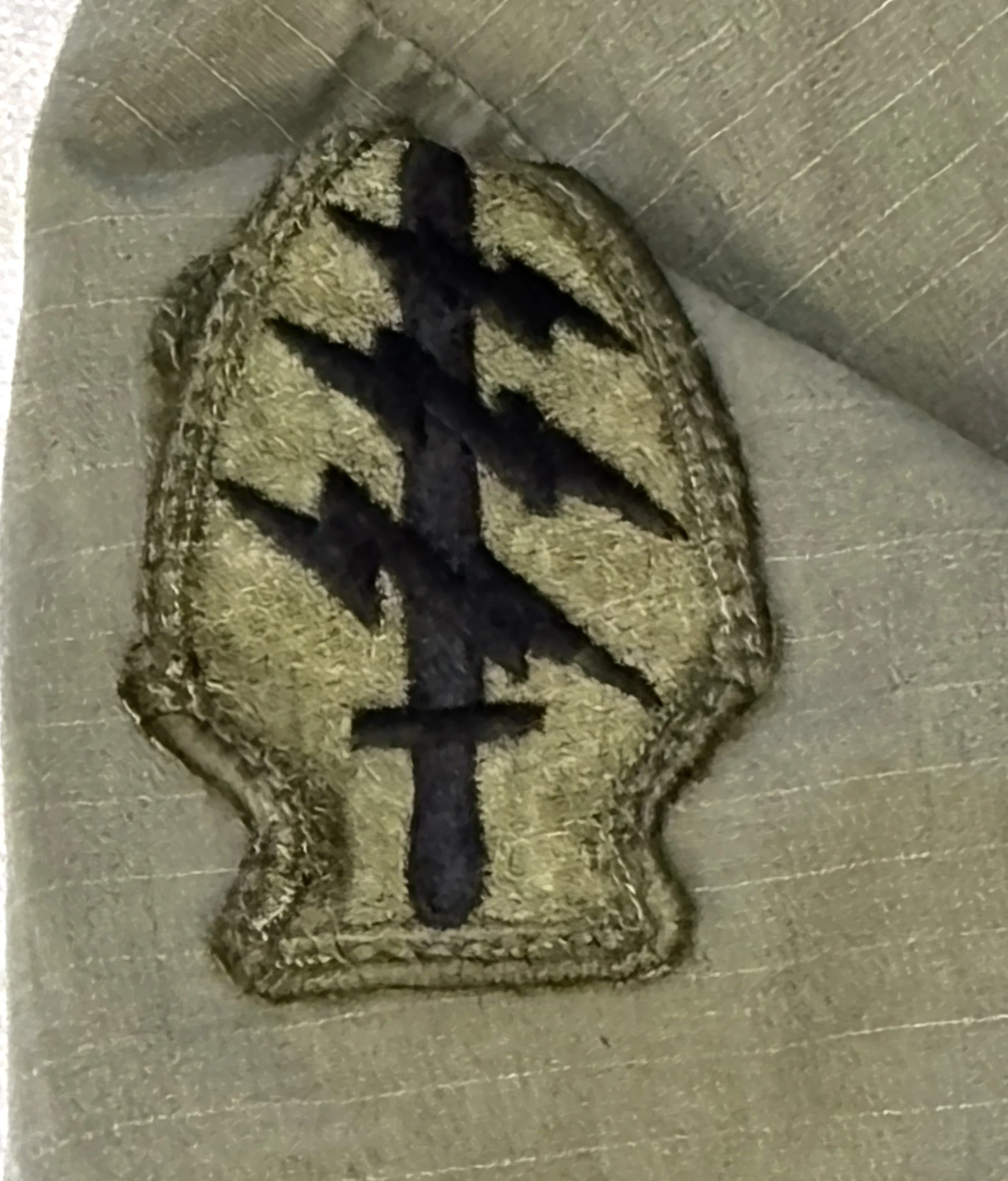
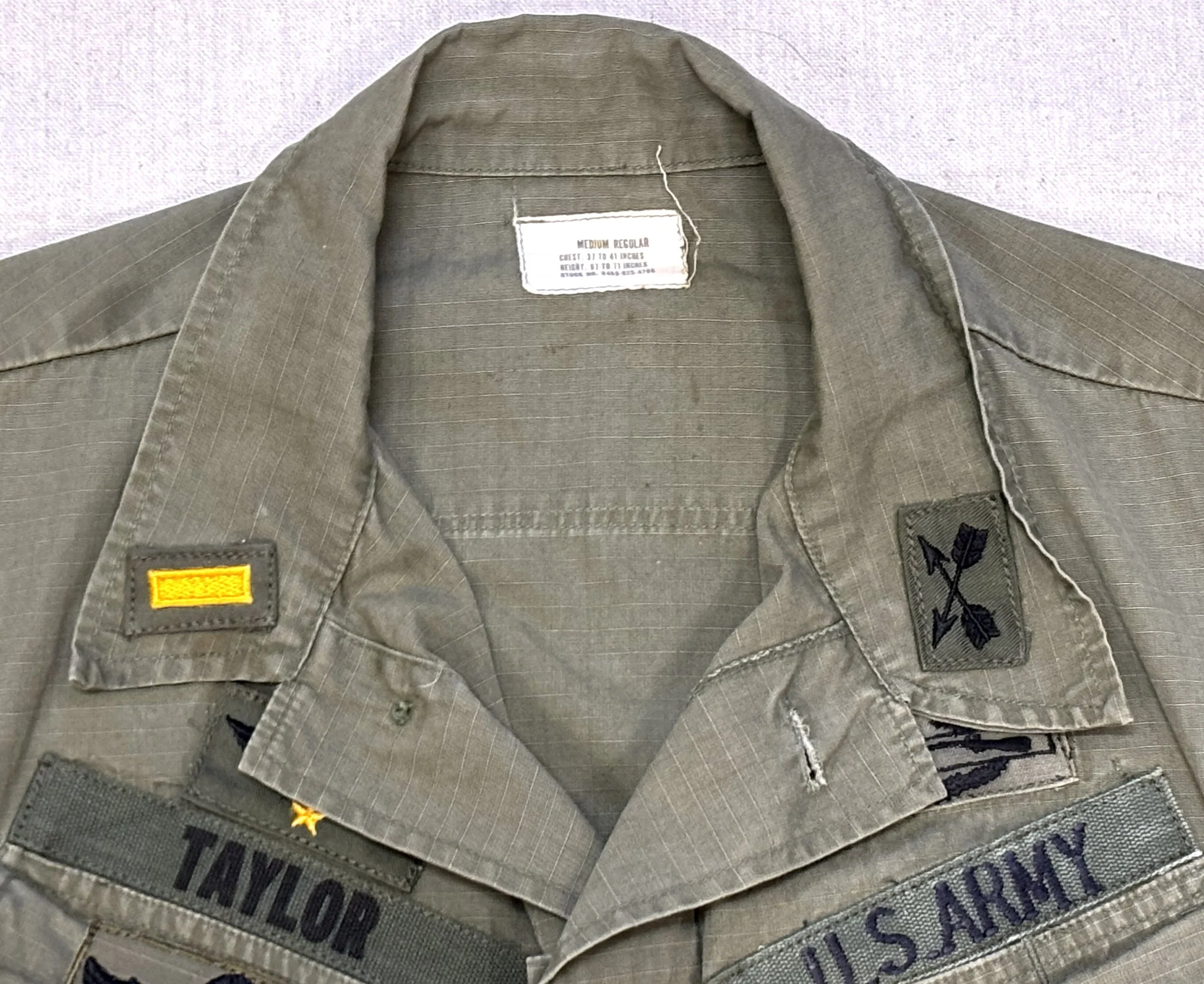
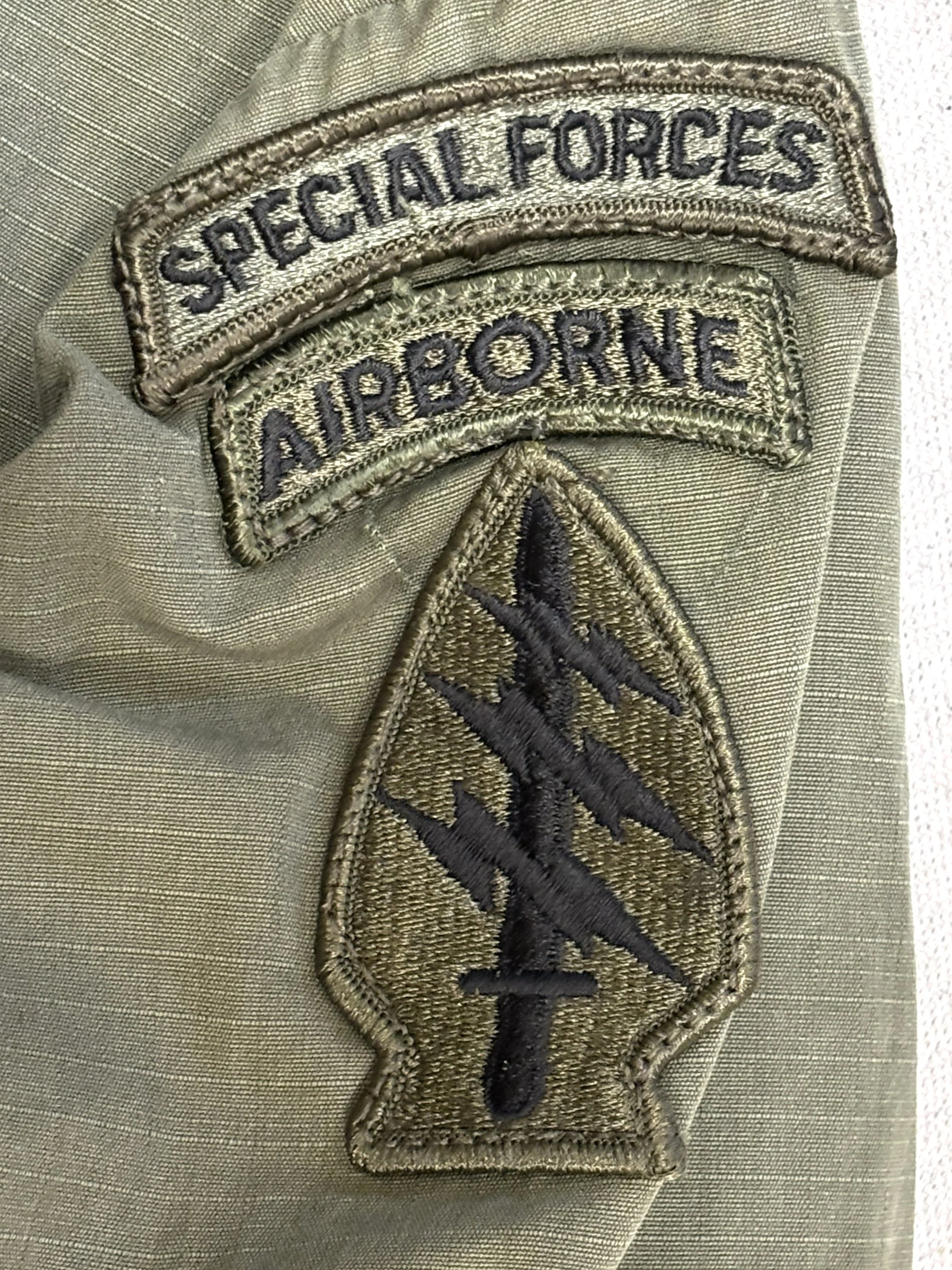
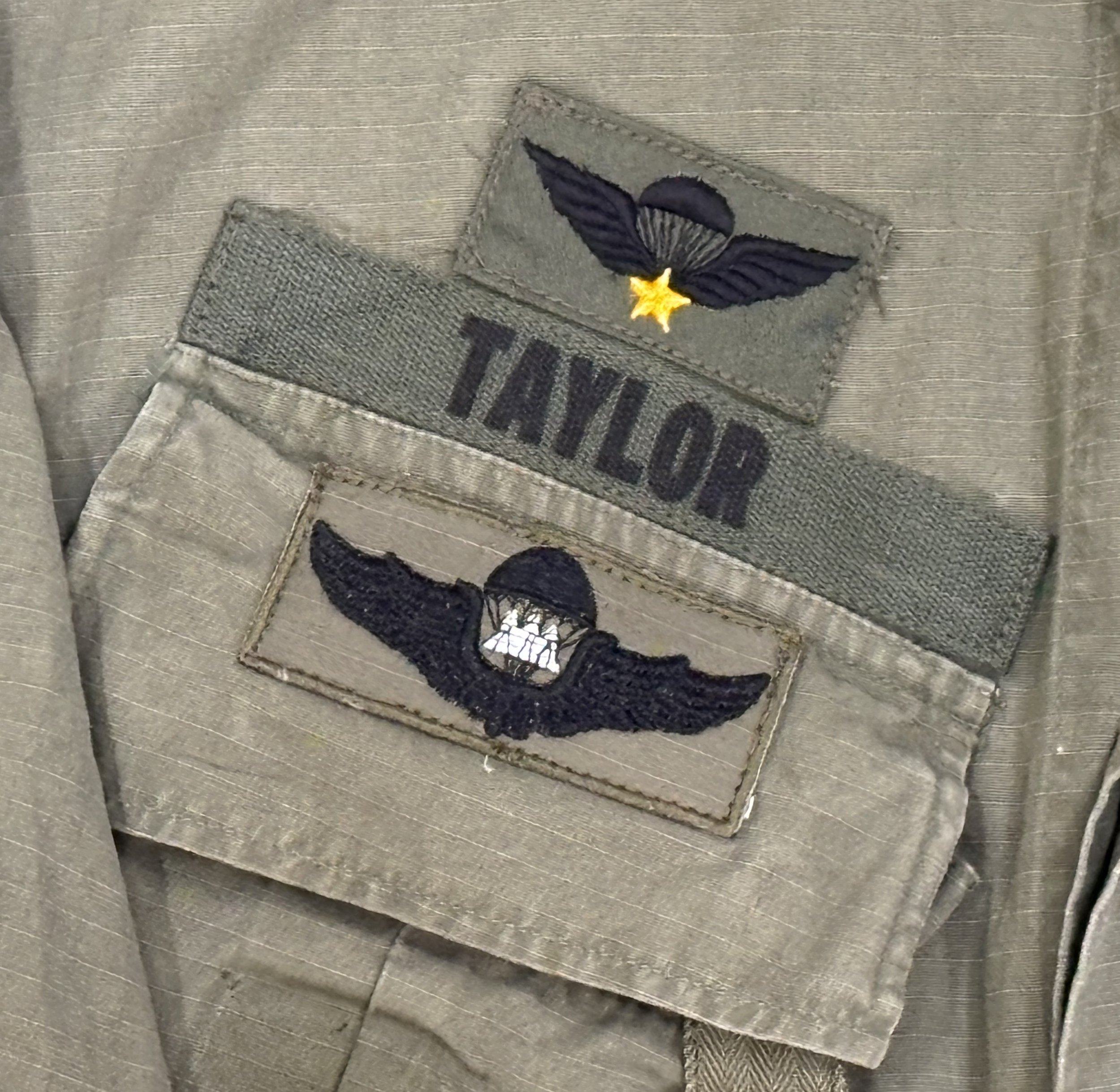
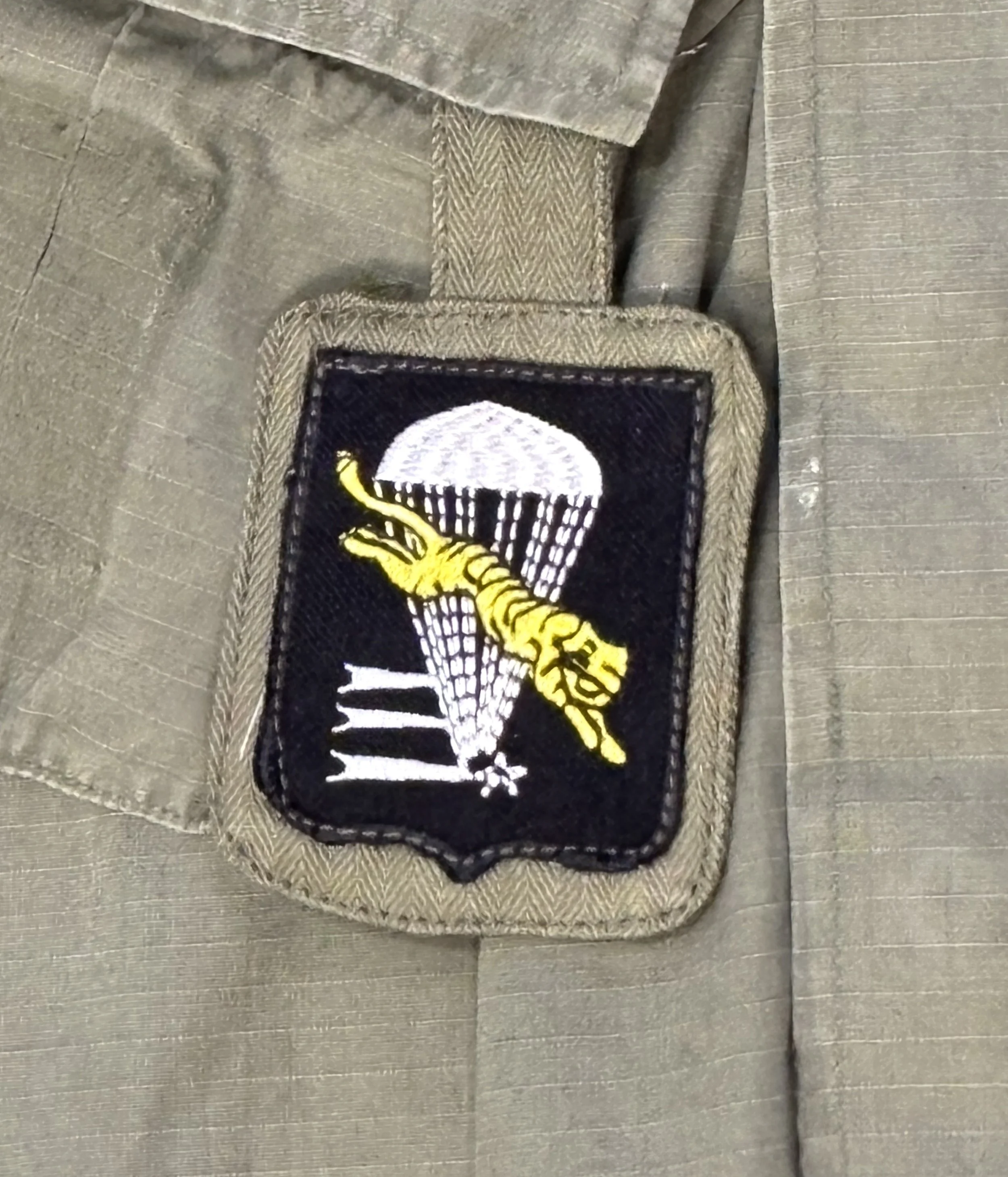
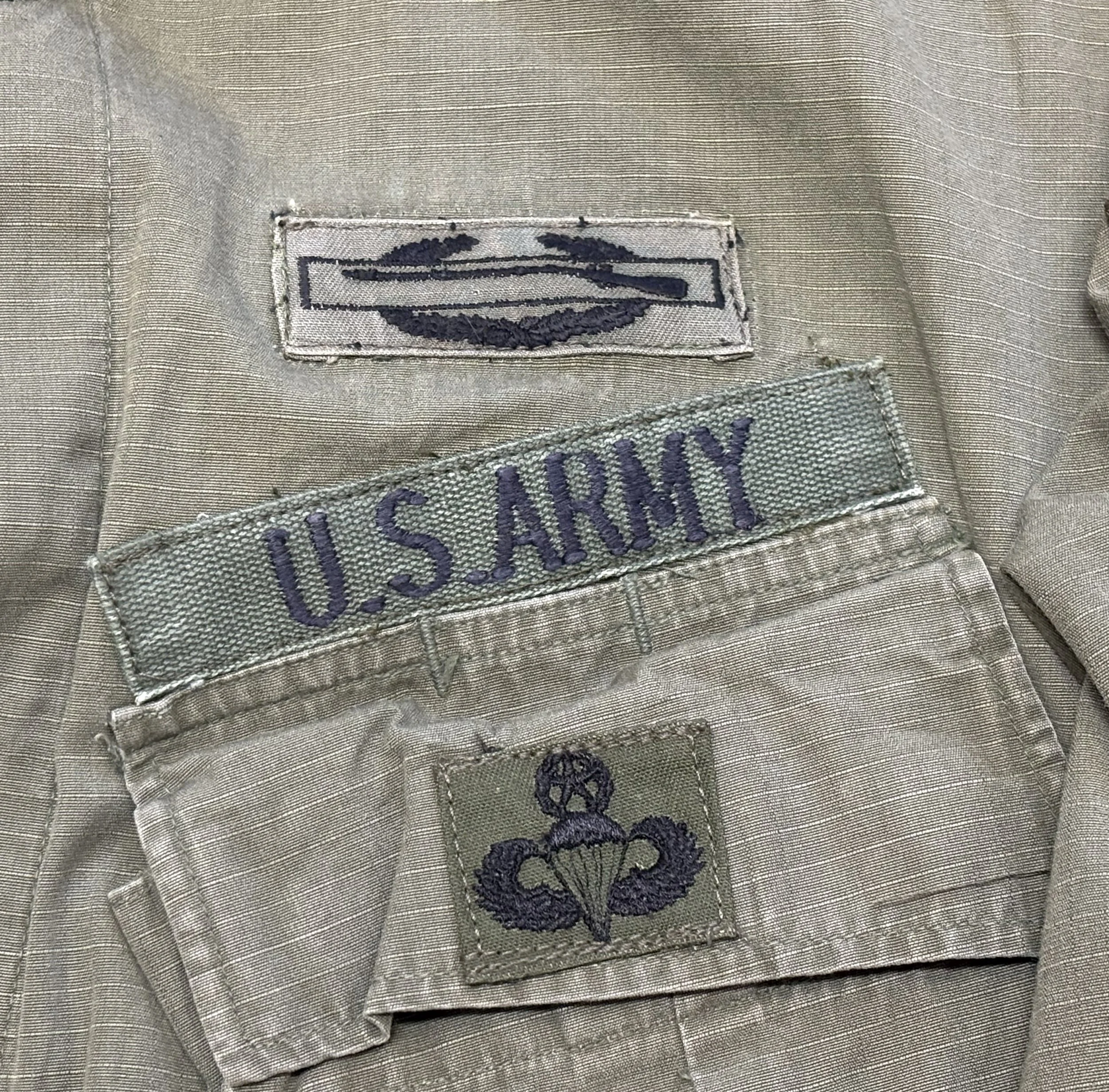
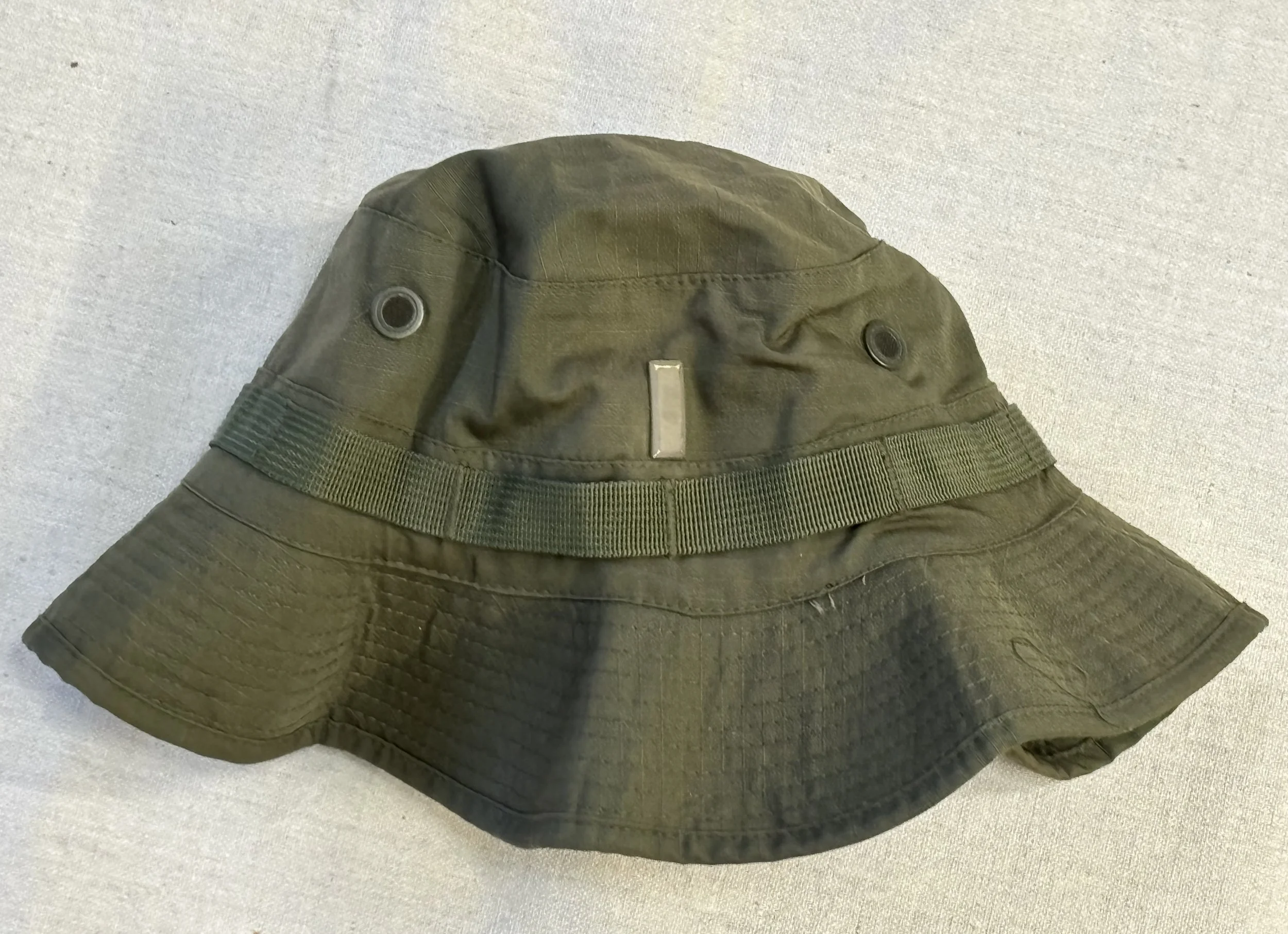
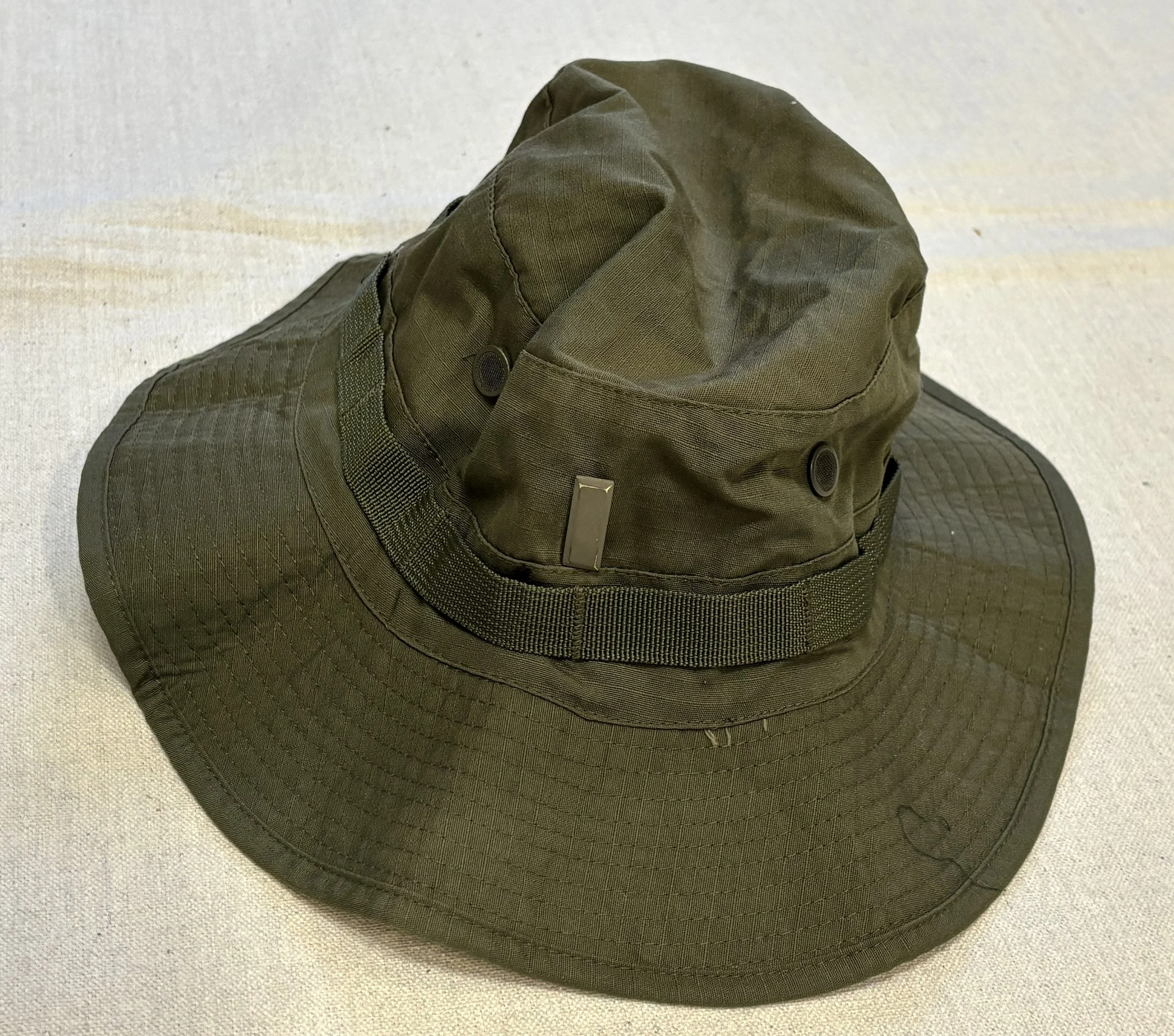
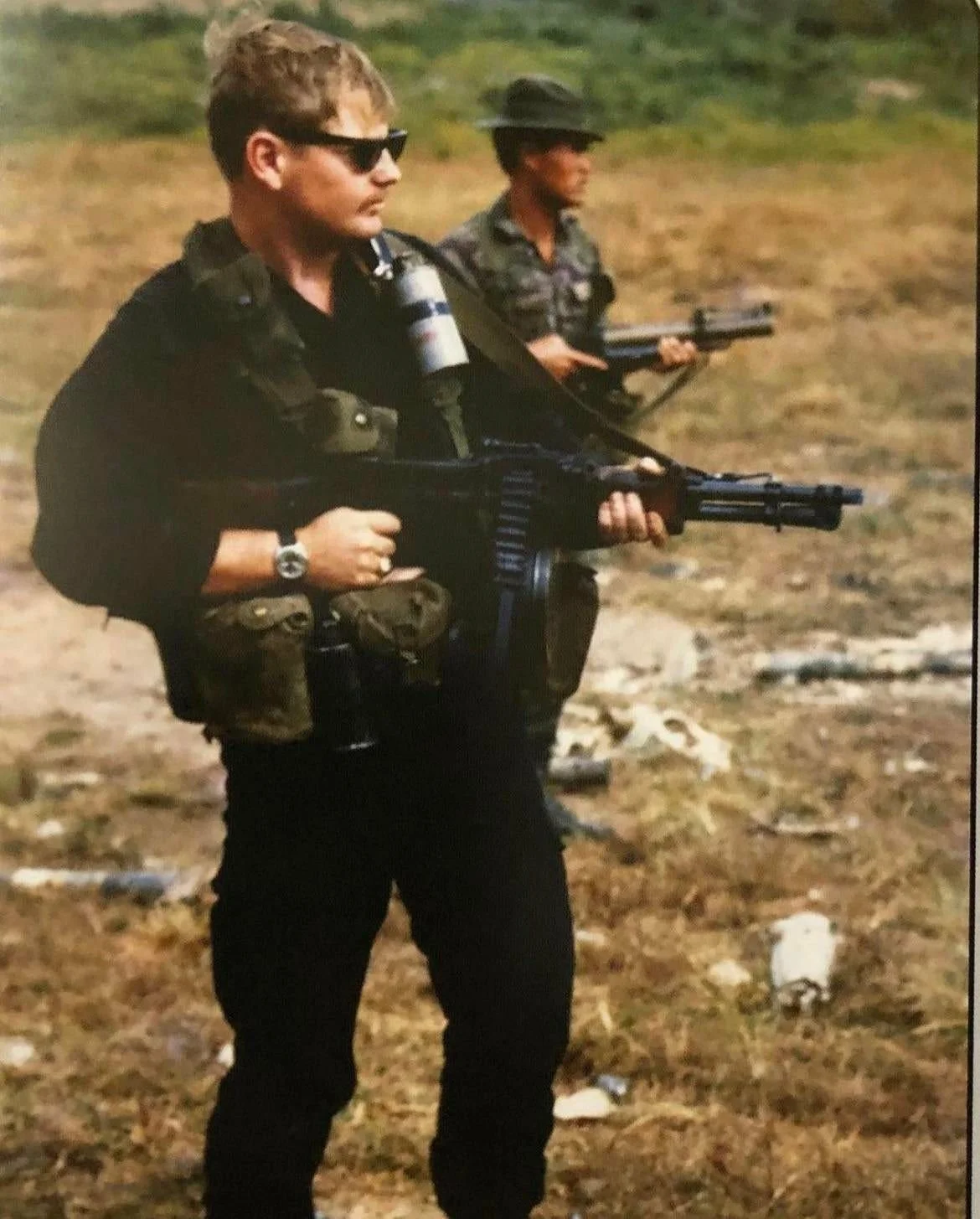
“New” Second Lieutenant, 5 Special Forces, operating with RVN SF:
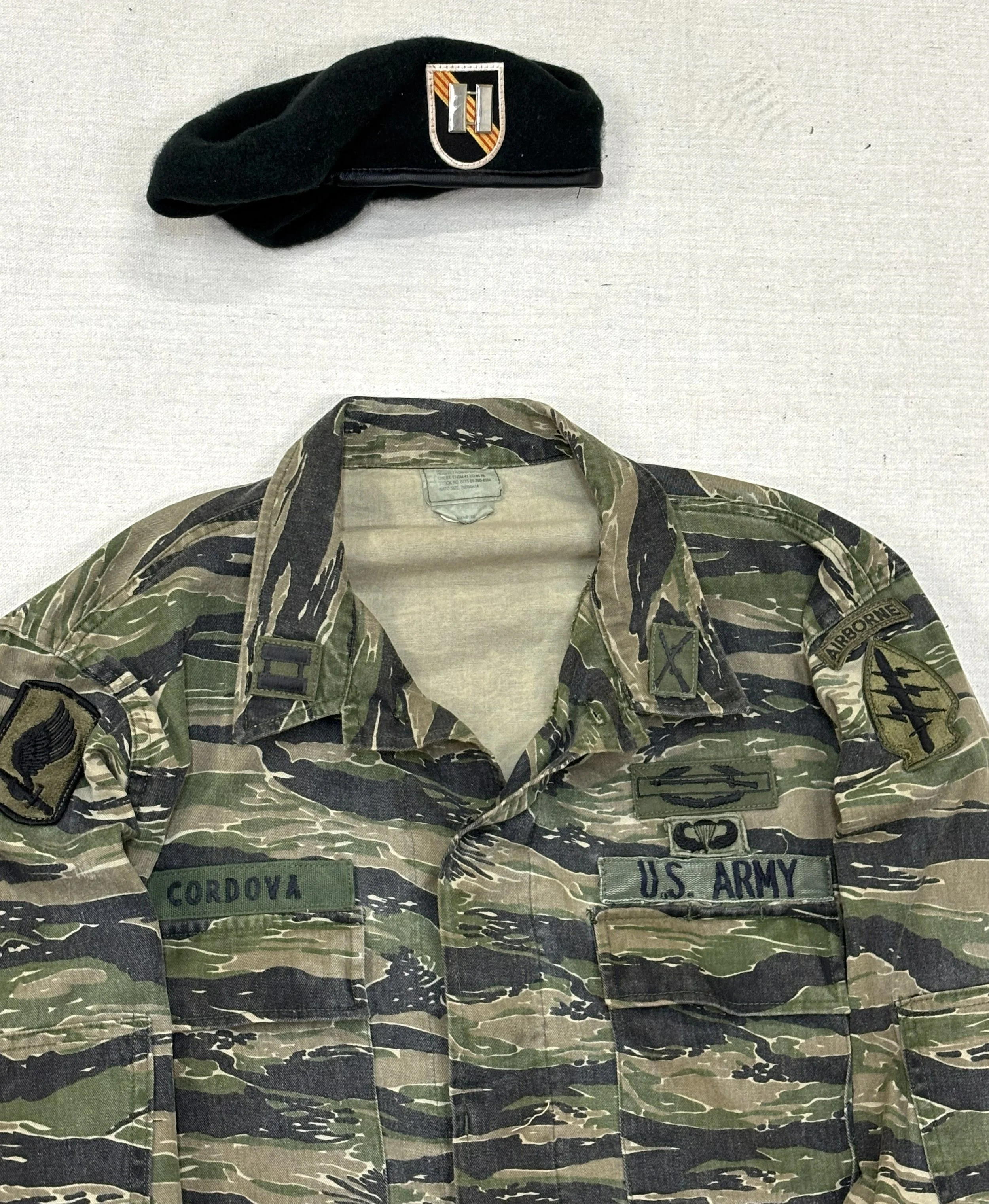
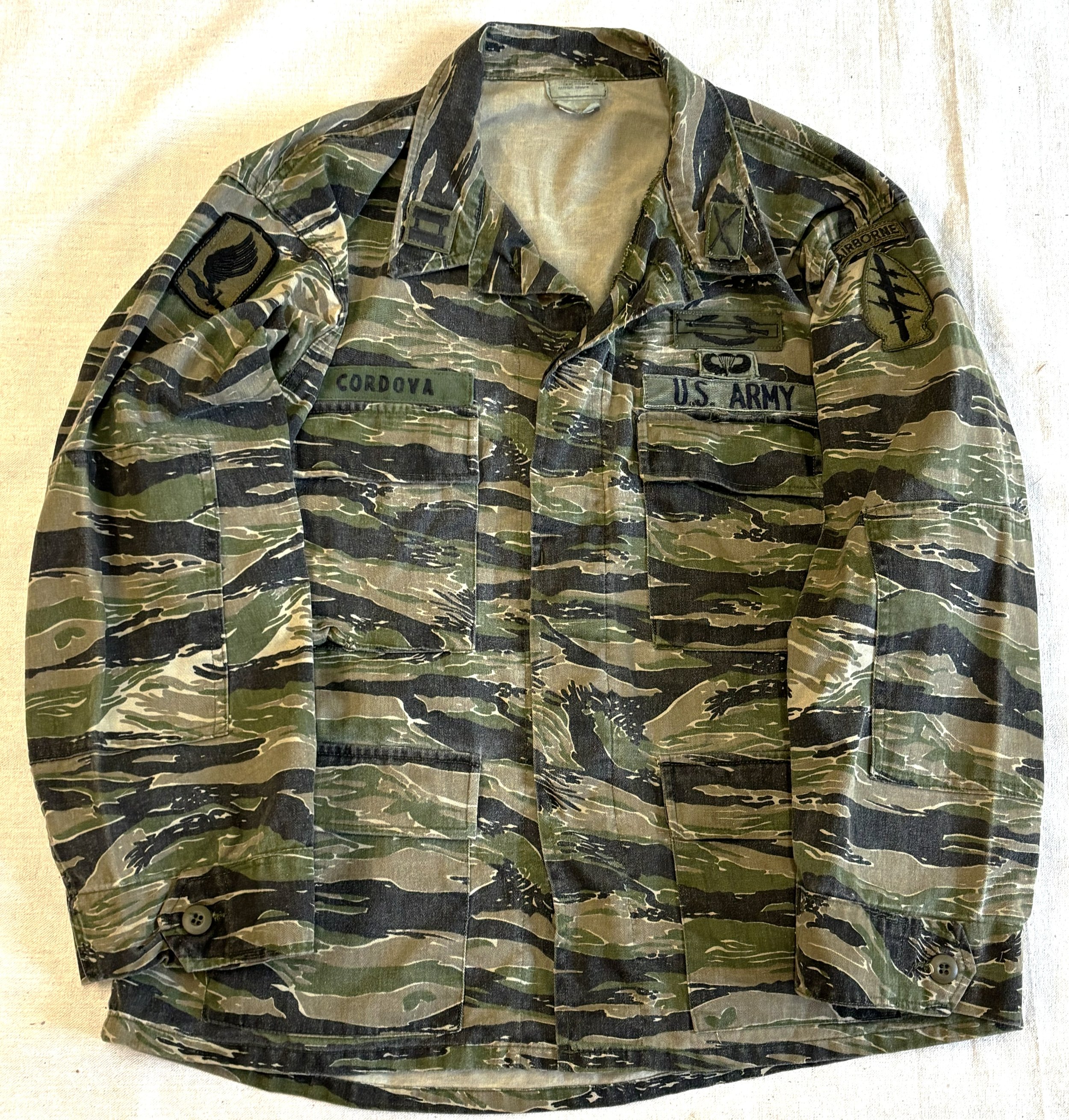
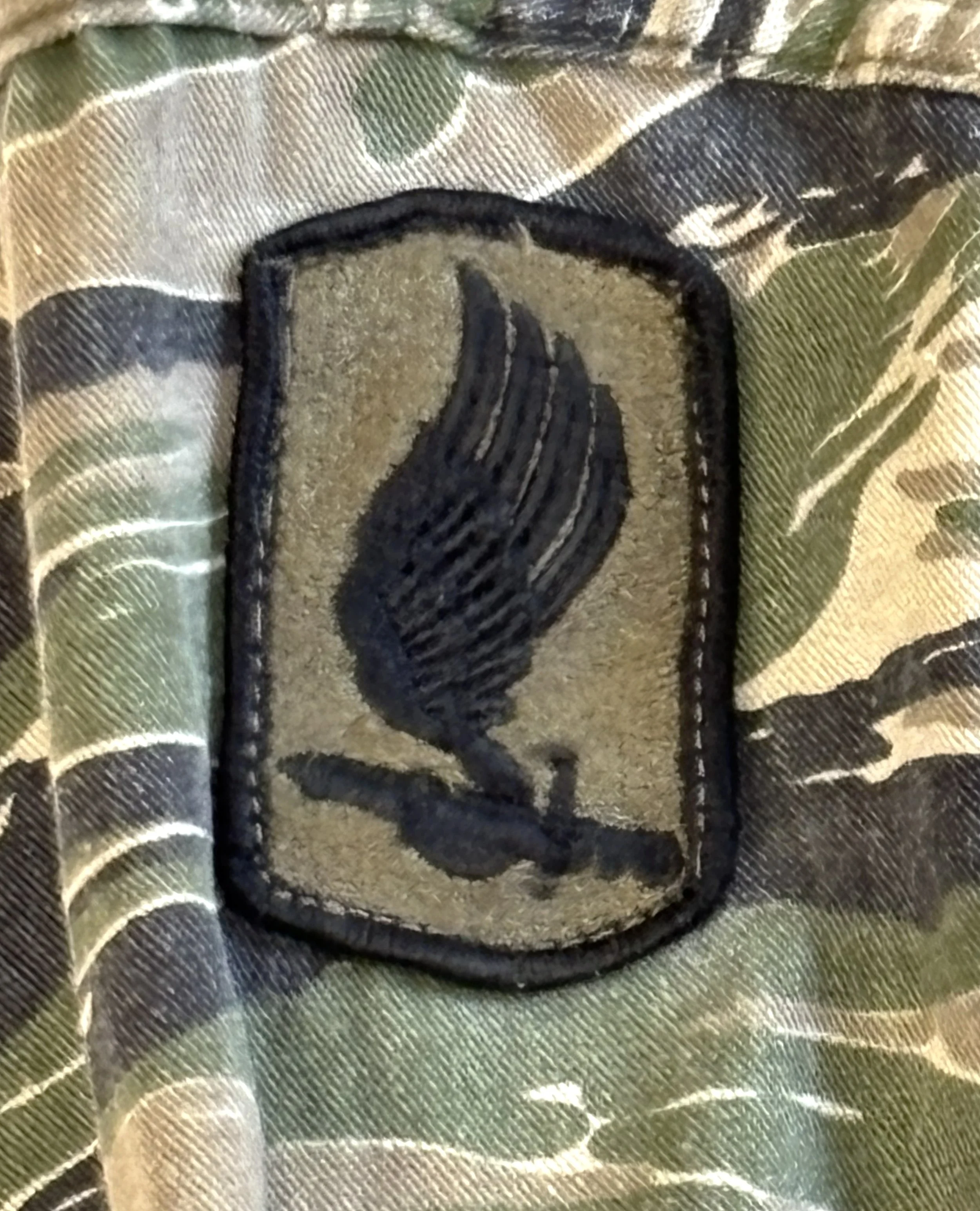
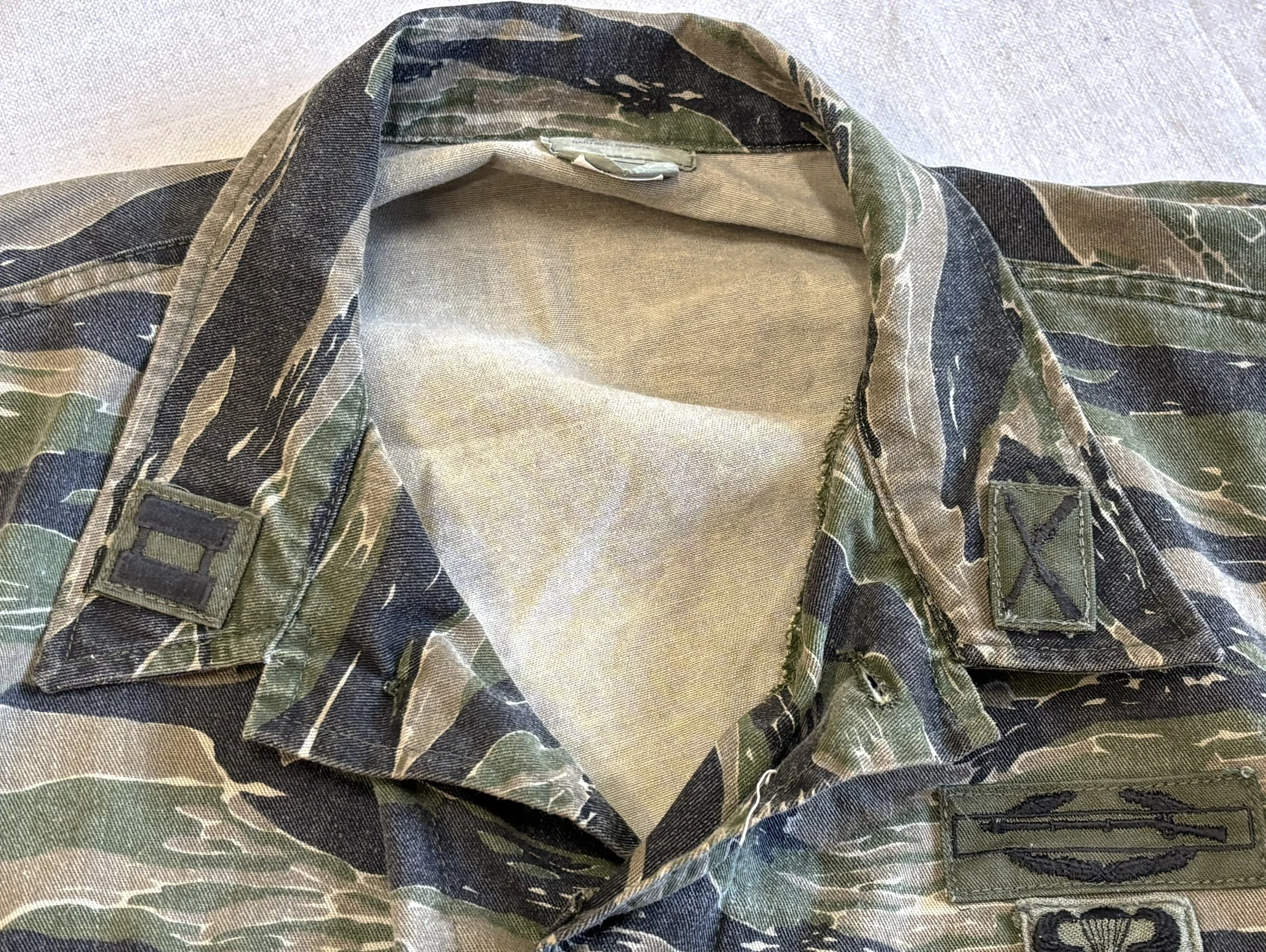
He has been commissioned as an Officer in the Special Forces, as opposed to the common “Infantry Officer” crossed rifles, and then became a Special Forces officer, so he’s been Special Forces for a while. No “Newbie” to jumping out of airplanes either; he has his “Master” version of the Army’s Jump Wings; he’s probably done many dozens of training jumps. He has trained for and asked for this mission and needs the challenge; he has been in long enough to know exactly what he is doing, the backing to be there, and the drive and hope of success. But it’s been said the SF enemy is its own command, and he’s about to be sent on an unending mission, therefore an unwinnable mission, by his own leaders.
Note that the pocket hanger patch has been called the early pattern patch, but I can’t confirm that. And why it would be needed when operating with his own force could be questionable, and again would imply the uniform being worn at least on the main Special Forces Base, or outpost, where other troops would be around. He carries the Royal Thai Armies Jump Wings as well, this would imply a previous tour with the 7th Special Forces there, and having the CIB, quite likely a prior tour with the Infantry, and humped around as a “Grunt” before he got the Special Forces” bug, Rangers was nowhere near as big and operation as it is of later, and had been restarted from the 75th Rangers, and these were the LRRP of Vietnam, however the school has always been a stepping sone, and later a requirement to becoming an Officer, So Speial Forces was on a platou of its own, and really smaller size itself, but the mysteries of the operation have always be way over propotianate to the actual duty, special and important none the less.
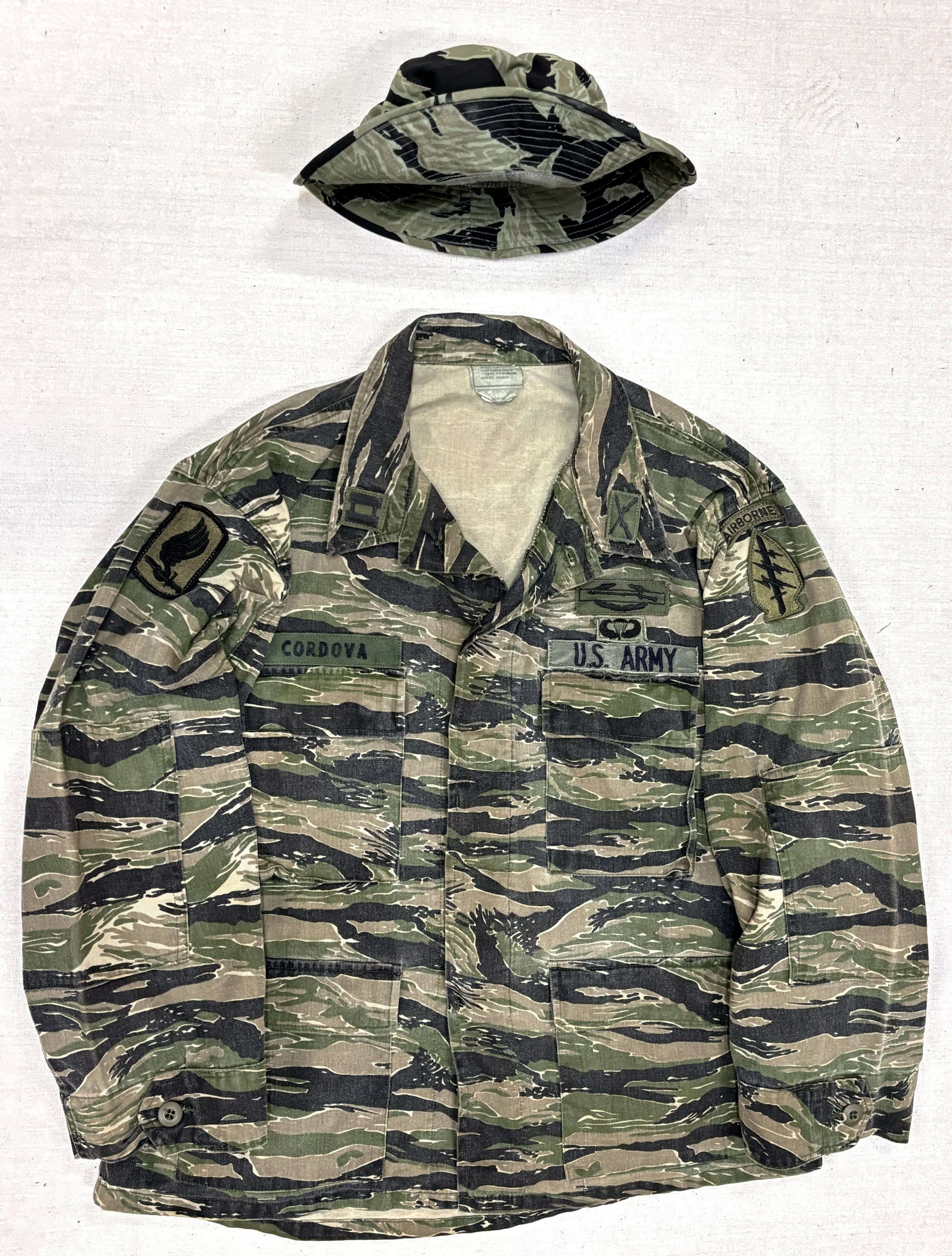
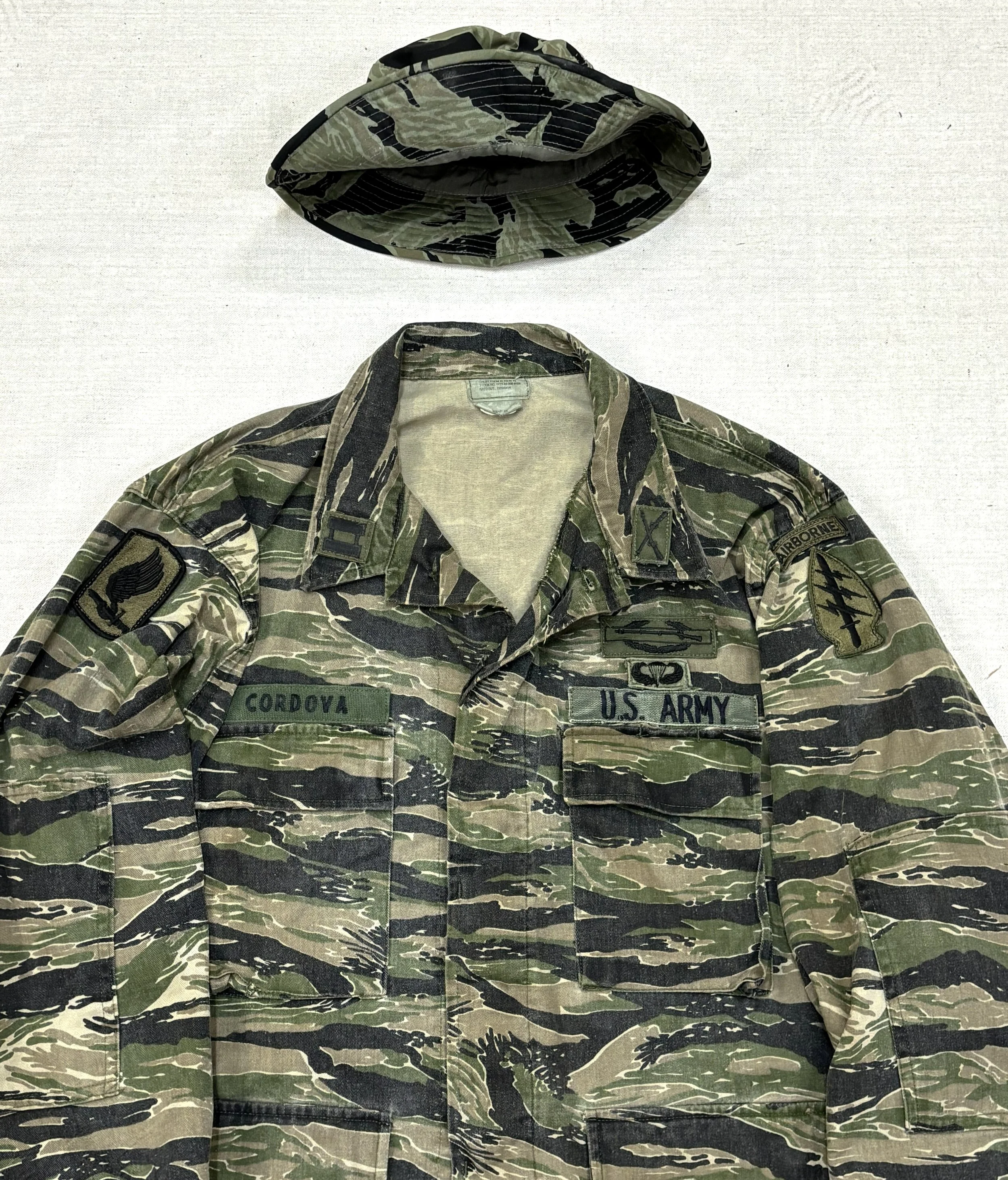
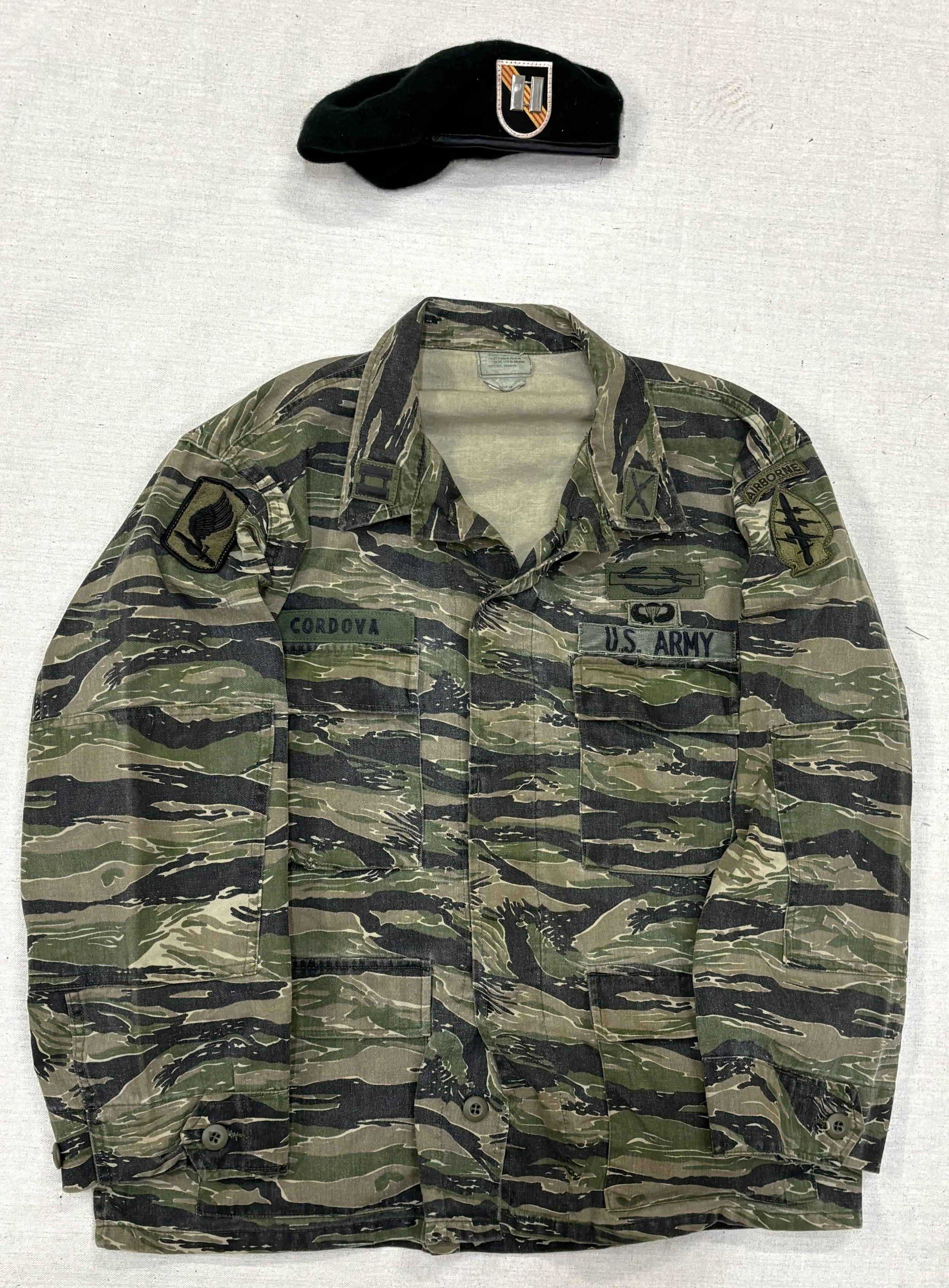
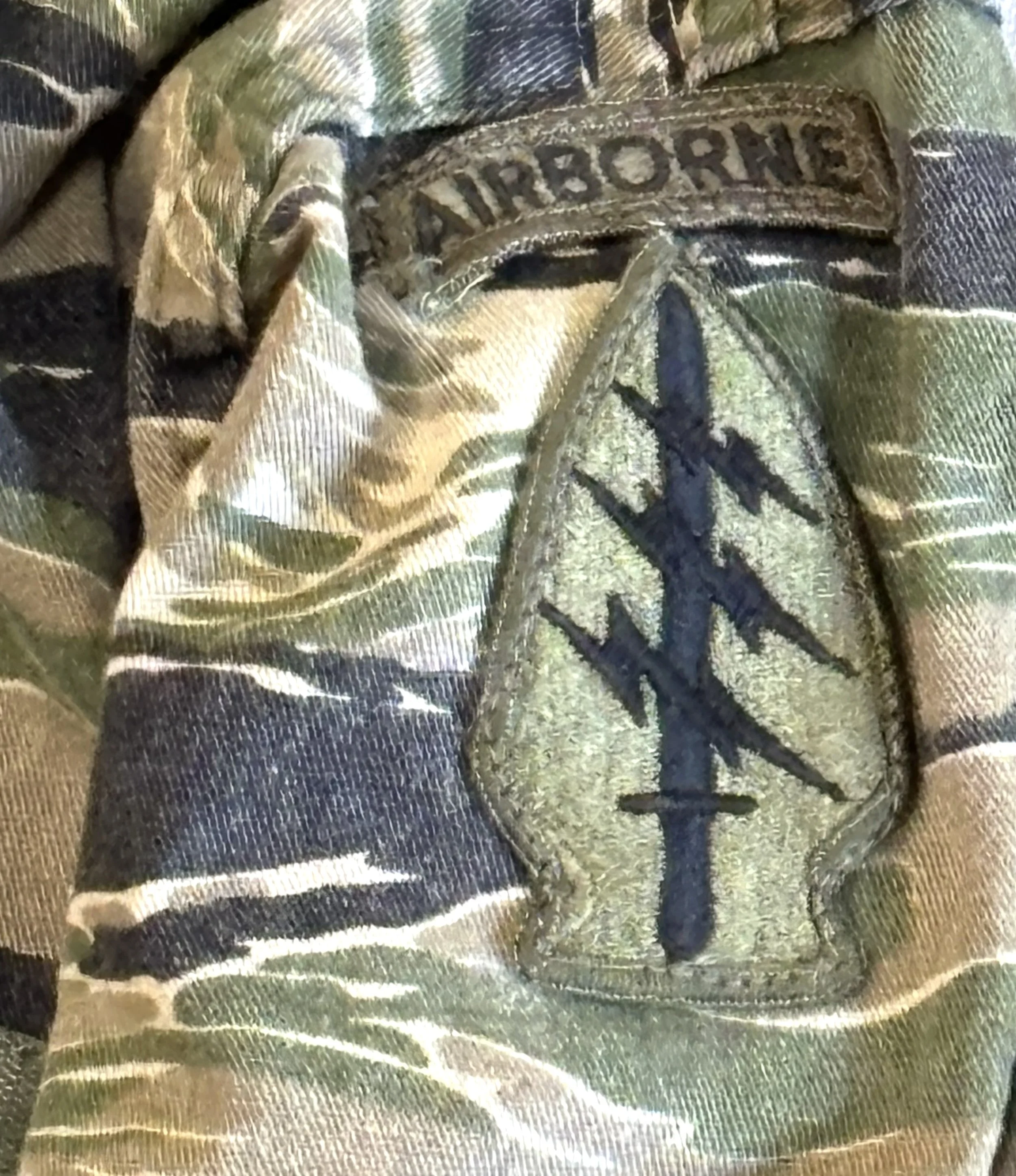
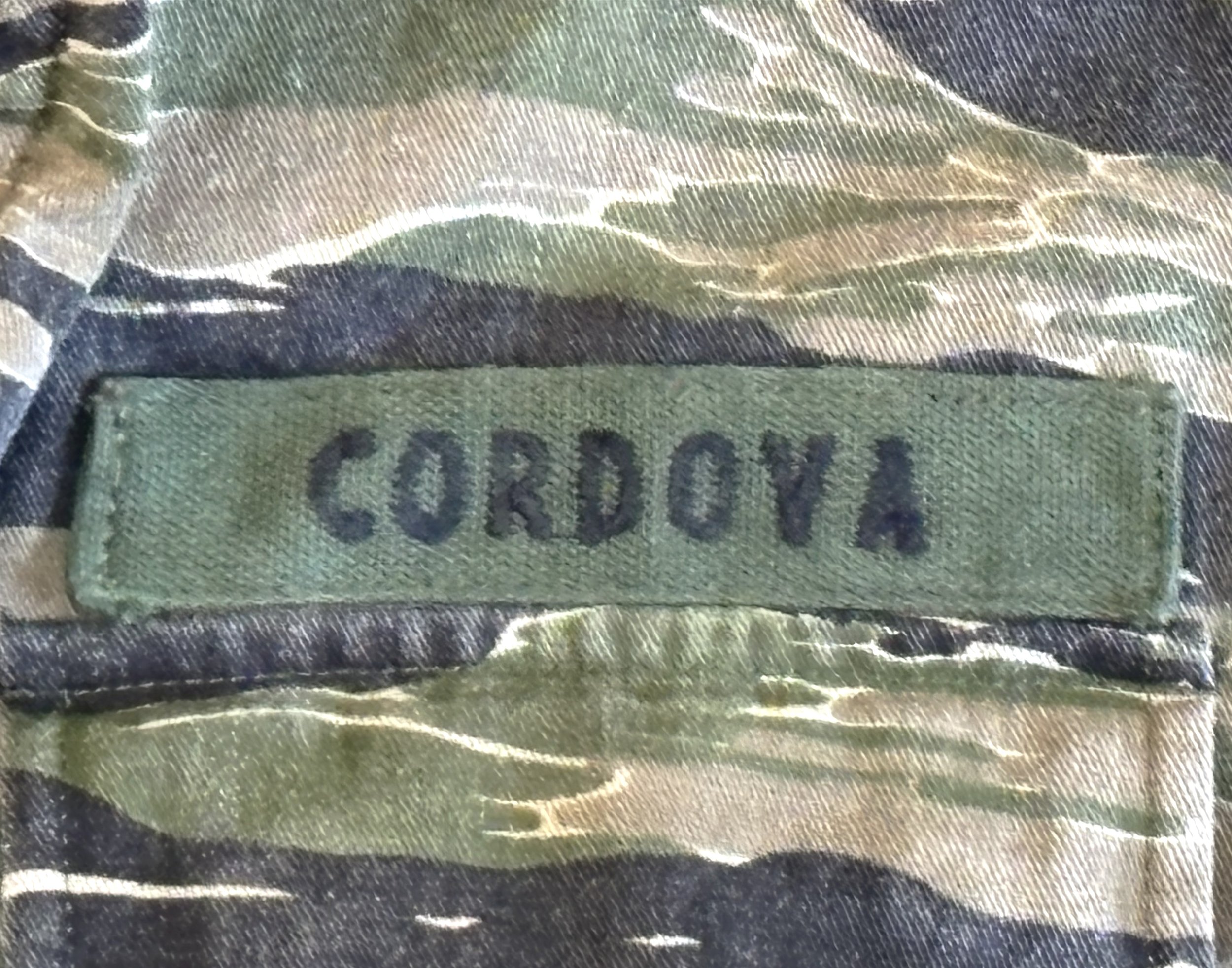
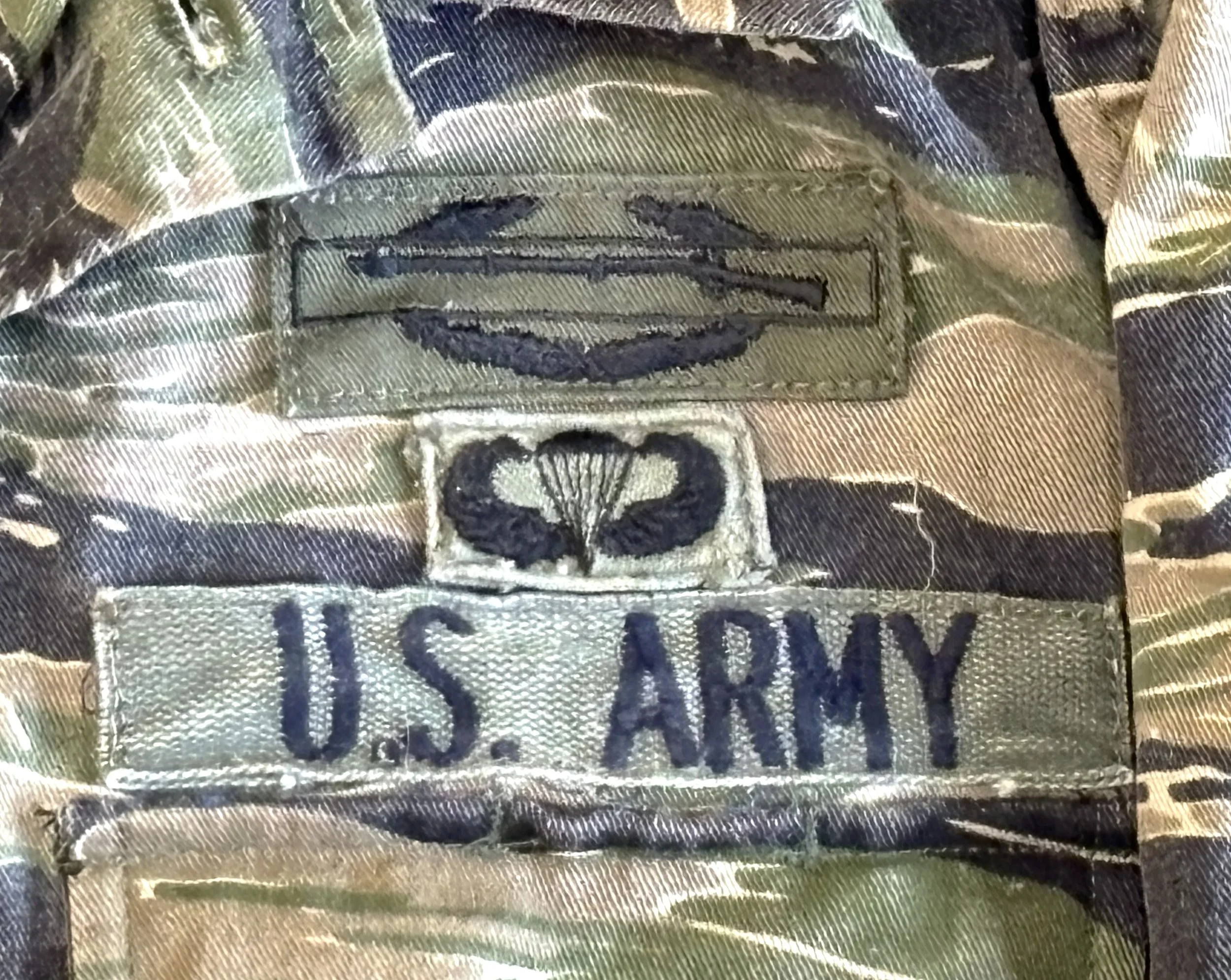
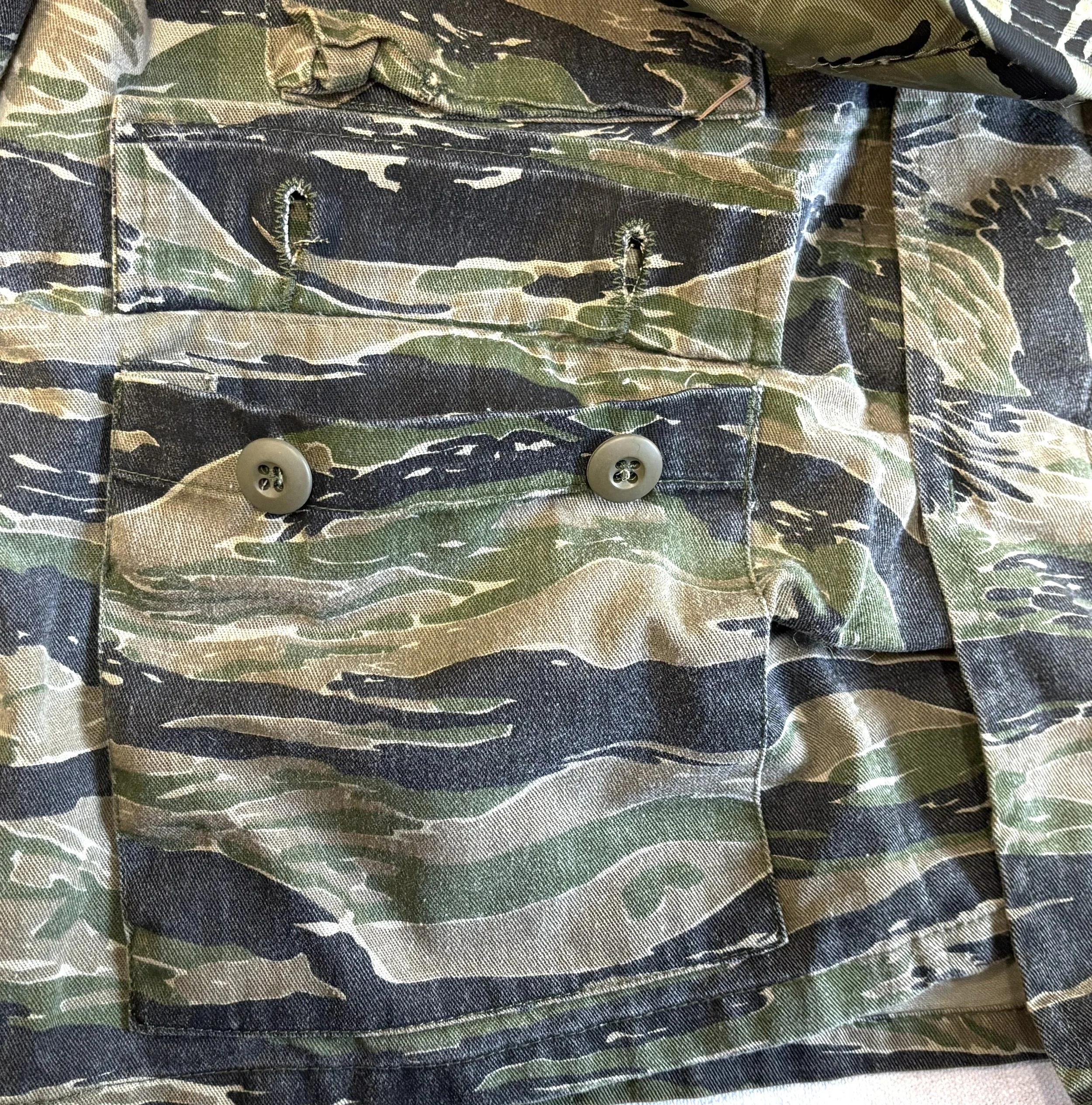
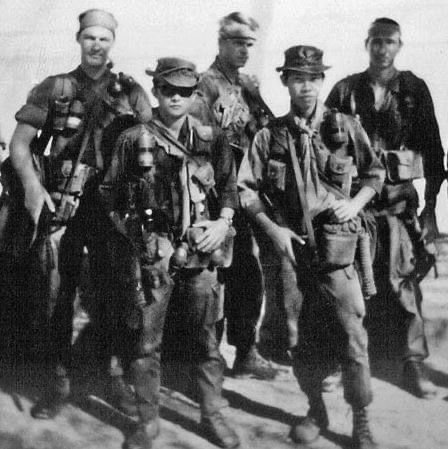
“NEW” Captain, Special Forces:
Special Forces’ main mission in Vietnam was creating and maintaining CIDG groups to operate as reconnaissance and blocking forces, and to be a reaction force that could help multiply forces in certain areas. They were to conduct counter-guerrilla missions to attack small groups of the enemy in the area, ambushes and the like, and prisoner snatches. But perhaps less documented was the unconventional warfare order, which leaves a lot to the imagination. There was, it is said, a lot of black operations that are still not known: assassinations of tax collectors, sniping of particular officers, going after businessmen, gun dealers, all kinds of grifters far in the north, threats made to political leaders, examples made, and psychological warfare, messages sent to the powers that be, mind games in the Vietnam War. Spy work, making drops, trading intelligence, buying them with money, or taking things to let them know someone was there. A lot of lessons were learned, too, and will only be known in special circles, with things compartmentalized; often, several teams could be on the same operation and not know it, gaining intel in different ways.
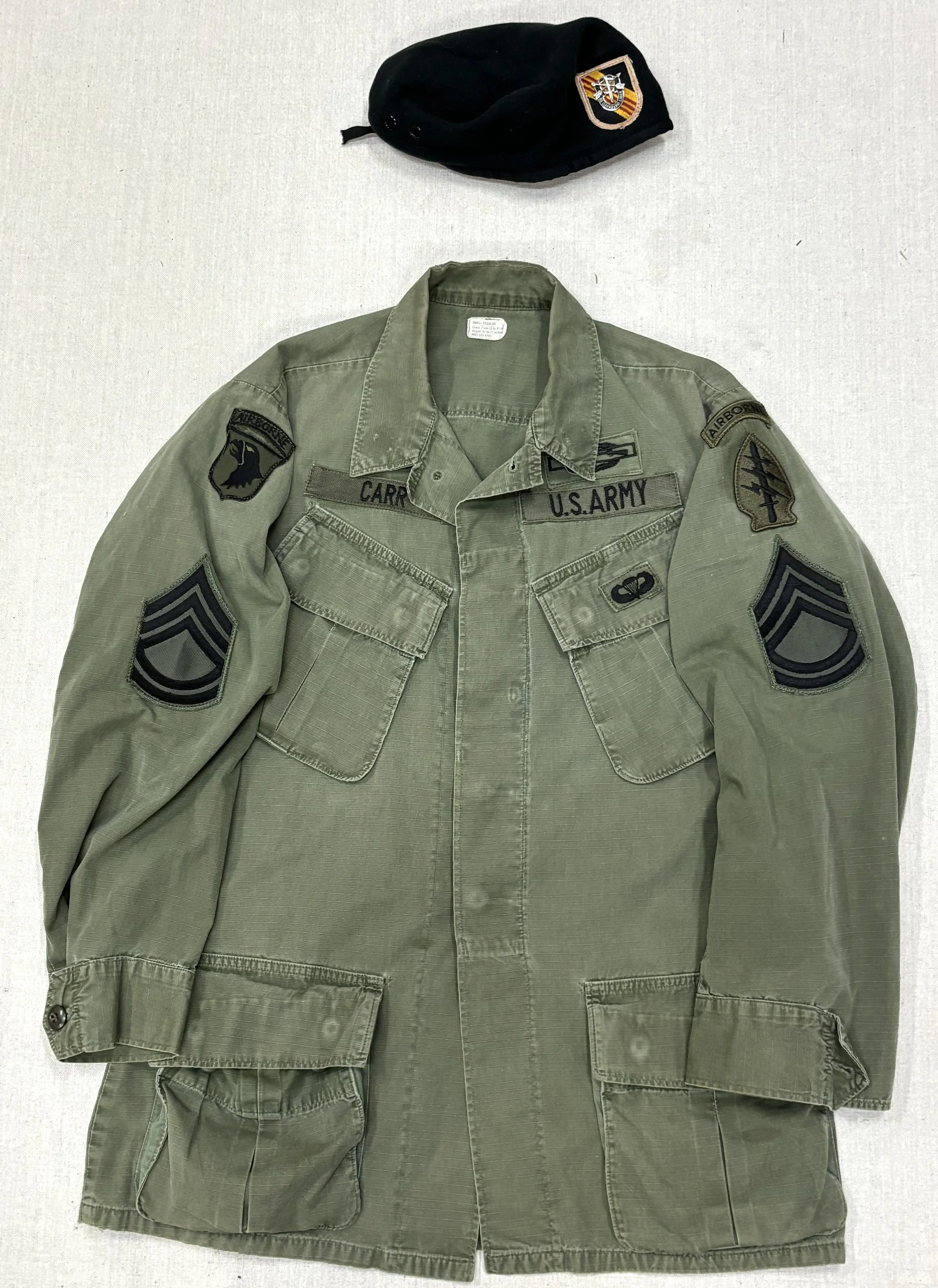
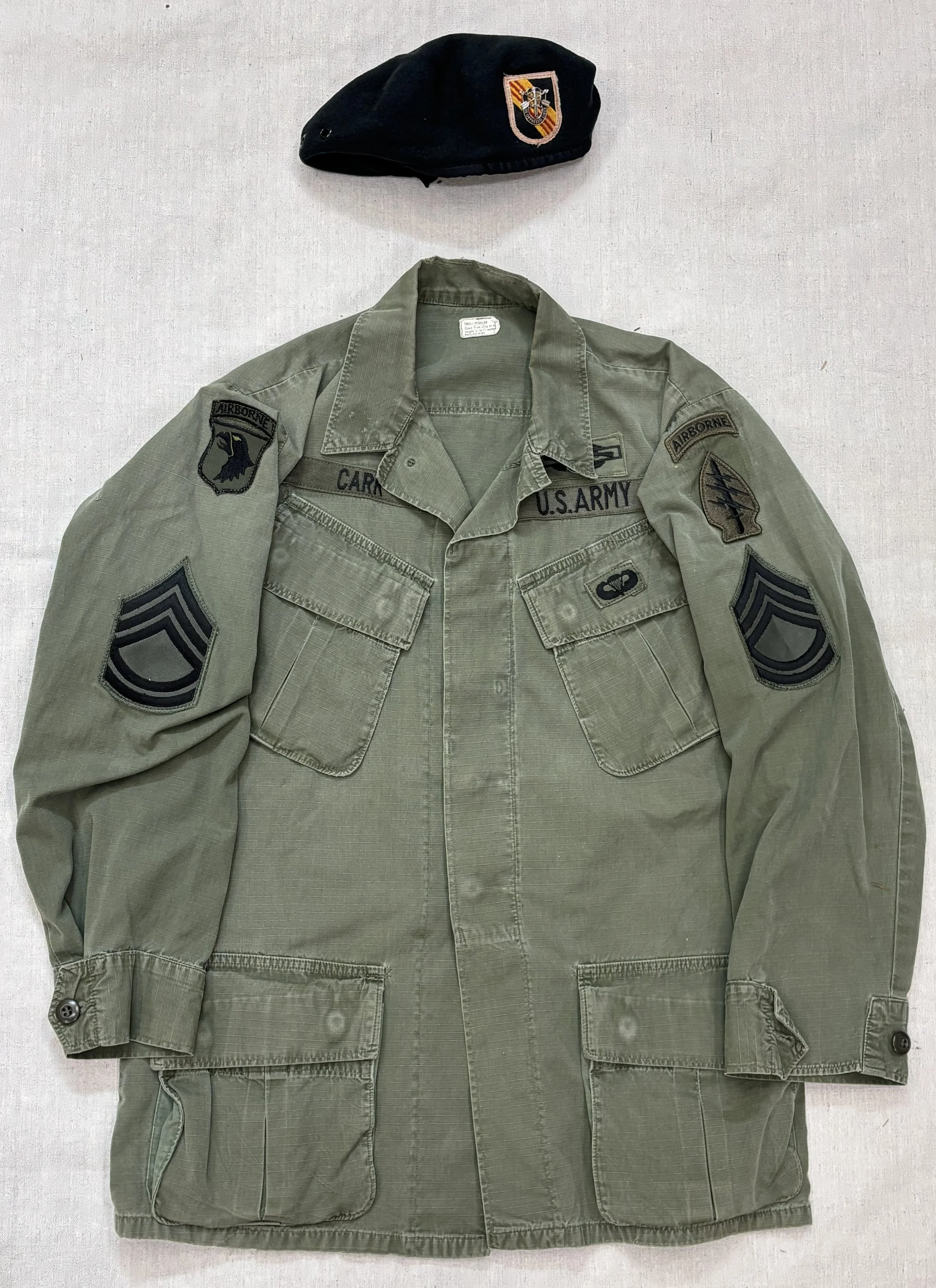
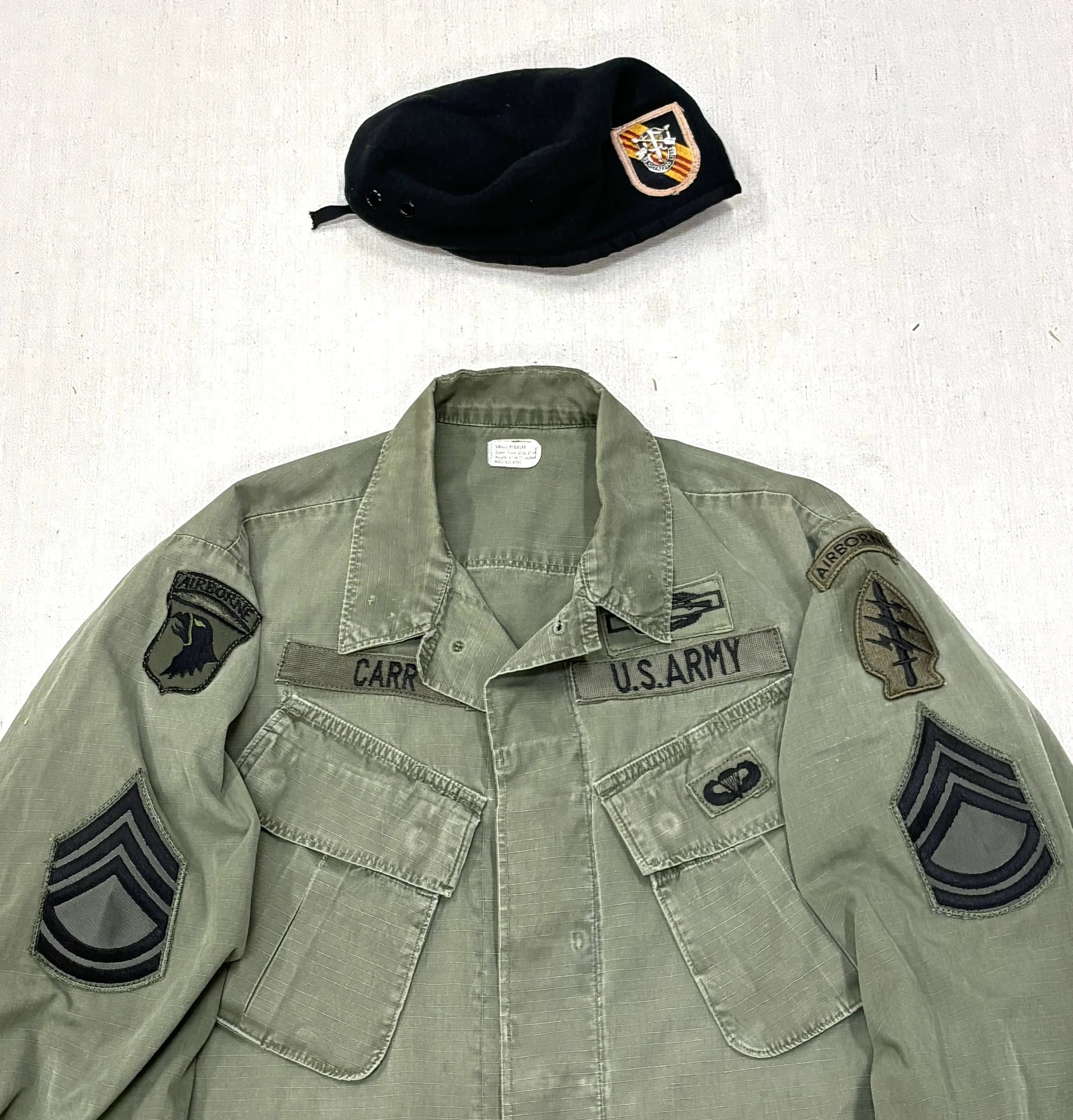
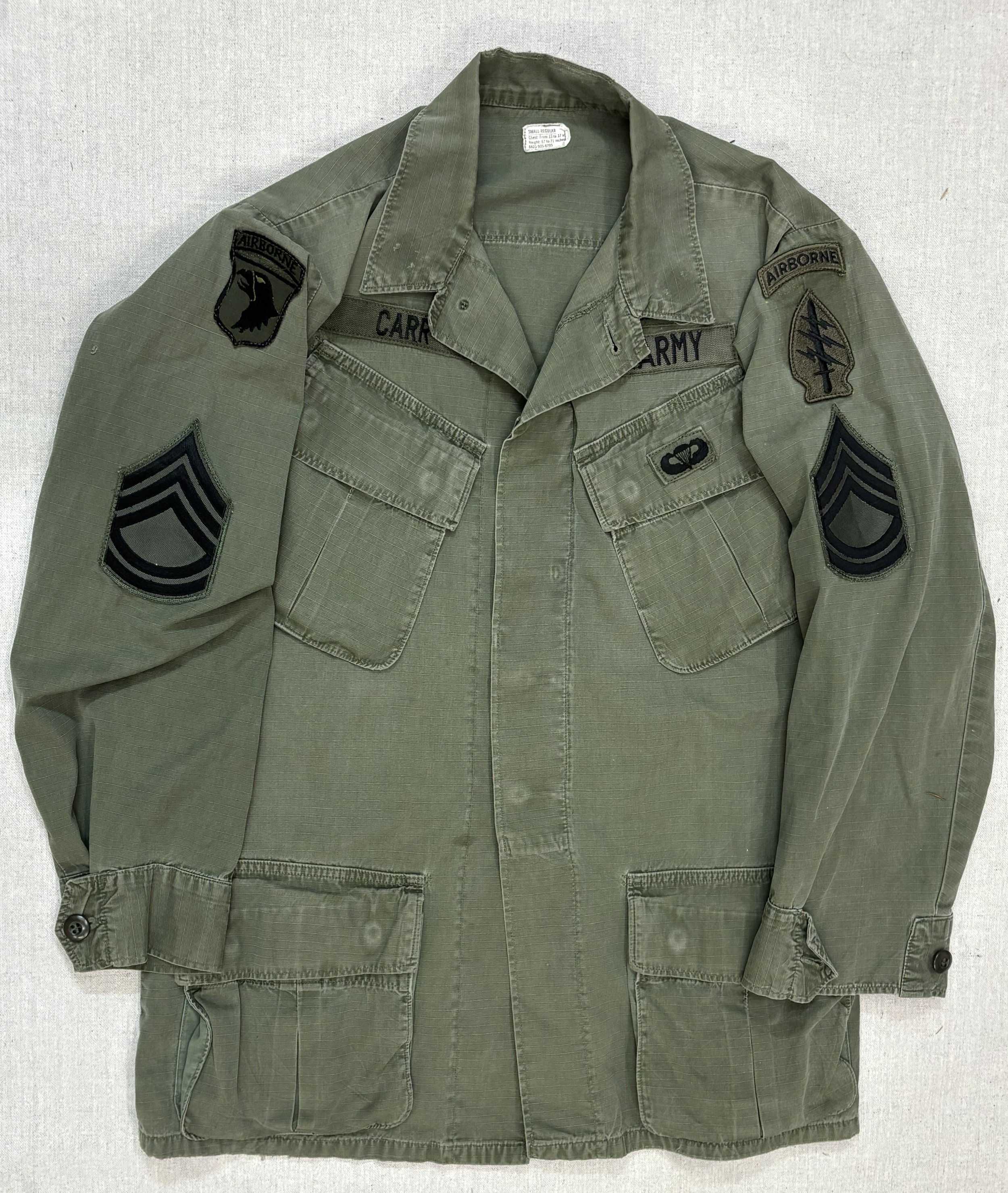
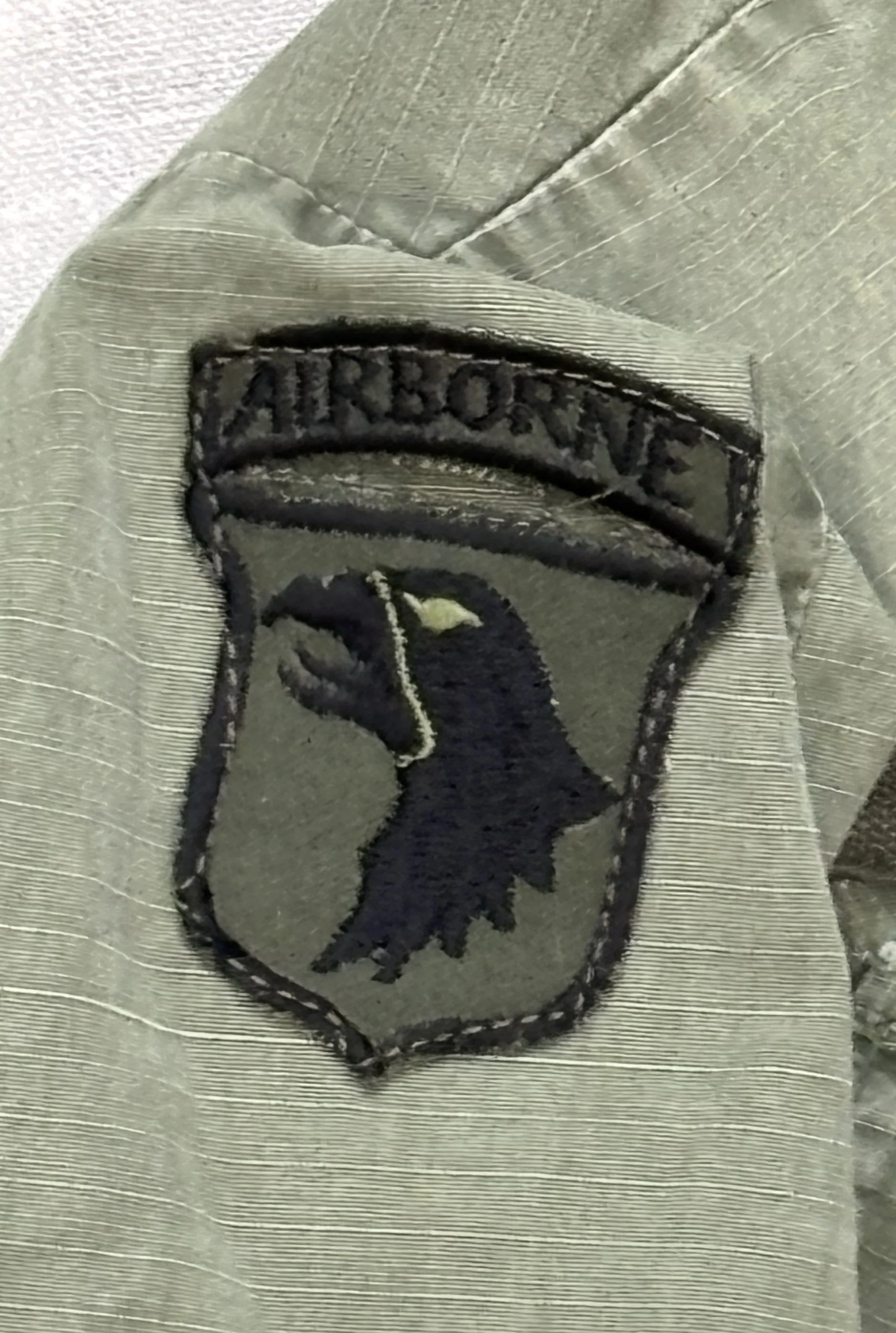
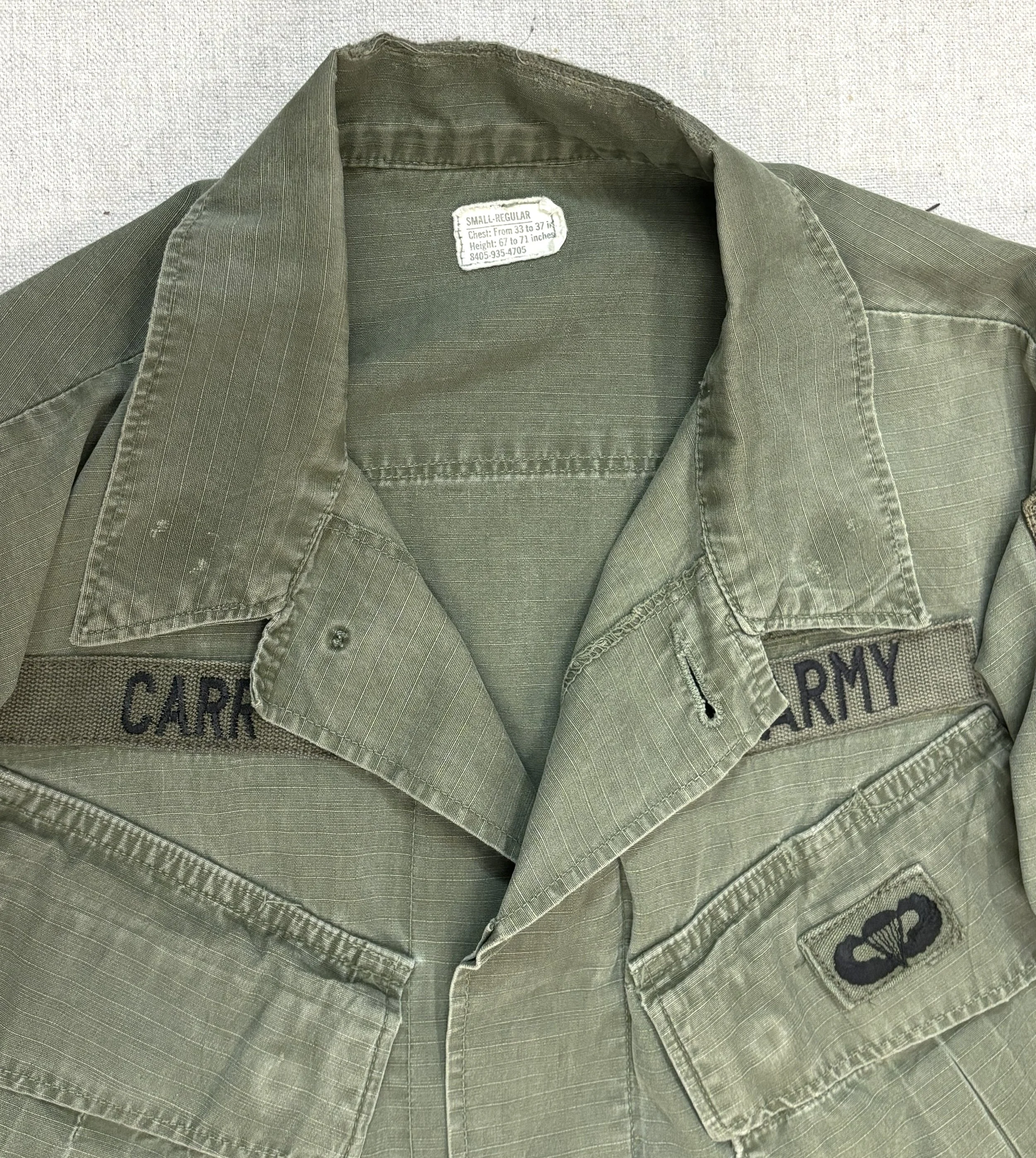
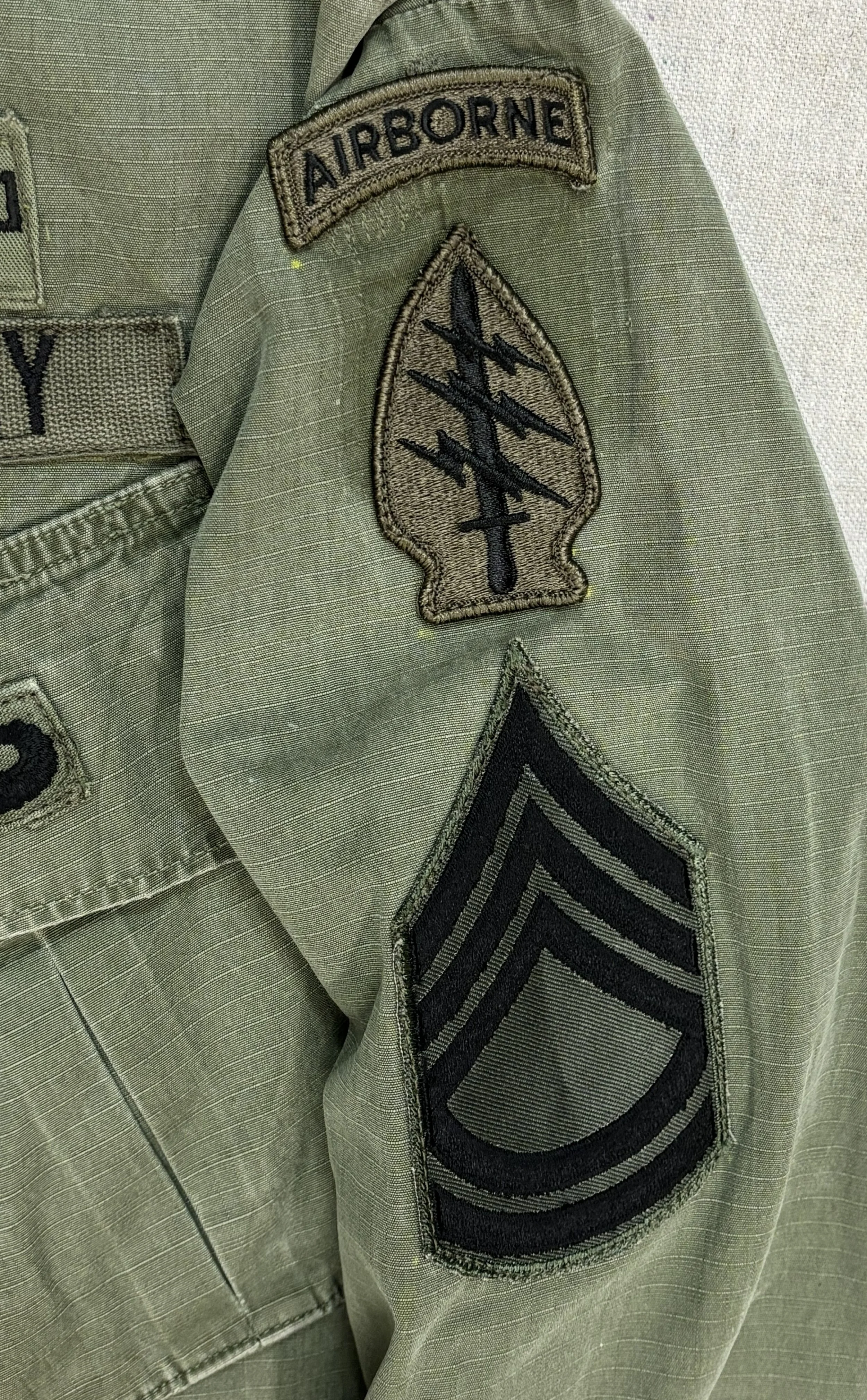
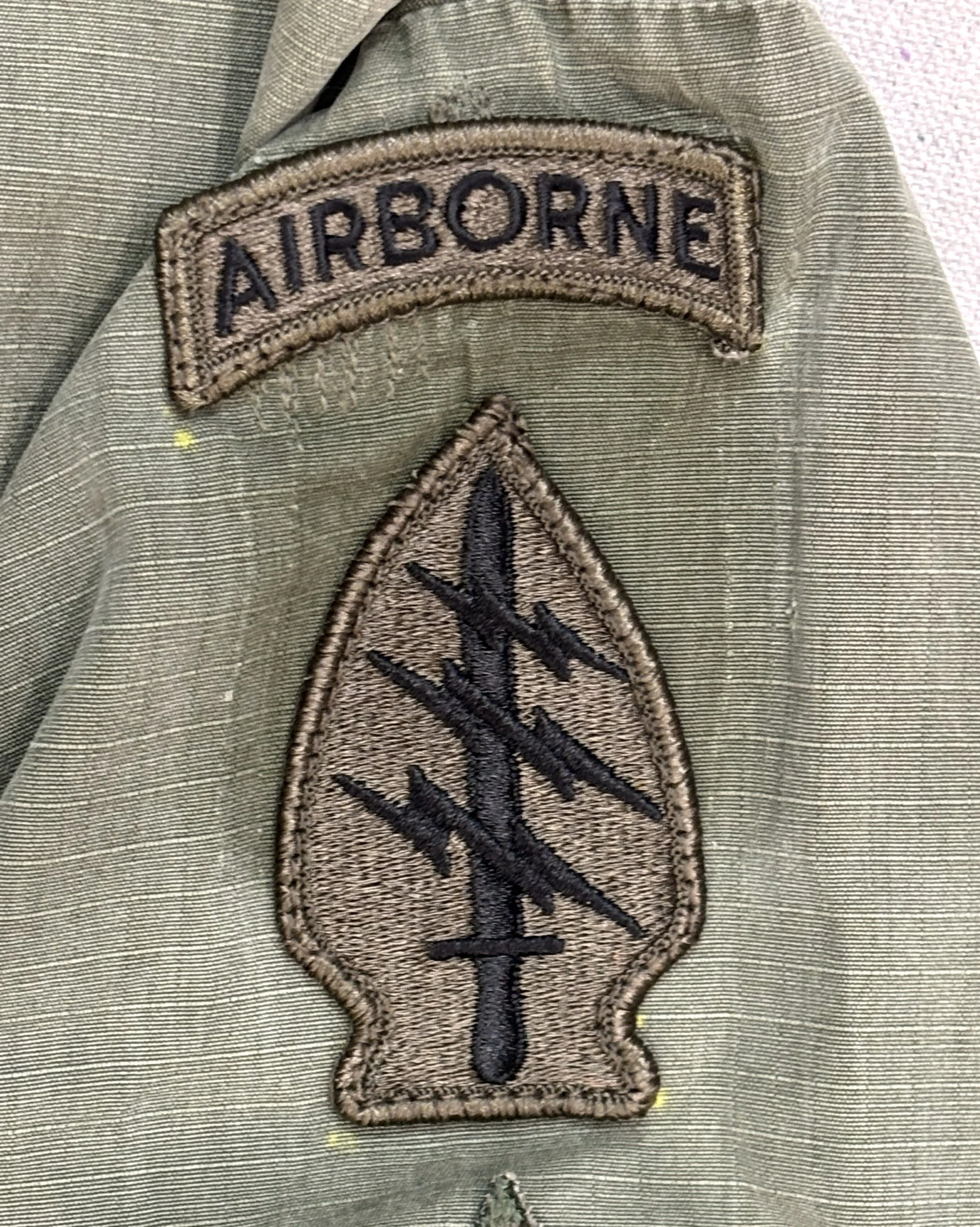
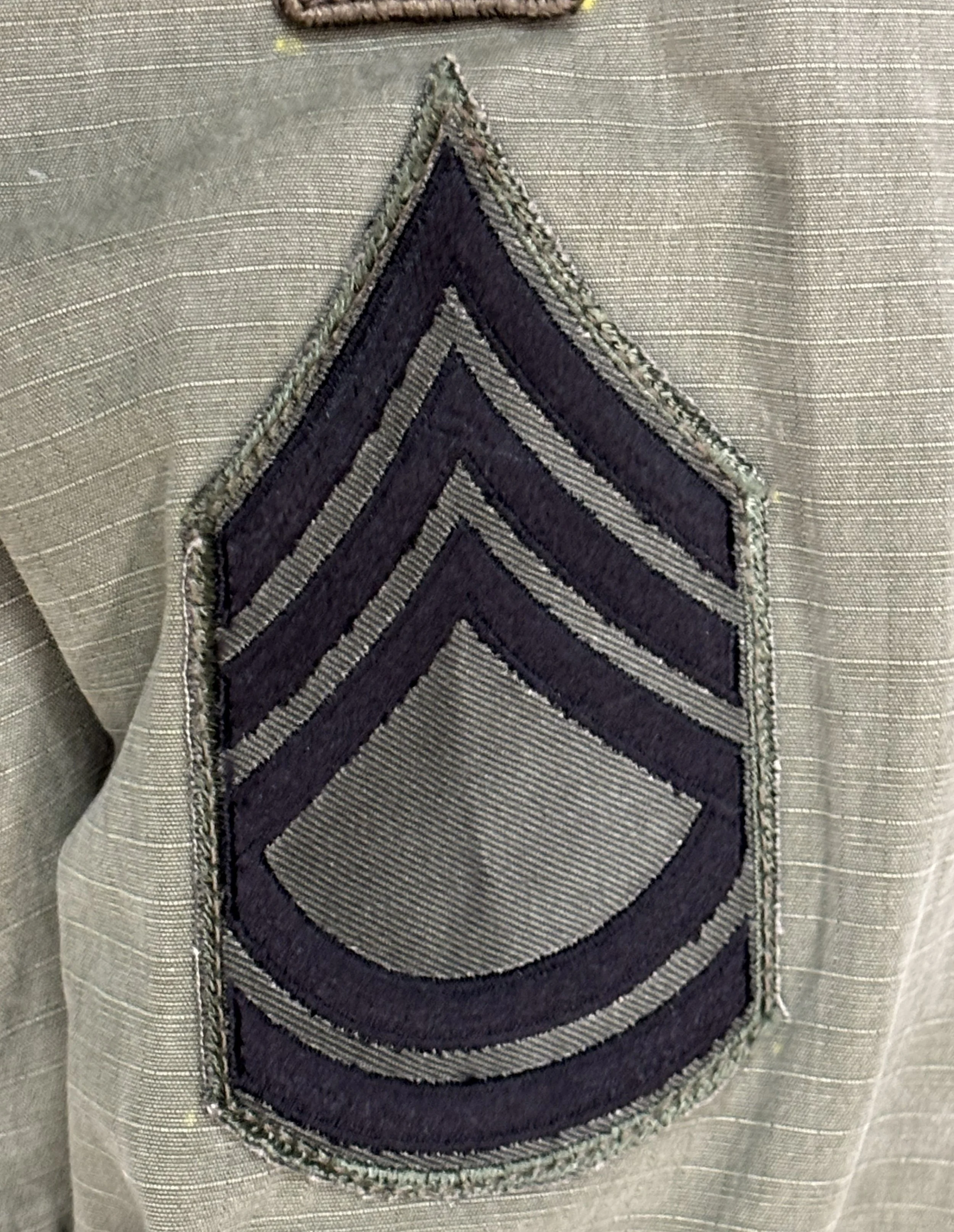
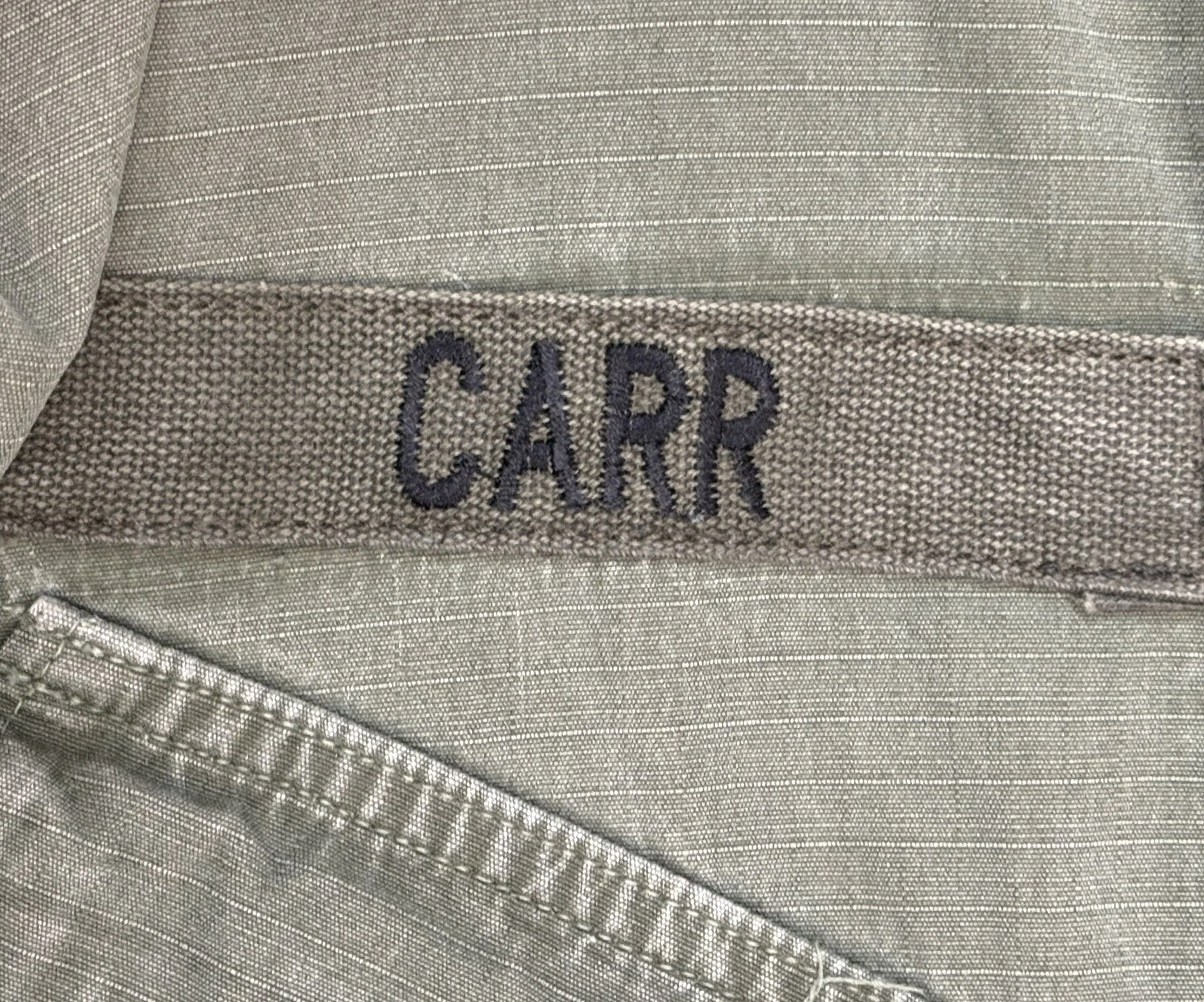
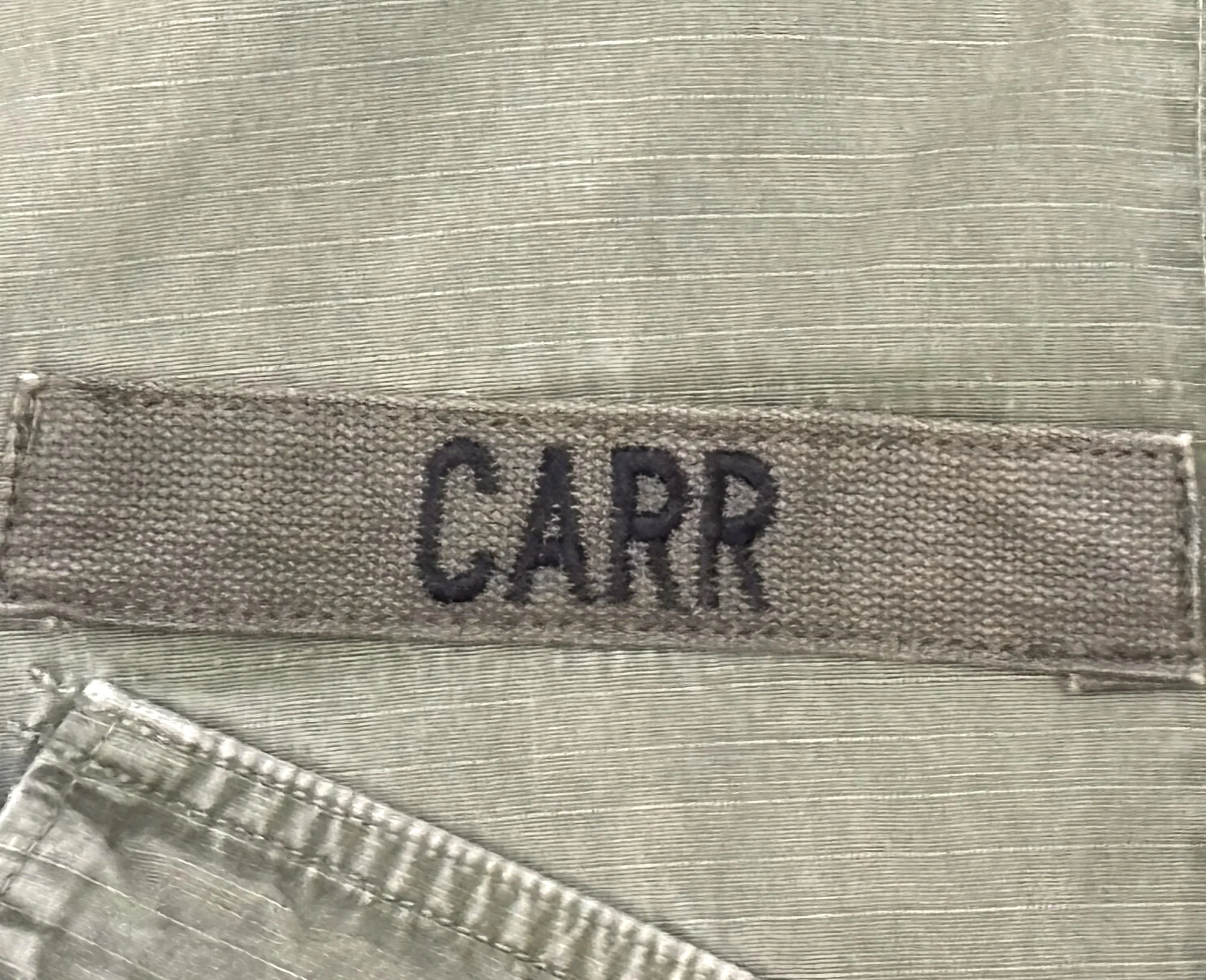
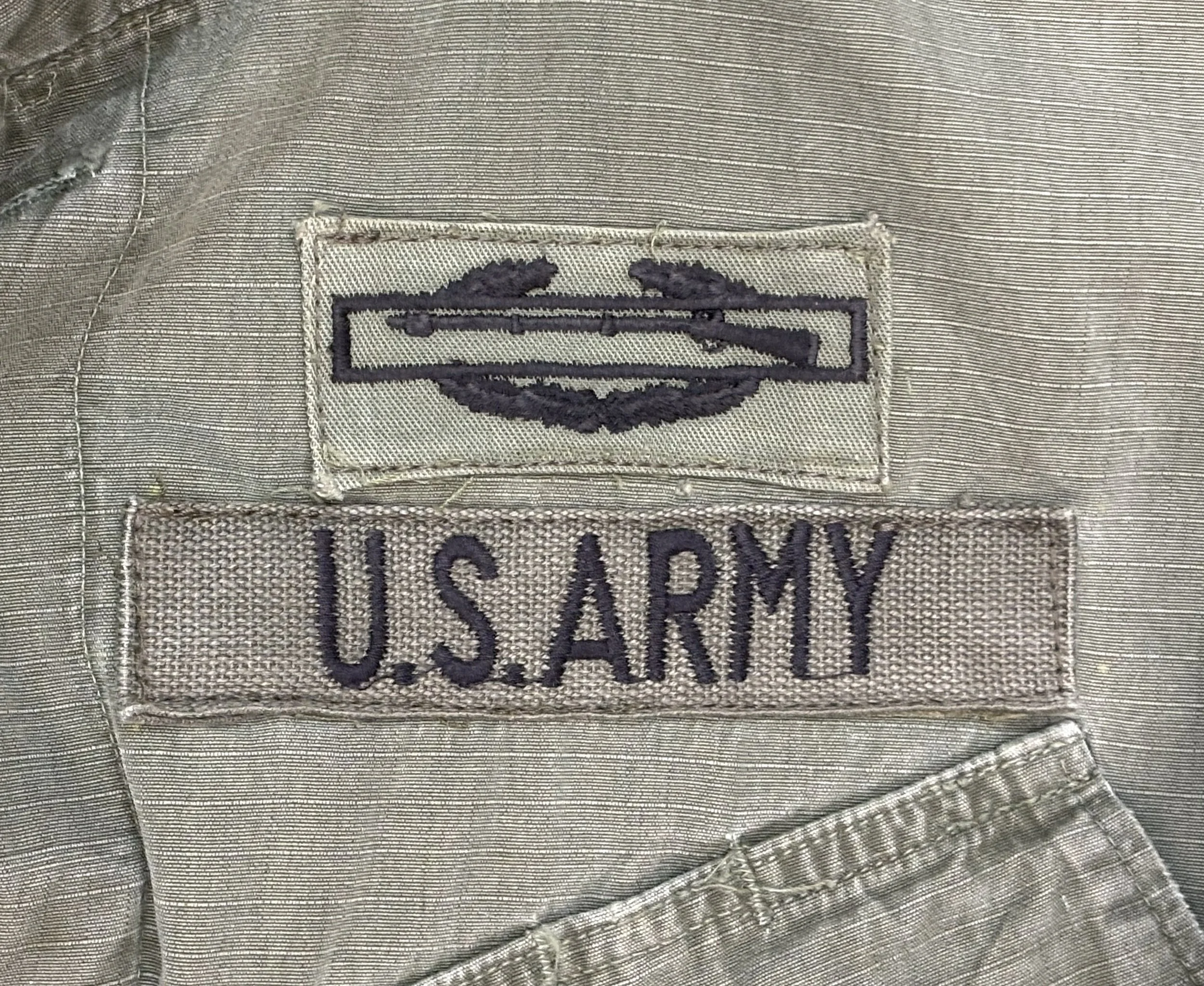
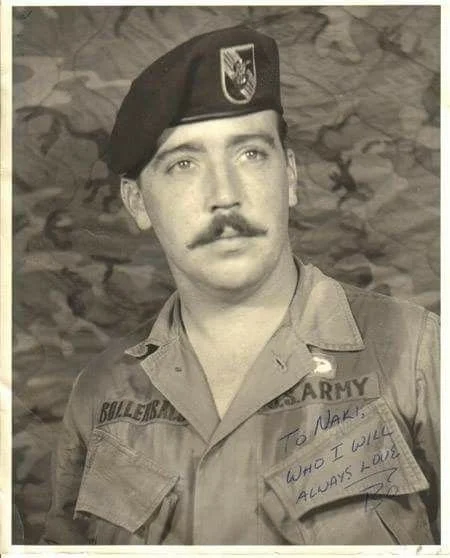
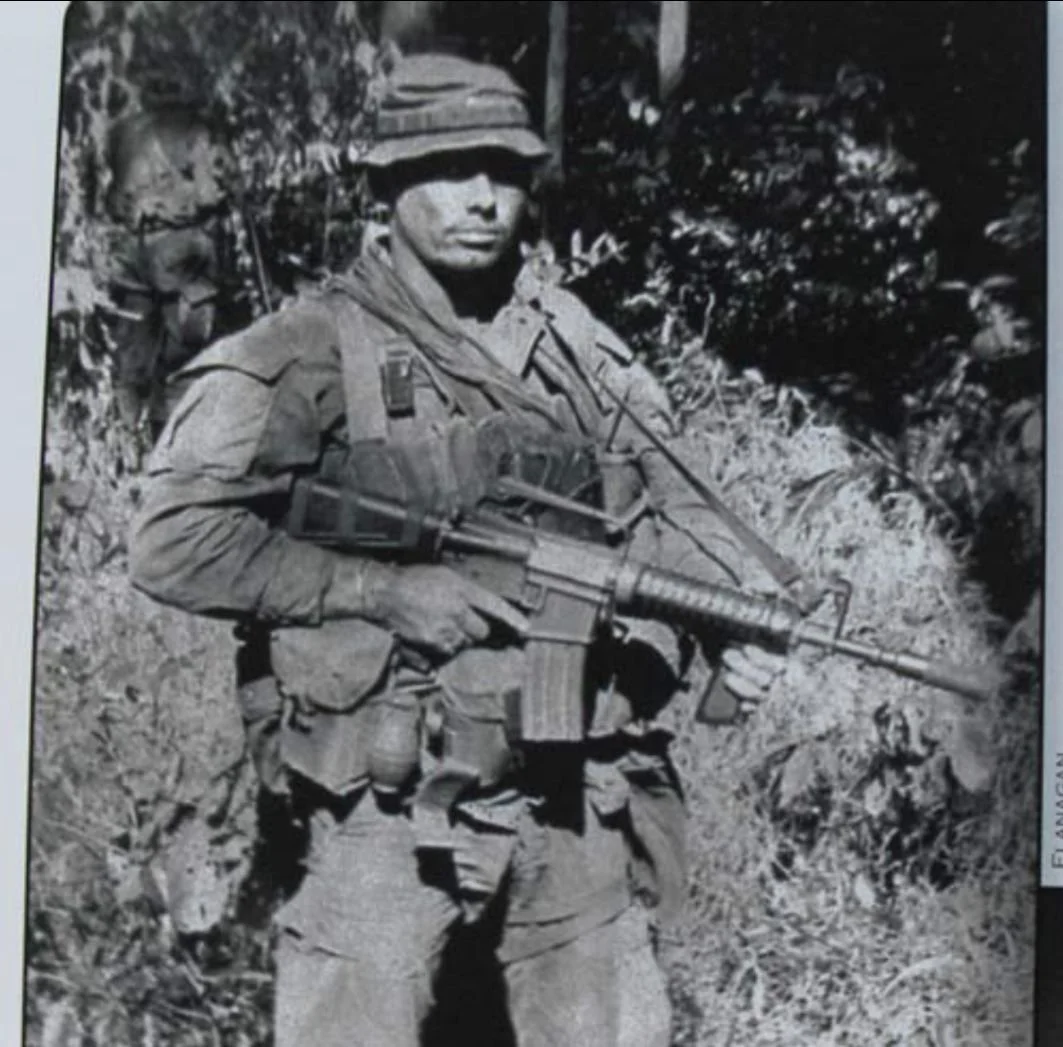
“New” Sergeant First Class, CARR, 5th Special Forces Group, 1968:
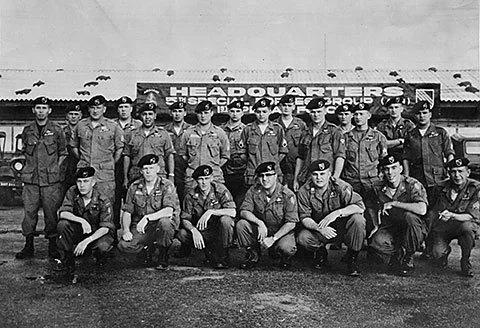
The 5th Special Forces Group (Airborne), sometimes called the "Legion". They were activated in 1961 at Fort Bragg, North Carolina. They are now headquartered at Fort Campbell, Kentucky. The 5th Special Forces Group “Airborne” was the primary group operating there. They might be called Black Ops now, but they were conducting unconventional warfare, counterinsurgency, and direct-action missions. They officially deployed there in 1964, and they conducted covert operations from Nha Trang until 1971. They trained over 42,000 (CIDG) personnel, launched cross-border operations (MACV-SOG), and earned 18 Medals of Honor, making them one of the most decorated units of the war.
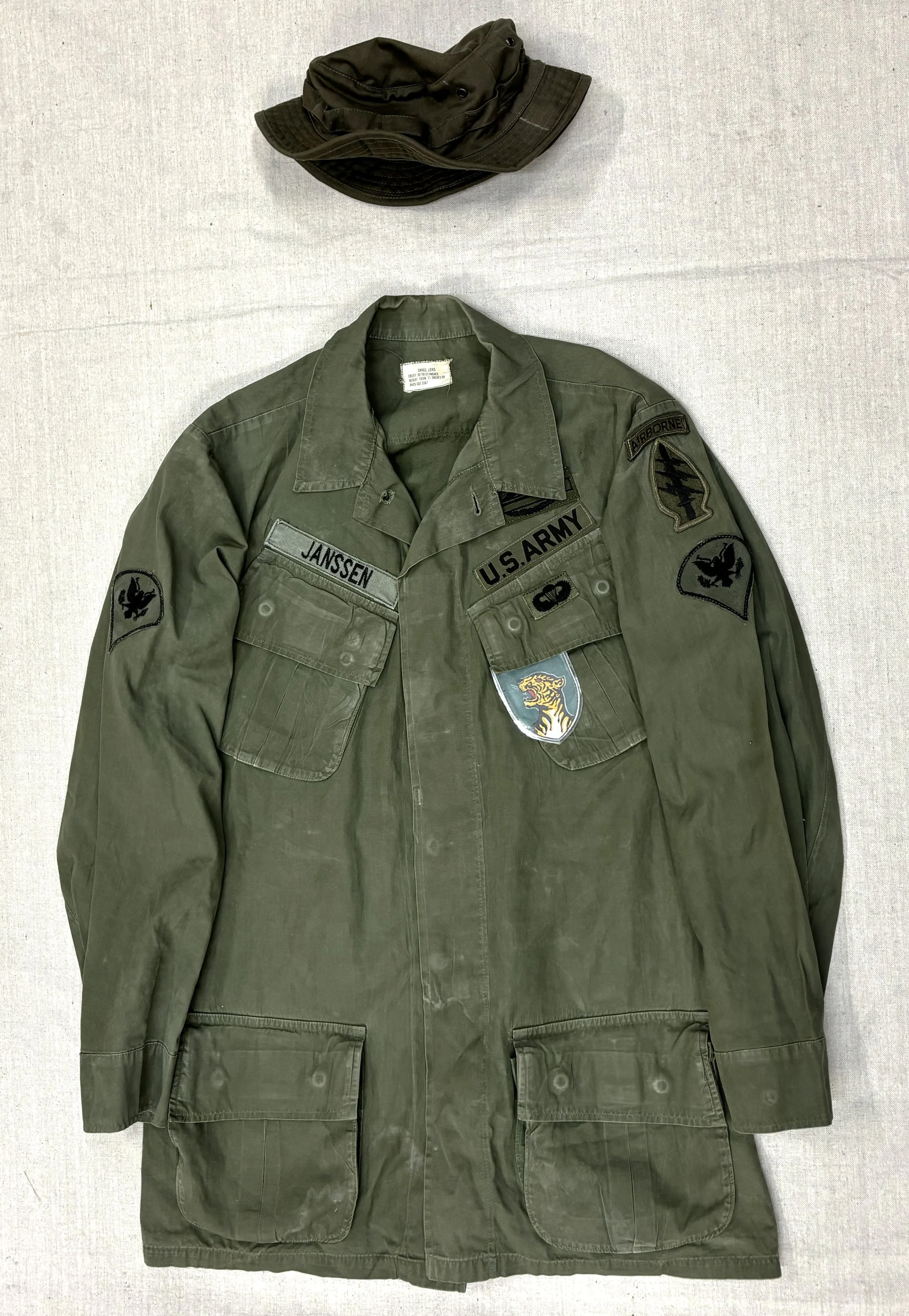
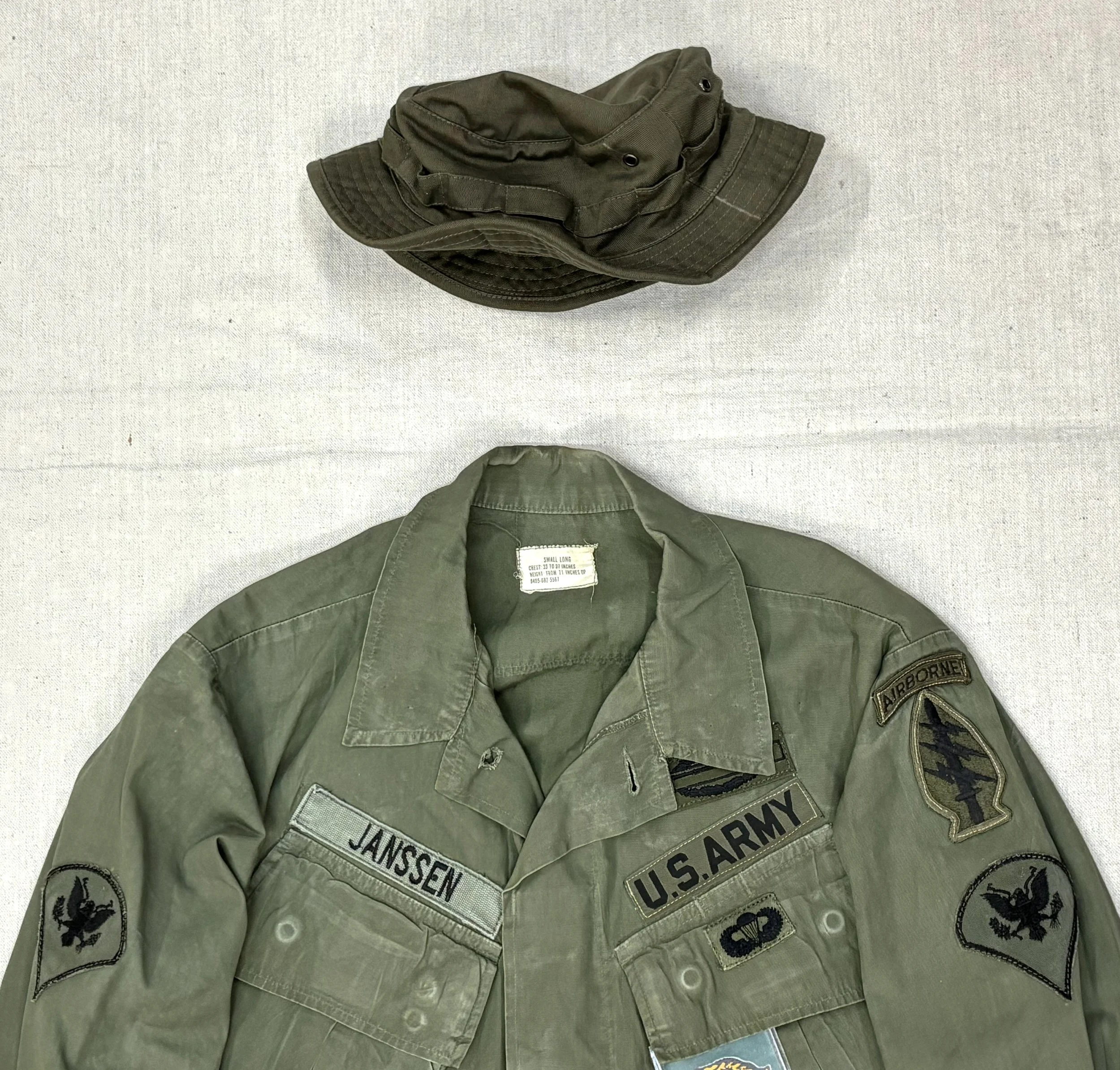
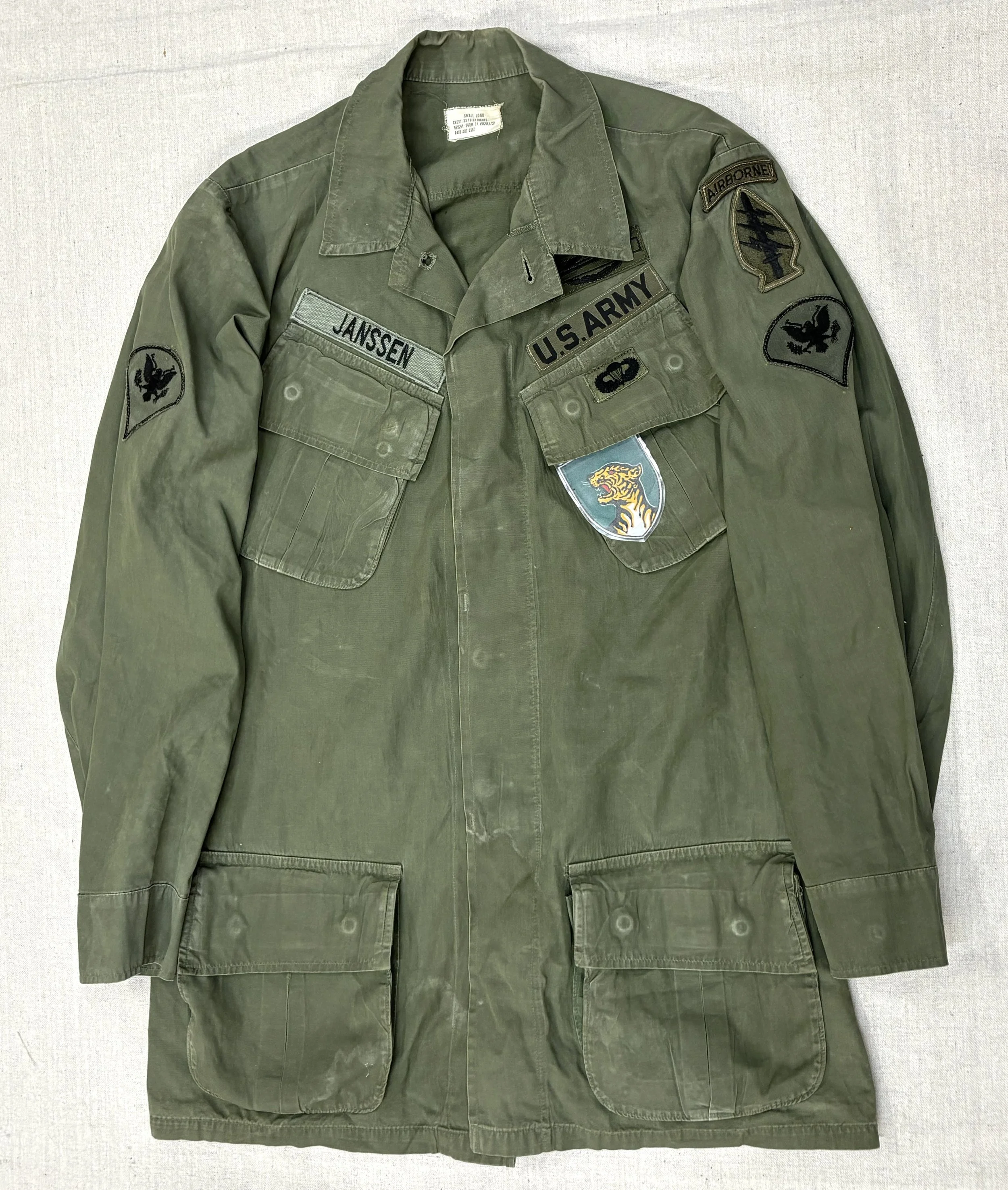
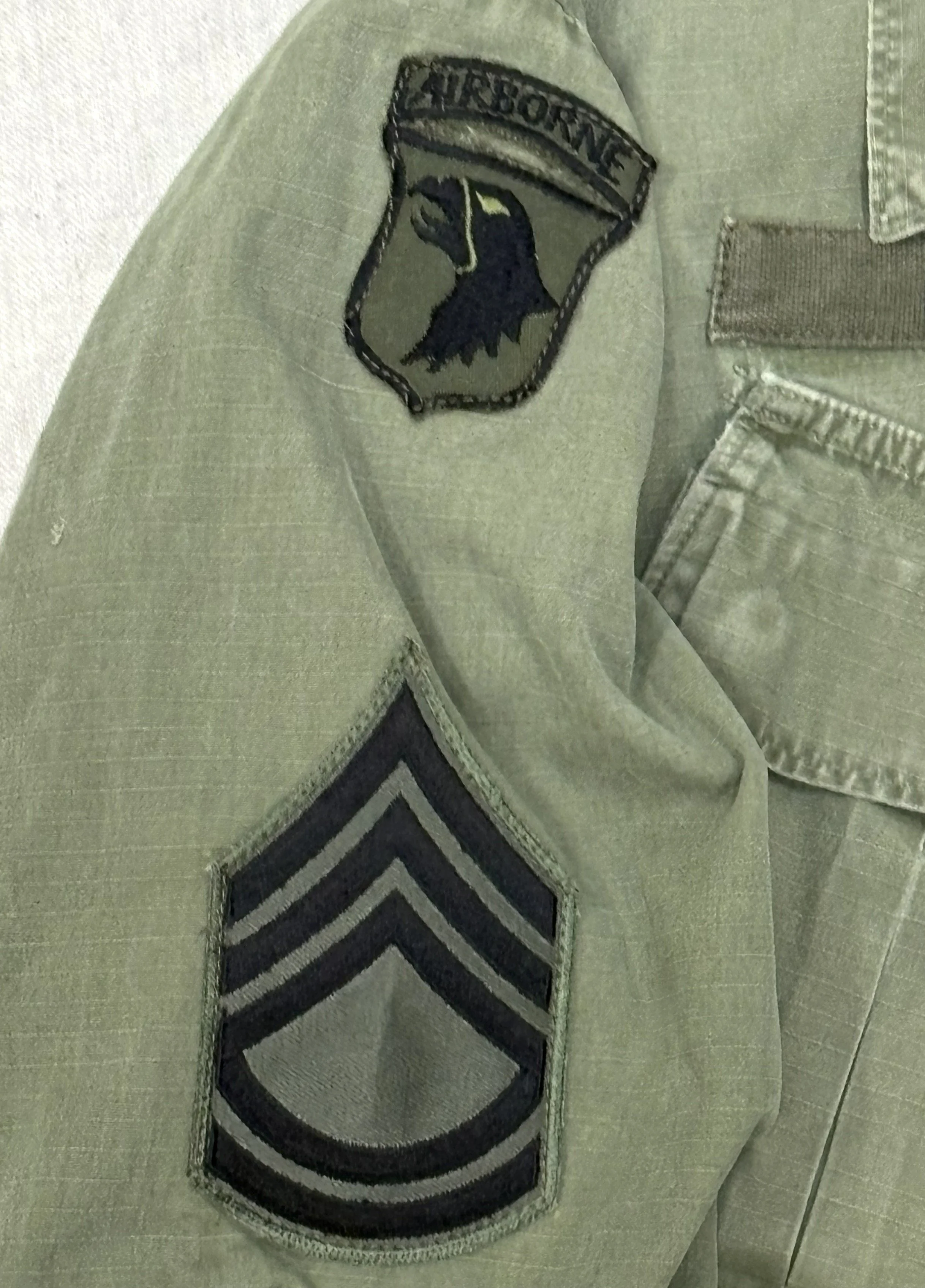
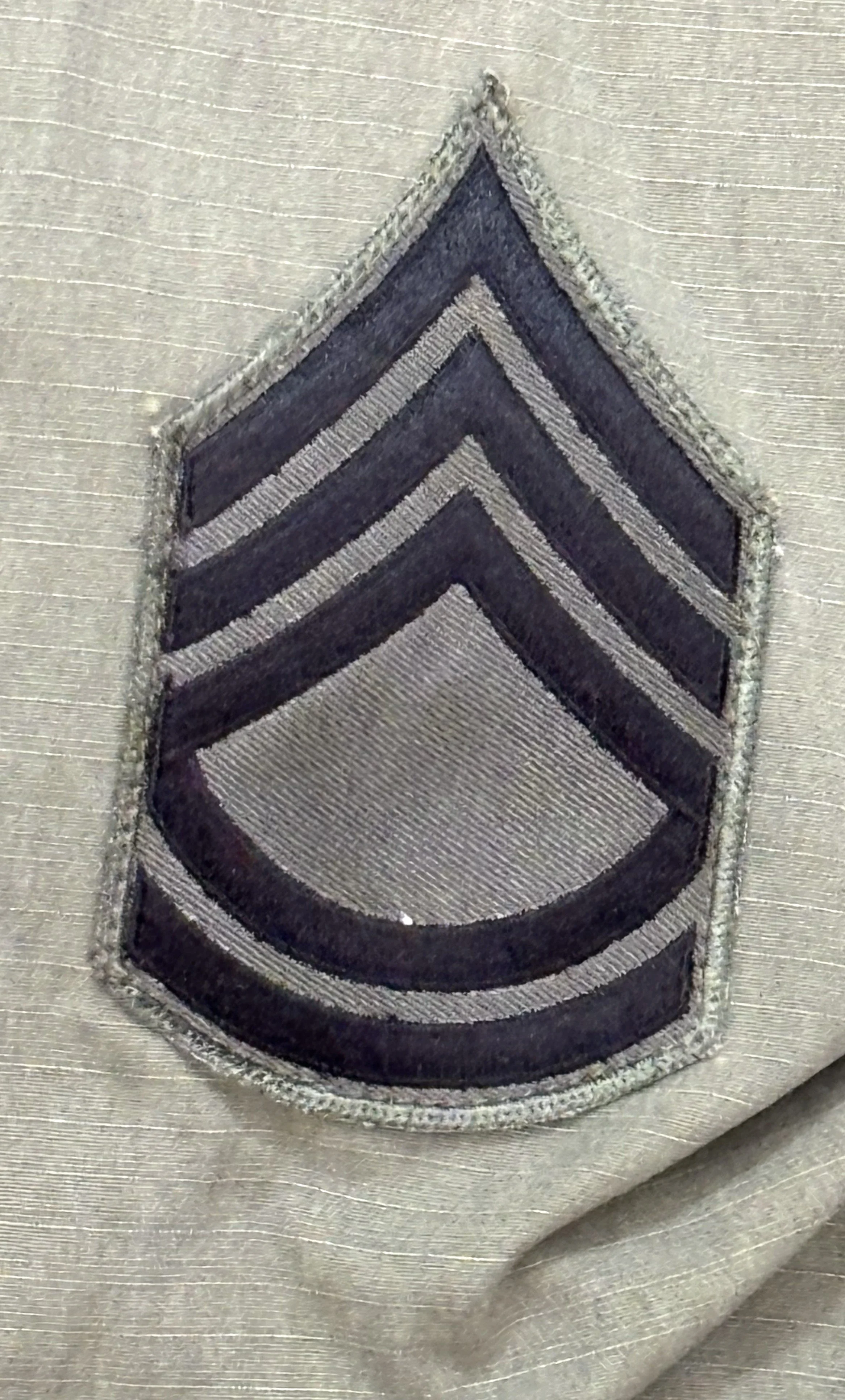
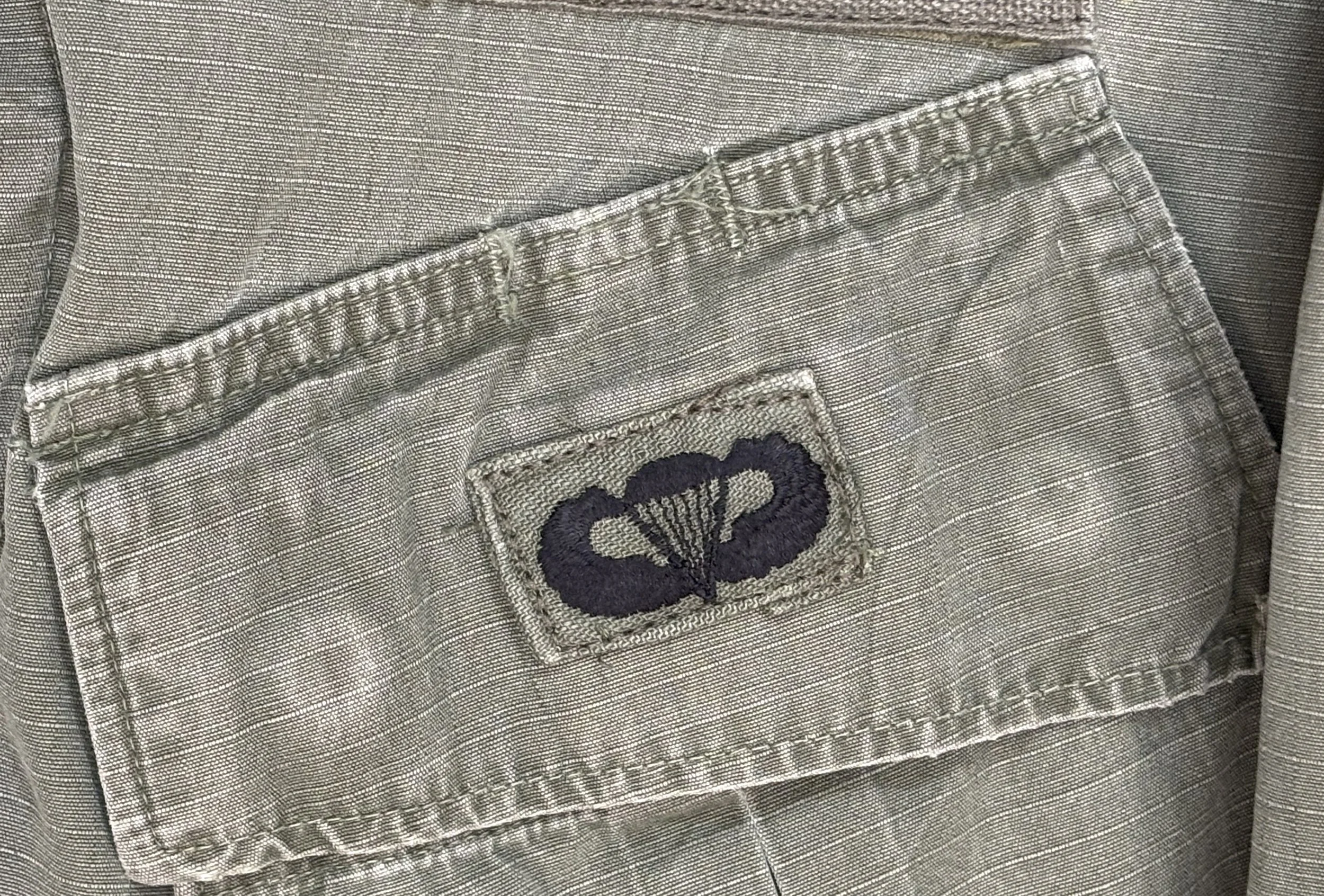
The Sergeant First Class was a later pattern of jungle fatigue, with the subdued insignia per regulations of 1968-69. He had served a prior tour in Vietnam with the 101st Airborne, prior to going to schools and training, and now with another famous outfit. He may have worn a sterrol uniform and boonie hat on actual operations, though they were not expendable, and if not necessary, might stay behind at base. Depending on the area of operations, they could not afford to be captured and interrogated; there was also a very real price on their heads. But then, if they didn’t go on a patrol - how did he actually know they went on it, or what they saw on it?

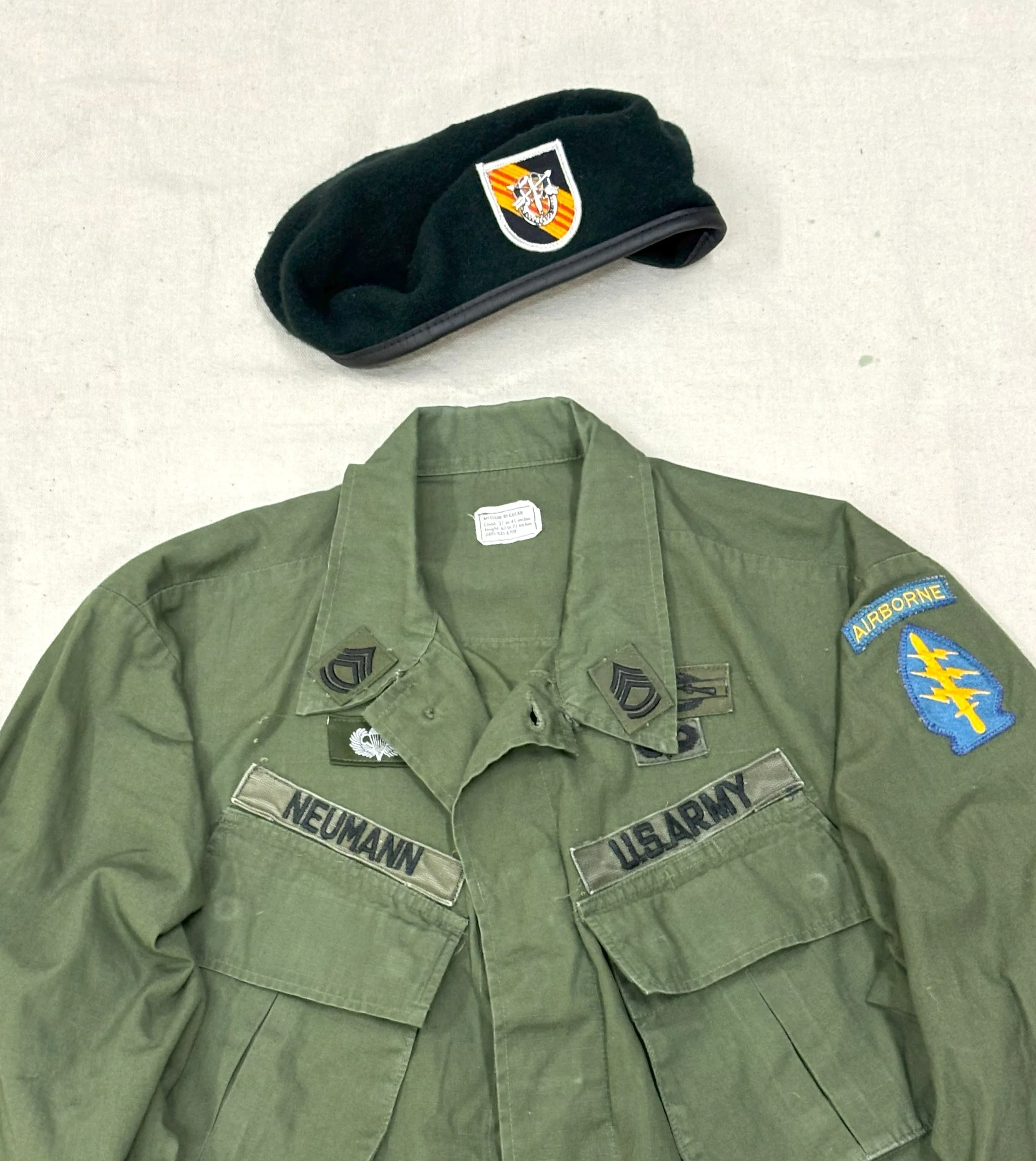

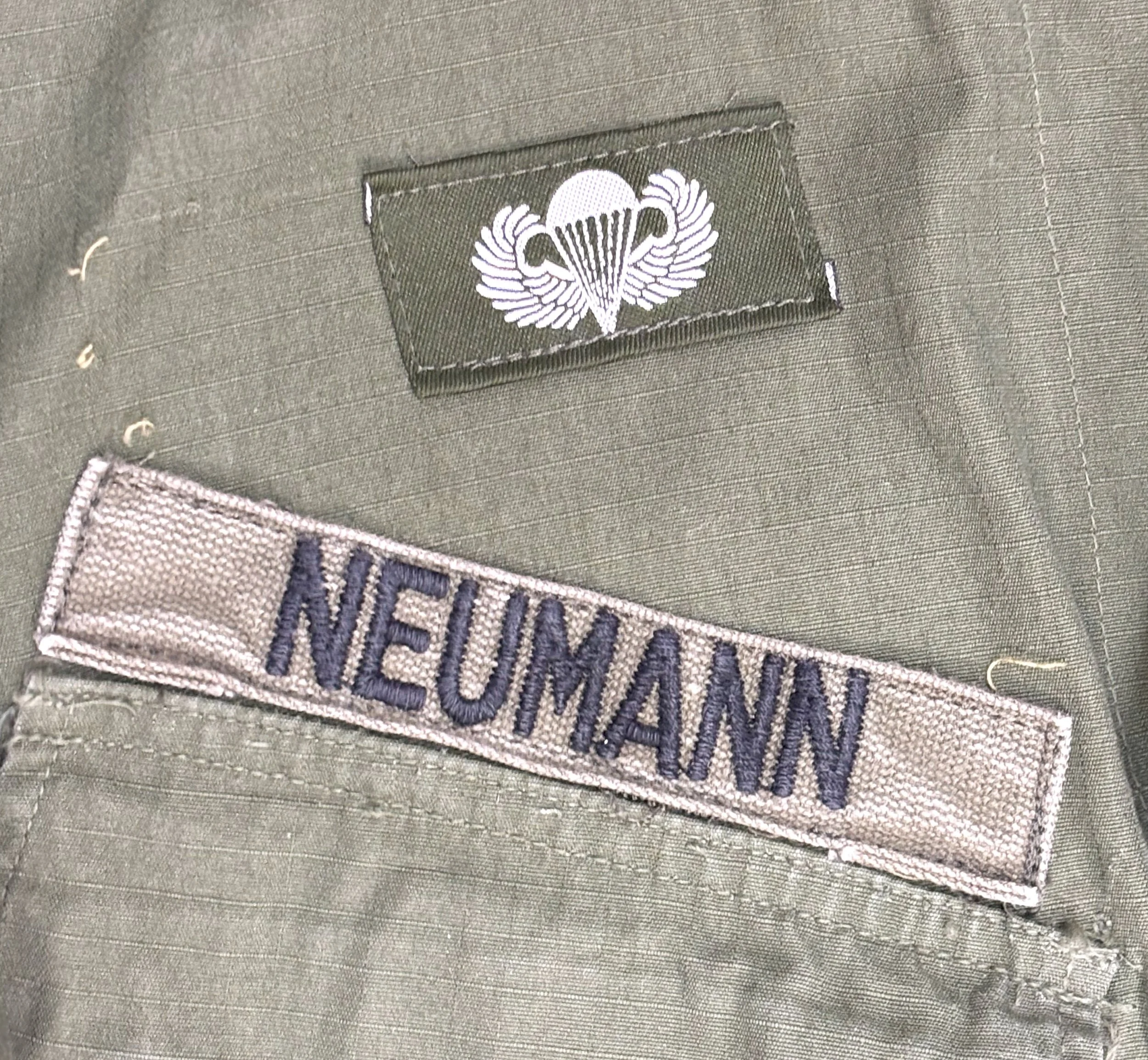


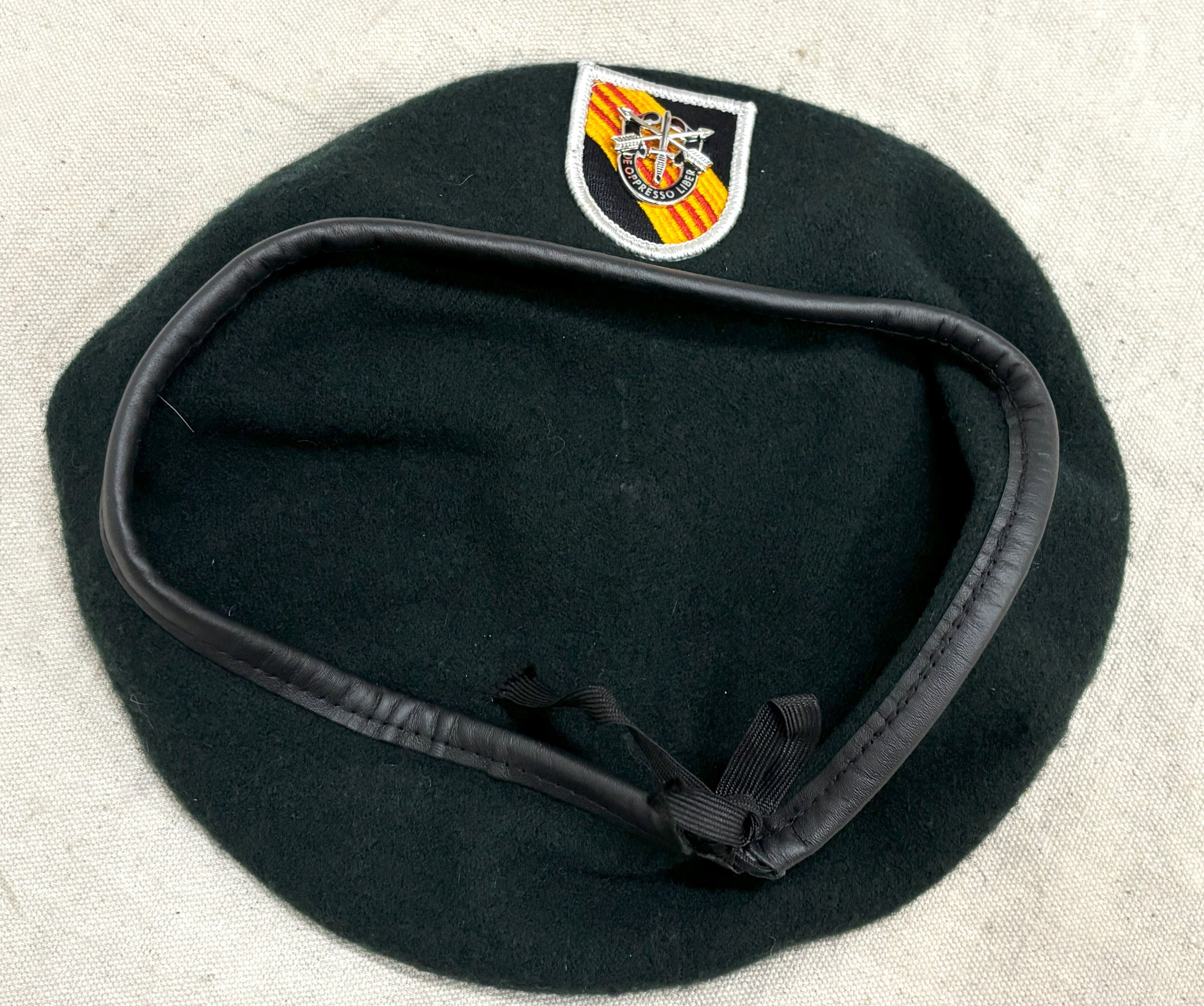

Sergeant First Class, 5th Special Forces Group, Cambodia:

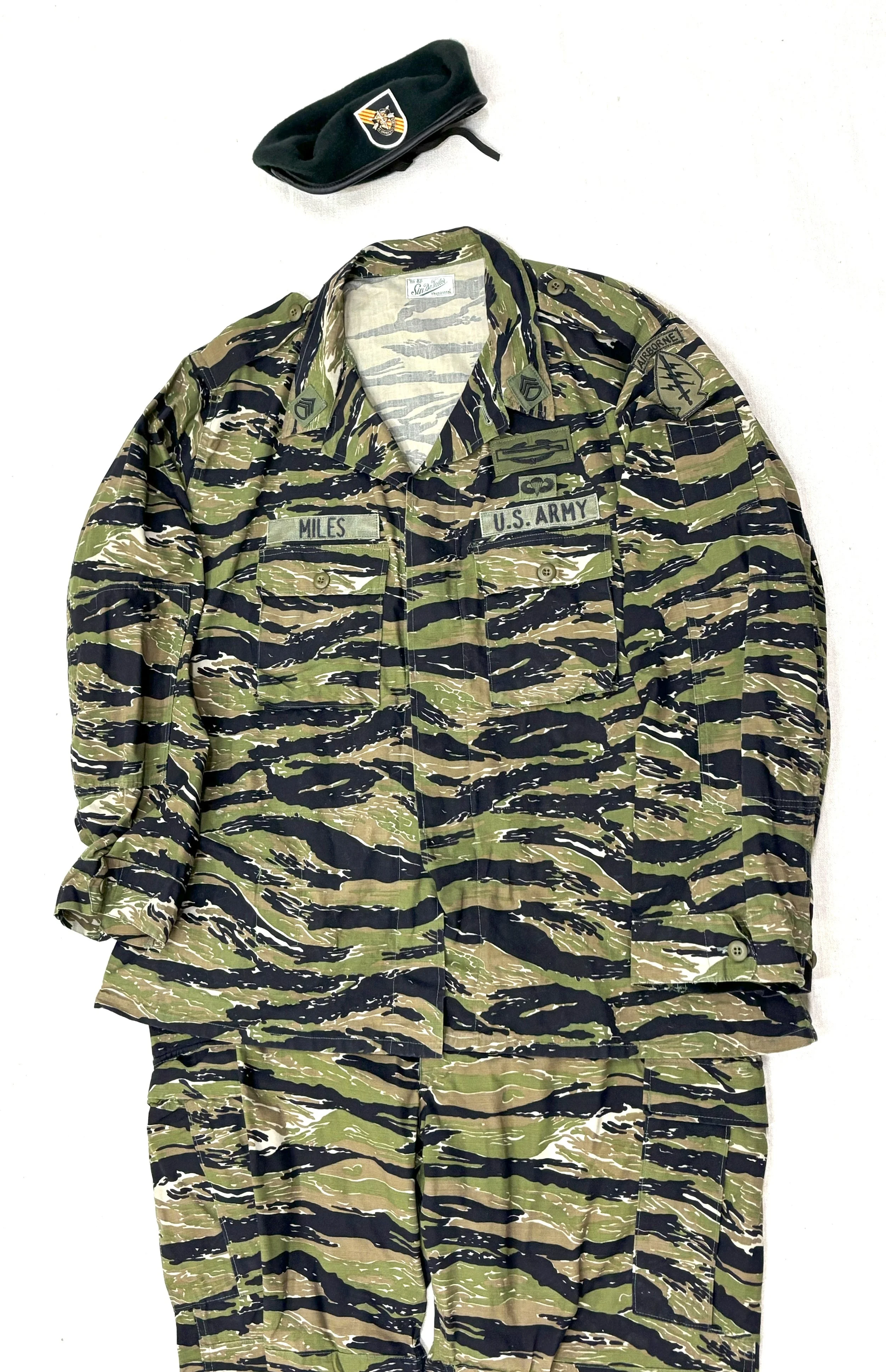


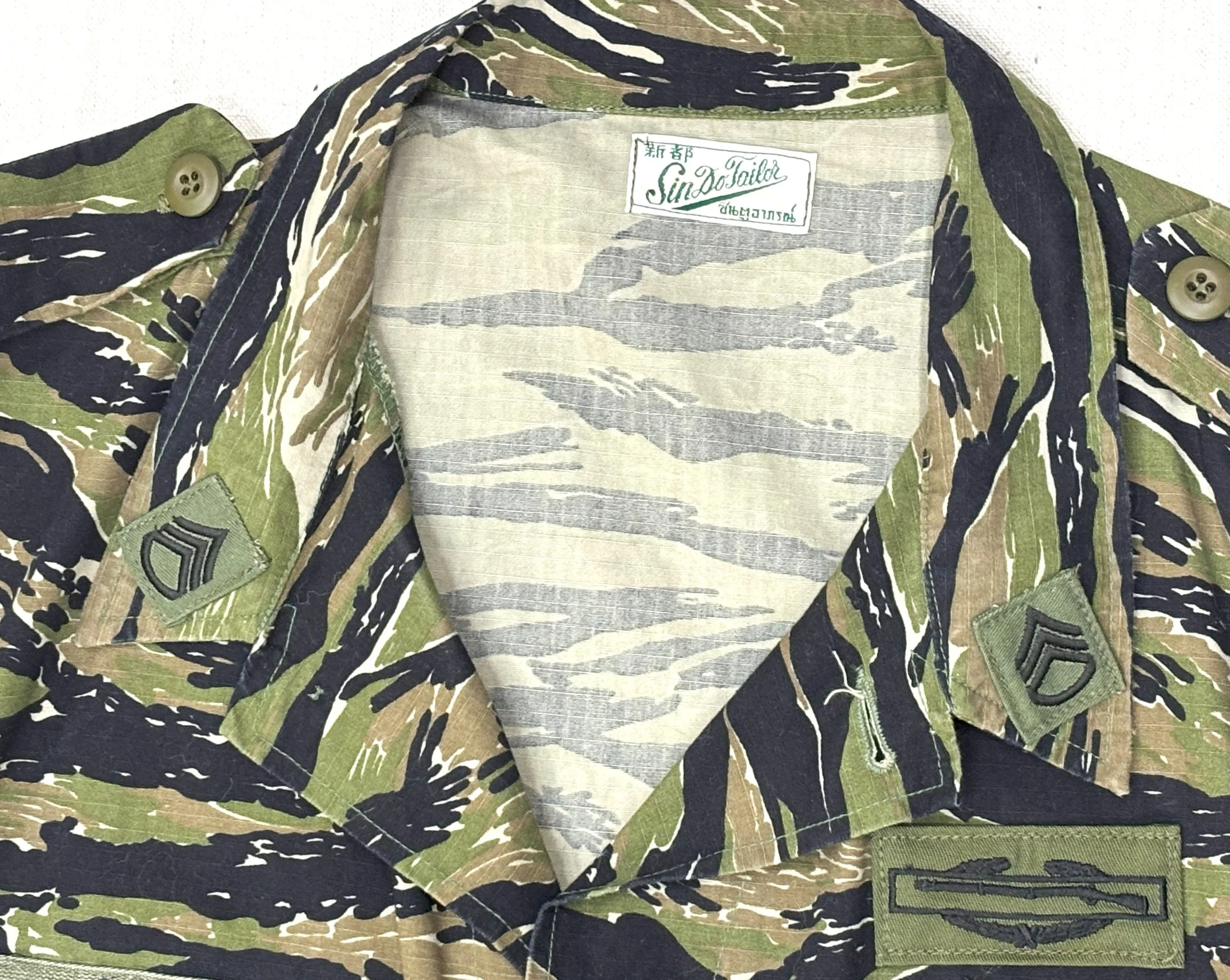

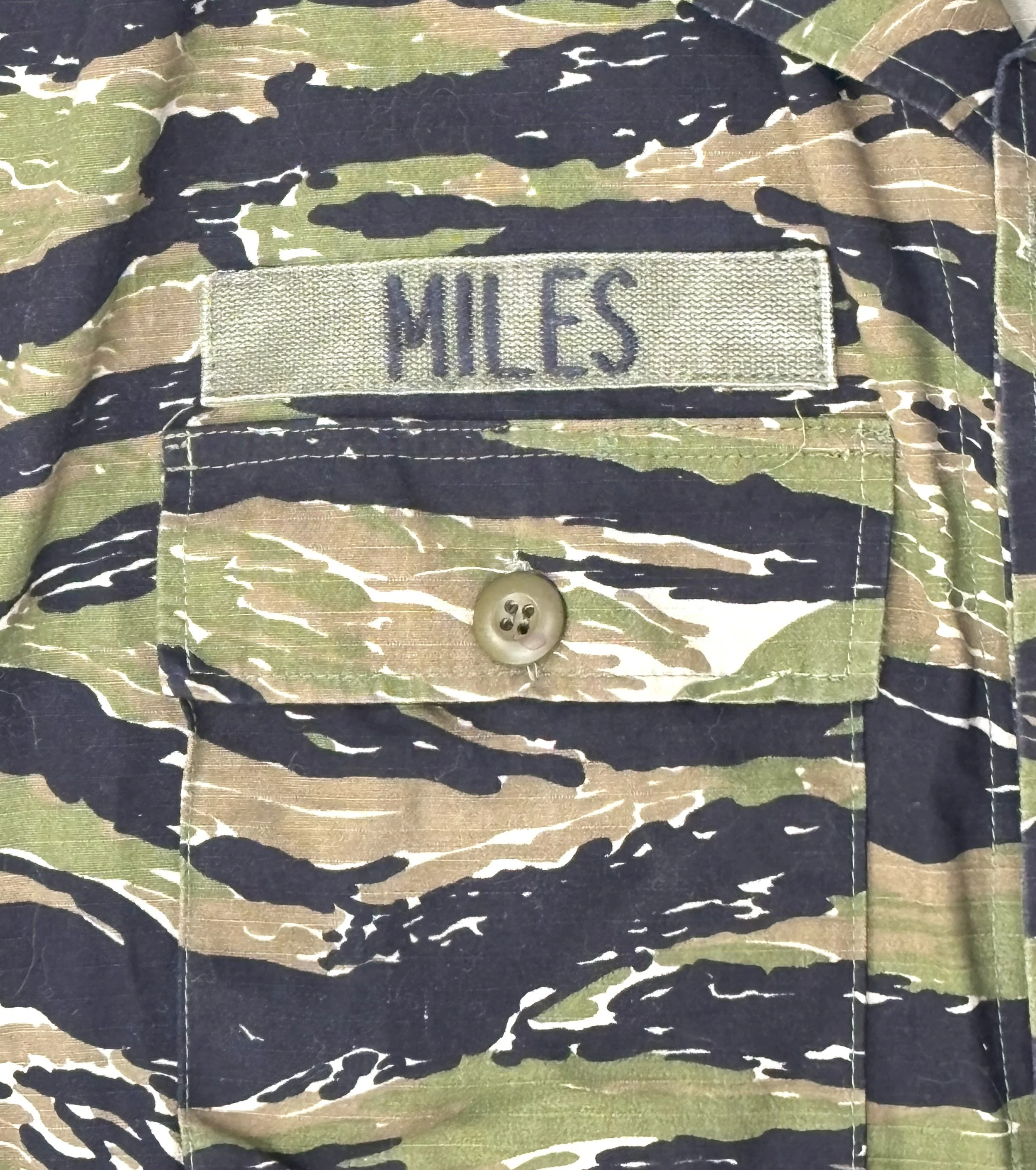


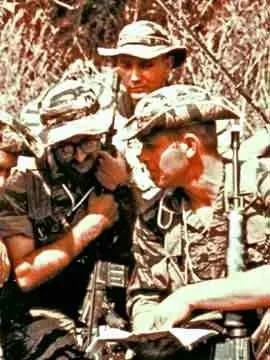
“NEW” Staff Sergeant, 5th Special Forces, Tiger Stripes:
Along with working and living with the indigenous peoples in Vietnam, and creating and trained them into a cohesive unit. The CIDG had its “Mike Forces” or reaction force to reinforce the various Special Forces Compounds. They worked with South Vietnamese civilians as well. They would patrol, search for the enemy, and get larger forces to deal with them. There was the Delta Project, which was the Special Forces reconnaissance project that collected operational intelligence in the very remote areas of Vietnam, and there was Project GAMMA (the codename given to Detachment B-57), which was responsible for covert intelligence collection operations in Cambodia from 1966 to 1970. All these operations were highly successful programs, but as the politics played out and the US involvement wound down, Vietnamization went into effect, and a controlled pullout began. Eventually, SF teams were withdrawn and reallocated to areas along the Laos and Cambodian borders as expendable, early relay groups, and the attitudes of the people began to get concerned with their futures, which proved to be called for.
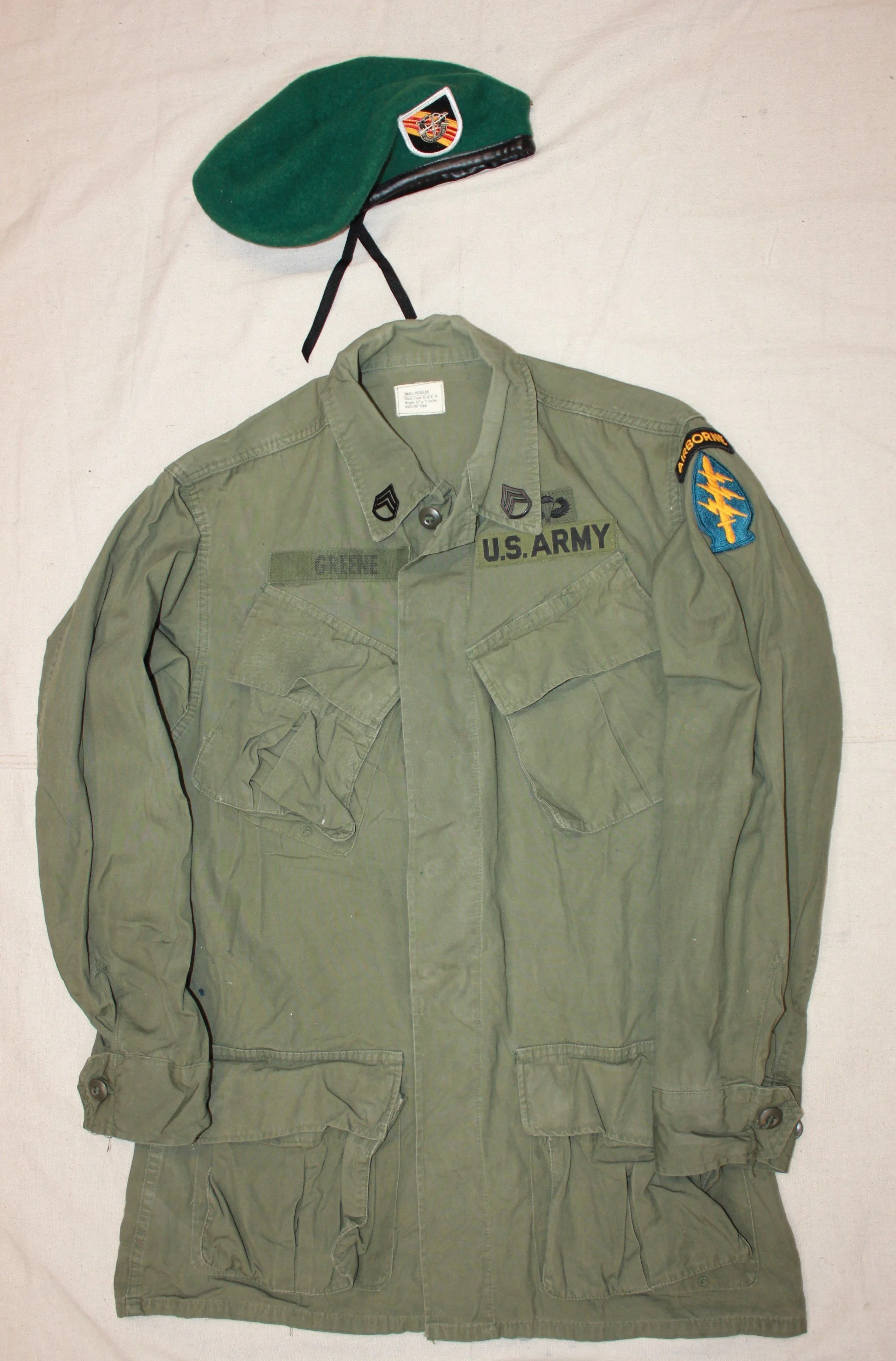


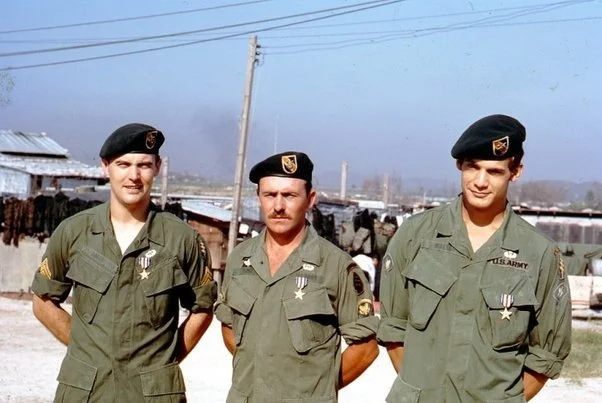


Staff Sergeant, 5th Special Forces, RVN 1969:
This is another variation of the uniforms seen in Vietnam, a later example, but he just hasn’t been able to ditch his bright SF shoulder patch. Hell-bent on leather, he may have been looking forward to the assignment still, hearing all kinds of horror stories, and training hard to be sharp, so he can maybe make a difference. Unfortunately, there is no real story here; his story is lost in the annals of military history, recorded in brief notes. But he represents one of the all-volunteer Special Forces People, who took the challenge and went to do a Tour in Vietnam to help the South Vietnamese and help train the people living in small hamlets throughout the region, to help them fight the Communists and gain intelligence through operations working with the various local indigenous peoples there. As I understand it, the operation of the Special Forces in Vietnam was successful; when they suffered losses, command was often pointed at. I don’t know if that is true, but one has to sal I takes special people to take on these jobs to help other countries, and all of them did their best.
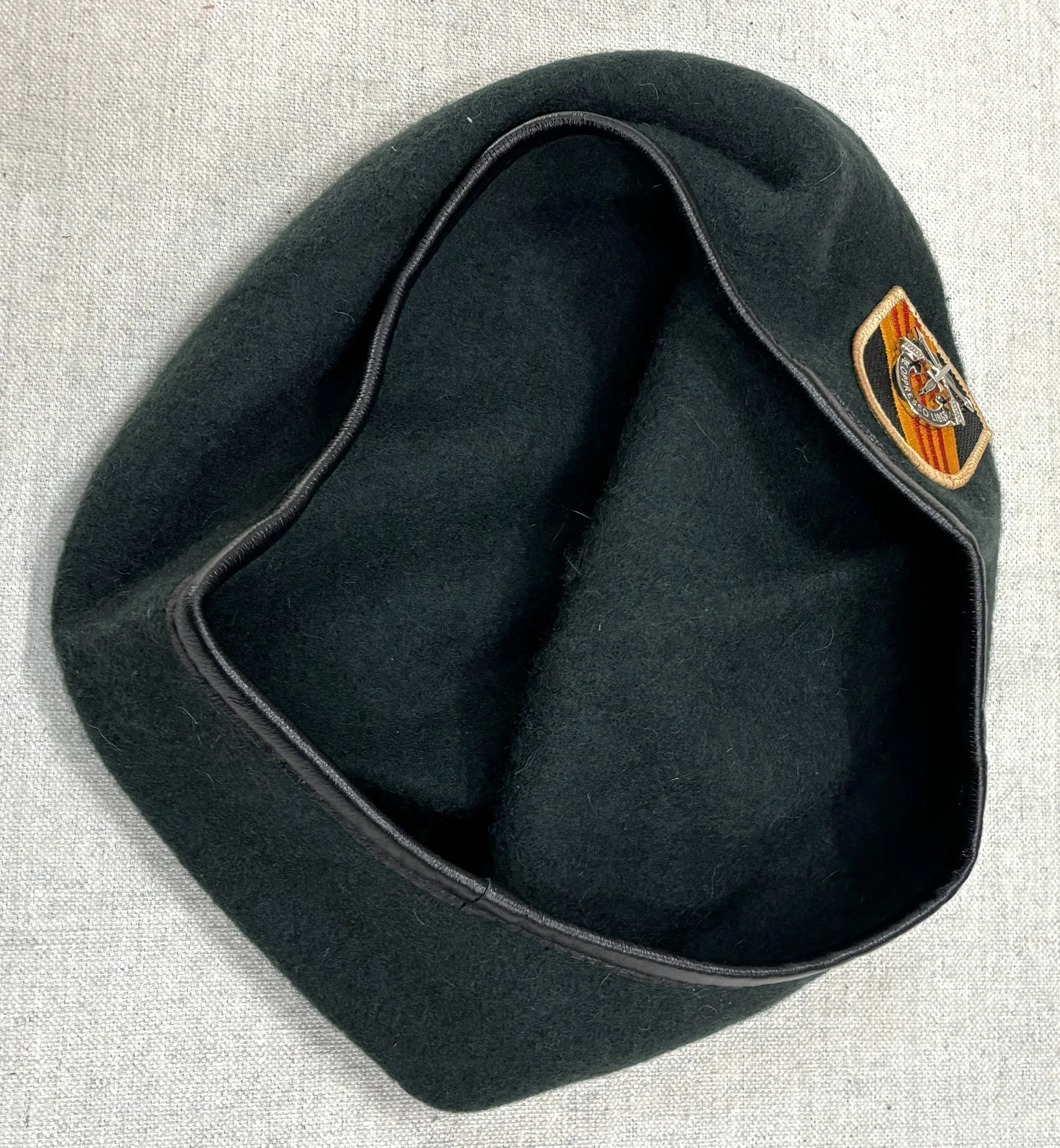
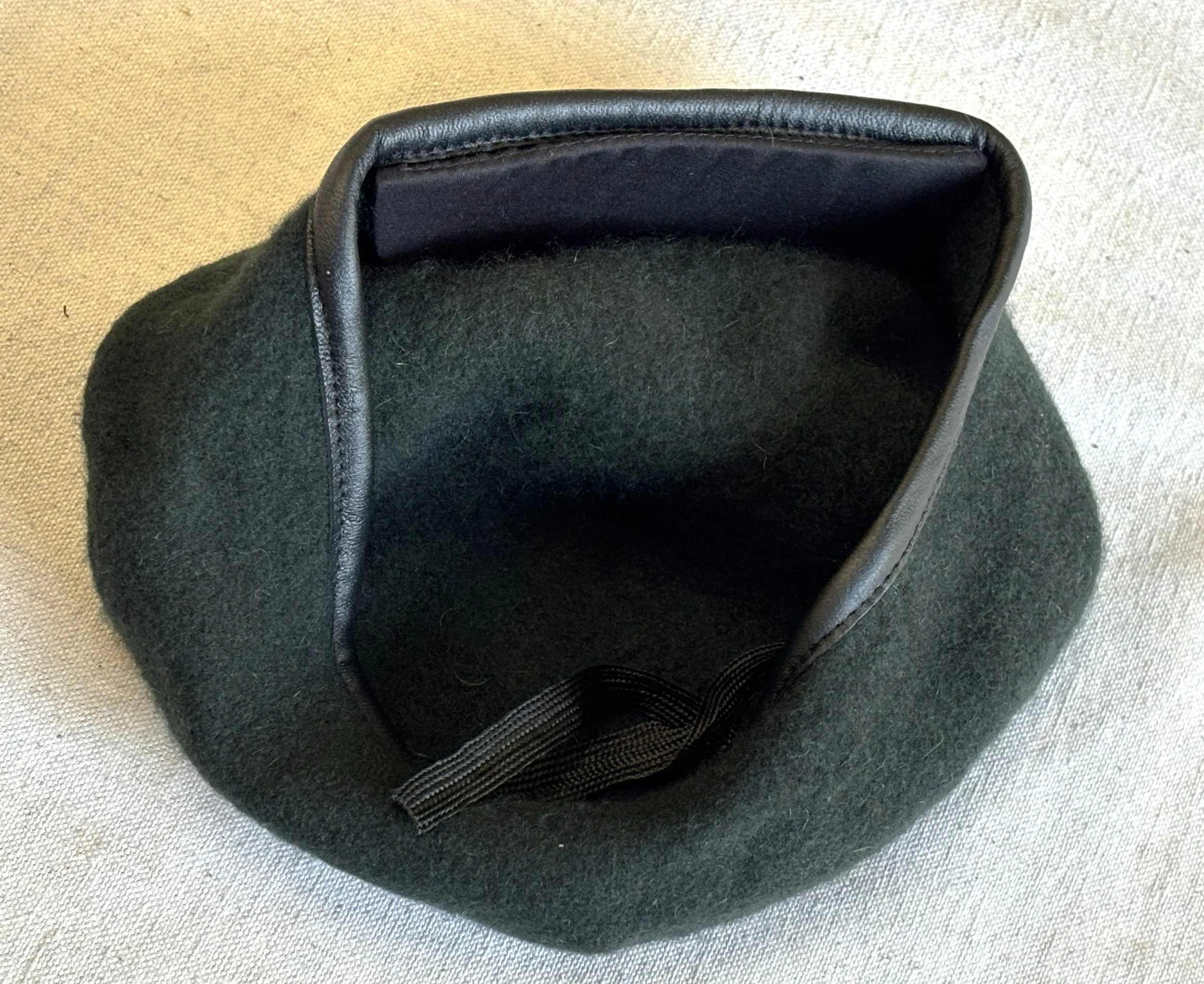
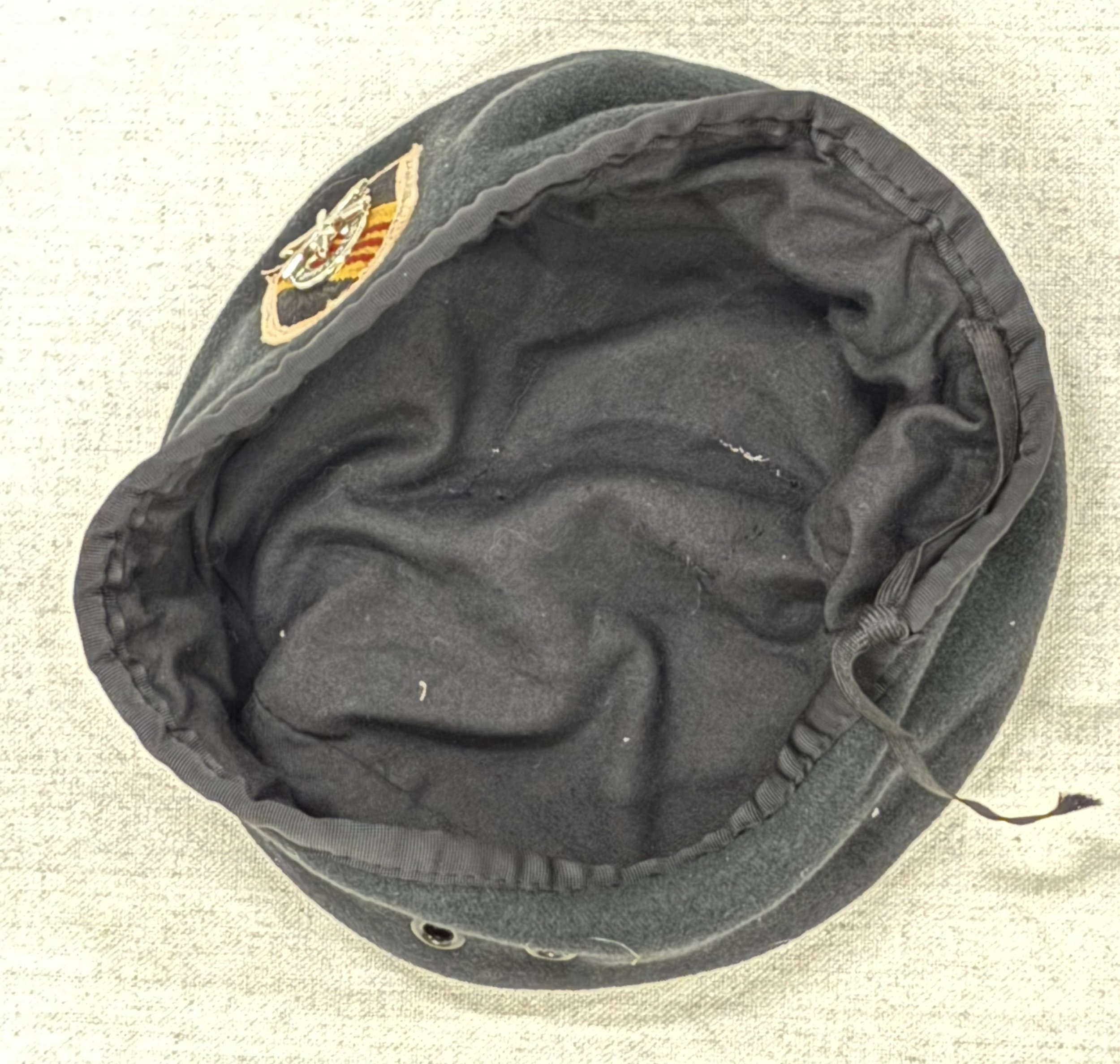
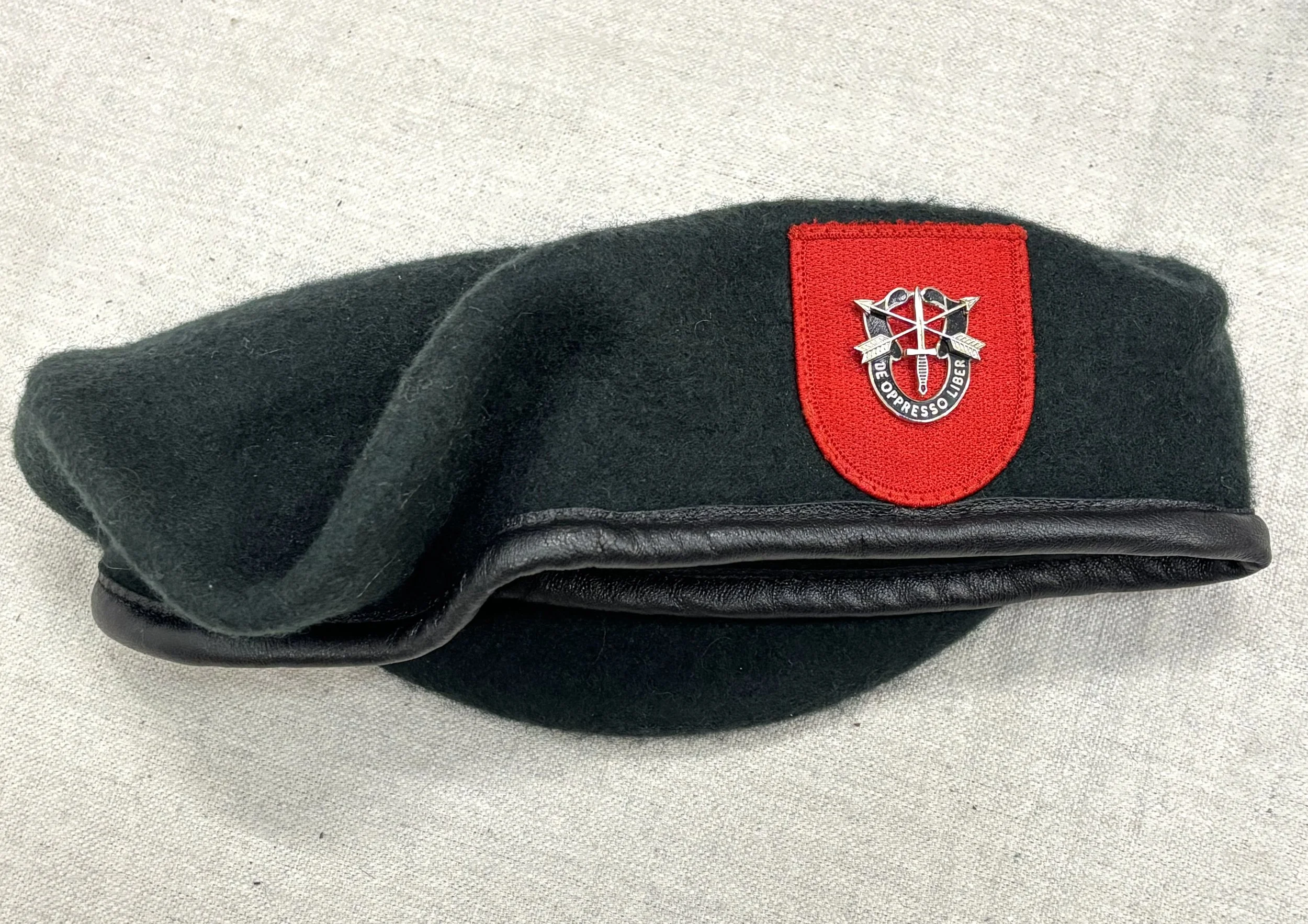
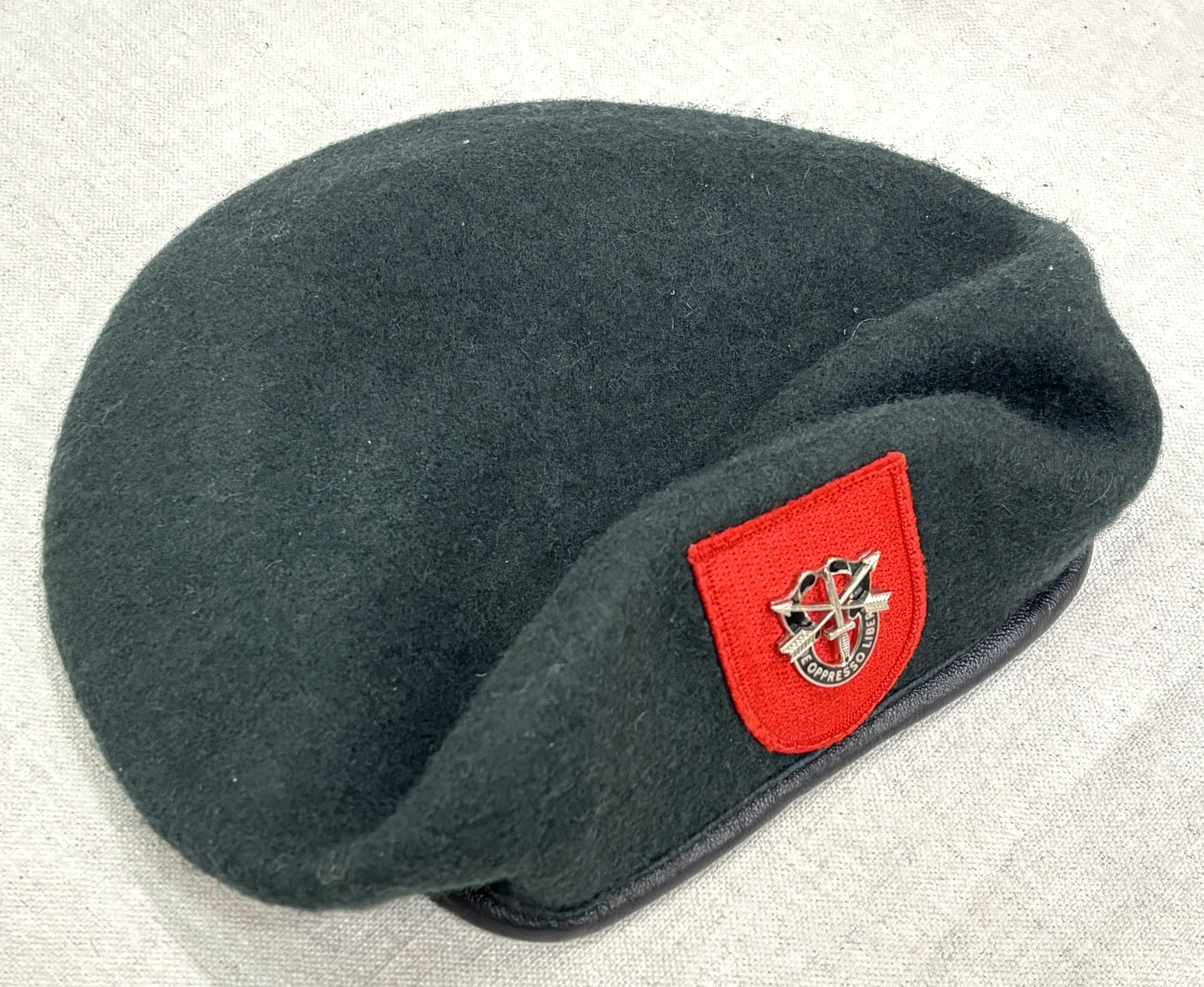
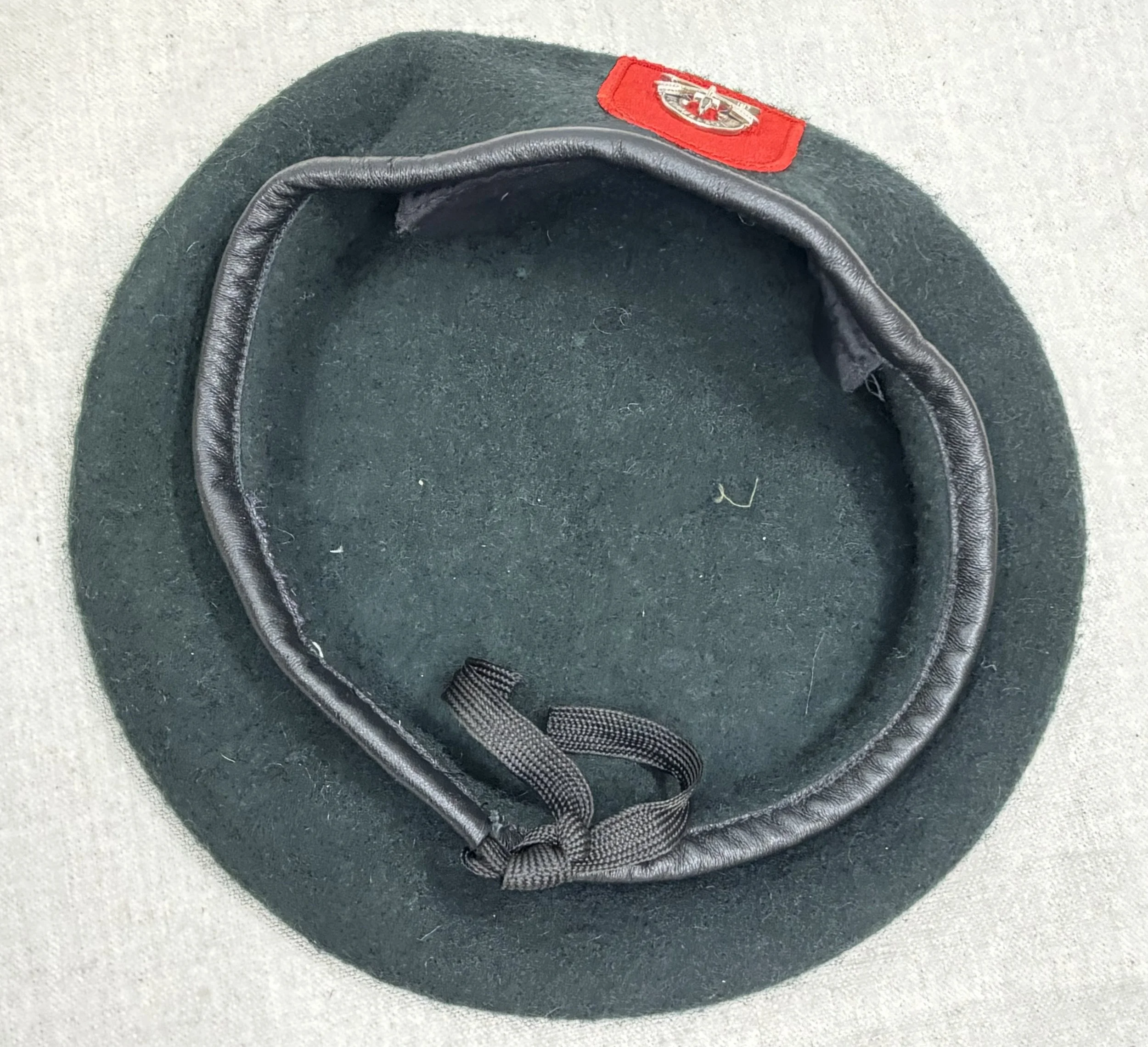
This one is dedicated to all the lost servicemen and women in the Vietnam Conflict and all the souls who lost their lives during that time we call the Vietnam War, and to the POW/MIAs still over there and have never been able to be re-acquainted with their homeland. The uniform shows the Non-Commissioned, Subdued / Metal collar rank approved for (Enlisted and NCO) wear in December 1967. However, pin-on enlisted rank insignia in GCM (gold colored metal) were approved for wear on certain clothing items in 1975. Officers, however, have worn metal collar rank for a much longer time (Early 1900s), I assume, but the subdued showed up about the same time as the final year of the 1960s. The Beret looks to be much greener than the one normally seen being used; the beret is a spin on the British Commando and Marine use, which are darker. Whatever the reason, my point is, they vary.
Leaving this uniform as is. The uniform is MIA.
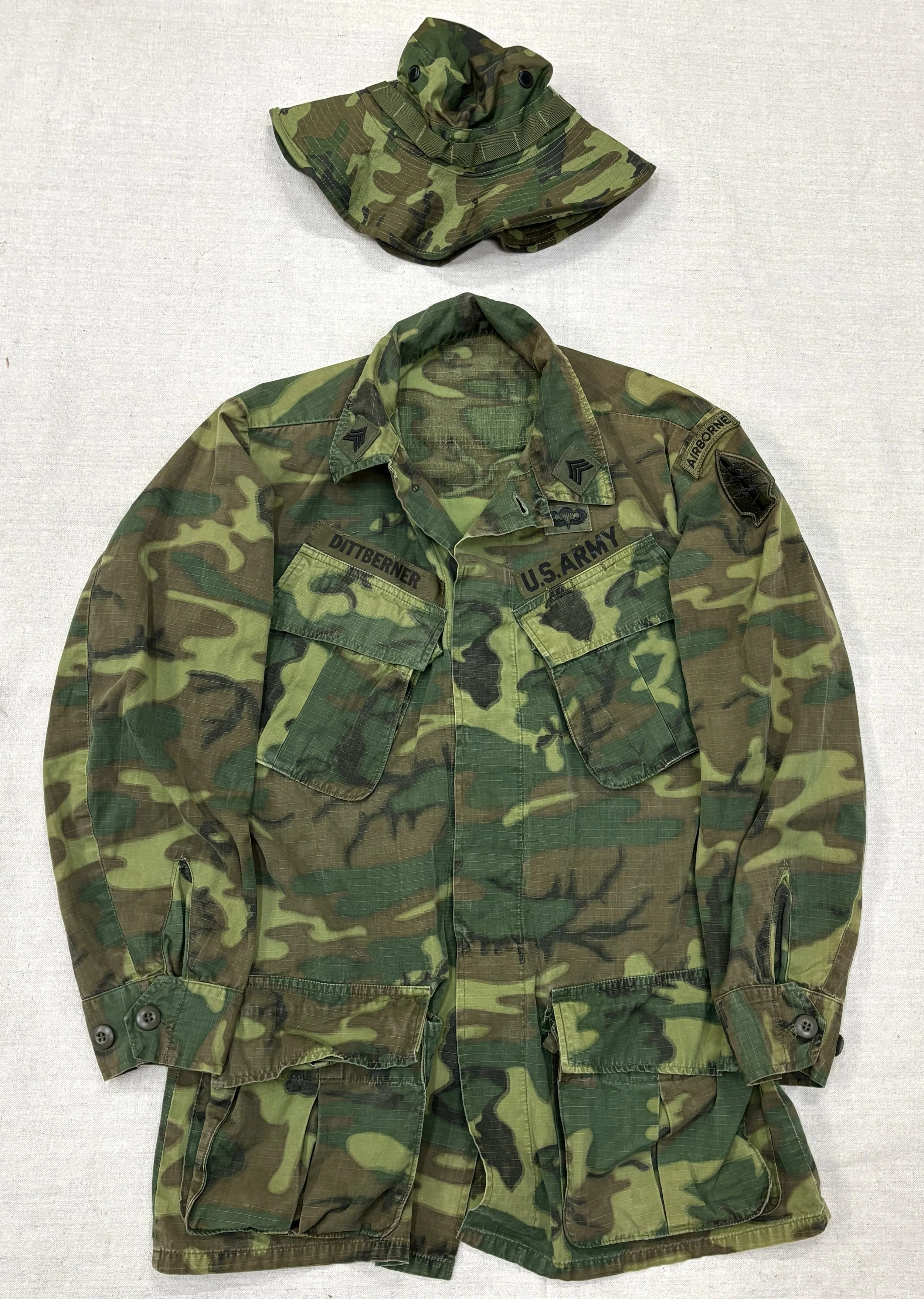
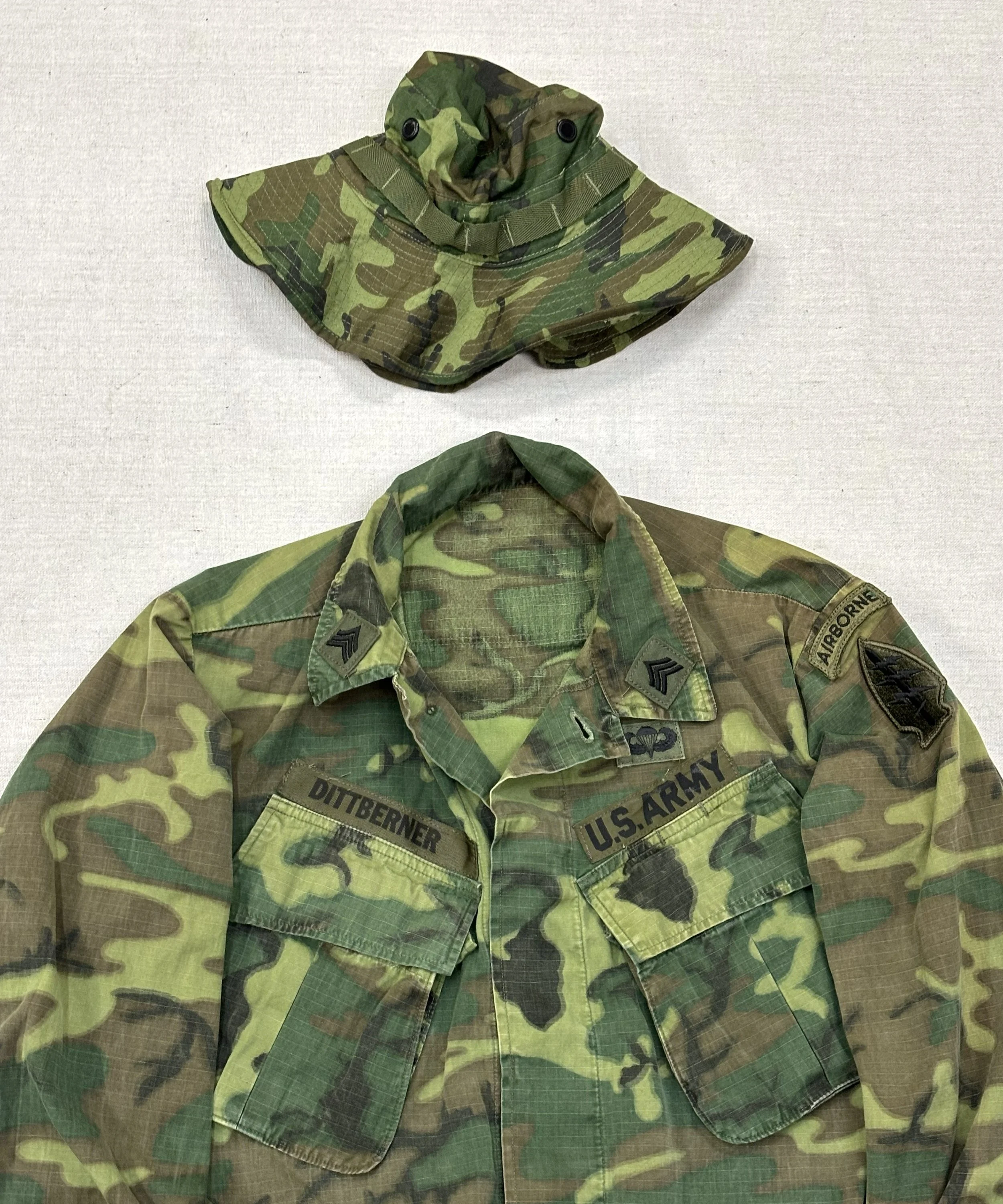
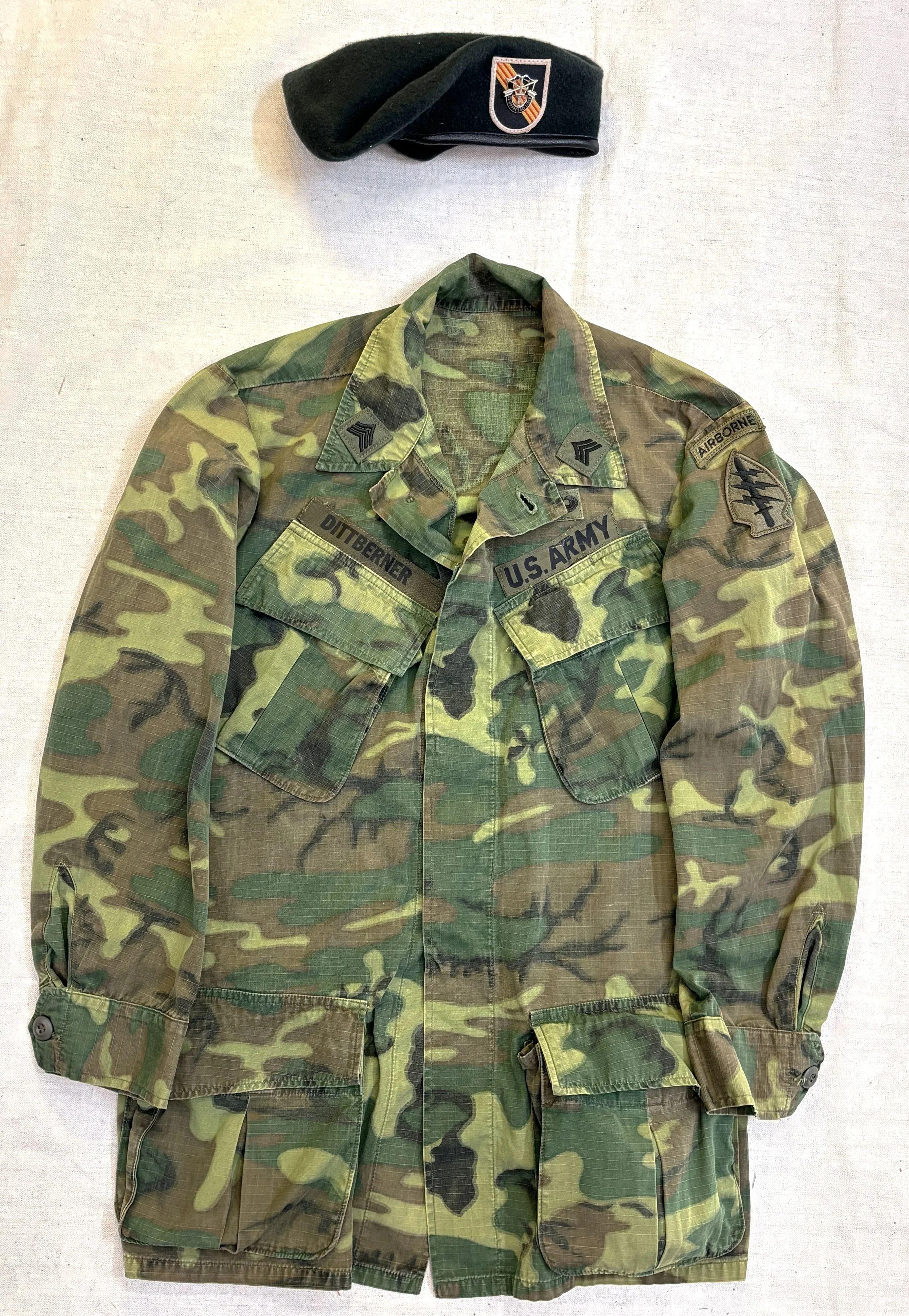
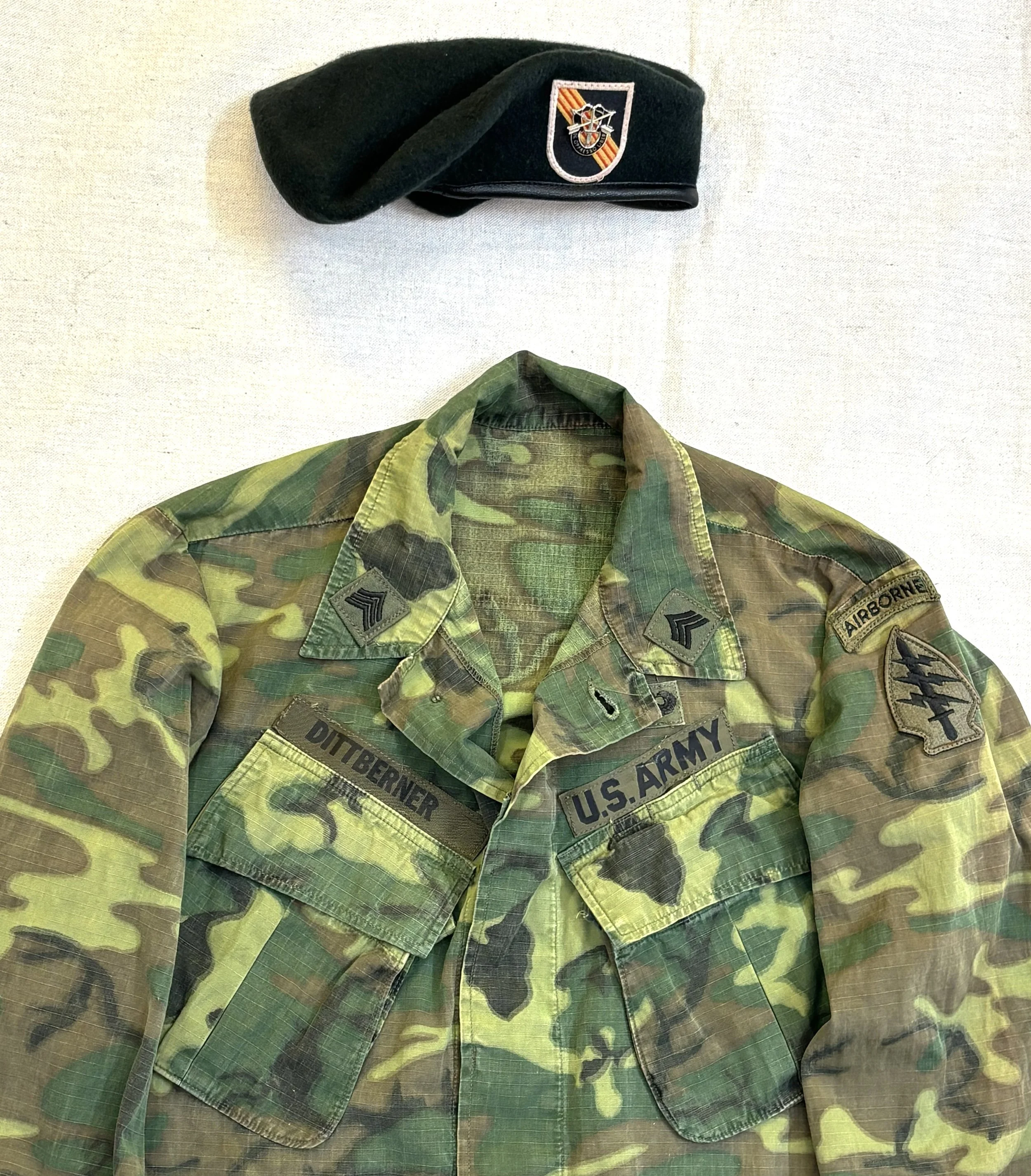
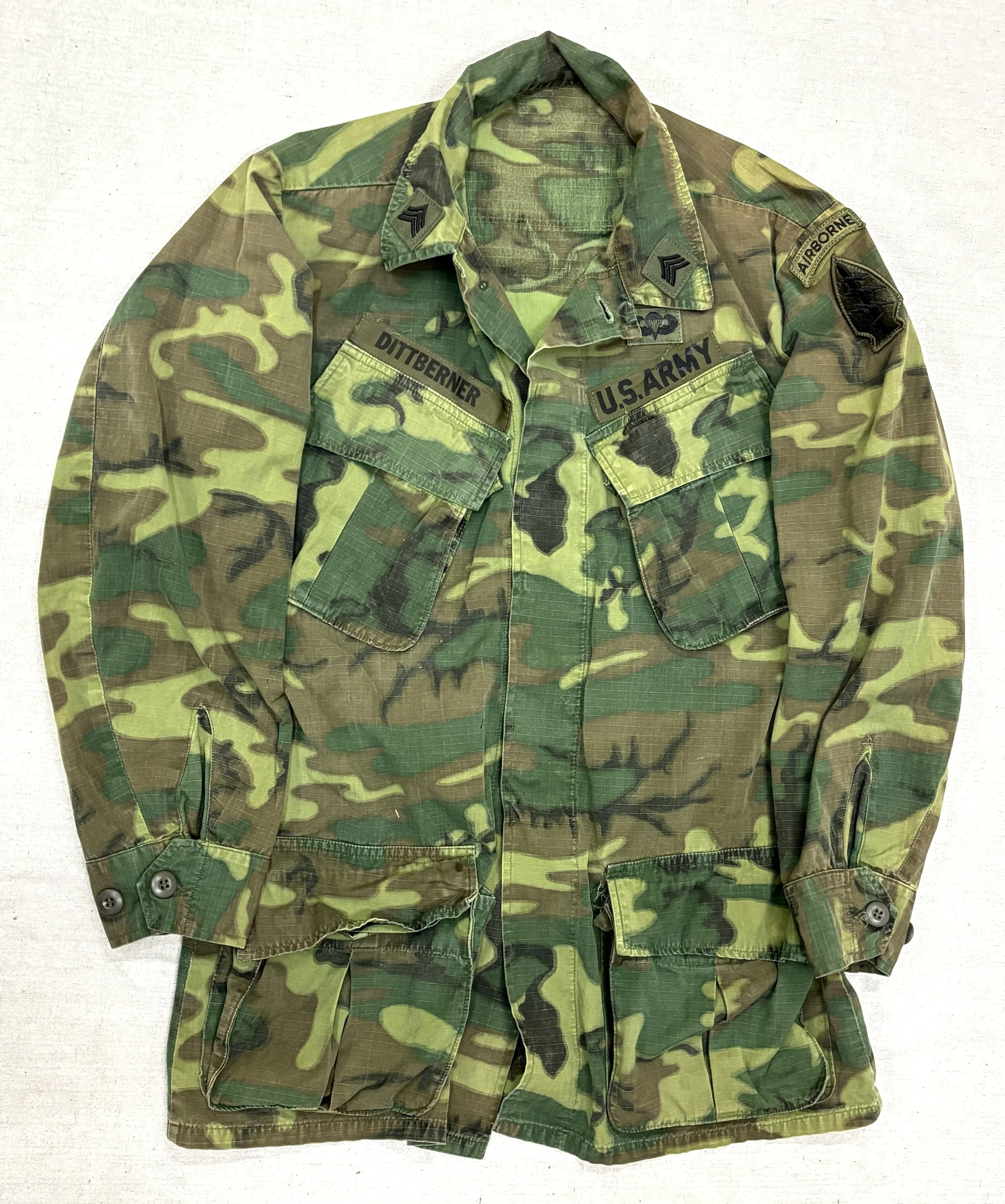
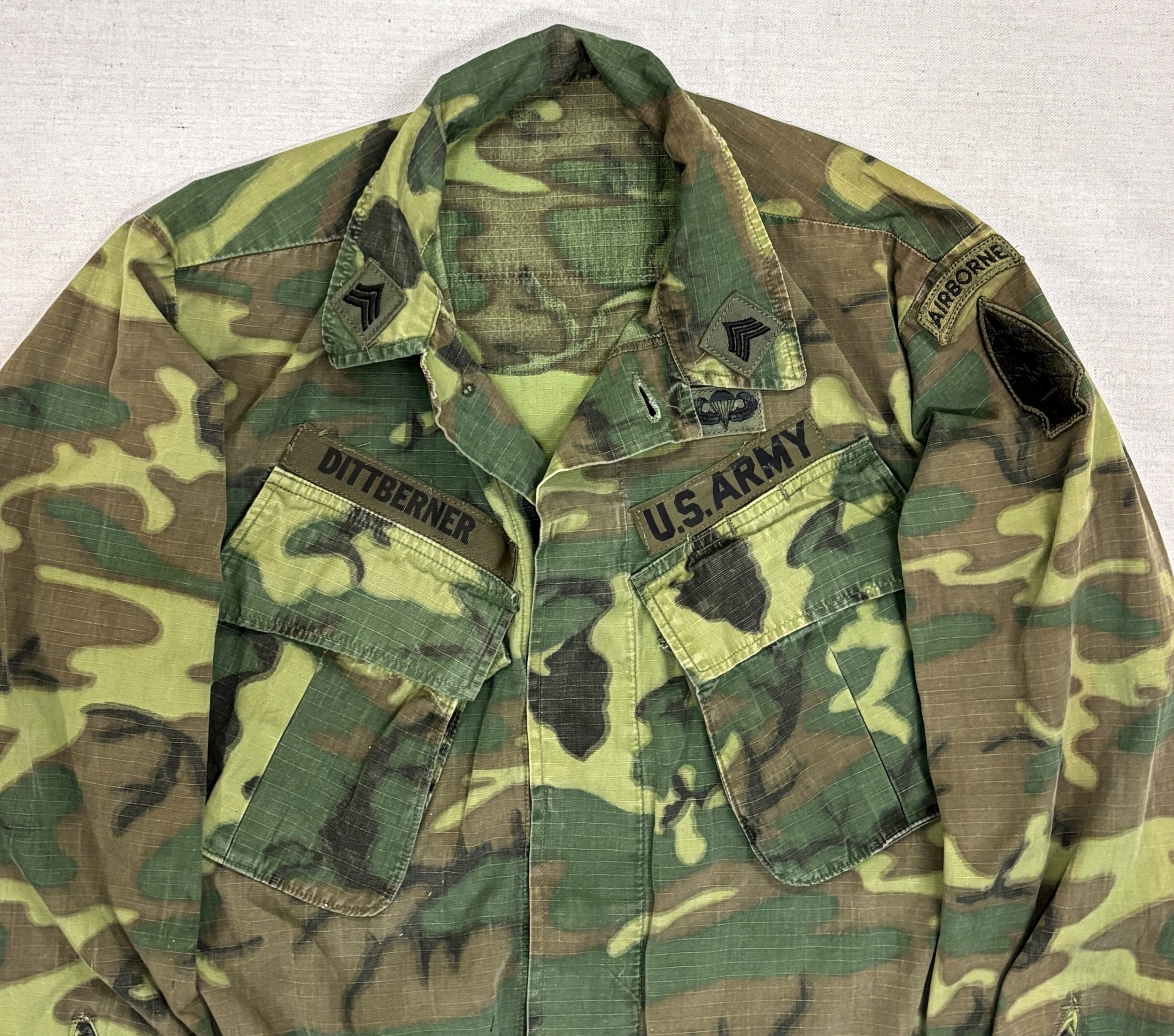
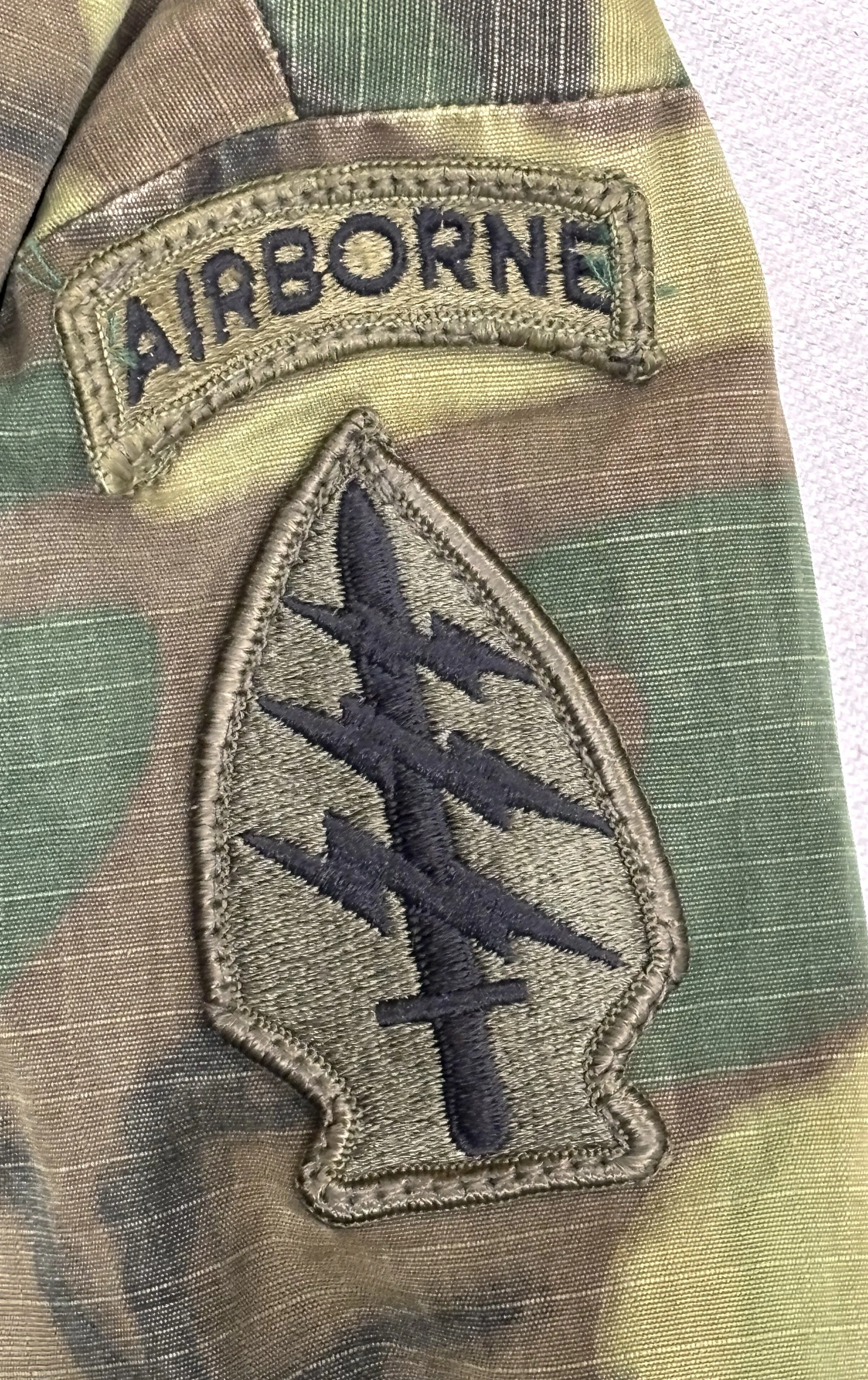
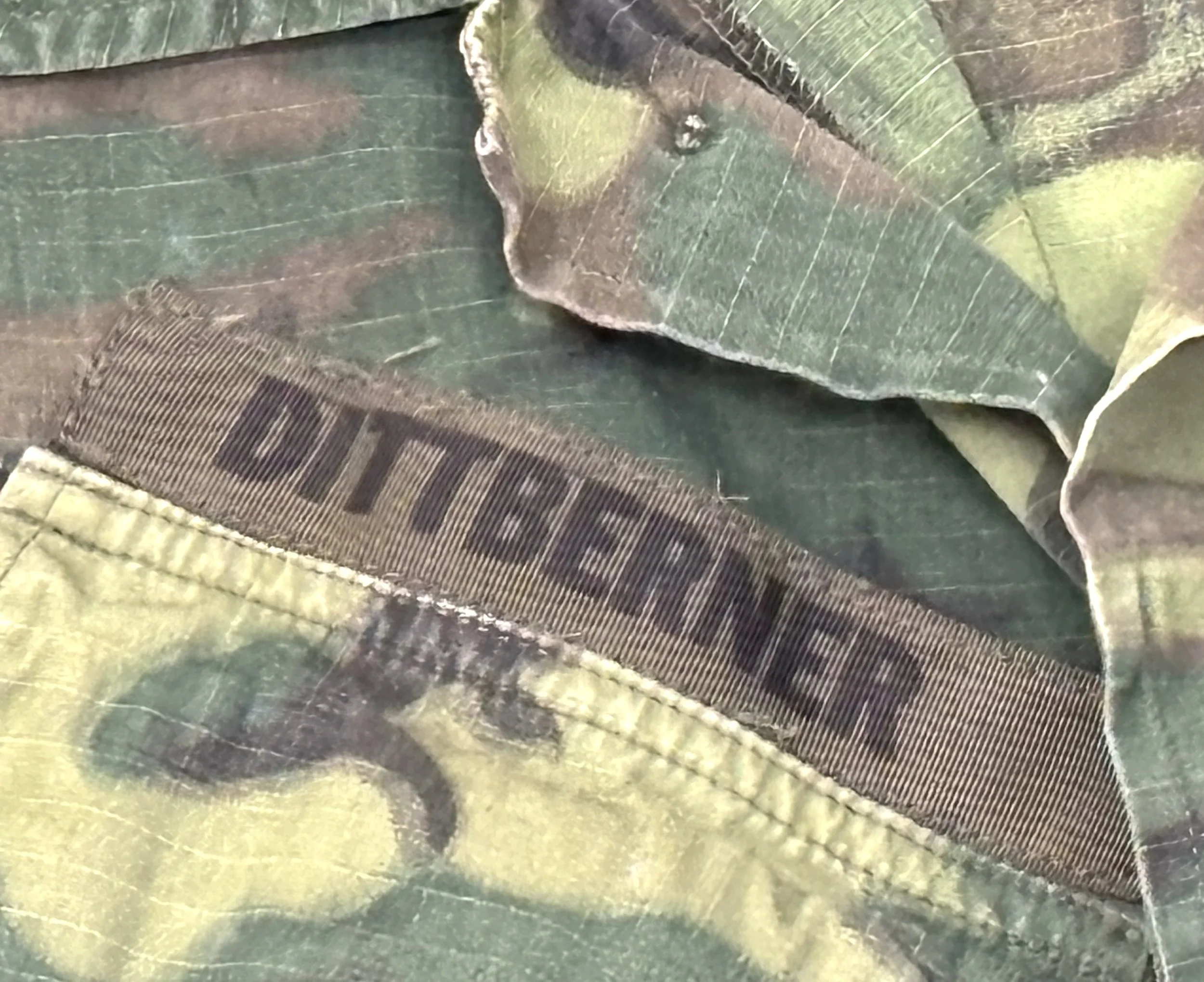
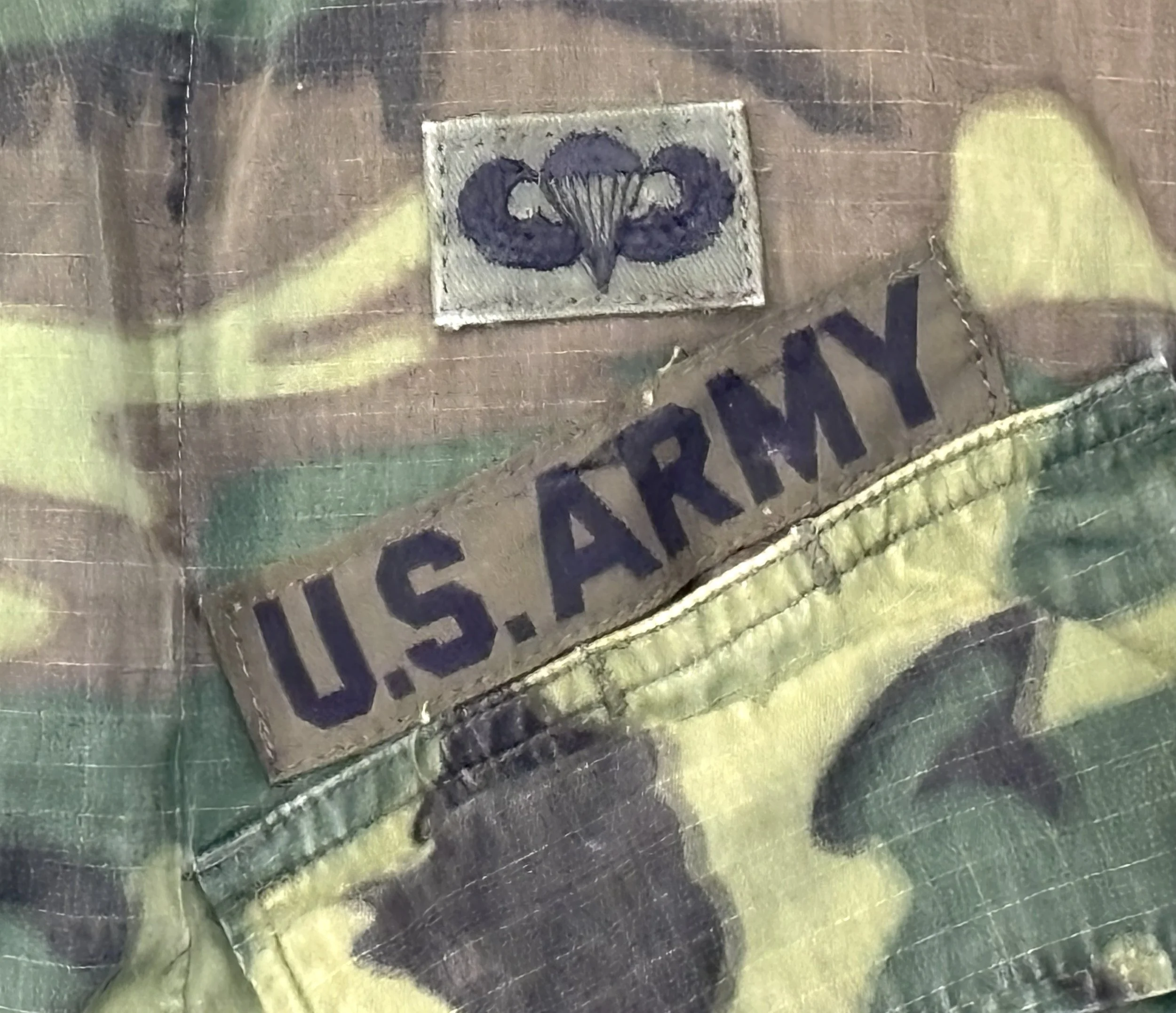
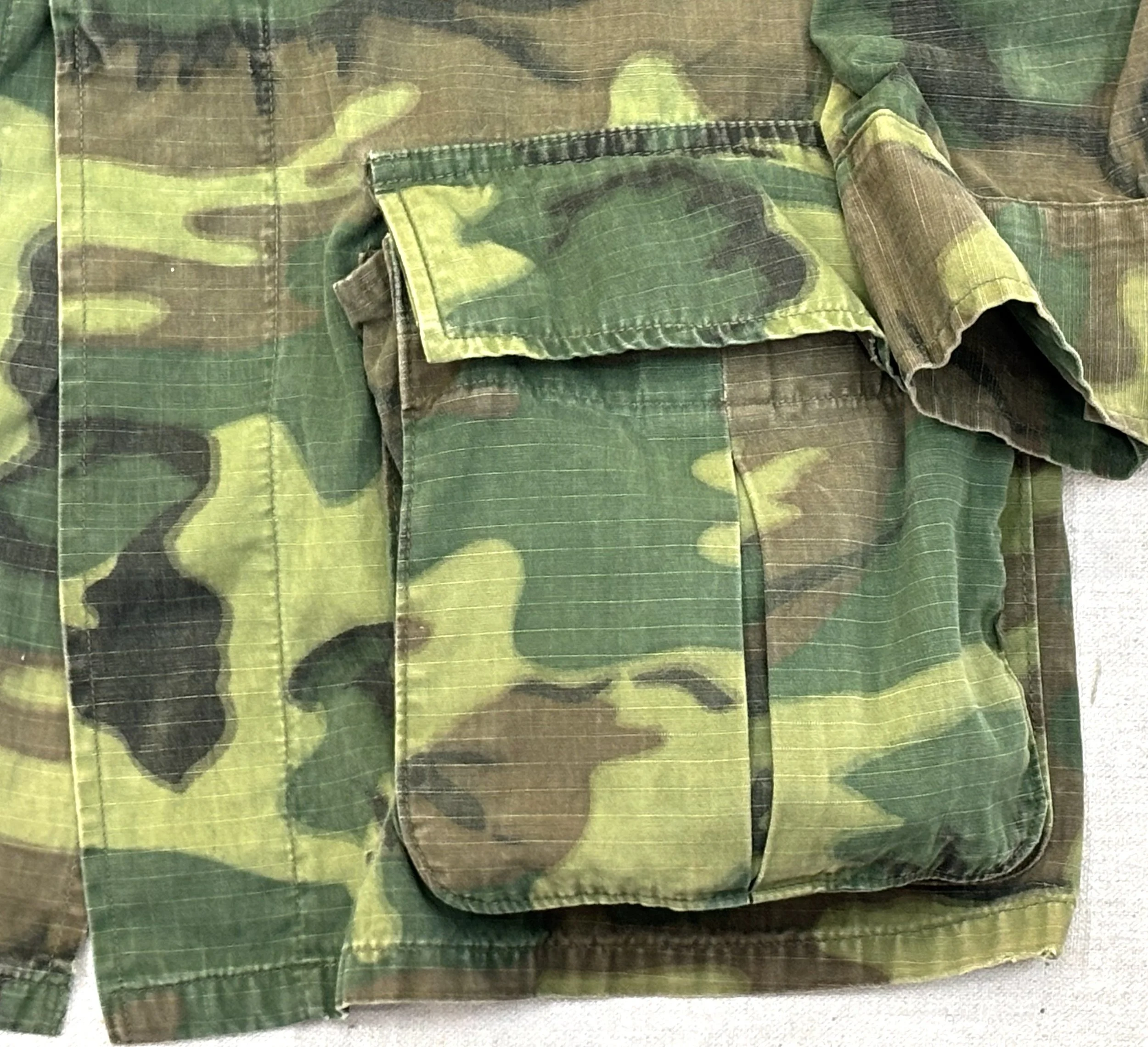
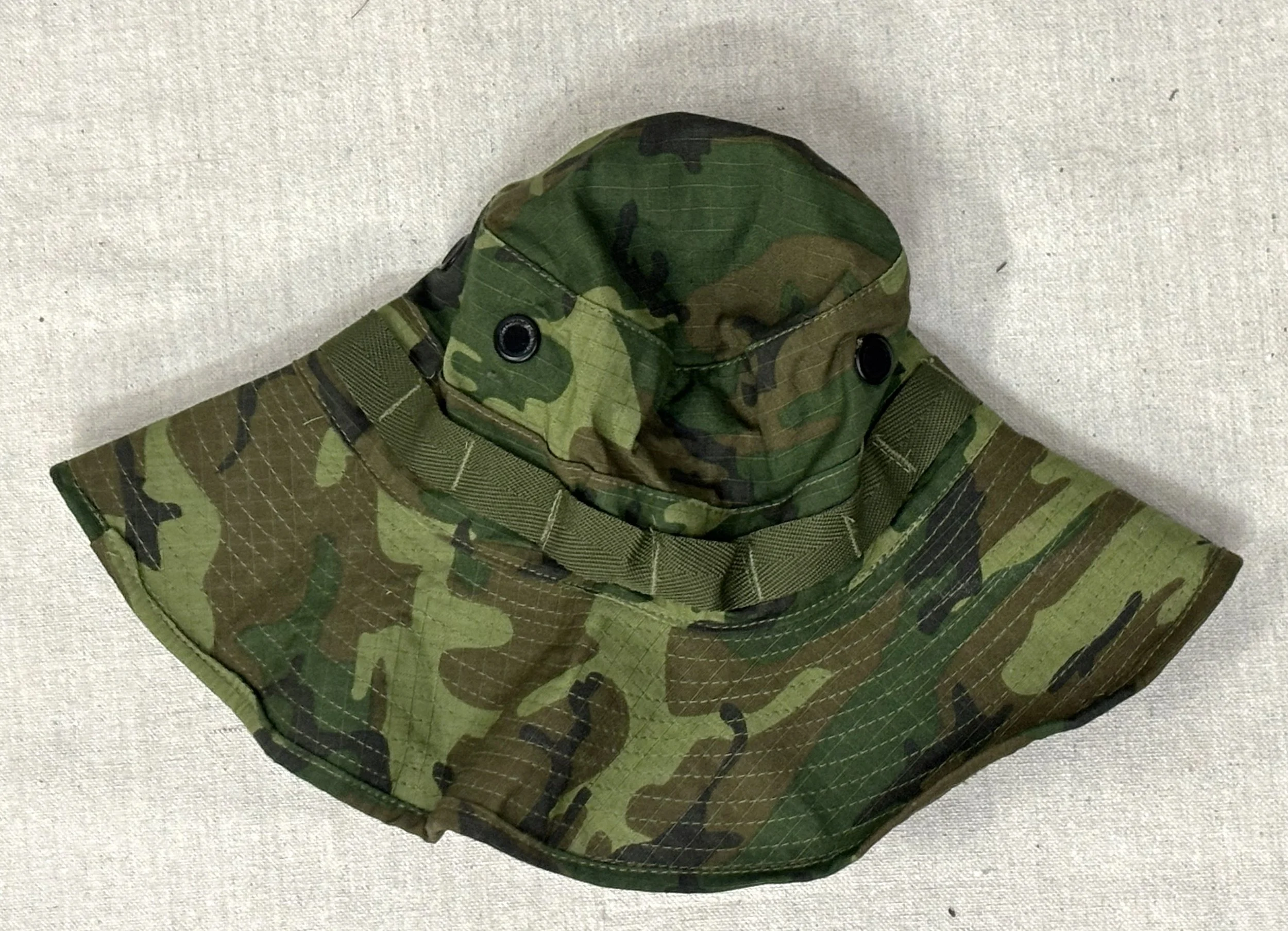
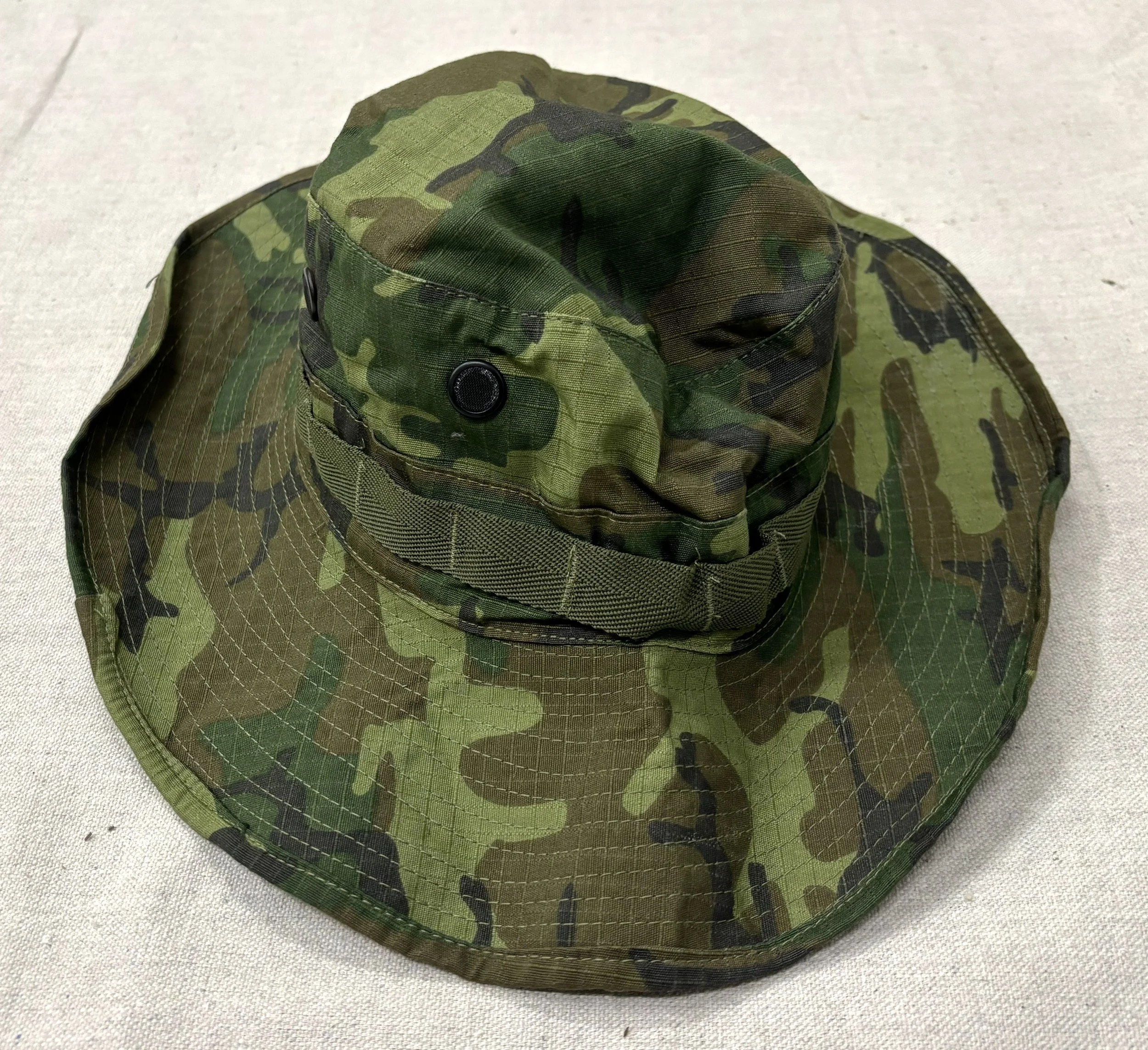
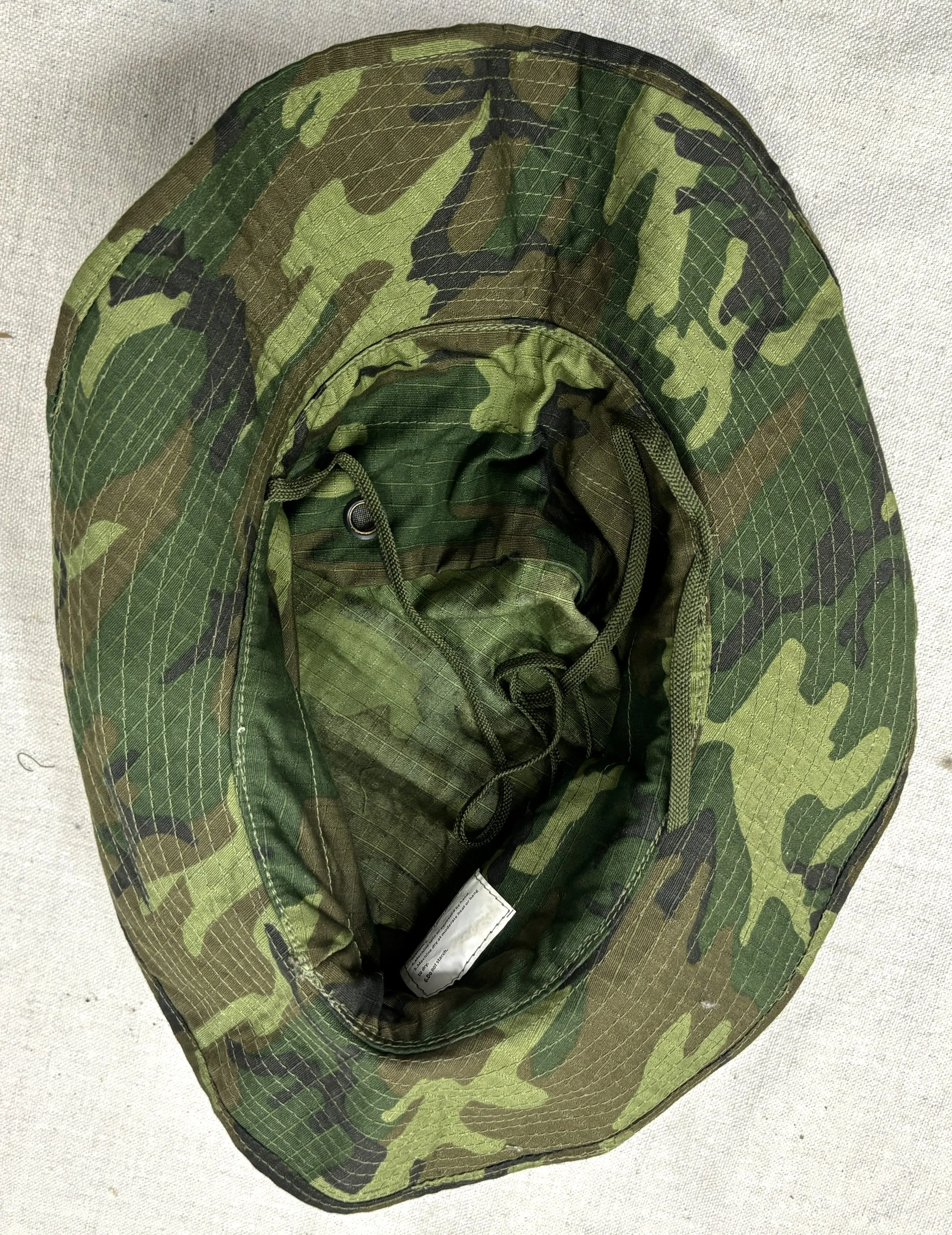
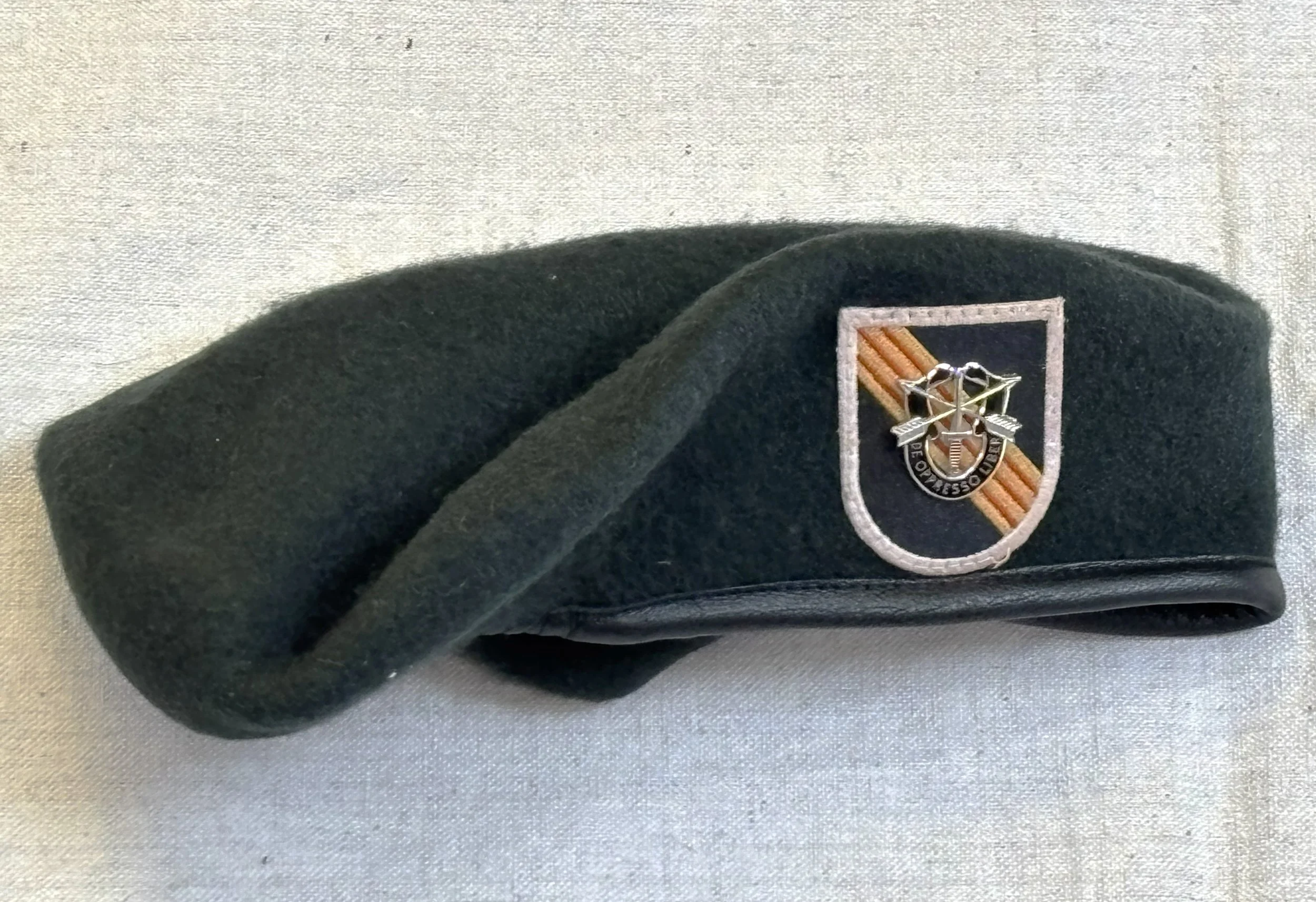
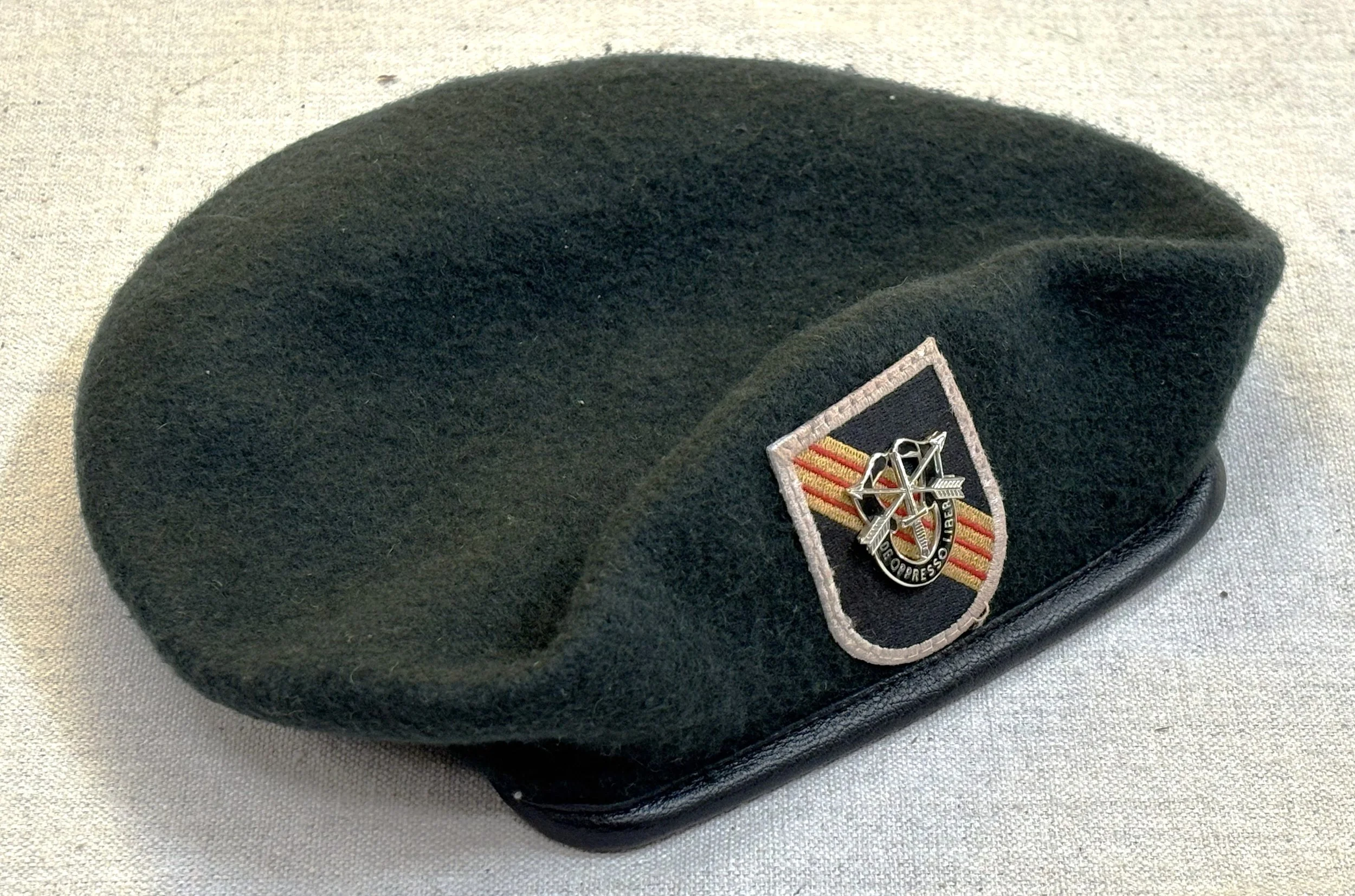
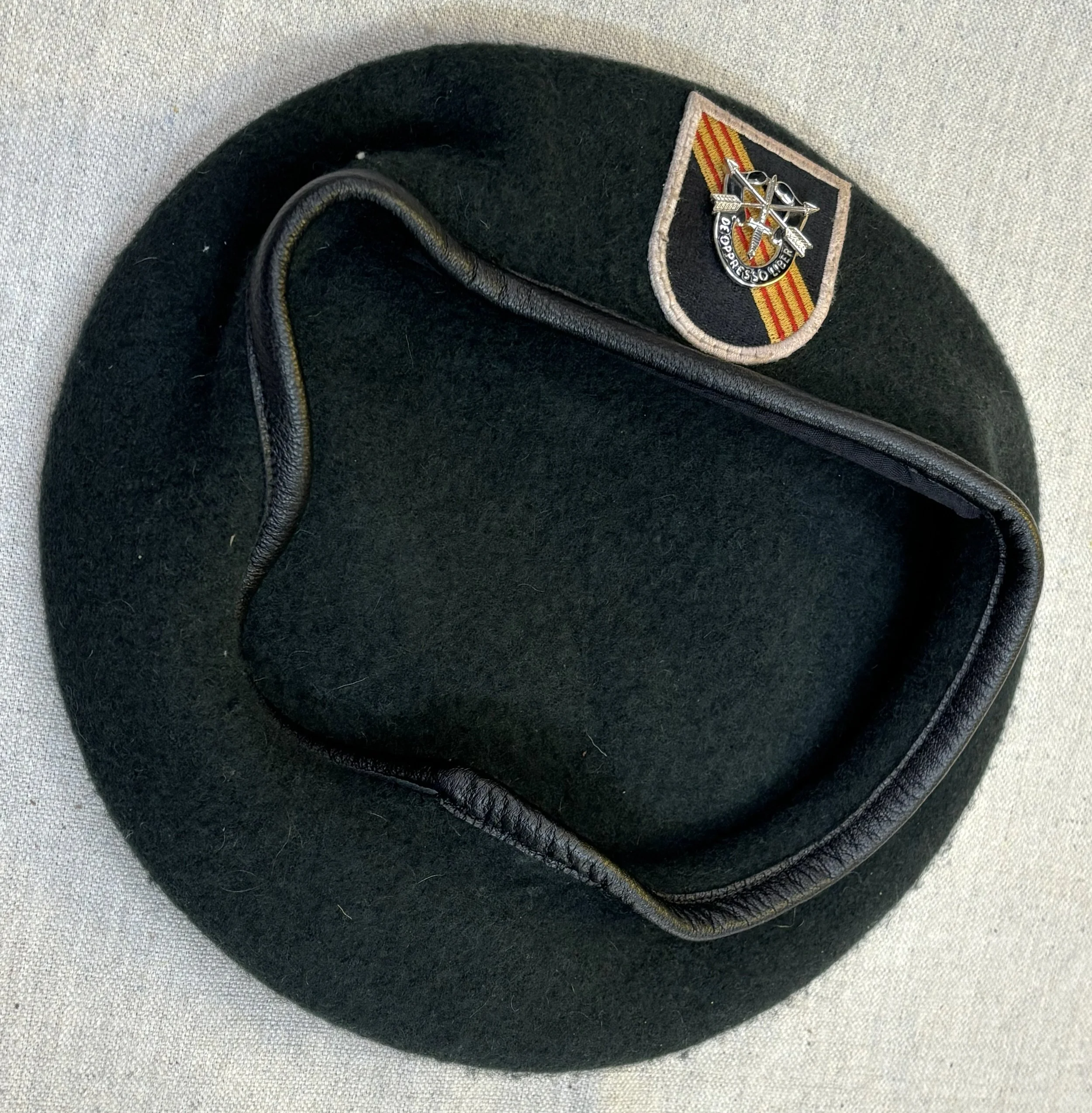
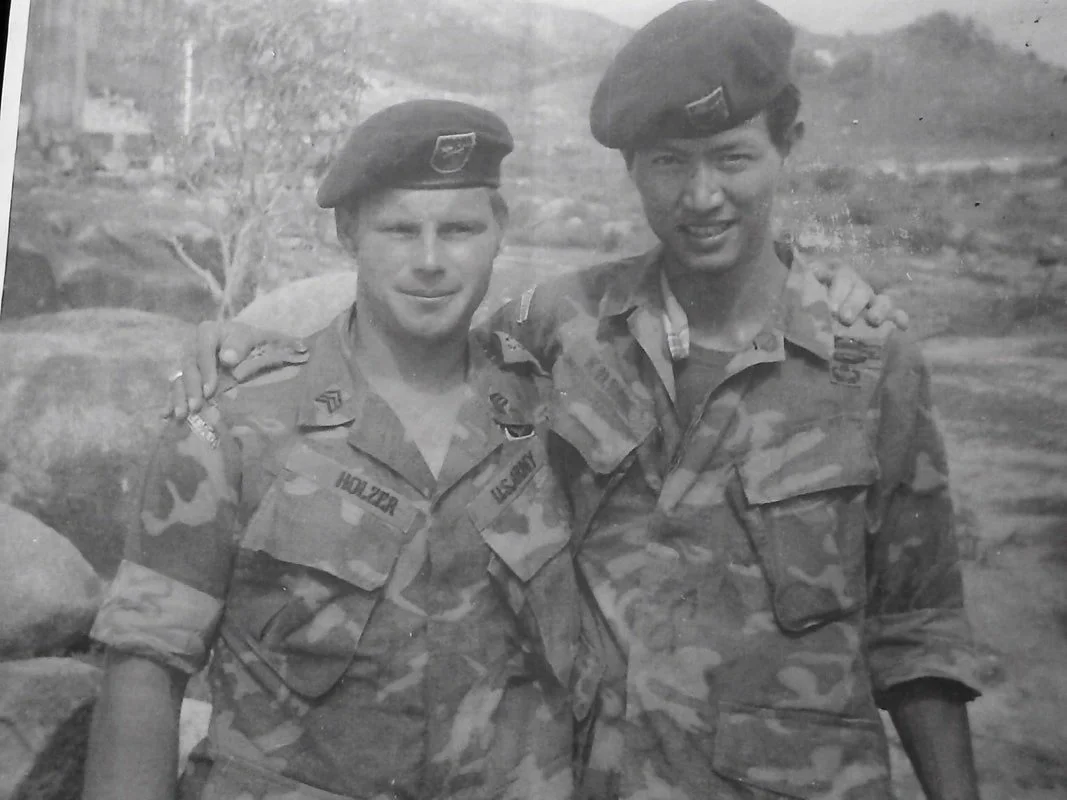
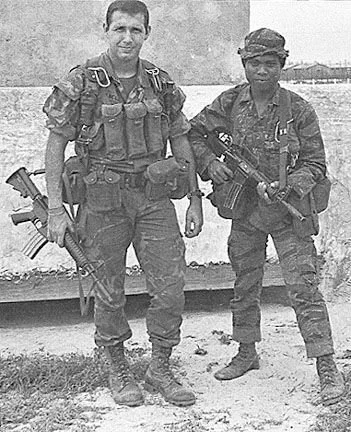
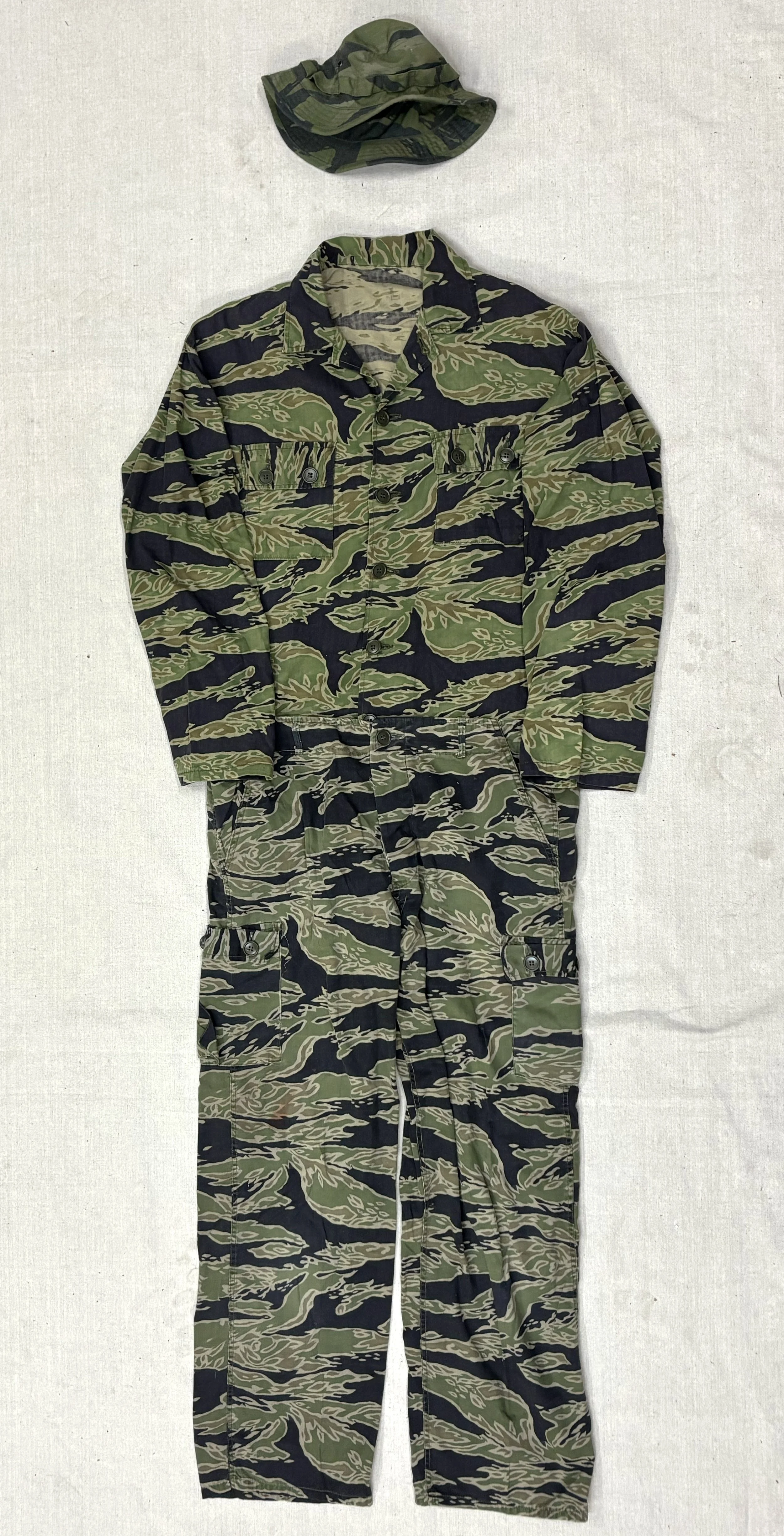
‘New’ Sergeant, 5 SF. ERDL pattern Camouflage, 1969-70:
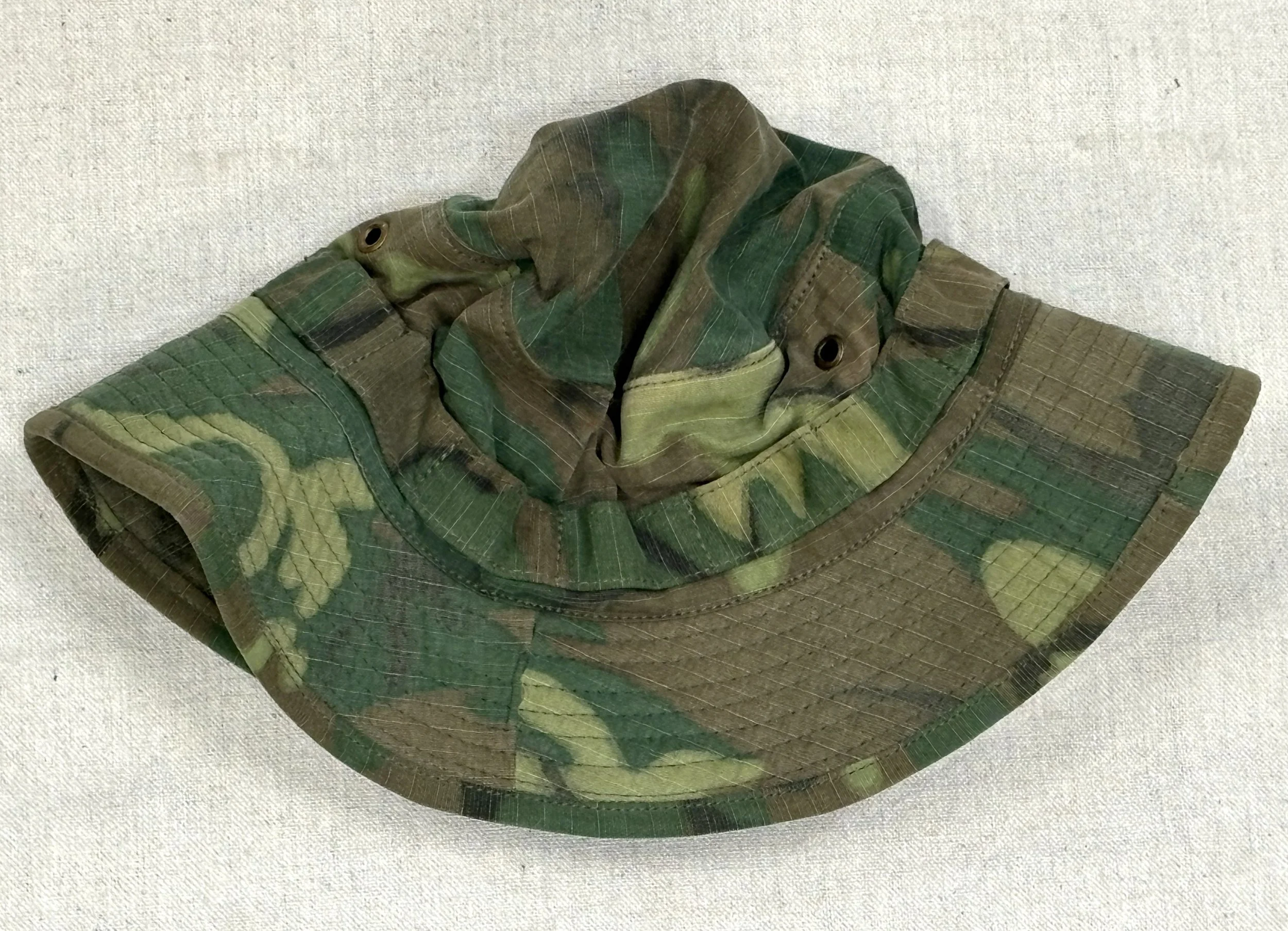
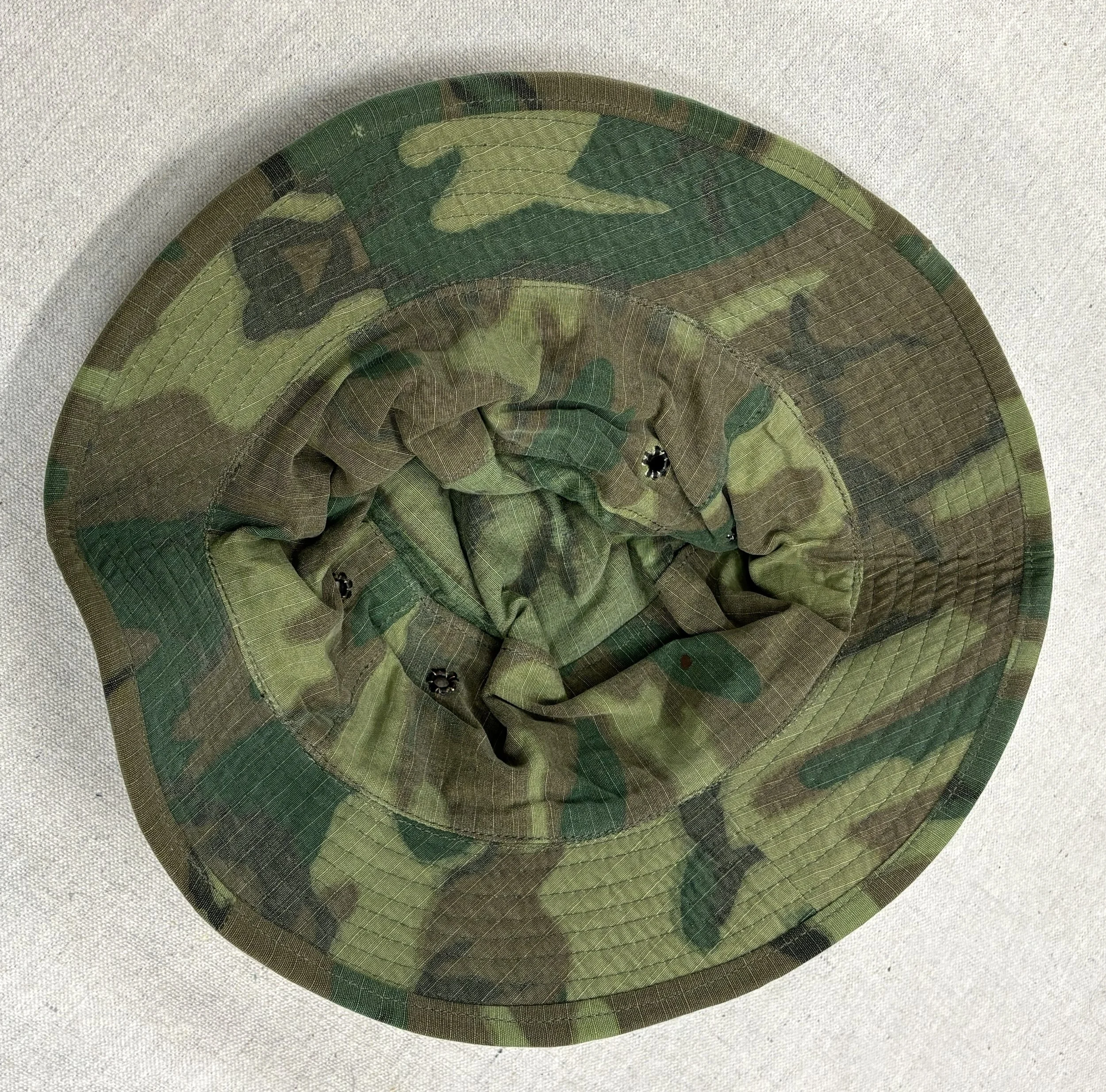
Introduced in 1967, the U.S. ERDL Camouflage popular 4-color woodland-type pattern was applied to jungle fatigues, which had recently come into issue. These Camouflaged “Jungle Fatigues” were tear-resistant and somewhat waterproofed, but being lightweight would wear out fairly quickly in the beatings they would take. The ERDLs would be issued to soldiers operating with Special Forces and LRRP units, as well as various reconnaissance, sniper, and forward air controller teams. Some called it the "leaf pattern," And it wasn’t long before it was used right alongside the older Duck-Hunter and Tiger Striped pattern uniforms. The rank soon went from sleeve to collar, and soldiers found it easier to find in “American Medium and Large sizes”. You’ll see Army tiger stripes on big guys, sometimes made from 2-3 ARVN uniforms put together in a patchwork design.
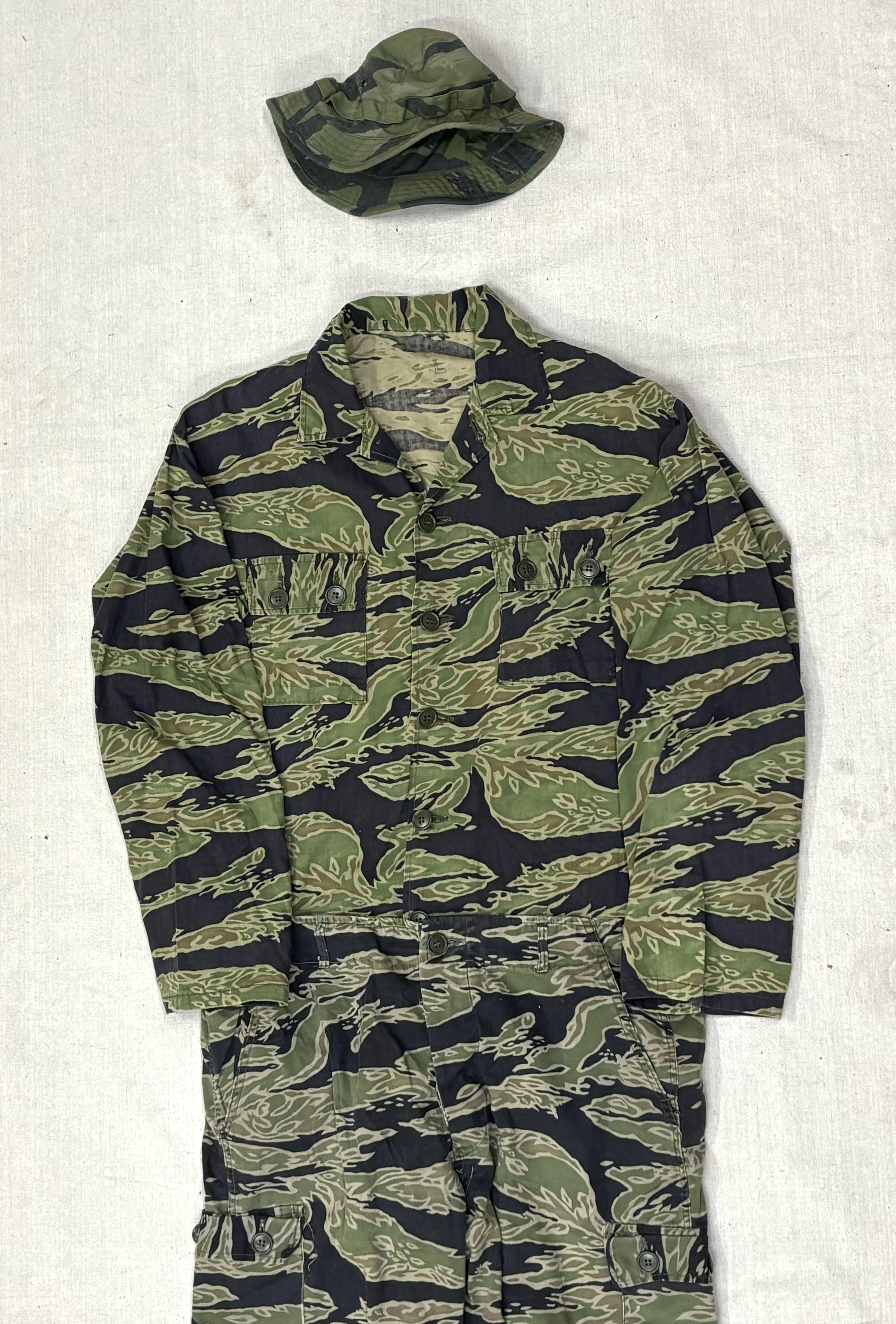
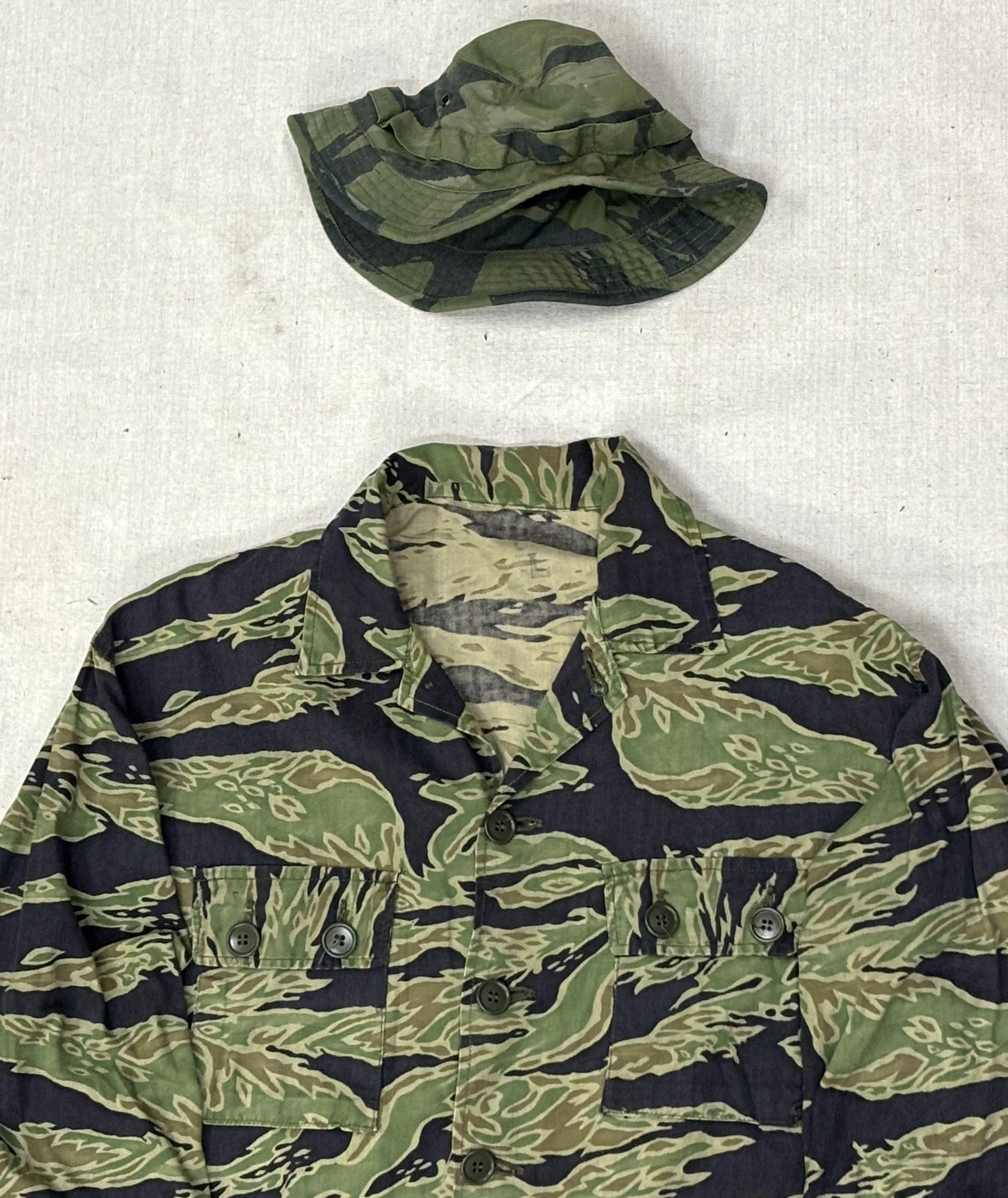
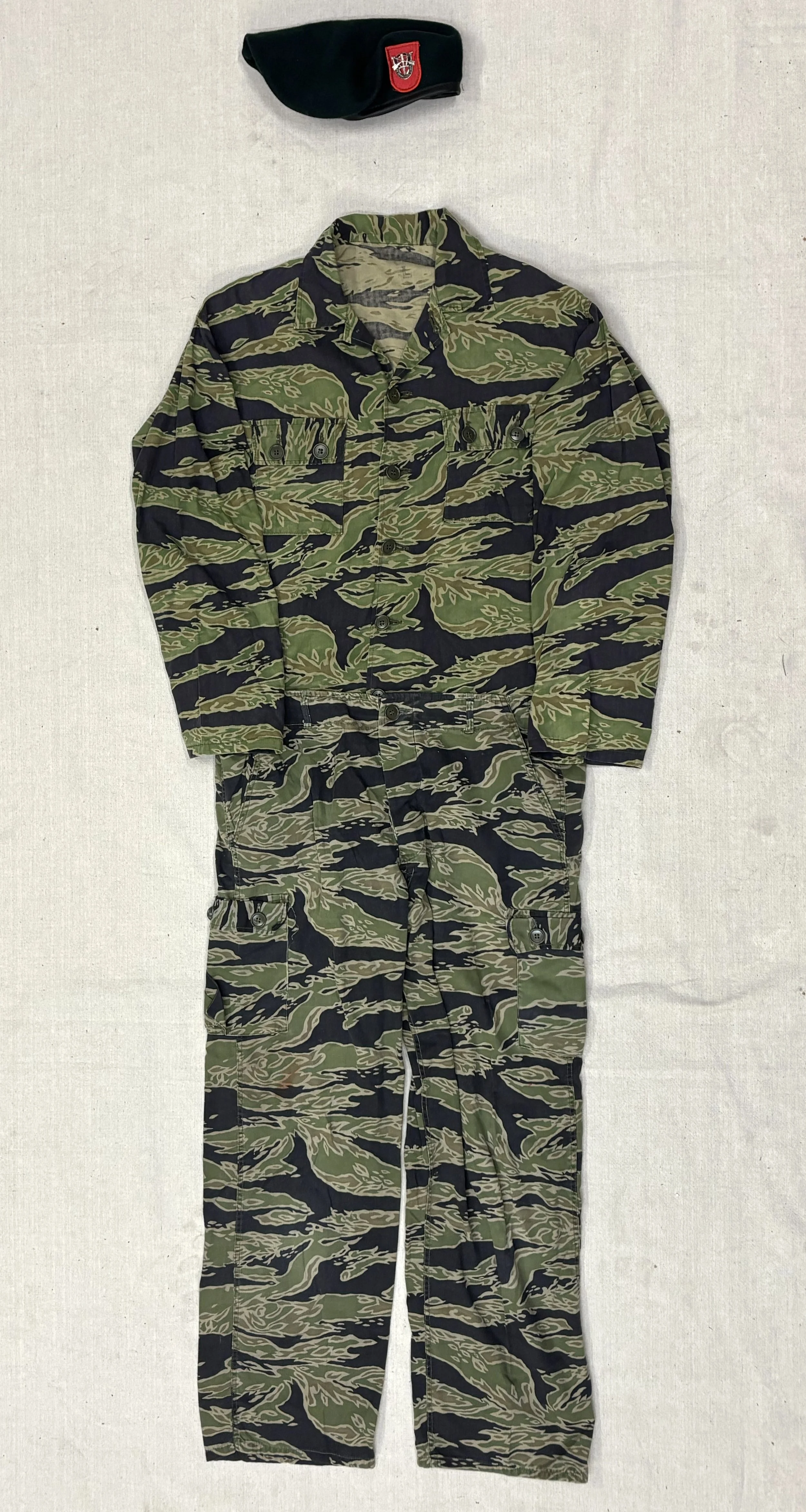
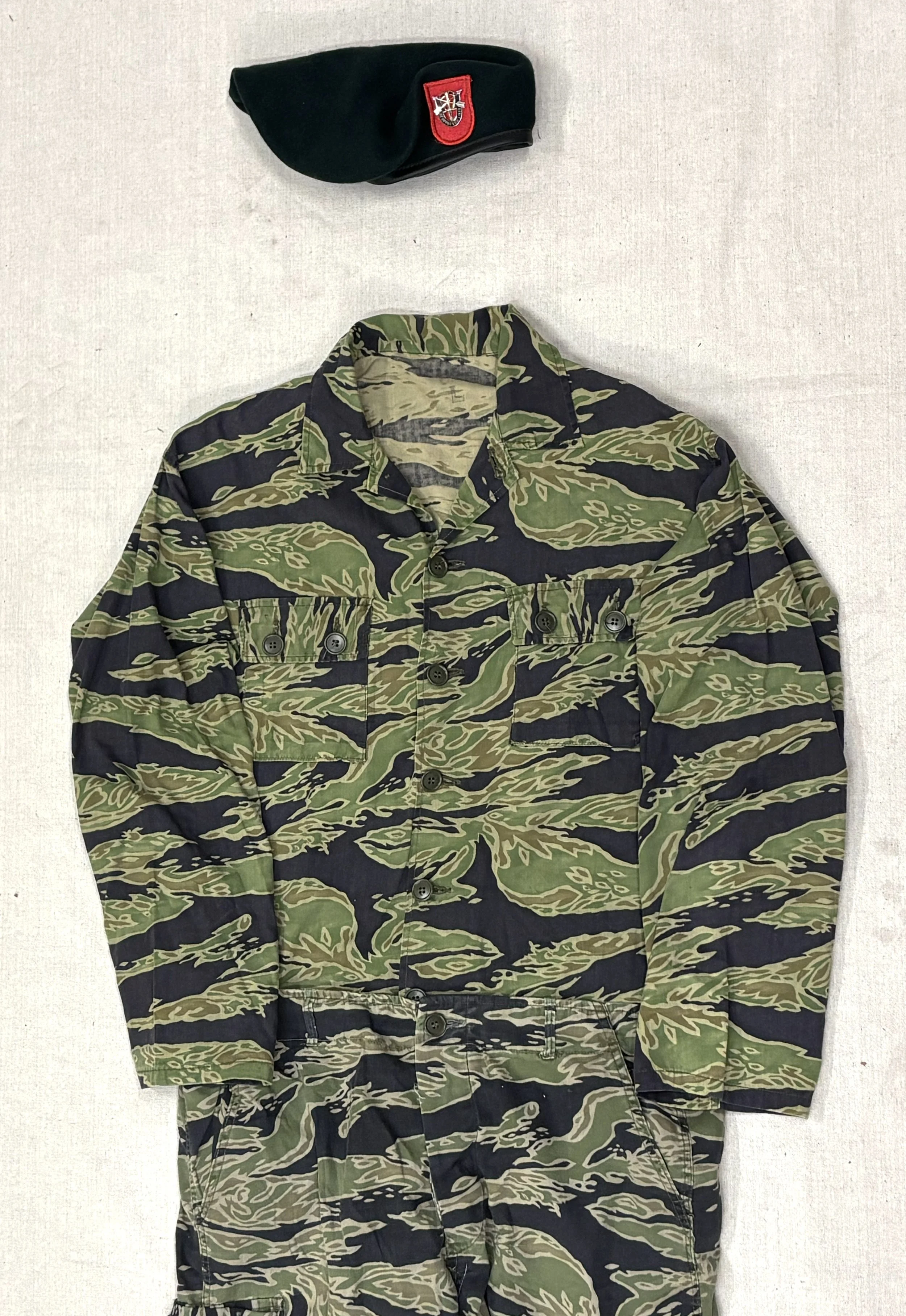
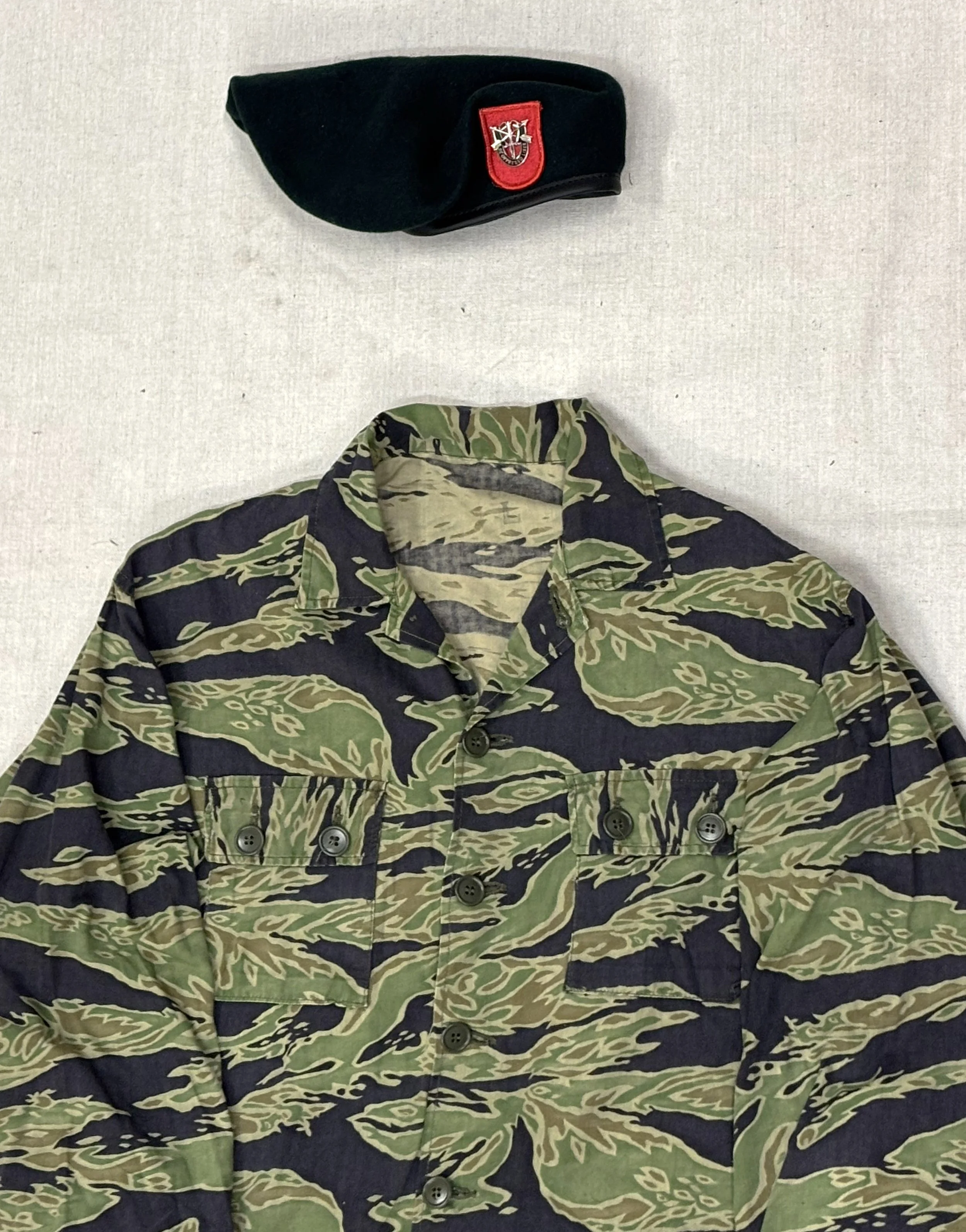
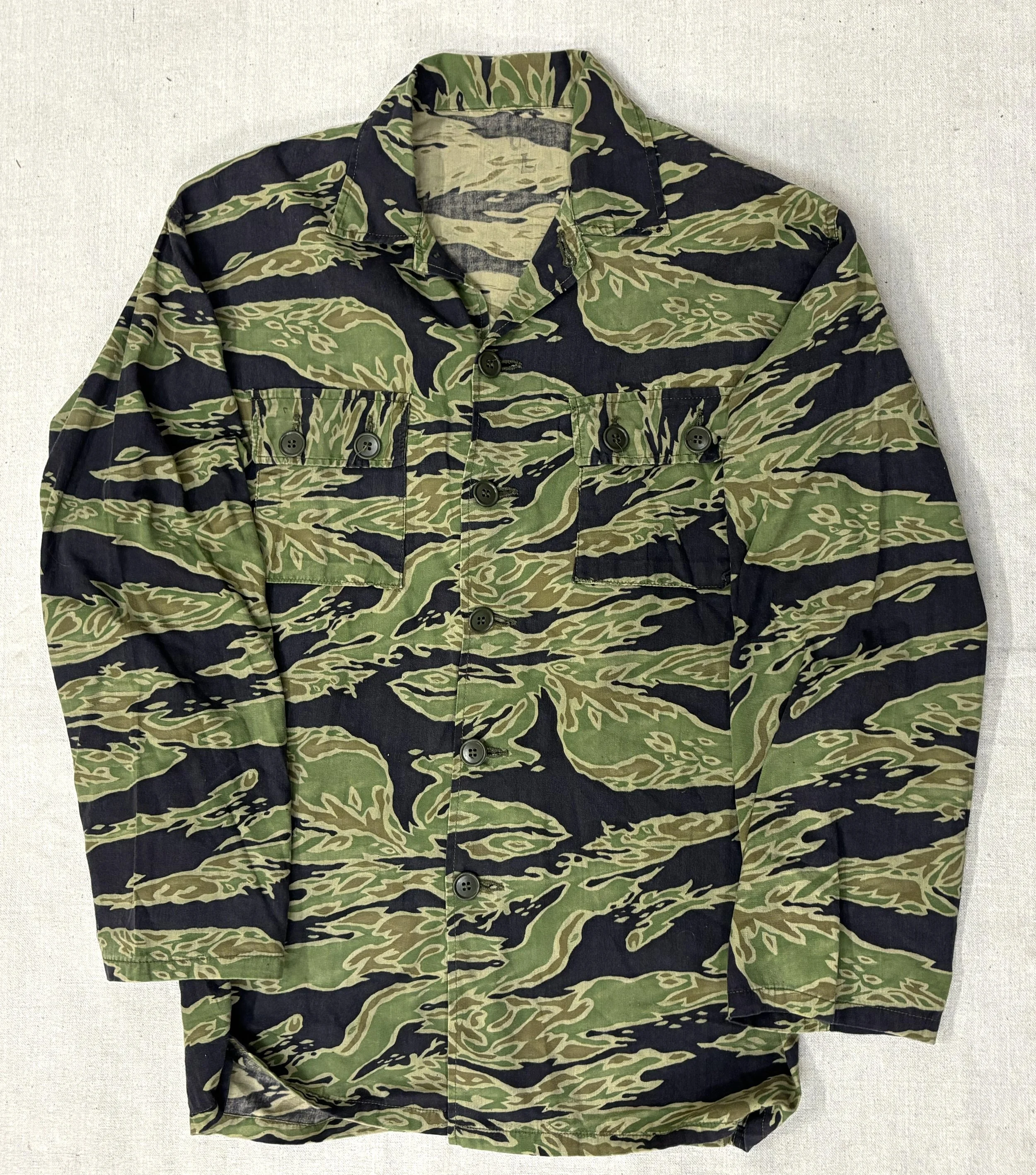
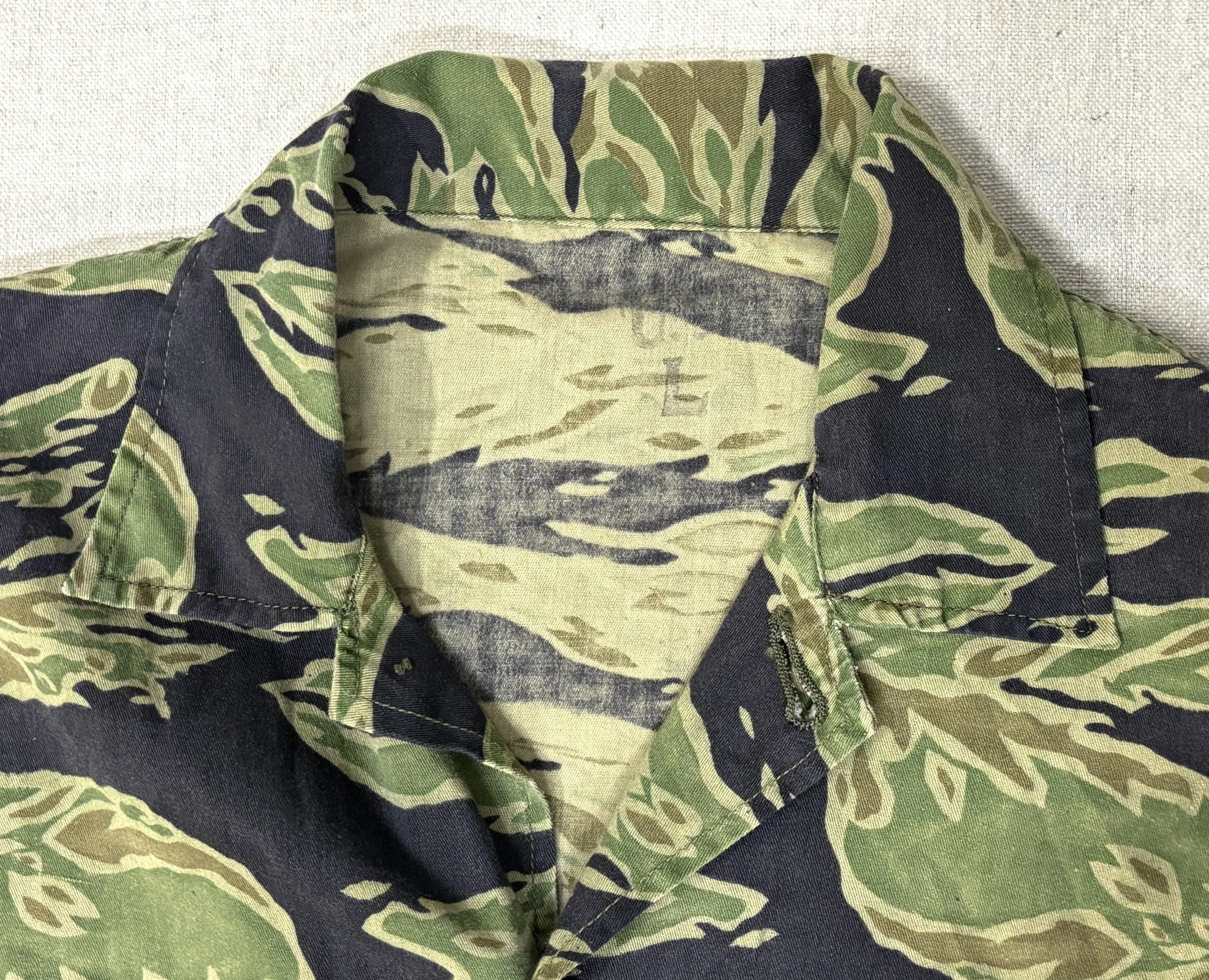
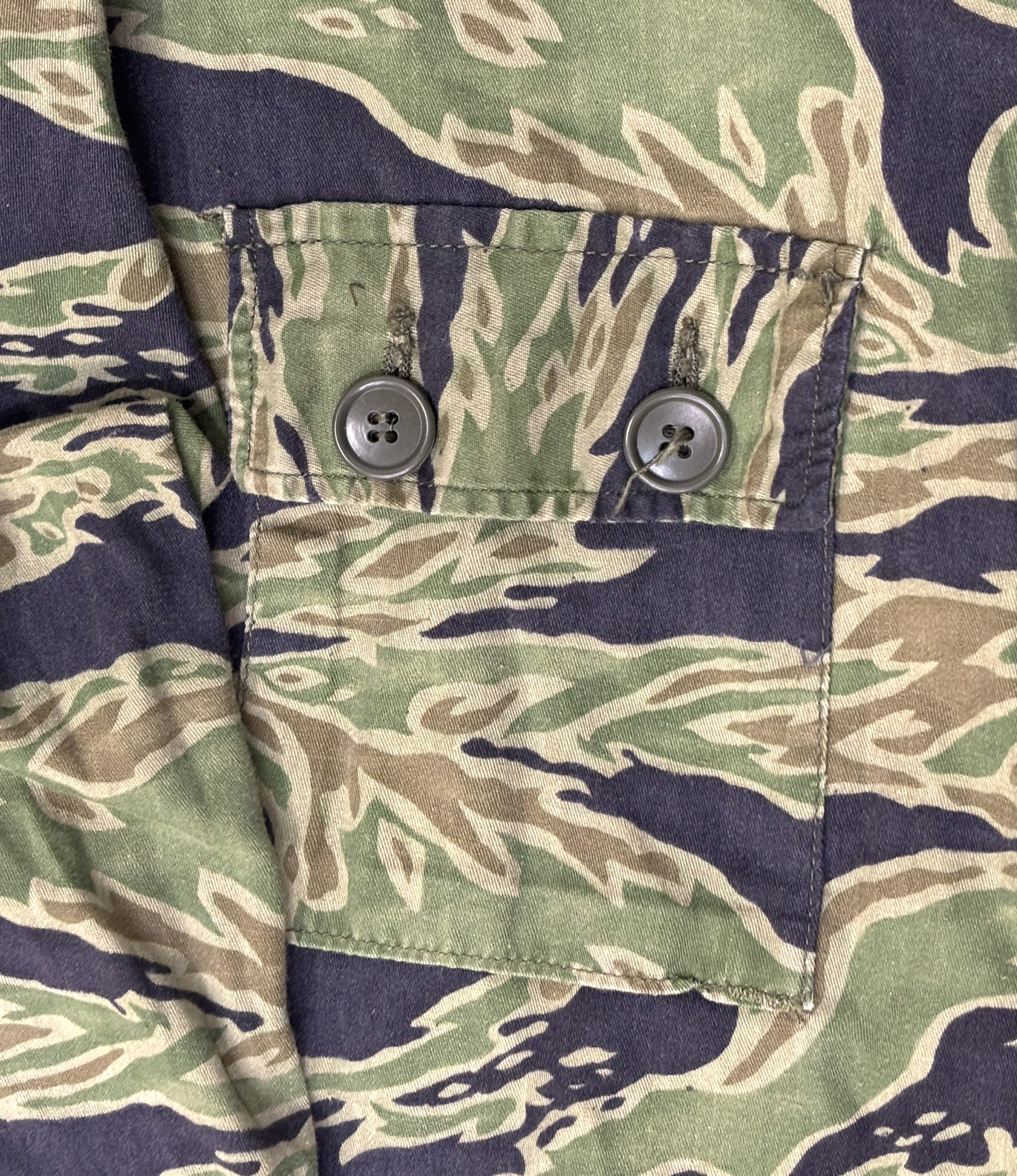
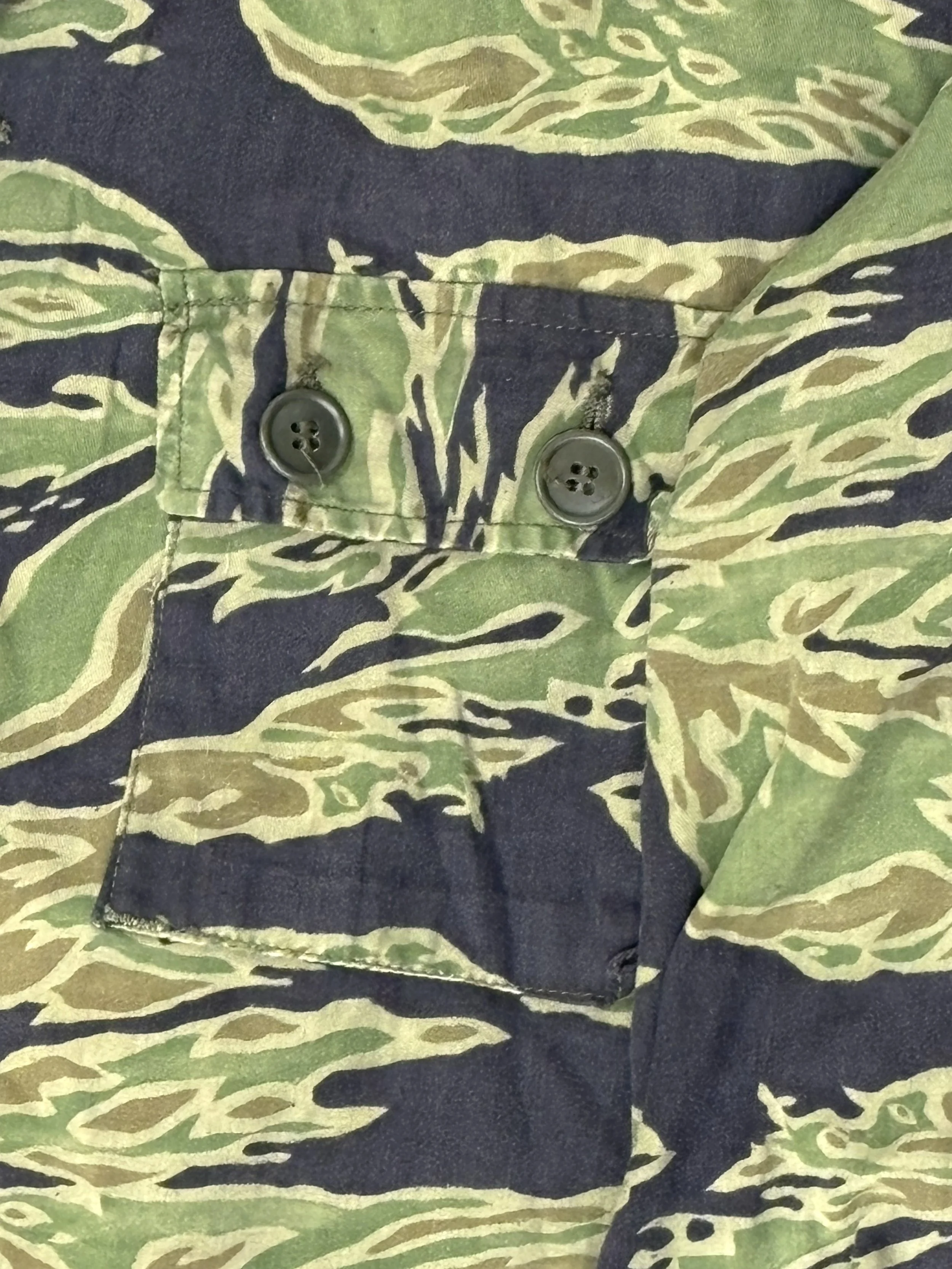
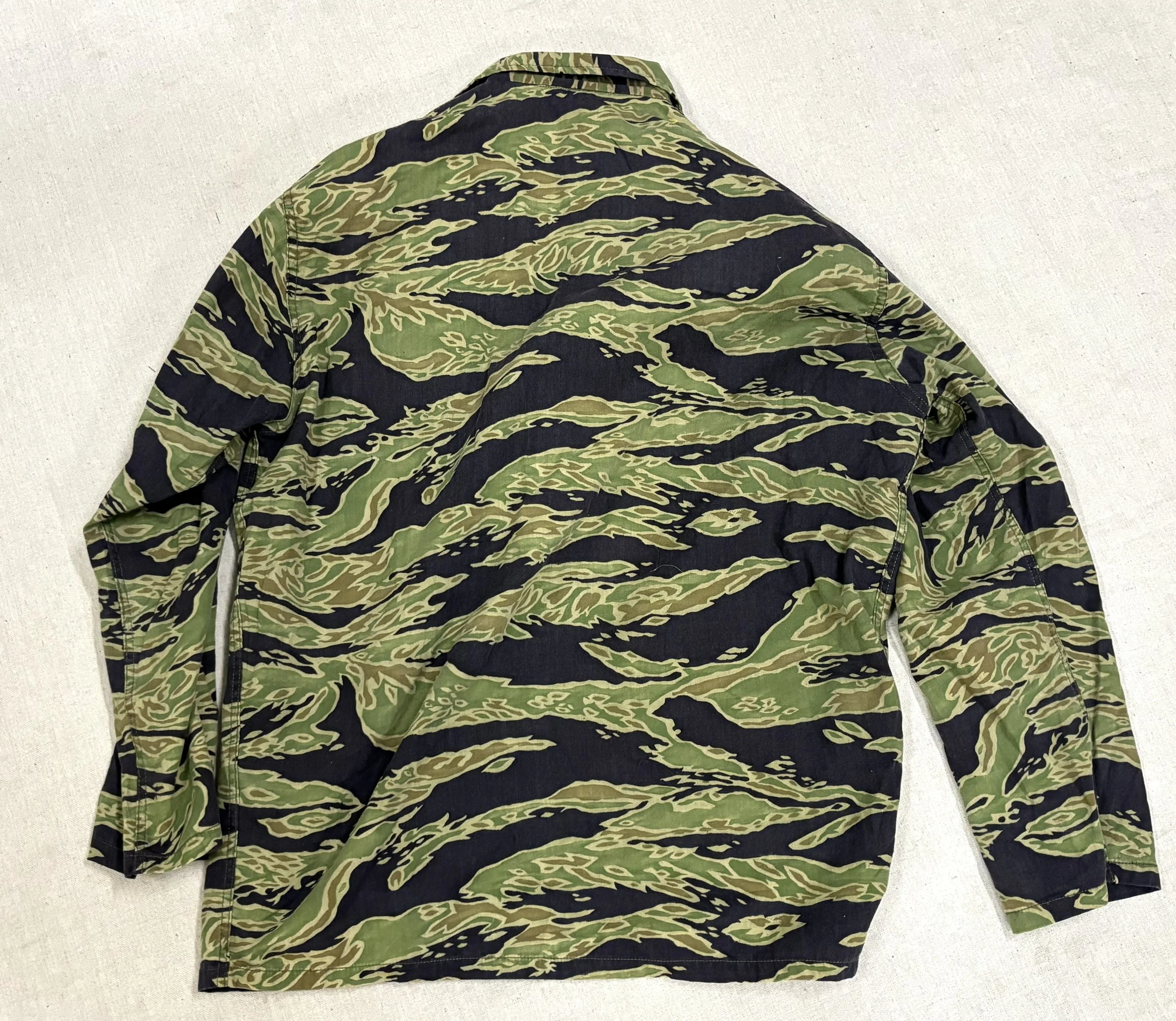
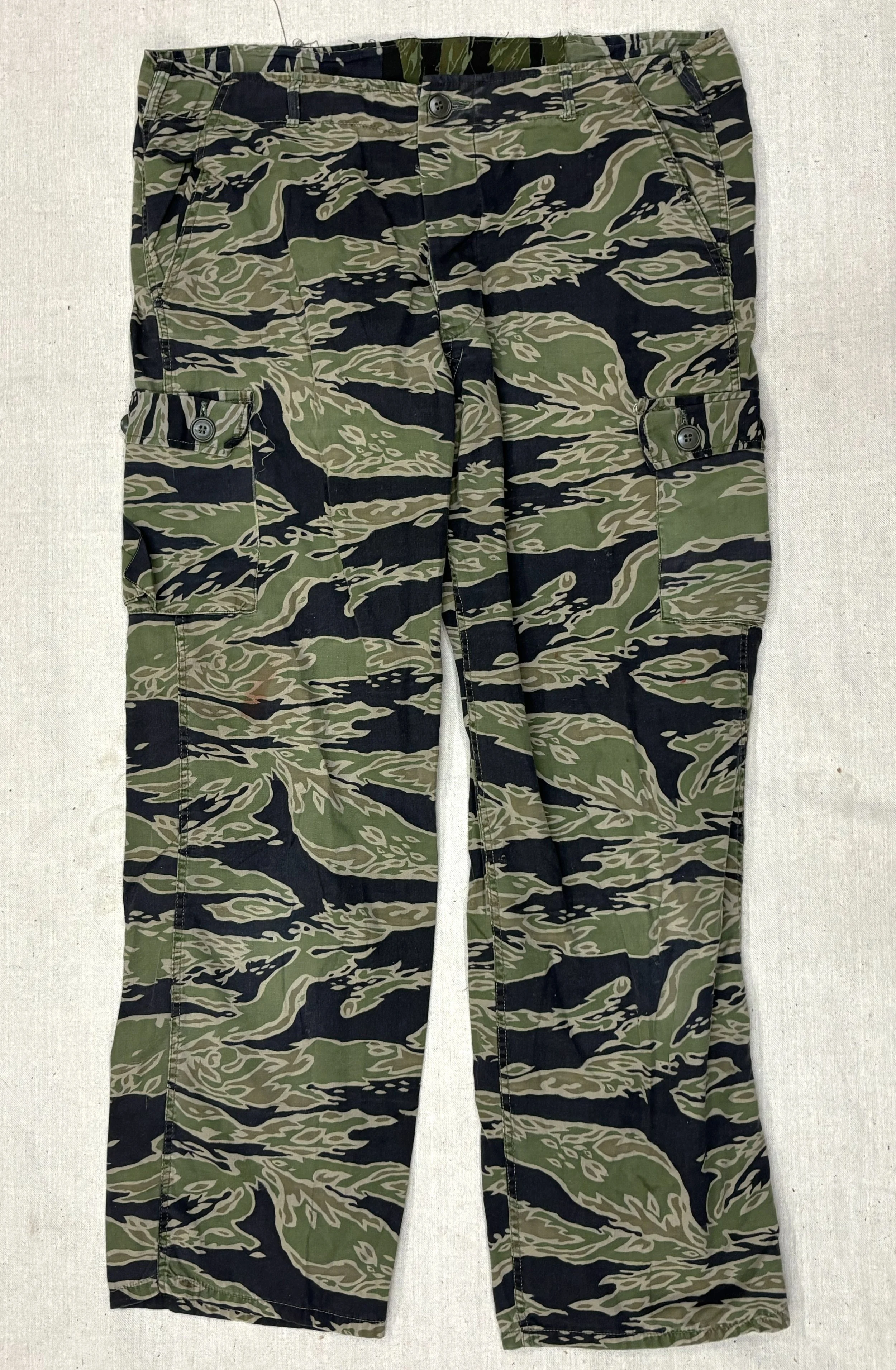
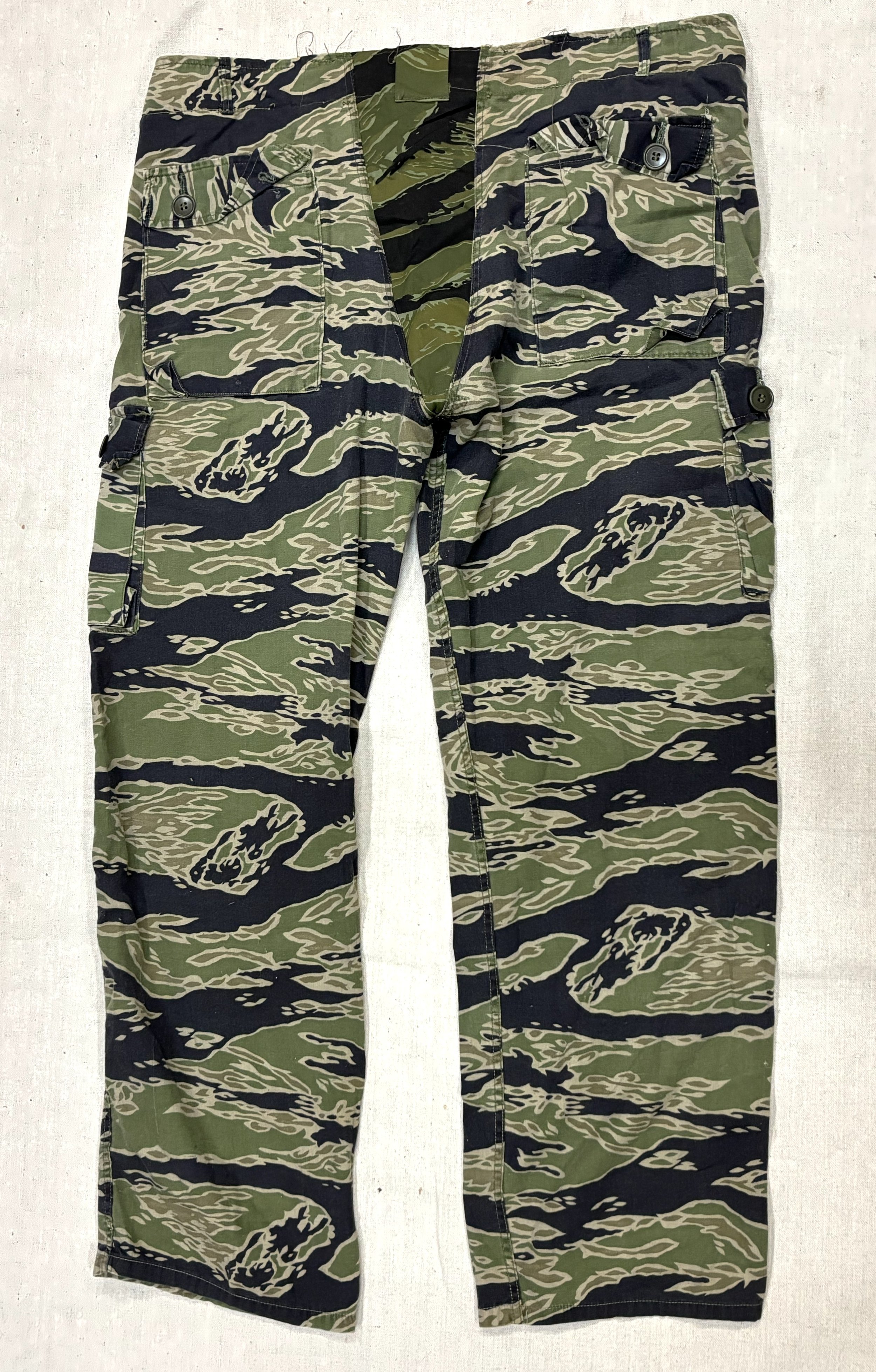
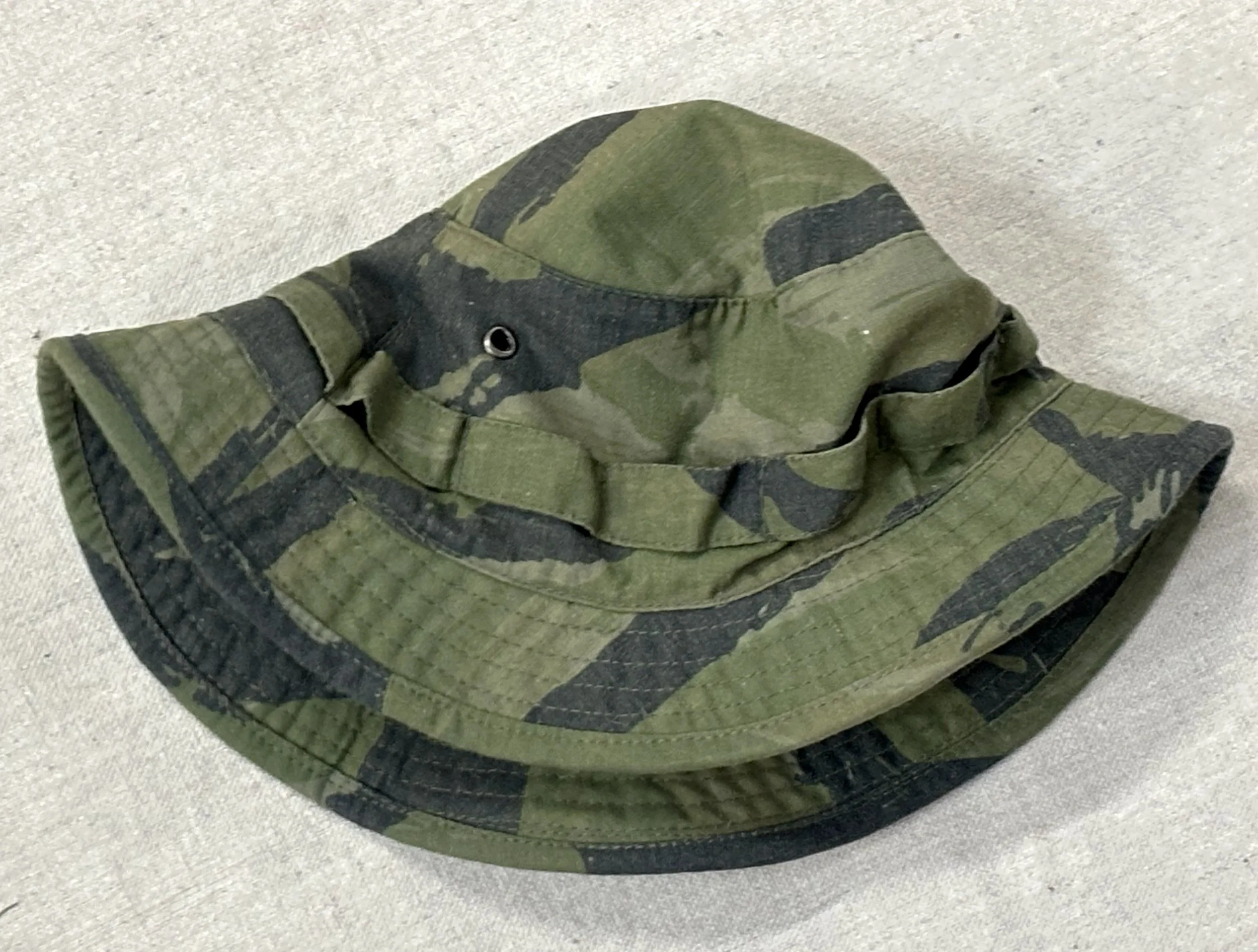
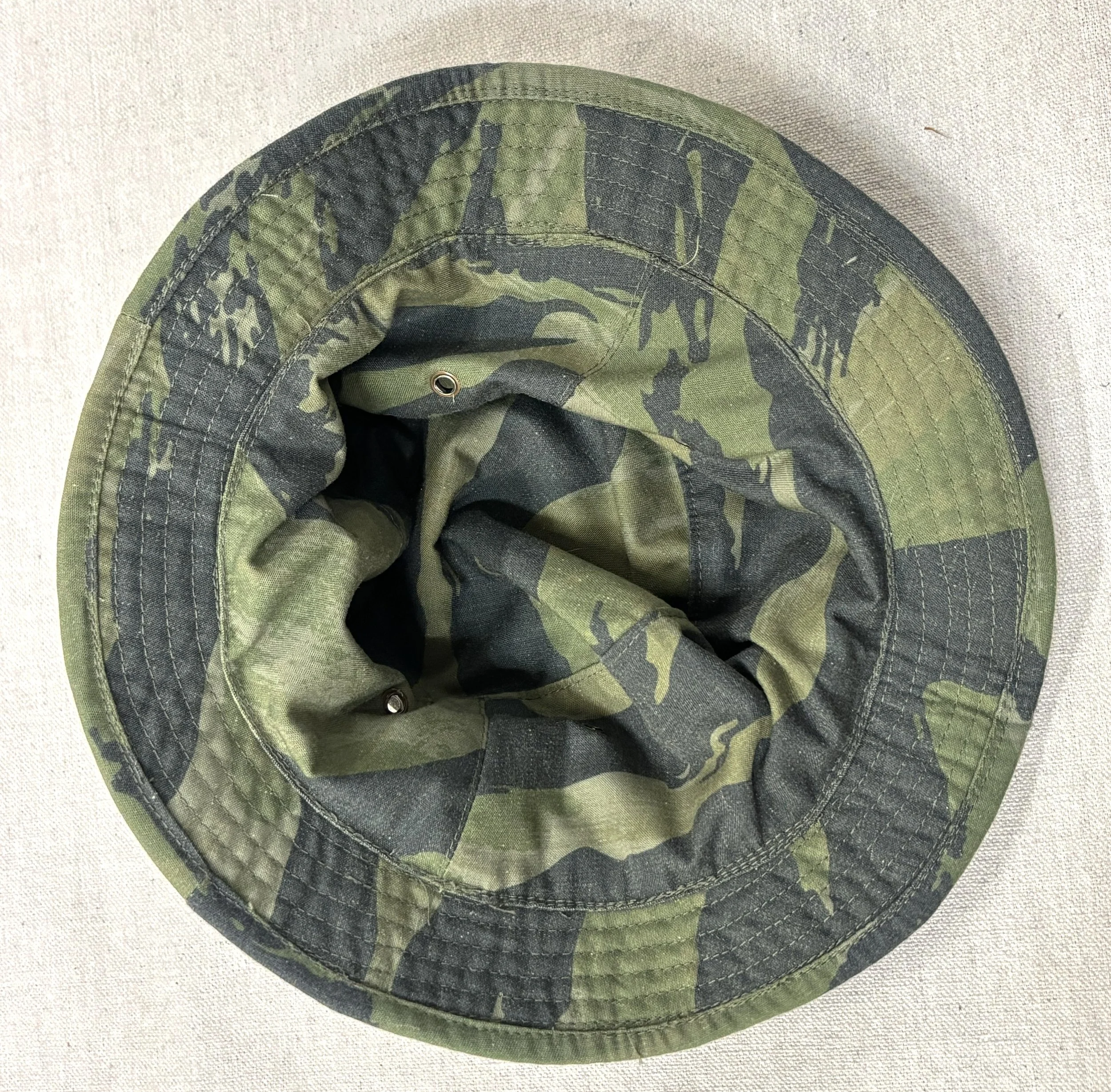
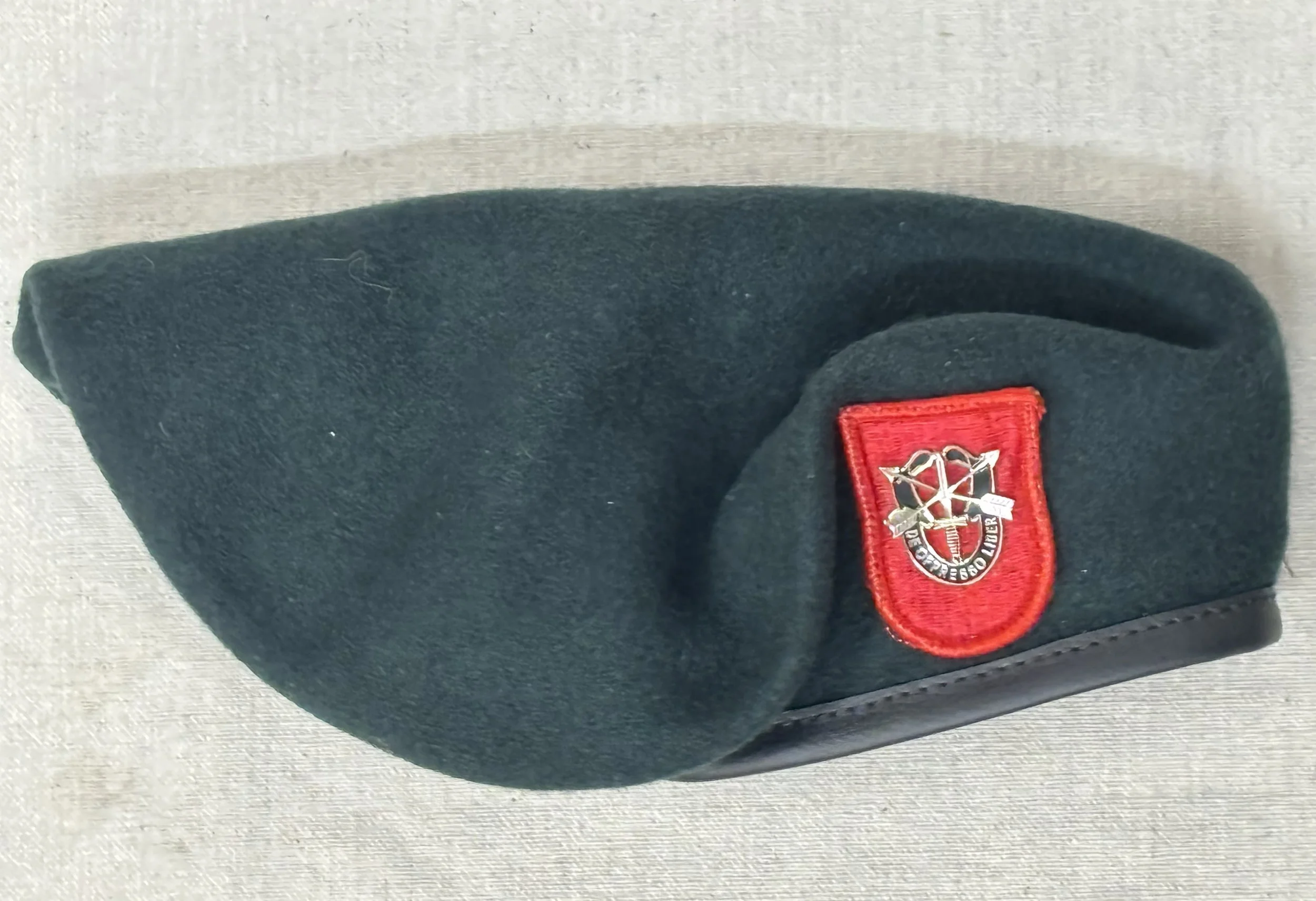
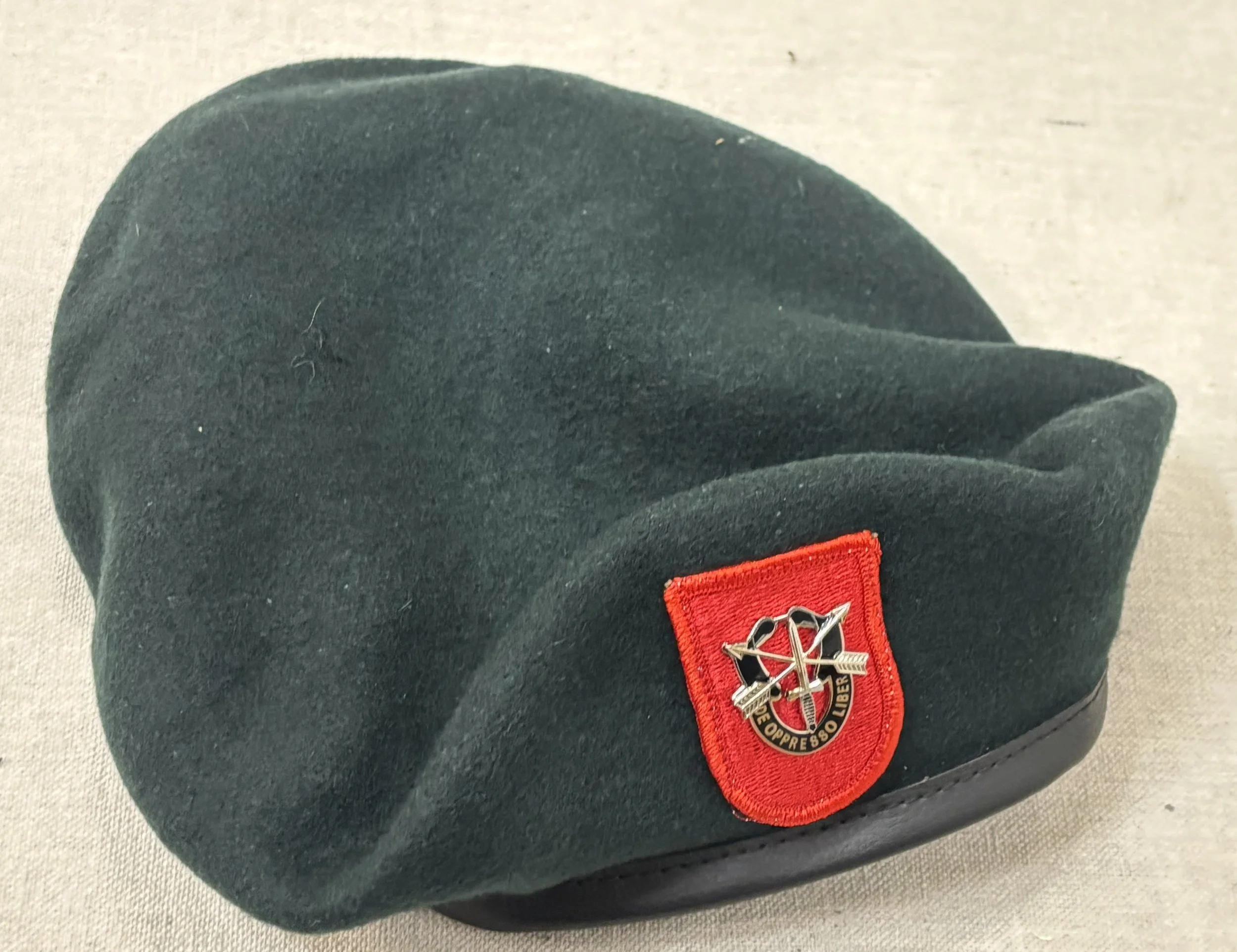
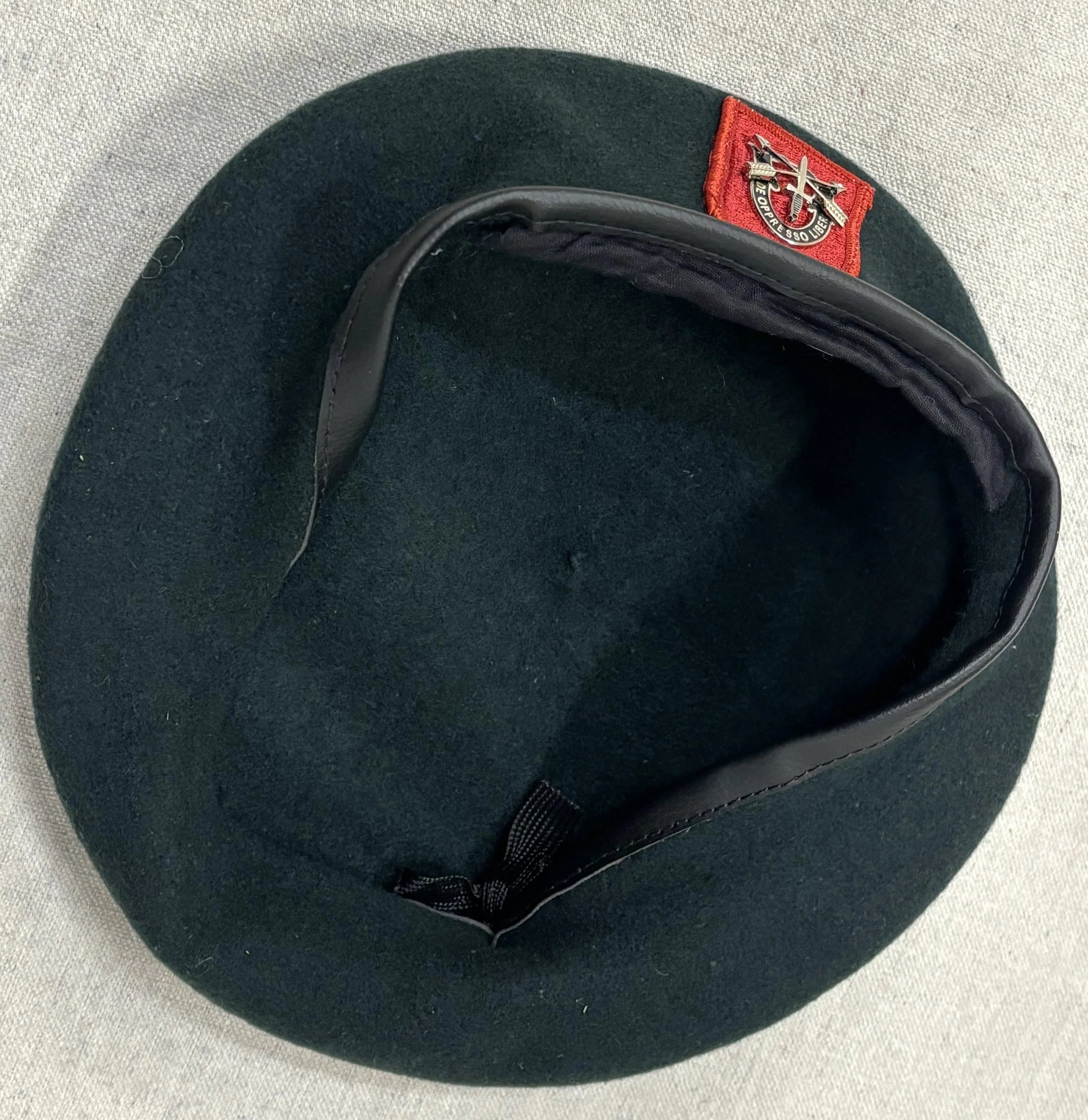
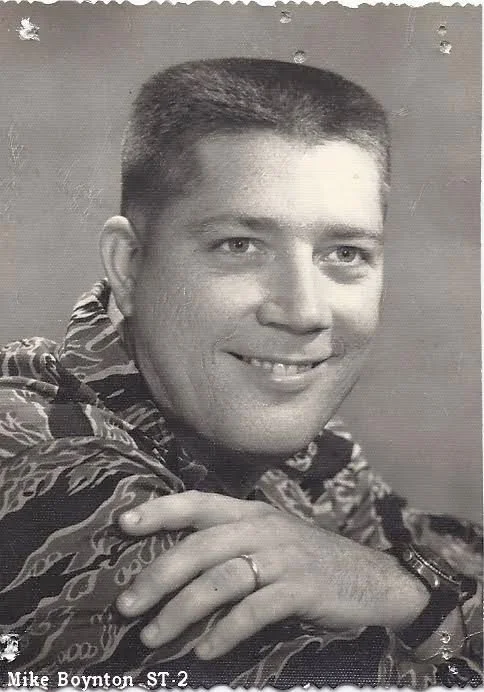
“New” Unspecified-NCO, 7th SFG, Laos, Tigerstripes, about 1967-68:
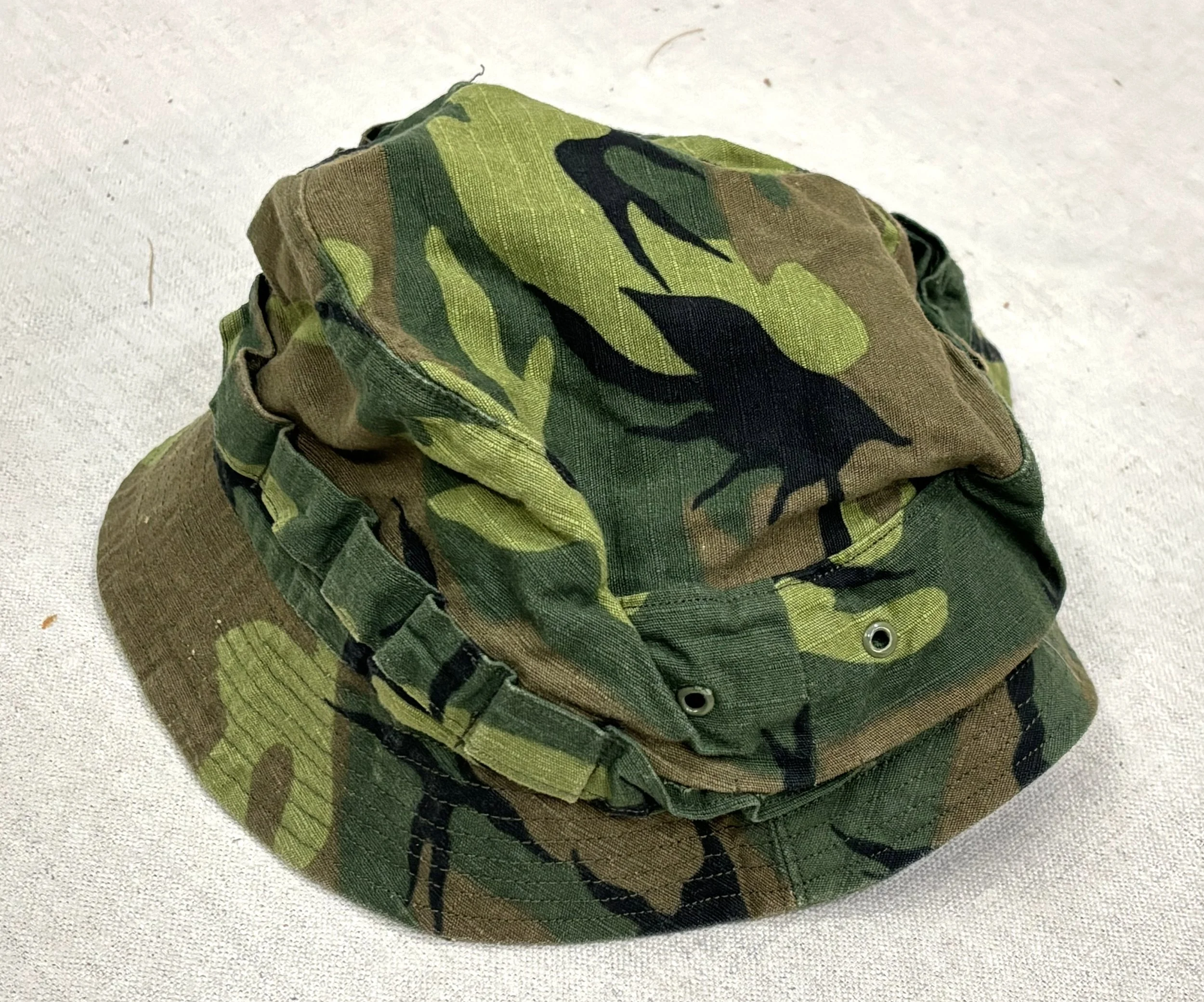
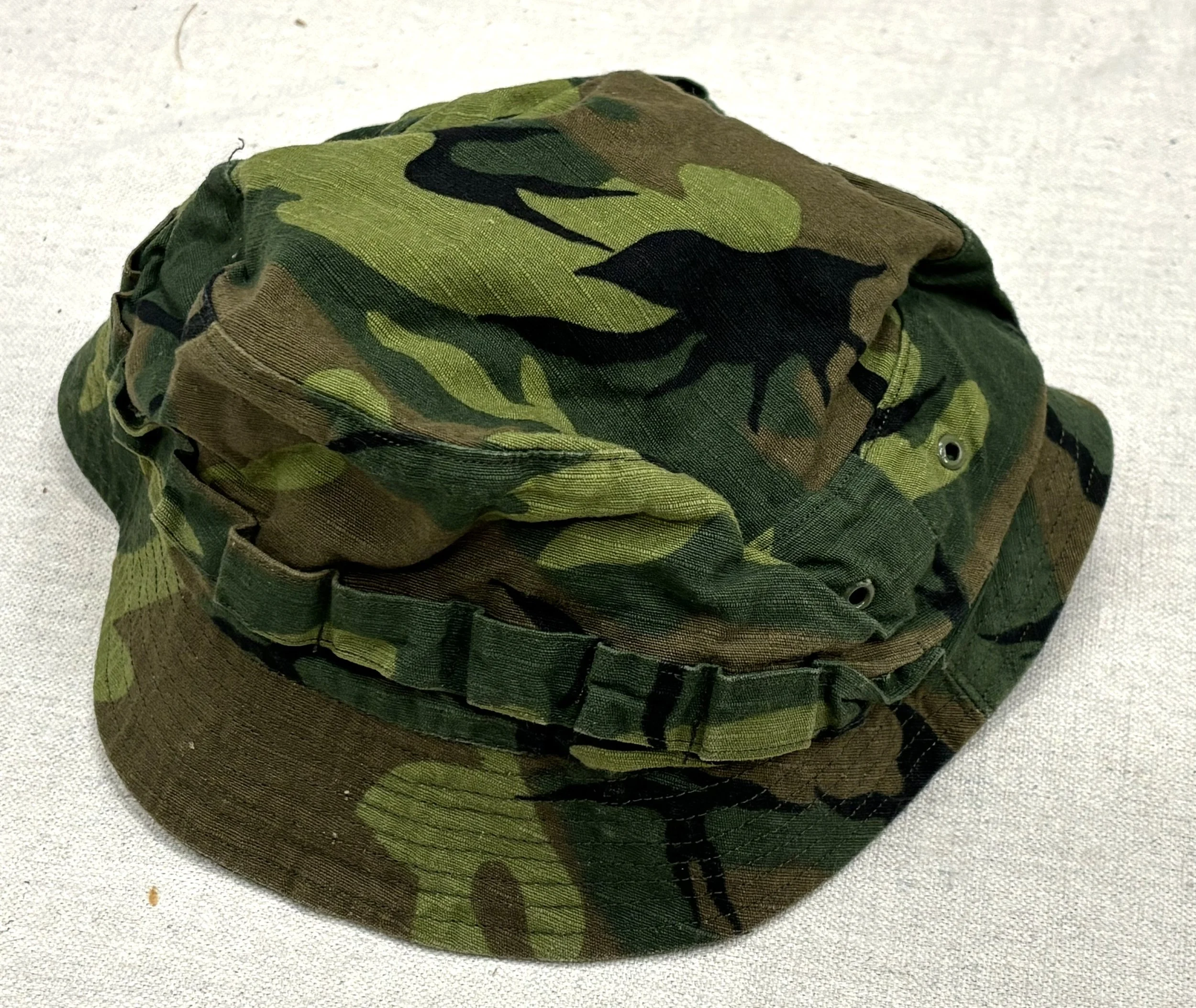
This is one of the “Greener” patterns I’ve seen here; it looks different in different light! I have aquired a pile of camoflauge uniforms, as well as other uniforms to sort through, most have never gotten their insignia, and were put in a storage area, and, call it lost or abandond, they were found, and now returned to me, which is nice, spent a load of mony for nothing back and forth, so it goes sometimes, but nice they were found, so I’ll star getting them on here to shoe some of the diferent veriations of patterns (that may not be exacly correct for the Special Forces Guys? But they get to be shown; some may go to other units, Navy UDT, or something. I don’t know where I’ll get a tailor here, but some of these will need to get insignia on them. Even found some more Italians, Finns, and British WWII uniforms; this may take a while...
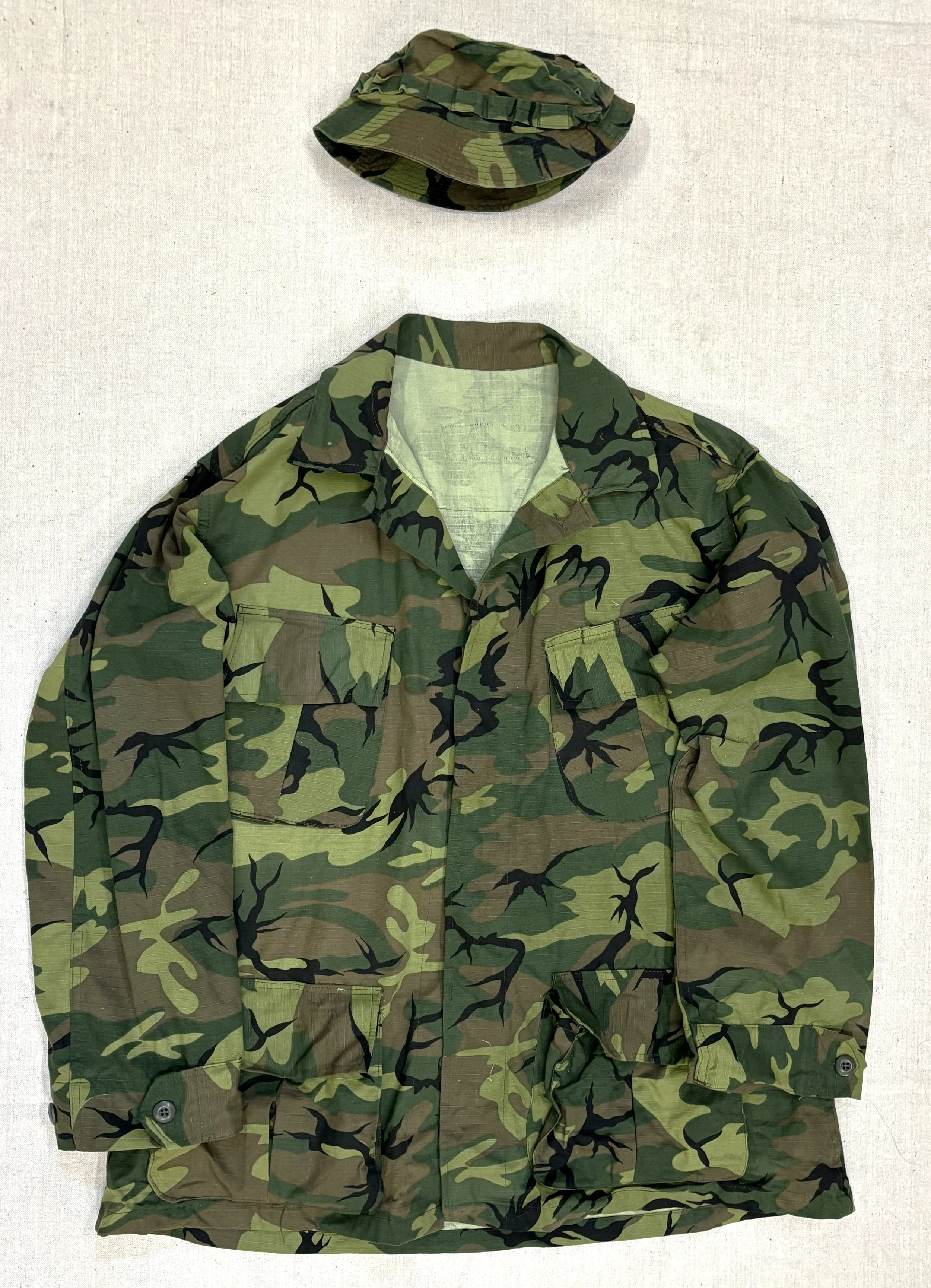
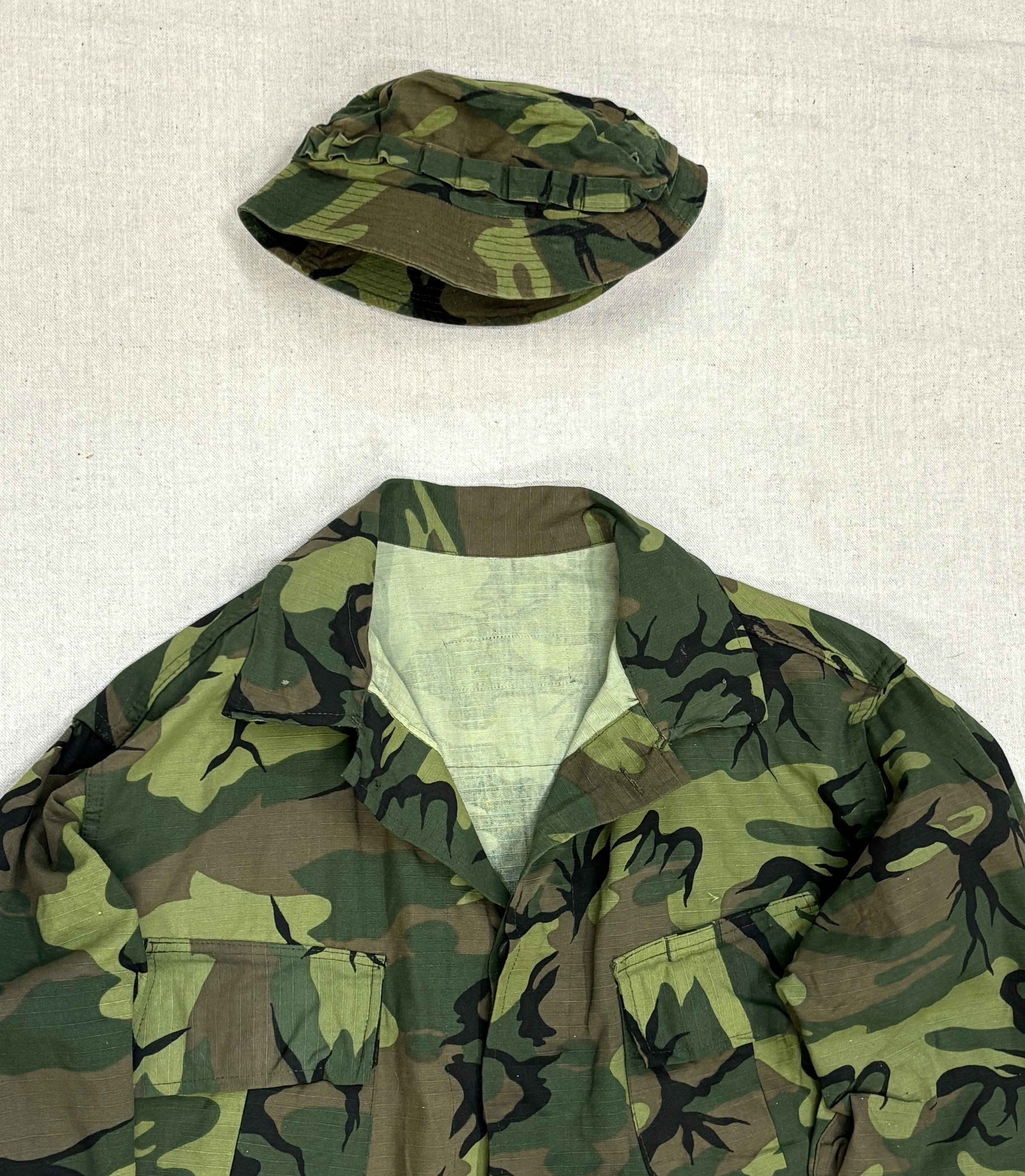
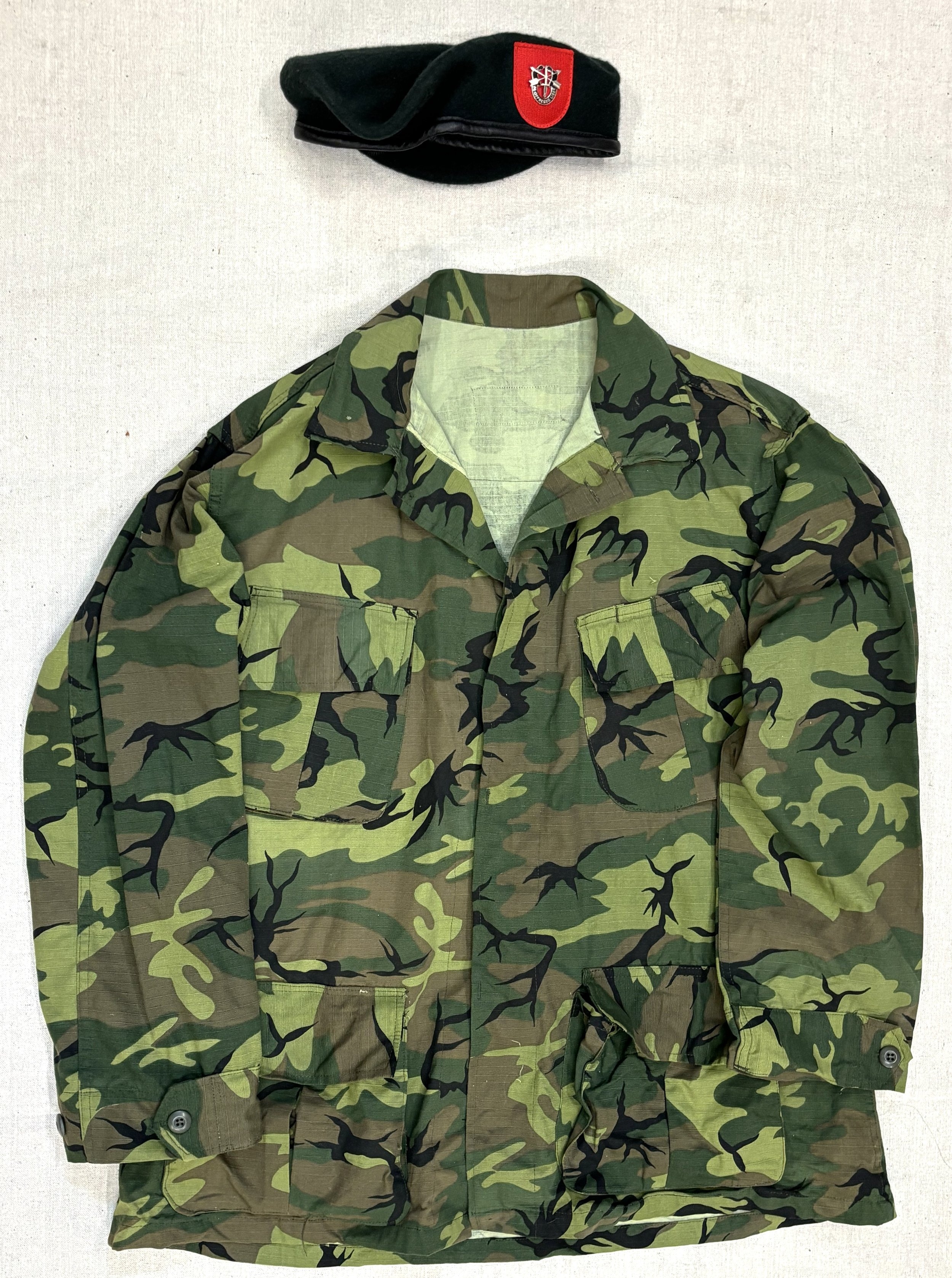
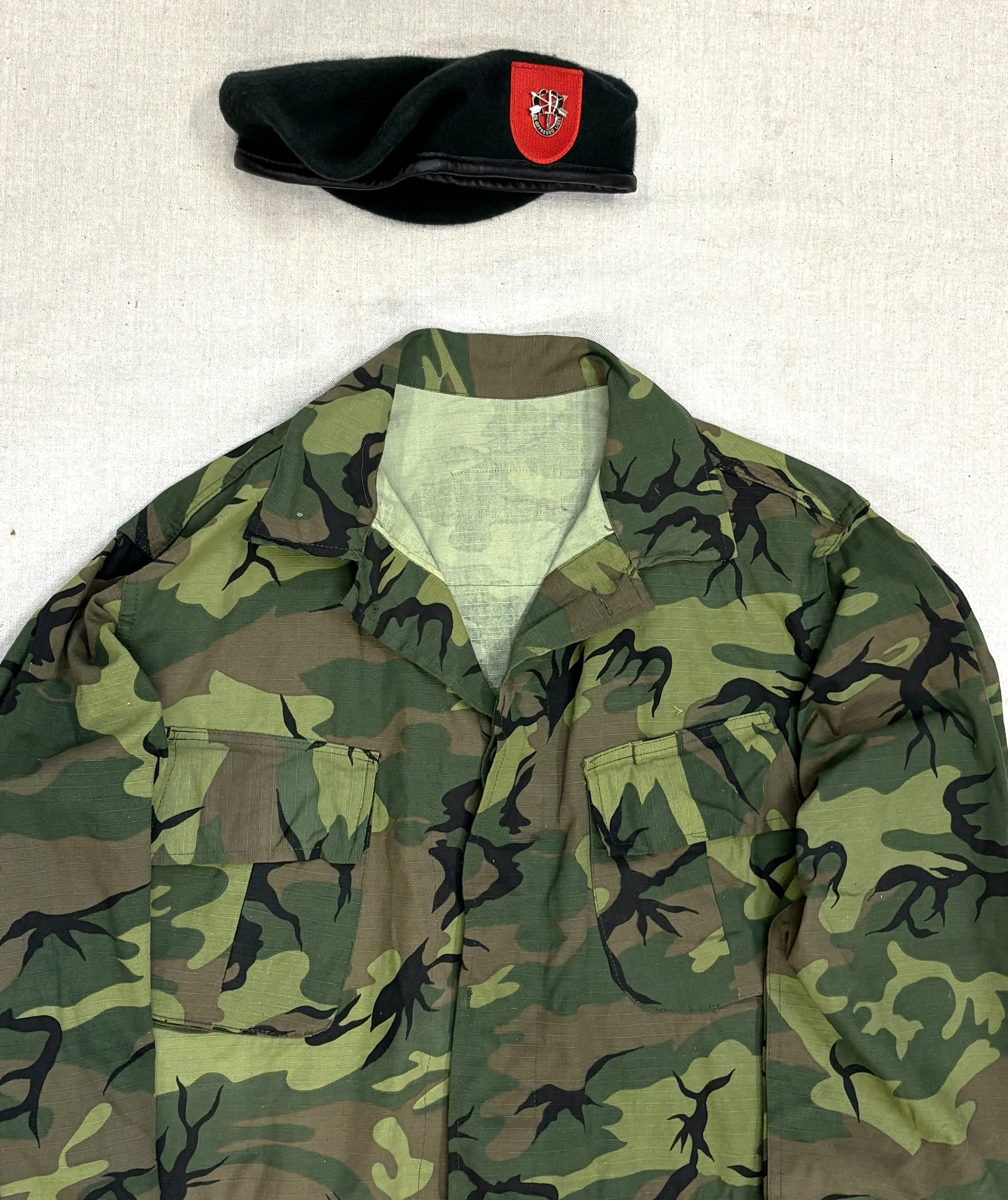
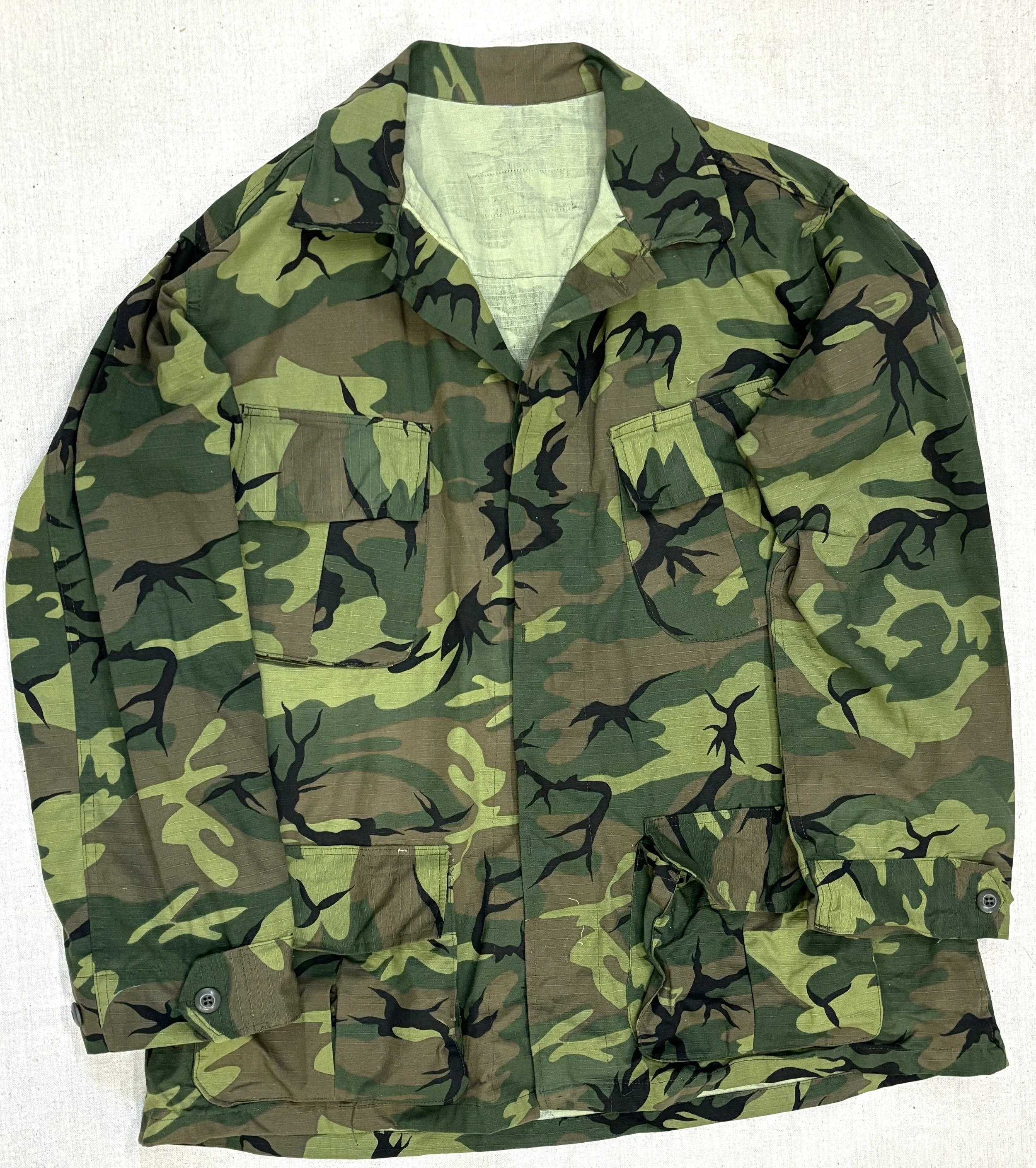
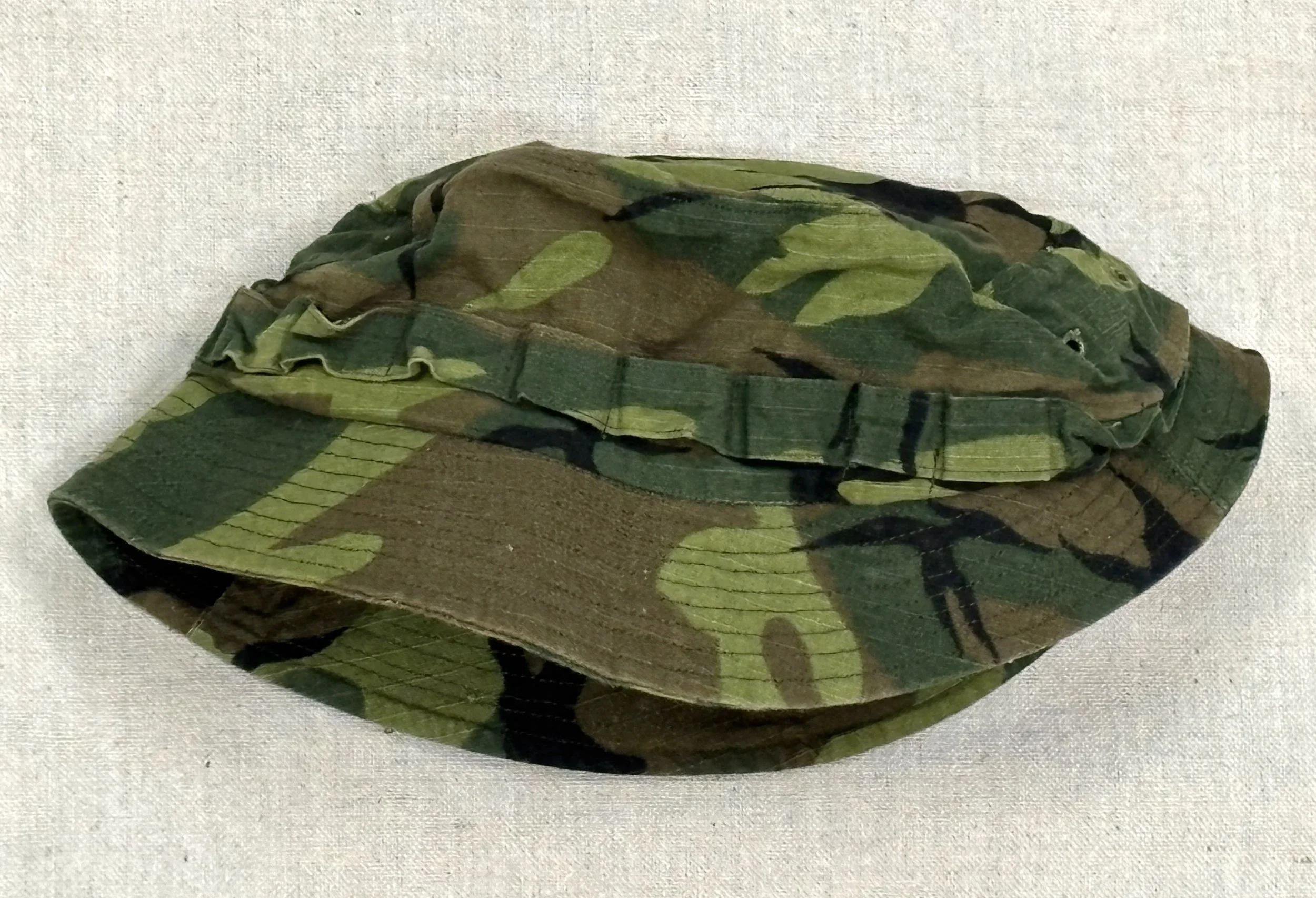
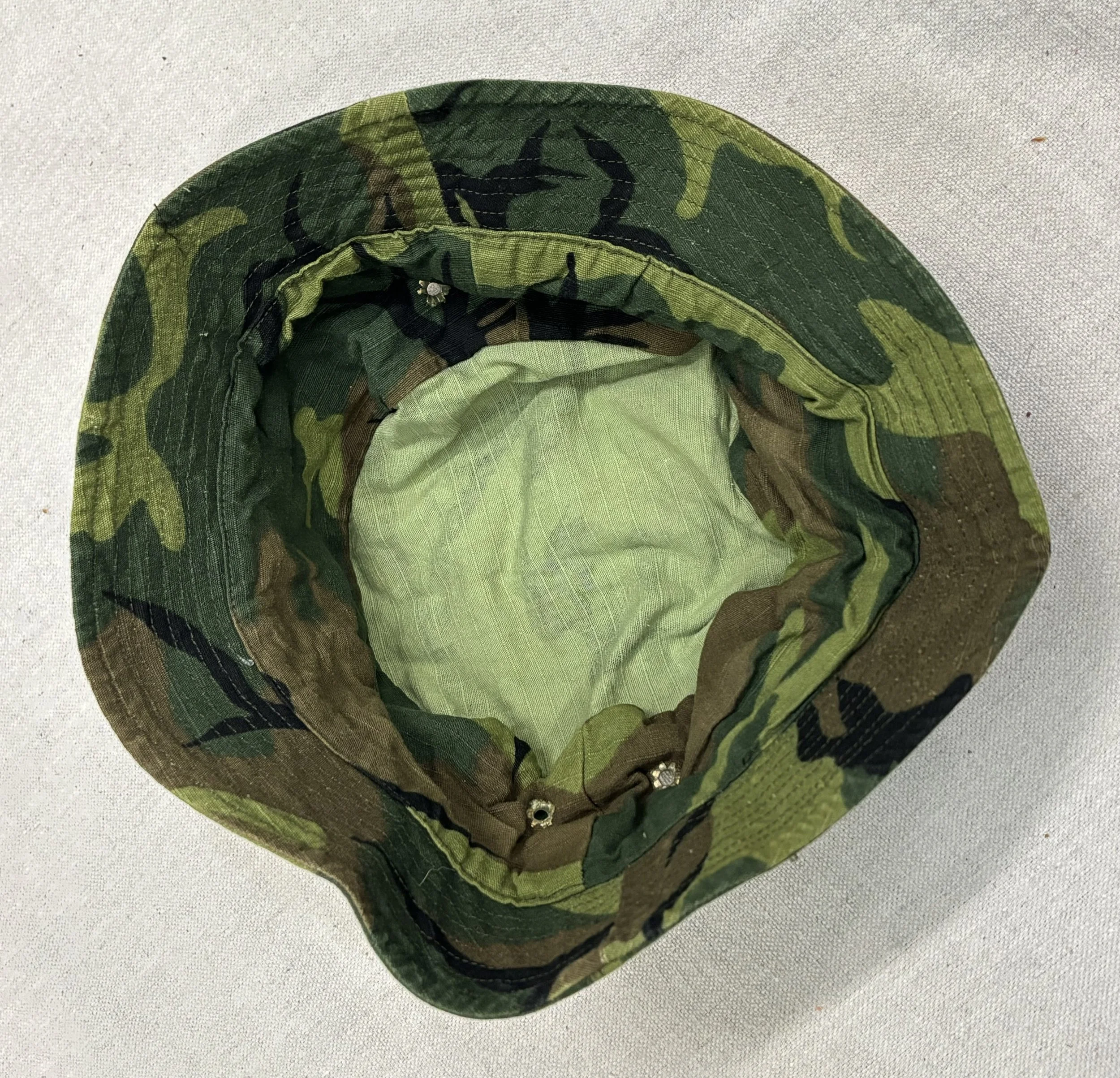
“New” 7th Special Forces Group, NCO, Laos, 1970-71:
These operations were of a smaller size and much more kept to the chest; in other words, less written about. I keep thinking, this is like new, but how appropriate for the trippy canopy found in many areas. I can very much see this fellow crouched down, wax-sick on his skin, light color on the low & shaded areas, dark on the high areas, like the forehead and nose, loaded with grenades, ammunition, and a radio. He is focused, analyzing the situation, watching the enemy, who were said to beware the men with green faces.